This is the introduction and hook of Ohio by legendary musician Neil Young. It was released a month after the Kent State massacre, an event in which the Ohio National Gaurd opened fire on a group of anti-war protestors. It tragically killed 4 of the protestors, paralyzed one, and wounded 8 others (History Channel, 2021). The event cause mass outrage and there were many responses, the greatest was from Neil Young.
Young starts the song by referencing Tin soldiers and Nixon, the men who carried out and allow the attack. But there’s more to the ‘Tin soldiers”, firstly Young is calling them out for being pawns to their masters, following orders without any empathy. But he’s also calling out the fact that many in the national guard were young, inexperienced, fake soldiers parading as real ones. Next Neil explains the feeling of his generation, on their own, the older generation and the government have abandoned them. They spend their summers hearing the drumming of marches, and the drumming of guns. Which eventually culminated in four dead in Ohio. This leads into the verse,
Gotta get down to it
Soldiers are cutting us down
Should have been done long ago
What if you knew her
And found her dead on the ground
How can you run when you know?
This of course describes the event more, but it also pleads for empathy. Neil wants the soldiers and those in charge of the war in Vietnam to imagine if they knew one of the victims. He accuses them of cowardice, running away from something that should have never occurred. He also informers them of the protestors’ message, that the war in Vietnam should have been done long ago.
The bridge of the song is a repetitive chant of “na na na na na na na”, which allowed the song to easily sang at protests. The recording of the song itself uses multiple voices for this portion of the song. The ending is also repetitive, with Young sounding more and more desperate as he echos out
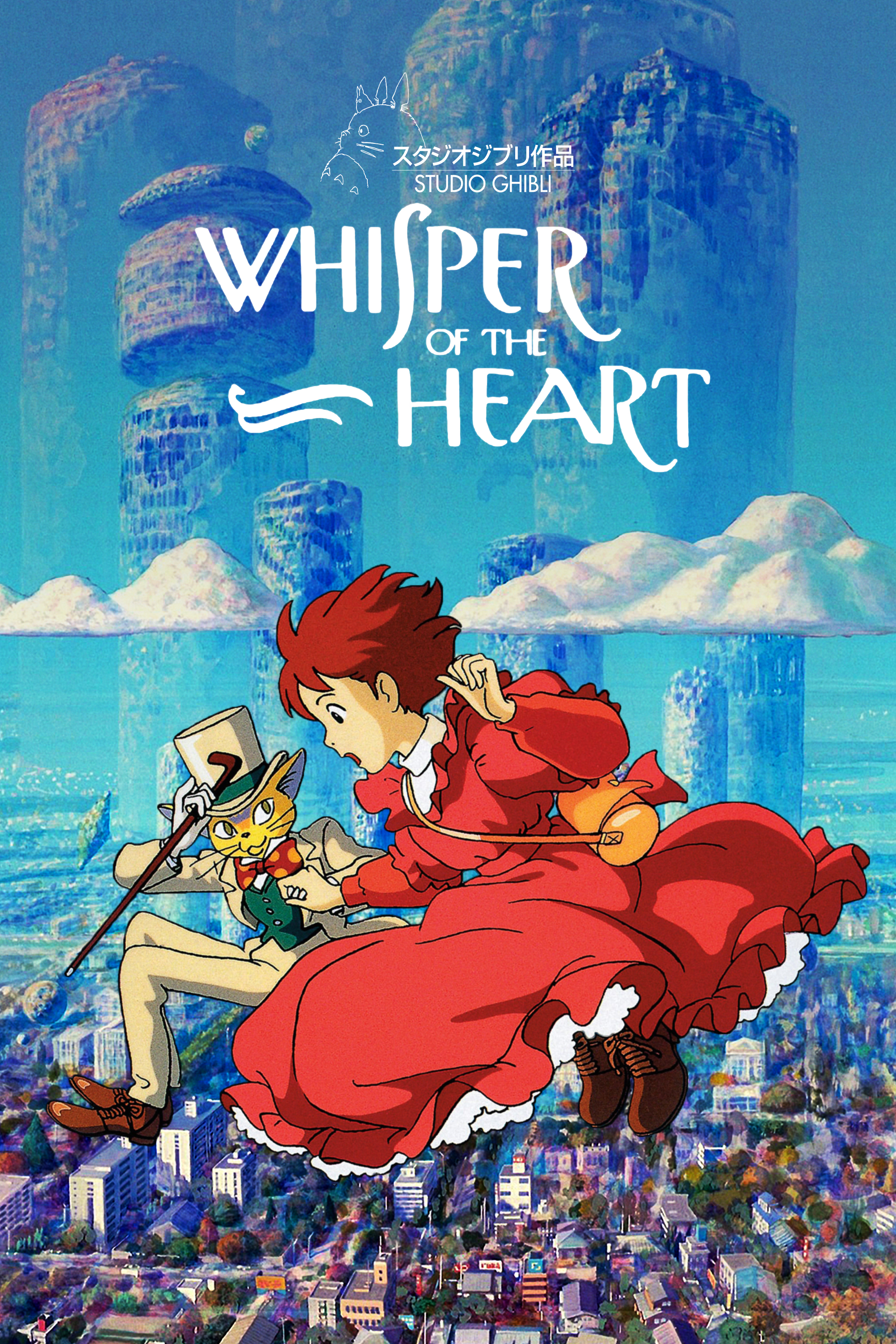
Now that the school year is starting, I thought this would be the best time to write about a movie that relates to many students, specifically high schoolers such as myself. As a sophomore, I’m already beginning to think about what universities I should attend, what career I should have for the rest of my life, and how I’m able to achieve any of these goals in the first place. The main character in the film, Whisper of the Heart, faces many of these “coming-of-age” challenges as well. In another masterpiece created by the Studio Ghibli franchise, viewers are taken on a journey that—quite frankly—they never thought they needed.
The movie introduces the main character, Shizuku Tsukishima, who has a passion for stories and writing. After discovering that her library books have all been previously checked out by one person, she meets Seiji Amasawa, a boy whom she finds annoying but is also the mystery student from the library. As they grow closer, Seiji explains to Shizuku his dream in becoming a professional violin maker in Italy. This makes Shizuku question her future path in life—or lack thereof. By using her love for writing, she creates a novel about a cat named Baron, inspired by a cat statue owned by Seiji’s grandfather. Seiji and Shizuku fall in love, but Seiji is given the opportunity to pursue his dream and has to leave Shizuku. However, Seiji surprises Shizuku early the next morning and takes her to see the sunrise. The boy promises to wait for her and reunite once they both achieve their dreams.
I’ll always applaud Studio Ghibli for being able to create such breathtaking imagery, albeit there’s a message far beyond the surface of this film that requires deeper analysis and understanding. The director of this movie, Yoshifumi Kondō, creates a balance between dreams and reality. Seiji’s dream forces Shizuku to realize that he’s moving forward with his life, whereas Shizuku is receding into her childhood self. Throughout the film, Shizuku constantly prioritizes her novels first because they help her escape the burdens of our world, but this proves consequential when she begins to fall behind on classes and relationships. While the director reminds us that making sacrifices is a part of growing older, he also shows how important it is to create our own path in life. As a result, Shizuku is able to intertwine her childhood into her future path by becoming a writer, regardless of how difficult it may be.
Typically, I’m not the type of person who enjoys romance or dramas, especially movies as cliché as this one. On the other hand, this movie is possibly one of the greatest romance movies I’ve ever seen because it genuinely relates to me from a high schooler’s perspective. The end of Whisper of the Heart is open-ended, leaving many viewers wondering if the two protagonists ever achieve their dreams. We can only assume, but our assumptions will determine our sense of the world.
So, I finally got around to watching arguably one of the most iconic films of all time- Les Miserables, about France in the 1800s. The film opens with Jean Valjean, a prisoner, being released from prison after a nearly 20-year long imprisonment simply for stealing bread. As a former convict, he cannot find a job or a place to stay, but a generous Bishop offers to take him in. However, Valjean tries to steal the Bishop’s silverware and run away, but is caught by the police- still, the Bishop stands up for him, saying that he himself gave Valjean the silver so he could start a new life in the world. Valjean is stunned and ashamed- to honor the Bishop, he makes himself a new persona to save other people.
Almost ten years later, Valjean is a rich factory owner- but he is shocked when a man named Javert (formerly a prison guard at the prison where Valjean was held) comes to meet Valjean as the new police chief. Javert begins to suspect Valjean’s real identity. Concurrently, one of the factory workers named Fantine is fired for having a daughter out of wedlock, named Cosette. Cosette is revealed to be living with a greedy family named the Thenardiers, who demand money from Fantine. Fantine, desperate, becomes a prostitute to pay her debts. After she attacks an abusive customer, Javert arrests her, but Valjean remembers her as a factory worker and takes her to a doctor. However, the unrest in Paris has festered for too long- things are about to get, for lack of a better term, heated.
Les Miserables takes place during the French Revolution. The movie is set amongst many historical landmarks in Paris- such as Notre Dame. The time period shines through- the deep social divides and political unrest of the Revolution bleed through and impact all the characters in different ways.
A big social issue in the film was the issue of poverty and criminality. Deep social and class divides between the rich and poor were very common at this time, leading to deep feelings of unrest in the country. In addition, even stealing was treated as a serious offense- leading to decade-long prison sentences and sometimes even execution. In turn, the imprisoned people were unable to provide for their families- which just reinforced the cycle of poverty and forced their children into stealing in order to survive.
A big social issue mentioned in the film was Cosette living with the Thenardiers. One might ask, why would Fantine send Cosette away? The truth is, it was very common in this time period for working-class women to send their daughters away to live with slightly better-off individuals who could provide the child with some education (for a fee).
There were many cultural differences shown in this movie I wasn’t aware of- for example, the practice of sending daughters away. In addition, I was unaware of the practice of the police dealing with the revolters in those days- I had no idea it was so brutal. I was also surprised by the truly horrible living conditions of the poor shown in the movie- I really had no clue they were that bad.
The issues this film deals with- poverty, criminality, and doing anything to survive- are definitely universal, and prominent even today, and even in the United States- with the wage gap and class gap that we are currently experiencing in our society. It was heartwarming, though, to see the sense of community, love, and kindness shown by Valjean, even in this brutal situation.
Howl’s Moving Castle is a Studio Ghibli classic, one based of a book of the same name. The gorgeous animations, lovable characters, and peaceful vibe of the movie make it one of my favorites. Howl’s Moving Castle follows a young woman, Sophie, who works as a hat-maker, content with a boring life. One day, a witch comes into her shop and curses her to look like an old lady. Sophie decides to seek out the feared witch Howl and his moving home, and gets caught up helping him resist fighting in the war sweeping the nation.
The movie’s director, Hayao Miyazaki, was influenced by his anger about the United State’s invasion of Iraq, and included many anti-war themes in the film. I also enjoyed the fact that the movie depicted old age in a positive light. Being seen as an old woman helped Sophie be stronger and bolder in standing up for herself. In many ways, Howl’s Moving Castle has many deeper meanings.
From the luscious green hills to the dark war scenes, Howl’s Moving Castle is truly a gorgeous animation. The characters are all very interesting as well, with Calcifer, the sarcastic fire demon, to Markl, the young apprentice with much to learn, and of course, Howl, who is much more than just a vain wizard.
You probably are a fan of some famous athletes, singers, actors and actresses, as well as other celebrities. On this TV docu-series on Disney Plus, you can actually watch episodes about these celebrities and about their rise to stardom. You can learn about their childhood, the challenges that they faced while growing up, as well as their thoughts and feelings during those times.
Even though the show only has one season so far, which was released in September 2020, there may be more episodes to come later.
You can watch episodes dedicated to the pasts of Anthony Davis, Candace Parker, Rob Gronkowsi, Nick Kroll, Adam Devine, Colbie Caillat, Caleb McLaughlin, Ashley Tisdale, Nick Cannon, and Julianne Hough! There were ten episodes in the 2020 season (The first season), with one episode for each celebrity.
If you look up to them, know about them, or even just want to learn more about them, I recommend this show because you can learn about how they grew up, how they tackled the obstacles on the way and what they did to become great at what they do. You can see that they never gave up on their dreams, even when their paths weren’t as clear and when the odds were against them. You can hear stories from the fathers, mothers, brothers, sisters, friends, mentors, teachers, and coaches of these 10 people!
I give this show an 8 out of 10 rating because it is very inspiring to learn about different people and their journeys and paths to success. The reason I took off 2 points is because I feel like the episodes were a little short. I know that these celebrities are very busy, but I would have loved to see some longer and more in depth episodes about each person, especially the athletes! Overall, it is a very entertaining, informative and encouraging TV show and I definitely recommend this show to anyone, especially those looking to become successful athletes, comedians, actors, or singers!
This is a great movie! I thought that it helped to answer a lot of questions Marvel fans have had about Natasha Romanoff, also known as Black Widow. I really enjoyed the action and plot of this movie. It takes place just after Captain America: Civil War and before Avengers: Infinity War.
One day, a strange package arrives and forces Natasha Romanoff to find Yelena, whom she last saw when they were young children being separated and sent to different places. They are now both spies and have both grown up. At first, they struggle to get along, possibly from feelings of betrayal.
Eventually, they find the Red Guardian (Alexei) and Melina, who end up helping them in their mission to find a man named Dreykov and put a permanent end to his diabolical schemes. However, is it really possible to end his terrible plans?
This movie helps viewers to understand more about Black Widow, especially what shaped her into becoming who she is now. A lot of the characters in this movie went through character changes, especially in their intentions and their personalities. I would recommend this movie to Marvel fans who enjoy adventurous movies. I thought that this movie had some important messages, like ‘People are capable of change’. There were also a few connections I was able to make between Natasha Romanoff in Black Widow and Natasha Romanoff in Infinity War, mostly between her actions and her personality in these two movies. I would rate this movie a 10/10.
The Hunger Games is a plot captured from a book and brought to the big screen. The main characters are Katniss Everdeen and Peta Mellark. The Hunger Games is where two randomly selected teens will participate in a battle to the death. There are a total of thirteen districts involved meaning 26 people will participate. The primary reason for these games to be conducted is for the pure entertainment of others.
One thing I loved about the execution of this movie was the fact they were able to capture the fashion sense from the books straight into the movies. The fashion sense is colorful, bright, and daring. Most movies that were captured from books tend to leave out many parts due to time constraints yet in The Hunger Games we did not see that. The directors managed to include every detail.
Although I was very disappointed in the casting because Katniss was supposed to have olive skin yet she was fair. Peeta was said to have bright blue eyes yet he ended up having brown. I think the casting could have been better executed.
Also, the CGI was flawless. In the books the technology is very futuristic and the movie was able to capture this. Overall the movie was very intriguing and left the viewers wanting more.
-Sanjana S.
The Hunger Games movie trilogy is available for checkout from the Mission Viejo Library.
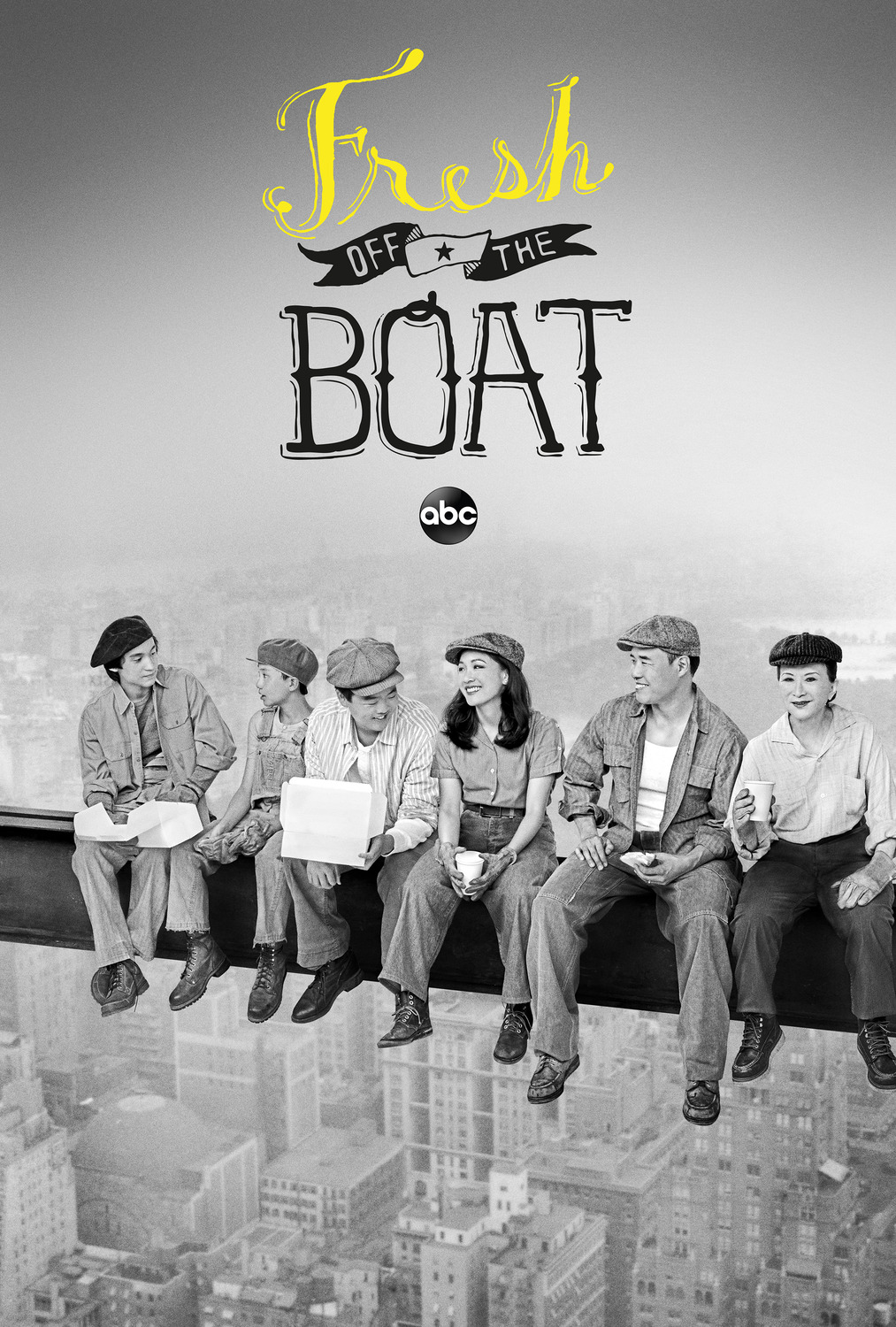
Just look at this loveable family you will get to follow!
With summer around the corner, everybody needs some light and fun television shows to watch to fill the time. One of my favorite genres of television is sitcoms and I have watched many that have come to my liking. Today I am recommending Fresh Off the Boat! This sitcom originally started airing in 2015 but currently has 6 seasons with the idea that there will most likely be a season 7. So do not worry, there is plenty of content to keep you busy.
Fresh off the Boat stars a Chinese family moving from a majority Chinese town in DC to the majority white in Orlando, Florida. This show takes place in the 1990s which I believe is the icing on the top for this show. The mother, Jessica, is your typical tiger Asian mom. She attempts to control the lives of her three sons: Eddie, the teenager who only wants to play video games, Emery, the perfect son, and Evan, the young smartie pants who skips a grade. There is also the dad, Louis Huang, who runs a bbq restaurant and is your classic funny carefree dad. At the same time, Jessica attempts to fit in with the white neighborhood moms group. We get to see how it was like for an Asian family to enter a majority white area in the 1990s. Hence the name Fresh Off the Boat, meaning they are basically fresh immigration with little idea of how things work in a suburban area.
The story mainly revolves around Eddie, the oldest child. One of my personal favorite scenes of the entire show is in the first episode. Eddie goes to school and is made fun of for his Chinese lunch. All he dreams of having for lunch is Lunchables so he can be cool, it seems we all had the idea of what is cool even in the 1990s! He goes to the market and gets to pick out the cool “white people food” as he calls it and boosts his confidence. This show is full of comedy that keeps you laughing for the entire episode.
Nonetheless, my favorite character has to be Jessica Huang, the overprotective mother. We slowly get to witness her mellow out her ways and become more of a relaxed parent. Do not get me wrong, one of my favorite parts of the show is getting to watch her be the typical tiger mom with a twist of a comedic side. She always rocks her 1990’s fashion to no end that makes her a character that you cannot just help but adore.
If you need a new show to watch I would seriously recommend watching Fresh Off the Boat as soon as possible!!
The Life Aquatic with Steve Zissou is one of my favorite Wes Anderson films. Its plot—combined with its direction, soundtrack, and cast—makes the film stand out against most of the films I’ve watched before. It centers around the themes of familial love as well as sadness, letting go of your past, and looking to the future.
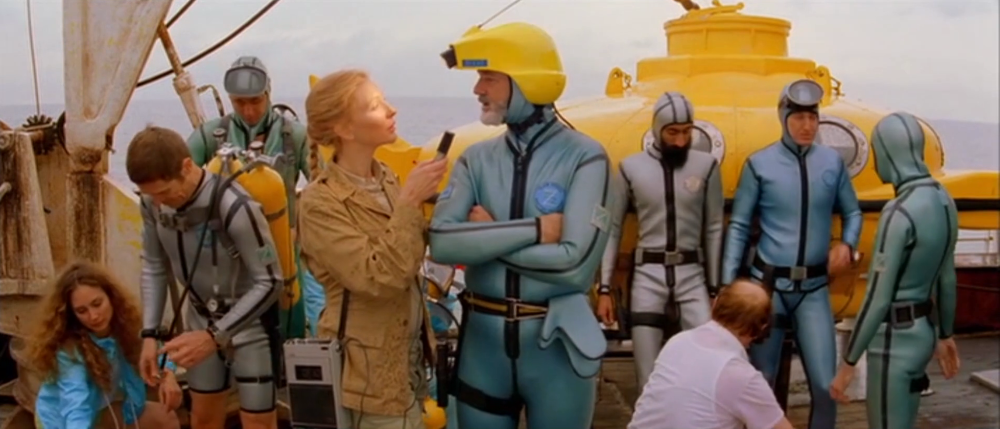
The story follows Steve Zissou, an oceanographer and filmmaker, on a mission to kill a shark—specifically a “jaguar” shark (which he coined himself)—that ate his best friend and partner, Esteban. He’s pretty washed up, with his funds for his films low—due to how badly his films were doing. He’s out to kill this shark solely for revenge, and he says he’ll do whatever it takes to get justice for his friend. Zissou is accompanied by his friends—the crew of his ship, the Belafonte. There’s one special member, though—and it’s what sets the film into motion.
That special member is Ned Plimpton, a polite, young man who came to Zissou during the premiere of his latest film. Ned claims to be Zissou’s son, the child of Catherine Plimpton, a woman Zissou remembered and supposedly had an affair with. At first, Zissou doubts this—because both of them aren’t really sure. It’s only when Ned is invited to stay at Zissou’s island and headquarters, and Zissou wakes him up in the middle of the night to film some “jellyfish” on the shore. Standing there, with his boom microphone—Ned adlibs along with Zissou. Though it’s awkward, Zissou figures out that a narrative between him and Ned could make his next film—and mission—successful. He hires Ned right there, and Ned joins the crew.
I won’t be discussing the film in its entirety, but what I found very compelling about the film was how it handled the themes of familial love—specifically paternal love.
Ned and Steve are awkward together. The two of them tiptoe around the fact that Steve might or might not be his real father. They avoid even breaching the topic. But, when they do, Steve confesses that he never wanted to be a father, right in front of Ned. After that, they don’t talk about their relationship with one another.
During this, Steve is also still weighed down by the grief of losing his best friend. He’s mourning him, and his anger is what drives him throughout the entire film. Most of the crew is telling him not to do it, not to kill the shark—or that the shark didn’t even exist. Even so, Steve still pushes on—through bad weather, a pirate attack, and even a kidnapping of one of his crew members. They go through a lot, just trying to find this shark.
The most devastating part of the film happens next. The crew finally gets the shark on their radar, and they realize they’re only a few miles away. A helicopter ride. So, Steve and Ned—a pilot—climb into the Belafonte’s worn out helicopter and fly away. On the ride, Steve and Ned talk about a letter Ned sent to Steve when he was younger. He admired Steve, and admitted that he wanted to be an oceanographer when he grew up. Turns out, Steve had kept the letter all these years, and he pulls it out to show it to Ned. This connection shows that the two of them, especially Steve, care for each other—and that Steve was ready to become a father to Ned.
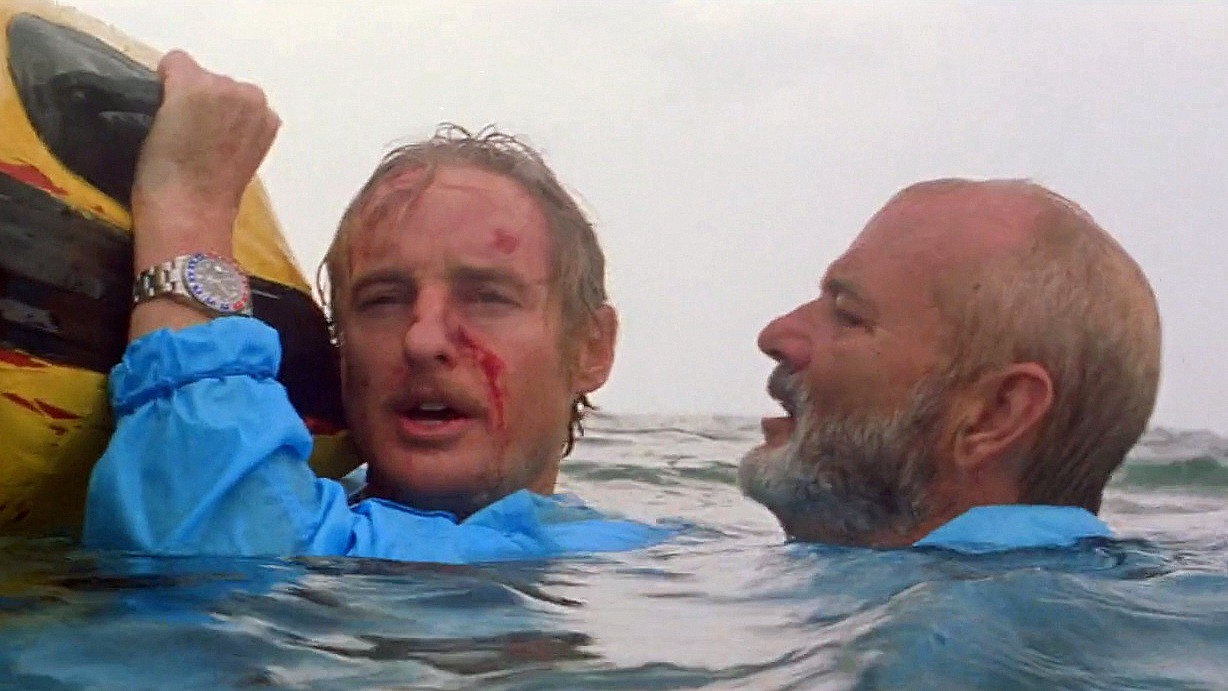
But, due to the helicopter being worn down and broken—they end up crashing into the water, just where the shark was. And although Steve is fine, Ned… wasn’t. The most interesting thing about this scene is that it’s framed to look like a shark attack—with Ned hanging onto a floating piece of debris, and red filling the water around them. Almost exactly the way Steve lost Esteban. (It’s later revealed that Steve was infertile. He couldn’t have children.)
Eventually, though, Steve and the crew are able to get into a submarine and see the shark up close. It’s my favorite, and most beautiful part of the film. The shark is swimming around them, glittering and beautiful, capturing the eyes of all the crew members—shocked that the shark was actually real. In the center of the frame is Steve, quietly reflecting on the events that had happened leading up to this moment—the moment where he’s “supposed” to kill the shark.
Instead, when asked if he still wants to kill the shark—Steve shakes his head, claiming they ran out of dynamite anyway. He tears up, and he asks, “I wonder if he still remembers me.” The whole crew then puts their arms on Steve, holding him as he cries, the shark still circling around.
I believe that the shark represents sadness. Something that is looming, circling, engulfing us. And when it attacks, there’s no stopping it. Steve has been going through this ever since Esteban died. His sadness and his grief engulfs him, consumes him, to the point where it causes the death of someone else close to him. It’s destructive, not only to others, but to himself. In an effort to find peace, Steve sets out to kill the shark—or, his sadness. He goes through so much, just to get rid of it.
In the end, when faced with it—when faced with his grief and he’s given the chance to finally kill it, he turns it down. He looks right into its eyes and says, “I wonder if he remembers me.” This is when Steve learns that sadness cannot be killed. It cannot be obliterated. Sadness can only be lived with, and that’s something we need to learn. It’s what comes with life. But what we can do is have others who support us and love us anyway. This is represented by his crew—his family—putting his arms around him and holding him as he cries. Even though his grief was engulfing, drowning him, the people who loved him and who he loved in return—were still there every step of the way.
Their film ends up getting produced, and receives lots of support. They’ve dedicated it to Ned.
The ending credits of the film leave a bittersweet feeling in your stomach. As the crew is walking down the pier, Buckaroo Banzai credits style, in the background you can see the Belafonte. It’s ready for their new adventure. And there, at the very top—with his signature pilot’s uniform and spyglass, stands Ned—guiding Steve and his crew, onward towards the future.
– Claire C.
The Life Aquatic with Steve Zissou is available for checkout as a DVD or Blu-Ray at the Mission Viejo Library.
Before COVID and quarantine, movie theaters were always the place to see the best new movies when they came out. Though streaming services were great for watching older movies or TV shows as nostalgia, they weren’t really used as a way to release new content. Now with new restrictions and most movie theaters being closed, streaming services are beginning to release brand new movies and TV shows on their own.
This completely changes the experience of how a movie is watched. Usually when watching in theater, you get there early to grab drinks and snacks before making your way into the movie to watch previews for movies you might want to see later that year. With streaming services, such as Disney+ releasing their own movies or TV shows, people can watch movies in more relaxed settings. The downside is it seems like a much smaller deal. Plus, there are little to no previews so it becomes harder to find what to watch next.
I’ve also found with streaming services putting out their own content, I’m actually less likely to watch it than I was if it were to come out in theaters. Usually when I go onto a streaming app with the intention to watch something new, I end up clicking on something I’ve either already seen or am in the middle of rather than something entirely new.
Now of course, streaming platforms releasing new shows and movies and documentaries has been very helpful when I find myself bored with what I’m currently watching but I don’t find the experience matches at all to that of going to a movie theater. Hopefully sometime soon, the two can merge and be released both in movies safely while also being available on multiple streaming services right away rather than limited to just one.









/cdn.vox-cdn.com/uploads/chorus_image/image/53887707/lifeaquaticmain.0.jpg)

 Mission Viejo Library Teen Voice