Finnegans Wake by James Joyce

Finnegans Wake by James Joyce

According to Greek mythology, Athens paid Crete seven virgins every nine years. The children were put into the Minos maze and, no matter how they walked, they died of thirst or were eaten by Minotaur, the monster of the labyrinth. Joyce associated this myth with Finnegans Wake. Finnegans Wake is a maze like the Minos Maze. Joyce created the maze with his own rules, a game he played his own way, in which he no longer had to obey other people’s rules, nor care about their recognition or participation. Just as the fate of children lurks in the Minos labyrinth, so the Finnega’s Wake contains a prediction of the fate of mankind that others may not understand, but will happen as predicted. From this perspective, Finnegans Wake is both a Minos labyrinth and an Eden created by Joyce himself, and also a prophecy about the fate of mankind.

In fact, In Joyce’s mind, Finnegans Wake was a work on a level with the Bible and other human sacred texts that readers must read with awe and shame. Finnegans Wake talks about a letter that the hen is constantly digging. The hen searched all the winding world for a very large piece of writing paper just as the clock struck twelve. The sentence, if read in Joyce’s way of making puns, could also be interpreted as the hen searching through all the complicated polysemous words at the stroke of twelve, looking for a piece of writing paper as big as God. Joyce also makes repeated references to the 6th or 9th century Irish holy book, The Great Book of Gaelic, and the hen digs the letter in Finnegans Wake is a stylistic parody of The Great Book of Gaelic. Historically, The Great Book of Gaelic had been buried like the letter dug up by the hen to protect it from the invading Danes, and centuries later it had been excavated and worn like a letter.

The letter, The Great Book of Gaelic, and Finnegans Wake are the same thing in Joyce’s mind, and if the hen is looking for the letter in a winding world, the reader is looking for clues to the Wake in Joyce’s labyrinth of complex and polysemous words. If the ragged book of The Great Book of Gaelic requires the reverence and patience of posterity, Finnegans Wake demands that its readers devote their lives to a book written, albeit by a contemporary writer. Most notably, Joyce actually regarded his Finnegans Wake as the same holy book as The Great Book of Gaelic. It’s as sacred and profound as The Great Book of Gaelic, and the process of reading it is the same as the process of interpreting The Great Book of Gaelic, the process of interpreting scripture. In this way the reader can understand why Joyce employs such obscure language in Finnegans Wake: Finnegans Wake is Joyce’s use of enigmatic language and content to reveal the mysteries of human destiny like The Great Book of Gaelic.
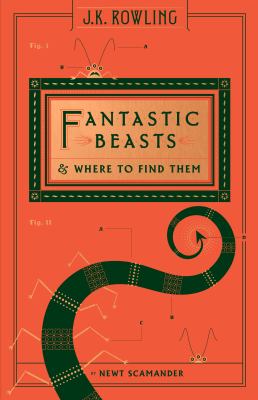
Fantastic Beasts and Where to Find Them by Newt Scamander

Complete with a foreword by Albus Dumbledore, illustrations by J. K. Rowling, and an A-Z list of magical creatures and their descriptions, Fantastic Beasts and Where to Find Them is the perfect book for anyone wishing to delve a bit further into the wizarding world.

Written by J. K. Rowling as Newt Scamander, the main character of the movie series of the same name, Fantastic Beasts and Where to Find Them is the textbook required by Hogwarts students in their first year. Though the information is expository, it isn’t dull, and J. K. Rowling adds humor and little remarks that make the text entertaining.

One of my favorite aspects of the book is the handwritten notes by Harry, Ron, and Hermione. Scribbled conversations, games, comments, and jokes can be seen on the pages. The writing styles and voices of the characters are evident, and while reading them I imagined tidbits of conversations that weren’t included in the Harry Potter books.

I admire the factual style J. K. Rowling uses when she includes references to foreign ministries and remedies for injuries caused by certain beasts. There is even a short biography for Newt Scamander in the back of the book. Certainly, the imagination and thought put into this book makes it a fascinating addition to a Harry Potter book collection.

Other than enjoyment, another reason this might be a good book to read is that it provides information about creatures that appear in the movie series Fantastic Beasts and Where to Find Them, and knowing about these creatures could enrich the experience of watching the movies.

-Mia T.

Fantastic Beasts and Where To Find Them by J. K. Rowling is available for checkout from the Mission Viejo Library

Ulysses by James Joyce

Ulysses - Alma Books

Ulysses has three parts and 18 chapters. The novel chronicles the experiences of three ordinary Dubliners in Dublin on a single day, June 16, 1904, from 8 a.m. to 2 p.m. The story begins with three protagonists living in an ancient tower on the outskirts of Dublin. One is Stephen DeDalus, a young history teacher and poet who has just graduated from a college in Paris. Stephen’s mother asked him on her deathbed to kneel and pray, but he did not listen out for religious revulsion. After his mother’s death, Stephen was consumed with regret for the matter. Later, due to the decline of his family, Stephen almost disowned his father, who led his sisters to a difficult living. He left home and made a living by teaching. The second was Leopold Bloom, an advertising salesman, a Hungarian Jew. Bloom used to run through the streets, busying himself all day, but always working for nothing. The death of Bloom’s youngest son left him irreparably traumatized. And Bloom was shamed by his wife’s infidelity. The third is Bloom’s wife Molly, who is a typical representative of carnalism. Her reluctance to be alone, due to the decline of Bloom’s sexual function made him suffer unspeakable humiliation and mental torture.

Early in the morning of June 16, 1904, having finished a history lesson, and receiving from the headmaster the payment of three pounds and two shillings, Stephen went for a stroll by the sea. In the face of the rolling waves, his thoughts are full of twists and turns, the vicissitudes of life, the mystery of nature, the eternity of time and space, and the charm of art begin to surge in his consciousness. He felt sorry for his father for having had a passionate love for his mother. He yearned, with a feeling of guilt, for the spiritual return of a father. At a house at eight o ‘clock the same morning, Bloom, an advertising salesman, was preparing breakfast for himself and his wife, Molly. At that moment the messenger brought Molly a letter which said something about a young man named Boylan who had promised to come and see her at four o ‘clock in the afternoon. In a dejected mood, Bloom made an excuse and left the house.

Bloom went to the post office to pick up a love letter addressed to him and read it in a quiet place. Later, Bloom went to attend his friend’s funeral. On Bloom’s way to the cemetery, he sees his wife’s lover, Boylan, walking in the direction of his home. Then a series of thoughts flashed through his mind: death, burial, graveyard rats fed on corpses, and a series of absurd visions flowed deep in his soul. Bloom then went to the Freeman, a newspaper publication company, to deliver a graphic design for an advertisement, and made another visit to the hospital to see a lady who was in hospital for a difficult birth. It was here that Bloom met Stephen, and the two hit it off. Stephen offered to treat him with his new salary, and they went to a brothel. There Stephen was very drunk, and Bloom took good care of him. They finally found what was most important to them spiritually in each other. Bloom finds his lost son; Stephen finds his spiritual father. Bloom went home and told his wife that Stephen would join them in the future. The dissolute woman who cheated on her husband had just said goodbye to a lover. She was vaguely gratified by the arrival of Stephen, mixed with a passion for a young man. She recalled, almost at the moment of falling asleep, the days when she and Bloom had been passionately in love.Their lives seem to be turning for the better.

-Coreen C.

.

The Great Gatsby by F. Scott Fitzgerald

F. Scott Fitzgerald’s The Great Gatsby, in all of it’s blue and gold shimmering splendor, is regarded as one of the greatest American novels of twentieth-century literature. Focusing on the story of Nick Carraway and his involvement with notoriously wealthy Jay Gatsby (followed by his legacy of the American dream and bitter love pursuit), The Great Gatsby dives into 1920’s American society in which the ideal life is painted as an extravagant party, born out of wealth and materialistic grandeur.

Hidden within the folds of Fitzgerald’s florid language — words of “yellow cocktail music,” a “universe of ineffable gaudiness,” “roaring noon” — the novel captivates the audience until it’s profound and raw close. The seamless flow of one thing to the next, the vivid images of a fast-paced and rich life, the timeless theory of long-lasting love and ambition: Fitzgerald renders a chaotic and recklessly beautiful portrait of the roaring 20’s Jazz Age and the world that buzzed within its history.

The incorporation of reoccurring symbols, such as the green light at the end of the dock or the constant juxtaposition of the colors yellow on blue, deepens the horizons to which The Great Gatsby stretches. Across the novel’s pages, Fitzgerald repetitively uses the colors yellow and blue to convey the ideas of truth versus wealth and false wealth in an abstract manner. Likewise, the green light brings the audience closer to Gatsby’s personal ambitions, his true substance over his outward actions.

Fitzgerald’s gradual characterization of each character increases the mysterious aura that revolves around Gatsby and those associated with him, wrapping the entire story into an enigmatic piece of literature rooted deeply in American history.

—Keira D.

The Great Gatsby by F. Scott Fitzgerald is available for checkout from the Mission Viejo Library. It can also be downloaded for free from Overdrive

Authors We Love: Beverly Cleary

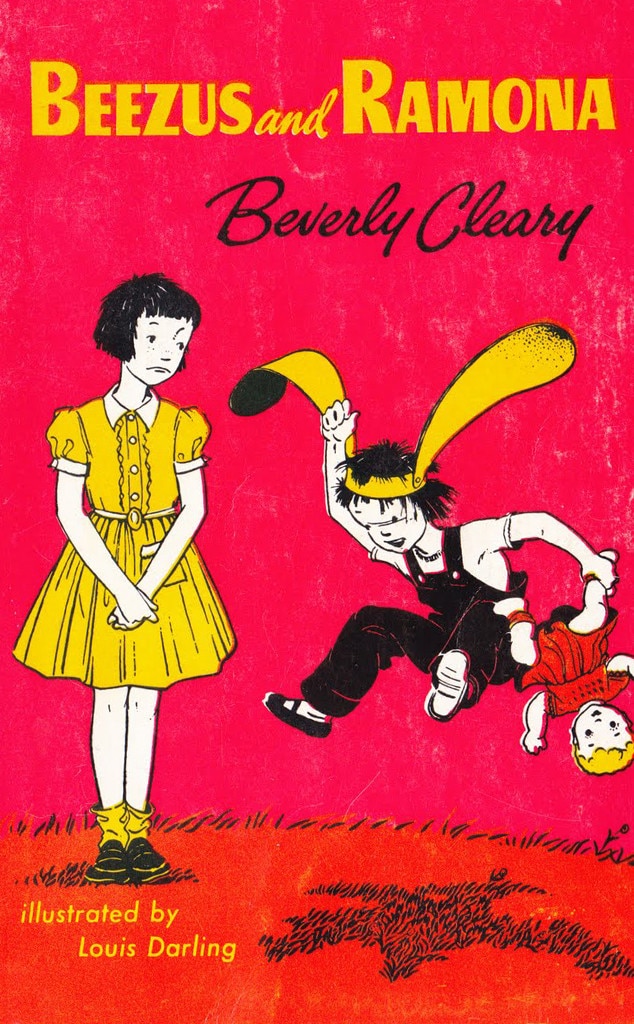
Beverly Cleary is one of my favorite authors.  She has written many short fiction books, most of which are set in an American town during the middle of the twentieth century.  Her works include Henry Huggins, Beezus and Ramona, and Otis Spofford.  Her books are among my favorites because they are easy to read and they contain many amusing stories.

I really enjoy reading Henry Huggins.  This book is about a boy named Henry who finds a dog on the street.  He names the dog Ribsy because it is skinny.  Henry tries to take Ribsy home on a bus with strict rules against dogs.  Henry does funny things to hide Ribsy on the bus.  I enjoy reading this book very much because of the way Henry becomes friends with Ribsy, even though the dog can be difficult to control.

Beezus and Ramona is another funny book.  Beezus (nickname for Beatrice) lives with her four-year-old little sister, Ramona.  Ramona gets into all kinds of mischief.  One time, she wrote her name all over a library book.  Another time, she put a doll in the oven.  Many other funny things happen in this book.  This may be my favorite book written by Beverly Cleary because of Ramona’s many misunderstandings and escapades.  Anyone with a mischievous little sibling can relate to this book.

I also find Otis Spofford to be very funny.  Otis gets into lots of trouble.  One time he dressed up as a bull and attacked a matador during a mock bullfight at school.  Some of his classmates were not amused by his behavior, but the situation is humorous.  I enjoy Otis’ lively personality.  He is always trying to stir up excitement.

Even though they are written for young readers, I still thoroughly enjoy Beverly Cleary’s books.  I have read some of her books several times.  I highly recommend them, not only for young readers, but also for anyone who feels like reading a short and charming book.

-Oliver H. 

The works of Beverly Cleary are available for checkout from the Mission Viejo Library. They are also available to download from Overdrive

Book Review Of Mice and Men

John Steinbeck’s classic novella Of Mice and Men is about two ranch workers, during the Great Depression. Both of these men are the exact opposite of each other: Lennie is large, but he loves touching soft things and he is mentally paired, while George is small but intelligent. Together, they travel from ranch to ranch, with the dream of owning land.

At the beginning of the story, the two arrive at a new ranch, after being chased out of their old one, since Lennie had done a “bad thing.” On this ranch, the two meet Candy, an old, physically disabled ranch worker, who greatly cares for his old dog, a parallel to George and Lennie’s relationship. George and Lennie realize that with Candy’s help, their dream of owning land and rabbits is obtainable until all their plans are disrupted by a flirtatious woman, the wife of their boss’s son.

Steinbeck’s novella portrays the theme that the best plans often go amiss, and that immigrants often come to America because of their hopes and dreams. Despite George, Lennie, and Candy’s careful planning, their vision fails to materialize, showing that nothing in life goes perfectly. In addition, Steinbeck’s novella shows that people often come to America due to the opportunities and lack of a rigid class structure. People often come to America because like George and Lennie, they have dreams of moving upwards socially, economically, and politically that they cannot accomplish in their current country.

Overall, I would recommend Of Mice and Men to students seventh grade and above, due to the dialect of the characters, author’s writing style, and strong language. It is definitely a classic, with universal and significant themes relevant in society.

– Josh N.

Of Mice and Men by John Steinbeck is available for checkout from the Mission Viejo Library. It can also be downloaded from Overdrive.

Old Rogaum and His Theresa by Theodore Dreiser

This is a short story written by Theodore Dreiser and I read it last week from an old book I found on the bookshelf. Though I wasn’t really expecting many surprises from this story, towards the end I was still surprised by its content.

The story starts off with old Rogaum who is a German butcher with his family living in New York. He calls his children one by one to bed every day at nine. His oldest daughter Theresa however, refuses to obey her father’s bed calls thinking that it is restricting her personal freedom. She is a girl in her puberty, therefore, wishing to show her charisma to boys. Almerting, the son of a stationer and also a member of a gang club, fell to Theresa’s interest. They were together for quite a long time before Almerting starts to complain about Theresa’s curfew. But since Theresa comes from a religious family, she refused to listen to Almerting’s wheedling. However one night, Rogaum decided to show his daughter some consequences of coming home late and locked her out.

Desperate to get in and later angry at her parents, Theresa wandered off by herself and met Almerting who coaxed her into coming with him to his club room. This leads to Rogaum looking for his daughter crazily when he saw a girl attempting to suicide laying half-dead at his feet. The girl galvanizes Rogaum to look even harder afraid that the same thing might happen to her daughter. Eventually, he was notified by the police that Almerting was with Theresa.

Overall, there weren’t a lot of surprises. But what I learned from this story is the love our parents give to us. They might be mad at us for not obeying them like Rogaum. But they do it for our sake. So as children, it is probably not a good choice to imitate Theresa and get ourselves hurt in the future.

-Coreen C. 

East of Eden by John Steinbeck

This novel was one I was required to read for school, but despite my apprehension when I saw how big it was, it actually turned out to be a great story that was captivating and an incredibly interesting read. The novel follows two families, the Trasks and the Hamiltons, specifically Adam Trask throughout his life. It is set mostly in Salinas Valley, California, where the Hamiltons live.

Adam’s early life is told through a series of flashbacks, where we see the impact of his father’s military career and his half-brother Charles’ jealousy. Adam was always his father’s favorite, and Charles, wanting nothing more than their father’s love, abuses Adam. Adam spends his young adult years wandering after a short time in the military before coming home, and when he does come home, he finds that his father has died and left him and Charles a significant sum of money.

At the same time, a girl named Cathy Ames is introduced, and from the beginning, she seems morally corrupted at her core. She is able to manipulate her parents into what she wants, she manipulates her teachers, her peers, and somehow is able to heap blame for evil actions onto everyone but herself. As she ages, she only becomes more vicious, killing her parents in a fire and using people as stepping stones to get where she wants. This inevitably goes wrong; a man beats her almost to death when he realizes she’s using him, and she is left on Adam and Charles’ doorstep. Adam falls in love with her, blind to her faults, and they move to Salinas Valley, where they meet Samuel Hamilton, intertwining the two families. They have two children, and the rest of the novel follows the children’s lives. 

East of Eden is one of those novels that doesn’t really have a climactic point; it’s more of a biographical story, following the complex lives of a few select people. One thing that I learned when analyzing this book in school was that Steinbeck intended this to be his own version of the story of Cain and Abel, and each pair in the novel reflects this: Charles and Adam, Cathy and Adam, Adam’s children Cal and Aron. However, the age-old story evolves into something greater here. While Charles and Adam were an accurate reflection of the original story, Cal and Aron are able to change it; Cal is supposedly “destined” to be the evil brother, but he realizes his wrongdoings and fights hard to correct them and correct himself.

The novel is a story of self-improvement and the way that the characters evolved really struck me as I read. East of Eden isn’t just a story highlighting a snapshot of someone’s life; I was in awe of what a masterpiece it is, portraying the best and worst of human life, teaching valuable lessons while keeping the story engaging.

-Adelle W.

East of Eden by John Steinbeck is available for checkout from the Mission Viejo Library. It can also be downloaded for free from Overdrive

Great Expectations by Charles Dickens

Great Expectations (Dover Thrift Editions): Charles Dickens: 9780486415864:  Amazon.com: Books

With sympathetic and nuanced prose, the book portrays Joe, Pip and Biddy as unpretentious little men of kindness. Pip lives in his sister’s family, living a hard life, his dream is to be a blacksmith like his brother-in-law; he did not want to be a gentleman. Then he wanted to be a gentleman because of a change in circumstances. The theme of love runs through the story of Great Expectations. Pip’s unwavering love for Estella, Pip’s brotherly love for Herbert, Magwitch’s misshapen but deeply hidden love for Pip are all described in detail. But what moves us most is Jonah’s unselfish, unsentimental love, and Dickens’s most intimate description of the relationship between Pip and Joe. Then, when Pip’s hopes of inheritance were so completely dashed, and he fell seriously ill, it was Joe again, who not only gave him great moral support, but quietly helped him to pay off his debts. This kind of love leads Pip to return to conscience gradually in the constant inner struggle between right and wrong. In Great Expectations, the happy life of Joe and his wife Biddy contrasts sharply with Pip’s pursuit of a gentlemanly life. In them, we can see the writer’s praise for the valuable quality and sincere feelings of the ordinary people at the bottom of the society. Dickens’s characterization of people is not just a description of their appearance, but a detailed analysis of people through his unique humor and exaggerated language. He not only depicts the characters from the external environment, but also depicts the characters with the help of the detailed description of the characters’ movements, behaviors, gestures, expressions and so on. In the novel Great Expectations, the author Dickens portrays Pip as the first person perspective in the form of autobiographical in order to be able to express Pip’s psychological activities and action language in detail in the work.

Book List: Books Worth Rereading

There are some books I enjoy reading just once, and there are others I could read over and over without getting tired … I seem to enjoy them more every time I read them. 

Whether you’re looking for an excellent book that (I would consider) is worth owning, or you’re looking for a relatable blog post about one of your favorite books/book series, I hope this post helps!

The Penderwicks by Jeanne Birdsall: I think I’ve mentioned this series in three other blog posts—when writing about my favorite fictional characters, locations, and about a recommended series. As you can probably tell, I love this series so much! Not only is the writing, setting, and characterization amazing, but this is a series I could read countless times. The perfect amount of humor is mixed with depth and sisterly love, and the dynamics of the Penderwick family are realistic yet captivating. I read the first few books when I was younger and enjoyed them, but I enjoyed and understood them on a different level when reading them once I was a little older. Like many of the books on this list (and with other books that I like rereading), I feel like so many age groups can get something out of this series. The Penderwicks is the ideal series for me when I’m looking for a book that is fun and not stressful but steeped in meaning and intrigue.   

When You Reach Me by Rebecca Stead: The first chapter of this book can be disconcerting because the main character is addressing someone who readers don’t know about yet. By the time I had finished reading this book the first time, I had forgotten my confusion in the beginning. When I started to read it again, the beginning of the book was so much more understandable. I gained a new appreciation for the intricacy of the story, and I realized who the main character had been speaking to throughout the story. 

Harry Potter by J.K. Rowling: I just had to put this here. As I grow up and as I continue to read Harry Potter, the story does not grow old for me. With every reread I pick up a little more: a funny detail, another character, another layer of depth. Each character, even if only mentioned once or twice, seems to have his or her own background and fictional life. Reading Harry Potter is so comforting, and the draw of the series’ characters, humor, writing, and world continues and expands with each reread.  

The Heroes of Olympus by Rick Riordan: Among other things, my favorite part of this series is the characters. I love the individual personalities of the seven demigods and their acquaintances (often enemies) and friends. Riordan’s humorous descriptions of the world of Greek Mythology and his knack for characterization make his books entertaining—even the second or third cycle through the books.

Being familiar with certain books results in a comforting reading experience. I already am accustomed to the settings and characters, and this allows me to take in other components of the story that I have not noticed before. I find there’s something almost magical about books that can be read more than once–not all books hold the detail and layers I find in these books. With each reread, the words you read are the same, but what you get out of it could be quite the opposite.

– Mia T.