Hard Times by Charles Dickens

Hard Times - Kindle edition by Dickens, Charles . Literature & Fiction  Kindle eBooks @ Amazon.com.

Hard Times is a novel by Charles Dickens, published in 1854. It describes life in an industrial town. Dickens was now 42 years old. The setting for this book is a time of intense industrial tensions in British society. Josiah Bounderby, a banker and textile mill owner, was friends with Thomas Gradgrind, a retired hardware wholesaler, Congressman and educator. Together they controlled the town’s economic system and educational institutions. They are materialistic and unsentimental, pretentious, and live by the principle of utilitarianism. Bounderby was attended by the widow Mrs. Sparsit. He taught his children to be practical and down-to-earth. When they learned to walk, they were put into classrooms and spent their days dealing with numbers. They were not allowed to read poetry or stories. Gradgrind marries his young daughter Louisa to the much older Bounderby, and the widow Mrs. Sparsit, jealous of her, inflicts pain on her, leading to the breakup of her marriage. At Gradgrind’s own educational initiative, his son Tom was forced to help Bounderby with his work. He led a dissolute life and was heavily in debt. He stole money from The Bounderby Bank and ran away, hiding in the circus and playing the role of a clown. After a series of painful lessons and the influence of Sissy Jupe, a circus girl, he gradually changed his attitude towards life and was sent to America by his father. Bounderby liked to boast of his self-made wealth, and to accuse workers of being dissatisfied with their delusions of luxury. Five years later Bounderby died of a stroke on the streets of Cookstown, and Louisa remarried.

Carry On by Rainbow Rowell

Carry On, by Rainbow Rowell, tells the story of a not-so-great Chosen One with a tendency to set things of fire – Simon Snow, and his vampire roommate/nemesis – Baz Pitch. As secrets from the past are brought to light once again, Simon and Baz are forced to work together to defeat the evil Humdrum that has been plaguing the magical society in England. Filled with monsters, magic, and romance, Carry On is a thrilling adventure with twists and turns and a fast-paced plot that leaves readers hungry for more.

This book, in a nutshell, is Harry Potter crossed with Twilight, with Star Wars references. And not in a subtle way. Despite it being remarkably similar to these three franchises, Carry On, in my opinion, is one of the best books I have ever read. It’s fast-paced plot caused me to speed through the book in only a few hours. As soon as I finished it, I immediately opened it back to the first page and started all over again.

Carry On contains many well written and lovable characters. While they bear many similarities to characters from Harry Potter (Simon to Harry, Penny to Hermione, Mage to Dumbledore, and Baz to Draco), they are each distinct and unique characters, with fun and likable personalities that set them apart from the characters they are based on.

Another thing that makes this book so great is the LGBT+ representation. Both of the main characters are part of the LGBT+ community as well as some of the side characters, something that is not seen often in this genre.

There were some swear words, just a warning, but I felt that they helped make the dialogue feel more real and authentic. I cannot recommend this book enough. If you love fantasy, if you love romance, if you love YA, then pick up this book immediately – you won’t regret it!

-Lauren R.

Carry On by Rainbow Rowell is available for checkout from the Mission Viejo Library. It can also be downloaded for free from Overdrive

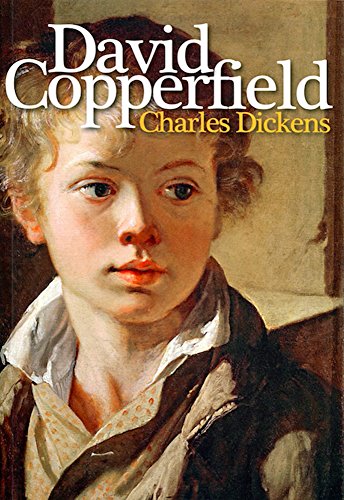
David Copperfield by Charles Dickens

David Copperfield (Charles Dickens collection) - Kindle edition by Dickens,  Charles . Literature & Fiction Kindle eBooks @ Amazon.com.

The artistic charm of David Copperfield lies not in its winding and vivid structure, or its ups and downs of plots, but in its realistic life atmosphere and lyrical narrative style. What attracts people in this work are the fleshy characters, the specific and vivid world and customs, as well as the personality characteristics of different characters. Such as Miss Bessie, David’s aunt, in her manners and speech, her dress, her likes and dislikes, and even her actions, though not without exaggeration, paint a vivid picture of an old woman with a strange nature and a kind heart.

As for the portrayal of Peggotty, the maid, this is even more accurate. The setting, especially the storm at Yarmouth, is powerful, vivid and immersive. Dickens was also a master humorist, whose witty one-liners and exaggerated caricature of characters can often be found between the lines of his novels. The chapters of David’s early life show a childhood world that has long been forgotten by adults from a child’s psychological perspective, and are vividly and movingly written. David, for example, has a special childhood sensitivity towards the cruel, cruel and greedy businessman Murdstone who pursues his mother from the beginning.

When Murdstone reached out his false hand and patted David, he saw that it had touched his mother’s unceremoniously, and angrily pushed it away. David repeated to his mother the time when Murdstone had taken him out to play. When he said that one of Murdstone’s friends kept mentioning a beautiful little widow in their conversation, she laughed and asked him to repeat the story again and again. It is told entirely from the point of view of the innocent child, who does not know that it is his mother who is being told, and the young widow, who asks for a reunion, whose fervent hopes for a happy life are already on the page.

David went to her brother’s house with his nurse, Peggotty, whose brother was a fisherman. David saw him coming back from his work at sea to wash his face and thought he had something in common with shrimp and crab, for his black face turned red when the hot water burned it. This strange association is full of childlike interest and Dickens’s characteristic humor. In David Copperfield, Dickens resorts to the cartoonist exaggeration and transformation techniques, with simple language humor to create lifelike characters, leaving us with an unforgettable impression. These cartoon characters fully demonstrate the artistic charm of Dickens’s novels.

Dombey and Son by Charles Dickens

Dombey and Son (Cronos Classics) eBook by Charles Dickens - 9782378073671 |  Rakuten Kobo Greece

In this work the author presents his views on the relationship between money and human nature. Dombey was haughty, imperious, and cruel when he had a great deal of money. After he went bankrupt, he confessed to his daughter and became both weak and kind. Florence and Gay took him in, and old Dombey, loving his grandson, lived a quiet and happy old age. Dombey and Son also truly reflects the development of industrial capitalism in Britain in the 1830s and 1840s, especially the development of the railway industry occupies an obvious place in the novel.

The work describes the vanity and hypocrisy of small citizens and the evil of the marriage system in Victorian England. The author tries to show the great corrosive and destructive effect of money on family relations (mainly father-son relations and husband-wife relations), which reflects the social reality that family relations have been reduced to the naked money relations in capitalist society. Paul’s premature death and Florence’s failure to seek her father’s love powerfully reveal the dominance of money and the fact that money is doomed to failure when it competes with emotion.

However, while criticizing the money relationship, the author tries to counter the money relationship with emotional education and moral influence. In fact, the root cause of Dombey’s transformation was his subsequent change in rank, and not the result of his daughter’s warmth. It must also be pointed out that it is obviously one-sided and inadequate for the author to attribute the monetization of family relations only to the conflict between money and emotion, which reflects the limitations of the author’s world view. Dombey and Son is a tightly structured novel created by Dickens, which is quite different from the loose structure in his earlier works.

The appearance of all the characters, and the development of the story, is arranged around the development of Mr. Dombey’s destiny, and the events are organically bound together, and the story is very lively and interesting. The artistic techniques Dickens used in his novels are varied. There are biting sarcasm, humor with a smile, objective descriptions, deliberate exaggerations, direct and simple statements, and also witty metaphors. Dickens’s characters are all alive. They have their own unique character, but also their own unique language. Even a dog, a parrot, a pair of tongs, and a curtain sometimes give vivid expression to their thoughts and feelings.

The Art of Racing in the Rain by Garth Stein

This heartwarming story is not an ordinary book. It is told through the eyes of a dog, Enzo! The book actually begins at the end of the book, or more specifically: the end of Enzo’s life (cue the tears). Enzo knows his time is up, but his owner Denny does not.

Then, the book goes back to the beginning, when Denny first adopts Enzo from a farm. Denny at that point is a bachelor, a professional race car driver. Enzo during his first year with Denny learns a lot about cars and car racing. About a year or two later, Enzo becomes a big brother and protector to Zoë, Denny and Eve’s daughter. Everything seems to be going well until it doesn’t.

*Warning: Spoilers ahead

Enzo silently watches as Eve suffers from constant headaches making her unpleasant to be around. He can sense the illness inside Eve but cannot say anything to warn the family. Eve fights a tough battle, but unfortunately, it is not a fight that she wins.

Denny, fresh-faced with his wife’s passing, is now faced with a custody battle with Eve’s parents who deems Denny as unsuitable for Denny to raise Zoë. He ends up selling his house and giving up racing temporarily in order to do anything they can to take back custody of his daughter.

The rest of the book consists of arduous trials consisting of an accused assault (that was not true), difficulty in getting back Zoë; things just are not going well for Denny. Luckily there is a turn around for Denny at the end; he gets back custody of his daughter, the assault charges are dropped, and gets an amazing offer of a new job as a car test and track instructor in Italy. Eventually, Enzo’s race is reaching an end, and Denny realizes this so he lets Enzo run to a field, where Enzo can run faster and never stop.

I definitely recommend this book but it is a tear-jerker (fair warning)

-Phoebe L.

The Art of Racing in the Rain by Garth Stein is available for checkout from the Mission Viejo Library. It can also be downloaded for free from Overdrive.

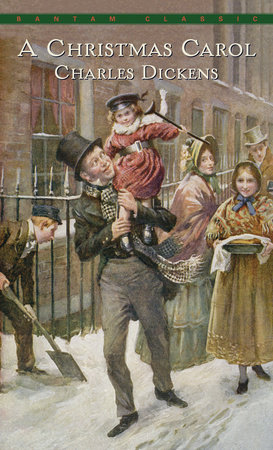
Book Review: A Christmas Carol by Charles Dickens

A Christmas Carol by Charles Dickens: 9780553212440 |  PenguinRandomHouse.com: Books

The novel is mainly about a miser. A miser had saved a lot of money, yet he was unwilling to add a lump of coal to the clerk’s fire. His nephew kindly invited him to the Christmas Eve party, but he thought his nephew was just trying to take advantage of him by refusing. Activists asked him to give a little Christmas food to the poor, but he was mercilessly rebuffed. He went home at night, and in the darkness he saw a face. Was it really a ghost? Or is it his vision? However, the appearance of the ghost has changed him completely.

Scrooge is visited on Christmas Eve by three Christmas spirits: Christmas Past, Present and Yet to Come. Christmas Past shows him how his sister cared for him in his lonely childhood, and how, as an apprentice, his kind boss, Fitzwig, danced with the crowd and entertained his staff on Christmas Eve. His heart began to soften, and he regretted his treatment of his employees and his transformation from a poor but happy young man to a rich but friendless boss. Present took him to a Christmas party at the home of one of his subordinates. It was a little clerk on a poor salary. There were no Christmas presents, no turkeys, but everyone had a happy smile on their faces. Yet to Come showed him the loneliness of being in bed with no family or friends to see him at Christmas when he was old. He began to rethink the meaning of life, and found that giving was happier than receiving. All this gradually awakened the other side of his humanity — compassion, kindness, love and joy. In an instant, his inherent selfishness and coldness collapsed and disappeared, and he became a good Samaritan.

So on Christmas morning, the morning after the ghost’s visit, Bob, an employee, arrives late for work, expecting Scrooge to be angry. But instead scrooge said to him, “Merry Christmas to you, my good fellow! I’ll give you a raise, and I’ll do my best to help your poor family. Get the fire lit quickly and buy a coal basket.” Then he bought a very big Turkey and had it sent to Bob’s family. Then, on his first visit to his nephew, he greeted people on the street with “Merry Christmas” and they smiled kindly at him. For the first time in his life Scrooge felt truly happy. His heart was laughing, and he felt the real joy of life in his charity.

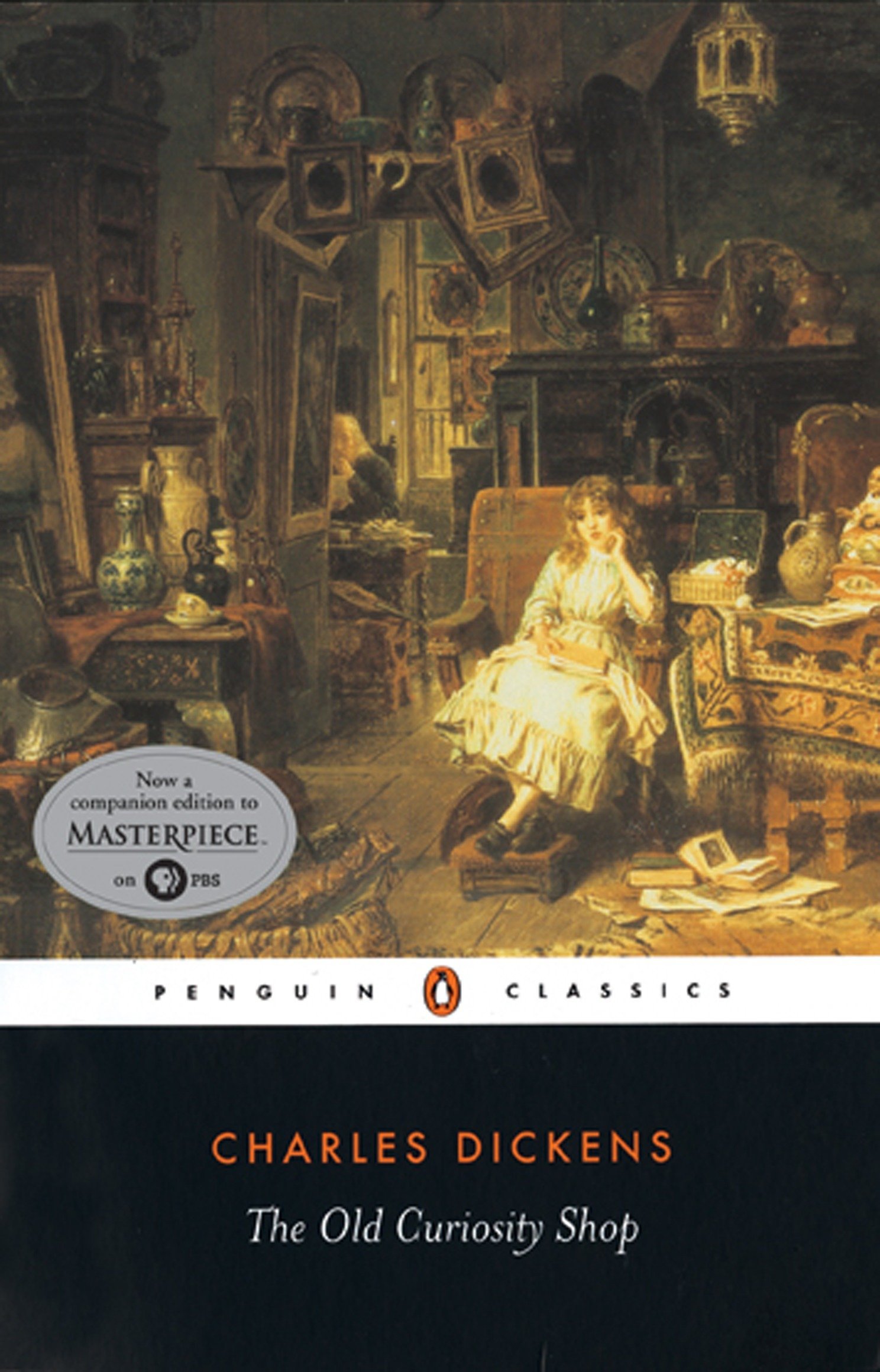
The Old Curiosity Shop by Charles Dickens

The Old Curiosity Shop (Penguin Classics): Dickens, Charles, Page, Norman:  9780140437423: Amazon.com: Books

The Old Curiosity Shop (1841) describes the tragic fate of the collapse of bourgeois in capitalist society. An old man with whom the author has deep sympathy runs an antique shop in a small alley in London. He had to fight against fate to get rich gambling, only to lose the antique shop to the loan shark instead. He and his little granddaughter Nell were ejected from the store. Two people later drifters to the remote countryside and died in the suffering. The kind-hearted little Nell and her grandfather lived together in an old antique shop, a place as magical as a fairy-tale cave. But little Nell did not know that her grandfather, who loved her dearly, hid a secret from her.

There was a crisis lurking in their seemingly uneventful lives — to make a living, and to leave little Nell a legacy that would enable her to live happily ever after. Desperate to get rich, he secretly gambled and borrowed money from the usurious upstart Daniel Quilp. Little did Grandfather think that they had fallen into the clutches of Quilp. Quilp tried to take over the old antique shop and the beautiful Nell. Nell’s sinister cousin, Freddy, had long coveted the business. He teamed up with his friend Dick Swiveller in an attempt to get Dick to marry little Nell, and then they could divide her inheritance between them, but grandfather found out.

Later, Daniel Quilp and his lawyer collect from turent, the old antique shop owner, an insatiable vampire who not only uses usury to take away all the old antique shop’s property, but also wants to take possession of beautiful Nell. Later, Quilp and his lawyer came to collect money from Grandfather, the owner of the old antique shop. The insatiable vampire not only used the usury to take away all the property of the old antique shop, but also wanted to take possession of the beautiful Nell. For the sake of his grand-daughter’s happiness, the old grandfather had to give up his old shop, which he had run for so many years, and take Nell with him to flee from home.

The two were forced to flee London and live a vagrant life of begging. On their way to escape, the two meet a variety of people, some good, some evil intentions, but Quilp has never stopped tracking them. In desperation, a good priest took them in and took them to his orphanage. But here, unfortunately, little Nell became very ill. In the end, the little Nell, who was physically and mentally injured and mentally exhausted, passed away.

The Grapes of Wrath by John Steinbeck

What if your family had no choice but to pack up all your belongings into a small car and travel a thousand miles on the road? And the destination is no place like home? What would you do?

Set in the “Dirty Thirties” during the Dust Bowl in Oklahoma, the Grapes of Wrath highlights the Joad family as they plan their new future in California, where workers are needed. In their eyes, California is their dream land and the rumored “Promised Land.” The family of thirteen people pack their necessities and are determined to take on the rigorous road to California.

Tom Joad, one of the main characters, leads his family through the obstacles on the road that include starvation and extreme heat. Each family member looks onto the road while facing internal and external challenges. The novel essentially teaches the importance of holding onto dignity and hope during hardships. The Joad family not only maintain hope for a better future, but they also unite together as a family.

Steinbeck additionally embraces the ideal American dream that, in reality, starts within the individuals with hope and determination. His use of symbols and literary devices portray the motif of endurance.

Overall, Steinbeck’s novel makes the reader go on his or her own journey while reading about the up’s and down’s of the Joads. At the end of the long path, the reader realizes that the obstacles they had to face teach them more about their ultimate destination.

-Zohal N. 

The Grapes of Wrath by John Steinbeck is available for checkout from the Mission Viejo Library. It can also be downloaded for free from Overdrive

Authors We Love: S.E. Hinton

S.E. Hinton is an American author we are often introduced to in school. Her classic novel The Outsiders remains one of the most popular books in youth literature to this day. The Outsiders tells the stories of the lower class (Greasers) and the upper class (Socs) from the perspective of narrator Ponyboy Curtis. The novel explores hostile interaction between social classes and is often seen as Hinton’s greatest work due to its stark realism and relatability. 

Rumble Fish is another one of Hinton’s greatest works. Rumble Fish follows the life of teenager Rusty James who struggles to live a life in his brother’s shadow. His brother, the Motorcycle Boy, had taken a trip to California and left behind a notorious, criminal reputation that Rusty James tries his best to embody. Unbeknownst to Rusty James, Motorcycle Boy never truly made it to California and was battling his own mental strife. In the end, Motorcycle Boy’s life is ended by his final, fatal encounter with the police as he tries to steal “rumble fish” from a local pet store. Possessed by grief, Rusty James decides to make his own trip to California and reaches the ocean in honor of his lost brother. Through this intense story, Rumble Fish teaches readers that the world becomes less dark if we know where to find the light. 

One of Hinton’s lesser known works is That Was Then, This is Now. That Was Then, This is Now contains many of the same elements as The Outsiders and Rumble Fish, but takes place a few years later. Now, social classes are less defined, and violence between Greasers and Socs is less frequent. The current omnipotent issue is no longer gang fights; it’s drug abuse. Main characters Mark and Bryon are close friends, and consider themselves brothers. When Bryon’s mother is hospitalized and needs surgery, the two scramble to find sources of necessary income. Bryon finds a job at a supermarket, while Mark supplies money without an obvious source. During this time of financial stress, their friend M&M goes missing until Bryon finds him under the influence of narcotics. M&M is hospitalized, and Bryon finds out that Mark has been selling drugs in order to help pay for his mother’s surgery. Bryon must choose justice for M&M or Mark’s life. In the end, their brotherly bond is severed when Bryon reports Mark and Mark is sent to prison. This story shows readers that the world is not divided into black and white, or good and evil. The most difficult decisions are often made in the area of divergence between the two extremes.

S.E. Hinton’s is one of the greatest authors of the 1900’s, and her books have remained popular, years after publication. Her didactic novels continue to teach modern youth crucial life lessons that will never die with age.

-Katie A. 

The works of S. E. Hinton are available for checkout from the Mission Viejo Library.

Nicholas Nickleby by Charles Dickens

NICHOLAS NICKLEBY (complete, unabridged and with all the original  illustrations from first publication) - Kindle edition by DICKENS, CHARLES.  Literature & Fiction Kindle eBooks @ Amazon.com.

Nicholas Nickleby is a boarding school teacher, an ambitious young man who is left penniless by the death of his father. His usury uncle not only refused to extend his hand to help, but uses his sister’s beauty for his own profit. He was upright and kind, and fled back to London to help abused schoolchildren. After many trials and tribulations, he fought with bad guys and exposed his uncle’s plot. Finally, he succeeded and married the girl he loved. Through his experience, the author reveals that at that time, the so-called poor run schools were actually profit-making places, the students suffered from hunger all day long, and whipping became the most important means of education.

Like most of Dickens’ works, Nicholas Nickleby is set in a contemporary setting. Most of the action takes place in London, with some episodes in Portsmouth and some in Yorkshire and Devon. This work satirizes social injustice in the form of irony. In the subject matter of this book, the main one is the education at that time. Dickens strongly criticized the education system at that time. He believes it is a serious crime that the British education system allows poorly functioning boarding schools to abuse children. Kindness and compassion are the main themes of this book. Noggs also plays the role of guardian angel because he is kind and upright. The friendship between Smike and Nicklyby further shows Dickens’ pity for some unfortunate people.

Greed is also an important theme of the novel. All characters make others suffer for their own financial gain. Most of their mistakes are caused by the love of money. Just as the Bible says: Money is the root of all evil. The book also deals with sexism and the passage of teenagers into adulthood. The book tells the story in the third person. Sometimes, the feelings of the characters are directly written out, and sometimes the feelings or thoughts of the characters are indirectly expressed through some small actions or facial expressions. When Dickens describes the abused children in chapter 8, he employs different rhetorical devices such as exaggeration, metaphor, alliteration and personification to leave readers with images of those children.