Adaptation Review/Comparison: The Rising of the Shield Hero Season 2

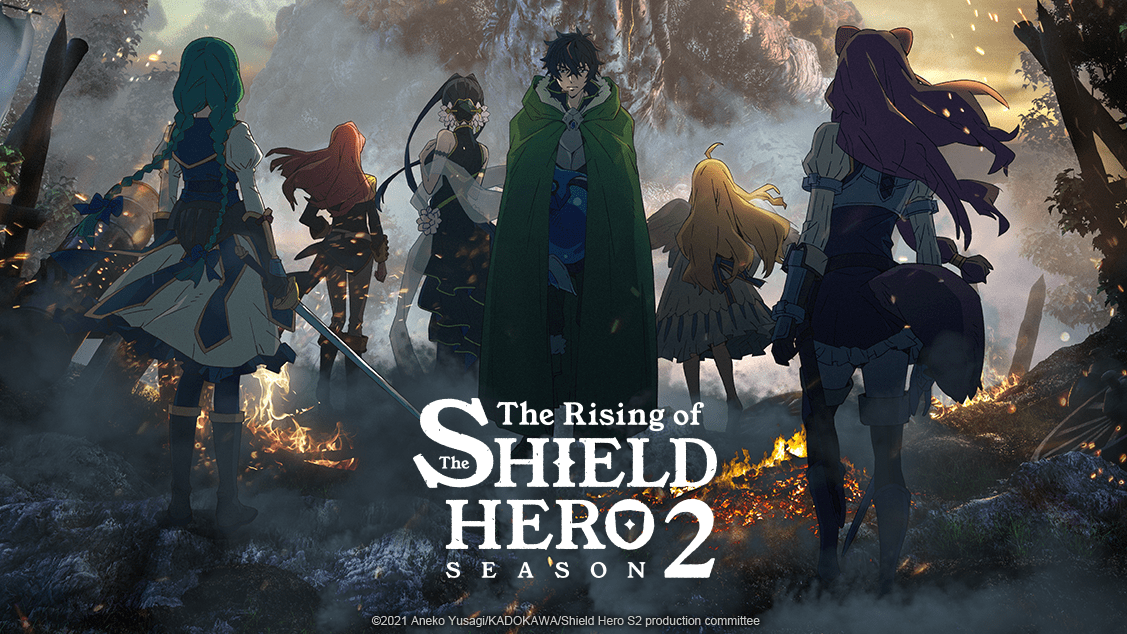
Before I begin the review proper I would like to preface that this review is mainly for those who are already aware of the Rising of the Shield Hero and while I will attempt to add context this review is more for those trying to decide whether to continue watching and/or reading the shield hero rather than those trying to decide whether to pick up the series or not. With that out of the way let’s start the review.

Now for those who decided to keep reading after that intro paragraph The Rising of the Shield Hero is a series of Japanese light novels written by Aneko Yusagi which was then adapted into an anime. The series follows the titular shield hero, Naofumi Iwatani, and his journey to save the world along with three other heroes.

The section of the story we are covering here is what is covered in the second season of the anime and in light novels 6-9. Now right off the bat, the anime decides to cripple itself by choosing to not adapt around 75% of the sixth novel which leads to an other-all state of confusion for anime watchers. You see much of the sixth novel is spent on introducing new characters and establishing new concepts and plot points. For example, in the light novel, we are introduced to the character of Eclair Seaetto who was tasked with helping the heroes learn actual combat abilities rather than just spamming their magic weapon skills like they had been. She also ends up beating the Sword Hero in a sword fight in order to prove a point which both highlights her skill with a sword and the fact that the Sword Hero is an awful swordsman.

Anyway, copying the anime in skipping that part we move on to what fans refer to as the Spirit Turtle arc. For a short summary of the plot for this part, in the world of the shield hero, there are four guardian beasts tasked with saving the world should the heroes fail to do so. However, a villain from another world going by the name of Kyo decided that he wanted to awaken the spirit tortoise early so that he could steal its power. Now unlike the previous section which only exists in the novels the spirit tortoise arc exists in both the novels and anime and both have their own pros and cons.

On one side of the comparison, the light novels do a much better job of highlighting the desperation Naofumi feels when fighting the spirit turtle and the sense of dread it brings. Not only do we hear Naofumi’s panicked thoughts but he also highlights how even with his insane level of defense the spirit turtle still manages to harm him. The novels also add the fact that the turtles’ servants act like parasites, using the still living bodies of their victims to grow their numbers. If the novels have one weakness it is that they are a slog to read through. This arc of the story happens to be rather stretched out and honestly it was painfully boring to read at some points.

On the other side of things, while the anime doesn’t do as much to establish the threat of the turtle it does have some definite benefits. For one thing the anime adds more scenes with the character of Ost Horai which give her more depth as a character and make it more painful when she dies at the end of the arc. Additionally, the anime was able to change the boring slog of the novels into mindless action which is a definite plus. If I have to be honest I would much rather watch the animes adaptation of this part than reread the novels.

The adaptation for the next arc, however, cements the Shield Heroes anime adaptation as less than stellar. To the anime’s credit they do at least cover this arc’s main plot points(Traveling to the other world to avenge Ost, meeting the Hunting Tool Hero, Raphtalia gaining the Legendary Katana Vassal Weapon, Fighting Trash 2, and killing Kyo) and it does alter a few things to make more sense like not spitting Raphtalia up from the main group immediately after entering the other world. The problem with this arc in the anime is that they only really cover the main plot points and skip over more minor but still important scenes such as Naofumi acquiring his Demon Dragon Shield which serves as his weapon of choice for quite some time in the novels.

In conclusion, if you want to truly experience the story of The Rising of the Shield Hero to the fullest I would highly recommend reading the light novels as while the English translation can be questionable in some areas it provides a better over-all experience with the story.
TV Show Review: The Disastrous Life of Saiki K.

The Disastrous Life of Saiki K. is a Japanese animated series that aired its first episode in 2016. The series is about Saiki, a high school student who possesses psychic abilities, but chooses to live a normal life while trying to hide his supernatural power from all the people around him, especially his friends and classmates. 

I really liked the animation style of this series and most especially its characters, which are very well-made. The voice actors did such great jobs, although there are certain parts wherein the dialogues are quite fast, which some people dislike, but in my opinion, it is still certainly understandable, and you would not get lost watching any episode. The series contains a lot of witty and funny jokes that did not fail to make me laugh. Whenever I watch an episode, I will always have a good laugh because each character is comedic and has their own way of being funny.

I think that The Disastrous Life of Saiki K. is an underrated anime series, thus I hope that a lot more people will discover the show so that it will get the recognition it deserves. If you have always been interested in animated shows and/or movies and you have not tried watching this, you should definitely start watching, and you will not regret it! While for those who have never tried watching animated shows, I encourage you to explore and give it a shot!

Book vs. Movie: Howl’s Moving Castle

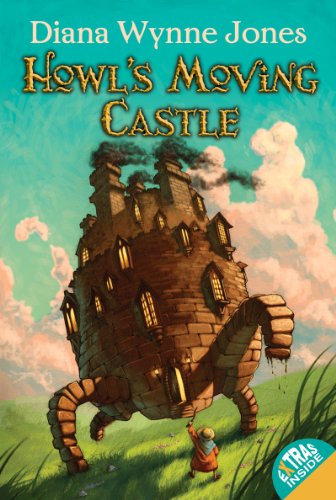
Howl's Moving Castle (Howl's Castle Book 1) - Kindle edition by Jones,  Diana Wynne. Children Kindle eBooks @ Amazon.com.

Sophie Hatter is the eldest of three daughters, which is deemed as “most unlucky”. Over the years, she’s accepted that she won’t have a fun, lavish future like her younger sisters, so she becomes content with being holed up in her family’s hat shop, trimming lace and styling bonnets.

However, everything changes when the Witch of the Waste visits the shop and curses her to become an old lady. Desperate for a solution, she hikes her way to the infamous “moving castle”-belonging to no other than the soul-eating wizard Howl. Here, she strikes a deal with Calcifier- an evil fire demon- hoping he can lift her curse.

Along the way, Sophie discovers that the wizard is not all he’s said to be and that maybe there’s more to herself than she thought.

I discovered the book Howl’s Moving Castle shortly after I watched the movie adaptation by Studio Ghibli, and neither disappoint. They both capture the essence of a world that’s both modern and magical in their own ways.

The main difference between the two is that the Studio Ghibli movie follows a slightly different plot, as do most movie adaptations. The concept of Sophie being the eldest-and therefore, prone to failure-is almost completely eradicated, focusing more on how her looks are subpar and modest compared to her sister. Although, this ends up tying in well with the movie’s altered story, as it is a story of self-acceptance, I was sad that this major plot point didn’t get included.

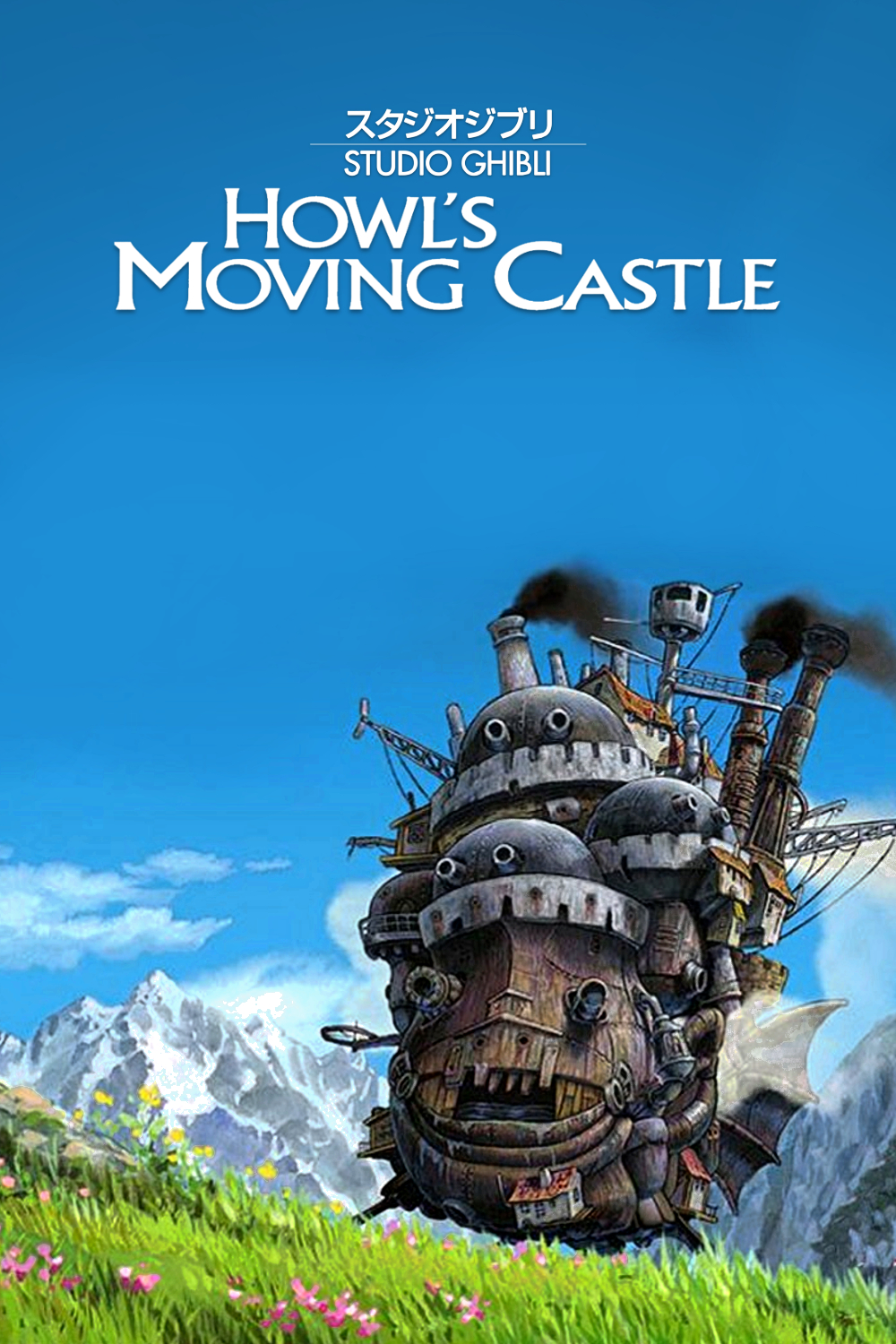
Howl's Moving Castle by Hayao Miyazaki, Hayao Miyazaki, Chieko Baisho,  Emily Mortimer, Christian Bale | DVD | Barnes & Noble®

There were also characters that didn’t make it into the movie, such as Sophie’s sister Martha and Howl’s family that resides in the mortal realm. While I was disappointed to find this out, Studio Ghibli makes their adaptation work in it’s own way, using their staple “ghibli-magic” to create a version of the story that’s lovable and great to watch, preferably on a rainy day. And of course, as always, the animation is stunning.

Despite their differences and minor plot changes-and the watering down of Howl’s oddly lovable snootiness- the movie adaptation does an excellent job of capturing the story that Wynne-Jones wrote so magnificently.

-Luxy B

Howl’s Moving Castle by Dianne Wynne Jones is available for checkout from the Mission Viejo Library. It can also be downloaded for free from Overdrive. The Miyazaki animated film can also be checked out from the library.

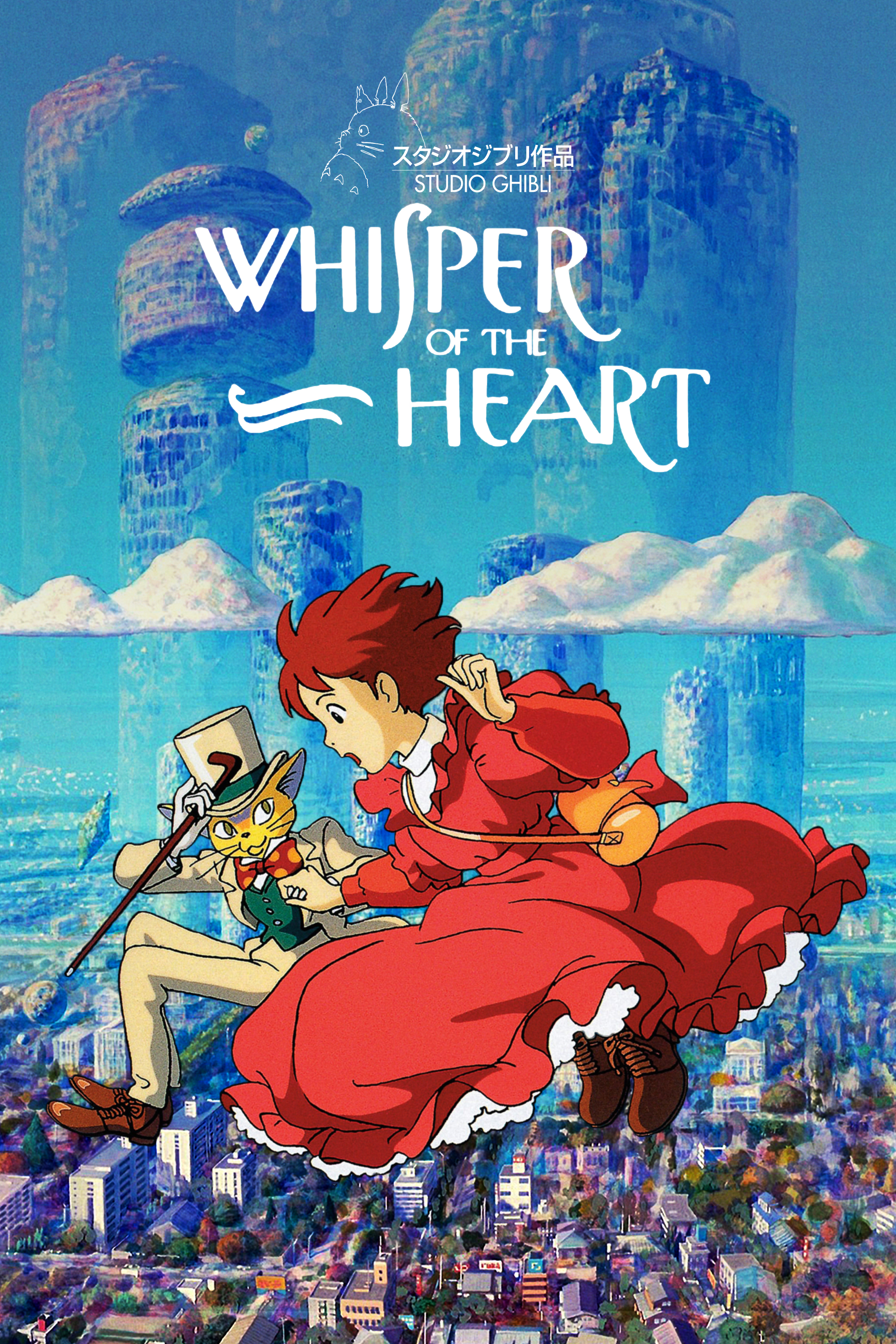
Film Review: Whisper of the Heart

Now that the school year is starting, I thought this would be the best time to write about a movie that relates to many students, specifically high schoolers such as myself. As a sophomore, I’m already beginning to think about what universities I should attend, what career I should have for the rest of my life, and how I’m able to achieve any of these goals in the first place. The main character in the film, Whisper of the Heart, faces many of these “coming-of-age” challenges as well. In another masterpiece created by the Studio Ghibli franchise, viewers are taken on a journey that—quite frankly—they never thought they needed.

The movie introduces the main character, Shizuku Tsukishima, who has a passion for stories and writing. After discovering that her library books have all been previously checked out by one person, she meets Seiji Amasawa, a boy whom she finds annoying but is also the mystery student from the library. As they grow closer, Seiji explains to Shizuku his dream in becoming a professional violin maker in Italy. This makes Shizuku question her future path in life—or lack thereof. By using her love for writing, she creates a novel about a cat named Baron, inspired by a cat statue owned by Seiji’s grandfather. Seiji and Shizuku fall in love, but Seiji is given the opportunity to pursue his dream and has to leave Shizuku. However, Seiji surprises Shizuku early the next morning and takes her to see the sunrise. The boy promises to wait for her and reunite once they both achieve their dreams.

I’ll always applaud Studio Ghibli for being able to create such breathtaking imagery, albeit there’s a message far beyond the surface of this film that requires deeper analysis and understanding. The director of this movie, Yoshifumi Kondō, creates a balance between dreams and reality. Seiji’s dream forces Shizuku to realize that he’s moving forward with his life, whereas Shizuku is receding into her childhood self. Throughout the film, Shizuku constantly prioritizes her novels first because they help her escape the burdens of our world, but this proves consequential when she begins to fall behind on classes and relationships. While the director reminds us that making sacrifices is a part of growing older, he also shows how important it is to create our own path in life. As a result, Shizuku is able to intertwine her childhood into her future path by becoming a writer, regardless of how difficult it may be.

Typically, I’m not the type of person who enjoys romance or dramas, especially movies as cliché as this one. On the other hand, this movie is possibly one of the greatest romance movies I’ve ever seen because it genuinely relates to me from a high schooler’s perspective. The end of Whisper of the Heart is open-ended, leaving many viewers wondering if the two protagonists ever achieve their dreams. We can only assume, but our assumptions will determine our sense of the world.

– Natisha P.

Movie Review: Howl’s Moving Castle

Howl’s Moving Castle is a Studio Ghibli classic, one based of a book of the same name. The gorgeous animations, lovable characters, and peaceful vibe of the movie make it one of my favorites. Howl’s Moving Castle follows a young woman, Sophie, who works as a hat-maker, content with a boring life. One day, a witch comes into her shop and curses her to look like an old lady. Sophie decides to seek out the feared witch Howl and his moving home, and gets caught up helping him resist fighting in the war sweeping the nation.

The movie’s director, Hayao Miyazaki, was influenced by his anger about the United State’s invasion of Iraq, and included many anti-war themes in the film. I also enjoyed the fact that the movie depicted old age in a positive light. Being seen as an old woman helped Sophie be stronger and bolder in standing up for herself. In many ways, Howl’s Moving Castle has many deeper meanings.

From the luscious green hills to the dark war scenes, Howl’s Moving Castle is truly a gorgeous animation. The characters are all very interesting as well, with Calcifer, the sarcastic fire demon, to Markl, the young apprentice with much to learn, and of course, Howl, who is much more than just a vain wizard.

-Kelsie W.

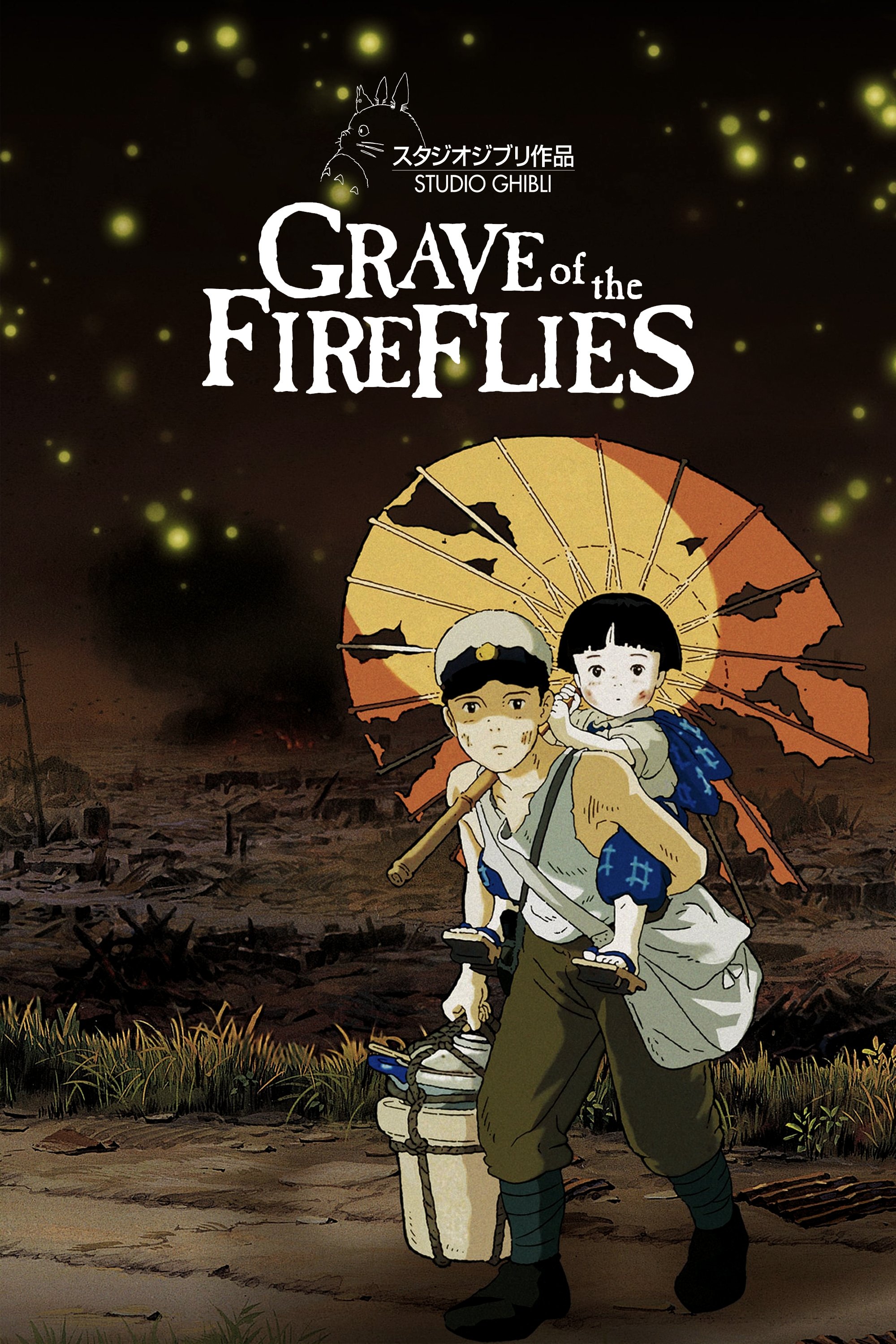
Film Review: Grave of the Fireflies

Studio Ghibli is a film franchise globally known for its popular movies, such as Spirited Away or My Neighbor Totoro. Compared to other animation studios like Disney or Pixar, Studio Ghibli creates memorable movies with plots that surpass the typical hero’s journey or romance trope. With a 100% on Rotten Tomatoes, Grave of the Fireflies isn’t an average film. It leaves viewers with a long-lasting emotional experience; one cannot even fathom its beauty, especially since its drawn entirely by hand. The movie is terribly sad and ends with a bittersweet ending, albeit its simple story moves viewers to tears and reveals nothing but the tragic, cruel truth of war.

Made in 1988 by film director Isao Takahata, the movie depicts a story of two Japanese siblings, Setsuko (age 4) and Seita (age 14), living in the midst of World War II. After surviving a U.S. bombing in Kobe, Japan, and becoming orphans, they move into their aunt’s house. With a staggering family relationship, the siblings decide to leave the house and find their own place. Unfortunately, living progressively becomes more difficult; as food grows scarce and less people are willing to help them, the struggle for survival grows stronger and their will to live diminishes. The movie is based on the novel titled Grave of the Fireflies by Akiyuki Nosaka, conveying a recollection of the author’s own experiences before, during, and after the firebombing of Kobe in 1945.

To begin with, the art style is extremely detailed; every drawing depicts something new, with different emotions drawn out from each event. Viewers are able to understand the characters’ thoughts and feelings simply through facial features. Each background drawn has clear details that bring life and realism. The plot and method of storytelling is well-thought out, intertwining artistic and literary beauty. To elaborate more would spoil some of the movie, but the plot often shifts between its beginning and conclusion, reaching a midpoint at the movie’s end. Even though the characters don’t explain much and the plot can seem drawn out at times, every small event builds up to one meaningful, heart-throbbing ending.

What I most enjoy about this movie is its message; the perspective of watching two children suffering is difficult enough to bear, but it teaches the audience about war’s negative impacts, of how many innocent lives are harmed by another group’s disagreements. In reality, the movie was not made to entertain–it was made to inform, to warn others about the consequences of violence. As a result, there’s no honor or glory; those who truly suffer are the ones who were never part of the conflict.

The personal impact of this story is often too difficult to put into words. In a mix of both horrid and beautiful scenes, each holding its own meaningful touch to the story, Grave of the Fireflies is a movie that’s been underrated and forgotten for years. And yet, once you watch it, even if it’s just once, it’s difficult to forget.

– Natisha P.

Grave of the Fireflies is available for checkout from the Mission Viejo Library.

Mission Viejo Library’s Teen Anime Club

Can’t find the right club for you because you’re a huge otaku (someone obsessed with all things anime and manga) like me and wish there was a club to watch anime, socialize with people and try fun new Japaneses snacks? Well the Mission Viejo Library’s Anime Club is for you!

On the second Saturday of each month the club gathers and spends two hours watching anime. The anime consists of older and recently released shows covering genres like sci-fi, action, and so on. While watching anime you can try an array of different Japanese snacks with different but unique tastes, which are spread out on a table. My personal favorites would have to be the “fake” ice cream cones, Hello Panda, and Pocky. I enjoy any type of sweet Japanese treats and this club fulfills my wishes. Furthermore, socializing with other people is easy in the club because they have a lot in common with you. If you prefer not to socialize with those not yet your friends, you can always bring a friend and share your fun experiences with them – like I did. I brought my best friend Emma and she enjoyed her first time as much as I did. We have attended the club meetings and together, we try to gain an ‘Anime Trivia’ streak. I also enjoy bring the ‘Bring a manga-take a manga’ shelf, although I have not contributed any yet. Next time I go I certainly will. I enjoy the club so much – it has opened me up to so many more anime genres and I have developed a new love for Dragon Ball Z.

Overall, the library’s Teen Anime Club is a great place to meet new friends, watch amazing anime and eat yummy snacks, share and review different opinions on  anime and so much more. I enjoy this club so much and definitely will keep coming back.

-Brenya B.

The Mission Viejo Library Anime Club meets on the second Saturday of every month from 1pm to 3pm in the Friend’s Storytime Room. Permission slips are required and can be downloaded online

Itazura na Kiss

itazura-na-kiss-1871Itazura Na Kiss is a manga, and later adapted into an anime, about an unlikely romance between two high school students. Spoilers to come!

Kotoko Aihara, a poor achieving high school student, falls in love with the genius Naoki Irie only to be flatly rejected and humiliated. Kotoko had fallen for Naoki since her first day of high school. When an earthquake strikes her house, she is forced to live with her father’s childhood friend. When Kotoko meets the family, she discovers that Irie is their son. How is she going to survive living under the same roof as Irie, especially being rejected?

Throughout the manga and anime, Irie develops feelings for Kotoko but life finds a way to intervene. They are both pulled away by other people in their lives, like Kotoko’s friend Ikezawa, who her ever since she started high school. There’s also Christine, a foreign exchange student who plans to marry Irie. Will they be drawn apart or will they settle down and get married?

Check out the anime and/or manga if you would like to know more about Itazura Na Kiss! I’ve spoiled enough. I would definitely recommend someone to check it out. This was my first anime that I’ve ever seen and probably one of my favorites! I would rate this series a 9/10.

-Kayla H. 11th Grade