Authors We Love: Jean Craighead George

Jean Craighead George is a naturalist, illustrator, and author.  Born in 1919 in Washington DC, George developed her love of nature from her family.  All being naturalists, together they’d hike mountains, climb trees to study owls, and make their own fish hooks out of twigs.  

This love of nature carried over to her writing as George eventually graduated from Pennsylvania State University with degrees in Science and English.  She is known for uniquely combining her careers into engaging fictional stories that take place in real, vividly described ecosystems. 

One of her most famous books, My Side of the Mountain, takes place in the Catskill mountains and involves a boy, named Sam, who attempts to make a home for himself in the wild.  The novel details the day to day life of Sam and features illustrations of some of his creations, including shelters, traps, and whistles.  While the book is an amazing read for nature lovers due to its setting, the trials of surviving in the snow, finding food, and the mystery of an unstable environment makes it a tale of suspense that is perfect for adventure-lovers too.  

Other novels by Jean Craighead George include:

  • Julie of the Wolves (Newberry Prize Winning) 
  • The Fire Bug Connection
  • There’s an Owl in the Shower
  • Water Sky
  • Charlie’s Raven 
  • Shark Beneath the Reef 
  • On the Far Side of the Mountain (Sequel to My Side of the Mountain)

-Giselle F. 

The works of Jean Craighead George are available for checkout from the Mission Viejo Library.

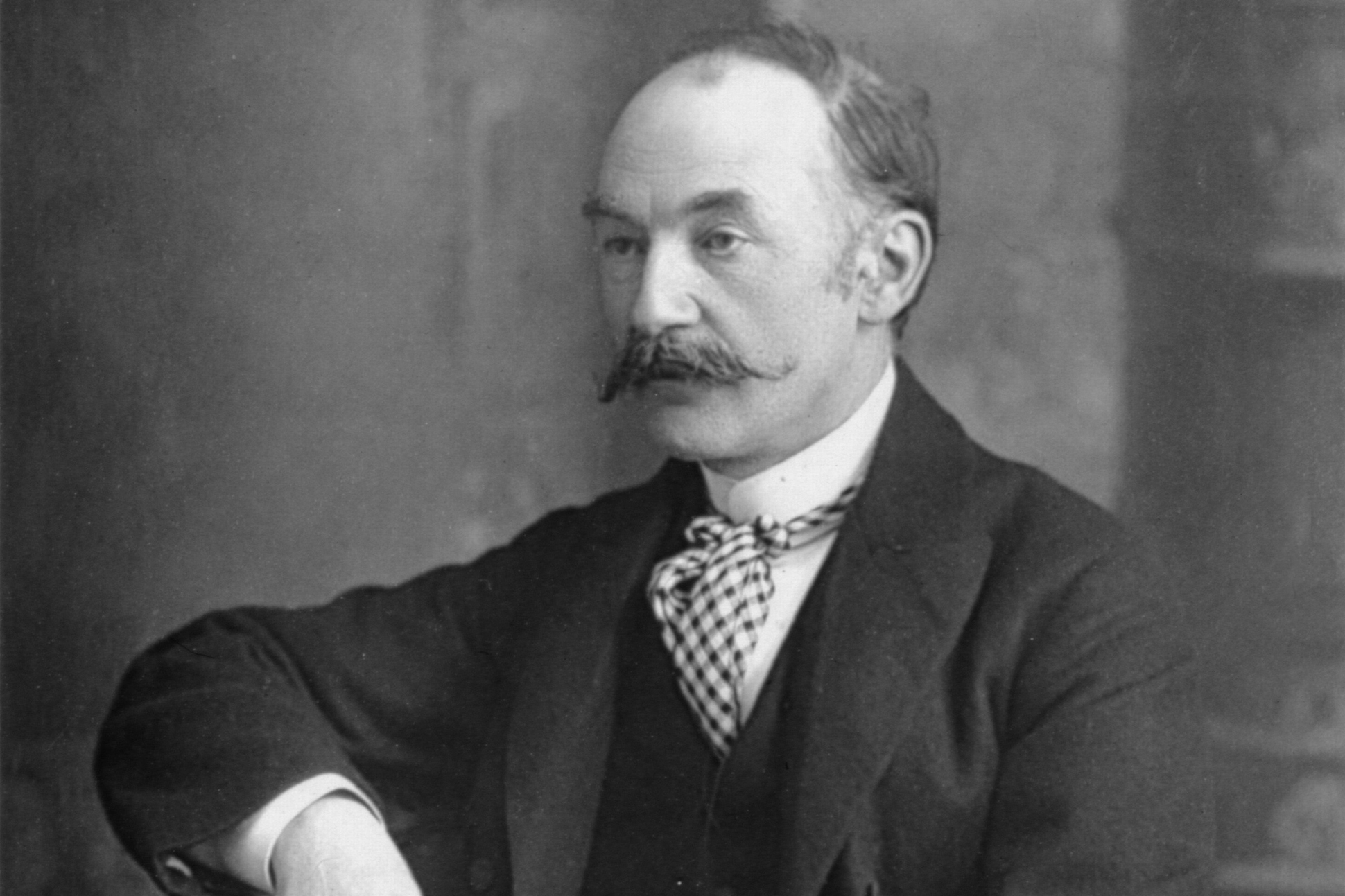
Authors We Love: Thomas Hardy

Thomas Hardy's Wessex - Wyntersea Productions Inc Wyntersea Productions Inc

“Happiness was but the occasional episode in a general drama of pain.” 

    ― Thomas Hardy, The Mayor of Casterbridge

Thomas Hardy was born on 2 June, 1840, in Higher Bockhampton, Dorset, England. While his father, Thomas Sr., was content with poverty and rural life, Hardy’s mother Jemima, who was well-read herself, encouraged her young son’s education. At 22 years old, Hardy entered the architecture field by studying the same at King’s College in London, winning prizes from the Royal Institute of British Architects as well as the Architectural Association. Despite this, Hardy despised London and its climate, and, having fallen to poor health, moved to Bockhampton to recover after five years of urban living. 

It was in this picturesque village that Hardy first tried his hand at published writing. While his first few works were not major successes, if published at all, he finally struck gold, so to speak, with Far From the Madding Crowd in 1874. Hardy’s subsequent wealth allowed him to finally marry and give up his architectural practice. While living with his wife in a cottage at Sturminster Newton, Hardy published the five major novels collectively of the theme of “Character and Environment”: The Return of the Native (1878), The Mayor of Casterbridge (1886), Tess of the D’Urbervilles (1891), and Jude the Obscure (1895), and enjoyed what he himself called the happiest years of his life. 

While Hardy had always dabbled in poetry, the public’s hostile reaction to the scandalous events chronicled in Jude the Obscure motivated him to become more involved in the poetic universe. The horrors of the First World War greatly influenced the dark, hopeless themes of his late works, including the epic drama in verse, The Dynasts, and a second verse play, The Famous Tragedy of the Queen of Cornwall. Because of these incredible works as well as others, Hardy was awarded the Order of Merit by King Edward. 

Sadly, in December of 1927, Hardy became ill with pleurisy and died on 11 January 1928. After some controversy over his burial site, it was eventually decided that his heart would be buried with his first wife in Dorset, while the rest of his body would be laid to rest in the distinguished Poets’ Corner in Westminster Abbey. Thomas Hardy left a lasting impact on the literary world, through both his award-winning novels and his stunning poetry, which inspired and continues to inspire many writers all around the world.

-Mahak M.

The works of Thomas Hardy are available for checkout at the Mission Viejo Library.

Authors We Love: Diana Wynne Jones

Diana Wynne Jones was a British novelist and children’s fantasy writer born in London on August 16, 1934 as the eldest of three sisters. In her early childhood, she was evacuated to Wales as a result of the bombings taking place during the Second World War. Throughout the war the family moved frequently before settling in 1943, but the result was a very complicated relationship between her and her parents, as she was largely left to care for her younger sisters. However, this only fueled Jones’s passion for reading despite struggling with dyslexia, and later transformed into a passion for writing as she wrote many short stories for her younger sisters.

She went on to study English at St. Anne’s College in Oxford, attending lectures by two very prominent authors, C.S Lewis and J.R.R. Tolkien. By the time she graduated from college, she married John Burrow and had three sons with him. She read to her children as many mothers do, but this also inspired her to create Children’s books of her own. Jones submitted her works to several publishers but they were ultimately rejected until she published the Changeover, one of her few adult novels.

Overtime, her most popular works included the Chrestomanci series, the Dalemark series, and especially Howl’s Moving Castle from the Moving Castle Series. Howl’s Moving Castle soon inspired the creation of the 2004 film Howl’s Moving Castle by Studio Ghibli and Japanese director Miyazaki Hayao. She would later go on to write dozens of many more works for both children and adults, along with winning multiple writing awards such as the British Fantasy Award, the World Fantasy Award for Life Achievement, and the Mythopoetic Award.

-Elia T.

The works of Diane Wynne Jones are available for checkout from the Mission Viejo Library.

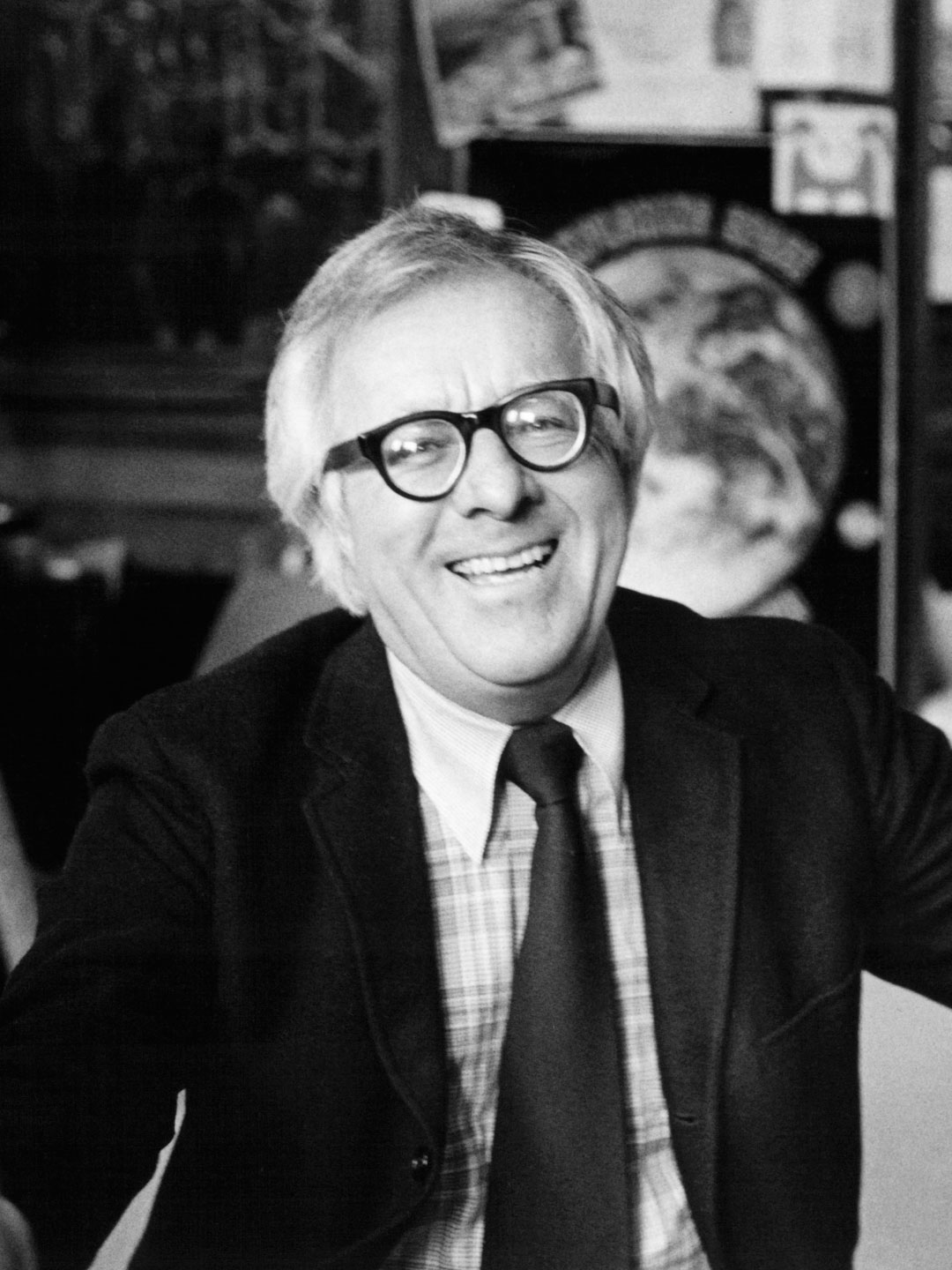
Authors We Love: Ray Bradbury

Ray Bradbury (August 22, 1920 – June 5, 2012) was, and still is, a well-renowned author known for his science fiction, fantasy and horror short stories and novels.

Born in Waukegan, Illinois, Bradbury’s start as a writer began very early on at the age of 12. He had a fateful encounter with a carnival magician by the name of Mr. Electrico who proclaimed “Live forever!” to which Bradbury decided to never stop writing.

Soon after this encounter at age 14, the Bradbury family moved to Los Angeles. When the Great Depression hit, Bradbury couldn’t afford to attend college so he instead attended the local library three days a week for ten whole years to acquire his education.

Over the course of his career, Bradbury published thousands of literary works including 400 short stories and 50 novels. In addition to this, Bradbury has also earned dozens of awards including the World Fantasy Award for Lifetime Achievement, the Science Fiction and Fantasy Writers of America Grand Master Award, and the Pulitzer Prize Citation.

I was first introduced to Ray Bradbury in the 6th grade with one of his short stories titled All Summer in a Day. The story is about a group of students who live on the never-ending rainy planet of Venus that have never seen the sun with the exception of a young girl named Margot who only moved to Venus five years prior. As our class read through in monotone uninterested voices (as most children do), I remember sitting there in awe at his simple yet elaborate descriptions of simple things such as the sun or the rain, the fantastical world he created on Venus, and the development of the characters in only a couple of pages. I remember that being the first time a short story truly made me feel something, like a deep pit in my chest.

The second short story I ready from Ray Bradbury was A Sound of Thunder, a story about time travelers who have something in drastic in store when they arrive in the past and return to the present. It was in this short story that I was truly enamored by his descriptions of the dinosaurs which were so incredibly elaborate that I felt like I was standing right there in front of them. It was when I read this short story that I set my own goal of creating scenes of such immaculate sensory description.

Ray Bradbury was not only a spectacular author but a person with an incredibly inspiring story and a true passion for something he loved to do. If you’re looking for a good long read or a good quick read, this is an author that will give you something interesting to read for years and years on end.

-Elia T.

The works of Ray Bradbury are available for checkout from the Mission Viejo Library. They may also be downloaded for free from Overdrive.

Authors We Love: Jules Verne

Jules Verne was a French author, poet, and playwright. He was born on February 8, 1828 in Nantes, France. He was the author of many popular classics that are still read today by many people in the world. Unfortunately, his writing career didn’t start off as well as he would have wanted. His dad did not support Jules following his dream in writing. He wanted his son to pursue a career in law and become a lawyer. Jules Verne did not want to be a lawyer, he wanted to write novels! 

In 1856, Jules Verne met Honorine Morel at the wedding of one of his old college friends. They later got married in 1857 and had their first and only child in 1861. They named him Michel Verne.  Michel Verne later helped finish writing his father’s stories after Jules Verne passed away. 

Jules Verne is the author of Journey to the Center of the Earth has proven to be one of his most popular books. The story is about a scientist who believes that volcanoes in Iceland have a path that leads to the Earth’s core. So, the scientist and his nephew travel into the caves that led them into the Earth. They take a journey where they find ancient fossils and evidence of huge humans. Then, they make it to the surface by erupting out of Earth inside a volcano.  

He has also written another top classic called Around The World In 80 Days where Phileas Fogg makes a bet to travel the world in 80 days. He takes boats and races through the countries as he works to win his bet. Then, he meets a French servant named Passepartout, who helps him save a princess from India named Aouda. They take Aouda along on their journey around the world. Then, they race to the meeting with the people to see if they won the bet. 

Jules Verne is also the author of 20,000 Leagues Under the Sea is about Captain Nemo and his submarine named Nautilus. He takes 3 passengers on his submarine and they go on an underwater expedition around the world. They face giant squids along the way that try to attack the submarine just like they have attacked ships from all around the world. Captain Nemo and his passengers try to survive the underwater attacks by the squid and try to escape! 

Jules Verne was the author of many popular books that are read by millions of people all around the world. His books have been translated into 140 languages and he is called the most translated author of all time. He gathered ideas and got inspiration for his stories while traveling around France and Europe. 

The French novelist isn’t just a very important and loved author because of his adventurous stories and new ideas, but his books are read because his adventures make readers feel like they are witnessing the adventures themselves. Readers keep coming back to read more of his books because of the ways how his stories make them feel. When I read Jules Verne’s tales, I loved reading because the books made me feel excited and kept me wanting to read more and more. 

Many of Jules Verne’s books were about traveling and exploring the world. In books like Around The World In 80 Days, 20,000 Leagues Under The Sea, and A Journey To The Center Of The Earth, are all books that include traveling whether it is on Earth’s surface, or underwater. He mainly wrote science fiction books combining world science and his creativity to make amazing stories filled with action and adventure. 

In 1886, Jules was shot in the leg by his nephew, and that bullet stayed there for the rest of his life. For several months, Jules had to rest and put his leg up. Fortunately, he was able to walk with a cane months later he was shot. Later when we was 77, in 1905, Jules Verne suffered a stroke and was never able to recover. He sadly died on March 24, 1905.

-Mert A.

The works of Jules Verne are available for checkout from the Mission Viejo Library. They can also be downloaded for free from Overdrive.

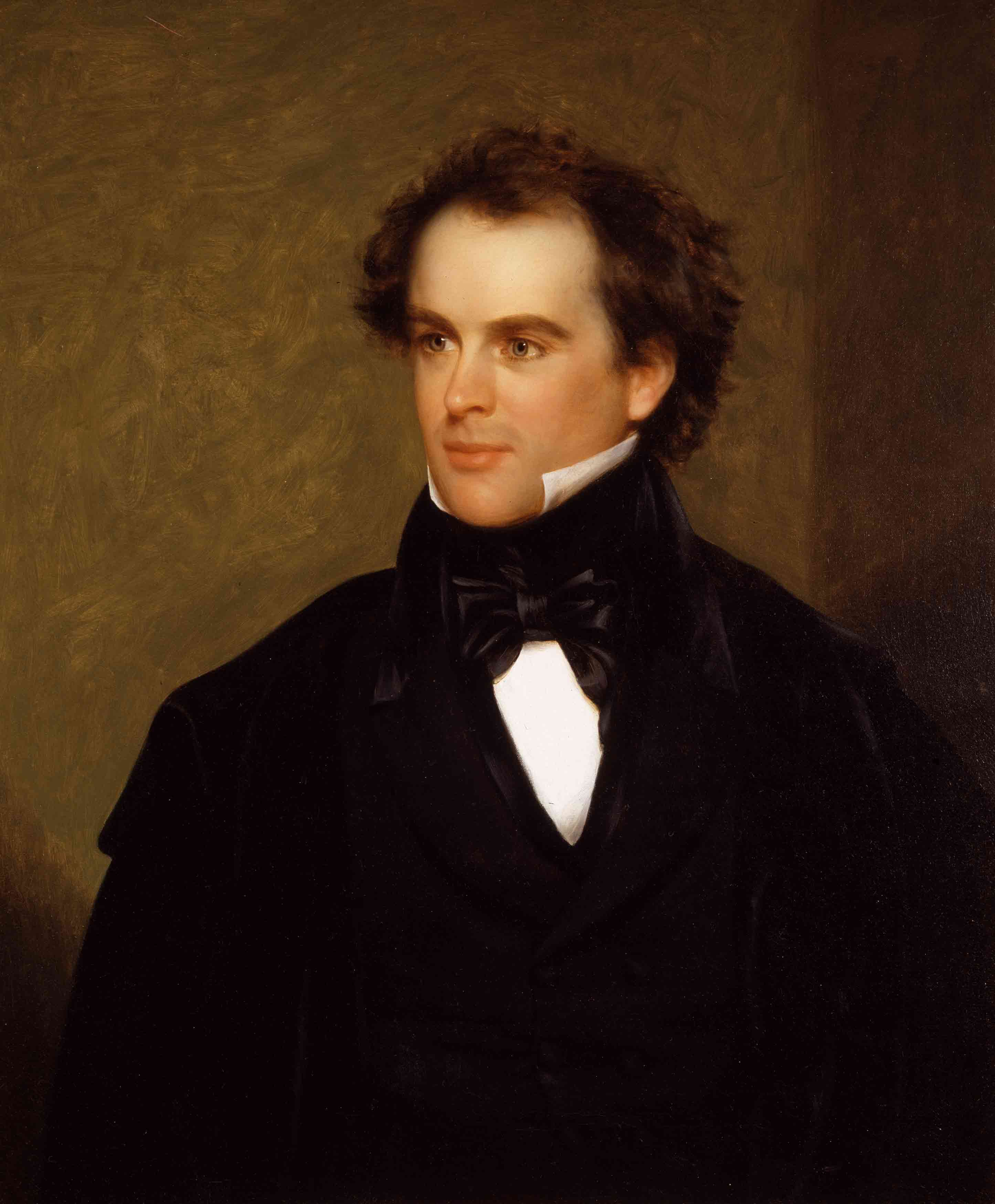
Authors We Love: Nathaniel Hawthorne

10 Things You May Not Know About Nathaniel Hawthorne - HISTORY

Nathaniel Hawthorne (1804-1864) is the founder of American psychoanalytic fiction and the first writer of short stories in the history of American literature. He has been called the greatest American romantic novelist in the 19th century. Hawthorne was born in Salem, Massachusetts in the United States. His family believed in the Christian puritanism, and Hawthorne was influenced by puritanism. After graduating from Bowdoin college in 1825, Hawthorne returned to Salem, where he wrote and published dozens of stories and short stories. In 1839, Hawthorne worked in Boston customs for more than two years, and then entered the “brook farm”, where he was exposed to transcendentalism and got acquainted with Emerson and Thoreau, the representatives of transcendentalism.

Later, Hawthorne went to Salem’s customs office, where his work experience there has a direct impact on his writing “The Scarlet Letter”, which consolidated his solid position in the American literary world. Hawthorne was evaluated as a spectator of life, and his attitude to life determined his interest and insight into people’s inner and psychological activities. He was deeply influenced by the thought of original sin, and the original sin was passed down from generation to generation. His representative works include the novel “The Scarlet Letter”, “The House of the Seven Gables”, “The Blithedale Romance”, “Twice Told Tales”, and “Mosses from an Old House”. Among them, “The Scarlet Letter” has become the world literature classic where Henry James, Edgar Allan Poe, Herman Melville and other literary masters are deeply influenced by it.

The works of Nathaniel Hawthorne are available for checkout from the Mission Viejo Library. They can also be downloaded for free from Overdrive.

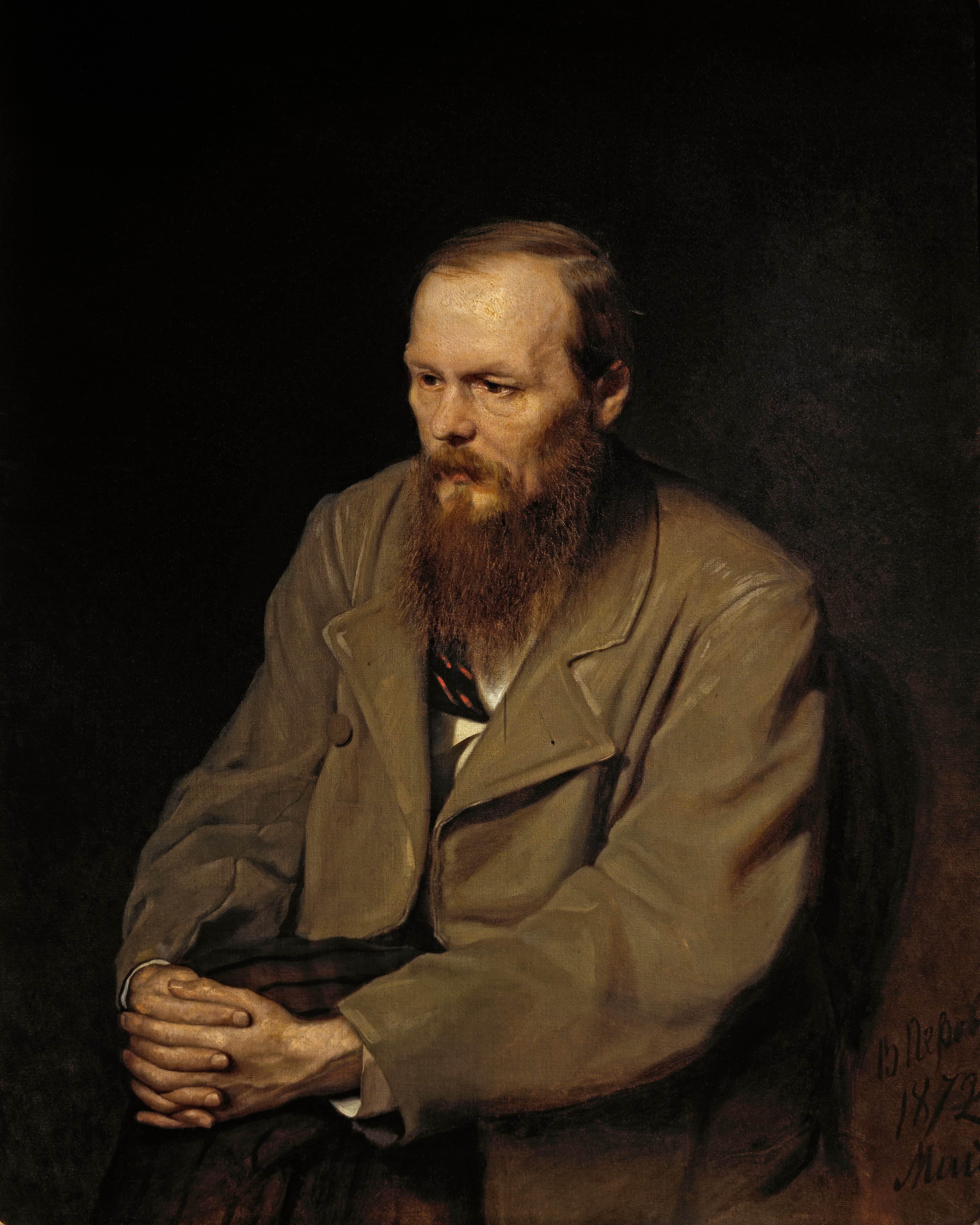
Authors We Love: Fyodor Mikhailovich Dostoevsky

Fyodor Dostoevsky - Wikipedia

In the middle of the 19th century, Russian society was full of contradictions and crises. The tyrannical rule of the tsar and capitalism weighed heavily on the psyche of the people. Dostoyevsky’s novels mainly depict the misery, contradiction, hardship and desperation of people living at the bottom of the society, reveal the depravity and destruction of human nature and the split of human spirit in this pathological society, and show the darkness and filth of the Russian society under the shadow of the autocratic rule and the capitalist system. His novels depict the bullied and insulted, and try to show the misery of the characters hidden in the dark corners of the slums. Dostoyevsky describes people who are divided by themselves, reveals multiple personalities and shows the return of human nature. Dostoyevsky is an expert in psychological description. He is obsessed with pathological psychological description. He not only writes about the results of behaviors, but also focuses on describing the psychological process of behaviors, especially those abnormal behaviors, near coma and madness.

The characters’ abnormal thinking and behavior are exactly the characteristics of his works. The intensity of Dostoyevsky’s psychological description is in proportion to the bewilderment of his thoughts. Dostoyevsky mainly adopts a non – temporal narration in dealing with the timing of the novel. Because he preferred to choose the most intense, terrible and extreme events as the subject matter of the novel, and was keen to show people’s psychology in the crisis, the overall rhythm of the work was extremely unstable. In the description of characters, Dostoevsky broke the tradition of describing characters in Russian literature since Pushkin. He not only described their impoverished situation, but also revealed the soul of the characters, not only sympathizing with them, but also associating with them. The strong is a story element opposed to the weak, mainly referring to those who have money and power but disregard any moral principles. Their most important characteristic is to get their own way. The rescuer and the rescued are another pair of story elements in Dostoyevsky’s novels.

If the antagonism between the strong and the weak constitutes the first clue of the narrative of the novel and highlights the author’s humanitarian feelings, then the second narrative clue composed of the rescuer and the rescued reflects the author’s thoughts full of religious meaning, which is of more metaphysical significance in thinking about the way out of the society. The latter two narrative elements are gradually developed in his novels. The story element of the savior is the perfect Image of Christ in Dostoevsky’s novels, the embodiment of the supreme good. At the beginning of creation, the image of the savior appeared in the form of a kind of good behavior, namely self-sacrificing love. After his return from exile in Siberia, Dostoyevsky shifted his focus to religious exploration, and the rescuer began to appear in his novels as a concrete and sensible figure. His character gradually became full and distinct, and he was no longer confined to the scope of love, but had a broader social content. In the novel, this element is the external manifestation of the author’s thoughts, and the author mainly reflects his own religious ideal of salvation through it.

Therefore, such characters are flat and are the “mouthpiece” of the author’s thoughts, often giving people a sense of paleness. The rescued person is the most important story element in his novels. Compared with the rescued person, this kind of character image is more abundant. The image of the rescued first appeared as the image of the visionary in Dostoevsky’s novels. This image inherits the tradition of superfluity in 19th century Russian literature and has the characteristics of superfluity: dissociating from the society, holding a critical attitude towards the society and possessing the characteristics of thinker. So his novels end with the triumph of the savior’s mind. But as an artist, Dostoyevsky always triumphs over himself as a moralist. He was deeply aware of the social reality at that time when people still had no way out depending on religion. The contradiction of his thoughts makes the main part of the novel present an open structure, and the ending presents an open state in a closed form.

The foundation of Dostoevsky’s novels is binary opposition, mainly composed of four story elements: the strong, the weak, the rescuer and the rescued, among which a theme of “salvation” runs through. Secondly, the structure of Dostoevsky’s novels is inconsistent. The construction of elements in his novels mainly consists of three parts: the antagonism between strong and weak — the conflict between good and evil in the heart of the saved, and the conversion of the save and the saved. However, due to the mutual influence, interweaving and inhomogeneity of various contradictions, the novel is open and incomplete in content. The reason why Dostoevsky adopted such a structure pattern in constructing novels is closely related to his religious thoughts and perplexities. Dostoyevsky’s novels mainly adopt two perspectives: inner perspective and omniscient perspective. First of all, his novels mainly show people’s self-consciousness. All kinds of consciousness have a relationship of equal dialogue, so the first-person inner perspective and the third-person indefinite inner perspective are the perspectives often adopted in his novels.

This perspective reflects Dostoevsky’s religious confusion and exploration. Secondly, the omniscient perspective of Dostoevsky’s novels is mainly reflected in the beginning and the end of the novels, which has two functions: one is to serve the characteristics of the perspective inside the main body of the novels, and the other is to serve the religious thoughts of Dostoevsky, thus forming the characteristics of the closed form of the novels. In addition, there are some “meta-novel” narrative modes in Dostoevsky’s novels, which also convey the confusion in his religious thoughts, no matter for the narrator, the hero or the reader. Thus, we can conclude the perspective mode of Dostoevsky’s novels: the main body of the novels mainly narrates from the inner perspective, and the beginning and end of the novels often adopt the omniscient perspective. Dostoyevsky’s construction of the time mode in his novels is mainly reflected in the following aspects: first, he no longer places events in the process of time like traditional novels, and is keen to describe the process in detail; instead, he cuts time, adopts a non-temporal narration, and pays attention to the synchro meaning of time. Secondly, it is also reflected in the psychological time intervention in the novel. He always likes to put the characters in the two poles of contradiction and in the atmosphere of tension, so as to describe all the secrets of the human heart. Hence, the psychological time is much longer than the story time.

-Coreen C.

Authors We Love: Leo Tolstoy

Leo Tolstoy (Novelist) - On This Day

Tolstoy has done a lot of thinking on human nature in his novels. From these thinking, we can see the most real aspect of Tolstoy’s spiritual world. Tolstoy’s reflections on human nature were inspired mainly by the history and reality of Russia at the time. On the one hand, traditional Russia was a patriarchal society, and the Orthodox Church determined the way people thought and felt. Tolstoy was also deeply influenced by the Orthodox Church, whether his attitude was one of acceptance or reservation. On the other hand, the European spirit of enlightenment also exerted a deep influence on Russia, which shook the foundation of traditional Russian belief to a great extent.

The influence of the spirit of enlightenment on Tolstoy was also significant, which made Tolstoy suspect the basic doctrinarian system of Orthodox Church, and he would not think about the issue of faith like ordinary believers. However, Tolstoy did not fully move towards the Enlightenment position of individualism in Europe, so his thinking on human nature often drifted between the two, sometimes like a believer, sometimes like a humanist. The utopian thoughts in Tolstoy’s works are mainly reflected in the resistance against violence and slavery, the opposition to private land system, and the opposition to the promotion of capitalist material civilization and evolution.

He demanded the return to a healthy farming life through the work and moral practice of everyone to establish brotherhood, equality, harmony and fraternity of all human beings. Tolstoy created epic novels. The historical facts are blended with artistic fiction, and the bold and unrestrained brushwork is mixed with delicate description. Tolstoy shows his personal face in a large group portrait. The epic’s solemnity is interspersed with lyrical monologues, which are varied and magnificent. He is good at handling the structure of many clues and the threads are all joined together seamlessly. He can break through the closed form of the novel as magnificent as life has no beginning and no end.

Tolstoy’s artistic charm lies not only in reproducing the macro world, but also in portraying the micro world. Tolstoy has mastered the dialectical development of the mind unprecedentedly in the world literature and described the evolution process of the mind under the influence of the outside world in detail. He dives deep into the subconscious and show it in a harmonious connection with the conscious mind. Tolstoy’s artistic power is real, and it is evident in the shaping of character. He faithfully describes the multifaceted, rich, and complex nature of his characters, not just their dominant side or a dominant state of mind.

He does not conceal the faults of his beloved, nor does he stifle the glimmer of light that flashes in the heart of the character he reveals. He does not sugar-paint, exaggerate, idealize or caricature, but always shows his true nature by the help of real and objective description, thus seeing greatness in the ordinary or, conversely, showing its horror in the ordinary phenomena. Tolstoy’s style is chiefly characterized by its simplicity. He strives for the fullest and most accurate reflection of the truth of life or expression of his own thoughts. Therefore, although he is strict in art, he does not seek to win by skill alone, nor does he seek formal delicacy and avoid long compound sentences, but only seeks the maximum expression. In order to show the disillusionment of the characters in structure, he often adopts the method of flashback. In language, the novel strives to be simple and concise and easy to understand, close to folktales.

-Coreen C.

Authors We Love: Lewis Carroll

Lewis Carroll - Wikipedia

Charles was the third of the eleven children of Dodgson. Charles loves his mother best. He regards his mother as one of the sweetest mothers in the world. His mother is a good housekeeper and pays great attention to the children’s preschool education. At the age of seven, Charles was said to have read Bunyan’s The Pilgrim’s Progress, as well as Maria Edgeworth’s Practical Education and Hannah Moore’s The Shepherd of Salisbury Plain. At the age of 12, Charles was sent as a boarder to a grammar school in Richmond, ten miles from Croft. He is diligent and eager to learn. The principal told his parents that his eloquence and the ingenuity and diction of his Latin prose proved him to be an extraordinary genius.

In 1846 he was sent to Rugby, which soon came under the rule of Thomas Arnold. When he first went there, he was unhappy and often bullied and called a “fool” (a clumsy athlete). He was often mocked because of his childhood stammer. On the other hand, when he did not receive prizes for classics, theology, mathematics, etc., he seldom went home. During the holidays, he began writing a series of home magazines for his siblings. At the age of 14, his first magazine was called an “inspiring and instructive collection of poetry.” It includes many humorous poems, some of which are in the doggerel style, while others are contemporary traditional poems written for children.

He composed poem in the form of a ballad taught people never to annoy their sisters, followed by a magazine illustrated by Charles himself. After leaving Rugby in 1850, Charles wrote his own masterpiece, The Rectory Umbrella And Mischmasch, while preparing for the Oxford entrance examination at home. The book shows that Charles was already an outstanding writer for a comic magazine. He also wrote plays for a puppet theater. His cousin introduced him to the novelist Francis Edward Smedley. He showed some of the poems to Edmund Yates, who, to compete with Punch, had started a penny magazine called Comic Times. Charles wrote four poems for the magazine.

When the Comic Times closed, he began writing for the latter Yates magazine, The train. Charles’ chief contribution to The Train was poetry. In publishing “Solitude,” Yates chose one of two pseudonyms offered by Charles: Lewis Carroll. These are the two Latin names of Charles, keeping the alphabetical order and then turning back to English. He was a priest and never married. He was very fond of children, and his favorite was a little girl called Alice Liddell. On the fourth of July, 1862, the author and a friend of his took the three Liddells and rowed up the River Thames from Oxford to Gostowe. On the boat, he told Alice a little story, which he later turned into a manuscript of Alice’s Adventures Under Ground and presented to her.

The manuscript is only 18, 000 words long, and the illustrations are by the author himself. Later, the author revised it to the present scale, changed the title to Alice’s Adventures in Wonderland, and asked the famous painter Sir John Tenniel to illustrate it. The first edition was published on July 4, 1865, as a memorial to that trip. The story tells the story of a little girl named Alice, chasing a rabbit in a dream and falling into the rabbit hole, began a long and dangerous journey. This fairy tale breaks through the traditional moralistic formula of western European children’s literature with its magical fantasy, funny humor and high poetry, and has since been translated into many languages and travelled all over the world.

Carroll later wrote a companion piece, Alice Through the Looking Glass, which became popular in the world along with Alice’s Adventures in Wonderland. In 1868, Carroll published his encryption method. This type of encryption is known as Lewis Carroll’s ciphers. Cryptography introduces the concept of a secret key, which determines which row of secret tables to replace according to the key, to counter word frequency statistics. The password’s key space size is 26m, so even if the value of m is small, using the exhaustive key search method can take a long time. For example, when m=5, the size of the key space exceeds 1.1*107, which is beyond the scope of exhaustive search by hand calculation.

Charles was writing parodies and satires. Works such as The New Belfry (1872), The Vision of the Three T’s (1873) and The Blank Cheque (1874) attacked the reforms of many colleges and universities. In 1879, he tried to study children publicly. Because he has a terrible stammer, but he can communicate with people through the camera. In his second year at the school (1856), Carroll bought a complete set of photographic equipment (The Wet Print) and photographed Tennyson, the Poet Laureate, and the Prince of England. But he was most attracted to girls around the age of 7, and he took every opportunity to photograph the girls he met. Only in front of the girls, Carol will not have any psychological barriers. The only work he did during this period was Rhyme? and Reason?

-Coreen C.

Authors We Love: F. Scott Fitzgerald

Fitzgerald was born on September 24, 1896, in st. Paul, Minnesota, to a family of small businessmen. His ancestors, who had once been rich and powerful, have faded down to his parents’ generation. In 1913, supported by relatives, he attended Princeton University, an aristocratic institution of higher learning in the eastern United States. But he had no interest in his studies, often missed classes and failed exams, and focused almost entirely on social activities. He managed to get into the school’s literary group, was invited to the most famous clubs, shook off his country accent, and developed a standard “advanced” English, trying to subtly erase differences of birth. In 1915, when Princeton’s theater troupe toured the United States with his comedy “The Evil Eye,” he was barred from performing with the group because of his grades.

In the spring of 1917, the United States entered World War I, and Fitzgerald joined the army. In late 1918, Fitzgerald left the army and headed to New York, where he found only a job writing the words for a little-known advertising agency. In June 1919, his lover Zelda lost patience and called off the engagement. Early experiences led to Fitzgerald’s lifelong sensitivity to money. In 1919, Fitzgerald returned home with nothing. Published in February 1920, the novel “This Side of Paradise” became an instant hit for its vivid sense of The Times, and the first edition sold out in a few days. Magazines began to scramble for him.

On December 21, 1940, Fitzgerald died of a heart attack caused by alcoholism at the age of 44, leaving behind an unfinished work, “The Last Tycoon”.

He is a legendary author with a flourishing life, but his outstanding literary understanding and writing abilities did not leave him with a glorious ending.

-Coreen C. 

The works of F. Scott Fitzgerald is available for checkout from the Mission Viejo Library. They may also be downloaded for free from Overdrive