Shoe Dog by Phil Knight

Shoe Dog is a book about Phil Knight and his journey of eventually creating one of the world’s biggest shoe and sportswear brands ever.

Phil Knight was born on February 24, 1938 in Portland, Oregon. Growing up, Phil was always into running. He would frequently run the many trails around Oregon. Phil was also a key member of Cleveland High School’s track team. One day he decided to take a trip around the world, and that’s where his adventure started. He visited Japan in 1962 and discovered the brand of running shoes that was known as Tiger (Today the brand is known globally as Asics). Phil fell in love with the shoes and wanted to take them back to America to sell.

He got a meeting with Onitsuka and was able to make a contract so that he could sell their shoes in America. Following this, Phil formed Blue Ribbon Sports with his track coach Bill Bowerman. The shoes were very well received and over the next few years Phil and Bowerman opened retail spaces in Santa Monica, California, and Eugene, Oregon. The business was growing very well with profits doubling year after year. Eventually, due to a lack of understanding and repeated issues, Phil and Bowerman split from Onitsuka and formed Nike. Nike’s first shoe, the Cortez, debuted at the 1972 Olympics. The Cortez was an instant hit. It was incredibly popular, and still is to this day.

-Emilio V.

Shoe Dog is available for checkout from the Mission Viejo Library

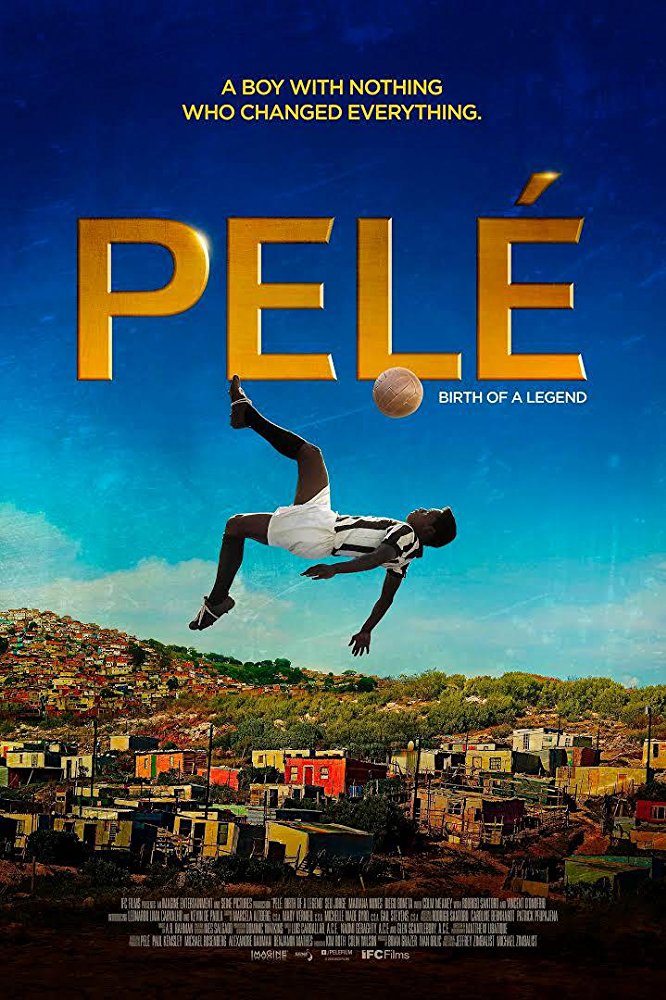
Film Review: Pele, Birth of a Legend

This movie follows the story of Edson “Dico” Nascimento, better known as the football legend Pele. This movie shows Pele’s life before his illustrious soccer career, back during his childhood in Brazil and eventual lead up to the 1958 World Cup. It shows the trials and obstacles Pele had to overcome before even playing for the National team.

Whether it be because of his mother discouraging him from playing soccer to eventually losing interest in playing soccer at all, Pele’s path to football stardom seemed all but lost. However, and as can be seen in various moments throughout the movie, Pele refused to give up. Determination and undying hope would follow him everywhere he went and would be the fuel pushing him to pursue a career in professional football.

This movie was a heartwarmer, showing his family life as a child, and showing who Pele was. Rather than just knowing him as a really good football player, it showed all the struggles he would face and just how difficult his journey truly was. What can be taken away from this movie is that you should always stay true to yourself and never once doubt in yourself and what you are able to do. Never give up in whatever happens, and no challenge is impossible to overcome.

-Kobe L.

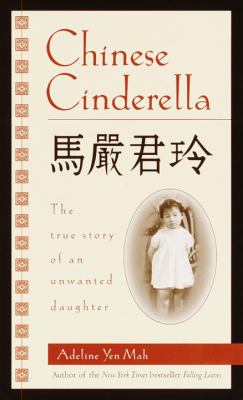
Chinese Cinderella by Adeline Yen Mah

Chinese Cinderella is the story of an unwanted daughter in China during World War II. Adeline Yen Mah was hated by most of her family. Her mom died while giving birth to her, so she is seen as bad luck. Adeline’s father then remarries a horrible stepmother called Niang. Niang always puts her two children above Adeline and her siblings. The people Adeline goes to for comfort are Ye Ye and Aunt Baba. It is apparent that Niang is now the matriarch of the family. Niang frequently gets angry at Adeline and accuses her of multiple things. Adeline is also constantly at war with her older sister. They constantly fight about who gets what room and who sleeps where. Eventually their relationship does get better. Then, on Adeline’s sisters’ wedding, Niang goes through her presents and keeps a jade pendant and keeps it for herself. As Adeline is going to tell her sister about the pendant, Niang tells her to go out to the balcony with her. Adeline then learns that Niang let her sister keep the pendant. Adeline does extremely well in school winning several prizes for writing, but that isn’t enough to please her hateful parents. She then goes on to go to college with her brother and continues writing. Adeline’s life improves very quickly through this and she becomes very happy.

Chinese Cinderella by Adeline Yen Mah is available for checkout from the Mission Viejo Library

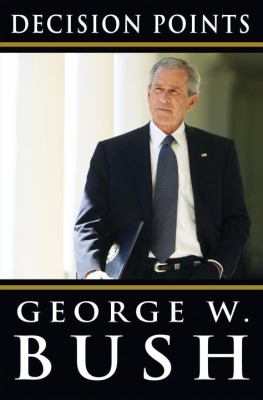
Decision Points by George W. Bush

When finding out something new about a person, it is best to hear stories in their own words. In doing so, you can find out their own thought process for decisions they had to make and their reasoning behind what they did. I discovered this when reading Decision Points by President George W. Bush. This book dove deep into the thought process of the 43rd President of the United States and relayed his own account of the many crises that occurred during his two terms.

He organized the book into chapters relating to types of decisions he had to make versus writing the book chronologically. Some examples for chapter titles were Personnel and Campaigning decisions. It was a very good read and I suggest to everyone that they should check it out, regardless of your political tendencies or beliefs because regardless of party or platform every president has to make tough decisions to try to better the lives of American citizens so it is interesting to see President Bush’s own thoughts on the subject.

A few weeks ago I actually had the opportunity to go out to Dallas and participate in Camp 43 at the George W. Bush Presidential Library on the SMU campus.  Twenty-three students and I were given scenarios in which to make decisions under a time limit and understand the good and bad consequences of what we decided. The camp lasted three days and we heard from a variety of different speakers and participated in a variety of decision making scenarios. I had a great time and it was so fascinating to combine what I already know, what I read in Decision Points, and what I learned at camp to be able to make better decisions in my life and in my career later in life.

-Kyle H.

Decision Points by George W. Bush is available for checkout from the Mission Viejo Library. It can also be downloaded for free using Overdrive

Film Review: The Pursuit of Happyness​

After watching the movie The Pursuit of Happyness, I began to realize how important it is to never give up and always keep on trying. This movie is actually based off of a true story which made the movie even cooler to watch. The movie is set during the 80’s in San Francisco. It revolves around Chris Gardner, portrayed by Will Smith,  who spent his life savings on portable bone density scanners. Throughout the movie he’s seen going from doctor to doctor, attempting to sell at least two each month, while taking care of his five-year-old son Christopher Jr. who’s played by the young Jaden Smith. However, it’s not as easy as it seems, as Gardner is constantly rejected by doctors. With the difficulty of selling the machines each month, the constant financial demand begins to put a wall up between Chris and his wife Linda. Gardner eventually lands an internship with Dean Witter Reynolds to be a stockbroker. This immensely displeases Linda even more, which causes her to make a decision to move away to New York. This leaves Chris, a now single-dad, to take care of his son. Since they don’t have enough money to pay the rent of their house, they’re forced to move out. They end up staying in different places like a motel, a homeless shelter, and even a restroom at a BART (subway) station. In the end, Chris ends up getting the job at the company to be a stockbroker and ends up forming his very multimillion-dollar brokerage firm.

This movie shows the struggles that people face every day, and it taught me to never give up, no matter what the obstacle might be.

-Phoebe L.

The Pursuit of Happyness is available for checkout from the Mission Viejo Library

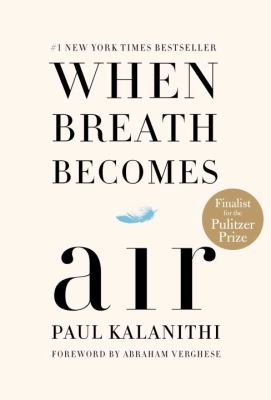
When Breath Becomes Air by Paul Kalanithi

When Breath Becomes Air is a best selling book written by author Paul Kalanithi, who majored in English literature in Stanford and would get his Masters degree in English literature. He would enter medical school in Yale and at 36 years old, he would become a resident neuroscientist and neurosurgeon. His life had full of hope and would seem to blossom with his wife Lucy. However, he was diagnosed with stage four metastatic lung cancer. His future seemed to be gone, and it looked as though his potential wouldn’t come to fruition.

Paul had learned about life and death throughout his studies in literature and philosophy. He would learn about death through the experience of studying medicine, but it was a whole new experience when death seemed to come to him. His short term and long term plan for his life would have to be revised. In the hospital, the doctor was somewhat like the “captain” of the ship, and Paul had always been the doctor, the captain, the leader. Suddenly, he became the patient, the ship, the follower. He was confused about his identity. However, he would choose to be a leader and captain of his own life. He spent time with his family, he would write his book When Breath Becomes Air, returned to the hospital, took care of patients, and would even have a daughter. He would leave this unfinished memoir behind and leave a lesson to us that we are all going to die someday, but we have to continue living our lives and making the most of it.

-Kobe L.

When Breath Becomes Air by Paul Kalanithi is available for checkout at the Mission Viejo Library. It can also be downloaded for free from Overdrive.

Film Review: Big Eyes

Both Halloween and Christmas have come and gone, but I’m sure at least a couple of you have either seen the film below or at least have a vague memory of what transpired:
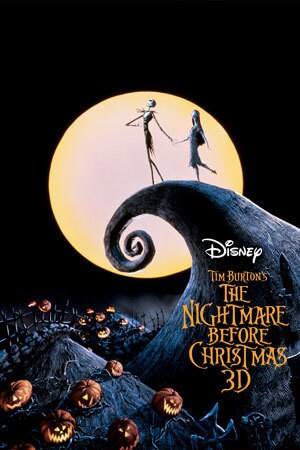
Image result for the nightmare before christmas

However, this is not a review of a cross-seasonal classic with much more dark elements to it than you would expect for a children’s film. Instead, this is about a more recent film that was released late 2014, yet didn’t enjoy the same level of success as some of some of Burton’s earlier films (Batman, Charlie and the Chocolate Factory, Corpse Bride, etc.). I believe that it’s still worth a watch.

Related imageBig Eyes is a biographical film based on the life and career of Margaret Keane, an artist who became wildly successful in the 1950’s and 1960’s. After a previous marriage that she left together with her daughter, she met the charming Walter Keane, whom she thought was also an artist. (He wasn’t) She quickly fell in love with Walter after he promised that they would live a comfortable life, and married him.

Margaret was struggling to pay the bills, raise her daughter well, and keep her apartment in San Francisco. It didn’t help that she didn’t have much qualifications, due to majoring in an artistic field in college. She worked at a children’s crib manufacturer painting pictures on cribs.

In her free time, however, Margaret enjoyed painting portraits and selling them for money along the San Franciscan beach. Her unique style of art often featured melancholic-looking girls with oversized eyes. which eventually caught the eyes of the wealthy of San Francisco, and almost overnight her paintings and reproductions were being sold everywhere. But there was a catch- people didn’t know she was the painter.

Margaret’s husband, Walter Keane, was not a great painter himself, but was an extremely persuasive and cunning salesman. Margaret was the original painter, but she always signed them “Keane”. Walter was the one who first went out and tried to sell Margaret’s paintings, which he recognized had true potential. Since the 50’s and 60’s was still a time where people subconsciously perceived women as less creative/intelligent/etc. when compared to men, the first buyers assumed he was the painter. Walter didn’t correct them because he feared that people would lose interest in the paintings if they knew a woman had painted them, and before he knew it, he was raking in hundreds, if not thousands of dollars. 

For the sake of keeping their reputation and the money, the two reach an agreement: Margaret would spend her days in the attic painting her iconic paintings, and Walter would go out and sell them. However, as time went on, Walter became more and more abusive, shutting Margaret in the attic for most of the day and preventing Jane, their daughter, from visiting her. Walter did not take criticism well, and eventually became an arrogant, unpredictable control freak.

Related image

The stakes grow higher and Margaret becomes more and more fearful for her and Jane’s safety. When Margaret uncovers a lie that Walter tried to hide in the past, she confronts Walter, several other things go wrong, and eventually Walter tries to burn down the house and Margaret and Jane flee. What happens next? You can find out for yourself by watching Big Eyes.

While I enjoyed Big Eyes, there are several things I believe could have been done better. The movie was not the best in terms of writing and didn’t appeal as much to the audience as it could have. There were also several historical inconsistencies between the movie and the true story.

Overall, however, I found this movie memorable. I had never previously heard of Margaret Keane, or imagined a scandal like this could occur. The actress behind Margaret (Amy Adams) and the actor behind Walter (Christoph Waltz) both did extremely good jobs, as you can see from their Golden Globe award and nomination, respectively. The music and pacing were both very pleasant, and the sets and props do conjure up a nostalgic feeling for San Francisco in the 60’s.

But what really stood out to me about this film, and in fact the reason why I even knew it existed in the first place, was this girl right here. Delaney Raye portrayed young Jane, the daughter of Margaret, in the movie.

She doesn’t have that many lines in the movie and gets much less screen time than Margaret or Walter, but young Jane is the character I remember most from the movie. Why? Because the actress portraying her was one of my classmates from elementary school. I didn’t get to know her that well because I was only at that school for 3 years, but I remember everyone in the class making a big deal out of it in 6th grade (Back in that school district, you could’ve gone to middle school in 6th grade or chosen to stay. Most people stayed) and that was when I first heard about this film.

Up until that point I never realized I could have been going to school with someone that was in a Hollywood movie directed by a famous director, but when I found out it was true I suddenly became interested in seeing Big Eyes. However, I forgot about it for a couple of years after I moved away (to here), and then it popped into my memory out of nowhere and I decided to watch the film— and was pleasantly surprised by how compelling it was.

Overall, I’d definitely recommend this film. It may not have the elements of romance or adventure that many people seek, but if you do take the time to watch Big Eyes it might just take you by surprise.

Be warned, though, it does have swearing and some suggestions of violence.

Image result for happy new year

-Michael Z.

Big Eyes is available for checkout from the Mission Viejo Library

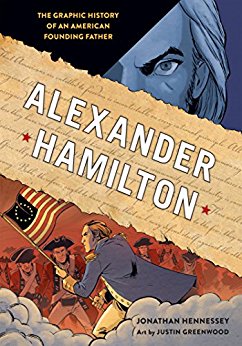
Alexander Hamilton: The Graphic History of an American Founding Father by Jonathan Hennessey and Justin Greenwood

I tried and tried and tried, I just couldn’t enjoy this book, I really wanted to, but I just couldn’t.

It started off kind of weird, and If I am being honest, I skipped the prologue, It was very hard to follow. You have to know, I love history, so I assumed I would love this (I mean, how could I not?) but it was really just an odd book.

I thought the whole novel was hard to follow and had moments where I had no clue what was going on.

The book itself looks very nice, it’s a goregous graphic novel and the layout on the back matched it perfectly. I guess what I am trying to say is, that it would be much better as a shelf book then a reading book. I am so bummed I did not enjoy this book.

I thank ‘Blogging For Books’ for graciously sending me an ARC of this novel.

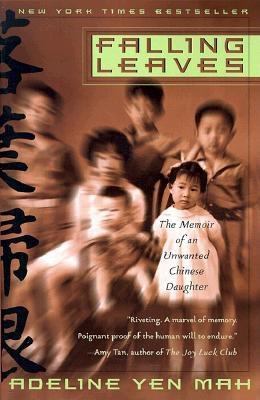
Falling Leaves by Adeline Yen Mah

Upon reading Mah’s Chinese Cinderella and its sequel, I recently was made aware of a precursor and her official autobiography.  Entitled Falling Leaves, the book follows the same plot line as her other two works.  However, what made it different was the voice Mah used as the story of her life progressed.

Little Adeline, originally Mǎ Yán Jūnlíng, was born into a high-class family in Tianjin, China.  Her mother, the light of her father’s life, died shortly after giving birth to Adeline.  This did not raise the youngest child’s status in the family.  From a young age, Adeline received nothing but resentment and mistreatment from her family, with the exception of her kind Aunt Baba.  Under the direction of the late mistress of the Yen household, Aunt Baba became Adeline’s surrogate mother.  But, Adeline was persistent to win her father’s attention, through and through, even to his deathbed.  She consistently was awarded medals and perfect report cards.  On few occasions, her father would notice, but with the addition of a new stepmother, Niang, Mr. Yen sent Adeline to boarding school.  Where, throughout the years she spent there, nobody paid her a single visit.

As Mah takes the reader throughout her painful life, she not only follows her own story, but retells her family’s (if they could ever be called that), so when the story concludes, all the pieces come together.  And, in Adeline’s case, quite heartbreakingly.

What Mah has written truly shows the willpower of human sufferance.  War-torn countries and refugees have stories worth sharing, inspiring the fortunate people of the free world.  However, within what may seem to be a noble Chinese household, the step-children, in particular the youngest girl, find a similar fates.  Though found the library’s adult section as it contains more mature content, I fully recommend Mah’s autobiography.

-Maya S.

The works of Adeline Yen Mah are available for checkout from the Mission Viejo Library.

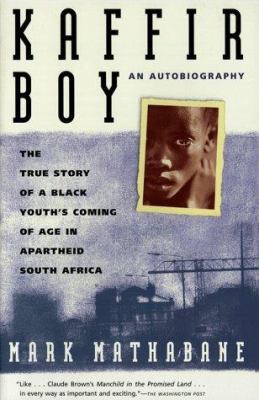
Kaffir Boy by Mark Mathabane

Kaffir Boy, the autobiography of Mark Mathabane, is the haunting story of Mathabane’s life in South Africa under apartheid. In a world where his very existence is frowned upon, and his every movement is monitored by cruel regulations, Mathabane accomplishes feats deemed impossible by the powerful white minority of South Africa. You see, although Mathabane was talented, smart, and athletic, he was black, which, according to the laws of his country, should have sentenced him to a life of poverty and servitude in the ghettos of Johannesburg. However, in a twist of fate, Mathabane enrolls in school and discovers tennis, the sport which changed his life. The rest, up until the publication of his book, is a rollercoaster ride of revolution and rebellion that you will not want to put down for an instant.

The book begins with Mathabane’s childhood, which as you would probably assume, allowed very little room for play or fun. The opening of the book details a police raid in which multitudes of his neighbors were arrested for petty crimes, and sent to work in the countryside for unspecified amounts of time. Later, his family battles starvation. Just when you begin to wonder if times will ever look up for the Mathabanes, they gather enough food to scrape by for another day. Event after event occurs, and you begin to wonder how Mathabane, called “Johannes” in the book, even survived long enough to write the book that you hold in your hands. However, hope comes to the family in the form of education, against all odds.

As a disclaimer, I will say that Kaffir Boy is not exactly a feel-good story. However, it is wonderfully written, triumphant, and eye opening. The book is a look into a world that we tend to glance over. You probably know what apartheid was, but this book is a look into the life of a person oppressed by it. It is also exciting, and shocking in many ways. It is a must read, and I definitely recommend it to anyone and everyone.

-Mirabella S.

Kaffir Boy by Mark Mathabane is available for checkout from the Mission Viejo Library