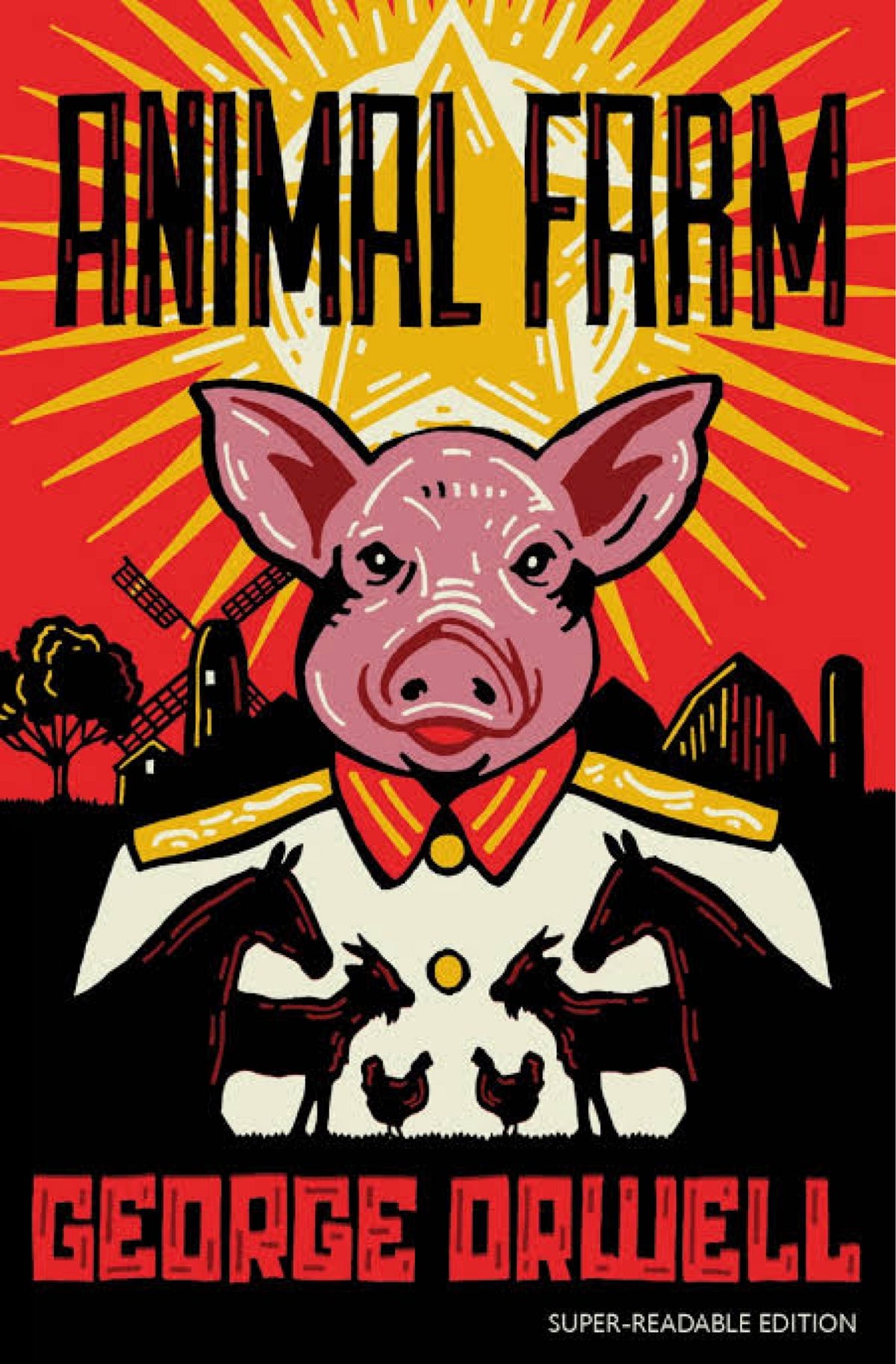
Animal Farm Book Review

Animal Farm is an allegorical fiction novel written by George Orwell, used to depict how corrupt leaders can manipulate those who are less knowledgeable into doing what they want. Orwell was alive during the time of the Russian Revolution, where Joseph Stalin had taken power away from Leon Trotsky and manipulated the Russian people into thinking that he is going to make Russia a better place; Stalin was just trying to get people to believe in his ideas, so that he could get them to do what he wanted. Since George Orwell watched these historical events take place, he wrote Animal Farm to inform the people of this time that they had been taken advantage of by these dictators, and that if they had been further educated, they would have noticed.

In the novel, Orwell uses the pigs to represent the more educated members of society and shows how they take advantage of the less educated animals. The horses on the farm, Boxer and Mollie, represent the working class in Russia during the early 1900s and how they believed whatever they were told due to their lack of education.

One of the pigs, Napoleon, becomes a dictator figure on the farm and manipulates all of the lesser animals to work for him and turn the farm into a paradise for the pigs. Once the smarter animals such as Benjamin, the donkey, who represents the working class, inform the other animals of what the pigs are doing they realize that they have been tricked into being the pigs’ slaves, but it is already too late.

Overall I felt that this book was a good example of how an excess of power can be turned into something bad. This book taught me that knowledge is important so that you can make decisions for yourself and know when someone is steering you in the wrong direction. I liked this book because it was entertaining to read about the fictional animals, but the moral of the story was also inspirational.

Animal Farm by George Orwell is available to check out from the Mission Viejo Library. It is also available to download for free from Libby.
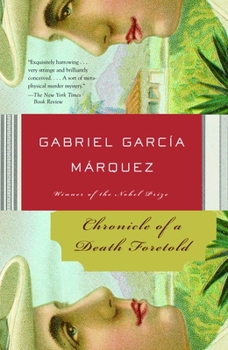
Márquez’s Criticism of the Role of Religion in Chronicle of a Death Foretold

Paperback Chronicle of a Death Foretold Book

Chronicle of a Death Foretold is a book in the magical realism genre and set rural Columbia. It was written by Gabriel Garcia Marquez and was published in 1981. It follows a detective attempting to solve a murder that happened many years ago and is based on a true story. Please note that it was originally written in Spanish, so some elements may not translate exactly.

I recently read Chronicle of a Death Foretold and my biggest takeaway was how Marquez explored and criticized the role of religion. Marquez criticized religion in this book through the prestige of religious leaders, the townspeople’s treatment and views of the community, and by showing how people justify inaction with religion.

First of all, Marquez highlights the faults of religious leaders like the bishop and Father Amador, showing the community’s blind reverence towards them despite their incompetence and moral failings. Secondly, the community’s respect for characters like Santiago, Angela, Bayardo, and the twins is influenced by religious beliefs, leading to misplaced priorities and justifications for harmful actions. Finally, the townspeople use religion to absolve themselves of responsibility, demonstrating the bystander effect and moral decay influenced by religious justification.

Throughout the book, various characters demonstrate the misplaced priorities and moral degradation of the community. The bishop’s arrival and the townspeople’s excitement highlight the significant role of religion. Father Amador’s inaction and incompetence are shown through his failure to prevent Santiago’s murder and his disrespectful treatment of Santiago’s body. The community’s judgment of Angela’s purity and their pity for Bayardo reflect the influence of religious norms. The twins’ justification of Santiago’s murder as an act of honor under God’s will shows the corrupting influence of religion. These are just a few of the instances in which the theme of the corrupting role of religion is demonstrated in this book.

These themes are consistent and expanded upon throughout Chronicle of a Death Foretold, and through them, Márquez effectively demonstrates the negative effects of religion in society, leading to social and moral degradation, and ultimately, Santiago Nasar’s death. I would highly recommend the book and would encourage readers to look out for these details and themes. Through this, they will truly appreciate Márquez as an author.

Chronicle of a Death Foretold by Gabriel Garcia Marquez is available to checkout from the Mission Viejo Library.

Makeup is Not (Just) Magic: A Manga Guide to Cosmetics and Skincare.

Makeup is Not (Just) Magic: a Manga Guide to Makeup and Skincare, written by Ikumi Rotta, is a delightful informational book.

Written in the style of a manga comic, Rotta, a former makeup consultant, teaches the reader how to up their makeup game. It is an enjoyable read for all people, regardless of makeup expertise. I would say that while it is geared more towards beginners, there is something for everybody in here.

Readers will enjoy learning many things about makeup and skincare, including how to find their skin type, how to use the different skincare products, and the four point method.

The tips in this book transform makeup from a daunting task to a creative outlet! This book truly has the best of both worlds, in both terms of instructional content and art. The author’s playful manga art gets the point across in style! I personally found this a very helpful read! It really helped me up my makeup game, especially in the areas I wasn’t as confident in. Who knew that you were meant to angle your eyelash curler that way? This book did!

In conclusion, if you are looking for a light and fun, yet informative read, consider picking up Makeup is Not (Just) Magic.

Book Review: Animal Farm

Animal Farm is a dystopian science fiction novella that draws inspiration from the Russian Revolution. The author George Orwell depicts a world in which the animals on the farm overthrow the farmers. The pigs are the leaders of the “coup” in which they create the Seven Commandments of Animalism, the most crucial being “all animals are equal”.

Life without the humans starts off well, but as the story continues it shows the descent of the original beliefs. The animals build a windmill to create their income and fund the farm. By the end of the story, the pigs are drinking amongst other human farmers. I found this concept very interesting. The idea is that in an attempt to create a better situation, the pigs became just like the people they despised. As even their motto got changed to “All animals are equal, but some animals are more equal than others”.

Orwell perfectly illustrates how as the oldest members of the original coup die, the younger ones begin to abuse their power. The symbolism of animals on a farm representing people in a society is truly brilliant. I read this for the first time in 7th grade. This classic is a 10/10 and I highly recommend it.

Animal Farm by George Orwell is available to check out from the Mission Viejo Library. It is also available to download for free from Libby.

Share this:

Book Review: Wildwood

Be excited! Laika Studios, the same production company that made Coraline and Kubo and the 6 Strings, are turning Wildwood to a movie!

Wildwood is the perfect book to start this fall season if you’re into story building and fantasy worlds like Lord of the Rings but want something more digestible and easier to read. Colin Meloy and Carson Ellis make a wonderful team as husband and wife, the illustrations are beautiful and I love how simple the illustrations are, gently guiding readers to follow the storyline while still leaving more specific details to each reader’s imagination.

Prue loses her little brother to a murder of crows one afternoon, the next morning she leaves early to retrieve him when she finds Curtis, her classmate, following her out of curiosity. Prue and Curtis are classmates in the 7th grade and they end up venturing out together in search for the missing sibling. They discover a troop of disheveled soldiers of coyotes, speaking English, to their surprise and split up while they flee the chasing troop. The story follows the separate adventures of Prue and Curtis until they eventually cross paths once again.

This book is great to unwind after a long day at school or work with a cup of tea and perfect for transitioning from summer to fall.

Wildwood by Colin Meloy is available for checkout from the Mission Viejo Library. It can also be downloaded for free from Libby.

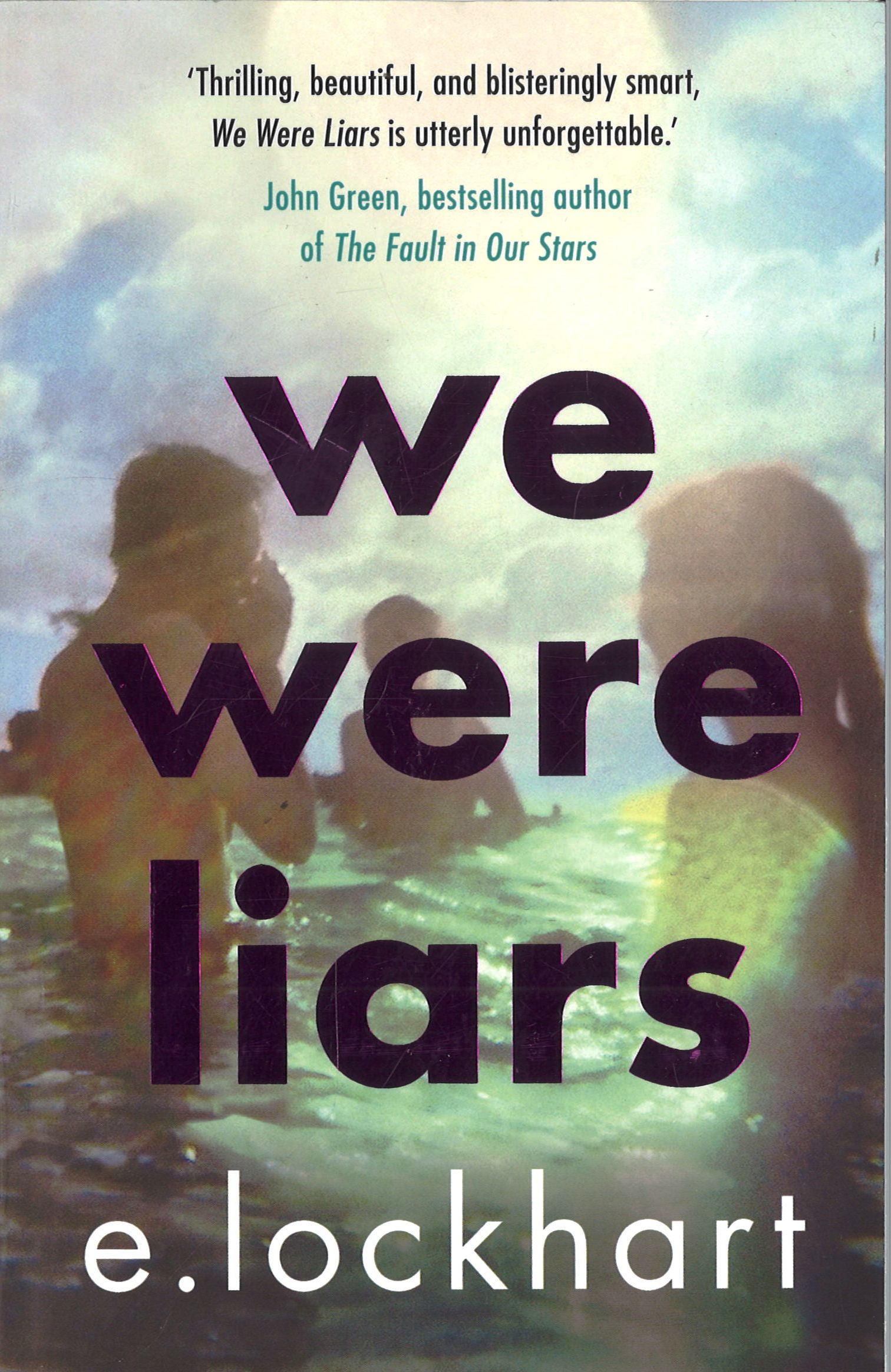
Book Review: We Were Liars

We Were Liars by E. Lockhart | The StoryGraph

This novel, written by E. Lockhart, is a psychological and horror story about a young girl named Cadence Sinclair and the events that occurred during the traumatic summer on her family’s private island. The story reveals dark family secrets and ends with a surprising twist.


Cadence suffered a head injury during her summer and cannot remember anything from that trip, so we uncover the events simultaneously, making the novel even more thrilling. As she reconnects with old family members, she uncovers the truth about her accident. The novel delves deep into the themes of privilege, guilt, and the destructive nature of lies.


Cadence’s friends during the summer are Mirren, Johnny, and Gat. They form a close group known as the “Liars.” They spend the entire summer together on the Sinclair family’s island, sharing new adventures and secrets. These adventures soon culminate in a shocking revelation about the accident on the island two years ago.


If you enjoy gripping and emotionally charged novels that keep readers on the edge of their seats, this book is for you! The novel’s intricate plot, well-developed characters, and unexpected twists make it a compelling read. Additionally, it dives into the themes of family, memory, and the consequences of secrets, providing both an entertaining and thought-provoking experience.

We Were Liars by E. Lockhart is available for checkout from the Mission Viejo Library. It can also be downloaded for free from Libby.

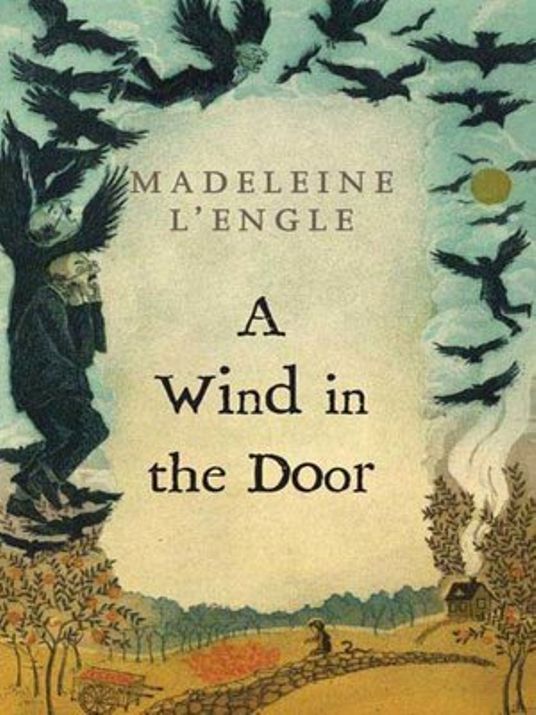
A Wind in the Door – The Sequel to A Wrinkle in Time

When I was younger and first discovering the beauty of classical literature, I fell in love with the famous A Wrinkle in Time, written by Madeleine L’Engle in 1960. Her writing artfully connects the fantastical and harshly realistic, as Meg Murry and her little brother Charles Wallace face extraordinary beings and situations to save those dear to them.

Little did I know after reading this masterpiece, that I would find five more beautifully written books accompanying it. The Time Quintet is one of the best book series I have ever read by far.

The Time Quintet Consists of:

  1. A Wrinkle in Time
  2. A Wind in the Door
  3. A Swiftly Tilting Planet
  4. Many Waters
  5. An Acceptable Time

My favorite out of these books though, is definitely A Wind in The Door. The novel continues to follow Meg and the Murray family, as her parents conduct risky and ingenious experiments. The genius family is distraught as they’re faced with one thing they might not be able to fix: a hereditary disease. In order to secure Charles Wallace’s future, Meg must assemble with creatures beyond imagination to defeat “those who hate”. Throughout this journey to save her brother, Meg must not only deal with real monsters but also find the good in someone who seems to be anything but good.

If you loved A Wrinkle in Time, enjoy fantasy or Sci-Fi, or desire to read a beautiful, empathetic story and add it to your repertoire: I highly recommend A Wind in The Door by Madeleine L’Engle.

A Wind in the Door by Madeleine L’Engle is available for checkout from the Mission Viejo Library. It can also be downloaded for free from Libby.

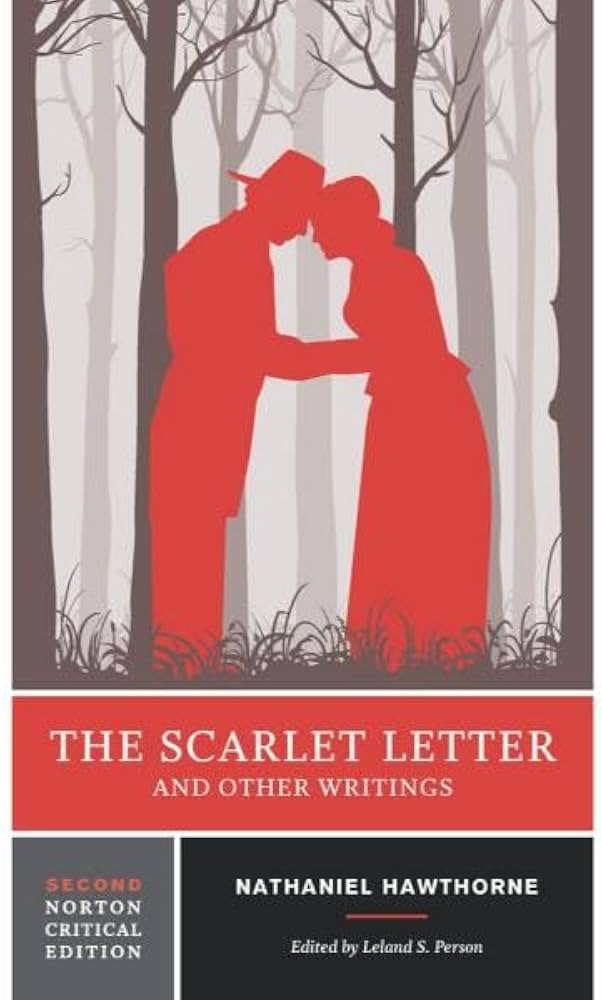
Book Review: The Scarlet Letter by Nathaniel Hawthorne

Recently, I began reading a multitude of books from the romantic and transcendentalist era for the English class at my school. While I initially came into the unit thinking that there would be nothing interesting about these 19th-century books written mostly by authors I’ve never heard of, save for Emerson and Poe, I was surprised by how interesting some of the other works were, including The Scarlet Letter, which the unit culminated in.

The Scarlet Letter gives the reader a vivid picture of early American society through the eyes of Hester Prynne, who is sentenced to wear a red “A” on her chest as a punishment for adultery after she had presumed her previous husband to be dead. The book begins with a visit from Hester’s husband, Roger Chillingworth, at the jail where Hester is being held. Chillingworth tells Hester about his quest for revenge, as well as his knowledge of the identity of the man whom Hester had an affair with. He then forces Hester to promise not to reveal who he is.

Fast-forward a couple of years. Hester’s child, Pearl, has grown, and Chillingworth’s quest for revenge continues. Although I am not going to reveal who the person ultimately is for the sake of not spoiling the story, Chillingworth begins to masquerade as a friend of the man whom Hester had an affair with and begins to psychologically torture him into confessing and exposing himself to the rest of the community.

Although I won’t spoil the rest of the story, I found this book very interesting because Hawthorne skillfully weaved references to romantic and transcendentalist ideas into the story, while still keeping it engaging. Also, for anybody interested in getting this book, I would recommend the Norton critical edition, as it includes the story itself as well as explanations for some archaic references or vocabulary that we would have a harder time getting. I would recommend this book to anybody interested in reading classic American novels, or novels from the romantic era in general.

The Scarlet Letter by Nathaniel Hawthorne is available to check out from the Mission Viejo Library. It is also available to download for free from Libby.

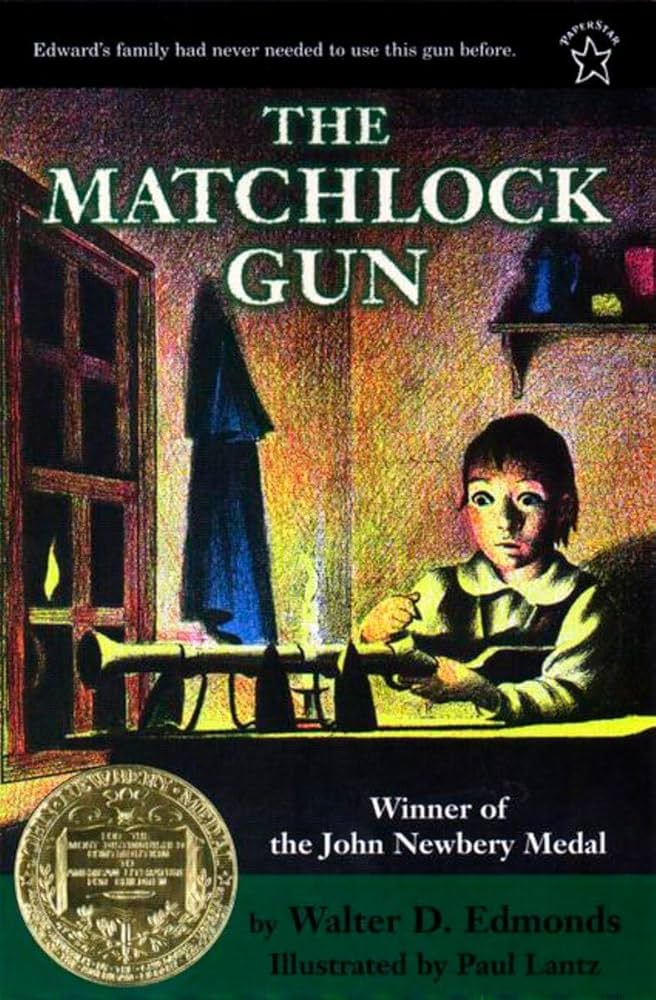
The Matchlock Gun by Walter D. Edmonds

The Matchlock Gun is a short story by Walter D. Edmonds. The story takes place during the French and Indian War, in New York State when it was still a British colony. Edward’s father, Captain Teunis Van Alstyne, is once again leaving home for military service. This time, he is going to Palatine Bridge to make sure that the Indians do not cross it and attack the town. Even though Teunis has often assured his wife, Gertrude, not to worry while he is away, she is still afraid of what might happen while he is away fighting the Indians.

When some of the nearby towns are attacked and burned, Gertrude’s worries become reality. She decides to teach her son Edward how to use their matchlock gun. This gun is a special type of musket that has power and weight comparable to that of a small cannon. It is so heavy that Edward needs to rest it on a table so that he can shoot out through the window. Gertrude assures Edward that if he is able to use the gun correctly and at the right time, then they should be safe from any Indians. Deep down, however, Gertrude does not know if they will be able to survive if they are attacked.

The foreword mentions that this book is actually based on a true story, which gave me a much different perspective on the setting and the characters. The story is quite dramatic.  Even though this book is very short, I enjoyed it immensely. The story is very exciting, so I found it easy to read in one sitting. I was disappointed that the Indians were portrayed as ruthless killers, but I understand that this book was depicting events from the perspective of early American settlers in those days. Despite the harsh realities of that time, I was impressed by the strength and courage displayed by Edward and his family. I consider this book well-deserving of the Newbery Medal, and I would recommend it to anyone interested in a short but action-packed read.

The Matchlock Gun by Walter D. Edmonds is available to check out from the Mission Viejo Library.

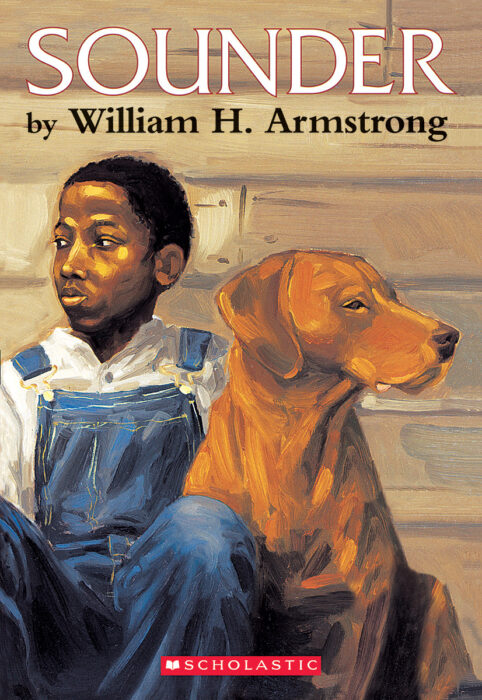
Sounder by William H. Armstrong

Sounder is a short novel by William H. Armstrong. This book won the Newbery Medal in 1970. The story is about a young boy living in the 19th-century South. The boy’s name is not given, but his father is described as a black sharecropper who is struggling to support his poor and hungry family. Along with his loyal dog, Sounder, the boy manages to survive despite the challenges of poverty and discrimination. From the boy’s perspective, this book explores themes such as finding strength to overcome trials and the importance of family. This book describes the harsh reality of racism and its harmful consequences. However, this book also celebrates an enduring spirit of hope and resilience as the boy is forced to deal with many hardships during his early life.

This book is simple yet powerful. It captures the emotions of characters who are dealing with severe difficulties. I appreciate that this book describes the Southern setting in a very realistic way, because I gained perspective on that society and culture. The relationship between the boy and his dog Sounder is very touching. I was impressed by the dog’s loyalty, and the story taught an important lesson about the value of good companionship during times of trial. The boy faces many challenges, including the imprisonment of his father and the struggles of daily survival. Through it all, he learns to become resilient and self-reliant.

A major theme of this book is the power of education. The boy’s greatest desire is to learn to read. Despite the tragic events of this story, there is hope that the boy will ultimately achieve his goal. This book inspired me to endure hardships and to pursue as much education as I can. Even though the human experience can be difficult and unfair, we can celebrate times of joy and express gratitude for family connections. Overall, I appreciated this book very much, and I would highly recommend it.

Sounder by William H. Armstrong is available to check out from the Mission Viejo Library. It is also available to download for free from Libby.