Dumplin’ by Julie Murphy

Dumplin’ is one of the few novels that I’ve loved both the book and film-adaptation. In both forms, Dumplin’ depicts the raw feeling of proving one’s self-worth, not based on outward appearances, but based on one’s self-respect and confidence in one’s capabilities. While capturing the jealousy, insecurity, and self-fulfillment of a teenager navigating the superficiality of teenage social-status and norms of beauty, Dumplin’ also left me with a message that will be prevalent throughout my life.

Julie Murphy’s Dumplin’ captures small-town Texas teen Willowdean Dixon’s path to finally feeling comfortable in her own skin. Through Willowdean’s, or Will’s, narration, she illustrates how being overweight affects her relationship with her former beauty pageant winning mother, Rosie Dixon, and her conventionally pretty best friend, Ellen. Will’s mother, being obsessed with maintaining physical beauty, never pursues a close relationship with her daughter, leaving her sister, Lucy, Will’s aunt, to take her place as a mother figure. Both Lucy and Will bonded over their love for country star Dolly Parton, an affection she also shares with Ellen. Through their idealization of Dolly Parton, a figure of confidence and glamour, Lucy encouraged Will to value and love herself despite being overweight.

To me, this was the part of the novel that stood out to me the most. Dolly Parton’s music in the novel inspires and influences Will to achieve the best version of herself and to approach that moment with the highest level of confidence. Dolly’s influence enforces the idea of figuring out who you are and doing it on purpose. While Will struggles to accept her plus-size figure due to her constant comparison to Ellen, Will chooses to compete in her mother’s beauty pageant, forcing herself to discover what real beauty is.

Today, beauty is very subjective. How we define beauty differs between cultures and the kinds of societies we live in. In my opinion, beauty is not what is aesthetically pleasing to the eye, but the confidence and goodness that a person carries within. It’s true that confidence makes someone more attractive, but what makes someone beautiful is when that confidence is real and grounded in self-worth; it is when that confidence cannot be shaken by any form of social comparison or deprivation. One cannot find worth in comparing oneself to others.

Will finds her beauty in self-worth, fulfilling her aunt Lucy’s wishes and proving to her mother that there’s more to beauty than being thin. Will stops blaming others for judging her and making her feel less than and looks within herself to build that esteem to feel good about herself. Being overweight does not define her; only Will can decide what defines her and how that will shape who she is and who she wants to be in the end.

Dumplin’ by Julie Murphy is available for checkout from the Mission Viejo Library. It can also be downloaded for free from Libby.

Persepolis: The Story of a Childhood by Marjane Satrapi

In my English class, we read the graphic novel Persepolis: The Story of a Childhood by Marjane Satrapi. The French-Iranian author of children’s books, graphic novels, cartoons, illustrations, and films created Persepolis as a memoir of her childhood when she lived in Iran during the Iranian Revolution.

To put the Iranian Revolution in perspective, the Islamic Republic of Iran, a theocracy ruled by Ayatollah Ruhollah Khomeini, was founded in 1979 after a series of riots and demonstrations that overthrew the Shah of Iran. The Shah was overthrown for a number of reasons, including political repression, economic difficulties, and public dissatisfaction with his rule (such as unrest brought on by the Shah’s westernization of the nation).

At the age of 10, Marjane Satrapi was forced to transfer from a coeducational French school to a girls-only school during the revolution. She was also required to cover her hair because the new Islamic regime enacted a law that, for religious reasons of modesty and dignity, required women to wear veils in public. The veil is a powerful symbol in the story because it stands for feminism, identity, and the oppression of women in Iran. Other struggles her family endured, like the Iraq War and her uncle’s execution for opposing the Shah and holding communist beliefs, are also covered in the book.

In AP World History, I formally learned about the Iranian Revolution and the overthrowing of the Shah. Once I read the book, I realized that people actually lived through the revolution and had to undergo the harsh conditions and the changes the new Islamic Republic established. Some of my friends’ parents experienced the revolution and describe it as fearful and deadly, and its long lasting outcome as a royal disaster for the Iranian people.

Persepolis: The Story of a Childhood by Marjane Satrapi is available to check out from the Mission Viejo Library.

Happy reading!

– Sophia B

My Brother Sam is Dead by Christopher Collier and James Lincoln Collier

About two months ago, I read a novel called My Brother Sam is Dead in my English class. At first, I thought I wouldn’t enjoy this book because I was being forced to read it. Instead, I actually ended up enjoying it a lot. I loved how it showed the side effects that war can have on society. Rather than showing the perspective of a soldier at war, it shows the perspective of a boy named Tim Meeker who has to face many challenges as a result of the war.

My Brother Sam is Dead takes place during the American Revolutionary War. The novel follows the story of a boy, Tim Meeker. While his brother, Sam Meeker, is fighting as a Patriot, Tim is forced to mature and change as he stays home and fights against the problems the war is bringing. As the reader continues throughout the story, they are able to witness the tragedies that Tim has to face causing him to go through very noticeable character development as the story goes on. They are also able to see how war brings other things rather than freedom and glory.

My Brother Sam is Dead is a well-crafted novel that has meaningful themes and topics. My favorite part of the book is its hidden message, which shows how war brings problems to everyone, not just those who are fighting in it. The novel does a great job at this by making the character development of Tim Meeker very apparent. The authors do this by making Tim go through life-altering events as a result of war, Causing him to mature quickly and to go through personal growth. Additionally, My Brother Sam is Dead has an entertaining story that will keep the reader engrossed in it throughout the story. The authors added very detailed scenes and emotions that have the reader feeling like they’re part of the story.

In conclusion, My Brother Sam is Dead is a novel that may seem boring, but is definitely the opposite. I recommend this book to anyone since it is not too long and has a story that is both engaging and thrilling. While this book may sound boring because it does not follow the perspective of a soldier at war, but instead a normal civilian, the authors do a great job at making it a very entertaining piece of literature. Using a civilian as the protagonist, the authors are able to tell the reader the side effects war has on the world. The authors are also able to explore topics such as personal growth with the use of Tim Meeker, a young boy who isn’t participating in the war, as the main character.

-Matthew R.

My Brother Sam is Dead by James Lincoln Collier and Christopher Collier is available for checkout from the Mission Viejo Library. It can also be downloaded from Libby.

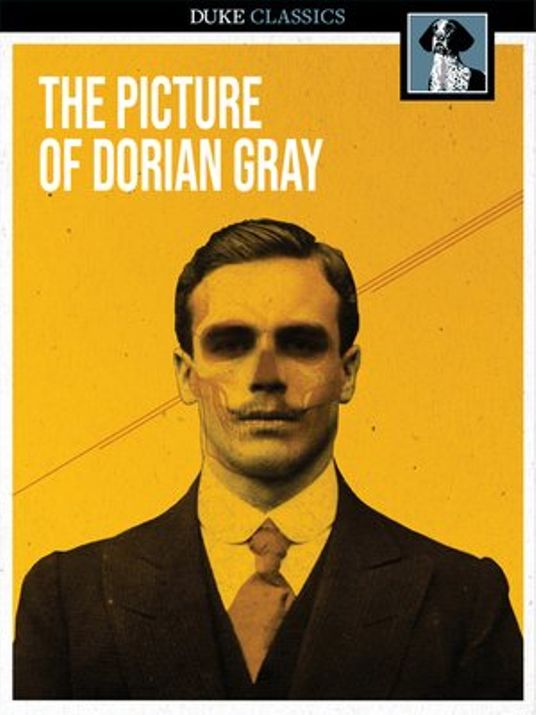
Picture of Dorian Gray by Oscar Wilde Book Review

Oscar Wilde’s The Picture of Dorian Gray is a haunting and provocative exploration of vanity, morality, and the consequences of indulgence. First published in 1890, the novel follows the life of Dorian Gray, a handsome young man whose portrait, painted by artist Basil Hallward, begins to age and show signs of corruption while he himself remains youthful and unmarked by time. Dorian’s pursuit of hedonistic pleasure, influenced by the decadent philosophy of Lord Henry Wotton, leads him down a dangerous path of moral degradation, as he engages in a life of excess without facing the physical consequences. The painting, however, becomes a mirror to his soul, revealing the true cost of his actions.

Wilde’s writing is sharp, witty, and layered with profound insights into human nature. His exploration of aesthetics and the consequences of living a life dedicated solely to beauty and pleasure is both thought-provoking and chilling. The character of Dorian is a complex one—initially innocent and impressionable, he becomes increasingly corrupted by his own image and the pursuit of personal gratification. Lord Henry serves as a persuasive, almost sinister, mentor, embodying Wilde’s fascination with the idea of “art for art’s sake” and the rejection of conventional morality.

I personally enjoyed the Gothic themes of the novel and how the book evoked a sense of wonder for the world. I became fascinated by the mystical words of Lord Henry and I loved being able to understand why Dorian Gray took the Lord’s words so seriously. I enjoyed how thought-provoking Wilde’s writing was and loved the array of shocking moments within the story. Furthermore, I thought the development of Dorian Gray’s insanity was beautifully written and held strong symbolism for the world’s corrupt obsession with youth, beauty, and immortality.

I would recommend this book to anyone who enjoys classical literature and a short, yet influential read. I think Wilde’s writing would attract readers who enjoy beautiful and mystical writing as well as exciting plot twists! I personally recommend this book for everyone as it is a wonderful novel to discuss peers and leaves you with thoughts about society!

Kaiya T.

The Picture of Dorian Gray by Oscar Wilde is available to checkout from the Mission Viejo Library. It is also available to download for free from Libby.

White Bird

White Bird: A Wonder Story (A Graphic Novel): Palacio, R. J.:  9780525645535: Amazon.com: Books

White Bird, is a book by R.J Palacio that I read about three years ago that tells the story of a young Jewish girl called Sara Blum who lives in a small village in France. Soon the Nazi Party, which was a movement under the direction of Adolf Hitler that believed that Jewish people had no right to live in Germany, defeated France and caused France to surrender which split the country in two regions, The Occupied Zone, and the Free Zone, Sara was placed in the Free Zone. However, even living in the Free Zone, the Nazis arrive and rounded-up many Jews to bring them to camp, Sara is brought to the woods for safety and meets a boy who invites her to live with his family and him in the meantime.

This book has really captivated me, and has overall become one of my favorite graphic novel books. The drawings, illustrations, and movements created in this book really add a whole level of contrast and emotions that really capture the reader’s attention. There is one part in this book, that really grabbed my attention due to the combination of the writing and the illustrations. It is when Sara Blum has a dream of herself flying up above the woods with a flock of birds, allowing herself to express and feel the sense of freedom while flying, this parts really brings a sense of emotions to the reader.

I would really recommend reading this book, as it is a great read and is really informative. The live-action movie is currently streaming and is available to watch on Youtube, Apple TV, and Amazon. I have not yet watched it yet, but is definitely on my watch list currently. White Bird is currently available to checkout from the Mission Viejo Library today!

Play Review: All My Sons by Arthur Miller

My English teacher recently recommended that I listen to or read some modernist plays in preparation for the next unit, and needless to say, I didn’t regret it. I found the play very interesting and moving, and I found the play’s nuance and Miller’s masterful usage of tension especially significant to the play’s powerful nature.

Set during the post-WWII era, All My Sons follows the tale of the Keller family, consisting of Joe Keller, the head of the family, Chris Keller, Joe’s son, Kate Keller, Chris’s mother, as well as Larry Keller, who went missing during the war. While Joe and Chris both think that Larry is dead, and that Kate should move on, she refuses to, deciding instead to turn to superstition to keep her hope alive. Meanwhile, Joe also has a dark secret in his past. During the war, he and his partner were convicted of selling cracked cylinder heads to the air force, causing the deaths of 21 pilots. While Joe was acquitted of any charges, Steve, his partner, was jailed because of this.

After establishing the beginning conflicts in the play, Miller goes on to expand upon the fatal flaws of each individual characters, He establishes Joe’s unwillingness to talk about the crime, implying that he was the one who was actually guilty of it. Kate’s vehement denial of Larry’s death is made more apparent in late act 1 and act 2, as she sees random events, such as finding Larry’s baseball glove, as signs that he would come back. Finally, Chris reveals his idealism to Larry’s old fiance, Ann, whom he is dating.

I won’t spoil the rest of the play, but I think this is a play that is definitely worth listening to, watching, or just reading. Miller does a great job of highlighting the flaws and traits of every character in the book, and making that work with the overall story is no small feat. Miller’s worldbuilding and writing style in this novel characterizes a break from a typical Modernist style of writing; While using very relatable and realistic characters and a realistic premise, Miller ultimately alludes to the theme of pursuing the deeper meaning of life and the world. I would recommend this book for anybody who enjoys modernist works of literature, or just anybody who wants to watch a classic American play in general.

All My Sons by Arthur Miller is available to check out from the Mission Viejo Library.

Redwall by Brian Jaqués

Redwall by Brian Jaqués is about a county of animals that live together in harmony. But when Cluny the Scourge, an evil rat only heard of in legends, comes to take over Redwall, the city of the mice, a brave young warrior steps up to save the day.

Ever since the passing of the great mouse warrior Martin, the forest has made a pact for Redwall to be a city of peace and wellbeing. This is so that any injured animal could come for aid, but in return Redwall could never be attacked: it was the unwritten law. However, Cluny the Scourge and his band of rats have tried to seize the opportunity of Redwall’s poor defense, and have made it their objective to break in and steal the valuables; starting with the mice’s precious Martin painting.

This is where Matthias comes in. As a young apprentice of Redwall, his duty is to obey Father Abbot at all times. The way of the mice is peaceful now, but Matthias longs to fight in an honorable war like Martin. When Cluny announces his threat, Matthias and his friend Methuselah try to find Martin’s long lost sword, shield, and belt. Cracking many clues, solving riddles, and an immense amount of courage Matthias is sent on a chase around the forest, hurrying to save his home before it’s too late.

Overall, I really liked the book. It had many unexpected plots, and the characters were well-thought out. It is a pretty thick book, so it took some time to read, but I really liked it. I would definitely recommend it to people who like animals but also adventure. There are 22 books in total in the Redwall series, and I would definitely keep reading them.

Brian Jacques’ Redwall series is available for checkout from the Mission Viejo Library. It is also available to download for free from Libby.

The Captive Kingdom

One thing that I liked about the book was the fact that it was different from the other ones. It had different characters, yet it was still good. I enjoyed the fact that Jaron and Roden were on better terms because I really like both of them, and I probably would not like it as much if Jaron did not like him. The author elaborated on the relationship between Amarinda and Tobias, which I thought was good because I was interested in it as soon as Jennifer A. Nielsen brought it up. I was pretty disappointed that Roden and Wilta did not work out, because while Wilta was not my favorite character in the world, I think that Roden deserves to be happy. The Captive Kingdom made me like these characters even more because they seemed extremely life-like. I think this because the three people that were training to be the lost prince/king Jaron (real Jaron, Tobias, and Roden) got to have love lives, or things that were close to that. As always, they have real emotions, such as Jaron’s sadness when he thought that Imogen didn’t care about him anymore and Tobias’s anger at the crew of the Shadow Tide when they captured Amarinda.

However, I think that the believable characters and the interesting plot make this a fascinating book. From when I first read The False Prince, my favorite has changed. When I first read it, I liked Jaron, and while I still like him, my favorite is Roden Harlowe; captain of Jaron’s guard. I like him because while he seems so tough and cool on the outside, he has his flaws. Take the scene in The Shadow Throne when he wanted more soldiers and so he sent a letter to Jaron asking for them, his letter had a lot of misspellings and bad grammar. I just thought that that made him seem all the more human.

Captive Kingdom by Jennifer A. Nielsen is available for checkout from the Mission Viejo Library. It can also be downloaded for free as an audiobook from Libby.

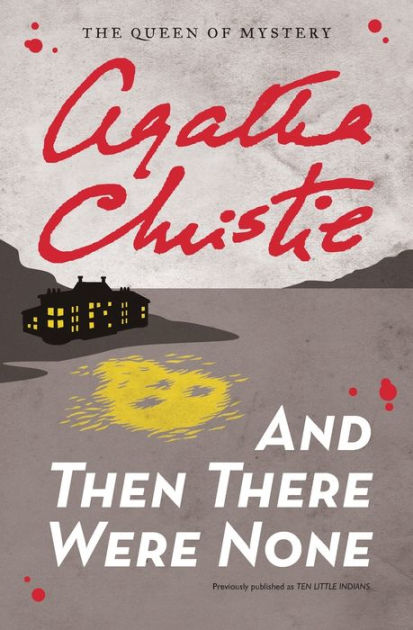
And Then There Were None by Agatha Christie Book Review

Agatha Christie’s And Then There Were None is a masterful work of suspense and mystery, often hailed as one of her finest achievements. First published in 1939, the novel introduces readers to a group of ten strangers who are invited to an isolated island under various pretexts. Each guest has a hidden past, with secrets they hope to keep buried, but soon, a series of eerie events unfold. As the guests begin to die one by one, the novel becomes an intense psychological game of survival, with no one knowing who can be trusted.

Christie’s skillful plotting and brilliant misdirection keep the reader guessing until the very end. The novel is a prime example of the “locked-room mystery” genre, as the isolated island setting creates an atmosphere of confinement and paranoia. Each chapter ratchets up the tension as the characters’ anxieties grow, and the clever use of nursery rhymes as a thematic device ties together the chilling sequence of murders.

I personally loved the constant suspense Christie gave us throughout the book. I loved how I could predict what would happen based on the poem “Ten Little Solider Boys” from the 1600’s, but was still left with unknown elements of the story. I also enjoyed reading about each character’s past and true natures. Not only were they all unique, but I loved how Christie highlighted human fear and suspicion and demonstrated the destruction death and fear can bring. Additionally, I loved the unexpected and haunting ending of the novel as it left me completely stunned and unsettled.

I would recommend this book to anyone who enjoys a good thriller murder mystery. If you like to read about a variety of unique characters and how they all become intertwined, I recommend giving this book a read!

Kaiya T.

And Then There Were None by Agatha Christie is available to checkout from the Mission Viejo Library. It is also available to download for free from Libby.

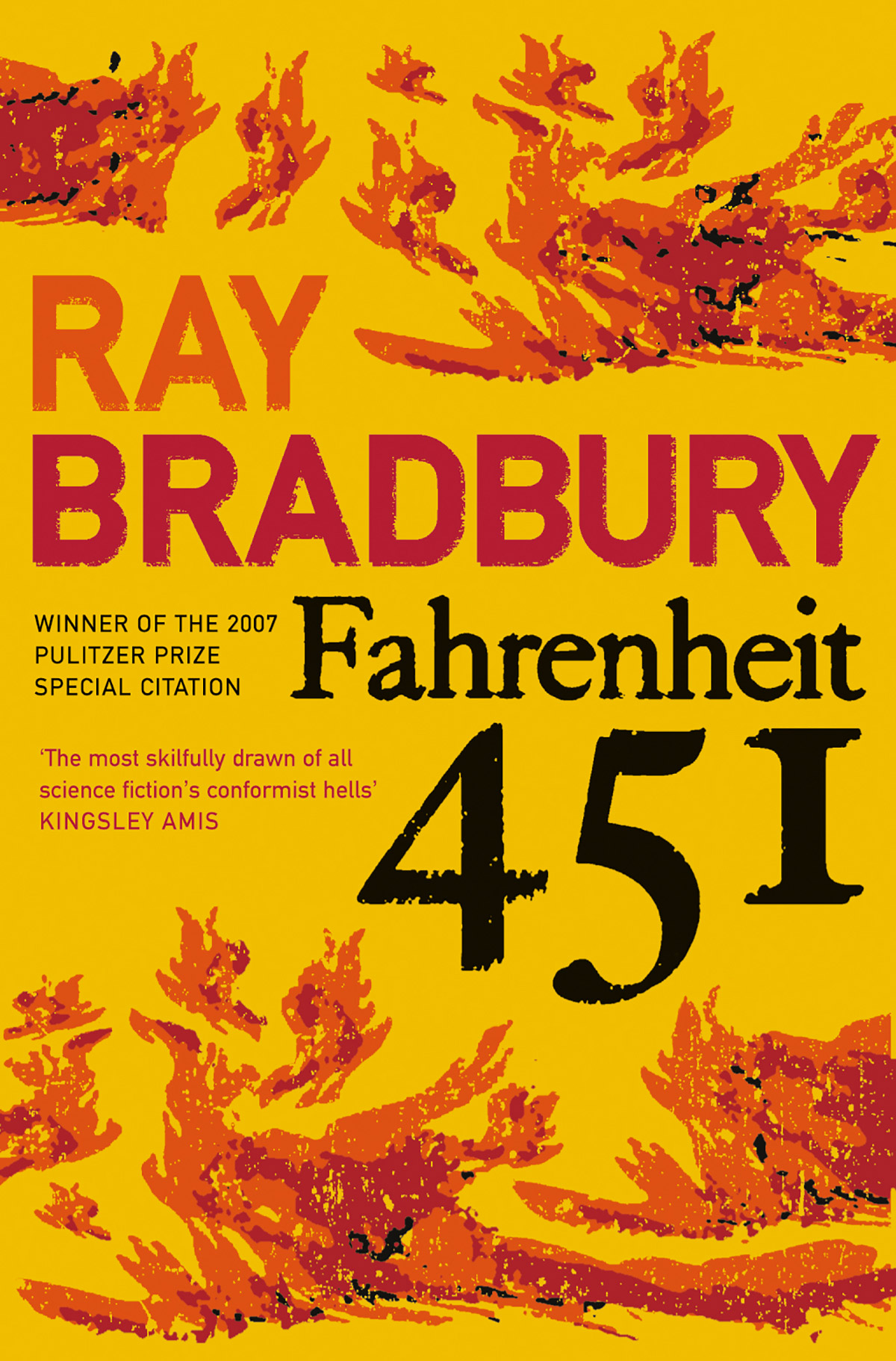
F451 Book Review

There must be something in books, something we can’t imagine, to make a woman stay in a burning house; there must be something there. You don’t stay for nothing” (Bradbury 139).

Fahrenheit 451 made me consider what I take for granted. Books have always been part of my world, but this story made me imagine a world where they were banned — where ideas, history — independent thought — were all erased. story—it’s a challenge. 

The book Fahrenheit 451 follows Montag, a fireman, but unlike the ones we have in our modern society, burns books and starts fires instead of putting them out. He is content with this job and claims to be happy. But is he really? He starts to ask himself this question when a new neighbor, known as Clarisse McClellan, moves in next door. Slowly, Montag starts to enjoy being in Clarisse’s presence, as she constantly thinks about life, and how the world is supposed to be. This sparks a change in Montag, but he has never taken action to it until one day, the alarm rang for a woman hoarding books. When they threaten to burn her and her books, she tells them that they will never have her books, and she lights a match, burning her house and committing suicide.

That scene haunted me. What could be so potent, so significant, that a person would rather die than live without it? Montag doesn’t know the answer, and neither did I, and that made his quest so gripping.

Bradbury’s world already sounded disturbingly familiar. The people in it are not imprisoned by ignorance; they embrace it. They immerse themselves in mind-numbing distractions, sidestep challenging conversations and recoil from anything that discomforts them. That one hit hard because it didn’t feel like any distant dystopia — it felt like a warning. His writing is dense and poetic, forcing me to slow down and really take in what he was saying. The conclusion left me conflicted.

There is hope, but at what price? The city’s gone, the world is broken, but there’s still a chance to rebuild.

Ultimately, Fahrenheit 451 is about something beyond censorship; it’s about what happens when we stop questioning, stop thinking, and stop feeling. It challenged me in an exquisitely uncomfortable way, addressing issues about the world around us. It’s not merely a story — it’s a provocation.

Fahrenheit 451 by Ray Bradbury is available to check out from the Mission Viejo Library. It is also available to download for free from Libby.