Harry Potter and the Prisoner of Azkaban Review – contains spoilers!

Harry Potter and the Prisoner of Azkaban is one of my favorite books by J.K Rowling. In it, Harry Potter starts his 3rd year at Hogwarts School of Witchcraft and Wizardry and finds out that a killer named Sirius Black is out on the loose.

During the train ride to Hogwarts, the dementors come and check the train for Sirius Black. I think the concept of them is excellent since they are able to suck happy memories out of you and make you cold. One of them got so close to Harry that he passed out. At school, dementors are stationed everywhere on campus.

Harry also get a new Defense Against the Dark Arts teacher: Professor Lupin. Lupin then turns out to be a werewolf. I think that was an excellent plot twist since it was so unexpected.

After Harry’s best friend Ron’s pet rat runs away, they follow him into the stump of a tree, where a vicious wolf-like creature comes out and takes Ron’s pet rat away. The wolf-like creature is actually Sirius Black as an animagus. An animagus is someone who can turn into an animal at will. I think this is really cool since you can sneak around places without anyone being suspicious. On top of that, Sirius turns out to be Harry’s godfather! With all of these plot twists and a lot of magic, I rate this book a 5/5.

Harry Potter and the Prisoner of Azkaban by J. K. Rowling is available for checkout from the Mission Viejo Library. It can also be downloaded for free from Libby

Anne Frank–The Diary of a Young Girl

On a spring day in May, in the year 1940, German Nazis stormed the Netherlands. The persecution of Jews quickly escalated, forcing many Jews to evacuate or go underground. One family, the Franks, went into hiding like thousands of others. Anne Frank is known for writing a diary that captured the horrors of World War II and her experience underground.

Reading this book, or diary, was exceedingly somber. In her diary, Anne highlights the constant fear, boredom, hunger, and threat of living life as a Jew. Despite the seriousness of the situation Anne is in, readers notice how cheerful and clever she is. Although she is put in the worst situation possible, Anne continues her fight for life in her ambitions to learn and become a writer. Even though she died as a young woman, she is a significant symbol of life, dreams, and the future. After reading this novel, I’ll admit that I was humbled to take everyday life for granted. Anne Frank’s Dairy is a wonderful commentary that is filled with her amusing, inspirational, and courageous thoughts that touched the hearts of millions.

November 1, 1944, was Anne’s last journal entry; the reason for the discovery of her family is kept as a long-lost mystery. One of her lasting passages reads, “I still believe, in spite of everything, that people are truly good at heart,” showing the depth of her optimism regardless of her circumstances (Frank). 

Anne Frank’s Diary is a masterpiece that everyone should read once in their lifetime.

The Diary of a Young Girl by Anne Frank is available to checkout from the Mission Viejo Library. It is also available to download for free from Libby.

The Adventures of Tom Sawyer by Mark Twain

Over the summer, I read a classic, Mark Twain’s The Adventures of Tom Sawyer. It remains a pioneering work in American literature. The story captures the 19th-century era with detailed and rich storytelling, showing Tom’s childhood adventure as a young boy who loves to get into trouble.

As we examine this classic, it’s crucial to recognize the evolving cultural context of the era and how social norms have changed since its publication.

When I read this in class, our teacher asked us to read it out loud, and some of the wording still made me uncomfortable saying it.

The Adventures of Tom Sawyer was published in 1876, and the societal attitudes and values of that time were so different from those of today. Twain’s portrayal of 19th-century American life is charming, engaging, and revealing, a world where language and cultural norms differ from today. He wrote the terms and phrases that might have been commonplace or acceptable then but would be frowned upon if anyone wrote them today. The most memorable part of this book was the terminology and racial references that he used, which were appropriate for then but not today. We counted the racial slurs in the books, which were more than 100 words.

Even though it was a classic, many students in my class weren’t happy to read it. There were many stereotypes and racial prejudices, but if we consider the era or the 19th century in which the book was written, it’s understandable that a good writer would make it very life-like and believable, and Mark Twain is no different. At that time, such language was embedded in our culture’s fabric, and its use was not questioned as it is today.

We have come a long way since then, understanding the harmful effects of stereotyping and racism. Modern readers and critics usually grapple with the discomfort of such languages in classic literature. Still, it is good for us to understand and see the change and growth in our society and what we deem acceptable and not acceptable.

I still like reading Tom Sawyer because it’s a classic, and it shows that our society has evolved and grown into something much better than the classics we read. The discomfort of encountering outdated language shows the positive changes in societal attitudes and how our society has grown and aspect more empathy, respect, and understanding from people.
Despite the controversial language, this book offers a human experience and captures youth’s essence. Tom, with his mischievous personality and also his struggles to do what’s right even though he seems to attract trouble.

Finally, while The Adventures of Tom Sawyer provides a snapshot of a 19th-century era, it is a reminder of the ongoing journey toward cultural sensitivity and social justice. So, the next time you read a classic, examine it critically and see how societal norms and language use differ and evolve from one century to the next.

Happy Reading!

Bella H.

The Adventures of Tom Sawyer by Mark Twain is available to check out from the Mission Viejo Library. It is also available to download for free from Libby.
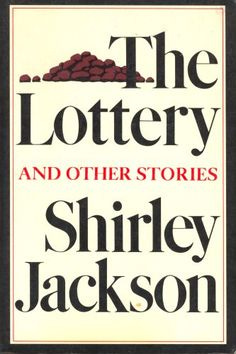
The Lottery: A Classic That Hasn’t Lost Its Kick

“Horrible”

“Superbly Contrived”

“Cancel My Subscription” 

These were all reactions to Shirley Jackson’s infamous short story, The Lottery. Originally published in The New Yorker magazine in 1948, this story has been haunting minds for generations. When my mom was around my age, she read The Lottery in her 8th grade English class. According to her, she found it eye opening, “I was amazed at how much suspense and curiosity a writer could evoke in just a handful of pages.” After she explained to me more about the story and author’s influence, I was interested in giving it a read. I checked out a book containing an anthology of Shirley Jackson’s short stories from the library. 

Flipping to the table of contents, I located The Lottery and began to read. The Lottery is a story about a yearly lottery event held in a rural American town. The purpose of the lottery is to ensure a good harvest, but how the lottery achieves this is unclear until the end of the story. At its heart, the Lottery is a cautionary tale about the dangers of blindly following tradition and adopting a mob mentality.

The title alone is foreboding, especially when you have heard people’s previous reactions to the story. This short story is so influential that even Stephen King was inspired by it. He states that, “I read it in the study hall, back at good old Lisbon High School. My first reaction: Shock. My second reaction: How did she do that?” Later, he adapted The Lottery into his short story, Rainy Season

As I closed the book, I found that it was very impactful for a short story. The writing invoked a lot of suspense, and I would recommend it to anyone looking for a quick but thought provoking read. If you are interested in reading it for yourself, (which I highly suggest as it only takes 5 minutes) you can find a free digital/audio copy here at: The New Yorker.

Why Are We So Obsessed With the Apocalypse?

So much media features the end times. From movies like A Quiet Place and Mad Max to novels like Silo and The Girl With All the Gifts, people just can’t seem to get enough of the genre. Why are we so obsessed with the apocalypse? According to Hugh Howey, author of the post-apocalyptic novel series Silo, humans tell stories as much for warning as for entertainment. Stories about disaster are expressions of our internal fears, and seeing characters prosper in face of those disasters gives us hope.

For this reason, wilderness and survival stories have always been popular. But why have we moved past the wilderness and towards the world-ending?

As we’ve explored most of the Earth, we’ve lost a lot of the wonder and fear we used to have for certain environments. Howey believes that “we need to imagine a future where we might be exploring other worlds, or a future where our world returns to the wilderness that we fear” in order to make our stories interesting.

If you’re interested in the post-apocalyptic genre, here are my top 3 favorites:

  1. Parable of the Sower by Octavia E. Butler
  2. The Girl With All the Gifts by M.R. Carey
  3. Silo series by Hugh Howey

These books are absolutely amazing, and I highly recommend them!

The Loop by Shandy Lawson

What if you were stuck in a world where time never moved forward, forcing you to relive the same terrifying events again and again? That’s exactly what happens to Ben, a teenager who finds himself stuck in a time loop, reliving the same deadly events over and over. With danger closing in and no clear way out, The Loop by Shandy Lawson is a thrilling ride that keeps you guessing until the very end.

One part of the story I really liked was Ben’s growing friendship with Maggie. At first, Ben is confused and scared, but Maggie already knows what’s happening—she’s been stuck in the loop longer than him. She’s not just a companion; she’s his guide to surviving the nightmare they’re trapped in. Maggie’s determination and quick thinking make her a strong character, and I liked how she never gave up, no matter how many times they had to start over.

Then there are the loopers, the men chasing Ben and Maggie. They’re mysterious, dangerous, and always seem to know what’s coming next. Unlike Ben and Maggie, the loopers don’t seem surprised by the time resets, which made me wonder—are they part of something bigger? Do they control the loop, or are they just as trapped? Every time Ben and Maggie try to escape, the loopers are there, making the story feel like a mix of mystery and action.

One of the most intense parts of the book was Jerry, the ruthless hitman working for the loopers. He’s a serious threat to Ben and Maggie, and his presence makes the stakes even higher. Unlike the loopers, who are mysterious, Jerry is direct—he has a job to do, and he won’t stop until it’s done.

I also liked Ben’s friend, Todd, because he represents the normal life Ben wants to return to. Todd has no idea what’s happening to Ben, which adds to the frustration and loneliness of being stuck in the loop. Ben’s mom also plays a small but important role, reminding us of the life he’s desperately trying to hold onto.

What I loved most about The Loop was its fast-paced suspense and unpredictable twists. Just when I thought Ben and Maggie had figured things out, something would change, throwing them back into chaos. This book kept me on the edge of my seat, making me wonder—will they ever escape, or is the loop unbreakable? If you like thrilling stories with mystery, action, and high stakes, I highly recommend The Loop!

-Adarsh V.

The Great Gatsby by F. Scott Fitzgerald

Recently, after watching the movie, I began The Great Gatsby. Considered by many to be the “quintessential American novel,” The Great Gatsby was one of the great books of its generation. While I initially felt ambivalent towards the modernist genre of novel in general, This novel changed my mind; I found this book very interesting and relevant to today’s world.

The novel starts with an introduction from Nick Carraway, the main protagonist and the narrator of the story. Nick introduces the line that divides the two cities, East and West Egg, as well as the lower-middle class industrial area known as the Valley of Ashes that splits the two districts. Nick lives in East Egg, even though he has the connections and family wealth typically associated with the “Old-Money” class of West Egg. At the same time, Fitzgerald also introduces one of Nick’s old acquaintances, Tom Buchanan, a temperamental, dishonest character who used to be one of Nick’s classmates at Yale. Nick also introduces Tom’s wife, Daisy, who will later be important to the plot of the book.

Nick first meets Gatsby through one of his lavish parties, which he throws weekly at his large mansion in East Egg. It is revealed that Nick had served with Gatsby in the WW1, fitting of the post-war setting of the book during the Roaring ’20s. Nick finds Gatsby’s parties shallow and garish, reflecting the West Egg sentiment about East Egg. Nick later uncovers that Gatsby’s parties were a futile attempt to win back Daisy, with whom he was deeply in love.

As the story progresses, the rivalry between Gatsby and Tom deepens, and the reader is also introduced to the lesser-known, shadier side of Gatsby. Fitzgerald includes several references to prohibition-era legislation and politics, including references to bootlegging and the 1919 Black Sox gambling scandal, using the character of Meyer Wolfsheim, one of Gatsby’s shady contacts, as an allusion for Arnold Rothstein.

I won’t spoil the rest of this story, but this book is definitely a classic that is worth reading. I really like how Fitzgerald is able to make his message about the American Dream and his overall Modernist sentiments about the meaning of life very clear to the reader, allowing them to create their own interpretation of the novel. I would recommend this novel to anybody who is interested in reading about life during the Jazz Age, or in general, anybody hoping to add a new piece to the puzzle that is the American story.

The Great Gatsby by F. Scott Fitzgerald is available to check out from the Mission Viejo Library. It is also available to download for free from Libby.
Tiny Dancer

Tiny Dancer [Book]

The Tiny Dancer is a book written by Siena Cherson Siegel and illustrated by Mark Siegel, that follows the journey of a young girl named, Sienita, on her pathway and dream of becoming a professional ballerina at the New York City Ballet Company located in New York City.

The book starts with Sienita as a young dancer, as a dancer at a small local studio near her in San Juan, after traveling to New York with her mother and doing an audition for the School of American Ballet School, she gets accepted and moves there. We then follow the pathway of Sienita at SAB and other ballet schools, through her many challenges and obstacles, from losing her boyfriend, her parents divorcing, and forced to reduce her ballet training when she experiences an injury, completely ruins her and dis motivates her as a person. Therefore, she must find a way to motivate herself back up again and continue working her dream and passion as a ballerina.

I really enjoyed reading this book, the illustrations and drawings were appealingly drawn showing life and motion. This book really shows and explains the difficulties associated with a passion that you are in. However, one negative aspect to this book that I did not enjoy much was how Sienita gave up on her dream of becoming a professional, she should have motivated herself even more and risen up to the challenge to work even harder to come back to her level, instead of letting herself get lowered down by how talented others are and by her injury.

If you are looking for another book similar to this one, To Dance, is also available in full color format with a similar story in a shorter, manageable text. This was the first book that I read from this author, after reading this book you cannot imagine the excitement I had to see a 2nd book written by the same author in a longer version!

If you are interested in reading this book, Tiny Dancer, by Siena Cherson Siegal is available to check out from the Mission Viejo Library today! I would totally recommend this book for people who are interested or currently are in the dance industry, or for anyone just looking for a motivating, beautifully illustrated and drawn book.

Rivals By Tommy Greenwald

Rivals, by Tommy Greenwald, is a great novel for teens for love sports. Two star basketball middle school boys feel the pressure to perform: a pressure many playing at an elite level feel. It is totally relatable, and as an AAU basketball player, I can really sympathize with what each boy is experiencing.

For Austin Chambers, basketball is starting to feel like a job. He must deal with his father’s legacy and worries that he’s not good enough to live up to it.

Carter Haswell, across town, is brilliantly talented and stressed to stay on his school’s basketball team to help them win and get a scholarship for college to ease his family’s financial situation.

Carter and Austin’s schools are traditionally rivals, and competition between those two middle schools is fierce. Neither school wants to lose, and Carter and Austin each do whatever it takes to win. However, the competitive spirits go way too far, and a few players get seriously injured. Through this, Tommy Greenwald shows how it’s good to compete in sports, but not to let it escalate to the point where people get hurt. Winning shouldn’t be a priority over health.

By the end of the novel, Carter, Austin, and the rest of their teams realize the same thing: at the end of the day, these sports are supposed to be for fun. This is something important to keep in mind because whatever sport you play should be to have fun and be competitive. Austin’s dad also sees that his son just wants to play for enjoyment, and that he shouldn’t force his legacy on him. He lets Austin have fun at the park simply playing ball, and Austin feels like basketball is his friend once again.

This book was totally enjoyable and relatable. The reader can really connect with the characters and learn an important message: sports should be competitive, but never forget that they are supposed to be fun.

Rivals by Tommy Greenwald is available to check out from the Mission Viejo Library.

Review for Matched by Ally Condie

It was good, not great, but good. It is a solid book that leads into a good series. I am going to talk a little bit about the book’s plot, high points, and characters.

Plot: Cassia, a smart teenage girl, finds out that her best friend is her Match (which is basically a mix of a soulmate and an arranged marriage). However, she sees that she is also matched with a boy named Ky. All the while, her grandfather gives her real poems, which are banned in the Society, where they live. She shows these poems to Ky and they fall in love when he teaches her how to create. Then, the Society takes Ky away and Cassia’s parents let her go find them.

Best Part: I liked when Cassia hung out with her grandfather. I think he was a really strong character and even after finishing this series, he was still my favorite character. I loved how he was mysterious and wise, basically Cassia’s version of Dumbledore or Yoda.

Character: In this book, we meet the three main characters: Cassia, Ky, and Xavier. Cassia is, like I said before, a teenage girl. She is determined, curious, and highly intelligent. Although she was raised in the Society and doesn’t understand certain things, she wants to learn and love. She ends up dating Ky. Ky is a calculating teenage boy who has seen way too much. He definitely did not fit in, but he tried to for the people he loved. He ends up loving Cassia and enjoys writing. Finally, we have Xavier, Cassia’s original match and childhood best friend. He is a dependent and caring guy who follows the rules and just wants to help.

Overall, it’s a good book. I like how it’s a dystopian novel, but it doesn’t really feel like Hunger Games or Maze Runner. It’s unique. I also like how the love triangle between Cassia, Ky, and Xavier doesn’t feel forced but instead seems, I guess honest is the best word. Both Ky and Xavier are amazing and well rounded characters who are good for Cassia. I’d recommend this to people who like dystopian novels such as the ones I previously mentioned.

Matched by Ally Condie is available to check out from the Mission Viejo Library. It is also available to download for free from Libby.