Book Review: Paper Towns, by John Green

paper_townsPaper Towns has to be my second-favorite book that John Green has written. When I’ve recommended books to friends, I’ve always made sure that my list of recommendations included Paper Towns.

Paper Towns is about a boy named Quentin Jacobsen, primarily known as “Q,” and the elusive enigma named Margo Roth Spiegelman. Though the two were once good friends in their childhood, they’ve become more distant as the years passed and Margo gained popularity.

However, one night, Margo taps at Q’s window dressed like a ninja with a whole night’s worth of plans. It is at this moment when Margo climbs into Q’s window that she climbs right back into his life.

After the night of impromptu adventures, Margo disappears just days before graduation and becomes a mystery to anyone who has known her. When Q hears about her disappearance, he ends up finding clues left specifically for him and follows them in order to find Margo.

It is this adventure that makes Paper Towns another favorite among teen readers and John Green Fans alike. I would absolutely recommend this to anyone who is interested in a book that is about a romance that is not really a romance at all.

-Danielle G., 11th grade

Book Review: Life of Pi, by Yann Martel

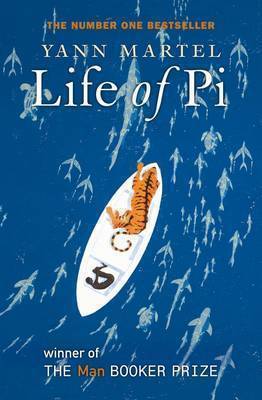
life_of_pi_coverThis book review is part of series of reviews written by students at St. Margaret’s Episcopal School for their 7th grade English classes.

The book I am reviewing is the book “Life Of Pi” by Yann Martel. You may recognize this book from the popular 2012 movie based after this novel. You also may recognize Yann Martel from other Canadian books that he has authored, such as “Self”. At any rate, Yann outdid himself with this book. Not many people could take the life of a young Indian man and make it into a compelling epic filled with conflict, hope, & promise.

This 537 page novel is divided into three main parts. The first is told from the point of view of Piscine Molitor Patel. His father owns a zoo in Pondicherry, India. He talks about his young life and the lessons he learned. Two really important things happen in this section. Firstly, after receiving the nickname “Pissing Patel,” he makes a new nickname for himself as “Pi Patel.” You get the idea that Pi is just a normal Hindu boy living in India. Secondly, Piscine “Pi” is born Hindu, but at the age of fourteen he starts practicing Christianity and Islam as well. He claims his reasoning as “I just want to love god,” (pgs 129-130). If I were Pi, I would have prayed to God more because Pi was about to have some bad luck.

The second is also told from Pi’s point of view. Surprising to me and unlike most book protagonists, Pi does not search for adventure. Instead it is forced upon him. His parents decide to move from India to Canada. After traveling with the animals on a ship so they can be sold elsewhere, Pi and the Patel family are thrown into danger. Their boat suddenly capsizes. Pi saves himself by climbing into a lifeboat but he is stuck with 3 (later 4) of the animals from his zoo. These animals are: a hyena, a zebra, an orangutan named Orange Juice, and a Bengal tiger named Richard Parker (RP). Eventually, only RP is left. Pi and RP learn to cope with each other in the boat for 227 days, most of which are spent describing the sea, stars, and his situation. Unlike most other stories, this story seems natural as if it was authored by Pi himself. Pi must remind himself continually of his family and realizes that life is only good if enjoyed, a continual reference through the rest of the book. If not for RP, Pi would have given up and died. Will Pi ever make it back? You’ll have to read the book to see what happens.

During the final part of the novel, years later, a much older Pi Patel is being interviewed by two reporters who are looking for info about the ship he was on. When they do not believe the story he tells them with the animals, he tells them another story in which Pi, his mother, the ship’s cook, and one of the sailors are on the lifeboat instead. The reporters have a mixed review to this story as well. Because neither of the stories have anything to do with the ship, they choose one of the stories. Pi’s response is simply “Thank you. And so it goes with God,” (pg. 531). You’ll have to read to find out which story they chose.

Overall, I would give this novel about 3.5/5 stars, because of two reasons. The book uses complicating word choice and if you prefer short books, this book is not for you. Also, the book does drag on in the middle while describing the few things Pi sees in the ocean in great detail. This leads to a slightly stretched out conflict and even some redundancy, but if you can make it past this part of the book, it is well worth it to see the end of Pi’s journey. Condensed into about 250-300 pages, this book would have been flawless, but now it is forced to depend on a simple plot and pure curiosity to keep the reader going. The only reason I did not stop is because I had to know how Pi’s life ended in the end.

-Tejav N., 7th grade

Book Review: Genghis: Birth of an Empire, by Conn Iggulden

genghis_coverThis book review is part of series of reviews written by students at St. Margaret’s Episcopal School for their 7th grade English classes.

Are you a reader that craves books swarming you with deceit, ambition, ruthlessness, and palpable pain? Then Genghis: Birth of an Empire is a perfect read for you. This compelling novel, written by Conn Iggulden is about the hardships and victories of Genghis Khan before he established the Mongol Empire. How can our contemporary from the picture-perfect English countryside paint such a vivid portrait of the 13th century warrior, leader, and visionary?

Temujin, later on known as Genghis Khan, is the son to Yesugei, who is the leader of the nomadic tribe called the Wolves. During his youth, Temujin experiences many traumatic events such as when his father is raided and killed by another tribe, and when he is abandoned, as well as his family to perish in the deserted plains by one of the bondsmen of Yesugei, Eeluk who declares himself khan of the Wolves, deceiving Temujin and his brothers.

On their first few nights alone, there is a very scarce amount of food and the entire family is starving, except for Temujin’s elder brother, Bekter. He discovers that Bekter is keeping food that he hunted away from the family. Temujin decides that this cannot go on any longer and he must kill Bekter before the entire family perishes. He and his brother, Kachiun create a plan to execute their greedy brother, and succeed. The news is announced to their mother and other siblings and the mother is heart-broken and infuriated at the same time. She orders Temujin to live separately from her and the family, threatening him, exclaiming, “If I see you sleeping, I will kill you for what you’ve done here.” (138). With tears in his eyes, Temujin flees from his family immediately, which is the only meaning in his life. What will happen next?

With such a strong focus on its main character, the author depicts a young boy and shows him transfer into a grown man who can lead anyone under his power. Depicting Genghis Khan as successful and hard-working, the author’s perspective of him is very clear- he admires Genghis Khan. In addition to the book’s main character development, the author follows several, central themes in his story such as how dangerous it was to live in Genghis Khan’s times and how fragile human life was, the never ending rivalry among various tribes in their quest for power, and the importance of loyalty and trust in Genghis Khan’s immediate circle of followers in order to not be defeated.

I recommend this book because I was captivated by the way Conn Iggulden described the characters and events in his story. I could imagine what Temujin’s thoughts and feelings were throughout his life experiences because of the author’s focus on his character’s inner-world. It really put a picture in my mind how Temujin was feeling when he was battling Eeluk. “Pain soared through him and Temujin saw Eeluk had aimed for the bloody spot on his tunic. He growled aloud as he came in, his fury fed by agony. Eeluk met his wild swing and punched again at the bloody muscle, starting a thin red stream that stained the tunic over older streaks” (364).  I was also moved by the author’s portrayal of major events in the story such as battles and murders in which his main character was involved. I felt as if I were a witness of them all because of how vividly they were described in the story.

-Natalie K., 7th grade

Book Review: Hokey Pokey, by Jerry Spinelli

hokey_pokey_coverA land where grownups do not exist, kids run free, riding on bikes and tricycles of all different shapes and sizes, while visiting the Hippodrome and Snuggles… where the Hokey Pokey man comes every day to serve cube shaped snow cones in every flavor from chocolate to jalapeño.

Welcome to Hokey Pokey, by Jerry Spinelli, a recently written book for teens about a fantasy land where boys rule day and night, and girls are not liked.

In the land of Hokey Pokey, Jack, an older boy is the leader of everyone, and spends his time cruising Gorilla Hill on his bike and always fooling around with his two amigos, Dusty and LaJo. Jack, the main character, has his prize bike stolen from by a popular girl, and he tries to get it back with the help of his two amigos.  But Jack also has another problem on his hands.  He is getting too old for Hokey Pokey, and his tattoo that all children in Hokey Pokey are issued as soon as they arrive is disappearing fast. Jack loves Hokey Pokey, but knows that it is getting ready for him to leave Hokey Pokey, where ever that may take him.

This book is a magical and humorous read, and even though girls are not accepted in the book, I feel this is for all genders, yet it is mostly geared towards boys. Hokey Pokey has nonstop action, and is always on the go, always amusing and entertaining.

Another thing I liked about the book is that every chapter switches perspectives, whether it is Jack’s, Dusty’s, LaJo’s, or Jubilee’s (the girls who stole Jack’s bike).  Hokey Pokey is a heartfelt story with a surprise ending that will definitely satisfy the reader.

Overall, I would say that Hokey Pokey was one of the better books that I have ever read, and I would recommend it to any teen who likes to read.

-Will R., 9th grade

Book Review: Dramarama, by E. Lockhart

dramarama_coverThis book review is part of series of reviews written by students at St. Margaret’s Episcopal School for their 7th grade English classes.

We all have dreams, often dreams we never even dare to follow. E. Lockhart pulls you into the life of a girl shooting for the stars, wanting to be known, and following a dream. Ms. Lockhart has written a Printz Honor book, been a finalist for the National Book Award, and a recipient of the Cybils Award for best young adult novel.

She illustrates the struggles, the longing, the tears, the smiles, the loss, the devastation and the hard truth of what comes with following a dream in her thrilling novel, Dramarama.

In the uneventful, lifeless state of Ohio lives Sarah Paulson, a young thespian searching and awaiting her chance at the Broadway stage. Her sleepy, repetitious life can’t keep up with her and her “lurking bigness.” So when the opportunity to audition to spend the summer at Wildewood, a prestigious performing arts boarding school, is handed to her, she cant contain her elation. While enduring the wait to audition she meets a boy named Demi, the only person in Ohio with even half of her “bigness.”

“My true best friend. A spirit made of equal parts of ambition and razzle-dazzle. A big baritone that slides easily into falsetto. And a future as bright as the lights on 42nd Street” (11).

She sets off to Wildewood with a new friend, new excitement and a new name, Sadye. Both her friendship and her talent are tested when she attends Wildewood and not all goes according to plan. When up against some of the most talented and experienced kids she’s ever seen, she cracks under the pressure and learns she’s going to need to be better than the best to even survive. Throughout her days that summer she learns more than how to transform into her character, or sing higher, or dance faster, she learns that you have to believe in yourself and that following your dream is something you have to fight for.

Sadye isn’t the best, or even close to it. But the real problem here isn’t that she doesn’t have the smoothest voice, it’s that she doesn’t believe in herself enough to have a shot. With no faith in her talents, with no confidence in her razzle dazzle, she falls short and gives up. No longer is she the girl who is proud to be herself and could be famous any day now, instead she’s the girl who couldn’t care less and doesn’t even try.

“Maybe my problem wasn’t what Morales and Reanne implied- that I lacked humility. Maybe my problem was that I lacked confidence. Not that confidence would make me a singer when I didn’t have a voice. It wouldn’t. I would never have the voice” (261-262).

It is imperative for her to believe in herself and persevere through her struggles to get where she wants to go and as E. Lockhart explains, without that she went nowhere fast and her chances disappeared. Belief is one of the most powerful tools to success and that is one of the greatest lessons to be learned in this novel.

E. Lockhart writes in a captivating and humorously relatable way, looking through teenage Sadye’s eyes. The way she tells this story made me feel as though I knew Sadye and was apart of her. This made each success even greater and each disappointment all the more frustrating. I felt as though I could relate to Sadye’s character and Lockhart did a magnificent job really capturing her essence and making her come to life. Not only does Sadye struggle with her talents and her Broadway dreams, but goes through every up and down all teenagers do. If you are in search for a good read full of humor, surprise, inspiration and a whole lot of singing, this book is definitely for you. E. Lockhart creates a story that hooks you in a heartbeat and pulls you in with every paragraph. Do Sadye’s dreams come true? Does she find the confidence in herself? Does she finally believe? You’ll just have to read the book to know for sure.

-Avery E., 7th grade

Book Review: Embers and Echoes, by Karsten Knight

embers_echoes_coverHave you ever pretended you could summon fireballs on your fingertips at will? Embers and Echoes, by Karsten Knight, is the perfect adventure novel for you.

Ashline Wilde, the reincarnation of a Polynesian volcano goddess, has been tracking her six-year-old sister to Miami, Florida. A group of gods have kidnapped Ash’s sister, Rose, for her ability to create explosions so powerful that they rip through the fabric of space and time. These rifts can become gates between any parts of the world, and even to other worlds beyond. Each of the four gods controls a power relevant to one of the four seasons, hence the self-proclaimed name: The Four Seasons. The Four Seasons reveal themselves to the world as heroes, gods from legend come to save humanity from harbingers of doom. In reality, their plan is to sacrifice Ash’s newfound friends Aurora and Wes, god of the night. So, with her assortment of gods, Ash seeks to stop the Four Season’s megalomaniac scheme.

Karsten Knight’s fast paced story never lets up, transitioning rapidly from one exciting battle to the next. The storyline provides a variety of different moods, along with comedy Easter eggs scattered throughout the book. Combined with an interesting plot, all of this makes for a very entertaining read. However, I did notice that none of the characters were described in great depth. As quickly as they were introduced, they either died or simply left, so that the reader didn’t get to know the well enough to really mourn or to rejoice when they passed on. While the fast-paced plot was exciting, the reader doesn’t really get a chance to mull over what just happened before something else happens. Also, this book has some profanity and adult themes.

Overall, Embers and Echoes is a fun read for anybody who enjoys fantasy books, especially concerning ancient gods. Be sure to read the first book in the series, Wildefire. I am eagerly awaiting the next book, Afterglow.   

-Phillip X., 8th grade

Book Review: When We Wake, by Karen Healey

when_we_wake_coverThe novel When We Wake by Karen Healey is intriguing. This book contains an alternate world that is supposed to be Earth, sped up to the future. Karen Healey has introduced this concept very interestingly, using cryonics as her main background story.

Cryonics is the freezing of the entire body. It is performed in order to instill preservation. So, from this background story, Karen Healey had decided to make her main character, Tegan Oglietti, the only survivor from the past Earth years. The book starts by a snippet of Tegan’s past life; her cherishes and dearly loved, when suddenly an event leads to her unexpected death.

Tegan wakes up a hundred years in the future, stored in a government building, without knowing how she ended up there. Technology has advanced, and all sorts of rules have been enforced since the time she was gone. On top of that, she has lost everybody she loved, and knows nobody in this foreign world. How does she adjust?

As you can guess, this book is unlike one you have ever read, literally. Also an interesting fact, Karen Healey has written The Guardian of the Dead and The Shattering, for you people that have read her other works. She is very inspiring, and I feel that the genre of a “new world” concept is only becoming more popular. There are all sorts of novels coming out about a future Earth, or perhaps a different planet of some sort.

In conclusion, this book is a must read. It surprises you in no way as another.

-Nirmeet B., 10th grade

Book Review: The Devil Wears Prada, by Lauren Weisberger

devil_wears_pradaThis book review is part of series of reviews written by students at St. Margaret’s Episcopal School for their 7th grade English classes.

It’s as if I am right there maneuvering my way through the streets of New York. The author of Devil Wears Prada Lauren Weisberger made me feel like I was in the big city trying to stay on task. A young girl fresh out of college named Andy ends up in a job one in a million girls would want. “Yes, the hours are long and the work is hard but it’s worth it, a million girls would want this job.”

The problem is, Miranda Priestly a high‐profile, cruel and fabulously successful editor of Runway magazine is impossible to please. Andy, quickly realizes after a long day of running impossible arenas, the only way to get her dream of being an editor for a fashion magazine is to last one year without getting fired. Instantly Miranda changes Any’s identity by giving her a makeover. Also she is now known as “Andrea” pronounced long and drawn out.

As you read through the book you will not be able to put the book down! You will instantly fall in love with Andy’s determined personality. She is young and a great inspiration too girls. This character demonstrates in order to get what you want you will have to work very hard and not give up. Overall, she had too be my favorite character. Andrea besides from trying too reach goals helps friend and makes many friend.

Miranda Priestly is the world’s worst boss. “Is there some reason that my coffee isn’t here? Has she died or something?” She expects the most from everyone. If it isn’t done they are fired. During the beginning of the book she tries to change Andrea’s profile from a small town girl to a high‐profile fashion assistant.

In the end the question is will she sustain the job with Miranda and not get fired? Will she get her dream? Will friendships and relationships last? Read this well written book and you’ll find out! The ending is unexpected and surprised me. If you like a great suspenseful and eager to read more book this is the book for you.

-Amanda C., 7th grade

Book Review: Edenbrooke was Eden

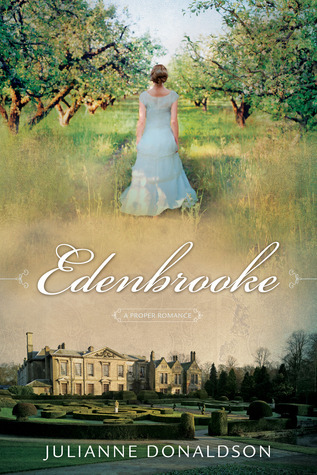
edenbrooke_coverHello. Austenite here.

I am a HUGE fan of Jane Austen, and for all you people who had to read Emma in high school and are SO over it, think again. I am reviewing an amazing, spectacular book called Edenbrooke by Julianne Donaldson.

Edenbrooke is a Regency novel about a 19-year-old girl who is sent to live with her grandmother after her mother is killed. Because Marianne hates it there so much, her grandmother sends her to Edenbrooke, hoping that Marianne and the young man there will fall in love.

It is an intense plot with a reading level about 8th grade and up. The language is period-based, yet easy to understand and the plot has so many twists and turns you will hardly be able to keep it straight.

The characters include a highway man, a handsome man, a twin sister, an annoying twin sister’s BFF, and a main character who has a slight affinity for twirling (with her eyes closed). This book was a masterpiece of a Regency novel and one should sit on every home’s bookshelf. I think this one is definitely more for girls though. Sorry, guys. One day I will review a book for you. Probably.

-Becka O., 8th grade

Book Review: Leviathan, by Scott Westerfeld

leviathan_coverThis book review is part of series of reviews written by students at St. Margaret’s Episcopal School for their 7th grade English classes.

I wasn’t alive during World War One but Scott Westerfeld’s Leviathan (the first book in his trilogy) made me feel as if I was. Titled after the British whale airships, most of the story takes place on one of these Leviathans. The novel was fast paced and action packed, so it seemed like I was living each moment along with the characters. Scott Westerfeld is clearly an expert at building suspense, as seen in the first three pages of the book: “The war was coming after all. Everyone said so” (3). As I read on, I felt like a part of the story when an Austrian-Hungarian prince named Alek fled from his home. He fled from all his riches and tutors because the Germans killed his parents to start war. “Maybe this was how you stayed sane in wartime: a handful of noble deeds amid the chaos” (360). Alek was accompanied by Count Volger, his fencing tutor, Otto Klop, the engineer and a few other servants. Together they formed a devoted group as they tried to flee to Switzerland. About the same time in England, a brave girl named Deryn tries to join the Air Force posing as a boy. Deryn always wanted to be in the Air Force because her dad took her flying in hot air balloons. Deryn refers to the air forces ships as “beasties” because of the living creature mixed in with the air ship. Deryn doesn’t like guys too much because she thinks they are total unaware of what is going on around them, “Most man’s awareness doesn’t extend past their dinner plates” (279).

Having these two main characters made the book interesting to read because of the different perspectives that it was written in. Since the two characters were different genders, the war could be understood from two points of view. This also makes it appeal to a wider audience of both girls and boys. Further, the two perspectives were not just different but they were actually in opposition due to their countries fighting against each other in the war. Ironically, the two separate story lines merge into one by the end of the novel as the two characters find each other. Throughout the story, Scott Westerfeld taught a valuable lesson of humanity in the way these characters came together and helped each other rather than fight one another. These lessons hit home with a reader because they cause faith in humankind to be restored even despite a violent war.

Scott Westerfeld’s writing is amazing at catching readers attention and keeping them interested because he keeps switching perspectives between Alek and Deryn and keeps you wondering how or when they will meet up. Scott Westerfeld is a very established author, having written 18 different books. His writing style is educational, in the sense that he included historical accuracy in his description of scenes. I think this is a very good book and I would recommend it to all young readers who have an interest in war history novels.

-Dylan C., 7th grade