Book Review: A Tree Grows in Brooklyn by Betty Smith

tree_grows_brooklynThe novel A Tree Grows in Brooklyn is about a young girl growing up in Brooklyn, New York at the turn of the century. It begins with a child, Francie, born in the tenements. During her childhood she would read her books in the fire escape and look at the tree in the center of the tenement district. The tree only grows in the districts and grows out of cement. On Saturdays she would bring junk in with her little brother, Neeley Nolan, to earn pennies so they can buy candy from Cheap Charlie’s, a penny-worth candy store. Charlie, the owner of the store, had a prize board but no one ever got a real prize, just candy for trying. She dreamed of coming back to the store with fifty cents so she can win all of the prizes on the board.

During her childhood, she went to school and was very good at writing. As she grew up, Francie went through her ups and downs as she overcame every one of them. She worked two jobs to support her family and to receive money. Francie’s first jobs was in an artificial flower-making company where she had to wrap green paper around a piece of wire to create the stem of the flower. Her second job was at a newspaper company where she had to read newspapers and clip article strips and sort them out by state. Finally, she grew up with her family and came out as a beautiful young lady.

I really liked this book because it had me interested with each chapter. It was a bit slow in the beginning but then it became full of character. There was some surprises along the way but they came at very great times during the book. I would recommend this book to people 13 years and up just because some of the events that happen are not for younger kids. If you ever read this book, I hope you will enjoy it.

-Samantha S., 8th grade

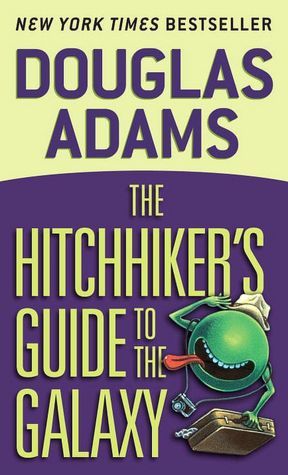
Book Review: The Hitchhikers’ Guide to the Galaxy by Douglas Adams

hitchhikers_guideThe Hitchhikers’ Guide to the Galaxy by Douglas Adams is the first, out of five, novels depicting the intergalactic adventure of an Earthling, Arthur Dent, and an extraterrestrial, Ford Perfect (his name on Earth).

In the beginning of the story, Arthur Dent is lying in the mud in front of his house to protect it from the contractors who want to destroy it so a bypass could be built there. A little while later, Ford Perfect comes and convinces Arthur to go to a pub with him. At the pub, Arthur thinks that Ford is crazy because he warns that the Earth is going to be destroyed by the alien race, Vogons. Turning out to be true, they manage to get on the Vogon’s ship.

Aboard the ship, Arthur and Ford are discovered and, as a punishment, are mandated to listen to the Vogon’s poetry, the third worst in the Galaxy. Then they are placed into an airlock where would be released into space. The President of the Galaxy, Zaphod Beeblebrox, who is aboard the ship called Heart of Gold, rescues them. Zaphod is a cousin of Ford; a miserable robot named Marvin and a woman named Trillian also join them. Follow Arthur and Ford through their interplanetary journey by reading The Hitchhikers’ Guide to the Galaxy.

Picking up this book, I wasn’t sure what to expect in the story. But I am glad I choose it. Despite its intimidating size, I read it and I thought that it was an awesome science-fiction story. At certain points in the book, the author goes off describing a new Alien race or new planet, but it eventually connects back to the story. If you enjoy the first novella, then I suggest reading the rest of the novels.

-Anmol K., 8th grade

Book Review: Heart of Darkness by Joseph Conrad

heart_darknessWritten as a narrative, Polish author Joseph Conrad writes about a character known as Charles Marlow. Charles Marlow is a ivory transporter who works down Central Africa traveling through the Congo river. From the beginning of the story, Charles Marlow is sort of obsessed with the “yellow” colored river on the map, the Congo River. It is this obsession that leads Marlow to work for a company that transports ivory down in Central Africa. Curious fact is though, that this company has had many steamer captains, the recent one of which died due to savage natives. However, this seems as nothing out of the ordinary since Marlow is set on traveling through the Congo River. Marlow joins the Belgian ivory trade firm and starts up on a journey to Africa.

During his journey through Central Africa, Marlow hears of an important and successful man named Kurtz. From the accountant, Marlow learns that Mr. Kurtz is a respectful man who has gained the most ivory compared to the other posts. Kurtz is sick, however he still has ambitions of becoming a manager within the ivory company. Even though Marlow does not know much of Kurtz, he starts to adore him, and eventually becomes obsessed. Throughout the trip, Marlow goes through many experiences, such as having a dead crew member fall at his feet and bleed to death, and get attacked on the ship by the local natives. In the conclusion of the story, Kurtz eventually dies, and Marlow is left looking into the darkness.

-Nirmeet B., 11th grade

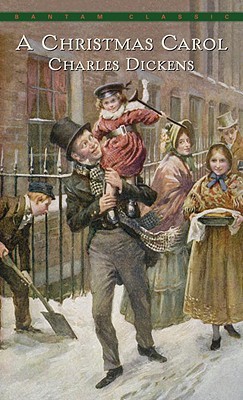
Book Review: A Christmas Carol by Charles Dickens

christmas_carol_coverThis terrific novel by Charles Dickens tells a tale of an old, stingy, and wealthy man, Ebenezer Scrooge, and a lesson about Christmas spirit. On a cold foggy Christmas Eve, Mr. Scrooge works in his office as his clerk, Bob Cratchit, attempts to warm himself with a measly fire of one single coal. Seven years ago on this day his equally selfish partner, Jacob Marley, died. One at a time two businessmen, a caroler, and his nephew, Fred, enters Ebenezer’s office. Quickly, he sends them off by saying, ”Bah Humbug!!” Scrooge grunts at the merriness of Christmas as people joyfully pass by.

At the end of the day, he goes to his gloomy mansion. Before he went to bed, he hears chains outside his bedroom. An apparition of Jacob Marley walks through the door! He has a pale white face and bears long, heavy chains with moneyboxes, watches, and cashboxes. The ghastly spirit tells Scrooge his horrific fate. Jacob warns Scrooge that three ghosts are going to appear before him to take him on journeys of Christmas. As Jacob leaves out of the window, Scrooge notices that there are other melancholy ghosts just drifting in the sky. After, he falls asleep disbelieving the existence of the ghosts of Christmas. Do you think his perspective on Christmas will change after the visits of the spirits? To find out- read A Christmas Carol.

I really enjoyed this book. It describes each of the ghosts very well and really gave a feeling of Christmas as you read. Charles Dickens is truly a wonderful writer, and he makes it that you are engaged in this book. I recommend this story to all ages. I hope you will read this book if you have not.

-Samantha S., 8th grade

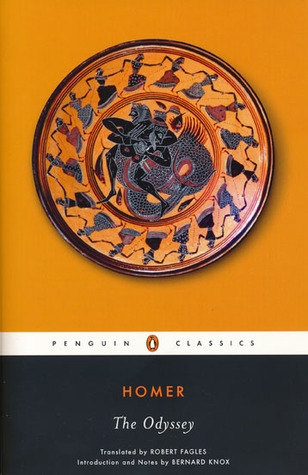
Book Review: The Odyssey by Homer, interpereted by Robert Fagels

odysseyYou may have heard about the two great epic poems of Greece, purportedly written by a blind poet, Homer: The Illiad and The Odyssey.

It was required reading for my English course to read The Odyssey. Warning: It is not a quick and easy read. I read the poem version, and that was 485 pages of verse. Though it may seem like an odyssey in itself to read this book, I found it to be surprisingly good, given the time period in which it took place.

An odyssey is a long journey. This epic tells of the odyssey of Odysseus, a great hero who left his hometown of Ithaca, Greece to fight in the Trojan War. The entire poem tells of the trials and hardships that Odysseus encounters in his attempt to return home after the war. The book is full of daring adventures, the whims of the immortal gods (mainly Zeus, Poseidon, Athena), and lots of bloodshed.

Given that the novel is in verse and was written so long ago, the names and places are now abstract to present day audiences, but that did not necessarily take away from the poem. To me, this aspect of the poem made it seem even more like a fairytale, since many of the names and places are so intangible and seem made up.

I would not necessarily recommend going out of your way to read this book, but when you have to study it for an English class, keep in mind that it is not a terrible book as may have been rumored by other students. Be grateful that we now have access to ways of reading books both on paper, audio books, and electronically, because in Homer’s time, this entire poem was passed down through oral traditions. That means this 485-page poem was memorized in its entirety! That was probably the most shocking part of the whole reading experience!

– Leila S., 9th grade

Authors We Love: John Steinbeck

grapes_of_wrathJohn Steinbeck has become one of my all-time favorite authors, after I was first exposed to his novels in middle school. He is one of the most popular American novelists, whose works have had a lasting effect on American people, even today.

I have recently read The Grapes of Wrath, which is one of Steinbeck’s most renowned works, earning the illustrious Pulitzer Prize. Set during the Great Depression, the novel focuses on the Joads, a poor family of tenant farmers who are driven from their home in Oklahoma  by drought, economic hardship, agricultural changes and bank foreclosures. Trapped in the Dust Bowl with little chance in escaping their unfortunate situation, the Joads set out for California with the hope of new opportunities. The Grapes of Wrath portrays the economic hardships of people during the Great Depression, as well as the American dream of freedom, dignity, and a better future.

In addition to The Grapes of Wrath, I have read The Pearl, Of Mice and Men (one of my all time favorites), Cannery Row, and the East of Eden. Steinbeck’s writing style certainly makes his works intriguing and his use of figurative language, especially imagery, helps the reader to imagine the vivid scenes and time period of his stories. Through characterization, readers are able to relate to his unique characters and feel their burdens and everyday hardships. I especially love Steinbeck’s novels because they urge me to read in between the lines and think more deeply about the true meaning of his stories.

Although his writing may seem simpler and easier to understand than most classics, I have found that each of his novels convey a different theme and underlying motives are hidden throughout his plots. Each time I reread a novel, for instance, I am able to come across new ideas I had never noticed before, making my reading experience more interesting and thrilling. John Steinbeck is certainly an influential author, who is able to transport you to new time periods and places through the power of his words. I definitely recommend his novels to students in middle school searching for a good classic, and urge those above the ages of thirteen to continue to read and appreciate the works of the wonderful John Steinbeck!

-Kaylie W., 10th grade

Book Review: And Then There Were None by Agatha Christie

and_there_were_noneIf you were to receive a vague letter that enticed you to an island for a pretext, would you still go? Such is the situation in the thrilling page-turner, And Then There Were None by Agatha Christie, ten people from different walks of life each receive a letter for a different purpose to go to Indian Island. But all of them have one thing in common: they all are indirectly involved with a person’s death.

In their rooms, at the mansion, each person has a framed copy of the poem: “Ten Little Soldiers.” After having dinner the first night, they all are in the living room when a gramophone announces each person’s name and whom they indirectly murdered. On the same night, Anthony Marston takes a sip from his drink and starts choking, an eventually dies. One by one each guest is murdered, and the guests who are still alive realize that the murderer is amongst them.

I thought this book was awesome. It was a real page-turner and I did not want to put it down. If you are looking for a great mystery-murder novel, then this book is recommended for you. As you read the book, you try to figure out who is the murderer. After you suspect one person, they turn out to be the next victim. This aspect of the book was fascinating to me. I won’t give much of the ending away, but the way the person executed their actions was improbable. Advised for anybody who loves suspense, read And Then There Were None.

-Anmol K., 8th grade

Book Review: Jane Eyre by Charlotte Bronte

jane_eyreUnfortunately Jane Eyre would never become the best seller it once was, if sold within our time. It holds four-hundred odd pages of description-infused writing (hardly any of which is possible to hold in concentration for the average teenager of our generation), a heroine and love interest who both do not seem particularly attractive, overt religious themes mixed in with heavy-handed moral preaching delivered by the author, a plain love story (with a few plot twists thrown in for dramatic affect), etc., etc.

And yet…it has become a story adored by generations, one that has ascended to the lofty consideration of a classic.

Fortunately for me, that meant I was subjected to read this in school, which in turn meant I was definitely not allowed to read it at just face value.

Perhaps two years ago I picked up the book in attempt to immerse myself in a classic for the summer, and at the time, I was incredibly disappointed. Reading it as my impressionable, naïve, opinionated teen self of a few years ago (that I like to think was the Sophia of the past) Jane was a meek protagonist, who was incredibly boring when held up to the “empowered” female protagonists of today. I saw her as too clingy to her outdated morals, and unable to follow “her heart” for love within the book. Predictably I only read through the first half of the novel before sucumbing to complete disatisfaction.

And wow, I was wrong.

Now with two more years of life experience under my belt, along with a hefty dose of analytical interpretation from the English class this assignment was given for, the truth has been revealed in stark comparison. Jane Eyre is actually (when read properly between the lines as well as through its many intricate layers) a compelling and interesting story of 19th century female independence and empowerment, created light years ahead of its time.

It was even considered revolutionary within its time, author Erica Jong stating (of Jane Eyre), “When a book is beloved by readers and hated by contemporary critics, we should suspect that a revolution in consciousness is in progress.”

Jane Eyre is aware of her self-worth. She knows what her morals are, and she stands by them (and unlike many others she sticks to them regardless of the final outcome of her decision). She doesn’t follow the advice of others advising her against marriage, the first time, because she is prudish or caged up or weak unable to sway for love (the mindset I believed before), but instead because she is standing strong for herself, standing by her own integrity and her own beliefs.

Charlotte Bronte masterfully subverts many literary tropes of her time, and of our own. The things that made Jane so unappealing for me before-she was far from perfect (or rather she did not have imaginary flaws seen by only herself; she was completely real, and completely subjected to the human flaws we all have), she was not beautiful which allows her to fall into a relationship with Rochester not based on appearance, but instead due to her true self, not one hidden behind a façade of perfection and beauty.

One of the other things that surprised me after becoming fully immersed in the novel-the dialogue and characters still appear fresh and witty in their interactions. The plot is as intense and immersing as a YA novel of today.

And if you can put aside your phones and your short attention spans for a period of time its 461 pages are filled to the brim with intense gothic imagery and mood, as well as beautiful compelling plot points and twists-things you wouldn’t expect from a novel published 167 years ago.

If you have the time and dedication to read between the lines, perhaps you’ll begin to understand the revolutionary nature of this novel-perhaps even revolutionary for our time.

-Sophia U. 12th grade

Book Review: To Kill a Mockingbird, by Harper Lee

mockingbird_coverTo Kill a Mockingbird is about two young siblings, Jem and Jean Louise “Scout” Finch, and their father, Atticus Finch. Jem is the older one with a kind heart, and Scout is the younger sister who favors boys’ games and entertainment.  Their neighbors are the mysterious Radleys.  Jem and Scout always wondered what was with the Radleys.  During one summer they meet Dill, a young boy who comes to their town every summer.  From that day they played with scripts from stories.  They decid to try to get one of the Radleys out, Boo Radley.  They try many ways but fail.

Few months later Atticus gets a case about a black man raping a white girl. Jem and Scout eagerly join the audience in the court room as the case was discussed.  It ended up with the black man being found guilty, and he went to jail.  The father of the victim wanted revenge on Atticus for defending a black man.  So, will the man found guilty be released or not?  And will Jem and Scout ever get Boo Radley out of his home?

This book was really enjoyable. Once you finished the first chapter you are hooked and reeled in.  It is such a page-turner!!  I suggest this for thirteen and up because of the language.  The story really fits in with the title.  I hope you enjoy this book.

-Samantha S., 8th grade