Book Review: Galapagos, by Kurt Vonnegut

galapagos_coverThere is an archipelago, six hundred miles from the western coast of South America, isolated from the rest of the world. For some, this remote location is a destination sought in the pursuit of relaxation, others engaged in the hunt of research. Yet most uniquely, this island chain is the focus for a novel written by one of the 20TH century’s greatest authors.

Kurt Vonnegut’s Galápagos, his eleventh elongated tale, remains a true example of his characteristic cynicism and caustic humor which have long attracted a devoted audience, including myself. At a rather superficial level, Galápagos is extremely humorous for those with an attraction to keen wit. Yet upon delving further into the text, one comes to grips with the more profound revelations Vonnegut has to offer. At its deepest level, Vonnegut prophesizes, criticizing the society celebrity-worshipping cult of “big-brained” buffoons that he observes. This is where Darwin comes into play; Vonnegut incorporates evolutionary ideas to suggest that our noggins have outgrown their necessity, and have driven us into despair. And so, as our author predicts, we shall regress to the animalistic state of furry ocean-dwellers.

Vonnegut’s scattered scenes mimic the geography of the story’s setting, and while occasionally disorienting, they lead to a comprehensive narrative regarding the tale of the crew of the fictional Bahía de Darwin who take on a sort of Noah’s Ark as the survivors of the human race. Stranded on the island of Santa Rosalia, the outcasts ultimately are the ancestors of a new species that inhabit earth, which Vonnegut continuously visits a few thousand years in the future. In this way, the only true antagonist of the story, the brain, is victorious.

While not a challenging read, Galápagos is advanced in its writing and revelations, but should be intriguing to any curious teen. There is no doubt that Vonnegut sparks some compelling questions: What is our relationship to the rest of creation? Are the fittest really the ones who survive? Have our brains become the enemy? Surely the author has his own opinions and predictions, but we are not necessarily compelled to agree. Rather, Vonnegut seeks to entertain us, his rhetoric present only under jocularly sardonic remarks and plot.

-Sebastian R., 10th grade
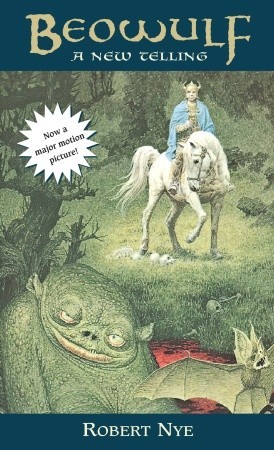
Book Review: Beowulf, A New Telling, by Robert Nye

beowulf_coverBeowulf is believed to be the first piece of English literature ever to be written. It was originally composed as an epic poem. This version was adapted in the form of a short novel.

In the beginning of the novel, Beowulf travels to the land of the Danes, to visit the king, Hrothgar. Hrothgar’s hall, Hall Heorot, had been under attack from Grendel, an evil monster, for many years. Because of this constant threat that no one had yet ceased, Hrothgar was indifferent of Beowulf’s arrival and declaration to fight Grendel.
However, Hrothgar would soon find that Beowulf is no ordinary hero. To fight Grendel, he uses no sword and does not formulate a plan. Will Beowulf still be able to defeat the monster without these vital things?

After the death of one of Hrothgar’s men, and the mysterious disappearance of Unferth, another of Hrothgar’s men, Beowulf follows Grendel’s mother’s sickly spoor into the Fen, an evil, swamp-like area on the edge of the Hall. To fight Grendel’s mother, he has to dive deep into a bottomless pool, with blood bubbles floating to the surface. Deeper and deeper he swims, until he is grabbed by Grendel’s mother.

Beowulf then tries to repeatedly hit the monster, to no avail. He feels helpless at the hands of this monster. Is it still possible for Beowulf to kill this hideous monster? Or will his fear paralyze him?

Despite his reputation in the land of the Danes, Beowulf does not feel he belongs there, and journeys back to his homeland. Once there, he is asked to be king, an offer which he declines, not wanting to take the throne when there is still an heir.

For the next few years, he lives peacefully tending bees like he did as a child. However, when the young king is killed, he must take the throne. He leads the country into a time of peace, during which he continues to tend his bees.

However, one fateful day, a slave wanders into the mountains seeking treasure in a prince’s burial chamber. This causes the firedrake to become enraged and swell to an enormous size, preventing the animal from exiting the burial chamber. Once the firedrake calms his temper and ventures outside, the monster wreaks havoc on the nearby houses, setting them on fire.

Beowulf, being king, knows he must take action. This time, with help, he formulates a plan to defeat the firedrake. He sets his bees in front of the entrance to the cave and steps inside to carry out his plan. Will Beowulf’s strategy work? Will he survive his last exploit?

Before reading this book, I had not heard anything good about the story. However, I thought the book was suspenseful and a good read overall. I would rate this novel a 9 out of 10.

– Leila S., 8th Grade

Book Review: The Lion, The Witch, and The Wardrobe, by C.S. Lewis

narnia_coverI read The Chronicles of Narnia: The Lion, The Witch, and The Wardrobe with my class this year and I liked it.

The story is about four kids, Lucy, Edmund, Peter, and Susan, who go into a wardrobe at the Professor’s House. Lucy goes into the wardrobe before the others, during a game of Hide-n-Seek on a rainy day. She meets a faun (a creature in Narnia), Mr. Tummus, in a forest where the wardrobe entered. He takes her to his cave where he lives, and serves tea.

Two hours pass and Lucy runs back through the wardrobe to her siblings and says,
“I’m here! I’m here! I’m not lost!” But it turns out it’s only been two minutes since the game started– according to the rest of them. Lucy talks about Narnia and none of them believe her. Days later, they all go in the wardrobe and go to Narnia and discover that she was telling the truth. And that starts the Adventure in Narnia.

There is also a movie but it is somewhat different. I recommend this book for age 9 and up because it is challenging in some parts and it is a good fantasy book.

-Kate B., 6th grade

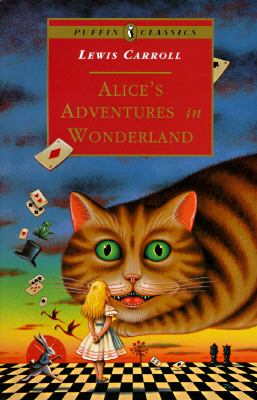
Book Review: Alice’s Adventures in Wonderland, by Lewis Carroll

alice_wonderland_coverAlice’s Adventures in Wonderland is a fun fantasy book for all ages. The story begins with Alice and her sister on a bank of a river. Alice peers into her sister’s textbook, and she tries to think what is the use of a book without pictures and dialogues. When Alice begins to pick daisies to create a daisy-chain, she spots a rabbit mumbling to himself. She thinks that is natural until the rabbit pulled a pocket-watch and looks at it. The girl becomes curious and follows the White Rabbit down the deep rabbit-hole.

Soon after she lands, she wanders through a long hall with doors on each side and finds a tiny door behind a curtain without a window. Later she encounters and talks to a blue caterpillar that is smoking a hookah. When the White Rabbit sees Alice, he thinks that Alice is Mary Ann, his house-maid, and tells her to fetch a pair of gloves and a fan. Afterward Alice meets the Queen of Hearts and plays a game of croquet. The croquet game uses a live flamingo as a mallet and a hedgehog as the ball.

Were Alice’s adventures real… or was it all a dream?

You’ve probably seen the Disney adaptation of this classic book, but did you know there’s a sequel? Read more about Alice’s adventures in Through the Looking Glass.

-Samantha S., 6th grade

Top Ten Rediscovered Classics

I rediscovered these classic books, and really enjoyed all of them! I thought I would share some of my favorites with you and maybe even persuade you to read them. This is my “Top Ten List of Classics,” counting down to my favorite.

pearl_cover1. The Pearl, by John Steinbeck
Steinbeck’s descriptive writing landed this book on my top ten list! This story is about a man named Kino who lives in poverty with his wife Juana, and his baby son, Coyotito. Kino is a pearl diver and one day he finds a giant pearl that changes his life completely. A story about greed and wealth versus generosity and humble living, this novella should not be missed!

2. Black Beauty, by Anna Sewell
This novel is written in the perspective of a horse named Black Beauty. Black Beauty tells of his struggles and triumphs, from the time he was born to the time he retires from pulling taxi-cabs. My heart was moved both with Black Beauty’s cruel owners and with his loving ones. The author does a great job of putting everything in a horse’s view. A famous success, this novel is a great read for any animal lover!

3. A Little Princess, by Frances Hodgson Burnett
Burnett creates the world of Sara Crewe, an orphaned girl who goes to live at Miss Minchin’s Boarding School while her father journeys with his friend to a diamond mine in India. However, unfortunate events leave Sara with no money, and the envious Miss Minchin immediately takes away all of Sara’s possessions and banishes her to be a maid at the boarding school. Truly reflecting the importance of friendship and kindness, this book shows what it takes for a young girl to stand up for what she believes is right. Continue reading

A Journey Through English Literature

bookstack2I have long maintained an affinity for words, a love of reading and language itself. To a large degree, my passion has been sponsored by my education in the arts of literature and composition, a trend has persisted even to this, my sophomore year of high school.

Since last September, my classmates and I have chronicled English literature as it has developed throughout the ages. From  a linguistic standpoint, it has been extremely interesting to see the advances of our language in vocabulary and syntax, yet even more so the changes in storytelling and style have enthralled me.

As the year began, we delved into the ever-classic Beowulf. Though not as ancient as The Odyssey or tales of other archaic civilizations, the epic emanates a similar air of inhumanly heroics, which, although often unacceptable to modern audiences for its lack of realism, is enjoyable for its archetypal characteristics. As with many if not all of the works I will discuss, Beowulf is a true portal to another time, imparting on the reader the same awe which the people of old felt in experiencing the tale of this epic hero.

gawainMoving from the Danish isles to those of England, we next read Sir Gawain and the Green Knight. Marking the beginning of the presence of knighthood, the tale is one of many surrounding King Arthur and his Round Table. Exemplary in its symmetrical structure and symbolic usages, Sir Gawain most notably gives insight into the values and beliefs of the time. Yet these are perhaps the most outstanding qualities of the work; in reading Sir Gawain, one comes to understand the values of chivalric times, if not the plot, story, and other thematic elements.

From here we read a few books and the prologue of Chaucer’s immortal Canterbury Tales. As opposed to the anonymous composers of the retrospectively conservative aforementioned tales, Chaucer is revolutionary, a critic of the age’s corrupt church. This quality of subtle rebellion has resounded throughout history in various arts. Furthermore, in addition to providing an accurate representation of the social structure of England at the time, Chaucer’s writings, the Miller’s fabliau, the Pardoner’s allegory, are truly entertaining.

othelloShakespeare furthers the role and characteristics displayed by Chaucer in his tragedy, Othello: Moor of Venice. Novel in its portrayal of an African as its protagonist, the work explores racial and gender themes, and is notable for these characteristics. Yet most riveting is the tragedy’s antagonist, Iago, a deceitful and charismatic villain who, despite leaving his motives unstated, acts solely to rue Othello with such spite and  yet such cunning that the audience is singularly and wholly captivated.
Our penultimate novel then was Jane Eyre. Moving to the near-modern age, Ms. Brontë’s novel is romantic, a true pleasure in which to delve, except for its lengthiness. This faux-autobiography is unique in the lot of works that have been discussed for its first person perspective, which provides a unique look into character not seen previously. In many ways an aspersion of Victorian beliefs and customs, Jane Eyre resembles Jane Austen’s Pride and Prejudice as a tale of true romance, and though occasionally melodramatic, is enjoyable for this purpose.

As we now look to end our year with Darles Chicken’s A Tale of Two Cities, I believe I have come to truly appreciate English literature as a whole. The diversity of the genre’s development has been incredibly interesting to observe, yet textual analyses aside, I have become engaged in the stories and have transported myself to other times. Yes, the texts have been dense and at times dull, but overall this escapade has been well worthwhile.

-Sebastian R., 10th grade

Book Review: The Adventures of Tom Sawyer, by Mark Twain

tom_sawyer_coverThe Adventures of Tom Sawyer is a great book to read for anyone who loves classic stories.  It is about a naughty boy named Tom doing a lot of mischievous tricks and risky adventures. He has a brother named Sid and a sister named Mary. Aunt Polly, who takes care of Tom, loves him even though he is a firebrand. Huckberry Finn, whose nickname is Huck, is Tom’s best friend as well as the partner in all of his adventures.

One of Tom’s crazy adventures is when he and his friend were in a graveyard trying to revive a dead person with a dead cat at midnight. Before they begin their process they see three men, Muff Potter, Dr. Robinson, and Injun Joe in the same graveyard. They quickly hide behind the bushes because they do not want to be seen by the three men. Instead, they witnessed Injun Joe murder Dr. Robinson for revenge, and then Injun Joe accuses Muff Potter for the crime. So scared, Tom and Huck run to a shed and complete a blood oath that they will never talk about the crime scene to anyone or they will die and rot.

Besides going on adventures, Tom also likes to tricks the children to do his white washing (putting new coat of paint on his aunt’s fence) and trade his trinkets for the tickets that can be used to trade in for the Bible to impress the new girl, Becky Thatcher– when a student receives a Bible, it shows others that they had been a good student.

I think teenagers today are going to like The Adventures of Tom Sawyer. Even though this book is a classic, there are still some naughty teenagers and they might want to read about how kids were in the 1800s.

– Samantha S., 6th grade

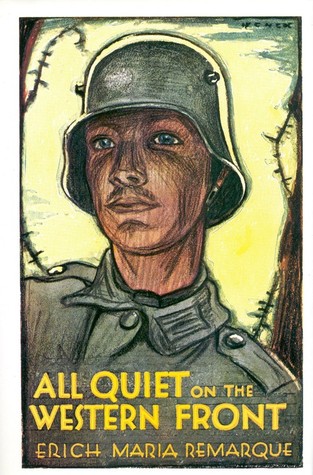
Book Review: All Quiet on the Western Front, by Erich Maria Remarque

all_quiet_coverAll Quiet on the Western Front is a novel about a young soldier’s life during World War I. Or we can say that this book records how a young man walks toward the battle field with proud and excitement to how he crushes to the ground with a tired heart that is harmed by the crying guns. He does not fight for his country, but for his life and the lives around him. However, just like many soldiers, he cannot and does not have the will to escape from something worse than death.

The novel is by Erich Maria Remarque, a German author who participated in World War I himself. Became a soldier when he was 19, Remarque was sent to the western front to fight with France. There he was wounded and sent to hospital, where he spent the rest of the war. During his time in the hospital, Remarque talked with lots of soldiers that were sent to be cured or to be left to death; his own experience with the stories that he heard from others led to his great works.

Why do people put themselves on the battle field? What is the reality on the front line? What happen to them each and every day? What is the thing everyone faces that is worse than death? What is WAR? From the perspective of the main character Paul Bäumer, Remarque showed the real meaning of war- it is a competition with death and a process of losing everything you had.

“We are forlorn like children, and experienced like old men, we are crude and sorrowful and superficial- I believe we are lost.”

“We are not youth any longer. We don’t want to take the world by storm. We are fleeing. We fly from ourselves. From our life. We were eighteen and had begun to love life and the world; and we had to shoot it to pieces.”

Once All Quiet on the Western Front was published, it sold 2.5 million copies in twenty-five languages in first eighteen months. Although Nazi Germany burned the books before World War II and Remarque was exiled, his works still remained popular in both German and the world.

“He fell in October 1918, on a day that was so quiet and still on the whole front, that the army report confined itself to the single sentence: All quiet on the Western Front.”

– Wenqing Z., 10th grade