Humanity for the Environment, Not Vice Versa

Imagine two trees: one grows on the edge of a highway, while the other thrives deep within an untouched forest. Most people would agree that the second tree has a better chance of living a long and healthy life. If we tried to extend the life of the first tree, we might use advanced techniques like steroids or gene editing. However, the core problem lies in its environment, not the tree itself. The same principle applies to humanity—if we want to ensure a long and prosperous future, we must focus on improving the world around us. By understanding our impact on the environment, addressing the damage we’ve caused, and recognizing how a healthy environment benefits us, we can create a sustainable future.

Humans have profoundly shaped the environment, often to its detriment. The global population has exploded, quadrupling to eight billion in just a century, putting immense pressure on the planet’s carrying capacity. Already, 95% of Earth’s surface has been altered by human activity, fragmenting ecosystems and threatening wildlife. Pollution, such as plastics in the ocean, harms animals and ecosystems, while also affecting human health. Diseases like asthma and cancer have been linked to the emissions and waste we produce. Clearly, our current trajectory is unsustainable, harming not only the planet but also ourselves.

Thankfully, solutions exist to reverse this damage. Tackling issues like plastic waste, transitioning to renewable energy, and reducing greenhouse gas emissions can significantly mitigate our environmental impact. For example, adding filters to washing machines can reduce microplastic pollution, while investments in renewable energy can cut emissions and save trillions of dollars annually. Transitioning to cleaner transportation, like electric vehicles, is another vital step toward sustainability. These efforts not only repair the environment but also pave the way for a healthier, more resilient planet.

A thriving environment directly benefits humanity. Forests, for instance, provide resources essential to modern medicine and contribute to mental and physical well-being. Studies show that spending time in nature reduces stress, boosts immunity, and improves mental health. Additionally, shifting to plant-based diets can reduce food-related emissions and improve global health. By protecting and restoring the environment, we secure both our health and our future.

Some argue that geopolitical challenges make these changes difficult, as nations prioritize short-term economic gains over long-term sustainability. However, this mindset is shortsighted. Neglecting the environment today creates ethical and practical problems for future generations, much like leaving broken glass in the woods harms those who come after. Addressing these issues now is not only necessary but morally imperative.

In the end, improving our environment ensures humanity’s survival and prosperity. Just like the tree in the forest, we thrive when our surroundings support us. By acknowledging our impact, repairing the damage, and appreciating the benefits of a healthy world, we can build a sustainable future for generations to come.

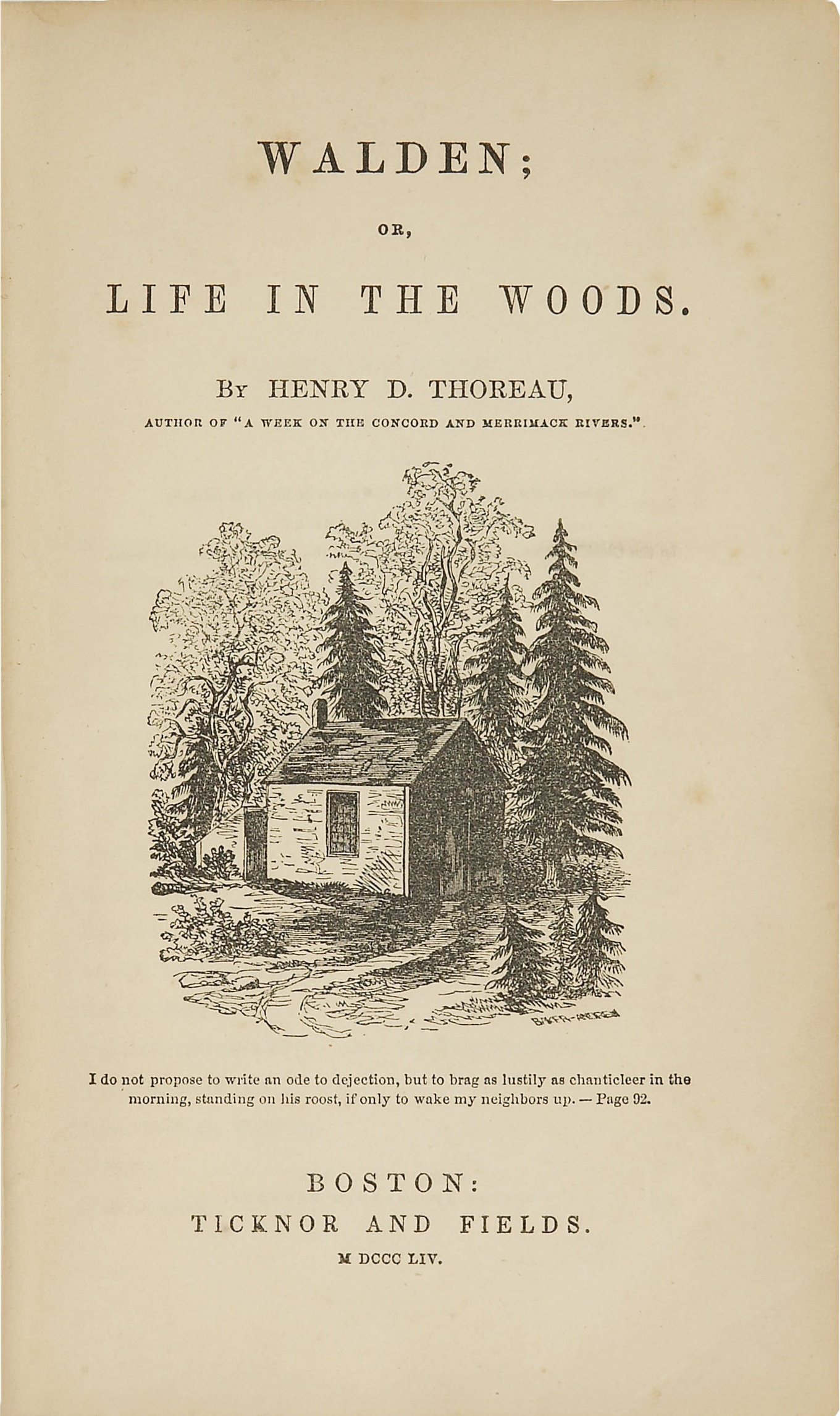
Walden by Henry David Thoreau

Walden - Wikipedia

Walden is a collection of essays by American writer Henry David Thoreau. Walden is a record of American writer Henry David Thoreau living by the Walden Pond. It describes what he saw, heard and thought over a period of more than two years. The book is rich in content, profound in meaning and vivid in language. Walden is composed of 18 essays.

In the process of the change of four seasons, it records in detail Thoreau’s inner desire, conflict, disappointment and self-adjustment, as well as the complicated mental process of his desire again after adjustment, which went through several cycles until its final realization. It shows that the author employs it to challenge his personal, and even human boundaries. But this kind of challenge is not the infinite hope of realizing self-worth, but the infinite power of recovery after injury.

Thoreau’s own practice at Walden Pond and his works have a consistent proposition: return to nature. In his works, he constantly pointed out that most of us modern people are trapped by family, work, various material needs, have lost spiritual pursuit and lived a materialistic life. That is still the case today, and it is getting worse. Many of us pay little attention to things beyond our petty personal interests and activities. In a global context, Walden has become a model of harmonious coexistence between man and nature. In the broader sense of ecology and biology, Thoreau was way ahead of us.

The myth of Walden represents a primitive way of life in pursuit of perfection, expressing an ideal that is both attractive and practical to contemporary people. This model is of ecological significance to us today, because the destruction of ecological balance and environmental degradation have reached a rather serious level, and many ecologists and environmentalists are working to protect the few remaining wealth left by nature to human beings. Thus, Walden is no longer just a specific place where the famous American writer Thoreau lived, wrote and thought. It has become a symbol. In Walden, we can find a way of life, a romance between man and nature, a persistent pursuit of ideals, a concept of embodied nature, and the eternal desire of man to approach and merge with nature.

-Coreen C.

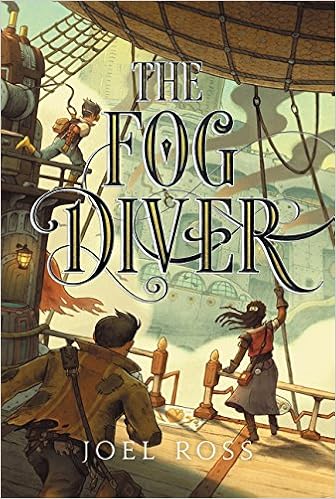
The Fog Diver by Joel Ross

Image

Image result for fog diver

The Fog Diver, written by Joel Ross, is a great book full of suspense and twists. It has a wonderful plot and intriguing characters.

What if the whole earth was engulfed in deadly fog? What if a great treasure was said to be hidden beneath the clouds? And what if you were the only one who could survive in that fog?  The main character, Chess, finds himself in such a dilemma. An orphan with special power, he is part of a ragtag scrapper crew. They hunt for items from old Earth to sell on the mountaintops while avoiding sky pirates and monsters.

Meanwhile, a tyrant named Kodoc hunts for Chess so he can use him to find the Compass, an ancient artifact said to  control the Fog. The team thinks that Port Oro, a legendary mountaintop, will be a safe haven for them, and attempt a journey. Along the way, they team up with pirates and gang kids. This book is full of friendship and action. I would strongly recommend it to anyone looking for a summer read.

-Joshua M, 6th grade

The Fog Diver by Joel Ross is available for checkout from the Mission Viejo Library