Dracula by Bram Stoker

Dracula (Bram Stoker) eBook by Bram Stoker | Rakuten Kobo

The creation of the horror image and the gloomy atmosphere in the novel is realized by spreading the devil world centered on Dracula, making the readers like a horror drama staged in the dark and dirty old castle. At the beginning, the novel presents a series of mysterious and dramatic images, such as a remote old castle, a desolate night, a sudden werewolf, and a strange bat.

The unknown smoke and other images serve as background factors to arouse readers’ memories and impressions of the grim and horrible scenes, so as to present a terrifying world to readers. This technique was also widely used in 19th century Gothic novels. On the one hand, it introduces the characteristics and identity of Dracula, on the other hand, it also employs these images to expand readers’ imagination and enhance their understanding, which sets a tone of terror and panic for the whole novel.

The existence of Dracula and the perception of his image are the self-perception of human eyes or psychology and the vivid description and presentation of the current social mentality. Jonathan’s visit and familiarity with the castle actually started the contest and struggle between good and evil, and at the same time hinted at the subtle relationship of conquest and resistance between the British Empire and the colonized countries at the end of the 19th century. The novel presents the reader with a strange and deviant world. In such a world, the reader is as anxious as the monster is terrifying. Dracula represents a strong possessiveness and a desire for racial invasion. He tried to invade London from far away eastern Europe, and while women were sleeping, he controlled their consciousness and drank their blood to reproduce his own race, expand his territory, and dominate the British Empire.

At the same time, the women who had been sucked into the blood were transformed into social outliers. They broke away from the male authority and were no longer bound by traditional concepts and customs, and freely expressed their likes, dislikes and desires. They possessed the characteristics of the new females emerging in the British society at the end of the 19th century, which was not recognized by the mainstream population at that time. The image of Dracula’s attempt to overturn the harmonious and orthodox order of British society was the accumulation of capital in the British Empire. The shadow of colonial expansion and self-portrait are the reverse of imperial colonial rule. At the same time, Dracula’s whole scheme is a symptom of the waning British empire’s fear of its own political future, a looming fear of the vassal states that are rebelling against colonialism and the rising powers that are gaining momentum.
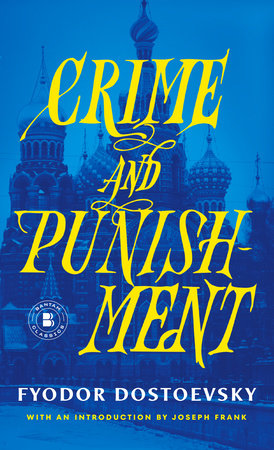
Crime and Punishment by Fyodor Dostoevsky

Crime and Punishment by Fyodor Dostoevsky: 9780553211757 |  PenguinRandomHouse.com: Books

Raskolnikov, a poor university student, lived in a small five-story apartment in a poor Petersburg slum. He had been forced to drop out of law school because he could not afford his tuition, and now lived off the money his mother and sister had saved from a tight budget. He hasn’t paid his rent for a long time. Of late the landlady had not only stopped feeding him, but was pressing him very hard for rent. Then he met Marmeladov, a junior civil servant. Marmeladov was driven to despair by unemployment, and his eldest daughter Sofia was forced to become a street prostitute. Raskolnikov did not want to be like Marmeladov, but he wanted to do something to prove that he was a very extraordinary man. The proprietress of the pawnshop, not far from where he lived, was a usurer, merciless. One night, while she was alone, Raskolnikov broke into the house and killed her. Raskolnikov, in a panic, killed the landlady’s half-sister, who was returning.

The next morning he received a summons from the police. He was horrified, but was relieved to learn later that he was chasing after the money he owed. As he was leaving, he overheard the officer talking about last night’s murder and passed out to get the officer’s attention. When he regained consciousness, he went home and was bedridden for several days, before recovering. After the murder, Raskolnikov, unable to get rid of his fear because of the painful conflicts in his heart, felt that he had lost all his original good feelings. This was a punishment of conscience more severe than the punishment of law. He was conscious that he had failed. So he came to Sofia in anguish of heart, and, inspired by Sofia’s religious ideas, told her the truth and the motive of the crime. Persuaded by Sonia, he turned himself in to the police. Sentenced to eight years of hard labor, Raskolnikov traveled to Siberia. Sofia was soon there too. The two met early one morning by the river. They are determined to have faith in God, to suffer all kinds of sufferings in a penitent mood and to gain spiritual rebirth.

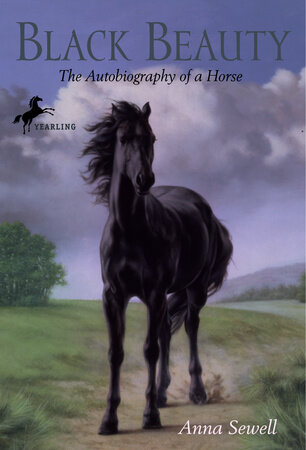
Black Beauty by Anna Sewell

Black Beauty by Anna Sewell: 9780440416456 | PenguinRandomHouse.com: Books

Black Beauty is gentle, intelligent and strong. His coat is black and shiny. A white speck of fur stands out on his forehead like a beautiful white star. However, fate is difficult, life is fickle, as a horse, he has tasted the sweet and sour people give. Black Beauty, the hero of the novel, is a beautiful and well-bred black horse. He has been living in a noble family since childhood. He has been well trained, docile and clever. But the good times did not last long, the master home had a change, Black Beauty had to be sold. He had been sold many times in a row and met all kinds of people. There are drunks who take their horses to anger when they drink too much wine, cab drivers who whip easily, barbarians who don’t take animals seriously. After tasting all the joys and sorrows of the world, it was lucky to have a good end-result. The work reveals the inner world of the horse, as well as the description of the horse coldly looking on the human society. Black Beauty’s life is the epitome of Victorian horse-riding, wagons in the country and London cabs. When he was a boy, his mother told him that a horse’s fate was all down to luck — he was lucky to have a good master, but unlucky to have an abusive master. As he grew up, Black Beauty met good people and people who mistreated him. He was first sold as a mount to Lord Gordon, who was kind to horses. Then it was sold to the count, and that abominable bridle became his greatest nuisance, and the bane of all horses. Pulling wagons not only consumes a lot of physical energy, but also is whipped by the driver. Black Beauty suffers when he draws a cab because people drive in the wrong way. Finally, Black Beauty finally found a friendly home to spend his old age. In Black Beauty we see many human qualities: honesty, courage, meekness and friendliness. Though Black Beauty has gone through trials and tribulations, it has not changed these qualities. This makes us wonder: what qualities should we have as human beings? Don’t we treat animals so cruelly because we disregard good qualities in them? Black Beauty, through his own eyes, with vivid language, tells a story, to convey such a message to readers. Animals also have feelings and thoughts. Human beings should therefore be kind to animals.

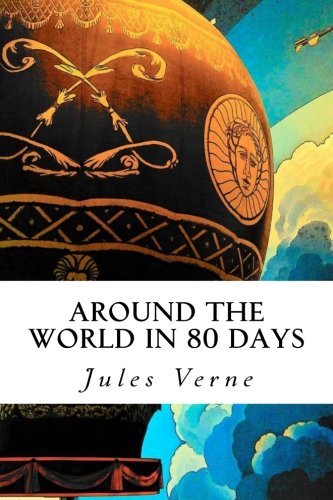
Around the World in Eighty Days by Jules Verne

Amazon.com: Around the World in 80 Days (8601410733353): Verne, Jules: Books

The novel is rich in themes. Science fiction theme, roaming theme, detective theme, love theme and other themes cross and merge, and construct quite rich meanings. Among these themes, the Eastern theme stands out. In the novel, Fog’s route around the world is detour through Africa to India, from India to Japan, through Japan to San Francisco, and finally from San Francisco back to England. India, China, the Philippines, Japan and so on account for nearly a third of the pages. This part of Oriental imagination and writing is also the most prominent part of the dramatic elements in Around the World in 80 days, full of excitement and adventure, bantering and satire. Jules Verne fully demonstrated his humanism as a writer.

Through the words of his characters, he expresses his indignation at India’s barbaric funeral system, and shows his deep sympathy and righteous indignation at the British opium poisoning of the Chinese people through the experience of Jean Passepartout. He also used the beating of Fix and Fogg at the San Francisco convention to ridicule the chaos of the American democratic elections. Verne through Fogg’s whereabouts, connected Europe, South Asia, East Asia, North America’s topography, climate characteristics, urban architectural characteristics and local customs. As if it were a richly detailed book of popular geography, the precise amorous feelings and the ups and downs of the characters in the book combine closely with the strange religious customs and local customs of the world to form the propeller of the plot.

Fix, for example, would not have had the opportunity to urge the evil monks in Calcutta to sue Fogg and his French valet Jean Passepartout if he had not been a know-it-all who did not know that Hindu temples had to take off their shoes and socks and enter barefoot. If Fogg and Fix had not strayed into the Hong Kong tavern, Fix would not have drunkun Fogg with his pipe, and Fogg would have missed the important message that his master’s ship was about to sail ahead of time. Fogg had to venture to Yokohama in a boat of twenty tons, and there would have been no hurricane at sea. And if Fogg hadn’t gone to the Japanese acrobat troupe in Yokohama to find work and perform feats of human overlap, the master and servant would not have met by accident.

Custom has no greater effect on the plot than when Fogg and his party, riding on elephants, witness the grotesque and sinister funeral procession of widows passing through the dense forest, and Fogg has a whim to rescue the poor lady who has been forced to die. This directly created Aouda’s brilliant appearance in the story, and also created the sympathy between Fogg and Jean Passepartout. In other words, when a new custom is carefully portrayed by Jules Verne, it is conceivable that the conflicts of the story will again become concentrated and climax. The customs of the world’s landscapes are, in a manner of speaking, like intricate prisms, and the development of established stories like flower petals, which, when combined, create a kaleidoscope of wonders from Jules Verne’s travels.

Around the World in 80 Days follows the narrative pattern of travel in Western literature. The hero Fogg is a calm, rational, methodical, precise and accurate Englishman. He bet the men of the club twenty thousand pounds that he could complete the circle in eighty days. So he set out with the French servant, and after a long journey they returned to England on time. Fogg not only won the stakes, but also won the love of Aouda from India. This is the main clue of the novel. There is another clue in the novel: Detective Fix pursues Fogg. Fifty-five thousand pounds are missing from the counter of the Bank of England. The police find that the thief looks very much like Fogg. When they found out that Fogg had left England, they thought he was going to make an escape, so they sent Fix to hunt him down.

Travel and adventure and the pursuit of fugitives form the double power of narration in the novel, as well as the parallel and intersecting two threads, which make the narrative and structure of the novel form a certain tension.

Robinson Crusoe by Daniel Defoe

The islands in the book are really England in the author’s heart. Before the Renaissance, the environment of the British Isles was so free and fascinating that with the advent of industry, the island’s calm was broken, with the clanging of machines and the clanging of men. Therefore, in addition to Robinson’s enterprising spirit, another factor that attracts readers to this novel is the free environment of the island — the independent space away from the hustle and bustle and industrial civilization.

Robinson’s experience on the island represents the dream in people’s hearts — that people can create their own ideal paradise on earth with their own hands. The author not only gives a gripping description of Robinson’s adventures and hardships, but also, more importantly, as a typical writer with emerging bourgeois consciousness, he raises people’s diligence, courage, wisdom and creative ability to an unprecedented height in his works, affirming the value of human beings.

He firmly believes that, as the spirit of all things, human beings have the ability to overcome difficulties, conquer nature, and finally reach the shore of victory. From the perspective of post-colonial criticism, the interpretation of colonial literature to the outside world is often narrated through the identities of colonists and explorers, among which Daniel Defoe’s novel is a typical example.

In the form of allegory, this book reproduces the process of colonial development and construction of colonial empire by the early British colonialism and imperialism in their overseas expansion. This novel is a classic text that adapts to the new development trend of western history and culture. From the creative labor of human beings, the great role of human ability is further seen, so as to promote human intelligence and labor creativity, and deny the absurd theory that God is omnipotent and that God creates everything.

Through 27 years of arduous experience in Robinson Crusoe, the work symbolically shows the basic trajectory of human development, thus putting forward the theme of the times that labor creates history. On the face of it, this is an adventure novel, with a simple plot. However, if the theory of post-colonial criticism is used to interpret, this novel reflects the thoughts of colonialism. The protagonist of this novel is a typical bourgeois colonialist who settles on a desert island and colonizes it. He not only controlled the whole island, but also conquered his companions. This novel calls for the study of the colonial content, in fact, from every aspect of this novel colonial tendency can be seen.

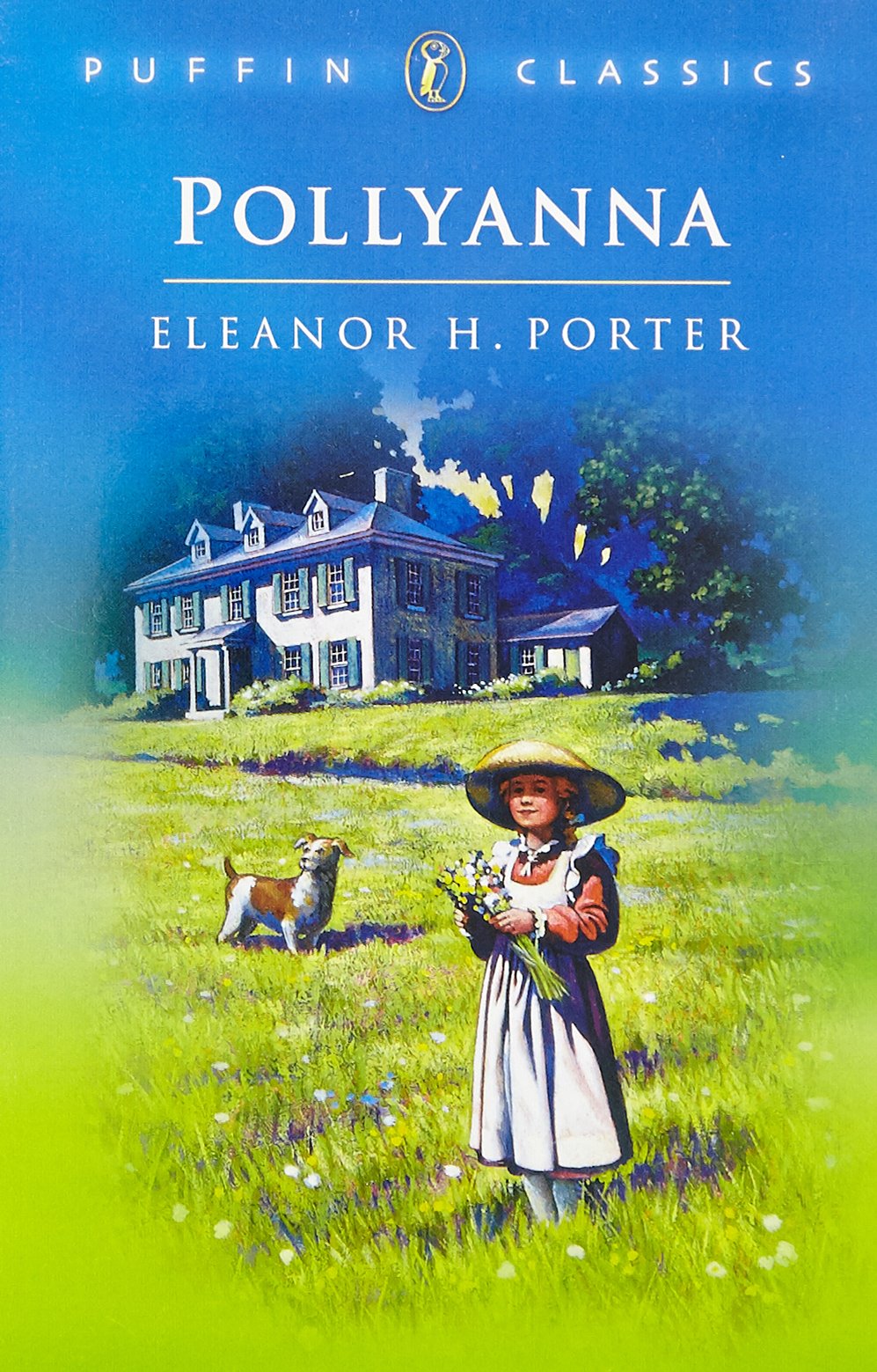
Pollyanna by Eleanor H. Porter

In this work, Porter tells us the story of an eleven-year-old girl. The child lost her mother at an early age, experienced poverty and hardship in life, and then lost her father. As a penniless orphan, she was sent to live with her rich aunt. But the rich, eccentric aunt Polly, who lived alone in a large house, did not welcome her niece. She did not even go to the station to meet her. Instead, she sent a maid, Nancy, so that the little girl mistaken her maid for her aunt.

The little girl cried after knowing this, but she immediately found a reason to be happy and turned tears into laughter. Pollyanna had told many, many people in this town about her theory of happiness, and she thought she was playing a happy game. The child’s happy theory and happy games keep divorcing people from getting divorced, make eccentric Pendleton adopt the orphan Jimmy, make the priest change his foolish ideas, and make the town and the world have an amazing change.

As she lay in her hospital bed after the accident, visitors came in droves. This child loves life and everything beautiful. From her father, a pastor, she learned to see life with a unique eye. The secret to happiness is always to explore and find the love and beauty in life and to pass it on to everyone around her. She had told many people in the town of her happy games, which had brought great changes to the indifferent Aunt Polly, Nancy, Mr. Pendleton, Dr. Chilton, and so on, and had brought about amazing changes in the town.

This work is very different from other works of children’s literature. While Pollyanna is physically and mentally healthy and full of life, the adults around her are sickly and twisted. Like the silver lining on the cloud, in this little girl looking for happiness and beauty, those self-righteous adults are just wasting their lives in a dark world. They have forgotten the essence and meaning of life, so they often create a trap for themselves, which seems ridiculous, even hypocritical.

This little girl, adept at finding joy in misfortune, epitomized the modern American spirit of believing, no matter what the circumstances, that everything would be all right. This optimism may seem naive and blind. But when we read this work carefully, when we see the changes of those who were deeply influenced by Pollyanna, we may realize that it is precisely because life is full of hardship and pain that people need to maintain a happy attitude to meet the unavoidable suffering in life. Never complain about the hard things in life, but learn to face them with tolerance, because as Pollyanna said — if you are willing to look for the good things in life, you will find them.

Gulliver’s Travels by Jonathan Swift

Gulliver's Travels (Classic Starts Series) by Jonathan Swift, Jamel Akib,  Paperback | Barnes & Noble®

Gulliver’s Travels has not only a profound ideological content, but also a relatively perfect art form. First of all, Swift used fictional plots and fantasy techniques to depict the reality of Britain at that time. At the same time, he also created a colorful, fairy-tale fantasy world based on the reality of Britain at that time. Swift’s fantasy world is based on reality, while the contradiction of reality is more prominent in the fantasy world. After the coup d ‘etat of 1688, for example, the Tories and the Whigs fought for power and attacked each other, when in fact they both represented the interests of the aristocracy and the bourgeoisie. Swift captured the essential characteristics of parliamentary party fighting and created the high-heel party and low-heel party in Lilliput.

These fictions make reality stronger, more concentrated, more typical, and more universal. The artistic charm of Gulliver’s Travels is also here. Swift’s fantasy and reality are harmonious and unified. Swift’s fantasy and reality are harmonious and unified, and Gulliver’s experiences are different in Lilliput, Brobdingnag, Laputa and Houyhnhnm. But they were all reasonably arranged without any flaws. Every time he went to a fantasy country, he was treated differently. He made his works have a sense of artistic reality, which has a great appeal, so that satire can achieve a high effect. When the author mercilessly satirizes and criticizes the parliamentary politics and reactionary religious forces in Britain at that time, some of them are straight sarcasm, some use the tongue of foreigners, some are metaphorical sarcasm, some are animal sarcasm, all of which are funny.

The combination of fantasy and reality also adds a unique artistic charm to the novel. Although the author presents a mythical world like a fairy tale, it is based on the reality of social life in Britain at that time. Due to the author’s precise, delicate and apt description, people can not feel that it is a fantasy, as if everything is true. For example, when describing the proportional relationship between small people and adults, and between people and things, the ratio of one to twelve is always reduced or enlarged. The little man of Lilliput is twelve times smaller than Gulliver. And the lords of the Brobdingnag were twelve times larger than Gulliver. One of Gulliver’s handkerchiefs would be a carpet for the Lilliput Palace. Brobdingnag’s peasant’s wife’s handkerchief, draped over Gulliver, became a sheet.

In describing the operation of the flying island of Laputa, the architecture of palaces, and the structure of towns, the author also intentionally uses the knowledge and data of mathematics, physics, chemistry, astronomy, and medicine. In this way, the authenticity, harmony and symmetry of the partial details of the characters are transformed into the reality, harmony and unity of the whole picture and scene, which greatly enhances the sense of reality and appeal of the work. The author’s writing is simple and succinct. In Lilliput, for example, Gulliver transcribes an official proclamation extolling the king as the king of kings, with his feet at the center of the earth and the sun above his head, etc. Gulliver, in brackets, calmly explained that the perimeter was about twelve miles.

With this explanation, the boundless territory that reached the four poles of the earth shrank abruptly to a mere dozen leagues around it. The contrast is hilarious. The words in parentheses reveal the author’s simple and matter-of-fact style, which he does not seem to be commenting on, but rather to explain to us objectively and faithfully the scale of Lilliput. Although the scenes of Lilliput and The Land of The Houyhnhnms vary, as do the circumstances of the heroes, the layout and style of the whole novel are consistent. Every time Gulliver went to sea, the causes and consequences are explained in detail, the complicated plot is described in order of time and space, the text is concise and vivid, and the story is unique.

Five Weeks in a Balloon by Jules Verne

Five Weeks in a Balloon eBook by Jules Verne - 9781775452614 | Rakuten Kobo  United States

The friendship and care between people are reflected in the book. Three travelers once risked their lives to save a French missionary. When the balloon was about to fall into Lake Chad, in order to make it rise again, Joe jumped into the lake and saved the lives of his two companions. As Joe fled the Sahara for his life, a shot from Kennedy saved Joe from the barbarians. This spirit of mutual love and mutual assistance in the era of personality publicity is very worthy of readers to cherish and carry forward. In order to show the wonderful scenery in Africa, this novel introduces the rich geographical knowledge. Through the image of the hero Fergusson in the novel, the author fully shows a scientist’s loyalty to the cause of human progress, praises his courage and strength, and shows the great power of modern science and technology.

However, when the novel describes the African native people, the racial prejudice reveals inevitably the era and history of the limitations. Five Weeks in a Balloon, by Jules Verne, describes the journey of Dr. Fergusson and his companions across the African continent, in which the admiration for European civilization, as well as the disgust and disdain for backward civilization, is evident. From the perspective of orientalism, Five Weeks on a Balloon shows a strong national character and the resulting Eurocentrism, which is mainly reflected in its description of the African environment. More than that, Jules Verne wants to show the excellence of his own nation in this process. To highlight this, the typical environment in his works is the desert, which means to raise thirst, desolation, loneliness and death, which must be overcome when crossing the desert.

The success of Mr. Fergusson’s entourage is the author’s affirmation of westerners and western civilization. But the whole work, from the point of view of orientalism, this affirmation is also based on a kind of dislocation between Europe and Africa. They thought of themselves as the most civilized people, looking down on others, and orientalism retained a more or less European-centered consciousness even in their later reflections. It is difficult to avoid this phenomenon, which requires that people should treat the East objectively and not overnight. However, in the analysis and criticism of people, they should at least be conscious of preventing them from being brought into the theory of Eurocentrism. When they look at problems, they should always make clear their position as an Oriental.

The African landscape is described in vivid detail, with mountains and seas, swamps and depressions, desert rivers and volcanoes all covered in the novel. The baobabs, fig trees, acacia trees, tamarind trees and other tropical plants are very strange. Elephants, hippos, crocodiles, vultures, leopards, hyenas and other tropical animals, as well as the thrilling battle of wits with savages and monkeys, all inspire the imagination to travel to Africa in an adventure. The hydrogen balloon was their vehicle, a relatively unknown object even to today’s readers, and the hero of the book had thought of it as a tool for exploration in the first half of the 19th century. What is more interesting is that the author even introduces the complex structure of the balloon to the readers in detail through the protagonist, which shows the author’s extensive knowledge and extremely rich imagination.

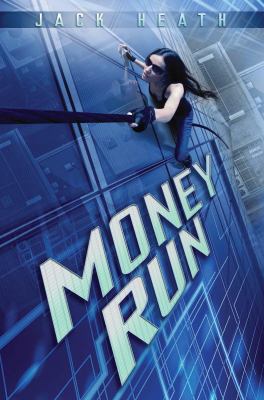
Money Run by Jack Heath

Money Run by Jack Heath is a suspenseful thriller about two teenager thieves: Ashley and Benjamin. Ashley’s criminal life started when her house was robbed, so she tracked down the thief and was able to steal back her belongings. Since that day, she keeps up with her life of crime to support her and her Father. Benjamin is her partner in crime but holds down the court by supporting her in their heists virtually.

One day, Ashley gets wind that there is 200 million dollars hidden in one of the biggest companies in the country. Their headquarters happened to be located in the same town where Ashley and Benjamin live. After deciding to steal the money, they hatch an elaborate scheme over the course of several months. They expect the job to be seamless without any hindrances, but once the day comes, stealing the money is a lot harder than it seems. Taking over the course of one day with a shocking ending, this book is for anyone looking for an exciting thriller.

I have always loved action adventure books, and this was no exception. With unexpected twists and turns, this book did not let me put it down until I got to the end. Even though it takes place in only one day, the reader gets to enjoy multiple points of view. These helped to explain the various events taking place, and also allowed the reader to understand each of the characters better. By being aware of their backgrounds, I was able to be more sympathetic and understanding, even for the ones engaged in thievery. This book is for the type of person who loves adventure movies, and a thriller, roller coaster ride.

-Anmol K.

Money Run by Jack Heath is available for checkout from the Mission Viejo Library

A Doll’s House by Henrik Ibsen

A Doll’s House by Henrik Ibsen is a story that takes place in late 19th century Norway. The main character of the novel is Nora Helmer, and she is married to her husband, Torvald Helmer. She is treated like a doll by her husband, and has no say into any decisions that are made. She is there as a plaything for her husband, and has been molded by society to not have own identity as a person. Despite her characterization as a dim-witted doll, she is hiding a big secret. Nora borrowed money without any permission from either her husband or father in order to help her family while Torvald was sick. This kind of action was unheard of for a woman to do at this time, so she never told her husband from where she got her money from. Once her secret is threatened to be revealed, the course of the novel changes from the depiction of a typical, happy family of the Victorian time to something modern, but not normal for that time.

I thoroughly enjoyed this book, even though it was not a typical read for me because it was a novel assigned to me by school. It was an easy read, but the story kept me hooked from the beginning. Initially, I was a bit wary of the way Nora was treated, and just thought of her as silly. However, when her secret was revealed, my opinion of her changed. The rest of the novel was now on a different, more interesting course of action. The ending was not only surprising, but very controversial for that time. I would recommend this novel, regardless if it is assigned or not,  for anyone in order to see the importance of this kind of novel at this period in history.

-Anmol K.

Henry Ibsen’s A Doll’s House is available for checkout from the Mission Viejo Library