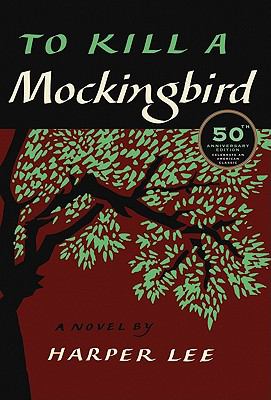
To Kill A Mockingbird

It’s that wonderful time of year again… the end of first semester freshman year and the beginning of the enduring English 1 ritual: To Kill a Mockingbird.

I’ve heard a lot of complaints about TKaM, usually about how boring it is and how no one can understand what the heck is going on. But I beg to digress, because though it’s one of the most commonly read books in the high school curriculum, ever, I really enjoyed reading this book.

Obviously, the story of TKaM is pretty famous already, and I think it’s important that high schoolers are forced to read a book that confronts issues still relevant in our society today. Especially in a time when books are being banned and voices are being silenced, it’s important to have this classic in our schools and education system.

There have been concerns about the prevalence of the n-word, about ideas of white saviorhood in the book, and also opposition from others who want to suppress this unsavory part of American history. But the tragic story of Tom Robinson is an important lesson, and despite some valid concerns, I think To Kill a Mockingbird fittingly and engagingly introduces an idea and a time period that shouldn’t be erased from our school books.

Moreover, I think it’s just a well-written story and an enjoyable read. Maybe it’s time we stop complaining about the “weird” wording and appreciate it for what it truly is.

To Kill a Mockingbird by Harper Lee is available to check out from the Mission Viejo Library. It is also available to download for free from Libby.

To Kill a Mockingbird by Harper Lee

To Kill a Mockingbird is a thrilling novel. It was written by the one and only Harper Lee, Who has made other great novels such as Go Set a Watchman.

At first glance, I thought this was going to be a very boring book because I had to read it for school. And most books required for school are a pain to read, and very boring. But once I started reading this book more and more I realized that I was hooked. Normally I’m not a huge fan of reading, but I really enjoyed reading To Kill a Mockingbird.

The novel To Kill a Mockingbird is a realistic fiction story. It follows the lives of 2 siblings: 6 year old Scout, who is the narrator, and 10 year old Jem Finch. The both of them are very immature at the beginning of the story. The time period is set in the 1930’s in a small rural town called Maycomb, Alabama. Atticus Finch is the children’s father, who is a lawyer. He is also a wise and loving dad, and teaches Jem and Scout many valuable lessons throughout the story.

The story starts getting intense when Atticus takes on a case. He must defend Tom Robinson, who is a black man. Tom is accused of raping Mayella Ewell, who is a young white woman. The trial has a big impact on Jem and Scout’s understanding of the world, and that everything isn’t always innocent as it seems. Jem and Scout grew much in their maturity after the trial, as they had a new perspective of the world and their surroundings.

I would recommend To Kill a Mockingbird to any readers who enjoy historical fiction and thrilling stories. This novel tackles the injustice that can happen in the world and issues with the society.

To Kill a Mockingbird by Harper Lee is available to check out from the Mission Viejo Library. It is also available to download for free from Libby.

To Kill a Mockingbird by Harper Lee

To Kill A Mockingbird by Harper Lee has to now be one of my favorite books, up there with The Outsiders and The Institute. I never expected to like this book so much but it’s always the ones you look down on that come back to bite you when you least expect it. To Kill A Mockingbird was our fourth required reading for my English class this year and when my teacher said that it was a good book, I should have believed her more.

To Kill A Mockingbird is one huge flashback told by Scout Finch. It starts when Scout is six and she introduces her older brother Jem and her dad Atticus. They all live in the town of Maycomb, Alabama, set in the 1930s, The Great Depression. Scout begins the story talking about how Jem had broken his arm. As simple as it sounds, it’s such a long story to get to that point that you completely forget that that was how we started the story until Scout brings it up again. It may be a long story, but it included some of the most interesting and engaging stories I have ever read. 

Lee’s characters are so well written that they will have a special place in my heart. Atticus was definitely my favorite character in the book. He was an amazing single father, especially when so many parents in books are either dead or awful to their kids. Of course not all books have those kinds of parents, but this was a nice piece of fresh air. Atticus was a fantastic role model, person, and father. He is such a good person and healthy both physically and mentally. The way he fought discrimination and racism was admirable but he was even more admirable to teach his kids and those around him not to discriminate or be racist.

While Atticus was my favorite, there were so many good characters in the book. Starting with Scout, her mental capability and persistence was super fun to read about. To see everything happen through her eyes was very interesting. Jem was also really fun. His growth from boy to man was nice to see, even though Scout didn’t really understand it much. Jem being a good older brother to Scout and doing his best to do the right things at school to make Atticus proud was great. Atticus helped give both of his kids great morals and empathy and it is really apparent in the book. 

I really loved the characters in this book. I didn’t mention all of them but they were all very memorable to me. To Kill a Mockingbird was incredibly well written. Lee did a fantastic job making the story interesting and fun while having subtle themes to make this novel literature. This was a fantastic book that I would highly recommend for others to read. Despite some language that wouldn’t be allowed today, if you could look past the period-typical racism, this book can teach people a lot and can overall be very enjoyable. 

-Nicole R.

To Kill a Mockingbird by Harper Lee is available to check out from the Mission Viejo Library. It is also available to download for free from Libby.

Book Review: To Kill A Mockingbird

The novel, To Kill a Mockingbird, by Harper Lee is a well-known classic, deep rooted in valuable life lessons in perspective, respect, and that mostly of moral growth. In the beginning of the novel, the plot did not garner much intrigue for me personally. In my opinion, there was a little too much detail on Maycomb County and the society of it all. I just finished this book since this was a required read for all freshmen at our high school.

However, as I continued to read the book, chapter by chapter, I realized that this novel had taught some important life lessons that the author wanted to get out to the world. Scout and Jem’s demeanor from the beginning clearly showed that they had a child-like innocence of the entire Maycomb scene.

However, as they grew older and witnessed the racial tension, prejudice, and imperfections of society, they lose some of their innocence and mature into more understanding characters who are easier to relate to.

The quotes, “You never really understand a person until until you consider things from his point of view…until you climb into his skin and walk around in it” (Lee 118), and “Real courage is when you know you are licked before you begin, but you begin anyway and see it through no matter what” (Lee 178) were really moving.

These quotes really touched my heart because Lee’s powerful themes throughout the book taught me the importance of not giving up in life and trying to understand people from their point of view before judging them.

Overall, the book definitely had some unprogressive parts in which there was a lot of unnecessary dialogue (typically between Scout and Jem), but these minimal flaws are overwhelmed by the powerful themes and life lessons that is expressed towards the readers.

I would recommend this book to many people because it really teaches you some important themes need for everyday life!

To Kill A Mockingbird by Harper Lee is available to check out from the Mission Viejo Library. It is also available to download for free from Libby.

To Kill A Mockingbird

To be honest, I was definitely hesitant to begin reading this book. I thought it would be like one of those really slow books with little to no plot. This book definitely proved me wrong. 

Among the main characters are Jean Louise Finch (also known as Scout), and her older brother Jeremy Finch (Jem). Their father, Atticus Finch, is a lawyer, and their mother died when Scout was very young. Another major character in this book is Charles Baker Harris, but he is simply called Dill. Dill visits Maycomb and his aunt during the summertime. To Kill A Mockingbird takes place in the town of Maycomb, Alabama.

Despite the ideals of that time period (the early 1900s) Scout frequently gets into fights. This only increases when the boys in her class begin to tease her for her father’s most recent case. He has taken on the difficult case of defending Tom Robinson. The issues of racism are brought up in this book frequently, especially in Tom Robinson’s court trial. Mayella Ewell, a 19-year-old girl, and her father have falsely accused Tom of trying to rape Mayella. Atticus must try to prove that Tom did not do anything to Mayella, but it is challenging because there were no witnesses besides Mayella Ewell, Tom, and, Mayella’s father Bob Ewell. It is especially challenging because the majority of the town is already on the Ewells’ side despite not liking them much, simply because of Tom’s race. They, and Bob Ewell, go as far as threatening Tom, Atticus, and Atticus’s children Jem and Scout.

I think that despite some portions of this book being as unfair and upsetting to read as they were, it is a book that everyone should read as it provides another important perspective.

-Peri A.

To Kill A Mockingbird  by Harper Lee is available to checkout from the Mission Viejo Library. It is also available to download for free from Libby.

What effects do the children’s perspectives have on the novel To Kill a Mockingbird by Harper Lee?

**This post assumes that you have already read the novel**

Children are often considered inferior to adults, yet they have so many positive and beneficial qualities that adults have unfortunately lost, resulting in the development of many negative aspects in society. The realistic fiction novel To Kill a Mockingbird by Harper Lee narrates the trial of Tom Robinson. The speaker, Scout Finch, recounts the events preceding the trial, the trial itself, as well as what happens after the trial. Although the central event is the trial of Tom Robinson and the injustice faced by colored people in America, Harper Lee cleverly implements the themes of courage, coming of age, and perspective. Specifically, the voice of young Scout Finch and the actions and dialogue of the rest of the children provide perspectives of innocence and impartiality, as well as a strong moral compass to portray societal aspects in a unique way.

Scout’s naive mindset allows readers to understand the events of the novel as they are, without the influence of prior biases. This genuinity enables readers to have a clear understanding of the unjust actions in Maycomb’s society. One such example is provided when Scout recognizes Mr. Cunningham in the group of people who arrive at the jail where Tom Robinson is being kept. Although she provides some background facts on Mr. Cunningham, Scout does not state her specific opinions or thoughts about him. She does not describe the group’s intentions, nor does she explicitly say that they are a mob–she simply describes what is happening. Harper Lee created the character of Scout as an honest young girl. With Scout’s unbiased account of events, readers are able to use their prior knowledge and develop their own opinions and understandings on the intentions and morals of the group. Many works addressing the topic of stereotypes and prejudice have authors writing with an argumentative tone, so the open-mindedness of Scout’s narration provides a sincere perspective, allowing readers to evaluate the negatively segregating aspect of society in a new way.

In addition to Scout, the rest of the children’s actions are highly notable. They place strong emphasis on morals and ethical behavior. Arguably, one of the most momentous examples of children displaying ethical behavior in the novel is woven in Dill’s disappointed and angry reaction with the way Mr. Gilmer is talking during the trial. Dill is not quite as young and naive as Scout, nor is he as understanding and observant as Jem, so his behavior during the trial is very significant to the theme of justice. On the other hand, Jem is a character whose growth and increasing comprehension is a major part of the novel, yet he is still young enough to not have caught “Maycomb’s usual disease”: the racial prejudice in Maycomb. His earnestness is seen in his reaction to Tom Robinson’s verdict: he starts to cry, and says that it is very wrong. With his comparatively higher level of maturity and understanding, Jem’s behavior again depicts the immorality of Tom Robinson’s case. In turn, it depicts the immorality of many aspects of society, especially the aspect of racism, stereotypes, and assumptions. 

Children are considered the epitome of innocence, kindness, morality, and ethics. The use of children in To Kill A Mockingbird unveils an aspect of society otherwise obscured by prior judgements, influence, stereotypes, expectations, prejudice, and much more. A youthful voice allows for readers to evaluate multiple aspects of society in a new way, and it also ensures a strong sense of morality throughout the novel. The use of children’s perspectives in Harper Lee’s work help to emphasize the just and unjust aspects of society, and readers also acquire significant insight into these aspects. Memories and qualities may fade away, but insight is never lost, and people will be able to adopt habits to improve their ways. After all, if children’s qualities are so admired, it only makes sense to make an effort to eradicate the negative effects the absence of these qualities have on society.

-Ayati M.

To Kill A Mockingbird by Harper Lee is available for checkout from the Mission Viejo Library. It can also be downloaded for free from Overdrive

Authors We Love: Harper Lee

The Measure Of Harper Lee: A Life Shaped By A Towering Text : The ...

Harper Lee (Nelle Harper Lee, on April 28, 1926 – February 19, 2016) was born in 1926 in the southern United States in a small town in Alabama. Published in 1960, the only novel in her life “To Kill a Mockingbird” made her won great reputation and the Pulitzer prize for fiction. The novel has been translated into more than 40 languages and sold more than 30 million copies worldwide.

Her father was a lawyer and a former state legislator. After graduating from local public schools, Harper Lee studied law at the University of Alabama and spent a year as an exchange student at Oxford University in England. Six months before graduating, she left school and moved to New York to pursue her writing dream. She writes while working as an airline reservation clerk in New York. Encouraged by friends and editors, she returned to her hometown in Alabama to write stories based on fragments of her childhood. Her masterpiece was “To Kill a Mockingbird”, released in 1960. The book is still one of the greatest American novels ever written. For 40 years, she has never given an interview, although paparazzi have tracked her down to where she lives with her sister Alice in Monroeville, Alabama. She was single and childless.

In 1961, Harper Lee won the Pulitzer Prize for her novel “To Kill a Mockingbird”.

In 2007, Harper Lee received the Medal of Freedom from US President George W. bush for her literary achievements.

The works of Harper Lee are available for checkout from the Mission Viejo Library. They can also be downloaded for free from Overdrive.

To Kill A Mockingbird by Harper Lee

This novel, published in 1960 by Harper Lee, deserves every ounce of fame it has thus far received. Although the subjects that are addressed by the novel are shrouded by controversy, it addressed issues that needed to be addressed, such as racism and the crimes that can be committed under its name.

The novel is told from the perspective of six-year-old Caucasian Jean Louise “Scout” Finch. Her father, Atticus Finch, is the most reliable lawyer in her town, Maycomb. He takes on a case defending a black man who is wrongfully accused of raping a white woman, and this sends the entire population of their town into a frenzy. Scout and her brother, Jem, experience the metaphorical splitting of the town as everyone takes a side. They are attacked and harassed for the actions of their father.

The plot deepens and thickens, unfolding with an uncanny message: racism is a real issue, and it remains as such, even though To Kill A Mockingbird was first published in 1960. In fact, Scout and Jem are attacked at night and nearly killed in retaliation of their father’s case. The town is violently over-involved in Atticus Finch’s case, and most of its citizens actually attend the trial for sport and entertainment. People are quick to take sides and are adamant and passionate about whichever one they end up on.

To Kill A Mockingbird is also semi-autobiographical- Scout’s childhood is based loosely off of Harper Lee’s. However, Lee quickly became reclusive due to her book’s fame and all the attention it received. The novel was groundbreaking, but Harper Lee hardly did any interviews, book signings, or any public event of the sort. In fact, Harper Lee was barely involved in the making of the movie adaption of the novel, which became a box-office hit (it made over three times its budget!).

Overall, To Kill A Mockingbird is a magnificent literary tapestry, with intricately woven characters and artfully spun plots and subplots. It addresses issues that were relevant in its time and, some may argue, even more, relevant today. It is a novel that has affected people’s lives, in ways that are clear but also subconscious, and has educated many on the subject of racism amid the early 1930s.

-Arushi S.

To Kill A Mockingbird by Harper Lee is available for checkout from the Mission Viejo Library. It can also be downloaded for free from Overdrive

To Kill a Mockingbird by Harper Lee

Taken place in imaginary Maycomb, Alabama in the middle of the Great Depression, racism, prejudice, hypocrisy, innocence and sorrow all integrate in Harper Lee’s profound novel, To Kill a Mockingbird. The story is narrated by Jean Louise “Scout” Finch as an adult but the story is solely a memory, told through her eyes as a six year old. Two main story lines are incorporated in this novel; both proving to teach Scout and her brother, Jem, lessons about life’s trials, obstacles and triumphs.

One story line digs deep into the issue of segregation and hatred. While a majority of Scout’s town and schoolmates, all being White, show blunt partiality and disgust towards African Americans in their society, her father, Atticus Finch, must uphold his personal moral responsibilities. He does this proudly and sensibly as he represents a falsely accused African American named Tom Robinson as his defense attorney in a court case. Young Scout learns that courage and bravery is not always fighting with guns but instead, is standing up for what you believe is right, no matter the cost or who stands with you.

The second storyline acts as a form of entertainment and mystery to Scout, Jem and their close friend, Dill, in the beginning of the story. However, by the end of the novel, lessons of acceptance, kindness and ignoring false misconceptions are heeded. A couple doors down from Scout’s house lives a mysterious family named the Radley’s who, despite being White, are discriminated against and have earned a negative reputation for being untrustworthy and abnormal. The three children, particularly interested in the son, Arthur “Boo” Radley, who is rumored to be locked up in the house by his father, play games and create dares in attempt to make him come out of his house. They find this exhilarating until Atticus tells them to stop harassing Boo and that they must respect the Radley’s despite the gossip about them that circulates through the lips of those living in Maycomb. Throughout the book, odd surprises lead the children to come to the conclusion that Boo is kindhearted but too broken to show his compassion like a normal person would.

Overall, Harper Lee does a superb job of utilizing Scout’s innocence and eagerness to explore the world around her to present the audience with a genuine piece of historical fiction that opens up the audience’s mind to topics such as prejudice, coming of age and morality. Harper Lee’s authentic writing style helps readers to understand the issue at hand by making each character quite profound and unique. This book is definitely a must-read for adolescents and adults alike.

-Jessica T.

To Kill A Mockingbird by Harper Lee is available for checkout from the Mission Viejo Library. It is also available for download from Overdrive and Hoopla

Book vs. Movie: To Kill a Mockingbird

killamockingbird_harperleeAs a required reading book for 9th grade English, I was not too excited to read this novel. All my friends who had already read it said it was great. But to tell you the truth, I did not believe them. For my class, we had to annotate each chapter, and by chapter 2, I was already annoyed with the book.

But please don’t follow my footsteps. This is a great book! I soon found out why. I know others have written reviews on the novel, but as a brief summary, this book is about the small Southern town of Maycomb, Alabama. Here, Atticus, the father of Jem and Scout, is appointed to defend Tom Robinson, a black man, against the accusation of raping Mayella Ewell. Through the novel, Atticus has to guide his children who are exposed to the racial inequality felt in the south in the 1930s. The children are disgusted by what they see of the real world and look to their father to help make sense of what they experience.

The novel was wildly successful when it was published and made into a movie in 1962, starring Gregory Peck. As part of my English class, we had the opportunity to watch this film in addition to reading the book. To me, the movie and the book both offer great benefits.

Reasons the book is better:

  1. You get to know the characters better, because more description is given, and you read the narrator’s (Scout’s) thoughts.
  2. More emphasis is given to show the separation between whites and blacks in the town.
  3. The book focuses more on the other lessons taught by the novel, incorporating the visit to the Finch’s Landing and the arrival of Aunt Alexandra, whereas the movie eliminates this all together, focusing instead on Tom’s trial and Boo Radley.

Reasons the movie is better:

  1. You see a physical description of Maycomb and its inhabitants, as well as getting a better understanding of the culture in the South.
  2. ***SPOILER***The scenes with Bob Ewell and his confrontation with Atticus and the attack against the children are scarier on screen.
  3. The relationship between Scout, Jem and Atticus is more pronounced, which makes the story more touching.

So it’s up to you…for those of you who have read/watched both the book and the movie, which was better in your opinion? Normally, I would automatically say the book was better. But in this case, I don’t know which one wins in my book.

– Leila S., 9th grade

To Kill A Mockingbird is available for check out from the Mission Viejo Public Library, Overdrive, and Axis360