Birds of a feather flock together. Though this phrase might not always apply to people, this applies very well to birds. When you are outside during the evening, as the sun sets, you might notice a swarm of birds chirping and gathering as they migrate in the sky. Adding to the nostalgic atmosphere as the sun sets and the day comes to an end, this swarm of birds, also known as a murmuration, occurs when a large group of birds, such as starlings, crows, and pigeons etc, gather together when the sun sets. The reason for their gathering together in these flocks, especially during the evening when the sun begins to set, is due to various reasons. One reason for this is due to the birds’ ways of living. In comparison to nocturnal animals such as bats, raccoons, beavers, etc, most birds are diurnal, meaning they are active in the day and sleep during the night. In the morning, most birds leave their nests and migrate in order to do their daily living activities, such as hunting, for example, and when the sun sets, the birds migrate back to their nests. When the sun sets, it’s a signal to the birds that it’s about to turn night and there will be no more daylight. For birds, this means the day is coming to an end, so they gather with other birds and flock back to their nests to rest for the day. They often do this in a large swarm, ranging from small groups of about 30 birds to large groups of about 100+ birds. They gather together due to mainly due to one reason. Predators. When a bird is by itself flying back to its nest, it makes it easier for predators to target them and attack them; however, when birds are together in a swarm, it creates this black shadowed figure in the sunset sky, which makes them appear to be a large predator, deterring predators. In the winter, however, birds gather in flocks due to the cold. In the winter, the cooler temperatures decrease the temperature in birds. In order to stay warm, the birds typically gather in flocks. In addition to this, the bird calls, which can be heard during sunset time, are the birds communicating with each other, communicating with each other that it’s time to go home. Thus, next time you see a bunch of birds flocking together during the evening, you’ll know the reason why!
Tag Archives: nature
Late in the Day by Ursula Le Guin
Late in the Day by Ursula Le Guin is a poetry and prose book, encompassing Guin’s writings towards the end of her life. The book is based on nature- on subjects as vast and meaningful as the sea, to as simple as a Canada lynx walking through a forest. However, in each small poem, Guin cleanly delineates each small, but significant lesson that the natural world can teach us.
I really enjoyed this book. I haven’t read poetry and prose for quite a while, and was a little apprehensive about a book as simplistic as this one, but I was completely surprised by the implicit depth and complexity of Guin’s writing. What I found unique about Guin’s writing is not her syntax or the breadth of her expression (both of which were, by the way, incredible), but her ability to use mundane, everyday situations, common to us all, and weave them into a detailed tapestry on every subject, from society to love to life itself.
Le Guin herself passed in October of 2018, but her writing is timeless, and as meaningful (arguably more so) to our world today as it was seven years ago. The necessity of interconnectivity and harmony with the natural world becomes more pressing day by day- and Le Guin’s writing masterfully explains why and how.
-Vaidehi B.
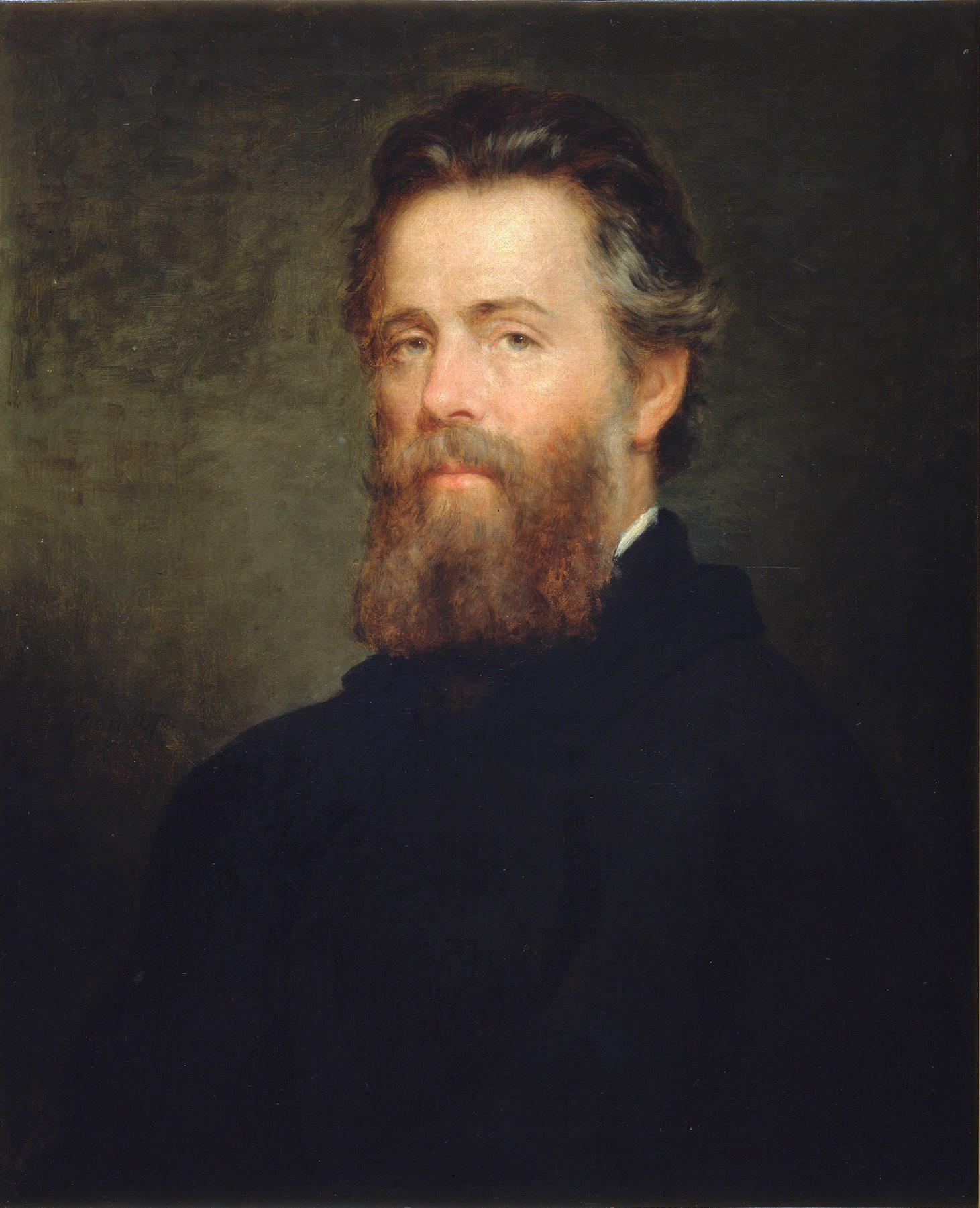
Authors We Love: Herman Melville

Herman Melville (1819-1891) was one of the greatest American novelists, essayists, and poets of the 19th century, along with Nathaniel Hawthorne. Melville, who received little attention during his lifetime, rose to prominence in the 1920s and is generally regarded as one of the highest figures in American literature. Maugham considered his Moby Dick to be one of the world’s top ten literary masterpieces, ranking higher than Mark Twain and others in its literary history. Melville is also known as the “Shakespeare” of America.
In “Bartleby, the Scrivener”, Melville, through the interpretation of Bartleby’s silent struggle, powerfully responds to the over-optimistic transcendentalist worldview and expresses his own different views. Transcendentalists believe that “god is merciful, and nature is an incarnation and symbol of god, as well as the embodiment of god’s mercy; The soul of man is divine, so man’s nature is good, and he is one with nature.” And for Melville, nothing is absolutely good or absolutely evil. Emerson’s transcendental optimism does not really help the development of individuals in a vast society. The power of individuals is small, unable to fight against the society. Emerson is only describing to us an ideal state of human life, which can never be reached, but a castle in the air, which is desirable but unattainable.
In addition, Melville was deeply influenced by biblical stories. Not only did many of the characters in Moby Dick take their names from the bible, but he was also influenced by the simple ecological views of the bible. In the bible, although nature is god’s tool to punish human beings, human beings have to overcome the harsh natural environment in order to survive outside the garden of Eden, but this does not mean that human beings have to conquer and transform nature in order to survive. In fact, the bible calls for careful control of nature, not unbridled conquest. In addition to giving man the right to rule the earth, god demands that man must protect and nurture nature which espouses most of Melville’s thinking and shaping of plot lines.
The works of Herman Melville are available for checkout from the Mission Viejo Library. They can also be downloaded for free from Overdrive.
The Island of Dr. Moreau by Herbert George Wells

In Dr. Moreau’s Island, Dr. Moreau uses his scalpel to transform the beast into a man with an ambitious plan to establish an empire on the nameless island in which he is the supreme ruler and creator. Dr. Moreau is a synthesis of scientific evolution and religious ideas. Using the scalpel as a tool to create humans, he plays the role of God and exerts both physical and spiritual control over the orcs. However, he fails miserably and both he and his assistant are killed. The novel condemns the endless expansion of life science that is not bound by the bottom line of morality, conveys the fear of human beings that they cannot truly control their creations, and is also mixed with the fear of Edward Prendick, the narrator, that he is not adapted to the strange island.
Back in the civilized world, Prendick is still haunted by fear, suspecting that the men and women around him are transformed orcs. Dr. Moreau’s provocative attempt to tamper with the laws of biological reproduction and evolution in nature ended in failure. His experiments also had devastating consequences for himself: he himself died at the hands of the monster he had created. And by the end of the story, the orcs are finally restored to their natural nature as animals. They began to disobey the “laws” that Dr. Moreau had made. Their physical features also began to return to their original characteristics. They become more and more unwilling to be bound by clothes, and finally become naked; Their limbs grew hairy; Their foreheads grew lower and their mandibles more prominent; Traits that were previously human-like are gradually disappearing without trace.
As the orcs’ nature was restored, the strange world that Dr. Moreau had created was destroyed by death. The failure of Dr. Moreau also proved that the law of nature is irreversible, the power of nature is strong, and any attempt to reverse or overstep the law of nature is doomed to failure. When human beings’ behaviors violate the ecological and ethical laws of nature, nature will punish the perverse actors with disastrous consequences. At the same time, nature will also use its own power to correct and tamper with it, making the whole ecological world move forward continuously in accordance with its inherent natural laws.
The progress of scientific and technological civilization in human society should be based on the integrity of the ecological ethical law of nature. The separation of scientific research from ethical laws, the neglect of ecological responsibility to nature, and the willful disobedience of the development laws of nature will eventually bring destructive consequences to the whole nature including human beings themselves. At the same time, once technology falls into the hands of those who seek power for personal gain and have no moral scruples, it will have disastrous consequences. Through the eyes of Edward Prendick, this novel depicts a miniature of the whole life, and mercilessly reveals the reality of the society.
Moreau brought the animals to the human level on a secluded island inhabited by humans, while creating a religion with himself as god and a harsh law to rule the orcs. This turned the orcs against him, and he died a violent death. The author uses this story to show the class antagonism in capitalist society. At the same time, the work gives a pessimistic outlook on social prospects. Wells referred to the Island as Noble’s Island, an obvious irony and yet another jab at the class system. Pronounce the name quickly and vaguely, and it is no blesses island.
-Coreen C.
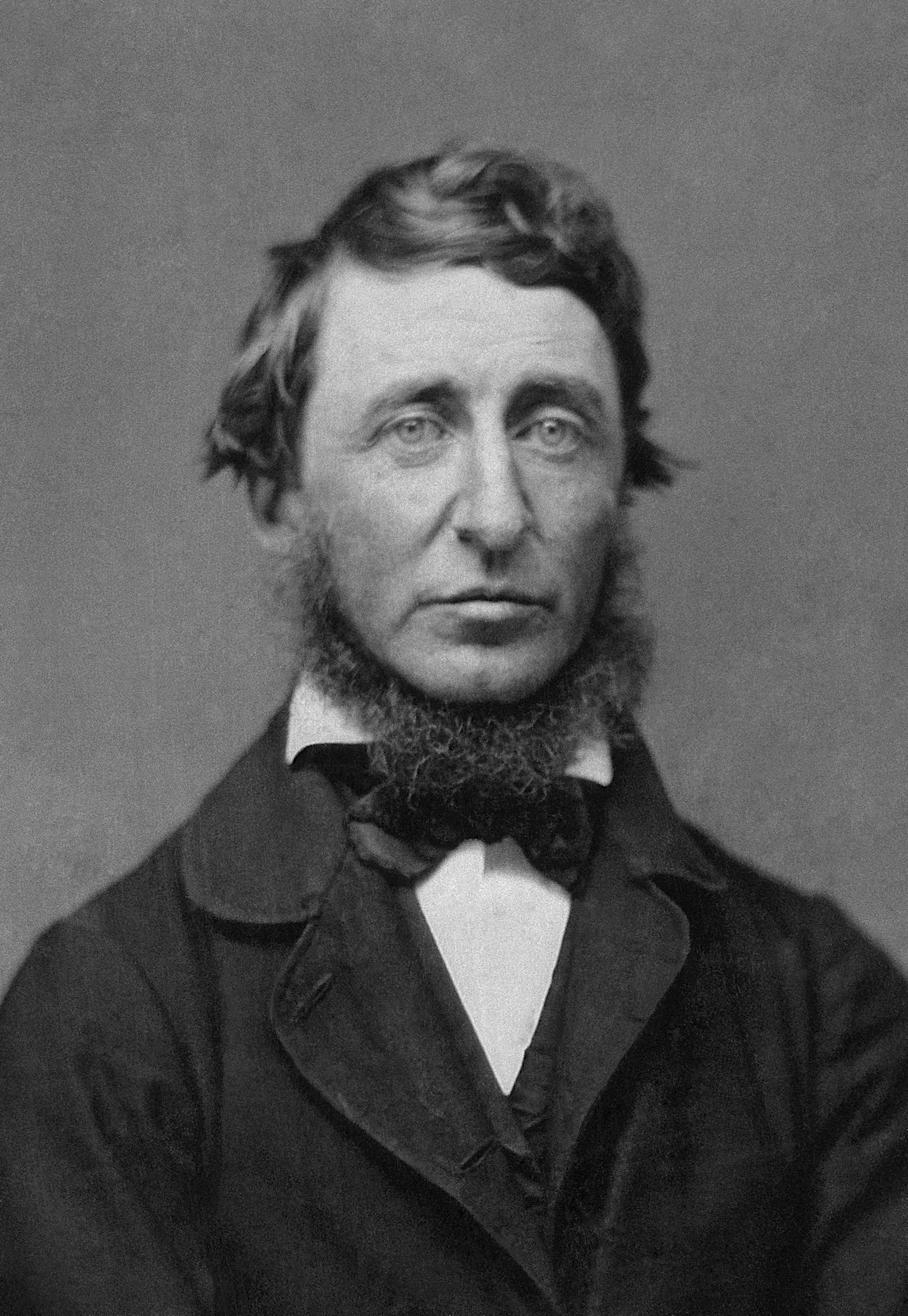
Authors We Love: Henry David Thoreau

Henry David Thoreau (July 12, 1817 — May 6, 1862) was an American writer, philosopher, and representative of transcendentalism.
A graduate of Harvard University, he helped edit Emerson’s quarterly review of the Sundial. He was a lifelong supporter of the abolitionist movement. He preached abolitionism everywhere and attacked fugitive slave laws. Deeply influenced by Emerson, he advocated returning to the heart and getting close to nature. In 1845, he lived by Walden Pond, two miles away from Concord, as a recluse for two years, farming and eating by himself, experiencing a life of simplicity. Walden, a long essay on this subject, became a classic work of transcendentalism.
Thoreau was brilliant and wrote more than twenty first-class essays in his lifetime. Known as the founder of nature essays, Thoreau’s prose was concise and powerful, simple and natural, and full of thoughts, which was unique among the American prose in the 19th century. Walden is considered the most popular nonfiction in American literature. His other works include political treatise on Civil Disobedience, Life without Principle, Cape Cod, A Week on the Concord and Merrimack river, The Maine Woods, etc. Walden records his reclusive life in Walden, while Civil Disobedience discusses the injustices of government and power and justifies citizens’ voluntary refusal to obey certain laws.
Thoreau was not tall but very firm with pale skin and strong, serious blue eyes, and a solemn manner.Thoreau later in his life, had a beard that suited him. His features were sharp, his build strong, and his hands were strong and swift in the use of tools. He said that he used his feet better than his eyes to find his way through the woods at night, and that he could estimate the height of two trees with his eyes very accurately; he could estimate the weight of an ox or a pig as well as a cattle dealer. He was good at swimming, racing, skating and rowing, and could probably beat any countryman in the long walk from morning to night. The relationship between his body and his mind is even more subtle than we think. He said that every step of his leg was his. As usual, the longer he traveled, the longer he wrote. If you shut him in at home, he won’t write at all.
-Coreen C.
The works of Henry David Thoreau are available for checkout from the Mission Viejo Library. They can also be downloaded for free from Overdrive.
The Call of the Wild by Jack London

The work tells the story of Buck, a pet dog of Judge Miller’s family, who has been living in a warm valley in southern California after being civilized. He was sold to the cold, remote, gold-rich northern state of Alaska as a sled dog. The dog who should represent the civilized world as a dog is forced to return to barbarism by his master. Growing up in a greenhouse, Buck was stolen and sold to the wild as a sled dog. The cruel reality touched Buck’s instinct and consciousness of returning to nature due to the long influence of human civilization. Buck was trained by the harsh living conditions, and he grew through them. In the end, he won the first place in the sled dog pack by defeating the king Spitz. When the cruel Hal had beaten Buck black and blue and was almost dead, John Thornton’s rescue made Buck feel warm and decided to pledge his loyalty to his patron to the end. However, the death of the benefactor completely broke Buck’s attachment to human society, so Buck was determined to go to the wilderness and return to nature.
First of all, the image of the dog in the novel is in sharp contrast to the image of the human. Dogs (Buck) are brave, kind, loyal, grateful, highly adaptable, and have excellent leadership skills, while humans are mostly hypocritical and tyrants. Buck was sold to a dog dealer and moved from the comfort of Judge Miller’s home to the rigors of northern life, but he soon adapted to the rules of existence. Even if there were no foreboding in the air, he could dig a hole by a tree or a bank, and hide safely from the strong wind. Buck used the best of management to keep the dogs in order. It pulled up a thousand pounds of flour and won the bet. Humans, on the other hand, still treat dogs with ropes, cages, and sticks. To satisfy their own desires, they do not care about the fate of other creatures. Man thinks he has the right to truth, and he thinks he is the supreme master of the dog. It is just because of a series of selfish behaviors of human beings that lead to the tragic fate of the dogs, and at the same time, human beings also suffer bad consequences. Hal and his family are buried in the White River, and Buck finally returns to the wilderness.
-Coreen C.
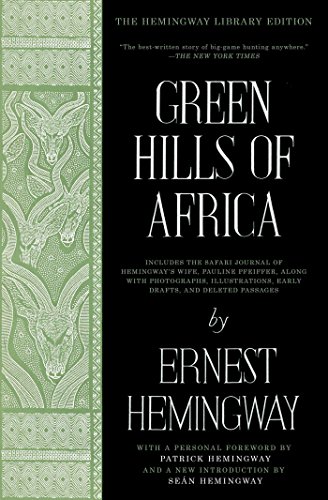
Green Hills of Africa by Ernest Hemingway

From November 1933 to February 1934, Hemingway went hunting in Kenya with his second wife, Pauline Pfeiffer, and his good friend Karl. Upon his return, Hemingway vowed to write a “book of absolute truth” that would be “as good as fiction,” and hence came the Green Hills of Africa. Hemingway, with amazing memory and exquisite writing, recreated the hunting experience in the remote mountains and forests of Africa, allowing readers to feel the thrilling scene of the author’s battle of wits and courage with animals and listen to the unique roaring and howling of lions in Africa. At the same time, Hemingway vividly describes the competitive and jealous nature of his competition with Karl, mercilessly dissecting himself and displaying manly honesty.
A passage in the book about the critical community’s praise and abuse of writers makes it easy to read today. Hemingway’s Green Hills of Africa is full of the powerful beauty of tension and yet life erupting. Even after getting used to this unimaginable activity, the author begins to look at the wildlife around him with a slightly wild, but not without beauty. Hemingway, after fierce fights with lions and other wild animals, began to appreciate this kind of life and gradually found his own fun through every bit of this life style. In the text, the roar of the lion and the low cry of the beast are not just a phenomenon of biological activity, but form a fascinating landscape painting.
Hemingway quietly observed in the dark, listening and finally appreciated what happened here scene after scene. In the end, the author also presents his observations and experiences of the natural scenery and living conditions in Africa through a long description. Through the description of these scenes, the author shows his inner love and yearning for nature and a simple natural life. After the long development of human society, people often get lost in many material needs. In the natural scenery, it can better show the real pursuit of human heart and human yearning for purity.
-Coreen C.
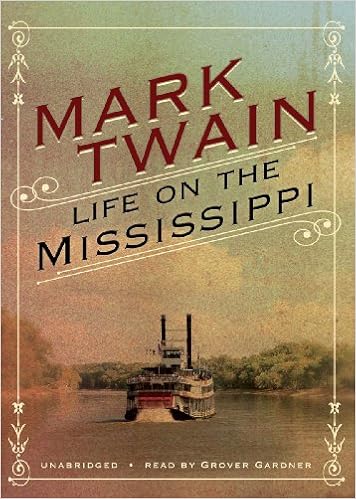
Book Review: Life on the Mississippi by Mark Twain

Life on the Mississippi is an autobiographical travel book. Mark Twain recalled his work as a sailor on the Mississippi River. The author has a keen interest in the Mississippi River. In his hands, the river emerges as a living, changeable, unpredictable, capricious image. To Mark Twain, who had little schooling, the Mississippi River was nothing less than a university, which exposed him to many mysterious natural and complex social phenomena. The rise and fall of the Mississippi River even directly affect the rise and fall of farms and cities. In those years, the river had fought its way through Hurricane Island, Arkansas, Walnut, and Conference Bay. The author also describes with delight the cities along the Banks of the Mississippi: Burlington, St. Louis, Minneapolis, Rock Island, New Orleans, and St. Paul.
The author’s love for nature and for the working people is reflected in his autobiographical travel notes Life on the Mississippi. Mark Twain had a special feeling for the Mississippi River because he had worked as a pilot in his youth, working with the crew and fighting side by side on the river. He knew its eddies, its reefs, and its rapids. He never forgot the mountains, towns, and local customs on both sides of the river. In his novel, the author gives a very touching description of the beautiful scenery that rises over the river at sunset. The writer describes nature, not for the sake of scenery, but to express his complex mood by describing nature. The author emphasizes that of all his experiences, the one that has left the deepest impression on him is his life as a sailor in the Mississippi River.
-Coreen C.
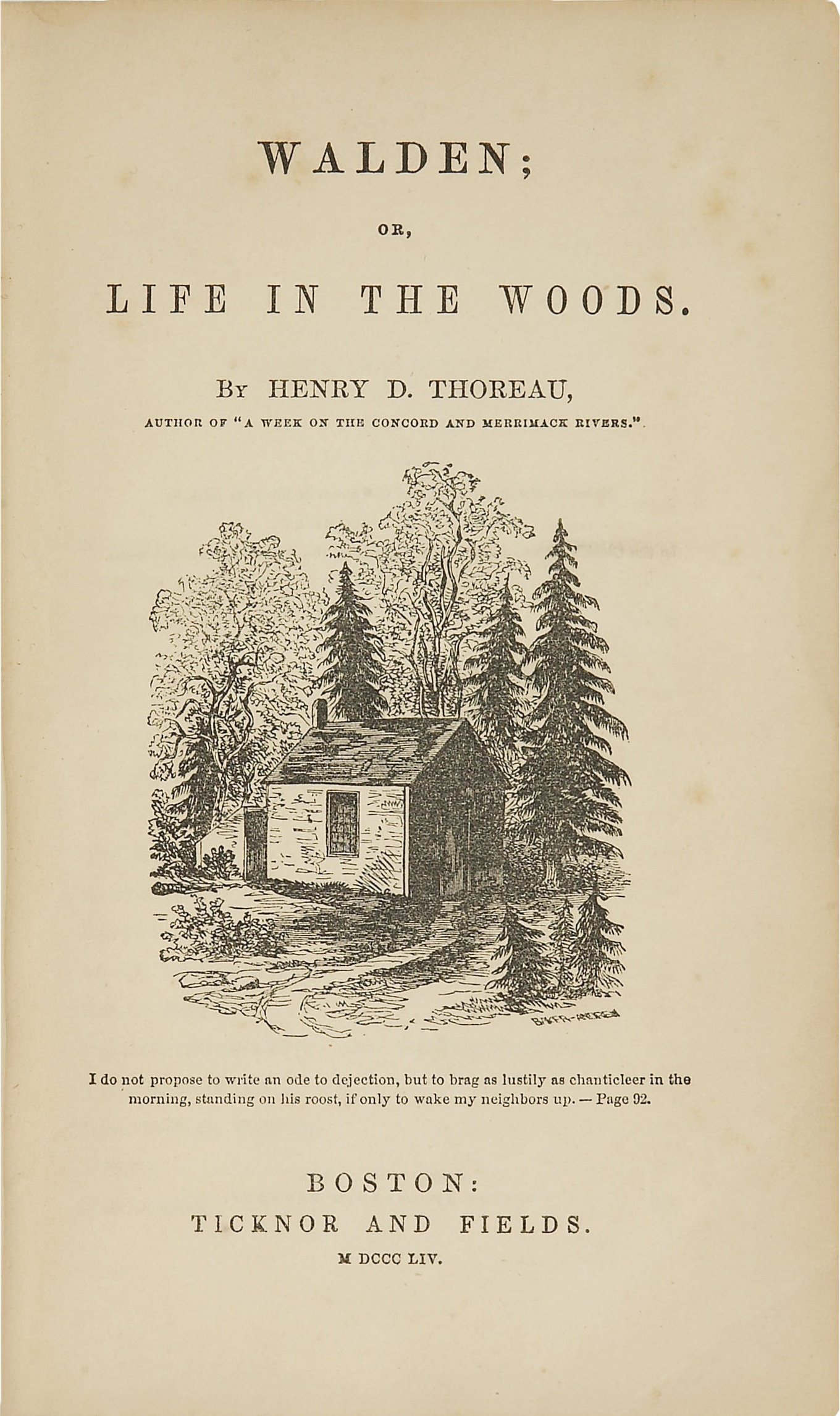
Walden by Henry David Thoreau

Walden is a collection of essays by American writer Henry David Thoreau. Walden is a record of American writer Henry David Thoreau living by the Walden Pond. It describes what he saw, heard and thought over a period of more than two years. The book is rich in content, profound in meaning and vivid in language. Walden is composed of 18 essays.
In the process of the change of four seasons, it records in detail Thoreau’s inner desire, conflict, disappointment and self-adjustment, as well as the complicated mental process of his desire again after adjustment, which went through several cycles until its final realization. It shows that the author employs it to challenge his personal, and even human boundaries. But this kind of challenge is not the infinite hope of realizing self-worth, but the infinite power of recovery after injury.
Thoreau’s own practice at Walden Pond and his works have a consistent proposition: return to nature. In his works, he constantly pointed out that most of us modern people are trapped by family, work, various material needs, have lost spiritual pursuit and lived a materialistic life. That is still the case today, and it is getting worse. Many of us pay little attention to things beyond our petty personal interests and activities. In a global context, Walden has become a model of harmonious coexistence between man and nature. In the broader sense of ecology and biology, Thoreau was way ahead of us.
The myth of Walden represents a primitive way of life in pursuit of perfection, expressing an ideal that is both attractive and practical to contemporary people. This model is of ecological significance to us today, because the destruction of ecological balance and environmental degradation have reached a rather serious level, and many ecologists and environmentalists are working to protect the few remaining wealth left by nature to human beings. Thus, Walden is no longer just a specific place where the famous American writer Thoreau lived, wrote and thought. It has become a symbol. In Walden, we can find a way of life, a romance between man and nature, a persistent pursuit of ideals, a concept of embodied nature, and the eternal desire of man to approach and merge with nature.
-Coreen C.
5 Books To Read This Summer
Are you reading for the Summer Read program this summer, and are tired of reading your mandatory summer English book? Try checking one of these books out! Hopefully they won’t remind you of the pains of school all that much…
- Catching Jordan by Miranda Kenneally
Jordan, the daughter of the famous QB Don Woods, and spent her whole life waiting to be the first girl to play QB at a college level. With the twists and turns of senior year, and as she’s torn apart between Henry and Ty, does she really want to throw away her dream of playing at Alabama?
If you have read any other books by Amanda Hocking, especially her Trylle books, you’ll definitely enjoy this. Bryn Aven must protect the Troll community, before it all falls apart. Sure, she’ll eventually be charged with murder and treason, but it will all be better when it’s all over, right?
Do you ever hear that catchy song on the radio and wish you were that girl the guy is singing about? Well, what for what most girls wish for, it turns out be a nightmare for Audrey after she breaks up with her boyfriend. Audrey has to deal with the paparazzi, changing her cell number because it keeps getting leaked to the press, and getting escorted by the police on a date with her new boyfriend. Maybe it’s a good lesson that she should never date a musician…
4. The Infinite Moment of Us by Lauren Myracle
If you loved her l8r, g8r series, you’ll love this book! This is an incredible story between Wren, the good girl who obeys her parents, and Charlie, a foster kid. And when these two people meet, everything begins to change. Not for younger audiences.

A sixteen year old girl wakes up in the middle of a plane crash, with no memories of her life. She has purple eyes, and so people began to call her Violet. When a mysterious boy claims he has the answers, will she trust him? Or will she remember nothing for the rest of her life?
The first book is a little bit tedious, but then it starts to get complicated with time travel and other things later on. This is the kind of serious that at the second to last chapter, you want to throw the book across the room, but then at the last page, you wish the author had made another three books.
-Rebecca V., 8th grade