Launch by Jeff Walker

launch_jeffwalkerWhen an Internet millionaire promises you the “secret formula to sell almost anything online, build a business you love, and live the life of your dreams,” how do you approach it?

With a very skeptical mind.

However, when I began reading Jeff Walker’s book Launch, I pushed away my doubts to try and learn a thing or two about online businesses.

To begin, Jeff Walker was a stay-at-home dad who created a successful online business using a technique he calls the Product Launch Formula. After discovering that his method was relatively unused by the rest of the business world, he began releasing training courses and books on how to emulate his success. According to Walker, the Product Launch Formula has been used by his students in a variety of different markets, from stock trading to dog agility training.

Essentially, the Product Launch Formula involves building an email list of people interested in your product, creating a close relationship with those people, and then building up anticipation to your product launch. Although I can’t personally testify to the formula, I think the book itself is very well written. Jeff Walker markets himself as someone who understands and relates to struggling entrepreneur, and not just some marketing god bestowing his eternal wisdom upon us peasants. When explaining any concept, Walker always provides at least one real-world example he’s encountered, often his peers’ success stories. Right in the beginning, he talks about a man who used PLF to sell over 600 copies of a board game using his technique.

The one change this book needs is more specifics to each step. Sometimes the success stories presented became repetitive. I would often finish the page knowing that the PLF model can work, but without knowledge of how to start. I’m sure he offers meticulous details in his online courses, but I won’t be paying thousands of dollars for those anytime soon.

For any budding entrepreneur out there, this book is a glimpse into one man’s road in online businesses. Even if Jeff Walker’s Product Launch Formula isn’t for your business, it might help you build your business knowledge for the future.

-Phillip X.

The Devil’s Highway by Luis Alberto Urrea

devil's highway_luisalbertourreaWe have all heard the horror stories of the border and the Border Patrol, of human beings desperate to escape their lives of suffering and cross into the land of the free. As Americans, we may hold negative opinions about such illegal immigrants, but the stories we hear from the media barely scratch the surface about the struggles these people must overcome to gain the opportunity of a better life.

Desperate to improve their own lives and their families’ lives, thousands of men unknowingly fall into the trap of corrupt Mexican lords, who promise to smuggle them out and provide them with a guide known as a “coyote” who would lead them to freedom. In May 2001, twenty-six men set out on a journey that would change their lives forever. Scrambling across the border with a few personal possessions, some food, and one jug of water each, the men reach an area in the Arizona desert known as the Devil’s Highway. Only twelve made it safely across.

The Devil’s Highway, written by Luis Alberto Urrea, details the path taken by these twenty-six men from their homes in Veracruz to what they call “the north.” Their enemies are countless: US Border Patrol, the Mexican government, rattlesnakes, the desert, hypothermia, fear, and most of all, the sun, a “110 degree nightmare” that dries out their bodies, sucks out all life, and literally fries their brains to the point of insanity.

I am personally not a fan of nonfiction, yet Urrea’s artful prose is captivating, drawing me in with the story of how only a dozen men survived and how fourteen others, labeled by the US media as the Yuma 14, did not. However, The Devil’s Highway is not just the telling of a fateful event; it is also Urrea’s way of shining a light on what he believes is a backward Mexican and US border policy, which does little to decrease the flow of immigrants. A strict border policy forces people to make the crossing in increasingly forbidden, dangerous areas, which contributes to the harsh conditions that kill those who dare to attempt it. While this book most likely will not influence immediate change in the border policy, it does bring attention to and educate the public about a serious political issue. I would highly recommend this book to those over the age of fourteen (as some descriptions can be graphic) who may be skeptical toward the nonfiction genre, as this book is highly informative and reads just like a story. Urrea certainly weaves first-person testimony, geographic descriptions and illustrations, cultural and economic analysis, and poetry into an award-winning masterpiece.

Kaylie W., 11th Grade

The Devil’s Highway is available for checkout from the Mission Viejo Library.

Why Fiction Is As Beneficial As Nonfiction

The debate over fiction and nonfiction is a battle between escapism and reality. Fictional stories immerse readers in vast worlds with intriguing characters, while nonfiction books expand readers’ horizons in the real world.

There is an ongoing debate over which is more useful for readers to consume.

In our world of literature, nonfiction is often considered more educational and useful than fiction. While nonfiction deals with the more pressing matters of the real world, fiction distracts readers with entertainment. Just the word escapism carries a negative connotation. If it weren’t for some extra vocabulary, reading a story might be the same as watching a movie.

Right? Wrong.

Fiction is a reader’s lens to view the world through a different perspective. Experiencing a fictional character’s life produces empathy in a way that cold facts fail to achieve. A Canadian research group led by Keith Oatley found that reading literary fiction greatly increased readers’ abilities to assess emotions and social situations. In a world where EQ (emotional quotient) often trumps IQ, empathy is extremely important. It increases a reader’s sense of morality, often through the repeated use of poetic justice. By ending most stories with the villains defeated, fiction reinforces that justice should triumph. On the other hand, only reading about the real world can create a feeling that life is cruel, and nothing can change that fact. Fiction readers have a less rigid line of thinking, and are more adaptable and comfortable with uncertainty.

Especially in children, fiction stimulates imagination and creativity, which in my opinion are just as important as knowledge. Imagination inspires dreams, creates goals, and makes the world seem more beautiful. It transports readers away from the mundanity of life. Happiness and relaxation are good things.

Many people dismiss fiction because they think it provides no tangible benefit to the mind. They believe knowledge and facts are extracted from truth, not stories. But can’t we learn from stories too? Who would argue that 1984 didn’t teach us about the dangers of authoritarian governments? Or that To Kill A Mockingbird didn’t highlight racial tensions? My point is, fiction can educate the public as well as nonfiction, and sometimes in a more convincing manner.

To sum it all up, fiction should stay with readers throughout their entire lives. Don’t cast away the creativity of childhood as you transition into adulthood. Of course, nonfiction is equally important, and we all want a balance of dreams and reality. So read a little of both, however much longer one might take compared to the other. Collect information and insight, while cultivating creativity. Reap the best of both genres!

Enrique’s Journey: The True Story of a Boy Determined to Reunite with His Mother by Sonia Nazario

enriquesjourney_sonianazarioTo be honest, this book had been sitting on my shelf for a while before I thought to read it. To me, it seemed interesting, but I wasn’t so sure. I was used to fast-paced, dystopian novels, not true accounts. So when I picked it up and saw a map on the first page, I was skeptical.

But of anything that I’ve read recently has a deep meaning, it’s this. This story follows Enrique, a young teen from Tegucigalpa, Honduras. When he was five years old, his mother, Lourdes, left him to go to the United States, in hopes of getting a job and helping the financial situation of her family. Her plan was to be gone for only a short time, an idea which was further fomented by pictures of rich cities in the United States. So when she arrived in the US, her plan did not go as she expected.

For young Enrique and his sister, Belky, it was hard to see their mother so far away. They could not imagine why she would want to leave them. Added to that was years of false promises of her return, and the children were not happy. Enrique was affected most of all. His life became difficult in the Honduras. He decided not to go to school anymore. He sniffed glue and was high more often than not. His family, and his girlfriend, worried about him.

At this point, Enrique cannot be stopped. He has decided to hitch-hike his way all the way to the United States, on top of trains and through the countryside. This is an extremely dangerous undertaking, because of the threat of gangs and migrant police and general disdain for migrants, not to mention that riding atop a moving train is not exactly the safest way to travel. This story follows Enrique as he makes not one but eight trips to try to get to the Mexican-American border, and the hardships and joys he experiences along the way.

It was truly eye-opening to read this story. In light of political comments about immigration in the United States, it was interesting to see the argument from the other side. I never knew it was this difficult for people to come to the US, where they aren’t even welcomed half the time. It was honestly depressing to see how cold and selfish people can be towards other people, especially after seeing how difficult life was for people in these situations. It certainly puts my experiences into perspective.

On a related note, the author of this account, Sonia Nazario, actually made this trip herself, so she could make the story more realistic, which shows a lot of dedication to her job. So not only am I in awe of Enrique’s courage, but also of Nazario’s selflessness and willingness to do anything in order to share such an important story.

– Leila S., 10th grade

Enrique’s Journey is available for checkout from the Mission Viejo Library. It is also available to download from Overdrive

Teen Read Week: Fast Food Nation by Eric Schlosser

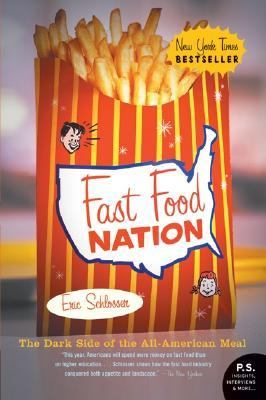
fastfoodnation_ericschlosserFast food has become an inescapable aspect of the modern world—especially for Americans. We drive along the freeway, see the recognizable Golden Arches, and think it’s typical to pick up an order of burger and fries after a long, stressful day since we are just too lazy to make the effort to cook a healthy meal. The obesity rate in America has soared in recent years. How can we escape the chains of fast food that have grown to be so normal in our daily lives?

In the non-fiction work, Fast Food Nation: The Dark Side of the All-American Meal, Eric Schlosser explores one of the largest industries in the United States, and perhaps, one of the most harmful. Focusing mainly on the McDonald’s corporation, Schlosser chronicles the rise of the fast food industry, which has grown at a remarkable rate. Why is it that ninety-six percent of American schoolchildren can identify the Golden Arches and Ronald McDonald before Mickey Mouse? How has the McDonald’s brand become so well-known throughout America and the rest of the world? From the farms where the cattle and potatoes are cultivated, to the meatpacking factories, to the restaurants, to our mouths, he explains the making behind the hamburgers and fries we consume. The aim of Schlosser’s book is to raise awareness of the unseen consequences of fast food and cause readers to contemplate “the dark side of the all-American meal.”

After reading Fast Food Nation for a summer assignment, my whole view on fast food has definitely changed. I’m sure everyone knows that fast food has dire consequences, but Schlosser brings to light many of the secrecies that are skillfully hidden from the public. The detailed account of dangers of working in the meat factories, as well as the sanitary issues of how meat is processed, is appalling. I usually don’t prefer to read non-fiction works, but Fast Food Nation was definitely a captivating, eye-opening read that I recommend to all Americans of any age, for it will forever make you question that burger you are about to chow down.

-Kaylie W., 11th grade

Fast Food Nation is available for check out from the Mission Viejo Public Library.

Taking Flight by Michaela and Elaina DePrince

takingflight_michaeladeprince“There’s not a mother in this world who would watch her child,
Cry in the street stand and watch her weep
There’s not a mother in this world who wouldn’t give
Up her own life for the life of her child”

-Abdulla Rolle, an established international nasheed writer and artist

The story of Michaela DePrince is one that I will never forget. Between its heartfelt message, its bittersweet moments, and its heart wrenching beginning, the hope of this little war orphan could keep an entire country motivated in such crisis.

A little girl by the name of Mabinty lived a pretty joyous life in a small, poor town in South Africa. Her father worked in the diamond mines while her mother stayed home to help educate Mabinty, for it was unlikely that this tiny girl would get married because of her appearance of white spots covering her neck, arms, and legs. She was considered a devil’s child because of this condition, for only the devil would give birth to such a wretched creature. Under her parents’ tutelage, by the age of 3 Mabinty could read Arabic and speak 5 languages. However, one day news came from the diamond mines that the rebels attacked and Mabinty’s father had been shot. To make matters worse, her uncle, who lived next door, deceivingly took over the girls along with all of Mabinty’s college savings. Then, afflicted by sickness and mistreatment, Mabinty’s mother died. Mabinty was promptly taken to an orphanage because her uncle, believing her to be the devil’s child, knew he wouldn’t get a good deal in marrying her off.

At the refugee orphanage, there were nannies, but not the Mary Poppins type. This type worked only to earn money for their household. They played favorites out of the 27 little war orphans. The beloved number one child would receive the best meals and first choice clothing. However, number 27 would get the smallest portion to eat and the last picked clothing. Mabinty was number 27. Her time at the orphanage was awful, but she still tried to bring her own light to it. She made a friend though with Number 26, whose name was also Mabinty. Number 26 cared for her much like a mother would. She would read to Mabinty when Mabinty couldn’t sleep. Number 26 would sing to her when it was raining or if Mabinty was sad. One day a wind pushed a magazine against the orphanage gates. On the front cover was the picture of a woman in a beautiful costume standing on her tippy toes. But what intrigued Mabinty was the fact that the woman looked overjoyed to be in this position. She ripped off the cover and stuck it inside the only thing that was hers, her underpants. Mabinty later learned from Teacher Sara(h) that the woman was a ballerina. So Mabinty would stretch and flex every day, mimicking the positions of the ballerina, hoping that someday she would become a ballerina.

Time passed and the children of the orphanage learned they would be adopted by American families. Twenty-six of the children had assigned families, but nobody wanted a spotted child. Incredibly, Mabinty and her best friend, number 26, were adopted together. Upon meeting her new mama, 4-year old Mabinty searched the hotel room for pointed shoes or a pink dress or tiara but found nothing. Since she spoke very little English at that point, she pulled out of her underwear the picture of the ballerina and showed it to her new mama. Her mom smiled and said she would dance. Mabinty and Number 26 wanted new American names. Mabinty became Michaela DePrince and number 26, Mia DePrince. Michaela and Mia, once settled in their new homes, both started ballet and dance classes. And, by age ten Michaela was in an upper class, dancing five times a week. Michaela DePrince is an inspiration, and this book follows her fight against all odds. The song at the beginning of this post really describes the whole book, and to me, the meaning of life. This was an amazing book, and I really encourage others to explore more about Michaela DePrince through this book, her movie, TED talks, and inspirational videos.

“Oh people of the world
Can we spare a little justice can we spare a little peace
For the children of war
Oh people of the world
Can we spare a little love can we spare a little prayer
For the children of war”

-Abdullah Rolle


-Maya S., 8th grade

Taking Flight is available for check out from the Mission Viejo Public Library.

Tuesdays with Morrie by Mitch Albom

tuesdaysmorrie_mitchalbomI really needed another book to read so I asked my mom if there was a book in her library that I could read. She gave me a book called Tuesdays with Morrie and told me that it’s about life lessons and stuff like that. It really didn’t sound interesting but I decided to give it a shot. It was so worth it. Tuesdays with Morrie, is more of a life lesson book for sure, but it is heart warming. Typically I like read the adventure/dystopian type novel so this story was somewhat out of my comfort level. So if you don’t mind reading a slower book then you should check out this book.

Mitch Albom tells about his own personal, strong relationship between himself and his favorite college professor. After leaving college, 16 years later, Mitch gets a new job as a journalist for the Detroit newspaper. It is a well- paid job but empty and he begins to feel depressed. After meeting with his mentor to catch up, Mitch decides to have Morrie mentor him once again. They met up every Tuesday(hence the name).

Through their time together you grow to love old Morrie and take in his lessons too. I didn’t understand all of them because some were directed towards adults but I definitely learned a good deal of them. One is “Life is a series of pulls back and forth… A tension of opposites, like a pull on a rubber band. Most of us live somewhere in the middle. A wrestling match…Which side win? Love wins. Love always wins”  There are so many more meaningful quotes and lessons sprinkled throughout this book.

I really hope you check this book out because it is one of my favorites!

-Erika T.

Tuesdays with Morrie is available for check out from the Mission Viejo Public Library and Overdrive.

Zero to One by Peter Thiel

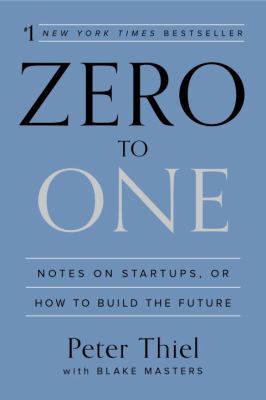
zerotoone_peterthielZero to One, written by  famed businessman Peter Thiel, is the essential guidebook to aspiring entrepreneurs everywhere. Short and concise, this handbook explains all aspects of problems in the business world, along with the key ingredients to create successful startups.

What sets this book apart from the dozens of other “guides to success”? The answer is its simplicity. Most books promising instant success provide convoluted plans for making money and small tricks for manipulating the business world. However, what Zero to One emphasizes is that there are no easy roads to success. There isn’t one formula or business model to instantly attain success. Instead, this book shows how to find a niche in the market and ensure a long term business strategy.

What’s more, Thiel doesn’t just explain this in a mind numbing and inapplicable way. For every single concept introduced, Thiel provided an example. When talking about long term strategies, hewrites about the Cleantech Bubble. For a short period of time, it seemed the entire world was focused on finding renewable sources of clean energy. Dozens of solar energy companies bloomed, only to be crushed in a few years. With the discovery of fracking, and the lack of innovative clean technology, nearly 40 solar companies went bankrupt in one year. Of course, successful companies are also displayed in this guide. Thiel highlights the winning moves by each startup, and the similarities between them. He also shares past experiences on starting his company, PayPal, and the difficulties he met along the way.

Even if you don’t plan to be an entrepreneur, Zero to One is still a very good read. It offers a quick but comprehensive view at where the future is headed. It shows how to find the balance between the idealistic and realistic for the most successful startup. Every startup company takes effort to run, but the hardest part is starting it—from zero to one.

– Philip X., 10th grade

Zero to One is available for check out from the Mission Viejo Public Library and Overdrive.

Grammar Girl by Mignon Fogarty

grammargirl_mignonfogartyAre you a grammar fanatic? Are you annoyed when people, including adults, mix up their grammar? Well, Grammar Girl by Mignon Fogarty, a book exploring the surfaces and depths of grammar and writing, is much more than a grammar book.  And more than likely, it is right for you.  It offers easy-to-understand rules of conduct to live by as a writer, or in your case, a blogger.  Throughout this book, easy lessons are explained through quick and dirty tips.  I learned everything from gerunds to objective versus subjective pronouns to complicated conjugations.

The basic definition of a gerund is a noun made from an action verb plus an ‘ing’ at the end.  Every gerund, without exception, ends in ‘ing’.  Gerunds are not, however, that easy to locate.  For example, a name of a profession counts.  Like, ‘Acting isn’t as easy as it looks.’  In this case acting is the gerund and is functioning like a noun, yet it sounds like a verb.  Here’s another one: ‘Her singing almost deafened me.’  Singing is the gerund because it is referring to the act of her singing as an object or an idea.  But, we’re not done yet. In most cases, gerunds need a possessive or objective pronoun much like some words need linking verbs. It can be pretty easy to make the mistake of saying ‘We didn’t know that was his singing.’ This sentence could mean we couldn’t tell if what he was doing was singing or if he was making some other noise.  That was a possessive pronoun, but to clarify the true meaning of these types of sentences, sometimes you need to use a possessive pronoun.  This is the correct sentence: ‘We didn’t know this was him singing.’

In sixth grade, your English teacher probably taught you about basic conjugation.  In addition to these, there are progressive and perfect progressive. Learning these are essential to speaking correctly and formally.  Progressive means that the action is ongoing, progressing, or will be progressing.  (You can see chart below for the progressive and the perfect progressive.)  Then, perfect progressive is when the action has progressed for a while before it ended or it will end.  Perfect progressive uses the words like ‘has been’ or ‘had been’.

I would definitely rate this book a 10/10 for its complete guide on grammar and tips to keep your writing in shape.  In addition to Grammar Girl, I also would recommend checking out some of Mignon Fogarty’s online resources as well.  She has a podcast, a website (http://www.quickanddirtytips.com/grammar-girl), and several books for you to explore and love just as I did with this one.

– Maya S., 7th grade

Grammar Girl is available for check out from the Mission Viejo Public Library

PROGRESSIVE(also called incomplete and continuous) EXAMPLE MEANING OF SENTENCE
Past progressive Jack was walking. At some point in the past, Jack was in the middle of a walk, but we don’t know when he stopped or if he did.
Present progressive Jack is walking. Jack is in the middle of a walk.
Future progressive Jack will be walking. Jack will walk in the future– and walk and walk.  Who knows when it will end?
PERFECT PROGRESSIVE (also called perfect continuous) EXAMPLE MEANING OF SENTENCE
Past perfect progressive Jack had been walking. At some point in the past, Jack started walking and did so for a while, but now it’s over.
Present perfect progressive Jack has been walking. Jack started walking sometime in the past, and he is still walking.
Future perfect progressive Jack will have been walking. Jack will walk until a specific point in the future, and then he will stop.

My Top Pick Going Into The New Year

Sstaying_strongtaying Strong 365 Days a Year by Demi Lovato has become a part of my daily routine in the last year and I have already restarted in the New Year. For each day of the year is a page with the date that contains; the date, a quote, a positive message that usually ties everything together, and a daily goal. I got this book as a gift while a family member was in the hospital and have read it everyday since.

I usually pick it up in the morning and then put the daily goal in my phone or write it down so I can make sure that I accomplish it. There are times that it will stay in my phone for days, or even weeks before I actually can delete it. But the feeling is indescribable and it is something that I can easily look forward to everyday.
I always recommend it to friends and even family, everyone that has read it has loved it.

If you are looking for a book that is uplifting and can bring some extra positivity into your life, this is definitely the book. I can’t describe how much it has changed my life for the better.

-Shelby B., 10th grade