Book Review: The Treatment, by Suzanne Young

treatment_cover

“The girl I used to be is dead-The Program killed her. And for better for better or for worse, I’m what’s left.”

Starting where The Program left off, Sloane and her boyfriend James are on the run. They barely survived The Program, an organization that “cures” teenagers from depression by stealing their memories, isn’t ready to let them go.

When forced to team up with some rebels, Sloane and James have the time to ask themselves who they are. Without their memories, so much of their past is unknown. How much of their life is a lie? The good news is, they have an orange pill, more commonly known as The Treatment, that can bring back their memories and ensure those memories will be safe from The Program forever. The bad news is, there are two of them and only one pill, a pill The Program won’t rest until they find.

This book felt less dark than the first. Since they have been “cured,” suicide is more a thing talked about other people doing rather than the main characters contemplating doing themselves. Instead, they learn to accept that they must live for the present, leaving the past behind them, if they ever want to live for the future.

It always seems more hopeful, at least for me, when characters are on the more instead of isolated in a single area when they are being hunted down. There are plenty more places to hide and ways to evade, but when The Program needs to keep their 100% success rate, it could only be a matter of time. If or when they are caught, it won’t be the same as before. Because this time, The Program won’t merely take their memories. This time, their personality will be sucked out of them as well.

I don’t think it is necessary to read the first book in the series. All crucial elements of The Program is revealed over the course of the novel, whether referred to directly or indirectly varied. Other than understanding the characters and their situation better, I think it would have been more interesting for me to learn along with the characters the past events and who people are versus who they claim to be.

Even so, I believe the mature content of the book she be reserved for older teens. Depression and suicide, even in a futuristic world, still seems so terrifyingly real.

This review is based on an advance reader’s copy. The Treatment, published by Simon & Schuster, will be available in bookstores everywhere on April 29.

-Nicole G., 10th grade
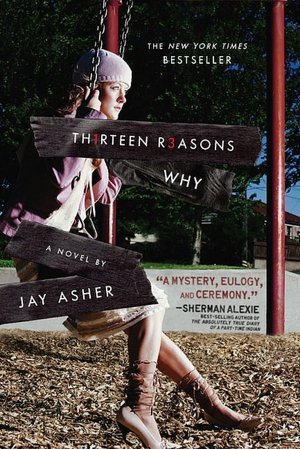
Book Review: Thirteen Reasons Why, by Jay Asher

13_reasons_whyTo follow the style of the original book, this review will be divided and counted.

Thirteen Reasons Why follows the story of Clay Jensen, an ordinary high school student, unwillingly tied up with the recent suicide of his classmate, and first crush Hannah Baker. After her death her “tapes” (listing the thirteen reasons why she decided to commit suicide) are distributed and mailed around to the thirteen people who are mentioned in the tapes. Jensen, as one of the recipients of the tapes, spends the evening listening to them- retracing Hannah’s steps throughout the town…eventually learning more about the girl who slipped away, out of his life.

Overall I had many, many problems with this book. There were a few positives, but the way the author addressed the serious topic of suicide and depression disturbed me and left me unnerved. Here are my own eight reasons why…

Negative aspects of this work:

1. Hannah Baker holds a very shallowly based argument for suicide.

A majority of the reasons for her suicide are connected to her romantic interactions with other males in the town, or her own reputation at stake. Although it is irrefutable that suicide/and or depression could be triggered by anything, societal problems being one of them, the story portrayed by the author struck me as if it was written by someone who had no idea of the weight of the topic they were discussing.

2. There was too much focus on males within the story.

Let me explain a little more, the males within the story were portrayed as the main instigators of most of Baker’s reasons for suicide. All of them also connected to her because of some romantic, or sexual exploitation turned rumor. Perhaps the author was trying to hint at the fact that males should be more aware of their actions towards others and how it affects them, but I still saw it as a sometimes anti-male tirade.

3. Some parts of the novel were incredibly unrealistic.

Much like the first point I made, other details in the story showed up as questionable. One of those is that Baker’s parents are never mentioned as being a source of help for her within the duration of the narrative. And what about the fact that the whole new town that she moved into seems so messed up, and against her? The fact that she seems unable to make new friends despite how charismatic and kind she is. This book definitely had a few plot holes, and things left unexplained- which did not help with the overall narration style taking place.

4. Uninspired story

Overall, you can tell that the author probably has had no personal experience with suicide or depression- as it shows through the work itself. And according to the author, it was inspired by audio tours that people take at museums, seeing artifacts, and listening to the story in place- not exactly the inspiration you would think would be needed to portray such a serious topic.

Don’t worry though…there are some positive aspects:

1. The author does a very good job of highlighting the idea that “it’s all a matter of perspective.”

No matter how trivial something may seem to you-that same thing, or action or thought may mean something entirely different for someone else based off of their own life experiences. Basically you don’t know the back story, so don’t be so quick to judge.

2. There is a very good portrayal of the ripple effect.

The author did a wonderful job in explaining and showing how one action may unwittingly set off a whole chain of events following, despite the connections being almost unseen to the people experiencing it.

3. There is very good characterization of the main person Clay Jensen.

The author did an incredibly realistic illustration of how he was reacting to the tapes. His immediate train of thought as he was visiting the places mentioned within the tapes. As the tapes explain back stories to people that he was completely unaware of. All of his reactions were incredibly relatable, and maybe even something I would do within his situation, allowing me to extend more empathy to his character. His emotion and anxiety was palatable, something completely tangible that you could almost feel as you were reading along.

4. There is a very good sense of “what if.”

The entirety of the story leaves you thinking about “what if.” And in turn makes you reflect about your own life and the “what ifs” present there.

Overall, the book’s negative aspects outweighed the positive for me, but it came as an easy read, with parts that left me with little bits of (sometimes shallow) introspection to mull over. Perhaps read it with these bits of commentary in mind, but don’t take it too seriously- after all, the author didn’t seem to take such controversial topics that way either.

-Sophia U., 11th grade

Book Review: My Big Nose and Other Natural Disasters, by Sydney Salter

my_big_noseHave you ever wanted to physically change a part of you? Maybe this book would help you reconsider.

Jory is a seventeen year old girl who has a big nose, and hates it because while her parents get the model style looks and her brother is a teenage Adonis, she gets the plain looks and her great-grandfather’s nose. However, in the summer before her last year of high school, she decides to work as a driver for a cake and flower delivery service so that she can raise enough money to fix her nose with plastic surgery and get the attention of her crush, Tyler. However, many things happen during that summer, such as meeting a violinist boy who works with jewelry, finding out that one of her once sensible best friend is making some bad choices, and finding out Tyler’s shocking secret.

In this book, there are some things that the reader should look out for. First of all, there is some weird humor. Secondly, there is use of alcohol and talk about people who like others of their same gender. Finally, Jory has the wrong image of what interests a boy in most of the story and also has a bit of jealousy later on.

However, this story does teach a good moral. Jory laters learns that no matter what, you should be okay with just  who you are, even if have a big nose.

-Megan V., 8th grade

Book Review: I Funny, by James Patterson

i_funny_coverI Funny stars a boy whose name is Jamie Grimm. His dream is to become the world’s greatest stand-up comic. Or, in his case, the world’s greatest sit-down comic. His legs are paralyzed, so he has to use a wheelchair. He doesn’t live with his own family- they died in a car accident- so instead he lives with the Smileys. Their name is really ironic, after all, they never smile, and they never laugh, so it’s impossible for Jamie to practice his jokes on them. And, even worse, there’s the threat of Stevie Kosgrov. He also lives with the Smileys, and he loves to pick on Jamie and beat him up.

Luckily, Jamie’s got friends that help him get back up and keep going, including his Uncle Frankie, who used to be a yo-yo champion and runs a diner, and Jamie’s best friends, Joey Gaynor and Jimmy Pierce.

This book is filled with jokes and is sure to make you laugh. I think it’s just amazing how James Patterson writes adult novels, young adult novels, and children’s books and still manages to make all of them great for that specific age group. I Funny is one of his children’s books, and is part of a side series to the Middle School series and in the sequel, I Even Funnier, (spoiler alert) there is actually a part in which Rafe Khachadorian meets Jamie Grimm! I can’t wait to find out if there is going to be a third book to this fantastic series!

-Linna C., 7th grade

Book Review: Struck by Lightning, by Chris Colfer

struck_by_lightning_coverIn the recently released book Struck by Lightning by Chris Colfer, high school senior Carson Phillips has big dreams, unlike others in the small town of Clover. Carson wants to attend Northwestern University and, then become a journalist for the New York Times. There is one problem: Carson has not yet gotten accepted into Northwestern yet.

In the book, Carson, along with maintaining the school newspaper and his writers club, needs to submit a literary magazine in order to get into his dream school. However, nobody in the high school likes Carson, or writing, and the only way Carson can get people to submit papers for his magazine is to blackmail students in his high school.

This book follows the storyline of a boy who struggles with life; both in school (with his college challenge)and outside of school (with his grandmother who has Alzheimer’s, his only parent mother who is a dysfunctional alcoholic, and his father, whom he never sees).

This book is well written and very engrossing. I literally picked it up and did not put it down until I had finished. This is a read for both boys and girls; however, I would recommend it to people who are at least 14. This a great new book that should be on every teen’s 2014 reading list.

-Will R., 9th grade

Book Review: Paper Towns, by John Green

paper_townsHave you ever met someone, maybe a person who is a huge influence on life, who you immediately had a first impression from them and you were also swept away when you found out that your first thoughts weren’t true? If so, then you’re on league with Quentin Jacobsen, a senior in high school who is in love with Margo Roth Spiegelman.

Quentin (nicknamed Q) is Margo’s neighbor, and has been her friend since they were young. Margo is like an enigma to him. She is the one who is adventurous, has run away four times, and once dressed up as a ninja in order to take Q on a wild adventure. Now, she has run away for a fifth time, and left clues to find her again. Only this time, Q finds out how different she is.

While this book is filled with comedy that anybody over the age of 13 would find funny, there are some scenes that some people might find inappropriate for people under the same age. For example, one time Q went out alone with Margo, who just happens to be the prettiest girl in high school, and when his friends found out about that, they made him write a term paper (30 pages min.), draw a realistic picture, make a sculpture, and write a poem describing the female anatomy. (pg 88) Additionally, some male anatomy parts are mentioned.

However, this book actually teaches an important lesson in the life of first impressions. Q has to learn that the adventurous girl that he thought he knew “was not a miracle…not an adventure…not a fine and precious thing. She was a girl.” (pg 199)
-Megan V., 8th grade

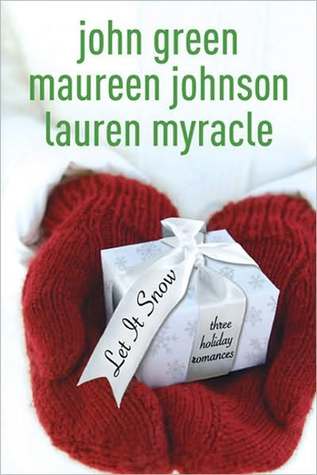
Book Review: Let It Snow by John Green, Maureen Johnson, and Lauren Myracle

let_it_snow_coverAs the holidays come to an end, I search for every way I can possibly find to prolong the season. I decided to read this book due to its dependable authors and captivating book jacket. Let It Snow is a three-story compendium of interconnected Christmas narratives written by John Green, Maureen Johnson, and Lauren Myracle.

The first story is “The Jubilee Express” which is my personal favorite, and follows a girl named Jubilee as she is spontaneously ordered onto a train on Christmas Eve, which unfortunately crashes into a snow drift. Her decision to get off the train and take refuge in the Waffle House nearby kicks off the elaborate series of unexpected events that prevail throughout the rest of the book. Jubilee is relatably awkward and unadulteratedly hilarious. She narrates the story in a unique, strange, and universally enjoyable style.

The second narrative is called “A Cheertastic Christmas Miracle” and is written by the modern king of young adult fiction, John Green. It tells story of Tobin and his friends as they journey through a blizzard to the proverbial Waffle House in pursuit of cheerleaders and hash browns.

The third story, “The Patron Saint of Pigs,” is the tale of an aforementioned girl named Addie, who aims to become less self-absorbed and sets off on a quest to a local pet store to pick up a previously paid for, teacup piglet for her friend, just as she promised she would. In this last part of Let It Snow, Lauren Myracle presents readers with a flawless, wrap-up conclusion to the novel in which all characters are united in one satisfying and intriguing resolution.

There are not very many authors that could possibly amalgamate a Waffle House, a Starbucks, a Tinfoil Guy, a notorious cheerleading cult containing an abundance of Madisons and Ambers, James Bond, a female Duke, tangential Swedishness, Twister, ceramic Santa villages, a girl infamous for her hash brown addiction, a celebratory Smorgasbord, and a dedicated Target employee to form one seemingly sane, unified whole, but that is exactly what these three authors came together and succeeded in doing.

Let It Snow consists of humor, relatable teenage drama, reflection of life, captivating stories of love and of friendship, and the substantial difficulties and benefits of human relationships. One reoccurring issue that is addressed throughout this book is the contemporary corruption of the social paradigm. The entire wholesome social hierarchy is solely based off the disregard of common equality (e.g. the drama geeks are cooler than the band nerds but buried under the social appreciation for jocks and cheerleaders). I found this both true and amazingly appropriate for the designated audience.

If you liked The Fault in Our Stars, Paper Towns, or any of Maureen Johnson’s books or Lauren Myracle’s novels, you’ll love Let It Snow.

“…a taste so profound and complex that it can’t even be compared to other tastes, only to emotions. Cheesy waffles, I was thinking, tastes like love without the fear of love’s dissolution…”
― John Green, Let It Snow

“Christmas is never over, unless you want it to be… Christmas is a state of mind.”
― Lauren Myracle, Let It Snow

“We study there a lot because… what other choice does society give us, right? It’s Starbucks or death, sometimes.”
― Maureen Johnson, Let It Snow

-Danielle K., 8th grade

Book Review: The Fault in Our Stars, by John Green

fault_in_our_stars_coverAs the second of John Green’s books that I have had a chance to read, The Fault in Our Stars did not disappoint. Written from the perspective of the 16 year old Hazel Lancaster who is diagnosed with a type of terminal thyroid cancer, it recounts her experiences in falling in love with the 17 year old Augustus Waters, an amputee who is recovering from osteosarcoma, after their chance meeting at a Cancer Kid Support Group.

Although this book is about cancer and the two main character’s experiences with it, it is not a “cancer book.” It is not a book of just tragedy, or a book of just recovery or regret. Instead, The Fault in Our Stars holds valuable insight to the perspectives one would not usually attribute with those who are fighting cancer or another terminal disease. In stark realism to other stories of its type, Green portrays Hazel and Augustus struggling together with observations about the fragility of life, the importance of humor, and the wisdom of death (or the looming threat of it); finally in the end, each reaching their own conclusions about what these subjects signify within their lives.

Green has lived up to every expectation, and has even surpassed some of those I held while beginning to read this book. Even with just two paragraphs into the book, it delivers an incredibly insightful observation cloaked within Green’s down-to-earth writing style:

“Whenever you read a cancer booklet or website or whatever, they always list depression among the side effects of cancer. But, in fact, depression is not a side effect of cancer. Depression is a side effect of dying. (Cancer is also a side effect of dying. Almost everything is, really.)”

Green writes with an incredible tenacity creating characters that are intensely fleshed out, vividly real, complex, and beautifully illustrated, transporting the reader into the shoes of both Hazel and Augustus, allowing for empathizing and connection with them on all levels. His ability of description also lends itself to create beautiful illustrations of the locations that play important roles within the story line making it easy for the reader to imagine themselves in the both the far reaches of where their favorite writer resides in Amsterdam, and in the closer homes or even bedrooms of the characters.

Despite the somewhat distant subject matter of these two teens fighting against cancer, Green manages to pull in the readers with the incredible points of realism and relatedness that they can hold with the characters. He also provides the perfect balance of humor and tragedy, the intense humor within the first half of the novel only serving to make the luminous final pages even more beautiful and heartbreaking. Ranging from the parts of incredible insight, to the intense humor and comic relief, to the final parts of tears and heartbreak, Green continues his winning streak, making this book one of my new favorites. Through the experiences of the characters you will learn a lot about yourself, and also be able to face topics that may have never shown up on your radar before, and in the end leave with a humbling story of love, friendship, and loss.

-Sophia U., 11th grade

Book Review: The Total Tragedy of a Girl Named Hamlet, by Erin Dionne

total_tragedy_coverThe Total Tragedy of a Girl Named Hamlet was awesome! From Erin Dionne, author of Models Don’t Eat Chocolate Cookies and Tales of an Accidental Band Geek, comes a story about Hamlet Kennedy, a funny eighth grade girl with a few big problems:

1) Her name is Hamlet- what about that is not tragic?
2) Her seven year old sister Dezzie will be attending eighth grade with her- as the math tutor (eek!)
3) Her parents are a walking, talking Renaissance fair who are still stuck in the 16th century and use words like Huzzah!

With issues like this you would expect Hamlet to just curl up under a rock and be homeschooled like any normal person. But Hamlet does not give up. Even if Carter still isn’t interested in her and she’s tanking pre-algebra, she doesn’t (excuse me, does not) let it show. Between her friends, her sister, and the school performance of “A Midsummer Night’s Dream” in which she plays Puck, she is able to actually enjoy her eighth grade year and even (shh!) has a secret admirer.

The characters are vibrant and funny, the plot is unpredictable, and the writing entertaining. This book is real, funny, and down to earth. Ask for it for Christmas!

-Becka O., 9th grade

Jane Austen Spinoffs Worth The Read

I’m reviewing these awesome books by Jenni James. They are called Pride & Popularity, Northanger Alibi, Persuaded, and Emmalee. They are all modern day parallels to Jane Austen books (suprise, suprise right? Any of you who have read my blogs before probably know I’m borderline obsessed). All these books are set with characters from the same town that interact a bit in all the books. For example, the mean girl in Pride & Popularity is the best friend in Persuaded.

These books, collectively known as The Jane Austen Diaries, are amazing. They have super-good plot development and are true to the original while still adding cool plot twists. I’m going to give you an overview and little summary of each of the four books:

pride_popularity_coverPride & Popularity is all about Chloe Elizabeth Hart, redheaded, four-wheeling, fun loving teenage girl. She is just as determined not to fall in love with Taylor Darcy Anderson as he is to get her to fall in love with him. She is not going to be added to his ever growing list of girlfriends, not going to be associated with all the drama that goes along with dating Taylor. But she starts to wonder if even she can resist his gorgeous smile (even if it is really annoying sometimes).

Northanger Alibi follows Chloe’s little sister Claire to Seattle, Washington where she dreams of finding her very own Edward. As she gets caught up in the world of Twilight she starts creating crossovers she thinks make perfect sense and decides that her (kind of) crush is a vampire and she is the Bella of her very own Stephenie Meyer novel. It’s a really good book even if you aren’t a Twilight fan (Harry Potter all the way!)

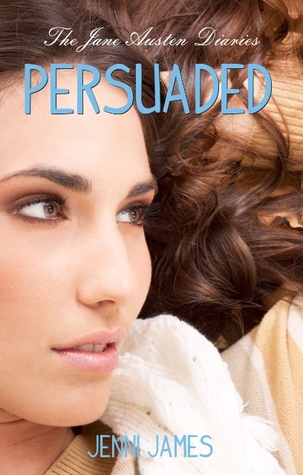
???????????????????Persuaded is all about Taylor Anderson’s former girlfriend Kylie’s best friend. Amanda was in love with Greg Wentworth when her cheerleading friends told her to break up with him. That was eight years ago and Amanda still wonders what might have been. Then he shows up again, totally hot, and acting like he doesn’t even remember Amanda. To make things even worse, the same friends that discouraged Amanda eight years ago are now throwing themselves all over Greg (who can fly girls to dates in his private plane). Amanda thinks she has lost any chance with Greg when a huge tragedy draws them close. Close enough that he might even begun to forgive her for breaking his heart all those years ago.

Emmalee follows the little sister of Zach Bradford, Taylor Anderson’s best friend. She is really annoying at first, because she thinks she can get whatever she wants because she has money and a “Bradford” smile. But when something huge happens, she realizes that she needs to make some major life changes, which may or may not involve Taylor’s super hot older brother.

If you have any time over Christmas break pick these up and read them. I guarantee you won’t put them down!

-Becka O., 9th grade