Book vs. Movie: Divergent

divergent_bookvsmovieThe night Divergent was released, I was there, excited and anxious with anticipation.. I went in with high expectations, as I have been in love with the book series since it was first released in 2011.

So perhaps it was my unrealistically high expectations of a book that I am thoroughly devoted to and invested in that contributed to the fact that I thought the movie was a big disappointment. People who I have talked to that did not read the book first before watching the movie have told me that they thought it was great, and maybe if I’d never read the books before watching the movie, I would have felt the same way.

Let’s start with how startlingly different it was from the book. I know book to movie adaptions are difficult to accomplish, but in this case it was significantly different. First off, they left out very important scenes from the book- scenes that are pivotal and important for the rest of the series. They also changed scenes– and not little scenes. Major scenes that, too, would affect the whole series.

-Edward. He barely has a presence in the movie (I think his name shows up on the scoreboard for a second?) and there is no book scene where he gets stabbed in the eye by Peter.

-Will and Cristina?!! It hardly shows their relationship, they’re pretty much portrayed just as friends, which is problematic, because in the books, it affects the plot and characters (especially Tris and Christina) in major way.

-There’s no Visiting Day in the movie, and some important information is found out from that scene. In the book, Tris never meets her mom in the shipping yard.

-Rachel L., 10th grade

Four Reasons NOT to Read the Divergent Series

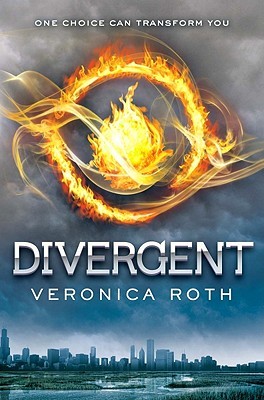
divergent_coverThe Divergent series by Veronica Roth offers three very unique novels. However, despite how much I liked, no LOVED, them, there are still some drawbacks to the series. You may want to consider the following if you are thinking about reading the series, if you have not already. Here are four reasons NOT to read these books:

#4. The books are each SOOOO long. The shortest book of the three is Divergent, at 487 pages. Wait a second– did I say the length of the books was a bad thing? Because it isn’t. The books kept me captivated throughout the whole series. The length of the books did not bother me at all. It just gave me a chance to stay immersed in the dystopian world even longer.

#3. Your outside life will SUFFER. At least mine did. I read them on a road trip over Spring Break, and let me just say, my sister was not pleased to see my nose in a book practically every second of the trip. I read at restaurants and at the pool. In fact, Divergent rode in the bicycle basket all around the town. Insurgent weighed down my backpack on a hike. And Allegiant kept me company on the long drive home. So much for that quality family time… I was a little QUITE isolated from them. But you know what, it paid off. I don’t have any regrets… Well, almost no regrets. My sister insists that she saw a waiter wearing a fedora fall backwards into a pool, but because I was deep in the Dauntless compound with Tris and the other initiates, I never saw a thing!

#2. Your heart WILL break. In at least one part of the series, you are practically guaranteed to cry. However, sometimes you need to cry. It adds interest to the story. That said, just don’t read that part of the book in public, unless you want to be seen with tears streaming down your face.

#1. Ummm… The final reason NOT to read Divergent? Honestly, I can’t think of another reason. If you are a younger teen, the romance aspect of the later books might be a little too much, but that depends solely on the reader. Other than that, I can’t come up with any other reason. That just goes to show how much I enjoyed the books.

As you can see, it was really hard for me to even come up with four reasons not to read Divergent, so I guess the conclusion you can draw from all of this is that, in my opinion, these books are worth reading. The moment you finish one book, you find yourself tearing into the next book. Each of the books truly hold your interest.

(P.S. To those who have read the books, yes, there is a reason that I chose ‘Four’ as the number of reasons, and I’m sure you know why…)

-Leila S., 8th grade

Book Review: Gone and Divergent

I recently have discovered multiple new series that I have enjoyed, as well as great books that stand alone on the bookshelves. I have been trying to read all 100 books on NPR’s list of top teen books.

Some of my recently discovered favorite series are Gone by Michael Grant and Divergent by Veronica Roth.  I have only read the first book in the Gone series, coincidentally also called Gone, because some other library-goer is taking forever to read the only copy of the next book and is, rudely interrupting my reading schedule.  Ranting aside, this book is seriously ah-mazing.  I have grown to love the end of the world, apocalyptic type books like The Hunger Games and this is at the top of my list.
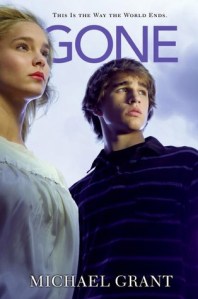
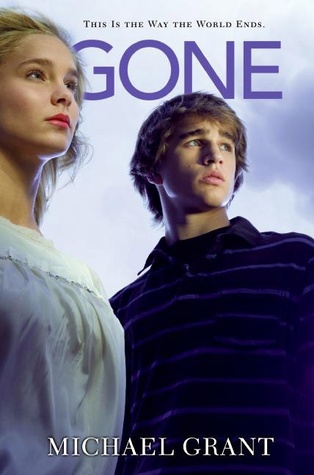
gone_coverIn the blink of an eye,  everyone disappears.  Gone.  Everyone except for the young. Teens. Middle schoolers. Toddlers. But not a single adult. No teachers, no cops, no doctors, no parents. Gone, too, are the phones, internet, and television. There is no way to get help.  Hunger threatens. Bullies rule. A sinister creature lurks. Animals are mutating. And the teens themselves are changing, developing new talents—unimaginable, dangerous, deadly powers—that grow stronger by the day.  It’s a terrifying new world. Sides are being chosen and war is imminent.  The first in a breathtaking saga about teens battling each other and their darkest selves, Gone is a page-turning thriller that will make you look at the world in a whole new way.

I repeat; AH-MAZING.  Makes me want to re-read it.

divergent_coverAnother post-apocalyptic book, as mentioned above, is Divergent by Veronica Roth.  In Beatrice Prior’s dystopian Chicago world, society is divided into five factions, each dedicated to the cultivation of a particular virtue—Candor (the honest), Abnegation (the selfless), Dauntless (the brave), Amity (the peaceful), and Erudite (the intelligent). On an appointed day of every year, all sixteen-year-olds must select the faction to which they will devote the rest of their lives.

For Beatrice, the decision is between staying with her family and being who she really is—she can’t have both. So she makes a choice that surprises everyone, including herself.  During the highly competitive initiation that follows, Beatrice renames herself Tris and struggles alongside her fellow initiates to live out the choice they have made. Together they must undergo extreme physical tests of endurance and intense psychological simulations, some with devastating consequences. As initiation transforms them all, Tris must determine who her friends really are—and where, exactly, a romance with a sometimes fascinating, sometimes exasperating boy fits into the life she’s chosen. But Tris also has a secret, one she’s kept hidden from everyone because she’s been warned it can mean death. And as she discovers unrest and growing conflict that threaten to unravel her seemingly perfect society, she also learns that her secret might help her save those she loves . . . or it might destroy her.

Both of these series are must-reads.  And, if you have a lot of time on your hands, go through the 100 book list from NPR and pick out what sounds good.  I promise, all of these are worth reading.

– Kaelyn L., 10th grade

Book Review: Skinned, by Robin Wasserman

skinned_coverSkinned is the first book of a sci-fi trilogy, set in a future where science has perfected a way to download a person’s personality and memories into an immortal mechanical body.

After her body is destroyed beyond repair in a car accident, 17-year-old Lia Kahn’s wealthy parents pay for her to become a “mech.” Lia’s new life poses unexpected problems when her friends reject her, believing her to be an inhuman impostor of her former self, and hate groups protest her very existence. She encounters a group of mechs who shun mortal life and live together for protection, and must choose between her old friends and family or the company of others like her.

I really liked the worldbuilding of this book. Many futuristic dystopian novels feature civilizations with impractical societal rules that are unlikely to develop in our world’s future, and are used mostly as a plot device (no art ever! the government matches you up with your spouse!). However, the world of Skinned is more of a decayed version of our own: there is still a democratically elected government, but they have little power compared to the huge corporations that own everything. People are even more addicted to technology and entertainment. And outside of the comfortable suburbs where Lia lives, the majority of the population starves in crime-ridden cities or works under harsh conditions in corporate-owned towns. Lia lives her life preoccupied with popularity and consumerism, and only starts thinking about the bleak state of the rest of the world once she sees the cities for herself and befriends mechs who grew up there. Her greater awareness of the problems of her society parallels her character development from a spoiled and judgmental girl to a more mature person trying to change the world. Though Lia has several love interests over the course of the trilogy, romance never overshadows the plot and equal focus is given to Lia’s changing relationships with family, friends, enemies, and the corporation who built her.

I would recommend Skinned to anyone 14+ (for language and thematic elements) who likes sci-fi and dystopian books such as Scott Westerfeld’s Uglies.

-Miranda C., 12th grade

Book Review: The Lives We Lost, by Megan Crewe

lives_we_lostThis month, I am reviewing the sequel to The Way We Fall, by Megan Crewe. The book, The Lives We Lost, begins when the main character, Kaelyn, and her friends discover that the deadly virus that starts with “flu-like” symptoms has spread far past their small quarantined island on the East Coast, and has now reached the rest of America, and possibly the world.

Kaelyn subsequently finds a vaccine in her late father’s lab that she heard him talking about before he died. She knows that she must set out to find someone who can replicate this vaccine to save humankind as we know it. However, as Kaelyn and her friends set out, they realize that the journey they are taking is long and dangerous, and the few people who are not infected with the virus will do almost anything, even kill innocent kids, to get their hands on the vaccine.

This is a great read, especially for teens who enjoy apocalypse and dystopian novels. Due to the content of the book, I would only recommend it for kids ages 13 or 14 and up, but even though the book can be graphic, it is a page-turner.

Both The Lives We Lost and its predecessor end with cliff hangers foreshadowing another book in the series. While I wish that Ms. Crewe had added another hundred pages or so and just finished the second book instead of leaving the reader hanging, I am looking forward to reading the third in the series.

-Will R., 9th grade

Fictional Worlds I’m Glad are Fictional

Books have a way of taking us to new and exciting places, and a lot of times those are places we wish we could go visit. Places like Hogwarts and Camp Half Blood are places that captures a reader’s heart and make you wish you could just jump through the pages and join in the adventure– and yet there a few fictional worlds that I am very glad are just that… fictional.

hunger_games_coverPanem – The Hunger Games series by Suzanne Collins

While the The Hunger Games is a great trilogy full of action and excitement, the country of Panem is one I’m glad exists only on paper. The thought of being entered into a drawing and forced to fight to the death at such young ages is something that I am glad I don’t have to worry about. Even though the concept that drives the story is something that I’m sure almost everyone would be against if it was implemented in society, there is something that makes it incredibly alluring to read about. The huge disconnect between the Capitol and the districts is something that in a way is reflective of our own government, and I think this is part of why readers are drawn to strongly to the story. This draw is further enhanced by Katniss’s incredible drive to protect those she loves, something which also aids in making the story relatable. Overall, the world of Panem is one that we can love to hate.

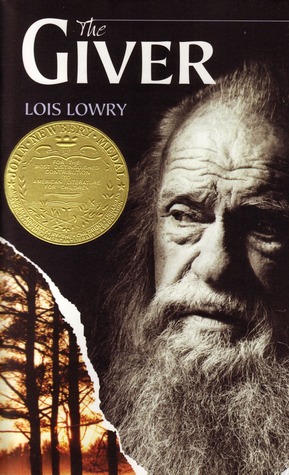
giver_coverThe Giver by Lois Lowry

The Giver takes place in an unnamed, futuristic society that at first glance is a utopia. Everything in this world is designed to make life as pleasant and convenient as possible; everyone is always polite, there is no war, no sickness, essentially everything unpleasant about life has been eliminated. Through reading the book and following the story of Jonas, the child who has been given the job of the Receiver of Memory at the Ceremony of Twelve (12 is the age at which children get their assignments, or roles they will play in the society), the reader begins to see that this utopia comes with a price. By eliminating all negatives aspects of life the society has really eliminated what makes people, people, something that Jonas learns while receiving the society’s collective memory. The Giver is a great reminder that even though life can be painful and unpleasant at times, it is these struggles that make life great in the long run.

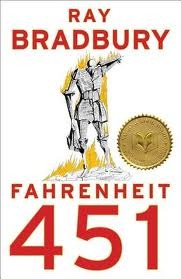
fahrenheit451_coverFuturistic America – Fahrenheit 451 by Ray Bradbury

The world of Fahrenheit 451 is another world that could be considered a utopia, however its flaws are more readily visible than other stories that feature utopia societies that dissolve into a dystopian society as the story progresses. In the society portrayed in the book people lives are all about quick gratification and easy living, they don’t think for themselves or having meaningful conversations, rather they settle for cheap thrills like driving their cars far too fast and letting technology essentially brainwash them into confirmatory. The biggest thing that sets the world of Fahrenheit 451 apart from our world is that books are illegal and fireman start fires, not stop them. Books are burned to prevent the spread of ideas and keep society uniform. With this restriction of thought it’s easy to see why that is a world better left on paper.

Overall, while there are many great fictional worlds that I would love to visit there are some that I am certainty glad are safely contained on the pages of books.

-Angela J., 12th grade

Book Review: The Treatment, by Suzanne Young

treatment_cover

“The girl I used to be is dead-The Program killed her. And for better for better or for worse, I’m what’s left.”

Starting where The Program left off, Sloane and her boyfriend James are on the run. They barely survived The Program, an organization that “cures” teenagers from depression by stealing their memories, isn’t ready to let them go.

When forced to team up with some rebels, Sloane and James have the time to ask themselves who they are. Without their memories, so much of their past is unknown. How much of their life is a lie? The good news is, they have an orange pill, more commonly known as The Treatment, that can bring back their memories and ensure those memories will be safe from The Program forever. The bad news is, there are two of them and only one pill, a pill The Program won’t rest until they find.

This book felt less dark than the first. Since they have been “cured,” suicide is more a thing talked about other people doing rather than the main characters contemplating doing themselves. Instead, they learn to accept that they must live for the present, leaving the past behind them, if they ever want to live for the future.

It always seems more hopeful, at least for me, when characters are on the more instead of isolated in a single area when they are being hunted down. There are plenty more places to hide and ways to evade, but when The Program needs to keep their 100% success rate, it could only be a matter of time. If or when they are caught, it won’t be the same as before. Because this time, The Program won’t merely take their memories. This time, their personality will be sucked out of them as well.

I don’t think it is necessary to read the first book in the series. All crucial elements of The Program is revealed over the course of the novel, whether referred to directly or indirectly varied. Other than understanding the characters and their situation better, I think it would have been more interesting for me to learn along with the characters the past events and who people are versus who they claim to be.

Even so, I believe the mature content of the book she be reserved for older teens. Depression and suicide, even in a futuristic world, still seems so terrifyingly real.

This review is based on an advance reader’s copy. The Treatment, published by Simon & Schuster, will be available in bookstores everywhere on April 29.

-Nicole G., 10th grade

Book Review: The Murder Complex, by Lindsay Cummings

murder_complex_coverShe’s trained to survive. He’s trained to kill. With a gripping tagline like that, one would expect this book to be excellent, right? Think again. When I first heard of The Murder Complex, I was instantly hooked. With its compelling title and blood-spotted cover, it seemed to be my type of book: bloody, action packed, and thrilling. Unfortunately, it fell extremely short of my expectations.

The Murder Complex is the start to a series by a brand-new author, Lindsay Cummings. It is a futuristic novel about a fifteen-year-old girl named Meadow Woodson living on a houseboat in Florida with her father, older brother, and younger sister. The world has changed drastically. A plague affected the world and killed off extreme amounts of people before a cure was found. Now, death is only possible by murder, which could happen anytime, anywhere. The murder rate is higher than the birth rate and no one is safe. Meadow has been trained to fight and survive by her callous father. Now that she’s approaching sixteen, she has to compete for a living. She soon meets and falls in love with Zephyr, a Ward, or someone who has to collect the bodies of people who are murdered every day. Zephyr is actually a trained killer, although neither Meadow nor Zephyr actually knows it. After a near-death experience, Meadow discovers something called The Murder Complex, which is a system that controls the number of people who die each day.

This book was an major disappointment. It’s simply way too confusing and chaotic. Periodically I had to stop and reread the summary to understand exactly what I was reading. The author attempts a dual POV with Meadow and Zephyr, but it doesn’t work out. The characters’ voices are too similar and they meld into one. It’s also just plain ridiculous. I was constantly rolling my eyes at the poor attempts to be dramatic and the “coincidences” that occurred so frequently. In conclusion, the plot was overly complicated, the romance was ridiculous, the characters were bland, and my boredom levels were high. It’s basically just a poorly executed replica of the Divergent series and The Hunger Games. Maybe my expectations were too high, but The Murder Complex was one disappointment after another.

This review is based on an advance reader’s copy. The Murder Complex will be available in bookstores everywhere on June 10, 2014, published by Greenwillow, an imprint of HarperCollins.

-Rabani S., 9th grade

Book Review: Gathering Blue by Lois Lowry

gathering_blue_coverIf you’re in middle school, you’ve probably already read or are going to read The Giver, a John Newbery Medal award winning science fiction novel by Lois Lowry. I decided not to do a book review on it so in case you haven’t read it yet, you won’t be dying to read it before you’ve been assigned it.

By the way, The Giver is being made into a movie and will be coming out around August this year. If you are a big Swiftie, like me, you’ll be excited to hear that Taylor Swift will be playing a character in the book named Rosemary.

The Giver is actually the first novel of a quartet by Lois Lowry.  The second, third, and fourth novels are Gathering Blue, Messenger, and Son respectively.  (You don’t necessarily have to but it helps to read the books in order.)

This review will be on the second book, Gathering Blue.  A thought-provoking book, it took me longer than usual to read this one. A bit less exciting than The Giver, but nonetheless a wonderful book. It takes place in a dystopian future, where a girl named Kira is orphaned after her mother’s death. She was born with a bad leg in a harsh society that shuns imperfections. To her surprise, she is taken in by the Council of Guardians, given a comfortable room with food and indoor plumbing (which is a rare and generous thing in this era), and allowed to pursue her beautiful and amazing talent: embroidery. She trains with an old woman in how to make dyes, and is given the task of restoring the robe worn by the Singer once a year, when he sings the history of the world to the people of the village. Things are pretty good, but Kira comes to realize not everyone and everything is so true and kind…

I’m glad I didn’t give up on finishing this book; it was definitely worth the read! I can’t wait to start the third book in this quartet! I understand it ties the first two together!

-Danielle L., 6th grade

Book Review: The Power of Six, by Pittacus Lore

power_of_six_coverIn The Power of Six, the sequel to the book I am Number Four by Pittacus Lore, aliens called Loriens move to Earth to escape the evil Mogadorians, who have already destroyed the planet Lorien and plan to take over the universe. The Loric are each named after a number and possess superhuman abilities called Legacies. Protected by a special charm, they can only be killed off in their numbered order. In I am Number Four, the Mogadorians have already terminated numbers one, two, and three out of the nine Loric. If all of the Loric are killed, there is no telling of what the future of Earth, let alone our universe, will be like.

After destroying a school and leaving Paradise, Ohio, Number Four and Six both go to Florida to flee the Mogadorians. On the other side of the world in Spain, however, Number Seven is trying to find her chest of Lorien because she knows that it is time to find the other Loric and face their enemies. But when the Mogadorians grow stronger and start to hunt down the only survivors of Lorien, there is nowhere else to hide from death and destruction.

Pittacus Lore is a pseudonym for the authors of the I am Number Four series. The authors are still in progress of finishing the series, which many young adults love. I would rate The Power of Six an eight out of ten because there wasn’t much action compared to I am Number Four. I would certainly recommend it to young adults and teenagers who love action and adventure, and can’t wait to finish reading the series!

-Riley W., 6th grade