One Week Girlfriend by Monica Murphy

Wow, what a great book! It was so good in fact, that I finished it in a day.
“I need your help”

The book starts with our leading man, Drew asking Fable (our leading lady) to work for him. She automatically thinks he want’s her for something else, so she says no, until he says that he only wants her to be his “temporary girlfriend”. How much is he going to pay? Glad you asked, he’s paying her $3,000. She’s struggling, as she has to care for her younger brother as her mother is useless, so she says yes.

“Do you like it?”
“Get it,” he says without hesitation. “You look…”
“Okay? Really? It’s kind of short.”
“That dress is it.” His gaze drops to my legs, lingering appreciatively. “And it’s definitely not too short.”

As you can probably assume by now, they are going to fall for each other. But how couldn’t they? They are both hiding secrets and they both realize that the other is hiding secrets.

“You have the most beautiful body I’ve ever seen.”

I won’t spoil any of their secrets, but let’s say Drew’s are not predictable at all. The author makes you really care for the characters and I can’t wait to read the next one!

But he is so very sweet:
“I woke up not fifteen minutes ago and the second I saw your message, I hopped in my truck and sped over here.” I spread my arms wide. “Look at me. I ran into the rain across my apartment parking lot and yours to get to you.”

-Skylar N.

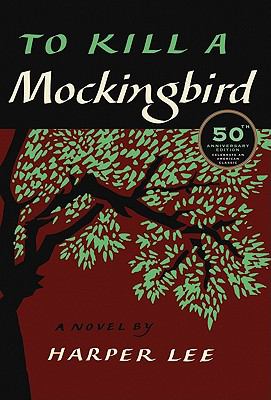
To Kill A Mockingbird by Harper Lee

To Kill A Mockingbird is one of those classic books that everyone has to read. I was forced to read it in English class, which immediately meant I was a bit more reluctant to read it than a normal book and I admit, it is not the most action packed book.

But personally, I felt that while reading the book, I grew really attached to the characters, especially Scout. She is a young girl who grows up learning about the prejudice in the world around her. Through following her story, you get really attached to her and, because of the way Lee writes the book, it really makes you feel like you are right there in the story. Which, really gives you a lot of insight of what the South was like in the 1930’s.

Another thing I really like about this story is that the two main characters, Scout and Jem, are kids that act like normal kids. So, they can really grow up as the story goes on. Which really shows how life was like for them and how much influence other people can have on you.

The second half of this book is defiantly way more interesting than the first half.  So, I would really suggest finishing this book once you started it. Though I agree, that some of the beginning of the book moves slowly and can be pretty boring.

Though, the main reason everyone should read this book at one point or another is that is really just a part of our American history. It really shows how far we have come.

-Ava G.

Harper Lee’s To Kill A Mockingbird is available for checkout from the Mission Viejo Library. It is also available for download from Overdrive and Hoopla

Shadow and Bone by Leigh Bardugo

After reading her Six of Crows miniseries, I realized Bardugo had written a precursor trilogy introducing the Grisha world.  Naturally, I wanted to know more about world of Ravka and its beginnings.  If you are new to Six of Crows or Leigh Bardugo, both this trilogy and the Crows duology are standalone novels that can be read with or without the other.  Now, let us dive into the murky waters of the Unsea.

In an alternate-type of history, magical people lived among the common folk.  They were called Grisha.  Much like events in our own past, such as the Salem Witch Trials or religiously-driven peoples running riots, the Grisha were unliked and even killed by some.  However, as they began prominently displaying their powers in Ravka, their home country, people started to treat the Grisha as royalty.  Ruled by the Darkling, a mysterious leader flanked by highly regarded Grisha officials, everything in Ravka was alive.  Except for the Shadow Fold, an equally mysterious stretch of forlorn land, its light diminished to nothing, and its only inhabitants being vulture-like creatures.  This is where Alina Starkov’s story begins, as an orphan girl tested for Grisha powers.  She and Mal, her best friend (also an orphan) trek together through the Shadow Fold and find a force a lot larger than the both of them.

Leigh Bardugo has a talent for writing and creating a darker story, all the while still building and breaking crucial moments as another novel may. If you are new to both Bardugo and these series, I would definitely recommend checking them out, and if possible, starting with the prequel trilogy.

Maya S.

Shadow and Bone by Leigh Bardugo is available for checkout from the Mission Viejo Library

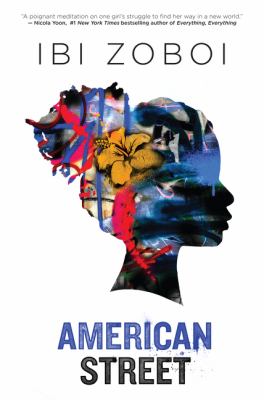
American Street by Ibi Zoboi

In her new novel, American Street, Ibi Zoboi creates a different type of story which is both full of truth and meaning.  The first thing I noticed when I picked up the book, however, was the names.  And how much Zoboi was able to do with them.  Our protagonist, Fabiola Toussaint, shares an inspiring story through narrated as well as journalistic chapters, and I loved all of it.  Though not based on a true story, the author has taken the voice of each character and has written from their own fictitious hearts, almost as if she were interviewing them.  Blending the American lifestyle of today’s Detroit and a coming-of-age teenager’s story from Haiti made for a truly extraordinary read.

Fabiola:

According to my papers, I’m not even supposed to be here.  I’m not a citizen.  I’m a “resident alien.”  The borders don’t care if we’re all human and my heart pumps blood the same as everyone else’s.

Not only does this message strike home for my beliefs, but it is truly and utterly relevant.  Fabiola, conned ‘Fabulous’ by friends at school, was born in Haiti to a life supported by her American aunt. The story starts out as Fabiola leaves the airport without her mother, detained by the immigration officers.  This vulnerability reaches the reader on a deep level.  If this scene was cut from the novel, Fabiola would be treated as any other modern-day damsel in distress finding her way around twenty-first century Detroit.

What makes her story so special was the way it spoke to the reader.  It was unlike many other novels recently released, in that the reader felt something more than joy or sadness.  At some point in one’s life, they will experience being in a new and unfamiliar place.  Nothing seems to stop to allow one to catch up.  It is as if nobody else cares.  Zoboi captured this shared human feeling stunningly.

On a scale of ‘one’ to ‘amazing’, I would definitely rate American Street ‘amazing’.  Readers can also learn something new about cultures and their collision on the corner of American Street and Joy Road.

-Maya S.

American Street by Ibi Zoboi is available for checkout from the Mission Viejo Library

The Grapes of Wrath by John Steinbeck

Image result for the grapes of wrathThis is a story about Tom Joad and his family immigrating to California. Their homeland in Oklahoma is being cultivated by tractors from the bank and the police officers beat them to hell more often than breathing.

In this miserable and harsh trip, their grandparents died, and Tom’s sister’s husband ran away. His brother wasn’t able to move with them so he stopped at a desert in the middle of the trip. The government camp provided hot water and the protection away from the deputies. But other times, people are treated akin to pigs, but without the slosh their owner pour in the mange every day. The people craved for slosh but found none.

To me it’s really inscrutable why people separate from their family, it’s like the fear will devour you into the black hole in the galaxy and the entire world fades away from your fingertips. And the bank in this novel sounds brutal to me, just because they want to expand some business land, the people and tenants living there are forced to leave their beating hearts on the land and left with their inane corpse. Ma is the person that resonated with my emotions and logic because she was like the leaves of the family tree. Sometimes, when autumn comes she turns yellow and shrivels a little, but her greenness brushes the entire forest with freshness and was the food and shelter to a lot of people when spring emerges. Without the oxygen, we won’t survive. The animals and the oxygen is the buttress of the inveterate root to keep stretching. And that’s Ma.

-April L.

John Steinbeck’s The Grapes of Wrath is available for checkout from the Mission Viejo Library

Dare Mighty Things by Heather Kaczynski

Dare Mighty Things by Heather Kaczynski is a science fiction novel about a competition organized by NASA among the brightest, gifted young adults from across the globe. One of these great minds belongs to seventeen-year-old, Cassandra Gupta. She has been training for a chance like this for her entire life. She is at the top amongst her classmates, but she must compete and be better among the others, who are of her caliber. The winner of the competition will be chosen to join astronauts on a secret mission.

Cassie is determined to be the one to go on that mission. As part of the training, everybody has to go through various physical and mental tests. Through the competition, Cassie discovers things about herself and others around her. When the time comes to chose someone for the mission, NASA picks someone who, in their eyes, will be the most successful.

The plot of the book was what enticed me to pick up this book to read, and I am glad that I picked it. With a great main character, the book kept me reading it till the end. Cassie is head strong and determined, which is the driving force behind the plot of the book. Also, she is able to keep going past her limitations; this is true, especially when she is in life and death situations. With a surprising ending, this book will be sure to keep you on the edge of your seat.

-Anmol K.

Dare Mighty Things by Heather Kaczynski is available for checkout from the Mission Viejo Library.

The Diviners by Libba Bray

There is a recently-added feature to the YA section called “Allen’s Pick”.  And, as I was walking through the library, I spotted this little tag and decided to give the recommended novel a try.  Little did I know it was the perfect kick-off to my summer, fulfilling my favorite three genres:  historical fiction, fantasy, and mystery.  Though the main character, Evie O’Neill (a Diviner, herself), and I got off on the wrong foot, I soon began to fall in love with her charming wit and Bray’s use of decadent literature.

The year is in the 1920’s where 17-year-old Evie O’Neill is performing her party act in front of her slightly drunk friends.  She asks for a person’s possession.  She touches it, falling into a deep trance before delivering the verdict.  In one case, she uncovers one boy’s secrets.  Without thinking, Evie spills, causing quite the uproar and later the punishment of moving to live with her mysterious uncle in upstate New York.  While Evie’s parents believed they were sending Evie to her mortal hell, the star-struck-wannabe-flapper was cooking up something entirely different.

I thoroughly enjoyed Bray’s novel, for its language, plot, and musical references.  She certainly did her research, finding what a teenage girl in New York in the 1920’s would be doing with her life.  I even had to google ‘Libba Bray age’ to make sure she was not 108 and therefore was not 17 years old in 1921.  Bray then went on to write a sequel to the Diviners, entitled, the Lair of Dreams.  Next time you visit the library, I would definitely recommend looking for the “Allen’s Pick” tag, and try a new read!

-Maya S.

The Diviners series by Libba Bray is available for checkout from the Mission Viejo Library

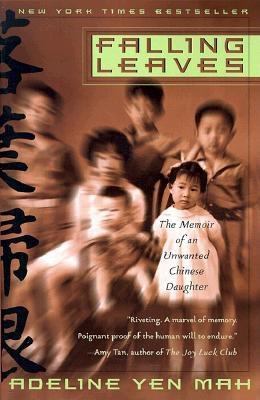
Falling Leaves by Adeline Yen Mah

Upon reading Mah’s Chinese Cinderella and its sequel, I recently was made aware of a precursor and her official autobiography.  Entitled Falling Leaves, the book follows the same plot line as her other two works.  However, what made it different was the voice Mah used as the story of her life progressed.

Little Adeline, originally Mǎ Yán Jūnlíng, was born into a high-class family in Tianjin, China.  Her mother, the light of her father’s life, died shortly after giving birth to Adeline.  This did not raise the youngest child’s status in the family.  From a young age, Adeline received nothing but resentment and mistreatment from her family, with the exception of her kind Aunt Baba.  Under the direction of the late mistress of the Yen household, Aunt Baba became Adeline’s surrogate mother.  But, Adeline was persistent to win her father’s attention, through and through, even to his deathbed.  She consistently was awarded medals and perfect report cards.  On few occasions, her father would notice, but with the addition of a new stepmother, Niang, Mr. Yen sent Adeline to boarding school.  Where, throughout the years she spent there, nobody paid her a single visit.

As Mah takes the reader throughout her painful life, she not only follows her own story, but retells her family’s (if they could ever be called that), so when the story concludes, all the pieces come together.  And, in Adeline’s case, quite heartbreakingly.

What Mah has written truly shows the willpower of human sufferance.  War-torn countries and refugees have stories worth sharing, inspiring the fortunate people of the free world.  However, within what may seem to be a noble Chinese household, the step-children, in particular the youngest girl, find a similar fates.  Though found the library’s adult section as it contains more mature content, I fully recommend Mah’s autobiography.

-Maya S.

The works of Adeline Yen Mah are available for checkout from the Mission Viejo Library.

The Hunger Games by Suzanne Collins

After discovering that The Hunger Games was my 7th-grade extra credit reading book and that I haven’t read it before yet ( say what?!), I decided now was a good time to pick it up and finally start on it.

Yeah, I know, how could you have not read the Hunger Games before? Face it, everyone’s probably pretty familiar with this book. You know of it, of course. It’s a famous book that almost everyone knows, just like Harry Potter and Percy Jackson. 

Anyways, once I picked up this book, I found it impossible to put down. I read for two straight days and got it finished. And then I reread it. And reread it again.

I probably would recommend this book for older children, particularly because of a few violent scenes. But other than that, I would highly recommend this book for anyone who looks forward to action and thrillers.

Starting off with the famous Katniss Everdeen, the book takes place in District 12, her hometown. There are twelve districts, although there used to have been a 13th, which was destroyed because of their rebellion against the all-ruling Capitol, Panem. Because of this, the Capitol has ordered the event called the Hunger Games, where two tributes, a boy and a girl, are selected from each district (24 tributes total). They will be placed inside of an arena whose conditions can change with directions from the inventors of the Hunger Games, the Gamemakers. The whole point of the Hunger Games is for the twenty-four tributes to kill each other as a sport; the last tribute standing wins, leaving the arena with a life of luxury.

And the purpose of all of this? To prove how everyone is at the Capitol’s mercy, how they take the people’s children to watch them fight to the death.

From District 12, Katniss and the boy tribute, Peeta Mellark, are pitted against the other twenty-two tributes. They have no idea what the arena conditions will be like; the yearly Hunger Games change every year. All they know is that it will be difficult, and definitely lethal.

I have to say, Suzanne Collins, the author, was really suspenseful. Every fight scene, every page that she wrote, was filled with action from top to bottom. That’s what kept me hooked to the very last page. But even through all that, she also manages to weave in just the right amount of romance between Katniss and Peeta.

I can’t wait to read the next book in the series, Catching Fire! I’m sure it’s as good as the first one.

But first, who will win the intense, action-packed Hunger Games? Because the tributes will either get out of there alive…or dead.

-Katherine L.

The Hunger Games series by Suzanne Collins is available for checkout from the Mission Viejo Library. It is also available for download from Overdrive

Inferno by Dante Aligheri

Related image

To be honest, I didn’t expect Dante Aligheri’s Inferno to be what it is when I first picked it up. It was originally written circa 1300 before the Middle Ages truly ended, has strong Christian values embedded in them, and seemed innocuous, or at least as innocuous as a book about hell can be.

When I read the plot summary of Dante’s Inferno, it appeared as just another pedantic, abstruse epic. I only gave it notice because my English teacher assigned my class to read at least 500 pages for the quarter, and we could only choose books from a college-approved list of classics. Dante’s Inferno just so happened to be on that list, and I just so happened to have coincidentally checked it out from the library the previous week. Rather than find a book that I may have had more of a predisposed interest in, I chose to just read the translation and its sequel, the Purgatorio. I was not ready for some of the gory parts, the horrible punishments handed down to people, and how Dante seemed to care more about himself and either harass the sinners or break down crying/swooning (but ultimately doing nothing useful). Then again, this is only an allegory, so everything is symbolic and Dante is only using his imagination. Although by today’s standards Dante is ultra-conservative, at that time Dante was actually progressive, being one of the first to use colloquial Italian instead of Latin and combine both Judeo-Christian values and Greek mythology.  

The John Ciardi translation is highly compact. Somehow, he managed to fit text that normally takes up 500 pages into a tiny, 300-page book with a rather tedious font and font size. The Inferno is essentially a very long poem, divided into 34 cantos (chapters). A summary of the events precedes every canto and around three pages worth of footnotes comes at the end. These help clarify many, many fine details that would otherwise go unnoticed. As well as the translation of the poem, John Ciardi’s version of the book also features a lengthy introduction, guide to the book, translator’s notes, information about Dante’s life, etc. If you’re in for a good read, make sure to skip these parts; but if you’re reading it for school, like me, try to at least skim them over.

As far the actual book goes– being irreligious, I at first tried to detach myself from the content of the book. But a few cantos in, I realized that no sane person could possibly agree with what Dante’s view of the perfect world. What is different about the Inferno is that it is written almost in a second-person perspective; Dante is the narrator and a character in the book.

The book is essentially about Dante realizing he is straying from the “Glorious Path” towards heaven and masochistically putting himself through hell to see all the horrible things that happen to such people so that he himself wouldn’t become one of them. Along the way, he is accompanied by Virgil, a wise Greek philosopher that unfortunately ended up in hell because he wasn’t Christian. In each part of hell Dante encounters either a mythical Greek character, infamous historical figure, or somebody he knew personally. Here’s how Dante organizes hell: in the many, many circles of hell, people are handed their punishments depending on their worst sin in life.

For example, hoarders and wasters are sentenced to circle four where they eternally lunge weights at each other, each trying to win against the other side but always failing to do so. I’ll admit that this is rather clever, although more than a little drastic. However, there are also many other circles of hell made especially for some people that I believe do not belong in hell. For example, heretics, or people who did not adhere to Dante’s religion were punished by being placed in an open coffin that burns for all eternity. That would be me, and quite frankly that’s the most boring and unimaginative punishment in the entire book. 

Even worse, if you commit suicide, no matter how noble you were in life or how justified your suicide is, you ended up as an immobile tree that bleeds blood when hurt and isn’t able to talk unless someone snaps off a branch. So even if you were a humble, God-fearing, moral human being that was being tortured or tormented, you must not commit suicide and instead bear the pain because otherwise you were a coward that deserves to burn in hell. Justified? 

What may be the goriest, most horrifying part of the book is the first part of Canto 28. The “sowers of religious discord”, or essentially the proselytizers that tried to convert people of Dante’s faith, are faced with a demon. They walk around in a circle without rest, and every time they come near the demon it swings its melee weapon and cuts through the body of the “sinner”, sometimes to the extent where all the inner organs are dangling out of the body. The victim then stumbles away, only to have his/her wounds heal and repeat the cycle yet again. Dante takes extra care in describing the wounds inflicted on people and the sounds of their screams, yet doesn’t seem too perturbed. Is this justified? Because to me, it’s obvious that Dante is just letting his inner sadist take over. And people praise this as a classic, honoring Dante as the best poet to ever come out of Italy? For me, this is quite disturbing. Aside from that, there is no real progression of events for the majority of the story; Dante spends most of his time trudging through hell, swooning, walking some more, assaulting the helpless, screaming, reasserting his good Christian-ness, climbing some more cliffs, crying, and being incredibly sappy one moment and psychopathically violent the next. Hopefully the Purgatorio will include an actual plot.

What saved the book for me was how beautifully it was written. Even though I read the English translation, which meant much of the details and allusions were lost in translation, John Ciardi painstakingly translated every word, managing to keep the original terza rima rhyme scheme, preserve the wonderful imagery and most of the finer details, and create a vivid, somewhat realistic world all at once, even if much of the words and syntax comes across as rather esoteric. When you read the stanzas out loud, the words all flow together and the transitions and rhymes are both smooth and memorable. For this reason alone, I’ve actually become interested in learning a little bit of Italian to read the original. But that’s as far as it goes. 

In the end, I don’t recommend Dante’s Inferno to everyone (or even anyone) because the read can be rather slow, dull, confusing and horrifying at times, but if you want some ideas on how to write a descriptive, vivid poem, I suggest you do consult Mr. Alighieri, because he does knows how to create a work of art.

-Michael Z.

Dante Aligheri’s Divine Comedy is available for checkout from Mission Viejo Library