Assassination Classroom by Yusei Matsui

assassinationclassroom

Almost none of us like school, that’s for sure. But what if your school held a competition where poor students and delinquents are sent to the “END” class, to be bullied every single day? How would it feel to be told that you’re the worst of the worst, and that everyone else is better than you, and the only way to get better is through mindless studying?

And what if your savior is a yellow octopus whose hobbies are being weak and loves the word “tentacles”?

Enter class 3-E (considered 9th grade in America), whose students consist of one genius psychopath, a few smart kids that failed on tests because of various non-school related things, and a whole bunch of people who just don’t get the material or don’t study. Their new teacher, an octopus alien that can run at Mach 20 (twenty times the speed of sound) named Koro-sensei, who is really good at teaching but has plans to destroy the Earth just like how he reduced the moon to 70% of its original size. Because of this, the Japanese FBI takes a vested interest in the class and teaches the kids something they actually might be good at: the art of assassination.

This manga will set you on a roller coaster. As I was reading the chapters, I saw everything from a serious plot line to absolute comedy to tear-jerking moments to back to comedy and repeat about 100 times. The genre could be described as an action/comedy, but there are some tragic moments too. Additionally, for those who only like to read manga that has finished its run, this manga is set to end by mid-March, with 180 chapters of 20 pages or so each.

Finally, despite his 40 or so weaknesses, there is a thing or two we can learn from Koro-sensei. He teaches us that it’s okay to be weak, and that while we may only want to ace in one subject, we should try our best in others because all subjects are related. The reader actually learns a thing or too in school subjects too.

All in all, everybody, no matter what preference, can enjoy this manga.

-Megan V., 10th Grade

Assassination Classroom is available for check out at the Mission Viejo Library

Akatsuki no Yona (Yona of the Dawn) by Mizuho Kusanagi

Yona is a typical sixteen year old princess who has grown up with sheltered from the world. She is naïve, stubborn, hates her red hair, and can have anything she wants. Yona is in love with her cousin Soowon and doesn’t know her  annoying bodyguard Hak, who is strong at absolutely everything, has feelings for her. She dreams of marrying Soowon one day, and having Hak as her bodyguard forever.

This all changes when she discovers Soowon murdering her peace loving father.

Now, Yona has to escape with Hak and find the legendary four men with the powers of a dragon, who have said to inherited power that assisted the legendary great king with red hair.

Problem is, would these dragons want to cooperate? And if so, would she still want to kill Soowon when she finds them all?

This manga is amazing. Not only does the series live up to its expectations with politics and revenge, but there is a lot of amazing comic relief at the most random of times. For example, Yona is complaining about her hair in the first chapter. Her father asks Hak to cheer her up, and Hak replies that there’s nothing wrong with her hair, but rather her head instead.

Additionally, I love how the author does some really great character transformation on Yona. She learns a lot in her journeys, and goes from weak little girl to strong warrior princess that helps her kingdom, which is really a big change that is not often shown in a main character.

All in all, this manga is a very awesome one to read and very recommended.

-Megan V., 10th grade

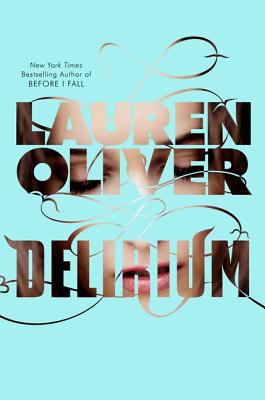
Delirium by Lauren Oliver

delirium_laurenoliverWhat would happen if love were outlawed? If it were eradicated from society, with all teenagers given a “procedure” which prevented them from feeling strong emotions?

This is the basis around the life Lena lives. Her mom committed suicide after Lena’s father died because she loved him, unlike the other couples who learned to live with one another. Lena’s older sister was also in love and had to be dragged to her procedure. Now, everywhere Lena goes, the story follows her, words of suicide and diseased.

But everyone claims the procedure is the cure. After that, people can live normal lives, go to college, get paired and married, and have the exact number of children the government requires. All the “cureds” are protected from the Invalids, those who are diseased with amor deliria nervosa, by barbed wire fences and guards. Regulators within the city keep everyone in line, at home before curfew and safe from the sympathizers who might pose a threat to their fragile society.

Sounds perfect, right?

Not quite.

All this supposed safety comes with a price. No one can be seen in public expressing any sort of strong feelings. Even parental love, such as between Lena and her mom before the suicide, had to be hidden. No loud music can be played; the only music even allowed is on the government’s list of approved songs. The same goes for books.

Lena had been living a normal life, looking forward to her cure and the chance to forget the pain associated with her mother’s death. She spends every second with her best friend, Hana. Yet at her evaluation, which rates her to be paired with a suitable future husband, something happens. It is quickly covered up with a lie from the government, but knowing the truth changes her view of her life.

And then there’s the boy who was standing on the observation deck throughout the whole thing, laughing…

I thoroughly enjoyed this novel. So many things which seemed predictable at first actually took me by surprise. I truly couldn’t put down this book and I finished it in less than two days, though I could have read it faster if I didn’t have an appointment. I recommend this book to anyone, though younger audiences might struggle with some of the content. Plus, like any good book, it also made me cry, but in a good way.

– Leila S., 10th grade

Delirium is available to check out from the Mission Viejo Library

Enrique’s Journey: The True Story of a Boy Determined to Reunite with His Mother by Sonia Nazario

enriquesjourney_sonianazarioTo be honest, this book had been sitting on my shelf for a while before I thought to read it. To me, it seemed interesting, but I wasn’t so sure. I was used to fast-paced, dystopian novels, not true accounts. So when I picked it up and saw a map on the first page, I was skeptical.

But of anything that I’ve read recently has a deep meaning, it’s this. This story follows Enrique, a young teen from Tegucigalpa, Honduras. When he was five years old, his mother, Lourdes, left him to go to the United States, in hopes of getting a job and helping the financial situation of her family. Her plan was to be gone for only a short time, an idea which was further fomented by pictures of rich cities in the United States. So when she arrived in the US, her plan did not go as she expected.

For young Enrique and his sister, Belky, it was hard to see their mother so far away. They could not imagine why she would want to leave them. Added to that was years of false promises of her return, and the children were not happy. Enrique was affected most of all. His life became difficult in the Honduras. He decided not to go to school anymore. He sniffed glue and was high more often than not. His family, and his girlfriend, worried about him.

At this point, Enrique cannot be stopped. He has decided to hitch-hike his way all the way to the United States, on top of trains and through the countryside. This is an extremely dangerous undertaking, because of the threat of gangs and migrant police and general disdain for migrants, not to mention that riding atop a moving train is not exactly the safest way to travel. This story follows Enrique as he makes not one but eight trips to try to get to the Mexican-American border, and the hardships and joys he experiences along the way.

It was truly eye-opening to read this story. In light of political comments about immigration in the United States, it was interesting to see the argument from the other side. I never knew it was this difficult for people to come to the US, where they aren’t even welcomed half the time. It was honestly depressing to see how cold and selfish people can be towards other people, especially after seeing how difficult life was for people in these situations. It certainly puts my experiences into perspective.

On a related note, the author of this account, Sonia Nazario, actually made this trip herself, so she could make the story more realistic, which shows a lot of dedication to her job. So not only am I in awe of Enrique’s courage, but also of Nazario’s selflessness and willingness to do anything in order to share such an important story.

– Leila S., 10th grade

Enrique’s Journey is available for checkout from the Mission Viejo Library. It is also available to download from Overdrive

Solstice by P.J. Hoover

solstice_pjhooverDo you like dystopias or mythology books? What about books that are both?

Solstice combines a dystopian-end-of-the-world atmosphere with a core plot that connects to mythology. Meet Piper. She’s just your average teenage girl with an overprotective mother living in a world that hasn’t seen winter for as long as she’s been alive. The heat waves that threaten the world are getting worse, which makes Piper’s mom more protective causing Piper to rebel all the more. She gets a tattoo with her friend and plans on moving away as soon as she finishes high school.

When Piper’s mom goes out of town, Piper finds herself pulled towards freedom and romance. But will it be with Reece who breaks rules for fun or Shane who makes her heart beat faster when she sees him? As she learns more about gods and the battle for the underworld, it’s hard for Piper to know who to trust. But whoever she is with, Piper can tell everyone is keeping secrets. Will she find a way to stop the world from dying and even find out who she is?

The romance here is a bit cliche with the insta-love-triangle. It isn’t bad per say, just nothing that new or special. I think I enjoyed more of the idea of the plot, how the mythology and dystopia blended together more than the characters. If the premise seems interesting enough, give it a read because it’s an interesting take of gods dealing with the end of the world.

-Nicole G., 12th Grade

Solstice is available for check out from the Mission Viejo Library.

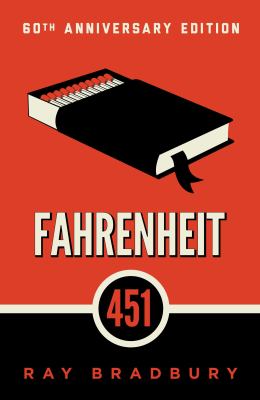
Fahrenheit 451

fahrenheit451_bradburyFahrenheit 451 by Ray Bradbury tells the tale of fireman Guy Montag. Read by many people since 1952, it is considered as a modern classic. Taking place in the future, society is obsessed with their television sets and radios. Nobody reads books anymore because of society’s obsession with technology. Firemen are sent to the houses of people who possess books in order to burn them. Guy Montag is a thirty-year-old man who burns books for a living. He does not think too much about this until one day he meets Clarisse McClellan. A seventeen-year-old girl, Clarisse starts up a conversation with Montag, and asks if he is happy.

This simple question causes Montag to rethink his life, and the righteousness of his job. He also wonders what the books he burns actually contain. Taking a book to his home, Montag tries to reason with his wife, but it does not work out. Eventually, his boss, the fire captain, discovers Montag’s secret and comes to arrest him. On the run, Montag is considered a fugitive.

A perplexing tale like this one is hard to forget after finishing. Bradbury’s way of writing is beautifully crafted. The ability to integrate so many different ideas at once was very interesting. I also enjoyed how Bradbury used imagery to convey some things instead of naming them directly. Also, the complex building of Guy’s character was really fascinating. Despite being written over fifty years ago, this book still resonates after turning the last page. I would recommend this to anybody looking for an interesting view on a technologically obsessed society.

-Anmol K.

Fahrenheit 451 is available for check out from the Mission Viejo Library. It is also available digitally through Overdrive

The Devil’s Intern by Donna Hosie

It all started the day Mitchell died. Actually, just kidding. It all started when “Medusa”, Mitchell’s frenemy/sort-of-girlfriend died forty years ago in San Francisco. No, it probably started back in 1666, when Mitchell’s British friend (who received a pin in Hell because of that year) died in a fire. Actually, it should probably start during Viking times, when Mitchell’s other friend died in battle. Confusing? Well, this is a book about time travel. And death. And Hell.

Mitchell, being dead for four years, wonders why he died. He knew that he died because he didn’t look when crossing the street (and that kids, is why looking both ways to cross is very important), but he wonders what made him not remember. Now, he’s stuck in Hell because of it, with his every day life being an intern to the Devil’s Secretary in Hell. Amidst the crowdedness of Hell and his three best friends in tow, he learns of a time machine being stored right near where he works. And it was Medusa, after all, who gives him the idea to change his death. Along with his three friends who want to change their deaths too. But death isn’t so easily changed, as Mitchell and his friends soon find out by paying the price.

I love the humor in this book. Mitchell is the typical hero who tries to make everything awkward but messes up. Hell, at least the interpretation of it, is my favorite since Hosie purposefully makes it not like the stereotypical Hell. Sure it’s overheated a lot, but other than that, it seems like a regular Earth, with the exception of the Devil’s daily tantrums and the fact that Hell’s going bankrupt.

It is also well thought out. I’m pretty sure that there are a multitude of books where the hero tries to think about what would happen if a certain death didn’t happen (ex: Harry with Dumbledore), but there are few that actually go into the consequences (ex: Dumbledore would’ve still died, and instead died in a way he wanted), and I like how Hosie goes into it.

Overall, if you like comedy or time-travel, I highly recommend this book.

-Megan V, 10th grade

The Devil’s Intern is available for check out from the Mission Viejo Library.

The Program by Suzanne Young

theprogram_suzanneyoung“But the psychologists say that suicide is a behavioral contagion. It’s the old adage ‘If all your friends jumped off a bridge, would you, too?’ Apparently the answer is yes” (9).

In Sloane’s world, nothing is as it seems. Any sign of depression, even just crying in public, and a teenager risks being sent to The Program, a “solution” to the suicide epidemic. Here, teenagers’ minds are wiped clean so they can start their lives again. The handlers medicate them to erase all their pain and memories, leaving all the returners “empty,” as Sloane might say.

Sloane, her boyfriend James, and their friend Miller do not agree. They would prefer to die than be sent to The Program, which makes things slightly more complicated.

Overall, I found this book to be a compelling read. I would definitely recommend it, yet keep in mind that it discusses a sensitive topic. For that reason, I would recommend this book for a slightly older audience. Even at my age, I was a disturbed by the repetition of suicide in the novel.

On a brighter note, however, the narrative was sentimental. The Program is definitely one of those books where you sympathize with the characters. From the perspective of a critic, the storytelling leaves readers with questions which are left unanswered until the very end, which makes me want to read the rest of the series.

– Leila S., 10th grade

The Program is available for check out from the Mission Viejo Library

Life of Pi by Yann Martel

lifeofpi_yannmartelLife of Pi, by Yann Martel, is perhaps one of the greatest books on philosophy ever written, delving heavily into themes of faith and hope, all while telling the exciting story of a boy and a tiger.

The story goes like this: Piscine Patel is a young Indian boy who lives on a zoo. There, surrounded by animals and the beauty of nature, Pi develops a fascination with religion, exploring and questioning every aspect of it. When his family is shipping the zoo across the ocean, a storm sinks the ship. As the sole survivor, Pi is cast to sea on a lifeboat, with only a Bengal Tiger as his companion. While drifting on the Pacific Ocean, Pi survives and slowly creates his own perception of faith and hope.

From the surface, Life of Pi seems like another tale of adventure and survival, much like Gary Paulsen’s Hatchet. However, I personally think that Yann Martel was more writing about the concept of religion. Even the themes of hope and survival are all linked back to Pi’s faith in God, or Gods.

Right from the beginning of the book, Pi establishes himself as an extremely religious person, becoming a devout Christian, Muslim, and Hindu all at once. When the truth comes out, all of his religious leaders and parents push him to settle on one religion. Pi replies, “‘All religions are true.’ I just want to love God” (Martel 69). Whether he is correct in saying this is unimportant, because the purpose is to show the frivolous nature of rivalry between religions. At the same time, he felt that atheists were his “brothers and sisters of a different faith” (28). Of course, when his situation spirals into survival on the ocean, Pi’s faith is shaken, but he finds his own peace with his God.

Life of Pi surpasses an average philosophy textbook because Martel doesn’t monotonously write about philosophical concepts. Instead, he weaves a beautiful story with elements of philosophy introduced alongside Pi’s experiences on the ocean and in his zoo. In this way, the story’s excitement and thoughtfulness work in tandem, each making the other more meaningful.

In conclusion, Life of Pi is a beautifully written book that will leave you questioning your existence without having to endure the boredom of a typical book of philosophy. Perfect!

-Philip X.

Life of Pi is available for check out from the Mission Viejo Library. It is also available digitally from Overdrive.

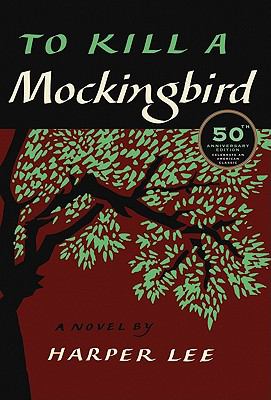
To Kill A Mockingbird by Harper Lee

killamockingbird_harperleeTo Kill a Mockingbird, by Harper Lee, is a story about the injustices served to blacks in the 1930s. Jean Louise Finch, more commonly known as Scout, is the main character of this novel. The majority of the novel is focused on the idea that a man who lives down the street is crazy, his name being Boo Radley. Scout, her brother Jem, and their friend Dill. Over the course of the summer, Scout, Jem, and Finch become fascinated with crazy theories such as the idea that Boo comes out in the middle of the night to hunt. As the book progresses, the main idea temporarily shifts to a court case regarding a black man, Tom Robinson, raping a white woman, Mayella Ewell. Atticus Finch, Scout’s father, defends Tom despite the fact that the majority of their community is against Tom Robinson. As the trial progresses, Scout seems to gain a better understanding of the horrors blacks face in this time period. She gains an understanding for the injustices in their country.

Through the course of the story, Scout learns about Boo Radley and reaches an unexpected conclusion about him. On the other hand, Scout also learns a lot about the discrimination black people receive, the different treatment they receive, and the different social standards set for them. All in all, I think that this is a piece of literature that everyone should read because of the striking reality of discrimination. Not only that, but there are many valuable lessons underneath the character of Boo Radley. In the end, this is not only a classic, but it is also a book that contains a great mixture between pleasure and entertainment.

-Melika R.