Book Review: Paper Towns, by John Green

paper_townsHave you ever met someone, maybe a person who is a huge influence on life, who you immediately had a first impression from them and you were also swept away when you found out that your first thoughts weren’t true? If so, then you’re on league with Quentin Jacobsen, a senior in high school who is in love with Margo Roth Spiegelman.

Quentin (nicknamed Q) is Margo’s neighbor, and has been her friend since they were young. Margo is like an enigma to him. She is the one who is adventurous, has run away four times, and once dressed up as a ninja in order to take Q on a wild adventure. Now, she has run away for a fifth time, and left clues to find her again. Only this time, Q finds out how different she is.

While this book is filled with comedy that anybody over the age of 13 would find funny, there are some scenes that some people might find inappropriate for people under the same age. For example, one time Q went out alone with Margo, who just happens to be the prettiest girl in high school, and when his friends found out about that, they made him write a term paper (30 pages min.), draw a realistic picture, make a sculpture, and write a poem describing the female anatomy. (pg 88) Additionally, some male anatomy parts are mentioned.

However, this book actually teaches an important lesson in the life of first impressions. Q has to learn that the adventurous girl that he thought he knew “was not a miracle…not an adventure…not a fine and precious thing. She was a girl.” (pg 199)
-Megan V., 8th grade

Manga Review: Naruto, By Masashi Kishimoto; Land of Waves Arc

naruto_vol2This is the third part of my review about Naruto. Please read the first and second parts if you missed them.

After the Instruction Arc is the Land of Waves Arc.The Land of the Waves Arc is the first major arc in the series. This arc is covered in between chapter nine to thirty three. These chapters were later complied together in the second to fourth tankobon volumes.

In the previous arc, Naruto Uzumaki, Sakura Haruno, and Sasuke Uchiha were placed in a squad together with Kakashi Hatake-sensei (sensei meaning teacher) after graduating the Ninja Academy. They pass is test and officially become genin, which is the lowest ninja rank.  After being officially placed together Kakashi’s Squad, which is also known as Squad 7, they are given missions to complete in order to build their teamwork and give them experience that they will have to use when they are older.

This arc starts with Squad 7 receiving a new mission. Naruto, who complains about receiving a d-ranked missions, demands to have a c-ranked mission. Typically genin are only give d-rank missions because they are the safest and easiest to do. C, B, A- Ranked missions are only given to ninjas that are a higher rank. The Hokage, who is the leader or commander of the ninjas, reluctantly gives in. The Hokage gives Squad 7 a c-ranked escort mission. They have to escort Tazuna, a bridge builder, back to his home in the Land of Waves. At first this seams like a simple, easy escort mission. Then they start to get attacked by ninjas on the road to the Land of Waves. They learn that there is something much more to the mission that Tazuna did not tell them about. Squad 7 also meets Zabuza Momochi, who is a dangerous ninja that is out to stop them, and Haku, a mysterious boy that no one knows anything about.Will they ever reach the Land of Waves and come back alive?

This is one of my favorite of the many arcs of the Naruto series. This is were you see the first major developments of  the main characters. This is when Naruto, the main character, faces his first major adversary. You start to learn more the stories of the main characters. The story also starts to become more serious compared to the earlier chapters. 

This is only my view of the manga. I would recommend this for 8-years-old and up due to the fact there is violence. This is also very good for anyone who loves adventure and action. I don’t know how you would like it, so read it to find out.

-Sarah J., 8th grade

Book Review: To Kill a Mockingbird, by Harper Lee

mockingbird_coverWritten by Harper Lee, To Kill a Mockingbird is one of those classics that everyone reads at some point of their lives, whether they choose to or are forced to read it for school.

Set in Maycomb, Alabama in the early 1930s, To Kill a Mockingbird is about the adventures of a young girl named Scout Finch and her brother, Jem. Their innocent childhood of playing games and making up stories is suddenly threatened when their father, Atticus, decides to defend a colored man in court. Throughout the novel, Scout and Jem try to maintain faith in humanity, as well as try to understand the human nature of good and evil.

Many themes are apparent throughout the book; however, the most important are the theme of morals and good versus evil. Many characters struggle to distinguish between right and wrong. Atticus is a wonderful example of an honorable and ethical man, who teaches readers to be open-minded and to not judge others because of the color of their skin.

As the novel goes on, readers will become attached to the many characters, including Atticus, Scout, Jem, their neighbor, Boo Radley, and their friend, Dill. In my opinion, Boo Radley is the most interesting character in the book. Due to the number of scary rumors, the children are both constantly afraid and fascinated by him. Boo is a man of mystery, and his secret isn’t revealed until the very end of the book.

I love the fact that the novel is narrated by a naïve six-year-old girl, since it shows the story in a point of view that one is not used to seeing in serious, realistic fiction. Because Scout is so young, she describes the plot from her perspective, without really comprehending the importance of the numerous events. This makes the reader actually think, and try to put together information to get a better understanding of the true meaning of the novel.

I first read To Kill a Mockingbird in seventh grade and I certainly enjoyed it. I have read it over and over again, each time gaining more understanding of the characters and overall message that Harper Lee conveys. Now, it is my favorite classic because it is deep, funny at some parts, and teaches many important life lessons. I would definitely recommend this book to anyone over the age of thirteen, and can completely agree with English teachers that To Kill a Mockingbird is “the best book ever!”

-Kaylie W., 9th grade

Book Review: A Christmas Carol, by Charles Dickens

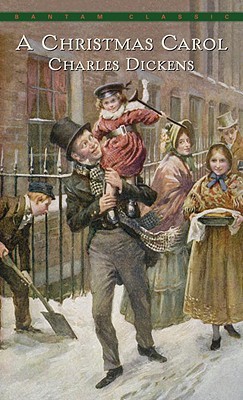
christmas_carol_coverThough we’re all wrapping up our holiday celebrations, it’s never too late for the classic Christmas tale A Christmas Carol by Charles Dickens. The book starts off with the main protagonist of the story, Ebenezer Scrooge, on Christmas Eve. Scrooge’s nephew, Fred, tries to invite his uncle over for Christmas dinner, but Scrooge says that Christmas is a humbug. After his nephew leaves, two more men come in seeking a donation from Scrooge to give the poor a Christmas dinner. Scrooge, being the rude old man that he is, says the poor must die to “decrease the surplus population.”

At home, the ghost of his dead partner, Marley, visits Scrooge The specter tells him that three spirits will visit him; the Ghost of Christmas Past, the Ghost of Christmas Present, and the Ghost of Christmas Yet to Come.

The first of the psyches, the Ghost of Christmas Past, takes Scrooge to Christmas events that took place in his youth. These scenes depict his solitary youth, his strong bond with his now dead sister and a Christmas party with his first boss, Mr. Fezziwig.

The second spirit, the Ghost of Christmas Present, shows Scrooge how his nephew was making fun of him. Also the phantom shows Scrooge Bob Crachit’s Christmas feast, where Crachit’s youngest son Tiny Tim is full of happiness, despite the fact that he is very ill

The third pneuma, the Ghost of Christmas Yet to come, shows Scrooge Christmas a year later, where Tiny Tim is dead because Bob Crachit could not afford the treatment on his small salary. Also the spirit shows Scrooge his employees stealing things from his dead corpse.

Scrooge wakes up on Christmas morning, a changed man, and sends the prize turkey to Bob Crachit’s family and spends Christmas with his nephew. The book ends with Tiny Tim saying those famous words;“ God bless us, everyone!”

I think this is book is the perfect way to capture the Christmas spirit. If you need an uplifting story about Christmas, then A Christmas Carol by Charles Dickens is the perfect book for you.

-Anmol K., 7th grade

Book Review: Let It Snow by John Green, Maureen Johnson, and Lauren Myracle

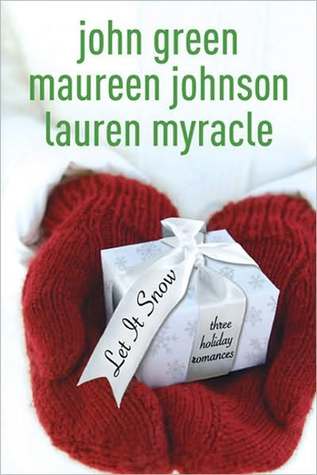
let_it_snow_coverAs the holidays come to an end, I search for every way I can possibly find to prolong the season. I decided to read this book due to its dependable authors and captivating book jacket. Let It Snow is a three-story compendium of interconnected Christmas narratives written by John Green, Maureen Johnson, and Lauren Myracle.

The first story is “The Jubilee Express” which is my personal favorite, and follows a girl named Jubilee as she is spontaneously ordered onto a train on Christmas Eve, which unfortunately crashes into a snow drift. Her decision to get off the train and take refuge in the Waffle House nearby kicks off the elaborate series of unexpected events that prevail throughout the rest of the book. Jubilee is relatably awkward and unadulteratedly hilarious. She narrates the story in a unique, strange, and universally enjoyable style.

The second narrative is called “A Cheertastic Christmas Miracle” and is written by the modern king of young adult fiction, John Green. It tells story of Tobin and his friends as they journey through a blizzard to the proverbial Waffle House in pursuit of cheerleaders and hash browns.

The third story, “The Patron Saint of Pigs,” is the tale of an aforementioned girl named Addie, who aims to become less self-absorbed and sets off on a quest to a local pet store to pick up a previously paid for, teacup piglet for her friend, just as she promised she would. In this last part of Let It Snow, Lauren Myracle presents readers with a flawless, wrap-up conclusion to the novel in which all characters are united in one satisfying and intriguing resolution.

There are not very many authors that could possibly amalgamate a Waffle House, a Starbucks, a Tinfoil Guy, a notorious cheerleading cult containing an abundance of Madisons and Ambers, James Bond, a female Duke, tangential Swedishness, Twister, ceramic Santa villages, a girl infamous for her hash brown addiction, a celebratory Smorgasbord, and a dedicated Target employee to form one seemingly sane, unified whole, but that is exactly what these three authors came together and succeeded in doing.

Let It Snow consists of humor, relatable teenage drama, reflection of life, captivating stories of love and of friendship, and the substantial difficulties and benefits of human relationships. One reoccurring issue that is addressed throughout this book is the contemporary corruption of the social paradigm. The entire wholesome social hierarchy is solely based off the disregard of common equality (e.g. the drama geeks are cooler than the band nerds but buried under the social appreciation for jocks and cheerleaders). I found this both true and amazingly appropriate for the designated audience.

If you liked The Fault in Our Stars, Paper Towns, or any of Maureen Johnson’s books or Lauren Myracle’s novels, you’ll love Let It Snow.

“…a taste so profound and complex that it can’t even be compared to other tastes, only to emotions. Cheesy waffles, I was thinking, tastes like love without the fear of love’s dissolution…”
― John Green, Let It Snow

“Christmas is never over, unless you want it to be… Christmas is a state of mind.”
― Lauren Myracle, Let It Snow

“We study there a lot because… what other choice does society give us, right? It’s Starbucks or death, sometimes.”
― Maureen Johnson, Let It Snow

-Danielle K., 8th grade

Book Review and Playlist: This Book is Not Good For You by Pseudonymous Bosch

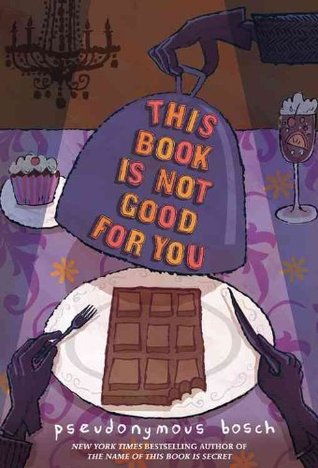
this_book_not_good_for_youWhenever you are reading a book, do you think of a song that represents the mood?  Then later, when you hear that song, does it evoke memories from that segment of the story?  I’d like to hear your thoughts in the comments below!

As the third book of this secretive series begins, the narrator puts a twist of his own likings in the book about chocolate tasting.  The three heroes, Max-Ernest, Cassandra (Cass for short), and YoYoji, wander into a zoo suspected to be run by the Midnight Sun and meet a master chocolate chef who was really working for the Midnight Sun.  Then they escape with an unusual person with them, Cass’s mother.  (She had been captured by the Midnight Sun earlier in the story.)  Like all of the others in this series, this book was fantastic.

One part of the story was significant  to me.  That part was when Cass, Max-Ernest and YoYoji freed the orphans from the Midnight Sun.  Then a song popped up in my head… Born Free!  This song perfectly sets the mood as the children run everywhere in the movie.  I would summarize this book as a tasteful adventure, literally!  This book was about tasting and the sense of the mouth, and it was an adventure, not to mention a great adventure between three heroine/heroes, Max-Ernest, YoYoji, and Cass.

At the end of the 10 out of 10 movie, I picture the song “Doesn’t Anybody Stay Together Anymore” by Phil Collins.  I envision the credits rolling by with that last scene of Cass and her Mother hugging yet Cass’s friends are in the distance.

See my reviews of the first two books in this series here and here, and don’t forget to comment and share the music you hear below!

-Maya S., 6th grade

6th Grade

Book Review: The Handmaid’s Tale, by Margaret Atwood

handmaids_tale_coverThe world keeps changing. And it changed.

“Last week they shot a woman, right about here. She was a Martha. She was fumbling in her robe, for her pass, and they thought she was hunting for a bomb. They thought she was a man in disguise. There have been such incidents. Nothing safer than dead, said Rita, angrily.”

When belief was twisted into something that only fulfilled the physical need, there is a group of people that was labeled with the lost of self.

 “They can’t help it, she said, God made them that way but He did not make you that way. He made you different. It’s up to you to set the boundaries. Later you will be thanked.”

Holy, holy, the Ceremony stated.

            “ ‘And Leah said, God hath given me my hire, because I have given my maiden to my husband,’ says the commander.

Serena has begun to cry. I can hear her, behind my back. It isn’t the first time. She always does this, the night of the Ceremony. She’s trying not to make a noise. The smell of her crying spreads over us and we pretend to ignore it.”

Women who have the ability to reproduce—They are the handmaids.

“ ‘He asks, are you happy.’ Says the interpreter. I can imagine it, their curiosity: Are they happy? How can they be happy?

Ofglen says nothing. There is a silence. But sometimes it’s as dangerous not to speak. ‘Yes, we are very happy,’ I murmur.”

Under His Eye, this is how the world should be.

            “But whose fault was it? Aunt Helena says, holding up one plump finger.

Her fault, her fault, her fault, we chant in unison.

Who led them on? Aunt Helena beams, pleased with us.

She did. She did. She did.

Why did God allow such a terrible thing to happen?

Teach her a lesson. Teach her a lesson. Teach her a lesson.

Crybaby. Crybaby. Crybaby.

We meant it, which is the bad part.

I used to think well of myself. I didn’t then.

What did they do to her? We whispered, from bed to bed.

I don’t know.

Not knowing makes it worse.”

The Handmaid’s Tale by Margaret Atwood is a dystopian novel that shows the reader a world in the future that is constantly at war. Most of the women lose the ability to reproduce, therefore people capture women who can and send them to train and become handmaids. According to the Bible, the man, the woman, and the handmaid go through the Ceremony to make babies. The author illustrates a world of extreme religious and uncontrolled chemical pollution through the life of a handmaid, Offred.

I recommend this book for students of 8th grade and above, and I want to give this book an 8 out of 10. The main topic of this book is very special, and the language and word choice were used in a way that perfectly set up the mood. Don’t miss it if you are a dystopia fan like me!

-Wenqing Z., 11th grade

Book Review: Tokyo Heist, by Dianna Renn

tokyo_heist_coverTokyo Heist by Dianna Renn is about a sixteen old girl named Violet. She is excited because her father is painting a mural for Kenji and Mitsue Yamada in Tokyo, Japan, and she gets to go with him. In Tokyo, with her father working for the Yamadas, Violet spends time with her best friend, Reika. Her extraordinary vacation turns upside-down when an invaluable sketch by Van Gogh, owned by her father’s clients, is stolen. With Reika, Violet pursues the search for the missing sketches and the accompanying painting. As the enigma expands, Violet isn’t sure who she should trust. Read the rest of the book to find if Violet can find the painting and save the Yamadas.

I liked this book because it perfectly infuses manga (Japanese comic books) with a real life art mystery. Readers who are interested in manga should read this book to get a little insight to it. One thing that I really did not enjoy was Violet’s fantasizing about her own manga series, which sometimes, in my opinion, got a little boring. Otherwise this novel has the perfect components of a thriller novel; action, mystery, a little romance, and adventure.

-Anmol K., 7th grade

Book Review: The Lion, The Witch, and The Wardrobe, by C.S. Lewis

narnia_coverThis story is about four children, Peter, Susan, Edmund, and Lucy, exploring an enchanted world called Narnia through a magical closet.

One day while it was raining, they were playing hide-and-seek, and Lucy found the old room with the wardrobe. Suddenly, she heard Susan coming and she climbed into the closet. She walked deeper into the closet and felt something cold at her feet. Then she discovered Narnia. The magical place was in the season of winter, and she met a fawn, Mr. Tumnus.

When she came out of the closet, she did not notice that no time had passed. A few weeks later Lucy and her brothers and sister entered the wardrobe, and they could not believe that they were looking into the world of Narnia. When Lucy showed the others Mr. Tumnus’ home, it was destroyed by the White Witch. During their exploration in the forest, they met Mr. and Mrs. Beaver. As the beavers and children were talking about the Stone Table and Aslan, a powerful lion, Edmund sneaked out to find the White Witch’s house… and you’ll have to read the book to find out what happens!

I honestly loved this entire book because as I was reading it, I felt like I was actually in the story. This book was very interesting and I think that everyone will like it. Also, if you love adventure and magic, this is the book for you.

-Samantha S., 7th grade

Book Review & Playlist: If You’re Reading This It’s Too Late, by Pseudonymous Bosch

bosch_cover2The truth is. . . if you are reading this, it is too late!  Now members of an unknown society in an unknown neighborhood in an unknown town, Cass and Max-Ernest’s adventure is all about the gift of sound and Cass’s oddly shaped ears.  The first book in this series, The Name of This Book is Secret, is about smells, hence The Symphony of Smells.  If this wonderful series of books by Pseudonymous Bosch was made into a film, this story’s beginning should start with the song ‘Secret Garden’ by Bruce Springsteen.  After the first chorus of “Secret Garden,” it should fade away to the opening scene of Cass’s dream.

The story starts out with Cassandra experiencing a bad dream.  She has a field trip to the tide pools, and Cass and Max-Ernest are supposed to meet Pietro, but some kids get in the way.  They finally see a ship with a familiar man staring back at them.  At this point in this story’s movie, “Message In a Bottle” by The Police reflects the panic the characters feel at that moment.  Oh no!  It is the Midnight Sun (a group of evil alchemists who are the antagonists).  The crew assures them it is not really the Midnight Sun and everything is fine until they begin hearing familiar voices… Cass and Max-Ernest are once again in the Midnight Sun’s grasp.

This story engaged me from the beginning.  There were many times I was expecting  something to occur when just the opposite did.  As was the case with the first book, I would recommend this hard-to-put-down novel for all ages.  In the movie version, “Fooling Yourself” by Styx should close the film. This song shows how many times Max-Ernest and Cass made mistakes and put themselves in harm’s way but always using cleverness to overcome obstacles.

-Maya S., 6th grade