Thus Spoke Zarathustra by Friedrich Nietzsche

Thus Spoke Zarathustra, a classic work written to surprise us, is a difficult text that requires utmost care. As the book is divided into four segments (w/ a prologue), I’ll split my review into sections in order to address each part from top to bottom. 

Prologue

It opens with Zarathustra, and serves to give a basic illustration of his character through action, interaction, and dialogue. Moreover, as Zarathustra descends from a cave he dwelt in for ten years of solitude, he brims with wisdom, love, and an urge to teach his brethren about the overman (caution: some books translate it to the “superman”). However, when he arrives in town and announces that the human race is a bridge between creature and overman, he’s met with disinterest and scorn. Thus, readers are left with Zarathustra cast aside, together with his determination to convince those few who wish to separate from the herd. 

1st Part

Zarathustra gives an overview of the three stages that lead towards the overman; camel, lion, and child. In the first stage, he declares that we must renounce our comforts, learn self-discipline, and accept difficulties which guide us to knowledge. Thus, we assert our independence, and decide to speak against outside influences and commands. Afterwards, the act of new creation is born, when we become oblivious to prior mistakes and grow to become an ‘overman,” hence a metamorphosis.

2nd Part

In addition to Zarathustra’s message about the overman, he establishes certain matters in regards to the weak and powerless. He states that each resent their masters, but detest themselves more so because they’re unable to strike back against them. Thus, he asserts that divine justice is set up as a means to secure vengeance for those that are too feeble to care for each other. In addition, he cites “evil” as a concept invented by man, once more as an excuse to explain wealth, health, strength, and vigor. In contrast, the poor view themselves as “good,” for they deem the concept of “unhappiness” and “sickness” as misfortune which we must experience if we are to embrace the “bigger” or “better” side of ourselves in the afterlife. Zarathustra, though he doesn’t agree with this exactly, does support natural inequality between people, as he claims it evokes creative freedoms, ambition, and the ultimate end. 

3rd Part

Zarathustra’s alone, and begins to mainly address himself, for he is soon to realize that his efforts to reach the overman might be futile. In the process, he becomes a “yes-sayer,” a person who loves life as it is. Therefore, it serves to represent the acceptance of fate, a characteristic of the overman that perhaps he and a few others can achieve. 

4th Part

In the book’s finale, Zarathustra is able to assemble a number of men in his cave who are close to the overman. Throughout, these characters enjoy a feast, some songs, and poetry. However, Zarathustra is soon given the gift of eternal recurrence, and it’s implied that he’s reached his goal. 

Thoughts

In truth, this wasn’t an effortless read, as Thus Spoke Zarathustra is quite uneven. As Nietzsche wrote it in ten days, his work is longer than it needs to be, and is often repetitive. Thus, it appears as though certain segments are oftentimes uncertain, and are torn between symbolism and the desire to be direct. That said, its unique outlook and doctrine is passable enough to recommend. Enjoy!

-Emilia D.

In the Time of the Butterflies by Julia Alvarez

In the Time of the Butterflies is one of many novels written by Julia Alvarez. Although it’s not as well known, the book serves as an impactful demonstration of woman empowerment and fighting for justice in an unjust government. All of the characters have their own unique personalities, a connection between fiction and history.

The novel is a work of historical fiction, therefore most of the characters are actually real people. Taking place in the 1960s, three sisters have been reported dead at the bottom of a cliff. The fourth sister, Dedé Mirabal, lives to tell the tale of the three heroic activists. Based on Dedé’s story, the sisters who passed were the primary opponents of General Rafael Leonidas Trujillo, a dictator of the Dominican Republic at the time. Throughout the novel, the perspectives of all four Mirabal sisters are portrayed as they grow older. From secret crushes to stashing guns in their own homes, the sisters depict the horrors of living under Trujillo’s oppressive regime, but also their interpersonal conflicts with the people they love.

There are multiple themes within this novel, such as racial, gender, and economic injustices, political conflicts, and finding courage in the face of adversity. As a woman myself, it’s always fascinating to see literature with underlying tones of a fight for gender equity and equality. Considering that the books I’ve read throughout my entire life were primarily written by male authors, this was definitely a breath of fresh air. It’s even more inspiring when readers realize that this novel is a work of historical fiction, that these characters have actually faced similar abhorrent situations in their lives. I applaud Julia Alvarez for being able to turn a book filled with many heavy themes and subjects, into a novel that’s light and heartfelt for young adult readers.

There’s a perfect balance between the plot and various themes of the novel, therefore the content is not too heavy for readers to understand. The only thing the book truly lacks would be plot twists and events that would drag the reader into the novel itself. Nonetheless, I highly recommend others to read this book, especially if they’re interested in historical political conflicts or female activism.

-Natasha P.

In the Time of Butterflies by Julia Alvarez is available for checkout from the Mission Viejo Library. It can also be downloaded for free from Overdrive.

Keeper of the Lost Cities: Flashback by Shannon Messenger

Shannon Messenger’s (soon to be 10) book series called Keeper Of The Lost Cities is a series about a 12-year-old girl named Sophie Foster who finds out she is an elf. She goes through many tribulations (with and without companions), makes and loses friends, and tries not to get killed when she leaves the safety of those she trusts.

In Flashback (the seventh installment and the book I’m reviewing), Sophie goes to a hearing for one of the Neverseen (the bad guys). The elf on trial, Alvar, was a spy from the most prestigious family, the Vackers. Since elves have an indefinite life span, the entire Vacker family was there. Also, there were Sophie’s best friends Fitz and Biana Vacker (siblings), and Keefe Sencen, whose mother is the leader of the Neverseen. Alvar claims that he has no recollection of anything, and he wants to prove himself worthy of earning everyone’s trust back. The Council (the governing system of the elves, consisting of 12 members) rules Alvar half-guilty for reasons of amnesia. Fitz (and his anger issues) finds this completely wrong and sore, so he stomps out of the trial chamber. Sophie follows him to a desert cave, where they start to train with weapons. 

As not to spoil the book, I won’t summarize anymore, but I give this book a 10/10. It is a fabulous book to read, and I highly recommend it to anyone who likes fantasy/fiction.

-Izzy W.

Keeper of the Lost Cities: Flashback by Shannon Messenger is available for checkout from the Mission Viejo Library.

Wayward Son by Rainbow Rowell

Wayward Son is a great sequel to Carry On; the first book of the Simon Snow series. The events of this book happen at a time very close to when the events of Carry On happened and will most likely only make sense if you have read Carry On first. Just like Carry On, Rowell has once again, done an excellent job. I definitely enjoyed this book, but didn’t enjoy it as much as Carry On. I did feel like this book progressed a lot slower than Carry On. Carry On gave us the back story and explained everything going on quickly. The plot moved forward faster than Wayward Son

Wayward Son continues to follow the four characters, Simon, who was formerly known as, ‘The Chosen One’, Baz, who is now Simons’ boyfriend, Penelope, Simons’ best friend, and Agatha, Simon’s ex-girlfriend who is making her life now in the states. Simon and Baz are having a tough time. Simon was the hero of the story and was supposed to live his happy-ever-after, but instead, he’s dealing with some of his trauma. Baz wants to be there for him and has a hard time figuring out how. Their relationship is slowly tearing apart so to help them all heal, Penelope brings them on a vacation to America with her. They plan to visit Agatha in California but this road trip across America turns into a rescue mission to save Agatha from vampires. 

We meet some new characters such as Shepard. Shepard was an interesting and unique character who became pretty significant in the story. He interacted with our characters and moved the plot. We also got to see a lot more of Agatha. She was no longer just the “main characters’ ex”, she instead became a real character and became very important to the rest of the story. 

Although Wayward Son was a bit slow and not as great as Carry On, it was still fun to read. It was mostly about their road trip and fixing their relationships in the beginning, but nearing the end, the characters get more external problems they have to solve and get rid of. But throughout the book, they all have many internal problems, like their romantic relationships, familial relationships, and how to start fixing things. All the characters are going through their own list of problems both internal and external.

Wayward Son was an excellent book.  The characters found and healed themselves throughout the book and went through many new experiences. I found out more about characters and met some new and interesting ones in the process. I enjoyed this book a lot even though it ended in a cliffhanger. But thankfully I won’t have to wait a long time since the third and final installment of the Simon Snow trilogy just came out this July ninth and I can’t wait to get the whole series to completely finish it and then re-read it later.

-Nicole R.

Wayward Son by Rainbow Rowell is available for checkout from the Mission Viejo Library. It can also be downloaded for free from Overdrive.

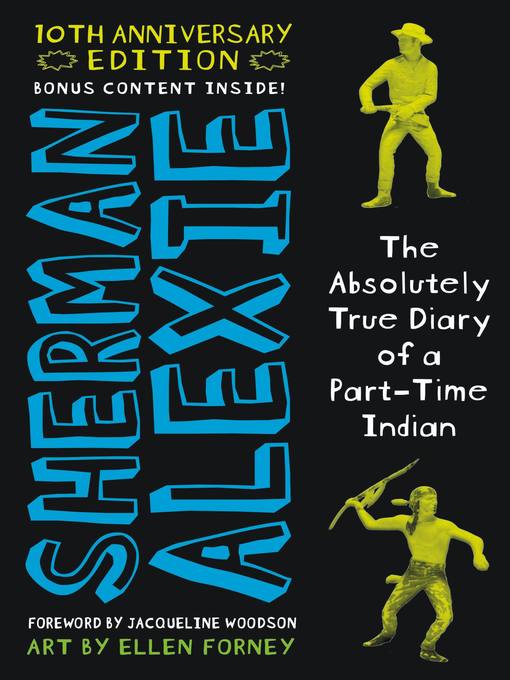
The Absolutely True Diary of a Part-Time Indian by Sherman Alexie

This book I felt was a fundamental in my maturity. It made me laugh, cry and have perplexed emotions all of the time. I liked how it dealt with race and the differences in a way that wasn’t biased to the point where it was unenjoyable. I thought that as silly as the book was, there was a lot of moral lessons to be learned. There were some political (lightly not even specified really) themes that tied into social problems dealing with race. However, this book still had lots of moments of being light hearted and just straight up hilarious.

I think this is a good book for 7th and 8th graders as they transition from being a kid and more of a young adult. Not to mention there are some humorous illustrations that not only help keep the reader enticed but also aid in explaining the story. (Not to mention the cartoon-like-style nicely contradicts the book). This was most definitely was a read that I could not put down for the life of me and also was a nice way to bond with my mom. The Absolutely True Diary of a Part-Time Indian was one of her favorite books and I hope it can become one of yours too!

-Coralie D.

The Absolutely True Diary of a Part-Time Indian by Sherman Alexie is available for checkout from the Mission Viejo Library. It can also be downloaded for free from Overdrive.

Curtain by Agatha Christie

Curtain by Agatha Christie is the last book in the Poirot series.  Captain Hastings, Hercule Poirot’s old and trustworthy friend, visits him in a hotel known as Styles.  Styles is significant to them because it was there that Poirot first met Hastings.  Poirot is much older now and can only get around with the help of a wheelchair.  However, his mind is as sharp as ever.  A series of events leads Poirot to believe that something dreadful is about to happen at the hotel.

I very much enjoyed reading about Poirot and Hastings meeting up again, after many years of absence.  Still, the tone of the novel is quite foreboding.  It becomes clear that Poirot’s intuition is correct, and that tragic things will occur as the story unfolds.  Similar to other novels in the series, the story is filled with intrigue and mystery.  However, this novel is longer than most of the others in the series.  The plot includes many twists and turns, and is full of surprises.  The ending was especially surprising to me, more so than any other book in the series.

In a way this is one of the saddest books in the Poirot series, but I enjoyed it immensely.  This is certainly one of Poirot’s greatest cases, and it is his last.  This book definitely kept me guessing throughout.  I would recommend reading other books in the series before reading this one, especially The Mysterious Affair at Styles.  The reunion of Poirot and Hastings becomes more meaningful, having read about their previous adventures.  This is a bitter-sweet story, and is a must-read for any fan of the great detective Poirot.

-Oliver H.

Curtain by Agatha Christie is available for checkout from the Mission Viejo Library.

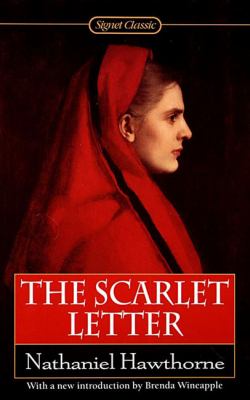
The Scarlet Letter by Nathaniel Hawthorne

The Scarlet Letter, a historical romance written by Nathaniel Hawthorne, is known as an American Classic. 

It begins with a narration to the reader, a token of awareness and readiness to start the tale. In addition, the description of the prison suggests that the exposition will either begin or end with this as its conclusion. Nonetheless, the first few chapters serve to build upon atmosphere, symbolism, and the emergence of theme (which I’ll mention often throughout this review). 

To sum up what first occurs in The Scarlet Letter, Hester, our main character, is accused of adultery and is forced to wear a scarlet “A” on her bosom. As Hester begins to adapt to this reality, she wonders about the value, weight, and depth of sin. In other words, she questions whether she’s the only “sinner” in town, as she concludes that she can’t be the only one to have ever been ungodly. Thus, Hawthorne awakens the need to call out religion’s insincere role and the impact it has on communities. 

Moreover, Hester births a daughter as a result of the affair; Pearl. This newborn, described as “elf-like” by the narrator, is a symbol that takes an important role. As Hester stands charged with an unholy crime, Pearl is hence a product of that “sin.” Therefore, she is another representation of the “A” that is woven into Hester’s clothes, a more intimate, organic consequence derived from Hester’s mistake. Furthermore, Hawthorne points out that though Pearl acts with an appropriate demeanor as anyone her age (rambunctious and childish), her actions are “defiled” by the perspective that she’s a demon, a misdeed due to her mother.  

A quote that carries great elements of figurative language is somewhat in the middle of the rising action, when Hester takes Pearl to the town’s church leaders in order to convince them not to seize her daughter. As she waits for them to address her, the narrator notes that “the shadow of the curtain fell on Hester Prynne, and partially concealed her” (102). It’s implicit to readers that they should be able to make a connection between Hester’s sin and what the “shadow” from the curtain could mean – a form of taint within her, driven by human imperfection and fault. As a result, such examples illuminate Hawthorne’s ability to craft not just specific scenes, but also the smallest details that have a chance to foreshadow what’s to come next. 

I would also like to take a quick note on the language used, which can have an impact on a reader’s perspective of the era. To illustrate, phrases such as “thee” and “thy” hint at old English, those which were common in Shakespeare and in poems similar to Beowulf. Therefore, take the time to make sure this doesn’t make a major difference on your experience; if it does, re-read certain passages or write short annotations as possible interpretations of what’s addressed, said, or argued. 

Thus, The Scarlet Letter’s conclusion, though not the most fortunate, is one of redemption, and demonstrates that characters and readers alike can learn from mistakes within the consequences that impact our futures. Thence, coupled with Hawthorne’s expertise and style, allows this text to serve as a book worth its time. 

-Emilia D.

The Scarlet Letter by Nathaniel Hawthorne is available for checkout from the Mission Viejo Library. It can also be downloaded for free from Overdrive.

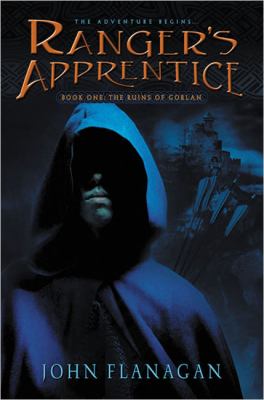
The Ruins of Gorlan by John Flanagan

The Ruins of Gorlan, written by John Flanagan published on November 1, 2004, is the first book in the Ranger’s Apprentice series. The series is made up of a total of 11 books. There is a sequel series of 5 books as well and also one other series that take place in the same world and has some connections and some of the same characters, as well as a few others. In total the three series make up a total of 26 books, so if you enjoy it there is plenty to look forward to.

The book takes place in a medieval-like Europe-like place, with some fantasy of some monsters showing up. The story is set around 15 years after a large-scale war. The book focuses on an orphan Will, it is unknown who either of the parents is but assumed the father is assumed to have died in battle. He lives in an orphanage that the lord runs for children whose parents died in the war. Now that he is 15 he is expected to learn a job or become a farmer. Failing to become get into knight school and become a warrior in his father’s image. He instead gets chosen by an unexpected person. He learns the skills of a ranger in a mysterious job.

This book while slow at the begging as it sets up the story for the series does eventually pick up and bring in some action. It is more about Will learning the skills of his position and surviving. It is nicely written and one of the best of its kind. If you give it a chance past halfway you’ll get to the point that you can’t stop if you like this type of book. I give this as a great recommendation to anyone who likes medieval-era with slight fantasy types of books.

-Luke G.

Ranger’s Apprentice: The Ruins of Gorlan is available for checkout from the Mission Viejo Library. It can also be downloaded for free from Overdrive.

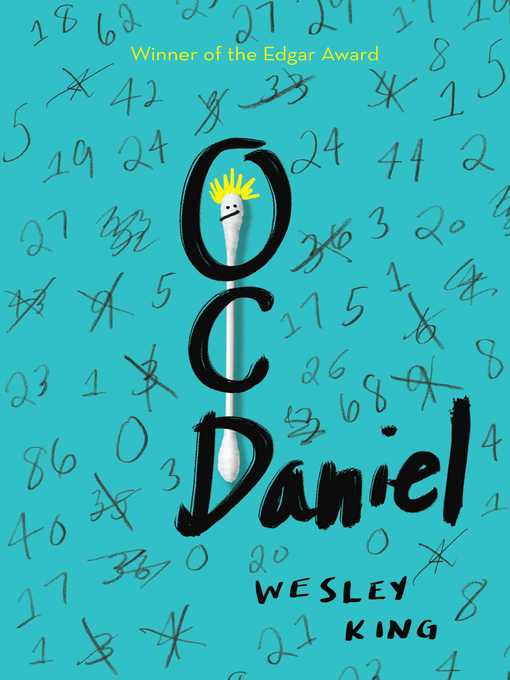
OCDaniel by Wesley King

Daniel has OCD (Obsessive Compulsive Disorder), but he doesn’t know that. He just thinks he is crazy. He avoids writing certain numbers, and he has a ‘Routine’ which takes him hours to do, just before bed. His “Zaps”, as he calls them, are sudden feelings of problems that need to be solved immediately. Most of all, he hides that he gets Zaps from everyone he knows. He gets Zaps from writing certain numbers, or sometimes not flicking a light switch enough times. Also, he hates football – which his dad makes him play. He plays as the backup punter (so he is basically just the water boy) and spends most of his time during games arranging the water cups strategically. However, he is surrounded by people who love football, from his best friend to his older brother and he feels like he has to continue playing.

One day, he receives a message from someone who calls themself  “Star Child”. As he gets further into this mystery, he finds himself now scared for much more important things than the feelings he gets for Zaps.

I like this book because I think that a lot of people can relate to the feeling of having to do something right or otherwise terrible things will happen. About 2.2 million adults (which is about 1% of the total U.S. population) have OCD. 

I think OCDaniel, Daniel’s story, gives the reader little insight into the life of someone with OCD and helps us understand what they are going through.

-Peri A.

OCDaniel by Wesley King is available for checkout from the Mission Viejo Library. It can also be downloaded for free from Overdrive.

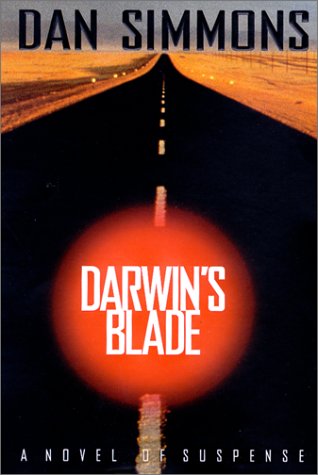
Darwin’s Blade by Dan Simmons

Darwin's Blade: Simmons, Dan: 9780380973699: Amazon.com: Books

This book contains some mature sexual descriptions that may not be suitable for all audiences.

Darwin’s Blade by Dan Simmons is an action thriller about Dr. Darwin Minor, an accident investigator with a dark past. His life has been more or less normal for the past decade- but as a series of increasingly improbable accidents crop up around California, he finds that he may be in too deep.

This book is typical, incredibly cliche suspense thriller- complete with the FBI, the Russian Mafia, guns, copious violent (albeit creative) death, and cars. Still, I did enjoy it. Even though it didn’t really live up to the ‘thriller’ part, I thought it was overall a pretty good read- and a nice break from the typical material I have. Still, quite a few pet peeves of mine made an appearance in this book. There were several points where I almost put the book down for good- because I really didn’t want to read a four-page description of physics equations or Vietnam or the mechanics of guns and cars or what felt suspiciously like Philosophy 101. The depth of detail about these frankly mundane and unimportant plot devices was mildly interesting, but for the most part, extraordinarily irritating.

As such, I would only recommend this book to slightly more intellectual readers. Some of the plot does require significant brainpower to understand- more than I, as a casual reader, would have liked. Also- be ready to face a macho, almost-forced version of romance. Still, if you’re looking for a comforting-in-its-outlandishness type of crime novel, you really can’t go amiss with Darwin’s Blade. Just be prepared to skip a few pages.

-Vaidehi B.

Darwin’s Blade by Dan Simmons is available for checkout from the Mission Viejo Library.