The Hunger Games by Suzanne Collins

Suzanne Collins’ The Hunger Games is a dystopian novel set in a futuristic fictional nation known as Panem, located in the midwestern United States. The novel’s protagonist is Katniss Everdeen, and she must survive a deadly competition known as the “Hunger Games.”

Panem is divided into twelve districts, each of which is like states. Each district has a specialty; for example, Katniss is from District Twelve, which specializes in coal mining. Because of a failed rebellion years before, each of the districts is required to send one “tribute” to an annual event known as the Hunger Games, during which two tributes from each district, a male and female, all fight to the death to claim the glorious title of “victor.”

The story begins before the Reaping, an event that chooses the two tributes from each district by random. Katniss’s younger sister is drawn, but Katniss volunteers to take her sister’s place, knowing that going means almost certain death. Chosen alongside Katniss is the male tribute, named Peeta.

Katniss and Peeta are both sent to the Capitol, a wealthy and powerful state that rules over all the districts and runs the Hunger Games for its own entertainment. Together with their coach and advisor, they begin to prepare for the Hunger Games, training and making alliances with other tributes.

I would recommend the Hunger Games because of the extreme suspense that the author creates while the tributes are fighting during the games. The story is touching, but it contains extreme violence, so I wouldn’t recommend it to younger readers.

-Josh N. 

The Hunger Games series by Suzanne Collins is available for checkout from the Mission Viejo Library. It is also available for download from Overdrive

For Whom the Bell Tolls by Ernest Hemingway

For Whom the Bell Tolls (film) - Wikipedia

“For Whom the Bell Tolls” is a novel created by American writer Ernest Hemingway in 1940. This novel tells the story of Robert Jordan, a young American who teaches Spanish in a university and has deep feelings for Spain. He volunteered for the Spanish army to blow up behind enemy lines. To cooperate with the counterattack, he was ordered to contact with the local guerrillas and complete the task of bombing bridges. He enlisted the support of Bilal, the wife of the guerrilla captain Pablo, and the rest of the team. He then isolated the demoralized Pablo, and arranged each man’s task in a step-by-step manner. In the midst of the flames of war, he heals the trauma of Maria, the girl whom Bilal has taken in because she was raped by his enemies. In these three days, Robert experienced the conflict between love and duty and the test of life and death while human nature continues to sublimate. When the bridge was bombed, Robert was wounded in the thigh and left alone to block the enemy. In the end, he sacrificed his young life for the Spanish people.

In “For Whom the Bell Tolls”, efforts are made to achieve a universal sense of harmony between nature and man, and man and woman. This harmony, Hemingway tells us, is the most difficult type of struggles. To understand one’s intimate relationship with nature and one’s co-existence with others requires breaking the consciousness of the human ego, overcoming the arrogant sense of domination and understanding the ethics of interconnectedness, interdependence and care.

-Coreen C.

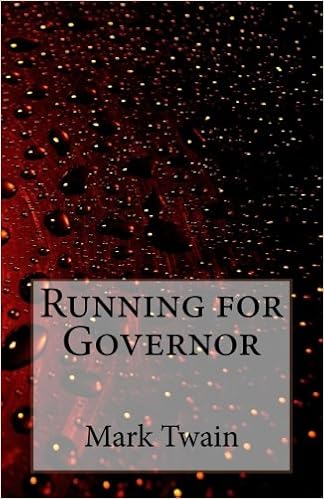
Running for Governor by Mark Twain

Running for Governor: Twain, Mark: 9781523289370: Amazon.com: Books

“Running for Governor” is a unique artistic work, a special genre between satire and short story. While a novel should be about character and plot, “Running for Governor” doesn’t focus on character or plot, but describes a bunch of cleverly arranged news stories and interspersed commentary. In that sense, it’s like a funny story, or a satirical essay. However, it is different from the general satirical sketch, because although it does not focus on depicting the character, it cannot be said that it does not show the character at all. It runs through the process of the emotional change and awakening of a character “I”.

Aesthetically, humor and satire belong to comedy. When something that is intrinsically ugly takes the form of something that is good and just; or, on the other hand, when something essentially good is expressed in some harmless form which is not in harmony with its essence, it tends to have a comedic effect — the former may be satirical and ridiculous, the latter humorous and ridiculous. “Running for Governor” is based on this contradictory principle of content and form, and adopts hyperbole to create a comic effect.

As a master of critical realism, the artistic feature of Mark Twain’s writing is based on his profound insight into the various social conditions and human affairs of capitalism. The sharp point of criticism directly points to the hypocrisy and ugly soul of capitalism. The irony in language is the most outstanding feature of “Running for Governor”. As for the use of language, Mark Twain is not impatient, but slowly, through vivid and delicate brushwork to show the subtle changes and contrasts in the text incisively and vividly.

-Coreen C.

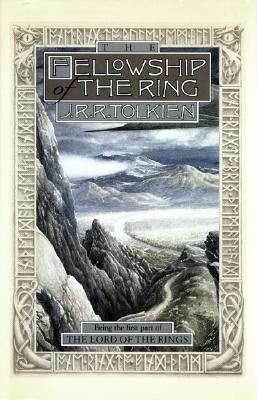
The Fellowship of the Ring by J. R. R. Tolkien

The Fellowship of the Ring is the first novel in The Lord of the Rings trilogy. The story is centered upon a magic ring found by Bilbo Baggins sixty years earlier during The Hobbit that must be destroyed. Bilbo has aged by the time of The Fellowship of the Ring, so with the advice of Gandalf, a powerful wizard, he passes the Ring on to his cousin Frodo and leaves for a “vacation.”

Years pass and Gandalf returns, and he discovers that the magic ring is no ordinary magic ring and that it is the ring of a powerful dark lord named Sauron. Gandalf tells Frodo that if the Ring were to fall into the hands of Sauron, he would conquer the world, and therefore it must be destroyed.

Gandalf sends Frodo, escorted by his friends Sam, Merry, and Pippin, to escort the Ring to Riverdale, an elven stronghold, where the fate of the Ring would be decided. Along the way, they face many threats, like the Ringwraiths, Sauron’s powerful servants. At Riverdale, it is decided that the Ring could only be destroyed in Mount Doom, a volcano near Sauron’s fortress where the Ring was forged in.

Frodo volunteers to travel to Mount Doom, and he is escorted by his friends, Gandalf, and some of the greatest heroes of Middle-Earth (the fictional world the story takes place in). The rest of the book is about the fellowship’s travels and adventures, and how they deal with problems and threats that they face on their journey to Mount Doom.

Ultimately, The Fellowship of the Ring is a good book, although it is quite long. I would recommend it to readers who love really long stories filled with action and adventure, like Greek epics such as the Iliad and Odyssey.

-Josh N. 

The Fellowship of the Ring by J. R. R. Tolkien is available for checkout from the Mission Viejo Library

Light In August by William Faulkner

This is perhaps my favorite writing so far done by Faulkner. In this novel, he explores the prejudice Americans have against each other. Diversity in this country oftentimes is merely seen as a glorification of racism. Back in the days when this book was written, southerners didn’t like northerners which is why Miss Burden had to suffer so much. Not that she was a huge advocate of the north, but that her attempt to live a peaceful and honorable life at the south was denied because of her heritage. Residents in Mississippi, a typical southern state, are not willing to give her a second chance at life merely because of her heritage, instead of other wrongdoings she has committed before, reflecting the deep-rooted bigotry people used to have and still remain today.

Joe Christmas, my favorite character in this novel, is no different. His cold and even brutal personality is a product of his upbringing in an orphanage. When he once caught the dietician making love to a male doctor while vomiting because of eating too much toothpaste, he denied the bribery which the dietitian offered—one dollar. Later on, because of his biracial ethnicity, he was sent to a black orphanage by the janitor who always watched him but later recalled by the matron. Christmas was adopted and got his name changed to McEachern because his father, a religious man thought the name represented sacrilege.

Joe Christmas’s life reminded me of his sense of repugnance for this world when he didn’t belong anywhere. Since he never received love, he didn’t have much to give. He has no fear in life and fears himself to some degree. His mixed-race endowed him with endless audacity but also imposed extremely low self-esteem upon him. In modern days, perhaps the reason why there are so fewer personages who are not white is not because of their inability to do well and contribute to the country, but because they felt disparagement and disenfranchisement from white supremacists who might be discouraging from having confidence and speaking for what they believe in.

-Coreen C. 

Light In August by William Faulkner is available for checkout from the Mission Viejo Library


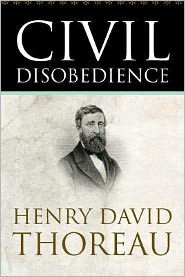
On the Duty of Civil Disobedience by Henry David Thoreau

Written in the late 1800s, Henry David Thoreau’s essays tell of civil resistance in society. He believed that many laws were bound to be broken and the people had the right to protest. In his essays, he says that human laws overcome government laws.

As a transcendentalist writer, Thoreau believed that humans could live beyond reality and could not be limited by temporary worldly objects. He shuns the idea of materialism and embraces the power of nature. Thus, people must take advantage of their individual power given by nature and represent their opinions.

Surprisingly, the essays of Civil Disobedience still apply to society today. In the past, Thoreau created an act of civil disobedience by not paying his taxes in order to protest against slavery and the Mexican-American war.

Today, people around the world refuse to follow laws to stand for an issue they believe in. Similar to the nineteenth century, materialism has taken over many peoples’ minds and distracts them from politics, the environment, and other important things. The protests that happen in the twenty-first century go along with Thoreau’s words in his work. Just as Thoreau mentions, many protests and strikes need to create an act of civil disobedience to bring awareness to the matter at hand.

As written in the work, society cannot learn and fix their past mistakes without acts of civil resistance. Thoreau emphasizes how individuals must hold onto their personal beliefs and make a difference to advance their society. It is amazing to see how a series of essays from 200 years ago still accurately applies to our society today. This can also be a bit frightening as some negative aspects of governments around the world have not been changed.

-Zohal N. 

Lord of the Flies by William Golding

Lord of the Flies is a dystopian, survival novel written by William Golding in 1953. Living through the bloodiest war in human history, Golding had witnessed humanity’s great capacity for inflicting cruelty and brutality on one another. This greatly influenced his pessimistic view of human nature; he believed that the natural human propensity is violent unless restrained by societal influence. The book opens on an island, now inhabited by a group of unsupervised British schoolboys that survived a violent plane crash. Some of the main characters are Ralph, Piggy, Jack, and Simon. Ralph and Piggy find a conch shell and call for an assembly of all the survivors on the island. The assembly results in the appointment of Ralph as chief. Ralph believes that maintaining fire on the island is the most important task, as it will signal to the outside world that they need rescue.

Meanwhile, Jack is focused on hunting. During this conflict, the boys find a mysterious creature called “the beast,” which they believe is following them, and planning to harm them. Simon tells the group that “the beast” may be them; that the human is the most dangerous animal on the island. As the debate on the existence of “the beast” continues, Jack and Ralph split into two separate tribes. Simon finds the head of a pig, left behind as a sacrifice to “the beast.” This head is the Lord of the Flies and gives Simon a vision. Simon is soon killed by Jack’s tribe, and as the conflict escalates, so is Piggy. Ralph is now targeted by Jack’s tribe and tries to fight them off as best he can. Just before Ralph is killed, a naval officer on a nearby ship reaches the island, alerted by their smoke signals, and rescues them.

This book demonstrates a zeitgeist held by many authors and philosophers during this time period. Golding’s use of British schoolboys as his characters shows that anyone, regardless of age or perceived innocence and civility, can surrender to the brutal proclivity living within all human beings. The boys are a mirror image of the warring adults surrounding them, and the island becomes a microcosm of World War II itself.

-Katie A. 

Lord of the Flies by William Golding is available for checkout from the Mission Viejo Library. It is also available for download from Overdrive

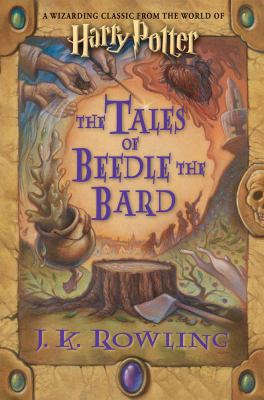
The Tales of Beedle the Bard by J.K. Rowling

This little book of five wizarding fables is a perfect way to re-immerse yourself into the world of Harry Potter after reading the series. With writing from the brilliant Albus Dumbledore, illustrations by J.K. Rowling, and little facts about characters from the Harry Potter series, The Tales of Beedle the Bard could naturally belong on a book list underneath Harry Potter and the Deathly Hallows.

Following each story is a note by Albus Dumbledore, which provides a thoughtful and sometimes witty analysis of the story, a discussion of the wizarding world’s acceptance of it, and perhaps a humorous anecdote. Although Dumbledore’s notes are written academically, the evidence of his witty and brilliant character in his writing is exciting and entertaining. I particularly enjoyed reading Dumbledore’s note on The Fountain of Fair Fortune because it mentions Hagrid’s predecessor as professor of Care of Magical Creatures, Professor Kettleburn. Professor Kettleburn is briefly mentioned in the Harry Potter series, but in his note, Professor Dumbledore delves deeper into his character while telling a humorous story involving the Care of Magical Creatures teacher and students at Hogwarts.

Additional references to and historical information about characters from Harry Potter serve as a treat to those wanting an extra morsel of the wizarding world.

What I enjoy about this book are J.K. Rowling’s intricate and elegant illustrations of her (or Beedle’s) stories. I find it intriguing to see illustrations by the authors, as their depictions are most likely to be true to their vision.

Lastly, it’s fascinating how The Tales of Beedle the Bard not only a book of stories about the wizarding world but a book that actually exists in Harry Potter’s world, as it is first introduced in Harry Potter and the Deathly Hallows. It almost appears like it was pulled from a Hogwarts bookshelf or a wizard or witch’s bedside table to be shared with the Muggle community.

Crafted with wit, magic, and a bit of the darkness you might find in a Grimm fairy-tale, these stories serve both as entertainment and as another taste of the wizarding world.

– Mia T.

The Tales of Beedle the Bard by J. K. Rowling is available for checkout from the Mission Viejo Library.

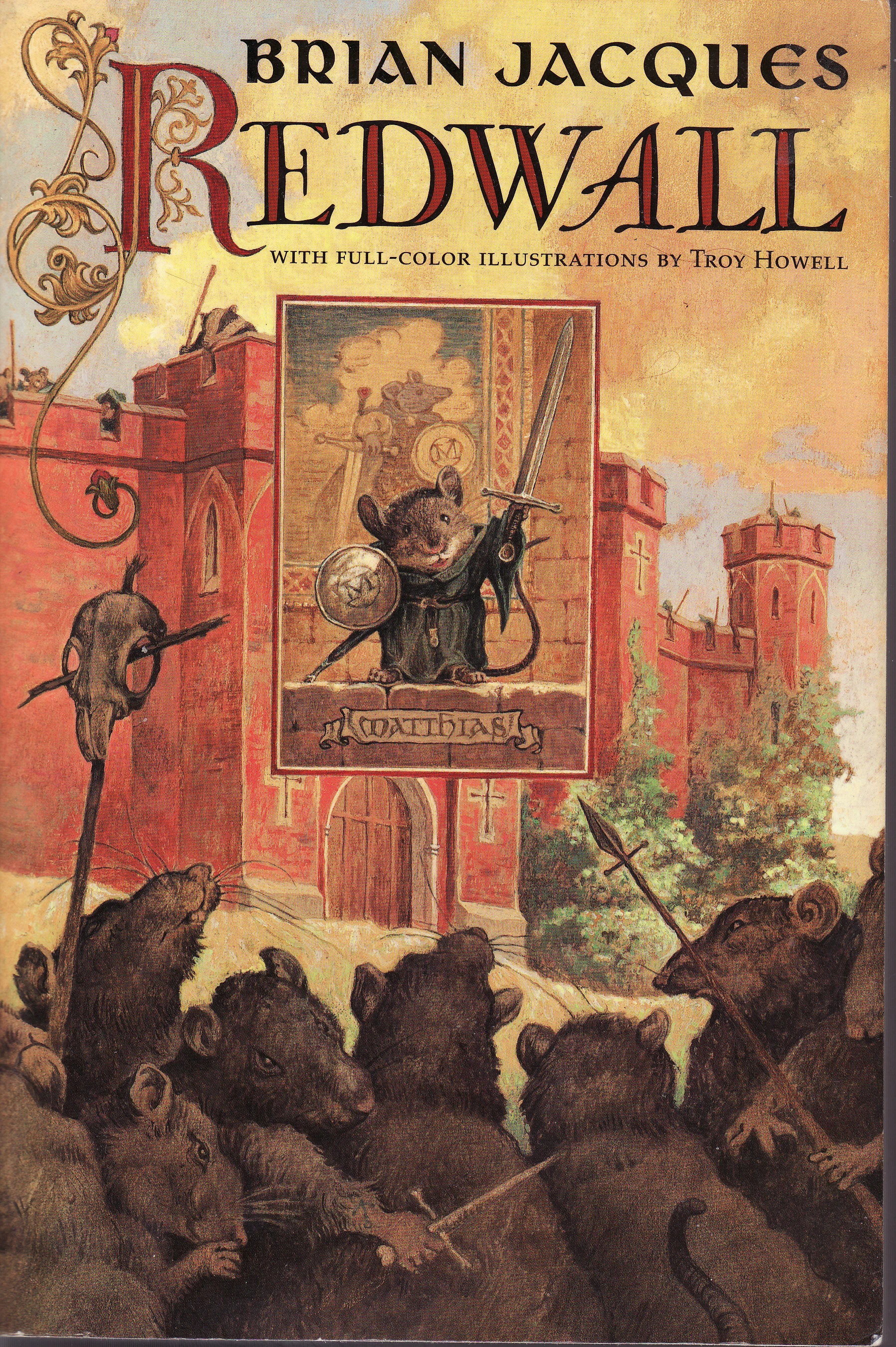
Redwall by Brian Jacques

Redwall is a series of 22 fantasy novels written by the late Brian Jacques.  The stories take place around a castle named Redwall Abbey in a land called Mossflower during a medieval period.  The main characters are animals with human-like abilities.  Most of the characters are woodland creatures that can talk and walk on their hind legs.  The good characters include mice, squirrels, otters, moles, and badgers.  The villains include rats, weasels, stoats, foxes and ferrets.  The books contain many epic adventures and are very enjoyable to read.
I have noticed a predictable pattern throughout the series.  Each book usually begins by introducing the main characters, including the main villain.  Then conflict arises between the good and bad characters.  Usually, the good characters are defending Redwall Abbey against their enemies.  Sometimes the heroes embark on long journeys or perilous adventures to defeat the villains.  By the end of each book, the bad creatures are defeated.  Though the books may seem repetitive and predictable, they are filled with surprising plot twists and many colorful personalities.

The first novel written in the series is simply titled Redwall.  The hero of the story is a small mouse named Matthias.  In this book, Matthias defends Redwall Abbey against the evil rat, Cluny the Scourge.  Matthias overcomes many challenges to save the abbey.  At one point he defeats the dreaded snake, Asmodeus, and obtains a legendary sword with which he fights against Cluny and his army.  This book is filled with action and suspense.

Another enjoyable novel in the series is Mossflower.  This book describes events that took place before the events of Redwall.  We learn about the history of Redwall Abbey.  A traveling mouse named Martin comes across a large and spacious castle inhabited by evil vermin led by tyrannical wildcats.  Martin finds a group of woodlanders who wish to overtake the giant castle and remove the dictators.  After finally succeeding in their mission and destroying the castle, they decide to build an abbey in its place.  The abbey is named Redwall because it was built with red sandstone from a distant quarry.  Redwall Abbey becomes the home of many good woodland creatures throughout the series. 

Perhaps my favorite book in the series is The Bellmaker.  This book involves a squirrel king named Gael who lives at Castle Floret.  The king is forced to flee from his home because of an evil foxwolf named Urgan Nagru.  As the story develops, heroic characters from Redwall come to the rescue to put an end to Urgan Nagru and his army once and for all.  This book may be my favorite in the series because of the gripping plot and fascinating character development.

The Redwall series is filled with adventure, action, and humor.  I enjoy reading each book because the stories are all woven together.  The characters come to life as we read about their exciting adventures from book to book.  These books may be written for young readers but I would highly recommend them to anyone.

-Oliver H. 

Brian Jacques’ Redwall series is available for checkout from the Mission Viejo Library

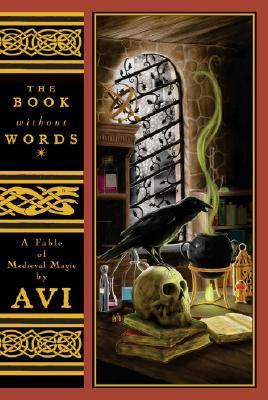
The Book Without Words by Avi

The Book Without Words by Avi is a strange, chaotic novella set in a medieval and gothic time period in an alternate universe.

An eccentric old man named Thorston has devoted his entire life to look for the two greatest secrets of life- the making of gold and immortality. Seconds away from a breakthrough, he keels over, dead. His servant, Sybil, and talking pet raven, Odo, decide that their only hope is to discover the two secrets and build a better life for themselves.

The ultimate theme of this book plays on human nature itself, as the two secrets themselves represent man’s greatest flaws- greed and the desire for immortality. 

This morally-charged storyline coupled with Avi’s odd, emotionless, and almost creepy narrating style makes for an intriguingly gruesome novella that turns the happy-go-lucky magic of youth into something curiously corrupted and cruel.

-Vaidehi B.

The Book Without Words by Avi is available for checkout from the Mission Viejo Library.