Women In Science

Women are typically overlooked in STEM subjects, even though they contribute heavily to research and innovations. It is now time to recognize the significant achievements women have made. Here are just some women who don’t get the attention they deserve.

  1. Margarethe Hilferding

Hilferding grew up among liberal and Jewish women; she contributed a lot of her knowledge to the field of psychoanalysis, and medicine while also advocating for women’s rights to contraception. She knew as a young kid that she wanted to study medicine, and was one of three female students to be accepted into a university to study physics and math. Many professors made fun of her for taking such rigorous courses as during this time women typically didn’t study these courses. Hilferding was the first Austrian woman to receive a medical degree from the University of Vienna. She produced a theory on maternal instinct, which is seen as controversial, and died in the Holocaust on September 23, 1942.

Aus den medizinhistorischen Beständen der Ub MedUni Wien [132]: Zum 150.  Geburtstag von: Hilferding-Hönigsberg, Margarethe: Zur Behandlung der  Schwangerschaftsbeschwerden. Vortrag, gehalten in der Gesellschaft für  innere Medizin in Wien. | VAN SWIETEN

2. Dr. Dorothy Andersen

Dorothy Andersen was a physician and pathologist who discovered cystic fibrosis in 1983, a heretical condition that impacts the pancreas and lungs. She identified how to look for acute lung and gastrointestinal problems in children. Her first task as a pathologist was to dissect a young child’s organs who was deemed to have celiac disease. As she was examining the organs she noticed some differences in the child’s lungs and pancreas and decided to look at other patients’ autopsies to identify the problem. She wrote a 50-page paper called, “Cystic Fibrosis of the Pancreas and its Relation to Celiac Disease: A Clinical and Pathological Study” and was the first to diagnose this disease in a living patient.

3. Dora Richardson

Dora Richardson was a chemist who invented a breast cancer treatment, tamoxifen. She became a chemist after visiting her sick grandmother in the hospital and worked alongside Arthur Walpole, another chemist. She worked to create compounds, and one day she developed a base for the drug, tamoxifen. Walpole and Richardson discovered it could be an effective drug to prevent breast cancer. A pharmacologist named Craig Jordan selfishly took the title of the “Father of Tamoxifen,” and is now associated with this drug.

Many women are undervalued for their contributions to science. These are just some of many women in the world who are unforgotten for their life-changing discoveries.

Hamilton

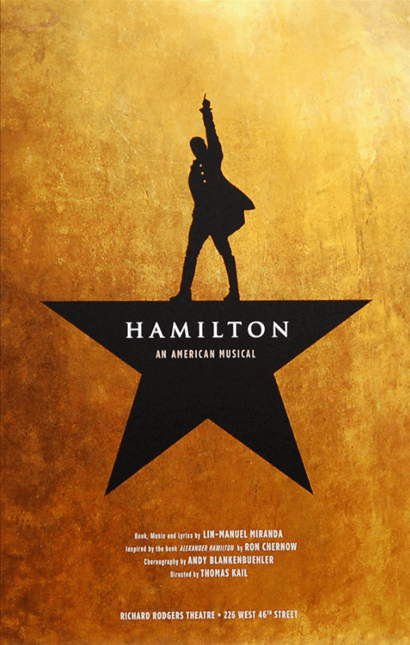
Hamilton a musical written by Lin-Manuel Miranda explores Hamilton’s experiences and what rose him to power, his role in the American Revolution, and more. Alexander Hamilton was one of the Founding Fathers and contributed dearly to what America is today. This musical is known for its unique blend of hip-hop, R&B, and traditional musical theater styles.

The musical covers Hamilton’s life from his early days as an immigrant from the Caribbean, through his role in the American Revolution, to his work as the first Secretary of the Treasury. It also explores some of his personal relationships, such as his wife, Eliza Schuyler, and his friendships and rivalries with Aaron Burr, George Washington, and Thomas Jefferson.

Although it’s a musical, it teaches in a really engaging way by blending historical facts with music and story-telling techniques. The use of hip-hop and R&B makes the information more appealing, especially to younger audiences.

The lyrics are packed with historical references and complex themes, which encourages listeners to pay attention and learn. The lyrics are also very amusing and the songs will be stuck in your head! One of my favorites is “Wait for It” sung by Aaron Burr, who is played by Leslie Odom Jr. in the original Broadway cast. It captures the struggle and resilience of Aaron Burr and the way he reflects on ambition, timing, and patience can be very relatable to listeners. Plus, the melody and delivery make it so emotional and tense.

Hamilton highlights the themes of legacy, ambition, and the complexities of the American dream. It’s both educational and entertaining, making the history of the musical vibrant and relevant. Lin-Manuel Miranda composed the most lyrical and amazing soundtrack for this musical and it’s incredible how he managed to write the musical and star as Alexander Hamilton himself. Even if musicals are not your cup of tea, I would highly recommend watching it as it is so amusing and the characters are so interesting to watch.

The Origin of Volleyball

Men’s volleyball is one of the fastest-growing sports in the United States, having increased by 40% since 2017. This fun and easy-to-learn sport has a rich and interesting beginning, and it all started in 1895, at a YMCA in Holyoke, Massachusetts.

William George Morgan was born on January 23, 1870, in the town of Lockport, New York. Morgan attended the Northfield Mount Hermon Preparatory School, where he met James Naismith, the future inventor of basketball. After that, he attended the International Young Men’s Christian Association Training School (now known as Springfield College) in Massachusetts, where he and Naismith both pursued careers in physical education. In 1895, Morgan moved to Holyoke, Massachusetts, where he became the Director of Physical Education at the local YMCA.

Morgan noticed that while playing basketball, the non-athletic/older men playing would have a hard time keeping up with the strenuous physical activity involved. He decided that he wanted to make a different game, similar to basketball, but more inclusive and easier to play. Morgan used ideas from handball, tennis, badminton, and his own experience to develop his new game.

The game would feature:

  • A 30 feet wide, 60 feet long playing area
  • A 6-foot, 6-inch net in the middle, separating the play area into two halves
  • 5 people on each side of the court, making a total of 10 players
  • A ball, which would be sent over the net in a “volley”
  • Innings (inspired from baseball), later called “sets,” to add a competitive tone to the game

A problem that Morgan had was finding a ball to use for his new game. A basketball was too heavy and hard, and just the bladder of the basketball itself was too light, so he contacted A.G. Spalding & Bros to make him a custom ball. They created a leather ball, around 26 inches in circumference, and was the perfect weight for his sport, 9-12 ounces. Finally, all the new sport needed was a name, and Morgan named it “Mintonette,” a word derived from badminton.

In 1896, William Morgan first presented his sport at the to the YMCA Directors of Physical Education at the YMCA in Springfield. The object of the game was to keep the ball off the floor as it went from one side of the net to the other. One person that was especially intrigued was Professor Alfred T. Halsted, who was the first person to suggest naming the sport “Volley ball,” later formed into one word, volleyball.

As the years went by, many major things happened:

  • 1900 – Spalding starts to produce the volleyball
  • 1920s – First beach volleyball courts are created in Santa Monica, California
  • 1922 – First YMCA volleyball national championships held in Brooklyn; 27 teams appeared
  • 1928 – the United States Volleyball Association (USVBA) was created, which made rules and held tournaments (now known as USA Volleyball)
  • 1937 – USAV recognized as the national governing body for the sport
  • 1947 – FIVB (The Federation Internationale De Volleyball) was founded
  • 1964 – Volleyball was introduced to the Olympic games in Tokyo, Japan
  • 1983 – The Association of Volleyball Professionals (AVP) is formed
  • 1996 – Two-man beach volleyball becomes an Olympic sport

Book vs. Movie: All Quiet on The Western Front

Disclaimer: The movie being compared is the newest 2022 movie.

All Quiet On The Western Front is a classic anti-war novel depicting the tragedies of the western front during World War I. Set from the viewpoint of the Germans, it features Paul Baumer and the set of ‘life and death’ colleagues he makes in the army. Rather than a hopeful take on the war, the author takes from his own experience to realistically express the war’s effect on soldiers and its moral implications.

While difficult, the best advice I can give for readers is to not get too close to any character ❤

Book Rating: 10/10 Movie Rating: 8/10

  1. Signing of the Armistice
    • Book: There is no mention of the signing of the armistice and only through a rumor at the end is it known that the war is coming to a close
    • Movie: Slowly throughout the movie, it cuts to the signing of the armistice. Specifically, it details the heavy restrictions the French politicians place on Germany as a clause in the armistice.
  2. Going Back Home
    • Book: There are two scenes in the book where Paul returns home for rest and recuperation before going to war. Mainly depicts how Paul doesn’t fit in and feels like the ‘lost generation.’
    • Movie: There are no scenes where Paul returns home.
  3. Timeline
    • Book: Starts directly at when Paul has already been in the army for more than a year and flashbacks occur to depict the past. The timing is also more spread out, which allows for more events to take place.
    • Movie: Starts from when Paul registers for the war with his friends and then skips to the later years of the war.
  4. Graveyard Battlefield
    • Book: One of the first (and amazing) battlefields that took place at the western front was in a cemetery and it depicts Paul’s use of coffins and corpses as a shield from bombs and guns.
    • Movie: There are no war scenes at a cemetery.
  5. The Main Antagonist
    • Book: Corporal Himmelstoss is a key figure in the book that often gives punishments over the smallest mistakes, symbolizing the power authority figures have over recruits. He has great character development in the later half of the novel when he joins the war at the western front and learns that power is useless when faced with life or death.
    • Movie: There is no mention of Corporal Himmelstoss. Rather than him, Prussian General Friedrich becomes the key figure in the book that symbolizes the hierarchy in the army. There isn’t much character development with him and he is often seen ordering soldiers and doesn’t directly interact with Paul and his friends at all.
  6. Kat’s Death
    • Book: Kat is hit in the head by a stray shard from a bomb and dies.
    • Movie: After stealing a goose from the owner, the owner’s son shoots Kat with a gun.
  7. The Ending
    • Book: Paul dies from a sniper shot one month before the war ends.
    • Movie: Paul dies during a last ditch effort by Prussian General Friedrich to win the war at the western front. He gets shot and dies just hours before the war ends.

General Thoughts: Movie vs. Book

The war scenes in the movie are arguably one of the best war scenes in the film industry. It gives a very accurate and desperate picture of the western front. I love the use of the many common weapons used during that time, such as poison gas, tanks, and flamethrowers. Would definitely recommend if you are interested in really good fight scenes!

Something I didn’t like about the movie was the ending. A big reason about why the novel is titled All Quiet On The Western Front is because Paul dies on a day so unremarkable that the commander just wrote ‘All Quiet.’ It reveals how unsignificant death was in the war, but it was something Paul was fighting against throughout the whole book. However, the movie shows Paul dying in a big fight on the last day of the war, which kind of undermines the whole point of the title and the book.

I do recommend both the book and movie to historical fiction lovers, so you should definetely check it out!

What to compare them for yourself? All Quiet On The Western Front by Erich Maria Remarque is available for checkout from the Mission Viejo Library. The movie All Quiet on the Western Front is also available for checkout from the Mission Viejo Library.

2024=1948

If you haven’t been on the reality side of life right now, you would know that Palestine and Israel are in a war which is slowly becoming a whole middle east against the west war. Besides wars, inflation is reaching an all time low of 3.2% and apartment/house rent being in a funky situation. Beyond the economic and world part, in my opinion, we are entering a new era in the cinematic/music/entertainment industry with movies from the 70’s to the early 2000’s coming out with sequel musicals,and  new popular music.

Looking back 76 years ago you, can see so many similarities between these two years; 2024 and 1948. Are we going back in time? Have we truly entered a war and a great depression?

The answers depend on how you would like to view what’s going on.

For more information about the similarities between those two years, we have have to go back to 1948, and see what went down.

We can all agree that war has a lot to do with money and inflation, which is why the USA dealt with post World War 2 inflation dropping down to 10%, with its highest rate (that it should have been at) being at 20%. With a democrat leading 1948 and a democrat leading 2024. 

But we aren’t in a war, why would our percentage drop to 3.2% in the present day? The answer to that will have to be, the pandemic aka Covid 19. With business shutting down, even the government shutting down, people losing jobs and such, the inflation began to decline and it is getting worse and worse with how the current economy is working during (a soon to be) war.

Speaking of war, looking back to spring, more specifically, May of 1948, the Palestinians welcomed jewish settlers who escaped the holocaust from Germany, and some parts around Europe to get to the middle eastern country called Palestine. Their settlement began as a UN and UK agreement for the jewish to have some part of Palestine for them to call their own (being Israel). They began to go past that agreement and ended up killing about 110 thousand Palestinians with a good portion of them escaping to countries around, like Egypt, Lebanon, Syria, and Jordan. 

Which is very similar to what is happening now with in just 5 months of the Gaza vs Israel war, over 27 thousand have been killed and 73 thousand displaces, under rubble, or missing, as the USA and UK funding the killing and bombing Palestinian safe zones.

Besides the War and Economy time, Hamlet, Oliver Twist, and the Fallen City releasing and getting big, we got musicals as old hit movies like Mean Girls (2003), Wonka (1971), and even The Color Purple/book (1982). With artist Taylor swift dropping her new album soon and making her own name, Lana Del Rey dropping a tour, and new music genres on the rise, 1948 came out with “all I want for Christmas is my two front teeth”

To conclude all of this, This year is extremely similar to 1948 and is possible we might be going back in history, rather than how some would hope it being similar to 2014 and party 2020.

What do are your thoughts?

https://www.babyboomers.com/1948

https://open.spotify.com/episode/5SiW6eh0ST9AYdlxHmPSxn?si=GwgU8Kg9QR-LYpOz-4lQtQ

Zina K

Understanding Globalization in the Past and Present

Below I have another historical essay which I created on the topic of Globalization throughout ancient history. I hope you enjoy reading it and are inspired to produce paper’s like these in the future!

“It has been said that arguing against globalization is like arguing against the laws of gravity.” – Kofi Annan

  1. Introduction

In our exploration of ancient civilizations throughout this course, we have delved into the intricate tapestry of societies such as the Khmer Empire, the Ming Dynasty, the Tupinamba, and the Spanish. A prevalent theme in this course has been how these civilizations established themselves within their borders. However, the meaningful engagement that these societies experience with one another emerges as a fascinating element in each of their histories. This revelation prompts us to reconsider the conventional timelines and narratives of globalization. By examining the rich tapestry of inter-civilizational connections, we aim to discern the nuanced dynamics that existed beyond the confines of individual borders, challenging our understanding of ancient societies as isolated entities.

  1. Historical Overview of Ancient Civilizations

At the heart of East Asia, the Ming Dynasty (1368-1644 CE) stands as a testament to the height of Chinese civilization. Under Ming rule, China experienced a cultural and economic renaissance marked by syncretic advancements in art, literature, and technology. Admiral Zheng He led the Ming’s maritime expeditions, exploring vast foreign territories, and connecting China to distant lands while fostering cross-cultural exchanges. The Admiral’s journeys promoted pluralism between the dynasty and other nations, such as the Japanese, led by Queen Himiko. Compared to its predecessors, the Ming Dynasty was far from isolated, as they actively interacted with neighboring regions, leaving an indelible mark on the interconnected history of the ancient world.

Meanwhile, the Khmer Empire of Southeast Asia (802-1431 CE) thrived as a powerhouse of culture and architecture. Centered around the magnificent city of Angkor and structured along the Mekong River, the Khmer Empire’s influence and territory extended across present-day Cambodia, Thailand, Laos, and Vietnam. In addition, the Khmer’s magnificent temple of Angkor Wat displays both the empire’s architectural prowess and reflects its syncretism with Hinduism and Buddhism. The Khmer Empire stood out for its religious syncretism through its fusion of Hindu, Buddhist, and Khmer ideals. The Khmer Empire’s trade networks and cultural interactions across Southeast Asia positioned itself as a key player in the transregional dynamics of the continent.

Turning our gaze to Europe, the Spanish played a pivotal role in shaping the narrative of the ancient world. The Spanish Empire, particularly during the Age of Exploration (15th-17th centuries), embarked on daring maritime expeditions, opening new avenues for global interaction. Their exchanges with the Americas transformed not only the Spanish but also the indigenous peoples they encountered, through major events such as Cocoliztli and the institutionalization of the Americas. This collision of worlds resulted in a complex intermingling of cultures, ideas, and commodities, challenging the perception of isolated civilizations.

In the lush landscapes of South America, the Tupinambá people thrived along the coastal regions of present-day Brazil. Their vibrant societies were deeply interconnected with the surrounding environment, emphasizing a harmonious relationship with nature. The Tupinambá engaged in elaborate trade networks and cultural exchanges with neighboring indigenous groups along with Portuguese explorers who created Feitorias and Engenhos throughout Brazil, assembling a dynamic web of connections that extended beyond geographical boundaries. The existence of the Tupinamba challenges the notion that globalization was solely a phenomenon of the Old World, offering a glimpse into the multifaceted nature of inter-civilizational interactions in the ancient Americas.

  1.  Rethinking Globalization: Khmer and Chinese Interactions

As we scrutinize the intricate web of inter-civilizational interactions, the spotlight falls on the exchanges of the Khmer Empire and the Ming Dynasty. In the realm of trade and cultural exchange, historical evidence reveals a vibrant network of connections, especially in religion. Serpent worship runs like a dark thread through all the mazes of Hindu literature and belief from the earliest to the latest. When Buddhism raised its head from the fold of Hinduism, the Sacred Naga again became active, and we find the Naga supporting and sheltering Buddha at the time of his enlightenment so that the seven-hooded head of the cobra becomes one of the symbols of Buddhism (Reed 212). Reed’s recounting of the serpentine aspect of Hinduism and the seven-hooded cobra of Buddhism, reveals the religious syncretism and globalization which stands as the foundation of the Khmer Empire’s culture. In addition, maritime activities played a pivotal role, exemplified by the Ming Dynasty’s ambitious naval expeditions and the Khmer Empire’s influential presence in Southeast Asia. The archaeological record, enriched with artifacts and historical documentation, provides a compelling narrative of economic and cultural interdependence displayed in these two formidable ancient powers.

Diplomatic and political techniques for expanding and maintaining territories further underscored the depth of collaboration and understanding of the Khmer Empire and the Ming Dynasty. While emphasizing their Chinese origins, the Ming relied on a melange of ruling practices that had been forged by earlier emperors, advisors, and military leaders. The Ming retained provincial structures used by the Yuan and reaffirmed the traditions of rule by officials and through imperial law (Burbank 204). These political structures and techniques passed down from the Yuan Dynasty to the Ming Dynasty, attest to the influence of globalization on the role of dialogue in fostering cooperative endeavors. These historical interactions challenge the notion of isolated civilizations, highlighting the Khmer and Chinese as active participants in a broader, interconnected world. The archaeological discoveries unearthed in this exploration offer a nuanced understanding, utilizing key terms related to trade, diplomacy, and cultural diffusion, reshaping our perspective on the origins of globalization.

  1.  Rethinking Globalization: Spanish and Tupinambá Encounters

In the crossroads of the Spanish Empire and the Tupinambá in South America, a fascinating tale of conquest, cultural exchange, and resilience unfolds. The impact of the Spanish conquest on the Aztecs and neighboring indigenous groups initiated a complex dance of cultural exchange. This encounter witnessed the blending of Spanish and indigenous traditions, revealing instances of cultural syncretism that defy simplistic narratives of conquest.

Delving into the perspective of the Tupinamba by foreigners, the Portuguese accounts by Hans Staden, reveals the way of the Tupinamba, casting a negative look on the Southern Brazilian tribes. The savages among whom the Portuguese live [the Tupiniquins] had traveled to the land of the Tuppin Imba to wage war on them and had captured a whole village and eaten the old people (Staden 59). Accounts such as that of Staden’s instantly give the reader a negative perspective on the culture of the Tupinamba, without showing any appreciation or respect towards the tradition of the Tupinamba. Amidst these interactions with the Portuguese, the Tupinambá showcased remarkable resilience, offering a counterpoint to narratives dominated by the conquering forces. Indigenous perspectives on the encounter with the Spanish provide crucial insights, emphasizing the importance of understanding historical events through diverse lenses.

The narratives of the Spanish and the Tupinambá, woven together, challenge traditional views of conquest and colonization. This exploration incorporates key terms related to colonization, cultural resilience, and indigenous perspectives, contributing to a nuanced understanding of how these ancient interactions continue to shape our understanding of globalization in the contemporary world.

  1. Agree or Disagree?

The Ming Dynasty’s maritime expeditions, as highlighted in lectures and readings, exemplify a deliberate effort to establish connections beyond regional boundaries. The archaeological evidence supporting the existence of trade routes and cultural diffusion of the Khmer Empire and the Ming Dynasty further substantiates the idea that globalization was not a recent phenomenon but had roots in the ancient world.

Similarly, in the context of the Spanish and Tupinambá, evidence from lectures and readings underscores the significant impact of the exchange between these two worlds. The blending of Spanish and indigenous traditions, coupled with the establishment of trade networks, emphasizes the intricate economic and cultural interdependence that existed. The resilience displayed by the Tupinambá against the Portuguese challenges the narrative of passive indigenous societies, highlighting a dynamic engagement that was crucial in shaping the complex tapestry of globalization.

As we delve into these historical narratives, it becomes increasingly apparent that the interconnectedness of ancient civilizations surpassed mere happenstance, pointing towards deliberate efforts to engage with the broader world. The evidence gleaned from these interactions solidifies the argument that globalization is not a recent phenomenon but rather a continuous thread woven into the fabric of human history.

  1. Personal Reflection

This exploration of ancient civilizations and their interconnections has undeniably influenced my perception of globalization. Witnessing the intricacies of trade, diplomatic negotiations, and cultural exchanges of these ancient civilizations, has completely shattered any preconceived notions of isolated societies that I had before this course. The realization that these interactions transcend geographic borders has prompted a reconsideration of the very essence of globalization. It emphasizes the notion that the roots of globalization delve deeper into history than I had previously acknowledged.

  1. Relevance to the Contemporary World

The lessons obtained from the ancient interactions of these four ancient civilizations offer profound insights into our present globalized reality. Parallels can be drawn between the economic interdependence, cultural syncretism, and resilience witnessed in ancient times and the dynamics of our contemporary globalized society. For instance, the violent approach of the Spanish towards the indigenous people which they encountered can be related to the Nazi’s relationship with the Jewish people during World War II. I [Columbus] found very many islands peopled with inhabitants beyond number. And, of them all, I [Columbus] have taken possession for their Highnesses, with the proclamation and the royal standard displayed; and I [Columbus] was not gainsaid (Columbus 268). This excerpt from Columbus’s letter to Luis de Santangel describes his ‘possession’ of the indigenous people whom he found. These actions seem to have recurred again 400 years later with Adolf Hitler through his mass genocide of the Jewish people, and forcing them into aiding him in the war effort by participating in his intensely laborious concentration camps. All in all,  by understanding the complexities of inter-civilizational interactions in the past, we gain a nuanced perspective that aids in navigating the complexities of our current world.

  1. Conclusion

In conclusion, the examination of the Khmer, Chinese, Spanish, and Tupinambán interactions reshaped our understanding of ancient civilizations. The evidence from the readings and lectures of this course challenges the perception of isolated societies and prompts us to rethink the origins of globalization. Whether through the vibrant exchanges in the Khmer Empire and Ming Dynasty or the complex dynamics of the Spanish and Tupinambá, the ancient world emerges as a testament to the interconnectedness that laid the groundwork for the globalized world we navigate today. As we continue to explore and question traditional historical narratives, we are reminded that the roots of globalization stretch far into the past, connecting us to the diverse tapestry of human history.

The First Flight Around The World

I was researching historical events that happened on my birthday when I came across an interesting one. The first around the world flight landed on September 28, my birthday. It took 175 days to complete it. But how did it happen? 

First up was the preparation. The U.S. Army Air Service, Coast Guard, Bureau of Fisheries, and Navy all donated fuel, oil, engines, and spare parts. There were going to be four airplanes; Boston, New Orleans, Seattle, and Chicago. As you can tell, they were all named after American cities. 

The objective of this treacherous journey was to display to the world that airplanes were a valid transportation method for all to use, and to advertise the new Douglas World Cruisers. Each plane could only take 300 pounds worth of supplies, meaning they couldn’t afford to take parachutes or life preservers. 

The four planes took off on April 6, 1924, in Seattle, Washington, heading west. They flew up the coast of Canada through Alaska. Alaska had freezing temperatures, thick fog, and violent, unpredictable storms. While traveling through, Seattle crashed. Fortunately, both the pilot and the mechanic were saved, but it was so early in the journey and they had already lost a plane. Luckily, the rest of them made it through Alaska. 

In May and June, they started venturing into Asia. Asia had typhoons, humid weather, and extreme heat. Japan was excited about aviation, but also suspicious of the planes provided by the military. They gave the pilots a harder route, in order to keep their military secrets hidden. Even with the harder route, they were able to make it through southeast Asia. 

In June and July, they started across India. Instead of fog and rain, they now had the humid tropical jungles and sandy winds of what is now Iraq and Jordan. 

At last, they made it to the edge of Europe in August. Now they had the daunting task of crossing the Atlantic Ocean. Keep in mind, these were old planes, and therefore needed to stop very often. The Navy stationed large ships along the route for when they needed to land. The journey to Iceland seriously tested the pilots’ skill. Heavy fog forced them to fly close to the wild waves. They were going 90 miles per hour with very little visibility. On top of that, towering icebergs floated in the sea, the pilots just narrowly avoiding them. They made it to Iceland, and from there went to Greenland. The conditions were the same, foggy and violent. From Greenland, only Chicago and New Orleans could make the trip to Labrador, Canada. Boston suffered serious damage, and couldn’t continue the journey. 

Once they entered the US, the pilots were crowded with fans at every stop. They flew down the east coast of America.

At last, they reached their final miles. The World Flight center was overflowing with eager crowds, waiting to see the latest American aviators. They crossed the desert to San Diego, and went up the west coast. Chicago and New Orleans landed successfully at the World Flight center in Seattle on September 28, 1924. They took 74 stops, and covered about 27,550 miles.

Day at the Museum -The Natural History Museum

One of my favorite museums in Los Angeles is the Natural History Museum which is located in Exposition Park.  The museum is a beautiful building that is adorned with grand pillars and a massive domed roof. It houses four floors of exhibits featuring over 80 million items that include prehistoric creatures, dinosaurs and life-size replicas of mammals that date over 65 million years!  It also showcases a butterfly pavilion and a beautiful nature garden exhibit. L.A. County Residents get free admission from 3–5 pm Monday through Friday. If you are 17 and younger but live outside of LA County, the admission is only $12. You can pretty much spend the whole day there, as there is so much to see and do!

One of my favorite exhibits is the Dinosaur Hall, which features an extensive collection of dinosaur skeletons and fossils. The hall showcases a 67-foot Tyrannosaurus Rex and a Stegosaurus but there are also a wide range of others like the Brachiosaurus and the Velociraptor. The models are incredibly realistic and there is a variety of fossils and skeletons from different periods of the dinosaur era. There are also very cool interactive displays that allow you touch real fossils and participate in a virtual reality experience that puts you in an simulated dinosaur habitat!

There many other exhibits like the African Mammals exhibit that highlights various life size mammals found in Africa. The Age of Mammals exhibit, which is another completely different exhibit, shows the evolution of mammals over the past 65 million years. Also life size! There is an Insect Zoo that displays live insects from around the world. The Gem and Mineral Hall houses the famous 563-carat Star of India sapphire, as well as many other remarkable gems and minerals that you’ve probably never even heard of before. The Nature Lab which is an interactive space. lets you explore the natural world and learn through hands on fun. There is a lot! Although all of the exhibits are pretty incredible, I think the most important part of the museum is that it serves as an educational resource for the city. There are a lot of educational programs and workshops for students and teachers that are designed to engage learning and interest in scientific exploration. There is also a focus on environmental conservation and sustainability which reminds us to be mindful of the impact that we have or leave on planet Earth. This is a pretty phenomenal museum that you should visit at least once!

1776 by David McCullough

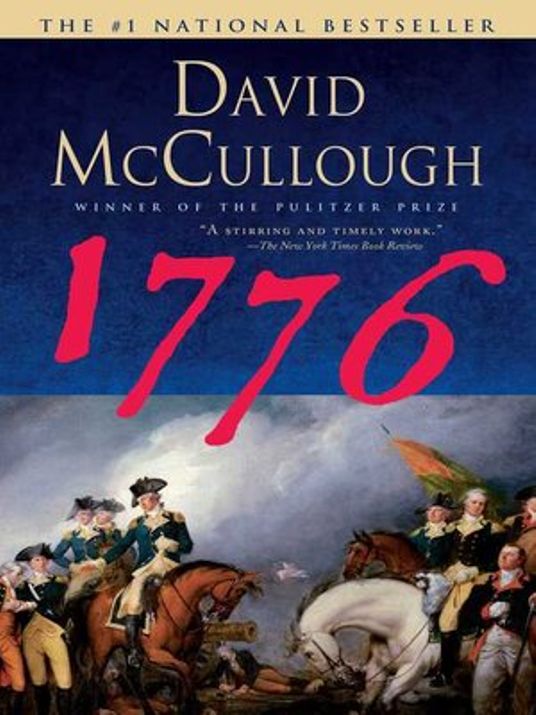
1776 is a non-fiction book by the acclaimed Pulitzer Prize-winning historian, David McCullough. It recounts the dramatic conflicts between the Americans and the English during the year 1776. The book draws from numerous documents and sources from the time of the Revolutionary War. It focuses mainly on the early stages of the war. McCullough describes these tumultuous events with meticulous detail. The Americans faced overwhelming odds with a small army that seemed no match for the powerful British military. Our forefathers faced seemingly insurmountable obstacles and suffered miserable conditions before they could achieve freedom.

I thoroughly enjoyed reading this book. McCullough clearly devoted a tremendous amount of time and effort to research these historical events. This book is very informative and factual, but also presented in a highly dramatic way that makes it extremely captivating. It provides deep insight into the lives and personalities of key historical figures that makes this era feel alive to me. This book is thrilling to read, especially knowing that the events occurred in real life.

I consider this to be one of the top ten books that I have read so far. This book is extremely gripping and compelling. I was not previously aware of the intense drama and critical decision-making that occurred during the Revolutionary War. I now have much greater admiration for the courageous people who have fought for our nation’s freedom. I would highly recommend this book to everyone.

1776 by David McCullough is available to check out from the Mission Viejo Library. It is also available to download for free from Libby.

Review of Hamilton: Live at Segerstrom

Recently, Hamilton came and performed at Segerstrom Center for the Arts. My parents got my brother, themselves and me tickets to the last show on the final day of their tour. I’ve been a fan of Hamilton ever since my friends and cousins got me into it a few years ago. Ever since then, I’ve listened to the soundtrack, watched the animatics on YouTube, and even got Disney+ just to watch it. But nothing I’ve watched could beat seeing the show live. Seeing the full show in person was a completely different experience than from seeing it through a screen. 

For those who don’t know, Hamilton is a musical based around the life of Alexander Hamilton, who was one of the founding fathers of America. It goes through all his accomplishments and everything he took part in, such as the Revolutionary War and the makings of the financial system in America. However, the musical also shows everything that happened in his personal life, and everything he had done or failed to do. If you haven’t taken a look at Hamilton (the songs or the story or both) I would highly recommend you do.

Despite how many times I listen to the songs, none of the recordings will blow me away in the same way hearing and seeing it live will. All the visual effects and sound effects within the songs created a whole new sense and feeling. You could feel the vibrations of the effects throughout the theater allowing shivers to run through my body. Being able to see and hear all the effects and visuals in person made everything more intense. The actors did a great job, and for the most part, I could understand what they said (probably because I’ve listened to it so many times). The choreography was stunning, the different kinds of lighting was awesome and connected well with the scenes, and the acting was phenomenal. The actors really did an amazing job, and they were very fun to watch. What’s even more exciting when seeing something live, is the fact that no show is going to be the same. The night my family and I went, the cast was different from any of the other days they showed. I won’t ever get to know what the other shows were like, how the characters sounded or anything. I am only going to know what my show was like, which makes the experience feel even more special. 

Hamilton was great to listen to and watch through a screen, but seeing it live was a completely new and amazing experience and I couldn’t be happier to have been there to see it. Once again, if you haven’t taken a look at any of the songs or anything even pertaining to Hamilton, then I would highly recommend you do. It has an impressive soundtrack that somehow manages to tell the entire story, even without hearing the parts in between (especially since the story is told through the music). Even if the music isn’t your cup of tea, just try listening to it at least once. Now, if you do find interest in the musical and end up liking it, I would definitely recommend you to watch the next showing of it whenever they come to your area. Seeing this show live is something you wouldn’t regret if you already like the music.

-Nicole R.