
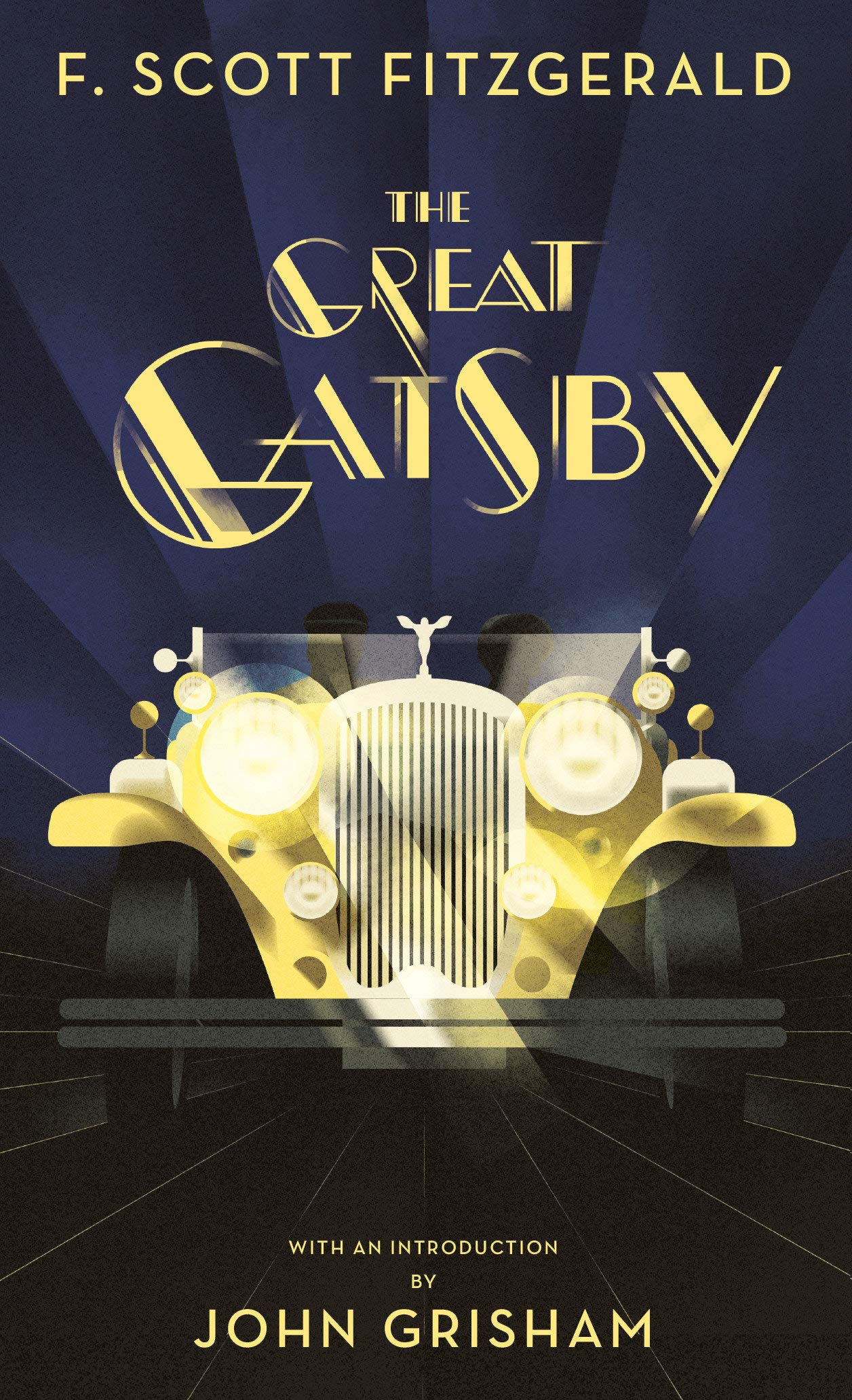
The American Dream in The Great Gatsby

The Great Gatsby (Vintage Classics): Fitzgerald, F. Scott, Grisham, John:  9780593312919: Amazon.com: Books

In the decade after the end of the Great War, the world was in shambles. Though relatively untouched by the devastation, America, along with the rest of the world, experienced a reactionary period against the brutal war, during which materialism flourished alongside the economy. The result was an era known as the Roaring Twenties, a cultural revolution that emphasised entertainment rather than functionality.

However, this veneer of excitement was underscored by the most important idea of the time – the American dream, the idea that all people have equal opportunities in life. Unfortunately, as people soon realised, the American dream was just that – a dream. The following disillusionment with society and life was reflected in the modernist works of the time, arguably the most significant of which was F. Scott Fitzgerald’s The Great Gatsby.

Nick Carraway, a young man from Chicago, moves to the “new-money” district of West Egg in New York, hoping to become a bondsman. Instead, he finds himself reconnecting with his “old-money” cousins in East Egg, Tom and Daisy Buchanan, as well as befriending the mysterious and even wealthier Jay Gatsby. The tale of Gatsby’s fabulous parties on the Long Island Sound is underscored by Gatsby’s obsession with his old love, who turns out to be Daisy Buchanan. Over the course of the novel, Gatsby uses Nick to reconnect with Daisy, but it is when Gatsby is closer than ever to achieving his dream that it is all torn away from him, and Fitzgerald’s message of the unattainability of the American dream shines through. 

This theme appears in various other characters as well, most notably in George and Myrtle Wilson. George, a destitute auto shop owner, dreams of running a successful business and of having a woman who loves him. He is foiled in the former because though he dreams of selling Tom’s blue coupé, Tom’s reluctance to sell it to him leaves him despairing for the future. He is also let down in the latter, considering that his wife, Myrtle, is Tom’s mistress. She, in turn, dreams of marrying Tom and therefore ascending to the upper class, but her hopes are fatally crushed in the novel’s chilling climax.

In The Great Gatsby, Fitzgerald writes his characters to each reflect a different section of society that aspires to achieve the American dream, ultimately concluding that no such thing exists or is attainable. Interestingly, the novel’s focus on the detrimental effects of materialistic culture and the relentless pursuit of the American dream lends itself to foreshadowing the Great Depression, which only proves Fitzgerald’s claim – the American dream is dead.

– Mahak M.

The Great Gatsby by F. Scott Fitzgerald is available for checkout from the Mission Viejo Library. It can also be downloaded for free from Overdrive

How Reliable Is Decision Making?

The coming to decisions based off observed patterns and past experiences is known as a heuristic. On the other hand, algorithms are step by step procedures that guarantee an outcome, and require lots of trial and error. Heuristics are often much more efficient than algorithms, yet they do not always guarantee a solution. For example, in a grocery store setting, an algorithm would be going up and down every single aisle looking for a specific item. Although there will always be a one hundred percent success rate, there is a lack of efficiency and most would not feel this as the best way to look for an item. A heuristic in this situation would be to look in certain labeled aisles that may contain the specific item that is being looked for. One type of heuristic that impacts decision making is the representative heuristic, or the judging of the likelihood of something by intuitively comparing it to particular prototypes. Although the use of this representative heuristic can make decision making quick, it may have a negative effect on the accuracy of such decisions. 

This is shown in the study Khaneman and Tversky 1974. This study attempts to prove the hypothesis that when people evaluate probability by representativeness, prior mathematically probabilities would be neglected. To do this, subjects were told to determine what the likely occupation of a certain person would be (engineer or lawyer?) based off of a description. However, this description would often have little to nothing to do with the occupation at all. To cope for this, the particpants were either told that there were 30 engineers and 70 lawyers, or that there were 30 lawyers and 70 engineers. Theoretically, the ratio of the participants’ guesses should be seventy to thirty because of mathematical probability. However, the study found that the participants of both groups had guesses closer to a ratio of fifty to fifty. Such shows that the subjects used to representative heuristic to make their decisions rather than using the probabilities given to them, causing decision making to become unreliable.

This study is useful in showing how the data does not match what one would expect based off the idea that the subjects were aware of the unequal amount of each profession. However, this does not directly prove that the representative heuristic is responsible for this distortion, as there is lots of room for error in the descriptions that the participants were given for each person. In the end though, the study still supports how decision making can become unreliable and cause errors.

-Jeremy L.

Celebrating Black History Month

In honor of Black History Month, I would like to share one of my favorite books written by a black author.

The Hate U Give

Author: Angie Thomas

Genre: young adult/fiction

Length: 444 pages

Published: February 28, 2017


Brief Synopsis:

This story follows Starr, a 16-year-old black girl that grew up in the hood neighborhood of Garden Heights. After gunshots ring out at a party she was attending, she flees in her childhood friend’s car when they then get pulled over by a policeman for a broken taillight. Assumptions, fear, and prejudice result in the dealt of her friend by the cop. This tale follows Starr as she struggles with self-identity, fear, and justice.

Impact:

This is such a powerful book, one that illuminates the realities of life as an African American. Though it may be a fictional book, its word holds truth. The truth of an African American who faces prejudice and whose voice fights to be heard.

Starr struggles to determine what defines her; is it her race? her neighborhood? her mannerisms or habits? Before she found her voice, she thought she was defined by her skin color. Attending a prestigious private school with a predominantly wealthy, white population, she believed she had to speak proper English, act docile, behave like a watered-down version of herself in order to fit in, to avoid judgement from her peers. She was consumed by other’s opinions, insecurities, and the fear that being herself was not enough that “There are just some places where it’snot enough to be me.” This aspect of her character is relatable, realistic. She is not the perfect, brave heroine readers grow envious of. Starr has aspects of herself that she is hesitant to display, as do many. We become hesitant, afraid that others will think less of ourselves should they witness the things we keep hidden. Starr Carter learns that oneself is not defined by physical or outward characteristics like race, or financial stability but in the experiences one faces and how they are overcome. That in terms of yourself, your body, your actions, the only opinion that matters is your own. For as her mother said, as long as you feel you’re doing right, that’s all that matters.

This book granted me the opportunity to experience life from another’s shoes, made me realize the things I take for granted, and on a less-serious note, turned me onto Tupac’s music. I encourage you all to read this book. It was powerful, moving, and definitely memorable.

-Gia S.

Favorite Quotes:

“‘Brave doesn’t mean you’re not scared, Starr,” she [Starr’s mom] says. “It means you go on even though you’re scared.'”

“‘Just like y’all think all of us are bad because of some people, we think the same about y’all.'”


“Fairy tale? No. But I’m not giving up on a better ending.”

Thus Spoke Zarathustra by Friedrich Nietzsche

Thus Spoke Zarathustra, a classic work written to surprise us, is a difficult text that requires utmost care. As the book is divided into four segments (w/ a prologue), I’ll split my review into sections in order to address each part from top to bottom. 

Prologue

It opens with Zarathustra, and serves to give a basic illustration of his character through action, interaction, and dialogue. Moreover, as Zarathustra descends from a cave he dwelt in for ten years of solitude, he brims with wisdom, love, and an urge to teach his brethren about the overman (caution: some books translate it to the “superman”). However, when he arrives in town and announces that the human race is a bridge between creature and overman, he’s met with disinterest and scorn. Thus, readers are left with Zarathustra cast aside, together with his determination to convince those few who wish to separate from the herd. 

1st Part

Zarathustra gives an overview of the three stages that lead towards the overman; camel, lion, and child. In the first stage, he declares that we must renounce our comforts, learn self-discipline, and accept difficulties which guide us to knowledge. Thus, we assert our independence, and decide to speak against outside influences and commands. Afterwards, the act of new creation is born, when we become oblivious to prior mistakes and grow to become an ‘overman,” hence a metamorphosis.

2nd Part

In addition to Zarathustra’s message about the overman, he establishes certain matters in regards to the weak and powerless. He states that each resent their masters, but detest themselves more so because they’re unable to strike back against them. Thus, he asserts that divine justice is set up as a means to secure vengeance for those that are too feeble to care for each other. In addition, he cites “evil” as a concept invented by man, once more as an excuse to explain wealth, health, strength, and vigor. In contrast, the poor view themselves as “good,” for they deem the concept of “unhappiness” and “sickness” as misfortune which we must experience if we are to embrace the “bigger” or “better” side of ourselves in the afterlife. Zarathustra, though he doesn’t agree with this exactly, does support natural inequality between people, as he claims it evokes creative freedoms, ambition, and the ultimate end. 

3rd Part

Zarathustra’s alone, and begins to mainly address himself, for he is soon to realize that his efforts to reach the overman might be futile. In the process, he becomes a “yes-sayer,” a person who loves life as it is. Therefore, it serves to represent the acceptance of fate, a characteristic of the overman that perhaps he and a few others can achieve. 

4th Part

In the book’s finale, Zarathustra is able to assemble a number of men in his cave who are close to the overman. Throughout, these characters enjoy a feast, some songs, and poetry. However, Zarathustra is soon given the gift of eternal recurrence, and it’s implied that he’s reached his goal. 

Thoughts

In truth, this wasn’t an effortless read, as Thus Spoke Zarathustra is quite uneven. As Nietzsche wrote it in ten days, his work is longer than it needs to be, and is often repetitive. Thus, it appears as though certain segments are oftentimes uncertain, and are torn between symbolism and the desire to be direct. That said, its unique outlook and doctrine is passable enough to recommend. Enjoy!

-Emilia D.

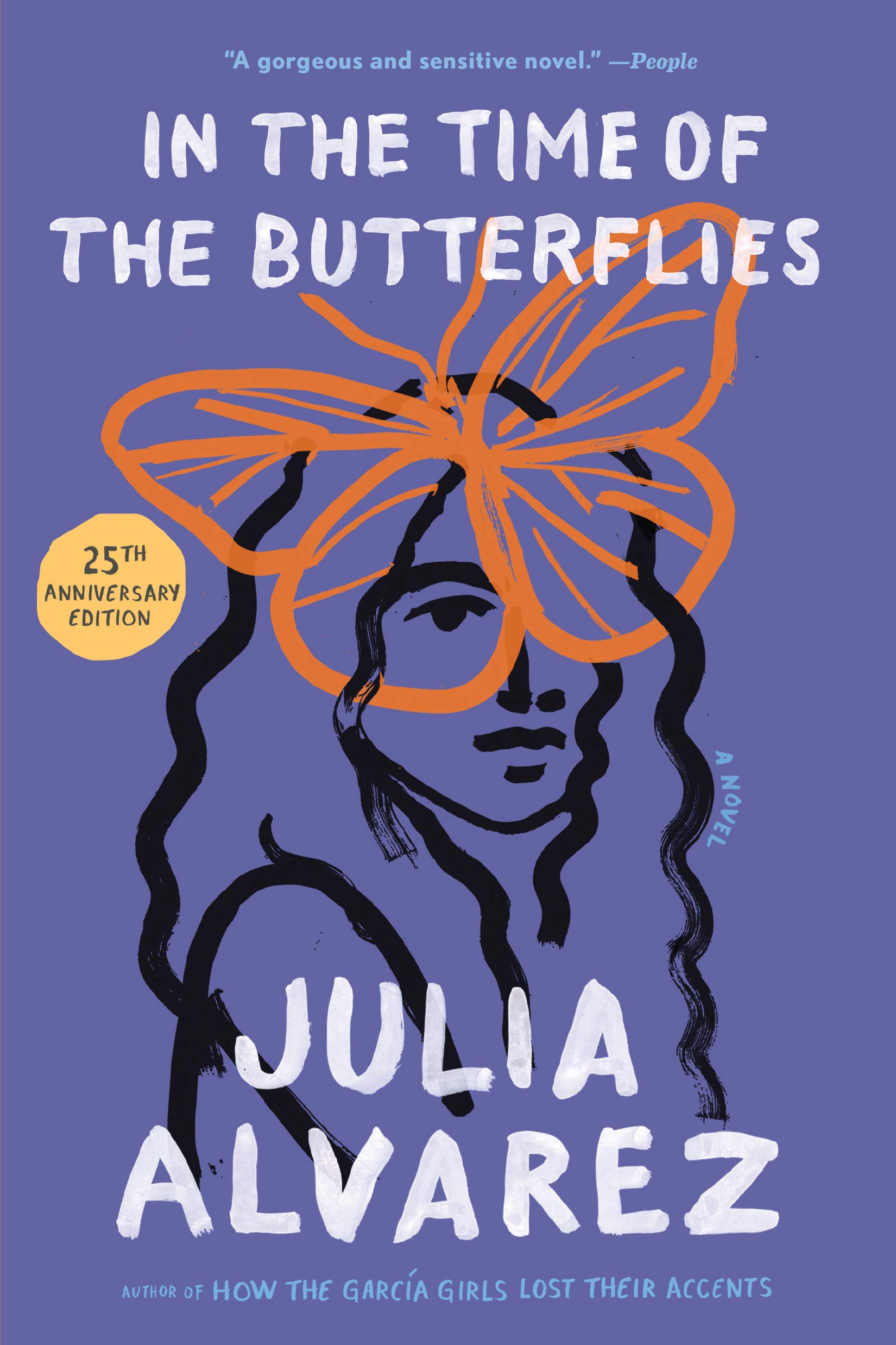
In the Time of the Butterflies by Julia Alvarez

In the Time of the Butterflies is one of many novels written by Julia Alvarez. Although it’s not as well known, the book serves as an impactful demonstration of woman empowerment and fighting for justice in an unjust government. All of the characters have their own unique personalities, a connection between fiction and history.

The novel is a work of historical fiction, therefore most of the characters are actually real people. Taking place in the 1960s, three sisters have been reported dead at the bottom of a cliff. The fourth sister, Dedé Mirabal, lives to tell the tale of the three heroic activists. Based on Dedé’s story, the sisters who passed were the primary opponents of General Rafael Leonidas Trujillo, a dictator of the Dominican Republic at the time. Throughout the novel, the perspectives of all four Mirabal sisters are portrayed as they grow older. From secret crushes to stashing guns in their own homes, the sisters depict the horrors of living under Trujillo’s oppressive regime, but also their interpersonal conflicts with the people they love.

There are multiple themes within this novel, such as racial, gender, and economic injustices, political conflicts, and finding courage in the face of adversity. As a woman myself, it’s always fascinating to see literature with underlying tones of a fight for gender equity and equality. Considering that the books I’ve read throughout my entire life were primarily written by male authors, this was definitely a breath of fresh air. It’s even more inspiring when readers realize that this novel is a work of historical fiction, that these characters have actually faced similar abhorrent situations in their lives. I applaud Julia Alvarez for being able to turn a book filled with many heavy themes and subjects, into a novel that’s light and heartfelt for young adult readers.

There’s a perfect balance between the plot and various themes of the novel, therefore the content is not too heavy for readers to understand. The only thing the book truly lacks would be plot twists and events that would drag the reader into the novel itself. Nonetheless, I highly recommend others to read this book, especially if they’re interested in historical political conflicts or female activism.

-Natasha P.

In the Time of Butterflies by Julia Alvarez is available for checkout from the Mission Viejo Library. It can also be downloaded for free from Overdrive.
Keeper of the Lost Cities: Flashback by Shannon Messenger

Shannon Messenger’s (soon to be 10) book series called Keeper Of The Lost Cities is a series about a 12-year-old girl named Sophie Foster who finds out she is an elf. She goes through many tribulations (with and without companions), makes and loses friends, and tries not to get killed when she leaves the safety of those she trusts.

In Flashback (the seventh installment and the book I’m reviewing), Sophie goes to a hearing for one of the Neverseen (the bad guys). The elf on trial, Alvar, was a spy from the most prestigious family, the Vackers. Since elves have an indefinite life span, the entire Vacker family was there. Also, there were Sophie’s best friends Fitz and Biana Vacker (siblings), and Keefe Sencen, whose mother is the leader of the Neverseen. Alvar claims that he has no recollection of anything, and he wants to prove himself worthy of earning everyone’s trust back. The Council (the governing system of the elves, consisting of 12 members) rules Alvar half-guilty for reasons of amnesia. Fitz (and his anger issues) finds this completely wrong and sore, so he stomps out of the trial chamber. Sophie follows him to a desert cave, where they start to train with weapons. 

As not to spoil the book, I won’t summarize anymore, but I give this book a 10/10. It is a fabulous book to read, and I highly recommend it to anyone who likes fantasy/fiction.

-Izzy W.

Keeper of the Lost Cities: Flashback by Shannon Messenger is available for checkout from the Mission Viejo Library.

Wayward Son by Rainbow Rowell

Wayward Son is a great sequel to Carry On; the first book of the Simon Snow series. The events of this book happen at a time very close to when the events of Carry On happened and will most likely only make sense if you have read Carry On first. Just like Carry On, Rowell has once again, done an excellent job. I definitely enjoyed this book, but didn’t enjoy it as much as Carry On. I did feel like this book progressed a lot slower than Carry On. Carry On gave us the back story and explained everything going on quickly. The plot moved forward faster than Wayward Son

Wayward Son continues to follow the four characters, Simon, who was formerly known as, ‘The Chosen One’, Baz, who is now Simons’ boyfriend, Penelope, Simons’ best friend, and Agatha, Simon’s ex-girlfriend who is making her life now in the states. Simon and Baz are having a tough time. Simon was the hero of the story and was supposed to live his happy-ever-after, but instead, he’s dealing with some of his trauma. Baz wants to be there for him and has a hard time figuring out how. Their relationship is slowly tearing apart so to help them all heal, Penelope brings them on a vacation to America with her. They plan to visit Agatha in California but this road trip across America turns into a rescue mission to save Agatha from vampires. 

We meet some new characters such as Shepard. Shepard was an interesting and unique character who became pretty significant in the story. He interacted with our characters and moved the plot. We also got to see a lot more of Agatha. She was no longer just the “main characters’ ex”, she instead became a real character and became very important to the rest of the story. 

Although Wayward Son was a bit slow and not as great as Carry On, it was still fun to read. It was mostly about their road trip and fixing their relationships in the beginning, but nearing the end, the characters get more external problems they have to solve and get rid of. But throughout the book, they all have many internal problems, like their romantic relationships, familial relationships, and how to start fixing things. All the characters are going through their own list of problems both internal and external.

Wayward Son was an excellent book.  The characters found and healed themselves throughout the book and went through many new experiences. I found out more about characters and met some new and interesting ones in the process. I enjoyed this book a lot even though it ended in a cliffhanger. But thankfully I won’t have to wait a long time since the third and final installment of the Simon Snow trilogy just came out this July ninth and I can’t wait to get the whole series to completely finish it and then re-read it later.

-Nicole R.

Wayward Son by Rainbow Rowell is available for checkout from the Mission Viejo Library. It can also be downloaded for free from Overdrive.

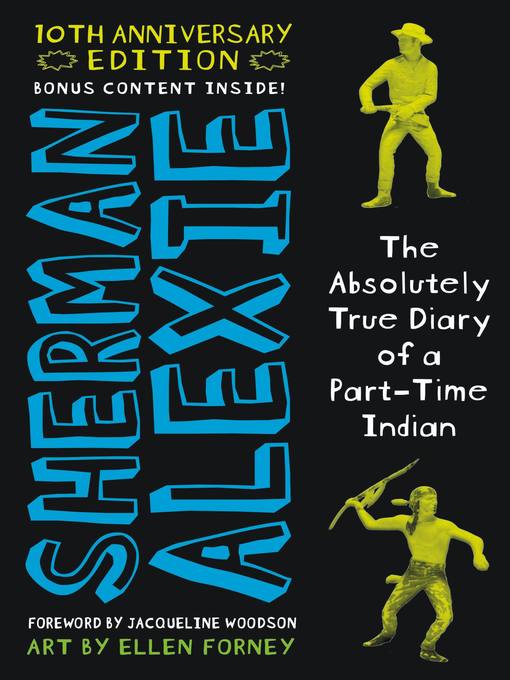
The Absolutely True Diary of a Part-Time Indian by Sherman Alexie

This book I felt was a fundamental in my maturity. It made me laugh, cry and have perplexed emotions all of the time. I liked how it dealt with race and the differences in a way that wasn’t biased to the point where it was unenjoyable. I thought that as silly as the book was, there was a lot of moral lessons to be learned. There were some political (lightly not even specified really) themes that tied into social problems dealing with race. However, this book still had lots of moments of being light hearted and just straight up hilarious.

I think this is a good book for 7th and 8th graders as they transition from being a kid and more of a young adult. Not to mention there are some humorous illustrations that not only help keep the reader enticed but also aid in explaining the story. (Not to mention the cartoon-like-style nicely contradicts the book). This was most definitely was a read that I could not put down for the life of me and also was a nice way to bond with my mom. The Absolutely True Diary of a Part-Time Indian was one of her favorite books and I hope it can become one of yours too!

-Coralie D.

The Absolutely True Diary of a Part-Time Indian by Sherman Alexie is available for checkout from the Mission Viejo Library. It can also be downloaded for free from Overdrive.
Ode to the Beach Poem

Whenever I see you I am comforted,

By your magnificent waves that crash against the sand.

When I see you I think of the magical creatures that are swimming in your oceans,

As well as the trillions of rainbow-colored fish I see each time I snorkel in your waters.

Whenever I step foot onto your sand,

I feel the sand between my toes,

That feels like home.

You provide a sense of comfort whenever I come to you,

As well as everyone else like my family and friends.

You provide a gathering spot where people of all ages can socialize and have fun,

And play in the sun.

Your oceans are sparkling like big diamonds wherever I look at them,

Which provide perfect picture spots.

There is so much I can do when I come to you,

Like play with sand toys in the sand,

Which make great big sandcastles,

That causes friendly competition.

And I can play in the water,

Whenever I go in,

I feel like I am by myself,

And that time has stopped.

I will always love coming to you.

-Abby V.

Curtain by Agatha Christie

Curtain by Agatha Christie is the last book in the Poirot series.  Captain Hastings, Hercule Poirot’s old and trustworthy friend, visits him in a hotel known as Styles.  Styles is significant to them because it was there that Poirot first met Hastings.  Poirot is much older now and can only get around with the help of a wheelchair.  However, his mind is as sharp as ever.  A series of events leads Poirot to believe that something dreadful is about to happen at the hotel.

I very much enjoyed reading about Poirot and Hastings meeting up again, after many years of absence.  Still, the tone of the novel is quite foreboding.  It becomes clear that Poirot’s intuition is correct, and that tragic things will occur as the story unfolds.  Similar to other novels in the series, the story is filled with intrigue and mystery.  However, this novel is longer than most of the others in the series.  The plot includes many twists and turns, and is full of surprises.  The ending was especially surprising to me, more so than any other book in the series.

In a way this is one of the saddest books in the Poirot series, but I enjoyed it immensely.  This is certainly one of Poirot’s greatest cases, and it is his last.  This book definitely kept me guessing throughout.  I would recommend reading other books in the series before reading this one, especially The Mysterious Affair at Styles.  The reunion of Poirot and Hastings becomes more meaningful, having read about their previous adventures.  This is a bitter-sweet story, and is a must-read for any fan of the great detective Poirot.

-Oliver H.

Curtain by Agatha Christie is available for checkout from the Mission Viejo Library.