Online Volunteering For Teens Part 2

Below, I’ve included three more organizations with which teens can volunteer online! Good luck!

Volunteer Opportunities | Cardinal at Work

1. DoSomething.org

DoSomething.org is another great virtual volunteering platform. The idea here is that you can volunteer from home, on your own schedule, and participate in mini ‘projects’- for example, one project could be collecting a number of nonperishable items for your local food pantry. You must track the hours you spent on the project, and upload pictures of your results- and DoSomething.org will send you a signed certificate confirming your hours! You can find them at https://www.dosomething.org/us

2. Points of Light

Another great platform to check out is Points of Light. Points of Light serves as a database, like VolunteerMatch, for volunteering opportunities in your area, and can also direct you to online opportunities- just toggle the Presence setting to “Remote.” You can find them at https://engage.pointsoflight.org/

3. TED Talk Translator

Do you know a language other than English? Then translating TED Talks might be the perfect volunteer task for you! You are assigned TED Talks in a secondary language, and then write subtitles for them in English, or vice versa- for example, you may have to write English translation captions for a Portuguese TED Talk, or write Portuguese captions for an English one. Even if you only know English, you can transcript subtitles for English TED Talks and review others’ work. The application process to become a translator is a bit tedious, but the work is rewarding! You can find them at https://www.ted.com/participate/translate/transcribe

-Vaidehi B.

Book Review: Between Shades of Grey by Ruta Sepetys

In the historical fiction novel Between Shades of Grey by Ruta Sepetys, 15 year old Lina Vilkas, along with her mother Elena and younger brother Jonas (who is 10 years old) are arrested and abducted by the NKVD (Soviet Secret Police) in 1941 Lithuania. They are stuffed into a tiny train car with many others, but the direct link between them all is unknown. The train car has horrible conditions, and Lina’s father Kostas was taken too, but he and the other men are in a different train. The book narrates the story of Lina, Elena, and Jonas’s journey as prisoners of the NKVD. The entire time, Lina, Elena, and Jonas are trying to find word of where Lina’s father, Kostas, could be.

This book has multiple settings. It begins in Lithuania in 1941, and Lina, Elena, and Jonas are first taken to Siberia and then taken back down to a labor camp in Altai where they are forced to do hard tasks in horrid conditions and minimal food. After that, they are taken on a ship back to Siberia, where they work to build for the NKVD.

The most obvious, main conflict is that Lina, Jonas, Elena, and Kostas have been taken by the NKVD, and so have many others, with no clear connection (in the beginning). This is an external conflict; however, each character also experiences their own internal conflicts. The story is told from Lina’s point of view, and she has many flashbacks of her life in Lithuania. The author very cleverly implements the flashbacks so each time, they get closer and closer to the present until they suddenly fit together like a puzzle and explain what led up to Lina’s family being taken (which I will not spoil!). 

As a 15 year old girl, and a wonderful artist, Lina draws what she sees, especially people, as a means of recording and expressing herself. She is the narrator of the story, and as a teenage girl her descriptions and emotions are very interesting to readers. Lina’s internal conflicts are specific to the mindset of a teenage girl, and it ranges from missing her father to being protective over her younger brother.

I think that the most influential character in the book is Lina’s mother, Elena, who is the rock for her children. Without Elena, Jonas and Lina would lose hope and motivation very quickly, and may even be separated from each other. Elena wonderfully symbolizes the theme of motherly protection, and it’s a delightful theme to see in such a story. The way she handles everything with kindness, but at the same time stays strong and does not tolerate anything unfair against her children is amazing. Her importance is especially seen since the entire mood of the book is a reflection of her. Lina is the narrator, and she often uses her mother’s facial expressions or posture while describing conditions. This shows the influence and love Lina has for her mother.

My favorite character in the book is Elena, since she is very protective, emotionally strong, and kind to those around her. I really loved the way Elena’s disposition shapes the novel, since Elena has such an impact on her daughter, Lina, who is the narrator. 

Jonas is a 10 year old boy, and is shown at the beginning of the novel to be obedient, sincere, and innocent. Young boys are famously known for being playful and mischievous. The horridness that people suffered during the time of the novel is very starkly shown through Jonas, since he is a young boy stripped of his childhood and being captured and forced into the workcamps. His presence makes the conditions of the book much more sad.

There was one event in the novel that may seem small but was very significant. In the train car, one of the people trapped in the same car as Lina was a boy named Andrius. During the train ride he found an oval stone with quartz and other crystals inside. At first, Andrius kept it, but then gifted it to Lina, who gifted it to Jonas, and the stone cycles through characters like this. It is always given as a gift because the person who is giving it wants the other person to feel better. The stone symbolizes luck and lifts the spirits of the captured people as soon as it is found. If the stone had never been found, the characters’ morale would have hurtled at a downward slope. The stone gave short, simple happiness, and throughout the story happiness and hope is what keeps the characters going. 

I would personally give this book a 10/10. This book was very interesting, and I finished it very quickly. It had wonderful characters, character development, and suspense. It incorporated themes of motherly love, the importance of family, and youthfulness. I usually do not like historical fiction books, but this book was very amazing and informative. The best part was that it did not seem distant and simply informative; the characters seemed so relatable in age and their emotions were easy to empathize with, making the book very powerful. People who enjoy mystery, suspense, the theme of family, and history would love this book. I think that this book is especially powerful, and a person who just likes one of the previously mentioned qualities would definitely enjoy this book.

-Ayati M.

Between Shades of Gray by Ruta Sepetys is available for checkout from the Mission Viejo Library. It can also be downloaded for free from Overdrive.

Poem of the Day: Dulce Et Decorum Est

Content Warning: This poem contains violent descriptions.

I recently read the poem “Dulce Et Decorum Est” by Wilfred Owen, and found it a heartbreaking but realistic message of what war is like, especially the World Wars. Read it below!

Bent double, like old beggars under sacks,
Knock-kneed, coughing like hags, we cursed through sludge,
Till on the haunting flares we turned our backs
And towards our distant rest began to trudge.
Men marched asleep. Many had lost their boots
But limped on, blood-shod. All went lame; all blind;
Drunk with fatigue; deaf even to the hoots
Of tired, outstripped Five-Nines that dropped behind.

Gas! Gas! Quick, boys! – An ecstasy of fumbling,
Fitting the clumsy helmets just in time;
But someone still was yelling out and stumbling
And flound’ring like a man in fire or lime…
Dim, through the misty panes and thick green light,
As under a green sea, I saw him drowning.

In all my dreams, before my helpless sight,
He plunges at me, guttering, choking, drowning.
If in some smothering dreams you too could pace
Behind the wagon that we flung him in,
And watch the white eyes writhing in his face,
His hanging face, like a devil’s sick of sin;
If you could hear, at every jolt, the blood
Come gargling from the froth-corrupted lungs,
Obscene as cancer, bitter as the cud
Of vile, incurable sores on innocent tongues,
– My friend, you would not tell with such high zest
To children ardent for some desperate glory,
The old Lie: Dulce et decorum est Pro patria mori.

Wilfred Owen was a soldier during World War I, and later in his life, he suffered from severe PTSD. This poem details the horrors of chemical agents used in the war- such as sulfur and mustard gas. Owen speaks in gruesome detail of how he watched one of his fellow soldiers die from breathing in this gas. At the end, he also rebukes the supporters of the war (and all wars), saying that they know nothing of what war is really like, and simply send young men off to their horrible deaths. He mocks the saying dulce et decorum est pro patria mori. This is a patriotic Latin saying, meaning it is sweet and honorable to die for your country.

-Vaidehi B.

Book Review: The Last Man by Mary Shelley

The Last Man, though a largely unknown work written by Mary Shelley, is quite a masterpiece. 

The book starts off with the importance of friendship, character interaction, and responsibility. Lionel (the main character), and his sister are orphans who first live a childhood of seclusion. However, they soon become friends of Prince Adrain, whose parents had known each other in their younger days. Though the depth of their camaraderie is somewhat unclear, the message sticks with readers as plot progresses. To illustrate, when I came across Lionel’s introduction to Adrian and the ties they began to form, it was crucial to take note of those moments in order to understand what was to come

(some vague spoilers will be mentioned in the next few paragraphs) 

Though the main topic of The Last Man is about annihilation, there are a few sections that precede the primary focus: Adrian’s illness, his revival of health through Lionel’s care, certain love relations and marriages occur, and the loss of love through the years. Therefore, observe these parts as a reader, and see what they might mean to you. It could significantly affect your perspective when the plague comes and begins to ravage the population. In hindsight, Mary Shelley adds these events prior to the disease in order to evoke certain emotions, whether it be sorrow, anguish, or pity. Books that make us feel are much more worthwhile than bland narration, as the miseries each character must endure allows such novels to feel closer to home, even if the cause of their pain is different from ours. To cry, laugh, and raise happiness are general sensations that enable authors to make the most of their craft. Anyhow, onto the plague.

The plague starts off in Eastern Europe and Asia, and eventually spreads to infect the Americas, Greece, and England (where the main protagonists reside). Therefore, a slow ruination of Lionel happens as he’s forced to witness the destruction of his countrymen. Moreover, as the illness consumes the globe, Lionel notices a shift in human behavior. He explains fear as a common reaction, an emotion so thick in the atmosphere that it’s as dominant as the air he breathes. In other words, he realizes that people are foolish to think themselves superior to the forces of nature. 

Before I come to a full resolution, a “character” that is hidden through most of the book, though which strikes me as significant, is Death. As described by Lionel, Death was a creature which originally came at night, a “thief which preyed on life.” However, as the plague began to plunder, it took on a new title – a conqueror. Therefore, Shelley’s creative attempts at figurative language gives room for the rise of certain themes, such as the truths of survival and existence. 

In short, The Last Man is about the realities of life, a reminder that we are expendable. 

-Emilia D.

Game Review: Onirike Steam Demo Impressions

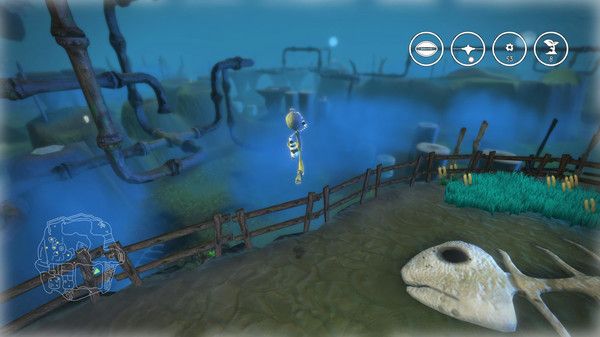
Onirike is a free 3D puzzle game out on Steam. The game follows a character known as Prieto, who explores a dream-like world. In this 3D-platformer, players are able to explore massive maps in an open-world setting.

The gameplay of Onirike was actually very simple. There were only a few simple controls that players could master in minutes. Since Onirike is still in its demo mode, players have the freedom to explore the entire map and world. There are small side missions and there is a loose storyline, but players have the opportunity to do whatever they want. The premise of Onirike is quite strange. Players follow Prieto, who wakes up in a fever-dream-like world. The player is told that they have the freedom to explore the map and help a wide variety of NPCs along the way.  

Throughout their adventures, players have to focus on two main problems. Since Prieto is in a dream-world, players run into the problem of sleep. If players go long enough without picking up glowing flowers that are on the ground, they will fall asleep and turn invisible to any NPCs that are around them. In order to counter this problem, players need to strategically place seeds for the glowing flowers across the map. This allows the flowers to grow and keeps the players awake so they do not turn invisible. I actually found being invisible fun, and not a bad thing. It was fun to run around the map without anyone noticing or seeing you.

I also want to talk about the animation style of Onirike. This game has beautiful animations and art style. The game looks like old tv shows I used to watch such as Crashbox. Besides the art, I also found the music to be very calming. As I roamed around the large world, the music helped to add a dreamlike feeling to the game. On top of the art and music, the character design itself was very interesting. All of the NPCs and Prieto himself had such a unique design. It almost seemed that all of the characters were actually from a dream, and it was a great addition to the game. All in all, Onirike is definitely one of the better 3D-puzzle games that I have played. It was very calming to explore the world, and the fun puzzles and mysteries that players could solve were a great addition to the game. I loved the art style of the game, it must have taken ages to make the entire map. This game is very underrated, and it’s free on Steam! For the game only being in demo mode, it has a lot of space for improvement, and I cannot wait to see what may be added.

-Daniel CW.

Book Review: To All The Boys I’ve Loved Before by Jenny Han

This is a light, fluffy read that has made me feel hopeful and happy. Love stories come in all types of forms but this one was different. The characters had unique personalities and the story isn’t a perfect ending. Lara Jean and Peter’s mannerisms made for a comedic and relatable read. It was a refreshing change of pace from other love stories. If you would like to read something lighthearted and cute this is the book. It’ll keep you captivated until the very end leaving you wanting more.

I was so ecstatic to find out that there was more to the series. Throughout the series, I felt that I was able to see the character development and the gain of knowledge and wisdom as they get ready for college. I know that it’s only a story but it’d be nice to have that same whimsical outlook on life like Lara Jean does. She truly gets to live the romance novel she reads daily; From having her lover to the evil ex who has a change of heart. As Lara Jean once said, “I’d always fantasized about falling in love in a field, but I just never thought it’d be the kind where you played lacrosse.”

-Coralie D.

To All The Boys I’ve Loved Before by Jenny Han is available for checkout from the Mission Viejo Library. It can also be downloaded for free from Overdrive.

5 Best Online Libraries

From school to extra activities, we don’t always have time to stop by the library and pick up some good reads. Online libraries are always a great option so you can read anywhere, anytime. Here are 5 of the best online libraries!

1. Project Gutenburg

Project Gutenburg is an online library that has over 60,000 free eBooks. There is no fee required to join/use the books, but this eLibrary is used more for informational books rather than kids fiction novels. Next time you need an eBook for a school project, visit https://www.gutenberg.org/ !

2. Overdrive

Overdrive is a website that directs you to your local libraries’ online bookshelf. Although Overdrive is not available for every library, it is one of my personal favorite websites to help me find a huge variety of free eBooks and audiobooks. Click here https://www.overdrive.com/account/select-library to use Overdrive!

3. Barnes & Noble Free Kids eBooks

The Barnes & Noble free kids eBooks is an online library that only has children’s books. It is totally free, but an app download is required. This eLibrary is perfect for those who prefer reading their books on their phone rather than a computer, since not all computers are compatible with this app download. https://www.barnesandnoble.com/b/free-ebooks/nook-books/_/N-ry0Z8qa

4. Oxford Owl

Oxford Owl is an online library for beginner readers (ages 4-8) that is 100% free. A login is required, however, but this website can be used on your tablet or your phone. Oxford Owl has online books such as Incredible Animals, The Frog Prince, and Dolphin Rescue! https://www.oxfordowl.co.uk/for-home/find-a-book/library-page/

5. Bookshare

Bookshare is a great online library for all ages. This website requires a membership in order to read certain books, but has over 1 million titles to read, like Harry Potter and Percy Jackson. The membership is only $1 a week, and if you are a serious online reader, I highly recommend looking into Bookshare. https://www.bookshare.org/cms/

-Anusha M.

Book Review: Shadow and Bone by Leigh Bardugo

A fast-paced novel, Shadow and Bone by Leigh Bardugo is a young adult fantasy novel that is the first book in the Shadow and Bone trilogy. Creating a whole universe, Bardugo immerses her reader into the Grishaverse, a world where some have powers that allow them to practice the Small Sciences.

Those who possess powers are called Grisha, and they are split further into orders: Corporalki, Etherealki, and Materialki. The Corporalki can manipulate the human body. Because of their power, Corporalkis are the most feared type of Grisha even though they can both help and harm a person. Mainly known as summoners, the Etherealki can manipulate natural elements. Being able to manipulate wind, air, and fire, these Grisha are crucial in any fight. Lastly are the Materialki, or Fabrikators. These Grisha can manipulate materials like metal, glass, and chemicals.

So, in Shadow and Bone, the majority of the events happen in the war-torn Ravka. Ravka has been plagued with war for years suffering the loss of citizens and patriotism. However, this war with their northern and southern countries is not their biggest problem. Long ago, an ancient Grisha Shadow Summoner ripped a gap in the center of Ravka, thus creating the Shadow Fold.

The Shadow Fold stretches from the northern to southern borders of Ravka, splitting Ravka into west and east Ravka. An ugly scar on the map, the Shadow Fold is pitch-black and filled with lethal monsters called volcra. When the Fold was first created, a prophecy mentioned the only thing that will destroy the Fold is a Sun Summoner. More detrimental than the war, the Shadow Fold prevents the full might of Ravka from coming together to restore power, peace, and patriotism.

With all of the background information covered, the main character can now come into play. Drafted into the military, Alina Starkov is a cartographer at the beginning of the novel. Along with her life-long best friend Malyen “Mal” Oretsev, they both plan to make a crossing through the Shadow Fold. However, when they enter the Fold and a volcra attacks Mal, Alina lets her true light shine, literally. To save her friend, light explodes out of her, burning away the volcra. Stunned at what just happened, the Etherealki bring the skiff back to east Ravka and take Alina to the Darkling.

Hearing of this impossible light, the Darkling drags Alina to his tent to receive an explanation. A descendant of the Shadow Summoner who created the Shadow Fold, the Darkling commands all Grisha. When the Darkling coaxes the light out of Alina once more, Alina, the Darkling, and Mal realize that they have the prophesized Sun Summoner in their midsts. From this event, the rest of the trilogy kicks into gear, and Alina’s adventure never stops.

Even though this fantasy world seems complex, Bardugo’s ability to simplify and condense information allowed me to fly through these books in a couple of days. This trilogy leaned more towards the easier side of reading, but the plot lacked no excitement or surprises. I would most definitely recommend this book series, along with her other Grishaverse books, Six of Crows duology and King of Scars series. These books provided me with some of my favorite characters to date, and I hope people at least try them out! Happy reading!

(Only if you’ve read the series) Which team are you on, the Darkling, Mal, or Nikolai?

-Katherine L.

Shadow and Bone by Leigh Bardugo is available for checkout from the Mission Viejo Library. It can also be downloaded for free from Overdrive.

Online Volunteering Opportunities for Teens

Whether you need to complete a school requirement or are just looking to spice up your college applications and resumes, volunteering is a huge part of the middle and high school experience. However, in COVID-19 times, finding in-person volunteering opportunities has become very difficult. A reasonable alternative? Virtual volunteering! You can complete your hours anytime, anywhere, according to your own schedule. Below are three great virtual volunteering opportunities for teenagers!

New Jersey Department of State - Volunteer and National Service -  Volunteering in NJ

1. Zooniverse

Zooniverse is an online platform, specializing in science-based volunteering through transcription and editing. For example, you could be assigned to a project digitizing marine organism classification cards, or transcripting research vessel records from the 19th century. There’s no shortage of projects available! You can find them at https://www.zooniverse.org/

2. Amnesty Decoders

Amnesty Decoders is an offshoot branch of Amnesty International. The platform utilizes citizen volunteers (like you!) to analyze images, scan text blocks, or sift through documents to find, track, and report occurrences, like harassment, that impinge on people’s human rights. You may also be assigned a research or categorizing role. For example, you could examine pictures of New York City intersections and flag all the cameras you see, so Amnesty can better understand how new facial recognition and camera technology impacts marginalized communities. Amnesty Decoders does not currently have any projects open to volunteers, but you can subscribe to their mailing list to be notified of upcoming projects. You can find them at https://decoders.amnesty.org/

3. Smithsonian Transcription Center

The Smithsonian Transcription Center is another great volunteer option. It also utilizes citizen volunteers to make transcriptions of otherwise illegible documents and recordings in the Smithsonian Archive, in order to make them easier for people with disabilities and impairments to access. For example, you could be in charge of transcripting letters from Charles Perrault to Anne Tapissier, discussing an upcoming art exhibition at the Château de Nemours. To ensure all transcriptions are as accurate as possible, multiple volunteers can work at once on the same page or item, and all transcriptions must be reviewed by a peer. The documents are very interesting to read through! You can find the center at https://transcription.si.edu/

-Vaidehi B.

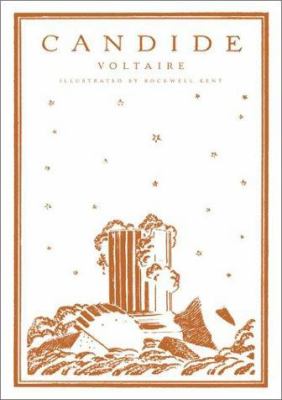
Book Review: Candide by Voltaire

Comedic. Sarcastic. Dark. What is not to love about the classic novella by Voltaire? It integrates comedy with a whole lot of skepticism, and mocking of the wealthy…quite a unique take indeed! 

The story of Candide follows Candide himself, the main protagonist, who resides in his comfortable abode in Germany. The Baron Thunder-ten-Tronckh owns the property which Candide resides in, along with the Barons daughter Cunégonde and the philosopher, Pangloss.

The Baron, catches him kissing his daughter and subsequently kicks Candide out of his home. Almost immediately, Candide is forced to enlist in the army, yet returns home to find that it was invaded by the enemy, and his beloved Cunégonde was killed in the aftermath. However, luckily for Candide as he travels to other parts of the Europe, he encounters people who help him navigate his life once more… 

After finding out that his precious Cunégonde is alive, Candide sets out on a series of endeavors in order to find her. He encounters people of all faiths, backgrounds, nationalities, and demeanors.

All of these help Candide oppose the idea constantly reinstated by Pangloss, the all-knowing philosopher, that “all is for the best”. However, contrary to his belief in his teacher, Candide begins to form his own perception of the world around him and towards the end of the book realizes that all is not for the best. 

The novella is extremely fast-paced. It is good for individuals who like a quick, fast read. I loved it because I was never bored, and the story was always straight to the point. Voltaire does a good job at employing sarcastic bits here and there and constantly uses Candide and Pangloss to mock the status quo present during his time.

-Haana F.

Candide by Voltaire is available for checkout at the Mission Viejo Library.