Book Review: To Kill a Mockingbird by Harper Lee

To Kill a Mockingbird by Harper Lee is a classic of American literature, dealing with the silent and prevalent plague of racism in the Great-Depression-era Deep South. Told through the eyes of young Scout and Jem, the novel created one of America’s most respectable fictional heroes- Atticus Finch, the upstanding, intelligent, and determined lawyer, dedicated to righting the wrongs of the South.

This novel deals with many complex themes- especially the theme of morality. Atticus Finch, the single father of Scout and Jem, is an upstanding, respectable, and almost irritatingly moral figure in his community. He is seen as a lone beacon of justice and light in his community because of his values. Another theme in the novel is that of humanity’s base instinct of right and wrong- beyond what is outlined in the law. This is clearly shown when Atticus chooses to defend Tom, the black man accused of raping a white woman.

Even though this book is highly lauded on many different platforms, I would not give it an incredible rating. First of all, I was not a big fan of Atticus- even though every single townsperson in the novel gushed about how Scout and Jem were so incredibly lucky to have such a moral, upstanding, and intelligent father, I did not concur. Sure, Atticus was most definitely all of those things- but he seemed more like the idea of a father rather than a real father: he was a personality before he was a person, so to speak. He was cold and aloof towards his children- he did not seem to provide Scout or Jem any real love or guidance through the novel outside of faux-profound moral platitudes. In addition, the book overall had an undertone of condescension and white saviorism that I really did not appreciate. However, this book was written in the 1960s- so it is understandably less progressive than what we would expect today. Even though I didn’t much enjoy this book, I would definitely recommend that you read it- it is still a window to not-so-past times, and can help us better understand what we need to do to confront racism in our world today.

-Vaidehi B.

To Kill a Mockingbird by Harper Lee is available for checkout at Mission Viejo Library. It can also be downloaded for free on Overdrive.
Book Review: The Screwtape Letters by C. S. Lewis

The Screwtape Letters, by C. S. Lewis, is a collection of letters written by a “devil” named Screwtape.  Screwtape is an important official in Satan’s realm, who refers to himself as “His Infernal Excellency, Mr. Screwtape.”  The letters are addressed to Screwtape’s young nephew, Wormwood.  Wormwood is a “junior devil” on earth, who is trying to tempt his “patient” into committing sin.  Each chapter is a letter of advice to Wormwood from his “affectionate uncle,” Screwtape.

I found this book to be very insightful and amusing.  I think it was very clever to imagine what words of advice one devil might give to another, as to how one might properly tempt a human into committing sin.  As it becomes clear that Wormwood’s patient is in danger of choosing good over evil, we see that the devil will stop at nothing to lead his patient astray.  We gain many insights into the devils’ tactics and methods of attack.  At the same time, I was amused by the dignified and affectionate tone of Screwtape’s letters, despite his evil intentions.  I also found it funny that one devil would have seniority over another, as though they aspire to positions of high status within their evil realm.

This book is a short read, but full of profound insights and witty observations.  From the devil’s perspective, we can learn a lot about human nature and frailties.  We can also learn about how to overcome evil tendencies.  This book offers a very unique and imaginative portrayal of the battle between good and evil.  I highly recommend it.

-Oliver H.

The Screwtape Letters by C. S. Lewis is available for checkout from the Mission Viejo Library. It can also be downloaded for free from Overdrive.

Book Review: Fahrenheit 451 by Ray Bradbury

Fahrenheit 451 by Ray Bradbury is an incredibly interesting and, at times, deeply unsettling novel on just how far humanity will go to suppress what it doesn’t understand.

The book is set in a dystopian future- the United States has become a massively powerful republic, and all news coverage and media are centered around a single event: the “War,” which the Republic is winning. It centers around a seemingly ordinary firefighter named Montag- but in this universe, firefighters do not put out fires. They light them, burning down houses which contain contraband items, usually books.

On one such night, Montag witnesses one woman refuse to leave her house, choosing to burn with her books- and is unsettled. How important must books be if she is willing to die with them? From the smoldering wreckage of the house, Montag takes a single book home with him. On his way home, he meets a teenager named Clarisse, who is out alone, walking in the night. Clarisse expresses the beauty of the night, and how the fallen autumn leaves “smell like cinnamon.” Montag is again deeply uncomfortable- primarily because he himself never thought to look up at the night sky or focus on the smell of fallen leaves. Soon, wracked with guilt about his crime of taking a book, Montag decides he will simply read a few pages to satisfy his curiosity, and then burn the book. But what he finds will change his life forever….

I, personally, have a love-hate relationship with this book. The dialogue is clumsy, the expositions are vague, and the setup and lead-ins for the plot are often simply nonexistent. However, what makes Fahrenheit 451 so memorable is the ideology rather than the imagery. There are indeed some beautifully-written passages where Bradbury fully lives up to the term “author” and beyond- but the idea that the slow eradication of culture and eccentricity is the individual citizen’s fault as much as it is the government’s really rings true in today’s society especially.

-Vaidehi B.

Fahrenheit 451 is available for checkout at Mission Viejo Library. It is can also be downloaded for free on Overdrive.

What effects do the children’s perspectives have on the novel To Kill a Mockingbird by Harper Lee?

**This post assumes that you have already read the novel**

Children are often considered inferior to adults, yet they have so many positive and beneficial qualities that adults have unfortunately lost, resulting in the development of many negative aspects in society. The realistic fiction novel To Kill a Mockingbird by Harper Lee narrates the trial of Tom Robinson. The speaker, Scout Finch, recounts the events preceding the trial, the trial itself, as well as what happens after the trial. Although the central event is the trial of Tom Robinson and the injustice faced by colored people in America, Harper Lee cleverly implements the themes of courage, coming of age, and perspective. Specifically, the voice of young Scout Finch and the actions and dialogue of the rest of the children provide perspectives of innocence and impartiality, as well as a strong moral compass to portray societal aspects in a unique way.

Scout’s naive mindset allows readers to understand the events of the novel as they are, without the influence of prior biases. This genuinity enables readers to have a clear understanding of the unjust actions in Maycomb’s society. One such example is provided when Scout recognizes Mr. Cunningham in the group of people who arrive at the jail where Tom Robinson is being kept. Although she provides some background facts on Mr. Cunningham, Scout does not state her specific opinions or thoughts about him. She does not describe the group’s intentions, nor does she explicitly say that they are a mob–she simply describes what is happening. Harper Lee created the character of Scout as an honest young girl. With Scout’s unbiased account of events, readers are able to use their prior knowledge and develop their own opinions and understandings on the intentions and morals of the group. Many works addressing the topic of stereotypes and prejudice have authors writing with an argumentative tone, so the open-mindedness of Scout’s narration provides a sincere perspective, allowing readers to evaluate the negatively segregating aspect of society in a new way.

In addition to Scout, the rest of the children’s actions are highly notable. They place strong emphasis on morals and ethical behavior. Arguably, one of the most momentous examples of children displaying ethical behavior in the novel is woven in Dill’s disappointed and angry reaction with the way Mr. Gilmer is talking during the trial. Dill is not quite as young and naive as Scout, nor is he as understanding and observant as Jem, so his behavior during the trial is very significant to the theme of justice. On the other hand, Jem is a character whose growth and increasing comprehension is a major part of the novel, yet he is still young enough to not have caught “Maycomb’s usual disease”: the racial prejudice in Maycomb. His earnestness is seen in his reaction to Tom Robinson’s verdict: he starts to cry, and says that it is very wrong. With his comparatively higher level of maturity and understanding, Jem’s behavior again depicts the immorality of Tom Robinson’s case. In turn, it depicts the immorality of many aspects of society, especially the aspect of racism, stereotypes, and assumptions. 

Children are considered the epitome of innocence, kindness, morality, and ethics. The use of children in To Kill A Mockingbird unveils an aspect of society otherwise obscured by prior judgements, influence, stereotypes, expectations, prejudice, and much more. A youthful voice allows for readers to evaluate multiple aspects of society in a new way, and it also ensures a strong sense of morality throughout the novel. The use of children’s perspectives in Harper Lee’s work help to emphasize the just and unjust aspects of society, and readers also acquire significant insight into these aspects. Memories and qualities may fade away, but insight is never lost, and people will be able to adopt habits to improve their ways. After all, if children’s qualities are so admired, it only makes sense to make an effort to eradicate the negative effects the absence of these qualities have on society.

-Ayati M.

To Kill A Mockingbird by Harper Lee is available for checkout from the Mission Viejo Library. It can also be downloaded for free from Overdrive

Movie Review: Black Widow

This is a great movie! I thought that it helped to answer a lot of questions Marvel fans have had about Natasha Romanoff, also known as Black Widow. I really enjoyed the action and plot of this movie. It takes place just after Captain America: Civil War and before Avengers: Infinity War

One day, a strange package arrives and forces Natasha Romanoff to find Yelena, whom she last saw when they were young children being separated and sent to different places. They are now both spies and have both grown up. At first, they struggle to get along, possibly from feelings of betrayal. 

Eventually, they find the Red Guardian (Alexei) and Melina, who end up helping them in their mission to find a man named Dreykov and put a permanent end to his diabolical schemes. However, is it really possible to end his terrible plans?

This movie helps viewers to understand more about Black Widow, especially what shaped her into becoming who she is now. A lot of the characters in this movie went through character changes, especially in their intentions and their personalities. I would recommend this movie to Marvel fans who enjoy adventurous movies. I thought that this movie had some important messages, like ‘People are capable of change’. There were also a few connections I was able to make between Natasha Romanoff in Black Widow and Natasha Romanoff in Infinity War, mostly between her actions and her personality in these two movies. I would rate this movie a 10/10.

-Peri A.

Movie Review: The Hunger Games

The Hunger Games is a plot captured from a book and brought to the big screen. The main characters are Katniss Everdeen and Peta Mellark. The Hunger Games is where two randomly selected teens will participate in a battle to the death. There are a total of thirteen districts involved meaning 26 people will participate. The primary reason for these games to be conducted is for the pure entertainment of others. 

One thing I loved about the execution of this movie was the fact they were able to capture the fashion sense from the books straight into the movies. The fashion sense is colorful, bright, and daring. Most movies that were captured from books tend to leave out many parts due to time constraints yet in The Hunger Games we did not see that. The directors managed to include every detail. 

Although I was very disappointed in the casting because Katniss was supposed to have olive skin yet she was fair. Peeta was said to have bright blue eyes yet he ended up having brown. I think the casting could have been better executed.

Also, the CGI was flawless. In the books the technology is very futuristic and the movie was able to capture this. Overall the movie was very intriguing and left the viewers wanting more.

-Sanjana S.

The Hunger Games movie trilogy is available for checkout from the Mission Viejo Library.

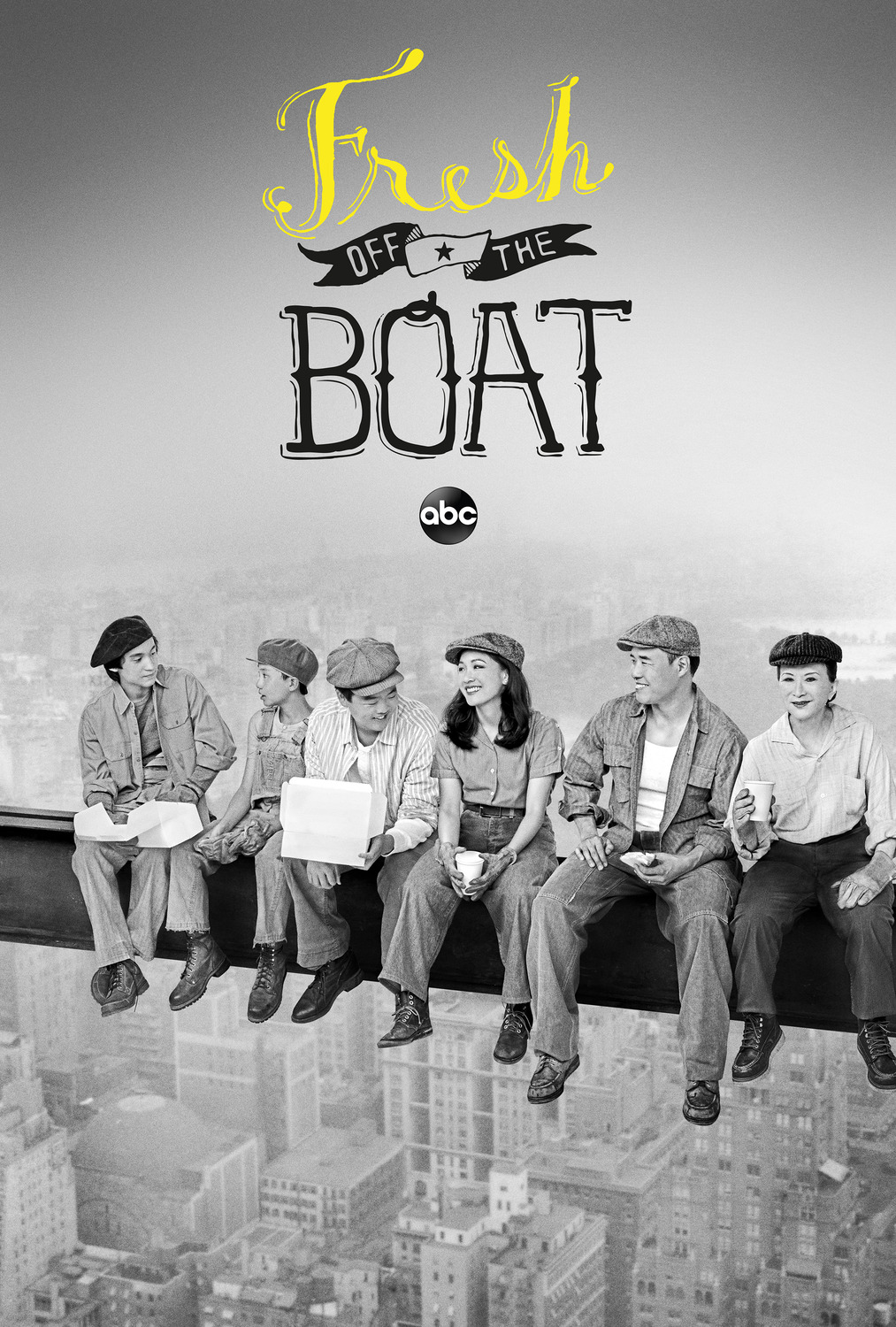
Need a new show? Try Fresh Off The Boat!

Fresh Off the Boat (TV Series 2015–2020) - IMDb
Just look at this loveable family you will get to follow!

With summer around the corner, everybody needs some light and fun television shows to watch to fill the time. One of my favorite genres of television is sitcoms and I have watched many that have come to my liking. Today I am recommending Fresh Off the Boat! This sitcom originally started airing in 2015 but currently has 6 seasons with the idea that there will most likely be a season 7. So do not worry, there is plenty of content to keep you busy.

Fresh off the Boat stars a Chinese family moving from a majority Chinese town in DC to the majority white in Orlando, Florida. This show takes place in the 1990s which I believe is the icing on the top for this show. The mother, Jessica, is your typical tiger Asian mom. She attempts to control the lives of her three sons: Eddie, the teenager who only wants to play video games, Emery, the perfect son, and Evan, the young smartie pants who skips a grade. There is also the dad, Louis Huang, who runs a bbq restaurant and is your classic funny carefree dad.  At the same time, Jessica attempts to fit in with the white neighborhood moms group. We get to see how it was like for an Asian family to enter a majority white area in the 1990s. Hence the name Fresh Off the Boat, meaning they are basically fresh immigration with little idea of how things work in a suburban area. 

The story mainly revolves around Eddie, the oldest child. One of my personal favorite scenes of the entire show is in the first episode. Eddie goes to school and is made fun of for his Chinese lunch. All he dreams of having for lunch is Lunchables so he can be cool, it seems we all had the idea of what is cool even in the 1990s! He goes to the market and gets to pick out the cool “white people food” as he calls it and boosts his confidence. This show is full of comedy that keeps you laughing for the entire episode. 

Nonetheless, my favorite character has to be Jessica Huang, the overprotective mother. We slowly get to witness her mellow out her ways and become more of a relaxed parent. Do not get me wrong, one of my favorite parts of the show is getting to watch her be the typical tiger mom with a twist of a comedic side. She always rocks her 1990’s fashion to no end that makes her a character that you cannot just help but adore.

If you need a new show to watch I would seriously recommend watching Fresh Off the Boat as soon as possible!!

-Lilly G.

Applying to Colleges

As I head into my senior year, the college application season is no longer a far off thought. Though you are somewhat prepared for it when you start high school, I have found the actual thing is very different from what you imagine. Though you see your friends and family apply and discuss whether or not they got in, having to do it for your own future takes on a whole new perspective. I have personally found the experience exciting, yet somewhat overwhelming. Though I am getting to select my own future and the place that I want to spend the next part of my life, I am also having to worry about grades, getting in, and moving away from family. 

A lot of people when looking into colleges, never truly talk about how much their senior year was affected by applying for colleges. Some people I’ve spoken to have said that senior year was super easy, but as I start this fall, I don’t quite feel that way. Not only am I taking my most challenging classes yet, I am also trying to balance hanging out with all my friends before we go our separate ways as well as applying to multiple colleges and get in. 

Now the application and search process has been quite fun so far. I have been able to look at schools in places I can see myself living past college as well as ones that are good for what I am looking into. I have also been able to see how what I am going into as a career can help others besides myself. This is the part where you can explore different passions outside of a major, with the wide array of classes so many schools offer. And every school is different, not every school is the one for you and that is okay. What I found I struggled with was that I didn’t like some of the schools offered to me and felt like I was letting someone down. Everyone is different and so is your search, so not fitting into one school or another is okay.

I think that college searching can be fun because you are able to look into the more superficial things such as dorm life and things to do when you aren’t in classes. College also allows you a sense of freedom you often don’t get while still in high school, in the fact that you are mostly depending on yourself to wake up, eat, get to class, and so on. The search is a way for you to see how you will be when you are off on your own and starting your own job and life away from home. 

Now while I have talked about being overwhelmed with this endeavor, I also urge you high schoolers, seniors especially, to not get too caught up in the stress of it all. Enjoy the time with your friends and family before you all go and do your own things. We will never be in a time quite like we are now, which is something a lot of my older friends who are now in college agree with. Though college application season is now, so is senior year and we should bask in that. 

-Danielle B.