
Test your knowledge of pop culture with this fun Quizziz created by the Teen Advisory Board! Just go to joinmyquiz.com and enter the code: 43878180
Good luck!

Test your knowledge of pop culture with this fun Quizziz created by the Teen Advisory Board! Just go to joinmyquiz.com and enter the code: 43878180
Good luck!

Mark Twain (November 30, 1835 — April 21, 1910) was an American writer and speaker, Samuel Langhorne Clemens, whose pseudonym was “Mark Twain,” a term used by Mississippi River sailors to indicate the depth of water measured in a waterway.
When he was 12 years old, his father died, he had to stop school and go to the factory as a laborer. He worked as a pilot, miner and journalist on the Mississippi River. Gradually, he began to write some interesting sketches and began his writing career. Twain’s representative works include the novels “The Million Pound Bank Note”, “The Adventures of Huckleberry Finn”, “The Adventures of Tom Sawyer” and so on.
Mark Twain is the founder of American critical realism literature. This genre was typical in novels, plays, prose, poetry and other aspects. In terms of content, his works criticized the unreasonable phenomenon or the ugliness of human nature, and expressed the strong sense of justice and concern for the common people. Stylistically, both the experts and the general reader agree that humor and satire are characteristics of his writing. He experienced the transformation from capitalism to imperialism in the early stage of the United States, hence his thoughts and creations were also reflected in the development stage from light humor to bitter satire and then to pessimism. In the early stages, he was good at bitter satire, but in the later stage, his language was more exposed and fierce.
The works of Mark Twain are available for checkout from the Mission Viejo Library. They can also be downloaded for free from Overdrive.
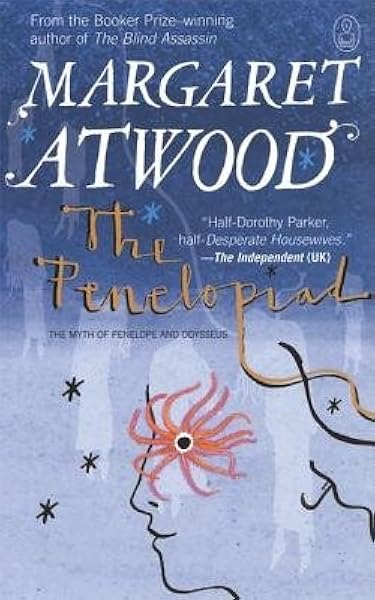
Most teens are familiar with Odysseus, the ancient Greek myth spread orally and eventually written down to be read by us in the future. The epic depicts a man on his years-long journey home from the Trojan War, battling gods and monsters alike under the protection of Athena. As the legend goes, Odysseus returns home to find his dining hall filled to the brim with ravenous suitors, after his wife Penelope. Beating the suitors in a contest, he regains control of the castle, enlisting his son to kill the men and hang 12 maids who favored them for their company. Thus, the story is complete, and Odysseus and Penelope spend their remaining days together. Or so we thought…
The Penelopiad tells the story from Penelope’s point of view, the persevering and cunning wife who waits for Odysseus to return despite the world giving up on him. Atwood begins the story at the beginning of her life, following her through the myth as we know it. Told through Penelope in Hades (the afterlife underworld of the Greek mythos), perspective flips from recalling her time in the land of the living to her interactions with the same characters after death. The author also incorporates the story of the 12 hanged maids as a chorus, chanting intermittent, heart-wrenching chapters in verse. The short novel is timeless, using its afterlife setting as grounds for various anachronisms and interwoven cultural elements.
Atwood’s retelling of the popular myth describes an ancient world made for men from a powerful woman’s perspective, one has rarely seen in ancient Greek literature. While a 21st century adaptation, it stands as an important vision of the lives of women during a time where they were given no power or say in what happened in their lives. Always the sidekicks, romantic interests, and victims, The Penelopiad gives us a chance to finally imagine what their story could have been told with the ancient myth so long ago.
Having read the book in three days, I found myself enthralled by the perspective Penelope and the maids bring to the conversation and recommend it to any reader fascinated by Greek epics beyond the mandatory school reading. Told by a remarkably influential author, The Penelopiad brings Greek women’s stories to life in dramatic and humorous ways.
– Bailey L.
The Penelopiad by Margaret Atwood is available for checkout from the Mission Viejo Library.

Halo-halo, a heavenly filipino dessert; it consists of my favorite thing in the world, nata de coco which is coconut jelly. The flavors of the sweetened beans, fruits, evaporated milk, delicious purple yam (ube), and leche flan balance each other out. This shaved ice dish is perfect, especially for the blasting summer heat!
Some of you may be wondering, what is Halo-halo exactly made up of? Well the average Halo-halo sweet course consists of sugar plum fruit, coconut sport, saba plantains cooked in syrup, jackfruit, agar jellies, tapioca pearls, nata de coco, sweet potato, sweetened beans, pounded toasted young rice, shaved ice, and evaporated milk. Then it’s topped off with a combination of leche flan and mashed purple yam (ube); adding ice cream on top makes it special.
A major pro to this dish is that the toppings pair well with the evaporated milk. The sweetened beans are warm, so you feel a warm yet cool sensation at the same time. Halo-halo isn’t for everybody, but it’s certainly an amazing desert that can be eaten and enjoyed many times. Not all restaurants have the same recipe for Halo-halo and prepare it the same way, so you can experiment!
Restaurants/fast-food places I recommend trying this desert at are Jollibee, Red Ribbon, Chowking, or Manila Kusina; these are not that far from the Mission Viejo area. Some other places are Manila Sunset, Goldilocks, Gerry’s Grill, and Pinoy-Pinay Filipino Fastfood. However, I must say that these eateries are further from Mission Viejo.
Though Halo-halo is most commonly eaten in the summertime, it can be eaten at any time of the year. It brings smiles to many faces and lives up to its reputation, you may check the reviews for your satisfaction. Hopefully this special desert brings joy to you, as it does for me!
-Hannah M.

This is probably one of the most unique and intriguing books I’ve read in a while. It’s part mystery, part romance, and at times almost seems like poetry. But my favorite part of all was the characters. They weren’t glamorous or flawless or bound to change in extraordinary ways. They were real, believable, and witty in a realistic, teenage way.
As a surface-level explanation of the story’s premise, Harris Sinclair is rich. He has three daughters and each has her own children. He prides his family for being Sinclairs. The family (the father, his daughters, and his grandchildren) spends every summer on Harris’ private island. Cadence, the narrator and the daughter of the eldest daughter, spends most of her time on the island with her cousins Mirren and Johnny and their friend, Gat. The four of them call themselves “the Liars.” But one summer Cadence is found on the shore of the island with a head injury and no memory of what happened before. Every time her mother tells her what happened she forgets and the doctors say she’ll have to remember on her own. What ensues is a struggle for Cadence to understand herself and that summer on the island. On her return to the island two years later, she gradually stitches together fragments of memories into a traumatic event she wanted to forget but which she has to acknowledge to move on.
I was fascinated by the intricacy of the story, the flashes of memories Cadence has that gradually build up into a story from two summers ago. The story unfolds for readers at the same pace as it does for Cadence–I don’t think I could guess what had happened until Cadence realized it herself–something I found very compelling.
Though the story does center around a mystery, the mystery doesn’t always seem like the main focus. To me, it was more like an underlying question beneath themes of corruption, greed, friendship, forgiveness, and acceptance.
While these themes are recurring and common, I would argue that they way they are conveyed is not. The story is not like a fairy tale, and Cadence sees this too.
As smaller chapters inserted between chapters of narration, Cadence writes variations of those age-worn fairy tales that always seem to end the same way. I thought of these as her way of explaining her situation and family and trying to make sense of them. However, as she finds, and as readers find too, life might not be compatible with a fairy tale.
I think something that makes the novel rather unlike others is that the characters are not made to fit in one box. For instance, Harris, the grandfather, can be pushy and discriminatory, but he can also be thoughtful and loving. He’s not that evil witch whose actions seem purely malevolent or that fairy godmother who always smiles. He doesn’t fit a role, as a regular human probably wouldn’t either. Similarly, Gat, Mirren, Johnny, and Cadence have the conversations and awkward moments that you would expect from teenagers. They’re not necessarily flawless or consistent.
Lastly, there is some language and dark content, and I would strongly suggest this for older teens (in fact, if I had known what would happen in the book I might not have picked it up. But this is coming from a reader who still enjoys re-reading some of her childhood fantasy books. I only did pick it up because it was chosen for a book club, and then it intrigued me more than I had expected).
– Mia T.
We Were Liars by E. Lockhart is available for checkout from the Mission Viejo Library. It can also be downloaded for free from Overdrive.

Baum’s first novel as a novelist was Mother Goose in Prose (1897). The book is based on a story he told his own children and introduces Dorothy, the farm girl, in the final chapter. In the introduction to the book, he says his aim was to create modern fairy tales that would not scare children as the Brothers Grimm did. In 1899, his collection of stories, Father Goose: His Book, was published, and it quickly became a bestseller. One evening, while he was telling his sons a story, he had an idea he had never had before.
While trying to calm them down, he grabbed a scrap of paper he could write on and excitedly wrote it down. This is a story about the Emerald City, and is the original idea of the Oz adventure story. The book, illustrated and covered by W. W. Denslow, was published at Baum’s private expense in 1900 and sold 90,000 copies in the first two years. Within a short time of the publication of the The Wonderful Wizard of OZ, the author had received thousands of letters from young readers asking him to keep the story going.
Baum did, at the reader’s request, write a series of fairy tales based on his fictional “Oz,” such as “The Emerald City of Oz,” “The Tin Woodman of Oz,” and “The Hungry Tiger of Oz.” He has written 14 fairy tales in this series. It does not include a collection of short stories from the The Marvelous Land of Oz Illustrated, published in 1914, or 10 other quasi-Oz-fairy tales that are intimately connected with the people of the land of Oz. In 1901, the first of the Oz series was adapted into a musical, with Baum helping to write the screenplay and lyrics.
In 1914, Baum was on the set of The Patchwork Girl of Oz. In the same year, he founded The Oz Film Manufacturing Company in Los Angeles (later renamed The Features Film Company), where he also directed films from 1914 to 1915. The well-equipped studio on Santa Monica Boulevard sits on seven acres. But the company went out of business and produced only two films about Oz, His Majesty, the Scarecrow of Oz and The Magic Cloak of Oz. In the years since, however, the story of the O.Z. has been brought to the screen many times. The Wizard of Oz, played by 16-year-old Judy Garland in 1939, was nominated for an Oscar for best picture.
This game is a party game that is coming out in late 2020 that has a lot of potentials to become a very popular game. The game is a party game where you play as clumsy animals such as dogs, cats, or even a rabbit. There were two game modes in the beta so far one was the sumo game mode where you try to knock your opponents out and make them fall off the map and the last person that is on the map is the winner. The other game mode captures the gummy which is basically capture the flag but with a giant gummy bear. The thing that makes this game special is the physics that the furry characters have. The physics in this game are super clumsy and have a good ragdoll feature that is similar to gang beasts or fall guys. So when you and another person collide it just makes you want to laugh about how absurd that just was.
In my opinion, I think that this will be a mainstream game when it comes out later this year and it will become one of the most popular games because the beta wasn’t well advertised at all and it had over 100k players playing during the short beta so this definitely won’t be the last time you hear Party Animals.
-Howard M.
Leonardo Da Vinci was born on April 15, 1452 in Florence, Italy. According to Britannica.com’s Leonardo Da Vinci biography, Da Vinci’s father was a landlord and his mother was a young peasant woman. Da Vinci only received an elementary level education when he was young, and only decided to learn more about subjects like Geometry or Latin later in life. When Da Vinci was fifteen years old, he became the apprentice for an artist by the name of Andrea del Verrocchio. There, Da Vinci learned how to paint and sculpt. He would continue to work and live in Florence until 1482, where he moved to Milan to work for and provide service for the city’s duke, Ludovico Sforza. Da Vinci eventually left Milan after seventeen years, in which he completed six paintings. The most famous paintings he made during this time period were the “Last Supper” and the “Mona Lisa”.
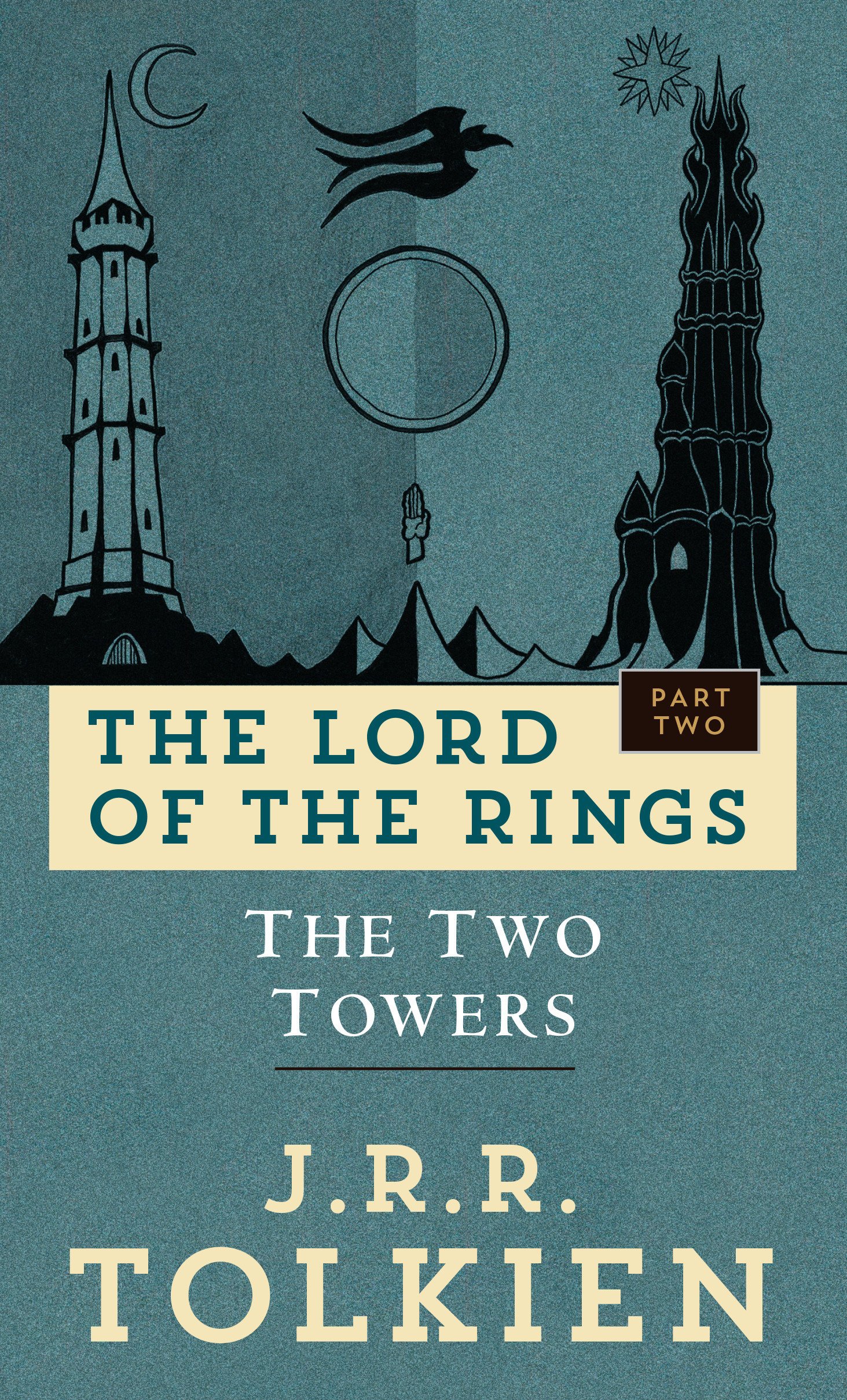
After the compelling events of the first installment in J.R.R. Tolkien’s Lord of the Rings trilogy, readers will not be disappointed by the quality of the second part, The Two Towers. The Fellowship of the Ring has been divided: the bearer of the Ring, Frodo, and his friend Sam have mysteriously disappeared, and two of the Company have been kidnapped by the despicable Orcs. The rest is left to stave off the wave of darkness that continues to seep out of the dark land of Mordor.
In Book I, the fate of the remnants of the Company is described as they continue on their mission. While hobbits Merry and Pippin attempt to escape their evil captors while Aragorn, Legolas, and Gimli track them across the wide plains of Middle-Earth. On their journeys, the two groups meet allies and foes, and eventually cross paths, and, in a happy twist of fate, manage to gain an advantage in the war.
Meanwhile, Book II describes Frodo and Sam, Middle-Earth’s last hope, and their perilous travel to the evil land of Mordor, with the twisted creature Gollum as their untrustworthy guide. Together, they travel throughout the land in their quest to destroy the One Ring and bring peace to all, but Frodo’s trusting nature is exploited in the cliffhanger of an ending.
Overall, fans of The Fellowship of the Ring will enjoy The Two Towers as much, if not more than, they relished the first installment. J.R.R. Tolkien does not fail to deliver a delightful combination of bewitching prose and poetry that keeps the reader engaged from cover to cover.
-Mahak M.
The Two Towers by J. R. R. Tolkien is available for checkout from the Mission Viejo Library. It can also be downloaded for free from Overdrive.

As a lover of historical fiction books, this novel always caught my eye when I passed by the shelves of the library, but I never looked into it because I assumed the book would be generic and clique. Recent famous novels I’ve read tend to follow the same plot line and character development, so most readers are not surprised by the ending. However, The Book Thief, written by Mark Zusak, an Australian writer who won the Margaret A. Edwards Award in 2014, has created a classic that lives up to its recognition, taking an interesting perspective on such a well known historical event. It dives deeper into the heart of World War 2, pushing the novel further through the contradictory and questionable actions of the human race.
Beginning on a train in the 1940s, the main character, Liesel Meminger witnesses the death of her younger brother on their way to Molching, Germany, where she meets her new foster parents. Throughout the story, Liesel grows as a character, unfolding the cruel reality of Hitler and his treatment of Jews and how it ties to her own story, thus encouraging her to write and steal books as an act of rebellion against the Nazis. The book grows through her normal life in Germany, yet slowly intertwines with history in a compelling manner. The main character witnesses the intimate, loving interactions between friends and family, but also the aggressive actions of others blinded by propaganda.
Compared to other historical fiction novels, Zusak provides readers another viewpoint on a historical event many are aware of, making readers acknowledge the other side of the war. The book makes us question ourselves and the validity of our opinions. For example, most believe all Germans were villainous because a majority were Nazi members, but there’s still a good portion of Germans that value all human life. Generally speaking, all of them are still just the same as we are; some were innocent children, others were working middle class jobs, many still wanted to live. But most importantly, what right do we have to villainize them if we don’t even feel sympathy or compassion in return? Zusak was able to brilliantly create a novel, who’s plots and underlying meanings create a puzzle–readers just have to put it together.
Despite the grand amount of pages, The Book Thief should be read slowly and carefully; every page has their own meaning and the slow pace builds up suspense to make the book a worthy read. Also, all of the characters are lovable and reveal their own flaws as humans. Overall, the author made it extremely unique, including a mixture of metaphors, imagery, and specifically, the humanistic characterization of Death. The context of the book was surprisingly poetic, even as it jumped to different passages of time. Zusak wrote a marvelous, emotional story as an ode to humanity itself, a tale that tugs at readers’ heartstrings in ways words can’t even describe.
-Natisha P.
The Book Thief by Markus Zusak is available for checkout from the Mission Viejo Library. It can also be downloaded for free from Overdrive.
 Mission Viejo Library Teen Voice