In the middle of the 19th century, Russian society was full of contradictions and crises. The tyrannical rule of the tsar and capitalism weighed heavily on the psyche of the people. Dostoyevsky’s novels mainly depict the misery, contradiction, hardship and desperation of people living at the bottom of the society, reveal the depravity and destruction of human nature and the split of human spirit in this pathological society, and show the darkness and filth of the Russian society under the shadow of the autocratic rule and the capitalist system. His novels depict the bullied and insulted, and try to show the misery of the characters hidden in the dark corners of the slums. Dostoyevsky describes people who are divided by themselves, reveals multiple personalities and shows the return of human nature. Dostoyevsky is an expert in psychological description. He is obsessed with pathological psychological description. He not only writes about the results of behaviors, but also focuses on describing the psychological process of behaviors, especially those abnormal behaviors, near coma and madness.
The characters’ abnormal thinking and behavior are exactly the characteristics of his works. The intensity of Dostoyevsky’s psychological description is in proportion to the bewilderment of his thoughts. Dostoyevsky mainly adopts a non – temporal narration in dealing with the timing of the novel. Because he preferred to choose the most intense, terrible and extreme events as the subject matter of the novel, and was keen to show people’s psychology in the crisis, the overall rhythm of the work was extremely unstable. In the description of characters, Dostoevsky broke the tradition of describing characters in Russian literature since Pushkin. He not only described their impoverished situation, but also revealed the soul of the characters, not only sympathizing with them, but also associating with them. The strong is a story element opposed to the weak, mainly referring to those who have money and power but disregard any moral principles. Their most important characteristic is to get their own way. The rescuer and the rescued are another pair of story elements in Dostoyevsky’s novels.
If the antagonism between the strong and the weak constitutes the first clue of the narrative of the novel and highlights the author’s humanitarian feelings, then the second narrative clue composed of the rescuer and the rescued reflects the author’s thoughts full of religious meaning, which is of more metaphysical significance in thinking about the way out of the society. The latter two narrative elements are gradually developed in his novels. The story element of the savior is the perfect Image of Christ in Dostoevsky’s novels, the embodiment of the supreme good. At the beginning of creation, the image of the savior appeared in the form of a kind of good behavior, namely self-sacrificing love. After his return from exile in Siberia, Dostoyevsky shifted his focus to religious exploration, and the rescuer began to appear in his novels as a concrete and sensible figure. His character gradually became full and distinct, and he was no longer confined to the scope of love, but had a broader social content. In the novel, this element is the external manifestation of the author’s thoughts, and the author mainly reflects his own religious ideal of salvation through it.
Therefore, such characters are flat and are the “mouthpiece” of the author’s thoughts, often giving people a sense of paleness. The rescued person is the most important story element in his novels. Compared with the rescued person, this kind of character image is more abundant. The image of the rescued first appeared as the image of the visionary in Dostoevsky’s novels. This image inherits the tradition of superfluity in 19th century Russian literature and has the characteristics of superfluity: dissociating from the society, holding a critical attitude towards the society and possessing the characteristics of thinker. So his novels end with the triumph of the savior’s mind. But as an artist, Dostoyevsky always triumphs over himself as a moralist. He was deeply aware of the social reality at that time when people still had no way out depending on religion. The contradiction of his thoughts makes the main part of the novel present an open structure, and the ending presents an open state in a closed form.
The foundation of Dostoevsky’s novels is binary opposition, mainly composed of four story elements: the strong, the weak, the rescuer and the rescued, among which a theme of “salvation” runs through. Secondly, the structure of Dostoevsky’s novels is inconsistent. The construction of elements in his novels mainly consists of three parts: the antagonism between strong and weak — the conflict between good and evil in the heart of the saved, and the conversion of the save and the saved. However, due to the mutual influence, interweaving and inhomogeneity of various contradictions, the novel is open and incomplete in content. The reason why Dostoevsky adopted such a structure pattern in constructing novels is closely related to his religious thoughts and perplexities. Dostoyevsky’s novels mainly adopt two perspectives: inner perspective and omniscient perspective. First of all, his novels mainly show people’s self-consciousness. All kinds of consciousness have a relationship of equal dialogue, so the first-person inner perspective and the third-person indefinite inner perspective are the perspectives often adopted in his novels.
This perspective reflects Dostoevsky’s religious confusion and exploration. Secondly, the omniscient perspective of Dostoevsky’s novels is mainly reflected in the beginning and the end of the novels, which has two functions: one is to serve the characteristics of the perspective inside the main body of the novels, and the other is to serve the religious thoughts of Dostoevsky, thus forming the characteristics of the closed form of the novels. In addition, there are some “meta-novel” narrative modes in Dostoevsky’s novels, which also convey the confusion in his religious thoughts, no matter for the narrator, the hero or the reader. Thus, we can conclude the perspective mode of Dostoevsky’s novels: the main body of the novels mainly narrates from the inner perspective, and the beginning and end of the novels often adopt the omniscient perspective. Dostoyevsky’s construction of the time mode in his novels is mainly reflected in the following aspects: first, he no longer places events in the process of time like traditional novels, and is keen to describe the process in detail; instead, he cuts time, adopts a non-temporal narration, and pays attention to the synchro meaning of time. Secondly, it is also reflected in the psychological time intervention in the novel. He always likes to put the characters in the two poles of contradiction and in the atmosphere of tension, so as to describe all the secrets of the human heart. Hence, the psychological time is much longer than the story time.
Tolstoy has done a lot of thinking on human nature in his novels. From these thinking, we can see the most real aspect of Tolstoy’s spiritual world. Tolstoy’s reflections on human nature were inspired mainly by the history and reality of Russia at the time. On the one hand, traditional Russia was a patriarchal society, and the Orthodox Church determined the way people thought and felt. Tolstoy was also deeply influenced by the Orthodox Church, whether his attitude was one of acceptance or reservation. On the other hand, the European spirit of enlightenment also exerted a deep influence on Russia, which shook the foundation of traditional Russian belief to a great extent.
The influence of the spirit of enlightenment on Tolstoy was also significant, which made Tolstoy suspect the basic doctrinarian system of Orthodox Church, and he would not think about the issue of faith like ordinary believers. However, Tolstoy did not fully move towards the Enlightenment position of individualism in Europe, so his thinking on human nature often drifted between the two, sometimes like a believer, sometimes like a humanist. The utopian thoughts in Tolstoy’s works are mainly reflected in the resistance against violence and slavery, the opposition to private land system, and the opposition to the promotion of capitalist material civilization and evolution.
He demanded the return to a healthy farming life through the work and moral practice of everyone to establish brotherhood, equality, harmony and fraternity of all human beings. Tolstoy created epic novels. The historical facts are blended with artistic fiction, and the bold and unrestrained brushwork is mixed with delicate description. Tolstoy shows his personal face in a large group portrait. The epic’s solemnity is interspersed with lyrical monologues, which are varied and magnificent. He is good at handling the structure of many clues and the threads are all joined together seamlessly. He can break through the closed form of the novel as magnificent as life has no beginning and no end.
Tolstoy’s artistic charm lies not only in reproducing the macro world, but also in portraying the micro world. Tolstoy has mastered the dialectical development of the mind unprecedentedly in the world literature and described the evolution process of the mind under the influence of the outside world in detail. He dives deep into the subconscious and show it in a harmonious connection with the conscious mind. Tolstoy’s artistic power is real, and it is evident in the shaping of character. He faithfully describes the multifaceted, rich, and complex nature of his characters, not just their dominant side or a dominant state of mind.
He does not conceal the faults of his beloved, nor does he stifle the glimmer of light that flashes in the heart of the character he reveals. He does not sugar-paint, exaggerate, idealize or caricature, but always shows his true nature by the help of real and objective description, thus seeing greatness in the ordinary or, conversely, showing its horror in the ordinary phenomena. Tolstoy’s style is chiefly characterized by its simplicity. He strives for the fullest and most accurate reflection of the truth of life or expression of his own thoughts. Therefore, although he is strict in art, he does not seek to win by skill alone, nor does he seek formal delicacy and avoid long compound sentences, but only seeks the maximum expression. In order to show the disillusionment of the characters in structure, he often adopts the method of flashback. In language, the novel strives to be simple and concise and easy to understand, close to folktales.
Clever criminal Neil Caffrey has finally been caught after years of Agent Peter Burke chasing him, yet manages to escape jail only to be caught once again. While other agents would immediately put him into a different jail facility, Peter Burke sees an opportunity in Neil. They work out a deal where Neil can’t go outside his two-mile radius and is tracked at all times by his anklet and he stays out of jail by helping Peter catch other criminals. Neil had skill as he was one of the top criminals and Peter saw that as an advantage because who else would know how someone committed a crime better than a former criminal! The show, White Collar, follows Neil and Peter’s journey. It’s one of those shows with the perfect balance of new mysteries every episode and ongoing mysteries.
I watched this show at a friends house, but we watched something from season 5 out of the 6 seasons and I believe that’s why I was so drawn in. Personally, I have trouble committing to shows which is why I stick to movies, but seeing all the action made me want to continue watching it from the beginning. If I had watched the first episode, I probably wouldn’t have been motivated enough. Now I’m not saying to randomly watch an episode from the middle, but I am encouraging you to watch a couple of them in order to fully get an idea of your preference on the show. All the twists and turns kept me on the edge of my seat and I continuously admired how clever Neal truly was. I would definitely recommend this show to anyone who likes crime and adventure. It has some hints of romance in there as well. This show will always be my favorite!
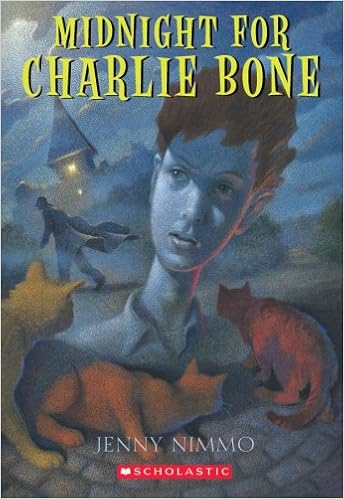
Midnight for Charlie Bone was written by a British author named Jenny Nimmo. It is the first of eight books in the Children of the Red King series. This series is among my favorites. The books refer to an ancient magician known as the Red King. His magical powers have passed down through his descendants for generations.
Charlie Bone is a ten-year old boy living with his mother, uncle and two grandmothers. Throughout his childhood, Charlie has been told that his father is missing. Despite this, Charlie continues to hope that he will see his father someday. Life is otherwise normal until one day he discovers that he can hear people talking in photographs. Charlie realizes that he has a special power.
Charlie’s three strange aunts soon arrive for a visit, pleased to learn of his power. They enroll him in a special school for gifted children called Bloor’s Academy. Charlie begins to realize that other children in the school have magical powers as well. He also learns that the Bloor family in charge of the school is engaged in dark and sinister schemes. Charlie realizes that there is more than meets the eye in this academy, and he is determined to uncover the truth.
I found it hard to put down this book once I started. The story is engrossing because of its many mysteries. I became anxious to find out about Charlie’s missing father, and about the history of the children who possess magical powers. Many questions are left unanswered in this book, so I was excited to read the other books in the series. The adventures are fast-paced, so I enjoyed reading the series in quick succession. You will likely want to read the other books in the series as well after reading this one.
-Oliver H.
Midnight For Charlie Bone by Jenny Nimmo is available for checkout from the Mission Viejo Library. It can also be downloaded for free from Overdrive.
Charles was the third of the eleven children of Dodgson. Charles loves his mother best. He regards his mother as one of the sweetest mothers in the world. His mother is a good housekeeper and pays great attention to the children’s preschool education. At the age of seven, Charles was said to have read Bunyan’s The Pilgrim’s Progress, as well as Maria Edgeworth’s Practical Education and Hannah Moore’s The Shepherd of Salisbury Plain. At the age of 12, Charles was sent as a boarder to a grammar school in Richmond, ten miles from Croft. He is diligent and eager to learn. The principal told his parents that his eloquence and the ingenuity and diction of his Latin prose proved him to be an extraordinary genius.
In 1846 he was sent to Rugby, which soon came under the rule of Thomas Arnold. When he first went there, he was unhappy and often bullied and called a “fool” (a clumsy athlete). He was often mocked because of his childhood stammer. On the other hand, when he did not receive prizes for classics, theology, mathematics, etc., he seldom went home. During the holidays, he began writing a series of home magazines for his siblings. At the age of 14, his first magazine was called an “inspiring and instructive collection of poetry.” It includes many humorous poems, some of which are in the doggerel style, while others are contemporary traditional poems written for children.
He composed poem in the form of a ballad taught people never to annoy their sisters, followed by a magazine illustrated by Charles himself. After leaving Rugby in 1850, Charles wrote his own masterpiece, The Rectory Umbrella And Mischmasch, while preparing for the Oxford entrance examination at home. The book shows that Charles was already an outstanding writer for a comic magazine. He also wrote plays for a puppet theater. His cousin introduced him to the novelist Francis Edward Smedley. He showed some of the poems to Edmund Yates, who, to compete with Punch, had started a penny magazine called Comic Times. Charles wrote four poems for the magazine.
When the Comic Times closed, he began writing for the latter Yates magazine, The train. Charles’ chief contribution to The Train was poetry. In publishing “Solitude,” Yates chose one of two pseudonyms offered by Charles: Lewis Carroll. These are the two Latin names of Charles, keeping the alphabetical order and then turning back to English. He was a priest and never married. He was very fond of children, and his favorite was a little girl called Alice Liddell. On the fourth of July, 1862, the author and a friend of his took the three Liddells and rowed up the River Thames from Oxford to Gostowe. On the boat, he told Alice a little story, which he later turned into a manuscript of Alice’s Adventures Under Ground and presented to her.
The manuscript is only 18, 000 words long, and the illustrations are by the author himself. Later, the author revised it to the present scale, changed the title to Alice’s Adventures in Wonderland, and asked the famous painter Sir John Tenniel to illustrate it. The first edition was published on July 4, 1865, as a memorial to that trip. The story tells the story of a little girl named Alice, chasing a rabbit in a dream and falling into the rabbit hole, began a long and dangerous journey. This fairy tale breaks through the traditional moralistic formula of western European children’s literature with its magical fantasy, funny humor and high poetry, and has since been translated into many languages and travelled all over the world.
Carroll later wrote a companion piece, Alice Through the Looking Glass, which became popular in the world along with Alice’s Adventures in Wonderland. In 1868, Carroll published his encryption method. This type of encryption is known as Lewis Carroll’s ciphers. Cryptography introduces the concept of a secret key, which determines which row of secret tables to replace according to the key, to counter word frequency statistics. The password’s key space size is 26m, so even if the value of m is small, using the exhaustive key search method can take a long time. For example, when m=5, the size of the key space exceeds 1.1*107, which is beyond the scope of exhaustive search by hand calculation.
Charles was writing parodies and satires. Works such as The New Belfry (1872), The Vision of the Three T’s (1873) and The Blank Cheque (1874) attacked the reforms of many colleges and universities. In 1879, he tried to study children publicly. Because he has a terrible stammer, but he can communicate with people through the camera. In his second year at the school (1856), Carroll bought a complete set of photographic equipment (The Wet Print) and photographed Tennyson, the Poet Laureate, and the Prince of England. But he was most attracted to girls around the age of 7, and he took every opportunity to photograph the girls he met. Only in front of the girls, Carol will not have any psychological barriers. The only work he did during this period was Rhyme? and Reason?
The youngest of the Brontes, Anne was gentle, quiet, and less talented than her two sisters. She lived to be only twenty-nine, and in the next decade of her short life her dismal governess occupation took up much of her time, but she wrote two novels, Agnes Grey and The Tenant of Wildfell Hall which have their place in the history of English literature. Her novels, like herself, have a tranquil feeling. The hero has a pure moral character, brave pursuit of independence and happiness, which is also the portrayal of Anne’s heart. Anne’s writing is more of an 18th-century work, with its frankness and clarity, rather than the Victorian style in which she lived. Anne’s life was an unhappy one. She had once fallen in love with her father’s assistant, Willie Weightman, but he died suddenly while Anne was away working as a governess. It was a long time before Anne got the news of his death. Her alcoholic brother thwarted the sisters’ hopes of starting a school at home. At the same time, Anne continued to suffer from illness. But she never complained, silently enduring the mental and physical pain with astonishing fortitude. Shortly after the publication of several of her books, she died in May 1849, far from home in the seaside health resort of Scarborough. Anne Bronte was born on January 17, 1820, at No. 74 Market Street, Thornton, West Yorkshire, where there was little room for two adults, six children, two servants and a nurse. Her father was appointed vicar in Haworth, seven miles away, after Reverend Bronte had written all over the place in search of employment. Haworth is more prosperous than Thornton, and the parson’s five bedrooms are far more spacious. But Haworth lacks a drainage system, drinking water is heavily polluted, the average life expectancy is only 25 years, and the vicarage’s window looks out on the churchyard where many of the children who died early are buried. By the time the Brontes moved to Haworth, Maria, their mother, had already been diagnosed with cancer. Maria’s sister, Elizabeth Branwell, came to Haworth to help Reverend Bronte, who was busy with his parish duties. Maria died on September 15, 1821. Soon the vicar Bronte, recovering from his grief, resumed his parish duties. At the end of the year he visited a friend of hers, and Elizabeth Force, Maria’s friend, expressed sympathy and comfort to him.
The priest then proposed to her, hoping to find a stepmother for their six children, but was rejected. Aunt Elizabeth, who took care of Maria, stayed behind to raise her six children. As their six children grew up, Maria and Elizabeth, now self-sufficient, helped their aunt with the housework as much as they could, while Anne, the youngest, became Aunt Elizabeth’s favorite and they shared the same room. When Anne was growing up, Aunt Elizabeth’s devout Methodist beliefs were a big influence. The Bronte’s’ new maid, Tabby Ackroyd, gave them plenty of Irish mythology and northern English country tales. In the summer of 1825, Maria and Elizabeth, who were going to school, fell ill and died, leaving the whole family in grief and pain. The Reverend Bronte no longer dared to give his children away, but instead taught them at home. He encouraged the children to read more, and Aunt Elizabeth wanted the girls to learn housekeeping, so at regular hours the children would come back from Keresley Library, four miles away, carrying heavy books with them. In June 1826, the Rev. Bronte gave Branwell a group of toy soldiers as a gift, which caught the imagination of the children. They gave the soldiers names and arranged their characters. In the years that followed, several children started with these soldiers and created a fictional African country called Angria. Angria includes many features of the real world. Charlotte and Branwell write poems in the voice of Angria’s living characters and an chronicle of Angria with mixed authenticity, but it is hard to see how much of a role Anne, who is not yet ten years old, played in the creation of Angria. As she grew older, Anne took Latin, French, music and art lessons from the local clergy. Her collection of books such as Edmund Burke’s aesthetic works, John Milton’s Paradise Lost, Robert Burton’s The Anatomy of Melancholy, and Aunt Elizabeth’s subscription to Methodist magazines all influenced her. In the summer of 1832, the Rev. Bronte founded a Church Sunday school in the area, where children took turns as teachers. Branwell was said to be impatient, and Anne was said to be the kindest looking but the most serious. Returning home from a year at Roe Head School, Charlotte recalled that one of the things she would do when she returned was to make tea to cheer up Anne and Emily, who were tired of teaching.
Like twins, Anne and Emily often wrote illustrated diaries together, in which Emily first mentioned the name “Gondal” in 1834. Gondal, a fictional country created by Emily and Anne, is a neighbor of Angria. Much of Gondal’s landscape is drawn from the heather moors that spread across West Yorkshire, and its wars, alliances, and lending with its neighbors are rooted in the political landscape of the time. Emily and Anne wrote many poems and narrative fragments, imagining themselves as characters in Gondal. The strong Emily dominates, and Anne shows deference to her sister, but sometimes feels like no one understands her. In October 1835, after Emily returned home, unable to adapt to school life, Anne took her place in The School of Roe head, which was the first time she left home at the age of 15. Charlotte, who was already teaching at the school, did not care much for Anne, but she did care for her sister’s health. Anne had few friends at school, but she worked quietly and hard. She knew she needed a school education to make a living with what she learned, and in the end she won a prize of excellence in 1836. Anne and Charlotte returned home before Christmas in 1836, and Anne took care of Tabby Ackroyd, her maid who had fallen, while she continued to write poems about Gondal. Verses by Lady Geralda, which she wrote at this time, dramatized the somber atmosphere, the despair of the Lady Geralda of Gondal, and is the first poem that Anne Bronte has in existence. After much exposure to Calvinism in 1837, Anne faced a crisis of faith in the question of whether all men could be saved. Charlotte always thought Anne was a child, and Anne’s classmates were too young, so she had no place to talk, which led her to write a poem called “A Voice From The Dungeon“, and then she fell ill. Anne was visited many times by a minister of the Moravian Church, who enlightened her, and her crisis of faith eased, but her condition remained serious. Charlotte was so worried that she even quarreled with Anne’s teacher, Miss Waller. In January 1838 the Reverend Bronte took Anne home, and she gradually recovered. Concerned about Anne’s precarious health, the Reverend Bronte asked her to stay at home and not go back to school, so Anne and Emily continued to write poems and diaries about Gondal.
In the spring of 1839, Branwell’s plans for an art studio failed and he had to go home. Emily worked as a tutor for a while and then went home to recuperate due to health problems. Charlotte couldn’t find a job for a while. The Reverend Bronte found himself once more in the position of supporting several children on his meager stipend. Quiet and practical Anne helped the family in her own way by getting a post of governess with the Ingham family at Blake Hall. Anne refused any company, went alone and settled down quickly. Anne soon discovered that the situation was far worse than she had expected. The pupils were so spoiled that she found it difficult to control them, let alone to get them to learn anything. Once she was so angry that she locked them on the legs of the table. Anne complained to the children’s parents, but they did not support her and she was considered unfit to be a governess. On Christmas Day 1839, Anne, who had lost her job, returned home and the three sisters were reunited. Her experiences at Blake Hall were later written by Anne in Agnes Grey. Anne met her father’s new assistant, William Weightman (1814-1842). Weightman, who graduated from Durham University, has been working at the parish since late August and is very popular at the vicarage. On Valentine’s Day, 1840, Weightman wrote a poem to each of the three sisters who had never received a Valentine’s Day hymn. Anne’s paintings at this stage featured sentient women facing the sea, and her poems featured both men and passionate women, leading researchers to speculate that she had a strong crush on Weightman. In May 1840 Anne got her second job as governess to the Robinsons of Thorp Green, where she worked as a governess for four children. In June she followed the Robinsons to Scarborough, North Yorkshire, for a holiday. Anne loved Scarborough, close to the sea and beautiful, and was happy to walk there and discover the wonders. From the second half of 1840, Anne’s poetry diverged. She wrote Gondal poems with Emily when she returned home, and even went on a trip with Emily imitating Gondal characters, but while at Thorpe Green she wrote poems expressing her own emotions. Anne soon found herself facing the same problems she had encountered at Blake Hall: she was homesick, the children were out of control, and the Robinsons were unsupportive.
She didn’t change much, but she stayed and made friends with two of her students. Returning home for a holiday in June 1841, Anne saw Weightman again, but soon afterwards she went to join the Robinsons at Scarborough. At this point she began to write her own independent diary, in which she mentioned the three sisters’ plan to open a school of her own. Returning home for a holiday in 1842, Anne discovered that Weightman had died of a misadventure, and in December of that year she wrote an elegy for an unknown man, expressing her sorrow and pain. The Bronte sisters at this time considered several school sites, including the vicarage, but did not actually go into action, and the attempt to open a school is also written about in Agnes Gray. In early November 1842, Aunt Elizabeth, who had brought up the Bronte sisters, died. Charlotte and Emily were at school in Brussels at that time. Only Anne returned to attend the funeral. Anne returned to Thorpe Green in January 1843 and found a place for her elder brother, Branwell, as governor for the now grown Edmond Robinson. From 1844 on, Anne became more and more difficult to bear the Robinson’s environment, while Branwell became more Bohemian under the Influence of Robinsons, which made Anne more miserable. She had to write poems to cope with it. In June 1845, Anne Bronte abruptly resigned her post as a governess at Thorp Green and returned to Haworth, supposedly because her older brother, Branwell, was having an affair with Mrs. Robinson, and Mr. Robinson suggested that Anne was acting as an intermediary. When Anne returned home, she sat with her father, who was seeing less and depressed, and began to write Agnes Grey. In the autumn, Charlotte came across Emily’s poem and thought she could publish it. Emily with a strong personality was not happy with Charlotte’s discovery that her sister interfered with her privacy. Anne basically agreed with Charlotte’s plan. In order to settle the quarrel between Charlotte and Emily, she volunteered to contribute her own poem. Without even telling Branwell or their father, Anne and Emily had each chosen twenty poems written after 1840, and Charlotte, with money from Aunt Elizabeth, had chosen nineteen of her own early poems and sent them to the publisher.
Fearing that reviewers would unfairly judge the author because she was a woman, all three sisters used aliases. The pseudonym Bell, derived from the curate of the church, had the same initials as the three sisters, making Anne Acton Bell. In May 1846, the 165-page anthology of poems by Currer, Ellis, and Acton Bell was put on sale. It received some critical acclaim, but it sold very little, only two copies in its first year. Charlotte later decided that her poems were childish in the three sisters’ poetry collection, and that Emily’s poems were bold, melancholy and sublime that could be handed down from generation to generation. Anne’s poems had their own sincere lovely pathos. In August 1848, Anne’s “The Narrow Way” and “The Three Guides” were published in The Fraser Magazine, the only poems published by the sisters apart from their collections. The death of Branwell, a chronic alcoholic, on September 24th at the age of 31 was a great shock to the family, and preparations for Branwell’s funeral left Emily and Anne exhausted. The winter brought coughs and colds to the family, especially Emily, who died on December 19. Emily’s death made Anne, who had always been close to her, even more sad. Anne began to show marked shortness of breath and asthma, but still sustained her illness by writing a reply to a theologian about the universal remedy mentioned in “The Tenant of Wildfell Hall “. In early January 1849, Anne became seriously ill. Doctors diagnosed tuberculosis and suggested that the disease was too advanced to recover. Anne accepted the news with calmness and self-control. Unlike Emily, she took her medicine exactly as the doctor ordered. In the months that followed, her illness waxed and waned, but she became noticeably thinner and weaker, and she decided to return to Scarborough, her favorite place. On May 24, Anne and her father said goodbye to the family servants and left Haworth with Charlotte and her friend. They spent a day and a night in York, where Anne and Charlotte went shopping in a wheelchair and visited her favorite chapel. The next day, Anne, who did not want her illness to limit Charlotte, hired a donkey cart. When they found her, they found her teaching the boy who drove her to be kind to his donkey. On May 27, a terminally ill Anne saw Charlotte struggling to contain her grief. Anne died at 2 p.m. the next day. Anne was buried there in St. Mary’s Churchyard in Scarborough. The funeral took place on 30 May. When Charlotte returned three years later, she found several mistakes on the gravestone, which had been re-engraved, but which still put Anne’s death age at 28. In April 2013, the Brontë Society re-erected the gravestone to make it 29.
His writing style can be boiled down to two characteristics: scientific and professional. The works are good at setting suspense, stimulating readers’ interest in reading, and paying attention to the overall layout. In terms of plot, there is a strong echo and strict reasoning. Rigorous causal reasoning and deductive methods are used to promote the plot of the novel and develop the story. He is famous for Sherlock Holmes. His short stories have a strong sense of painting, and their conflict settings are concentrated, with plot twists and turns, which make readers feel as if they are reading a movie story. However, in the later period of his creation, due to the gradual disappearance of enthusiasm for creation, Doyle’s depiction of Holmes became increasingly deified, showing a deliberately exaggerated plot with the so-called brand of the devil (see “The Adventure of the Devil’s Foot”, “The Adventure of the Dancing Men”).
It is no exaggeration to say that many of Doyle’s short stories, with minor modifications, are excellent movie bases. It is very rare for Doyle to have such artistic thinking long before the popularization of film art. The Adventures of Sherlock Holmes is the most frequently made film novel in the world. For example, Sherlock Holmes starring Robert Downey Jr., Gene Wilder in 1975, Charlton Heston in 1991 and other films based on the detective’s records have also been produced. There have been seven TV series. His short story, El Anillo De Thoth, revolves around the theme of death and immortality in ancient Egyptian culture, presenting us with a fantasy world, which was one of the important creative sources of Hollywood mummification films.
“The Lost World” is also a cross-generational work. This novel can only be said to be enlightening for our modern adventures of ancient beasts and dinosaur types and films. Conan Doyle wrote 60 stories, 56 short stories and 4 novels about Sherlock Holmes. These stories were published in Strand magazine in droves over 40 years, as was customary at the time (Charles Dickens published his novels in a similar format). The story mainly takes place between 1878 and 1907, with the latest story set in 1914. Two of these stories are written in Holmes’s voice, two in the third person, and the rest are Watson’s accounts.
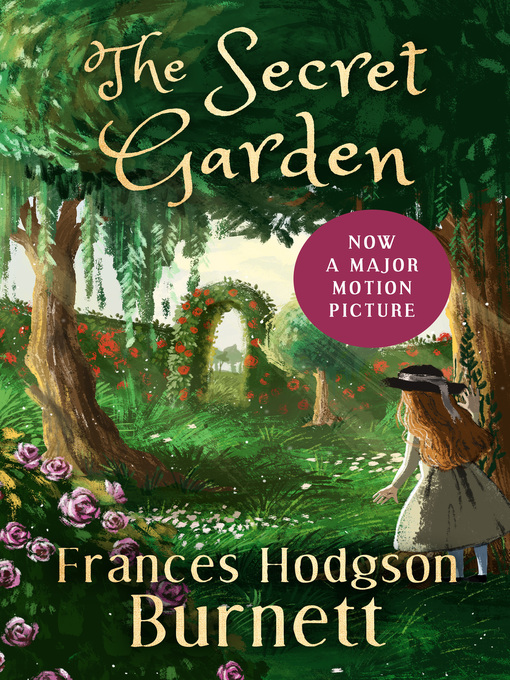
No matter what age you are, almost anyone can enjoy a whimsical and well-written children’s classic. In fact, my most recent favorite is The Secret Garden by Frances Hodgson Bernett.
The Secret Garden tells the story of a girl named Mary Lennox who whilst residing at her uncle’s house tries to figure out how to get into the secret garden, which has been locked up for a decade. Along the way she makes friends and leaves her mark on the dull and somber manor.
One aspect of this story I loved was the character development. When we first start out the book Mary is an insufferable, harsh brat who knows nothing about friendship because of her circumstances in the past. But once she opens up to people and learns to see the good in things and people alike, everything changes for her and she transforms into a kind and caring child.
The character development isn’t limited to just Mary though, her uncle’s son, Colin Craven has been thought to be dying for all of his life. But with Mary’s help, everything seems to change for the better.
The Secret Garden is very predictable, in the way almost all children’s classics are, but I am in no way complaining. In fact, the predictability makes way for you to become more attached to the characters because of all of their arcs.
Now if you couldn’t tell I have an infatuation with children’s classics. To me, they are such simple and impacting stories that always change your outlook on life. Frances Hodgson Bernett is my favorite children’s book author right now, seeing as she’s written both of my favorites, The Secret Garden and A Little Princess. Both books which I wholeheartedly recommend.
In short, if you’re a fellow devotee for good children’s classics like me, then you’ll love this book.
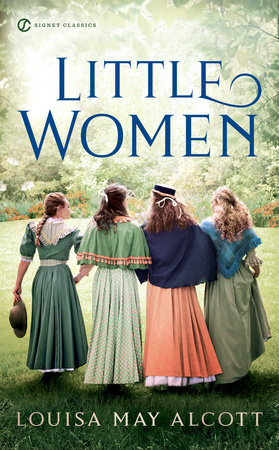
Little Women is a novel written by Louisa May Alcott and first published in 1868.
The novel was an autobiographical family ethics novel set in the American Civil War and based on the life’s trifles of four sisters in an ordinary family in New England in the 19th century. Influenced by Ralph Waldo Emerson, the great thinker of the time, the novel emphasizes the concept of personal dignity, independence and self-discipline. The content is simple but exquisite; the structure is simple but profound, full of strong appeal. Little Women is a semi-autobiographical novel with female characters and feminist consciousness.
During the American Civil War, Mr. March went to war as a chaplain, and his four daughters and their mother lived a poor but strong and optimistic life at home. They were poor, but willing to help their neighbors, the Hummels, who needed help more than they did. Women have vanity; they want to get beautiful clothes, eat delicious food, live like a princess. Although full of fantasy, in real life, they use their own efforts to solve the various difficulties in life. The eldest daughter, Meg, is beautiful by nature and full of longing for love; the second daughter, Jo, was independent and determined to be a writer; the third daughter, Beth, is the traditional good girl, weak and lovable. The youngest daughter, Amy, loves painting. The story follows these four women as they grow from girls into little women, recounting their unruly experiences and respective pursuit of different ideals and the processing of finding their true self.
The reason why the four March sisters, who are the true, the good and the beautiful, have such qualities as kindness, diligence, selflessness, tolerance and toughness cannot be separated from Mrs. March’s excellent education. Parents are their children’s first teachers, and there is no doubt that Mrs. March is an excellent teacher. She is generous, ready to help others, not easily angry, and grateful for life. In the eyes of the children, she is not only a good mother, but also their best friend. They liked to confide their worries to Mrs. March, who gave them good advice and help. It is because of Mrs. March’s unique family education that the four sisters became little women loved by everyone. Consequently, the courageous images of women in this book touch the heartstrings of numerous female readers.
Many people are let down when a great book has a sequel that cannot compare with the original. For that reason I always begin sequel reads with a kind of detachment and I analyze the plot before diving headlong into the book. I am pleased to say that Wildcard did not in any way fall under this category of sequels. The sequel to the amazing book Warcross has even more riveting action and adventure than its predecessor.
Emika Chen barely survived Warcross, but the times ahead promise even more danger. Caught within an epic war between virtual reality and the physical world, Emika and her friends must play the best game of their lives if either world is to survive. With danger at ever turn who can anyone trust?
Marie Lu packs suspense, betrayal, and romance into one spectacular book. A master of words she ensures that you will grab this book off the shelf as fast as possible. Do not forget to check out the first book in the series! (Warcross) But remember…everything has a price.
-Elijah Y.
Wildcard by Marie Lu is available for checkout from the Mission Viejo Library. It can also be downloaded for free from Overdrive.






 Mission Viejo Library Teen Voice