Authors We Love: Herman Melville

Herman Melville - Wikipedia

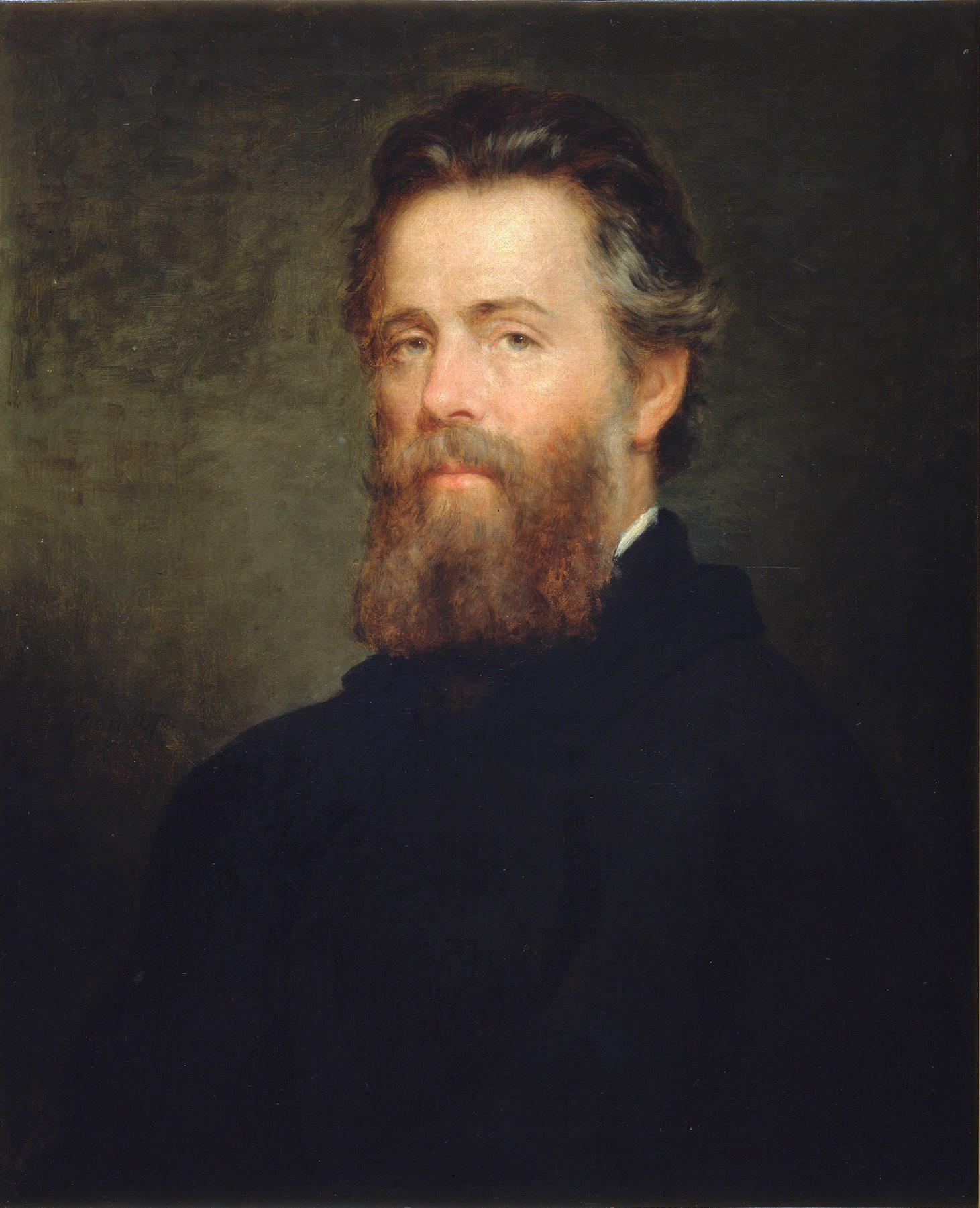
Herman Melville (1819-1891) was one of the greatest American novelists, essayists, and poets of the 19th century, along with Nathaniel Hawthorne. Melville, who received little attention during his lifetime, rose to prominence in the 1920s and is generally regarded as one of the highest figures in American literature. Maugham considered his Moby Dick to be one of the world’s top ten literary masterpieces, ranking higher than Mark Twain and others in its literary history. Melville is also known as the “Shakespeare” of America.

In “Bartleby, the Scrivener”, Melville, through the interpretation of Bartleby’s silent struggle, powerfully responds to the over-optimistic transcendentalist worldview and expresses his own different views. Transcendentalists believe that “god is merciful, and nature is an incarnation and symbol of god, as well as the embodiment of god’s mercy; The soul of man is divine, so man’s nature is good, and he is one with nature.” And for Melville, nothing is absolutely good or absolutely evil. Emerson’s transcendental optimism does not really help the development of individuals in a vast society. The power of individuals is small, unable to fight against the society. Emerson is only describing to us an ideal state of human life, which can never be reached, but a castle in the air, which is desirable but unattainable.

In addition, Melville was deeply influenced by biblical stories. Not only did many of the characters in Moby Dick take their names from the bible, but he was also influenced by the simple ecological views of the bible. In the bible, although nature is god’s tool to punish human beings, human beings have to overcome the harsh natural environment in order to survive outside the garden of Eden, but this does not mean that human beings have to conquer and transform nature in order to survive. In fact, the bible calls for careful control of nature, not unbridled conquest. In addition to giving man the right to rule the earth, god demands that man must protect and nurture nature which espouses most of Melville’s thinking and shaping of plot lines.

The works of Herman Melville are available for checkout from the Mission Viejo Library. They can also be downloaded for free from Overdrive.

Original Poem: “In a Few Days”

In a few days
the world stops looking less blue.
Sooner or later
there’s bound to be something new.

In a few days
the clouds above my head will lift.
As eventually as forever
my meaning will sensibly shift.

In a few days
I’ll fall asleep in complete dark.
A night without noise
from the purple and invisible spark.

In a few days
things will get better.
Because a few can mean soon,
or reach as close as possible to never.

Charlie Bone and the Time Twister by Jenny Nimmo

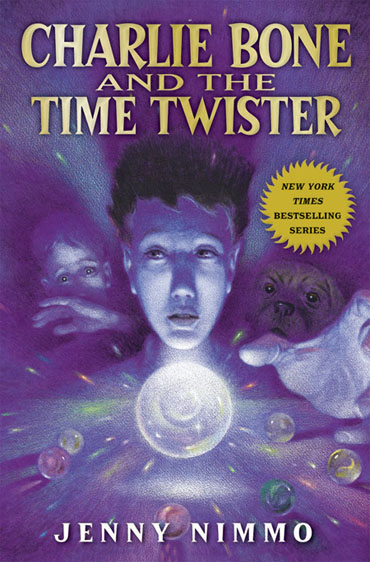
Charlie Bone and the Time Twister is the second book in the Charlie Bone series by Jenny Nimmo.  The main protagonist is a boy named Charlie Bone who possesses a special power.  Charlie can hear what people are saying inside photographs.  Charlie is not the only person to possess magical ability.  He attends a school for the gifted called Bloor’s Academy, where other students appear to have special powers of their own.  Charlie discovers that the evil Bloor family in charge of the academy has been plotting to harm some of the students, including himself.

I enjoyed reading about the development of Charlie’s powers in this book.  It becomes easier for him to hear what people are saying in the pictures he sees.  However, he does not fully realize the strength of his power yet.  One day at school, Charlie is surprised to meet one of his ancestors, named Henry Yewbeam.  Henry looks the same age as Charlie, but he was born over 90 years ago.  Henry had teleported through time using a mystical marble known as the Time Twister.  Charlie needs to protect Henry from the Bloor family, who would consider Henry an enemy.  This book is very suspenseful, as the Bloors become increasingly suspicious of Charlie.

One of my favorite characters in this book is Ezekiel Bloor.  Ezekiel is a cranky old man living at the academy.  He seems to hate everybody.  He has an old connection to Henry that creates a very intriguing background to this story.  I enjoyed the mystery and suspense of this book.  It was fascinating to read the story as it unfolded through different time periods.  After reading this book, I was anxious to read the next book in the series.  I highly recommend it.

-Oliver H.

Charlie Bone and the Time Twister by Jenny Nimmo is available for checkout from the Mission Viejo Library.

Cybersecurity Tips and Tricks

When the Internet was first made available to the public in the late 1960s, very few people would have even considered that it could become the global sensation that it is today. And yet, as of July 2020, 60 percent of the population is able to access the Internet, and this number is only increasing in recent months. 

While the Internet is undoubtedly a helpful and necessary part of our lives (case in point – the current pandemic, which would be making life much more difficult for many people without the Internet), the rising global dependency also makes it an enticing target for hackers, scammers, and other people with malicious intentions to take advantage of users. 

Because of this, it’s important to make sure that you’re protecting your information while browsing or posting on the Internet, so I’ve made a list of basic cybersecurity guidelines that all people should follow:

  1. You Are a Target to Hackers

Most people think that because of the vast number of people on the Internet, they won’t be targeted, but it’s actually the opposite. Most scammers go for ordinary people who, under the delusion that they wouldn’t be a victim, have been less than careful with the spread of their personal information. So, the first step is to recognize that you are a potential target and that you must protect your information.

  1. Passwords! Passwords Everywhere!

As I’m sure you know, passwords are a critical defense against hackers. However, choosing the right password makes all the difference. Many people set their password to “password” or “bluesky” or some other variation of an easy, dictionary level, all lowercase password. Unfortunately, passwords like these can be hacked in milliseconds.

Most sites have password requirements that prevent such simple passwords, but even they are not enough. When thinking for a password, try to make it at least 10 characters, with upper and lowercase letters, as well as numbers and symbols. For example, a secure password might be: WeAreTheChampions492!

One last thing – it’s important to keep your passwords random. For instance, don’t use FaceBookTime123! for a Facebook account. Instead, try to come up with unique base words, or, if you’re having trouble, find a random word generator online.

If you’re like me and have the memory of a goldfish, coming up with random passwords (and remembering them!) may seem daunting, but using secure password managers can help ease the burden on your memory.

  1. Always Think Before You Click

Phishing attacks are a constant threat; using various social engineering techniques, scammers will try and trick you into divulging your personal information. For example, in a scheme used to hack many politicians’ emails, you may receive a message stating that your password has been hacked and your account accessed, and that you must reset your password using a link provided.

Do not click the link unless you are 100 percent sure that it is genuine. Generally speaking, the rule of thumb for such emails is to go straight to the source and perform the action there. If your Amazon account was hacked, for example, go straight to Amazon’s web page and find the legitimate link there.

  1. Back Up Your Data

It’s important to keep your information secure, just like you would keep your valuables in a safe place. Some ransomware hackers encrypt your data and make it impossible to access it, and force you to pay a fee in order to have it returned to you. 

If you make sure to back up your data at least once a week, you can avoid having to pay the unreasonable sums of money presented to you by these ransomware attackers and be on your merry way.

  1. Declutter Your Digital Closet

Basically what’s on the tin – if you haven’t used an app or account for a large expanse of time (think 6 months to a year), you should probably get rid of it. This applies to social media apps, email accounts, etc. Doing this prevents hackers from exploiting old information or vulnerabilities.

Another way to harden your apps is by updating them, eliminating old vulnerabilities through new patches that can keep you and your information safe. Always make sure you have the most recently updated version of every app.

  1. The Ultimate Weapon: Common Sense

Obviously, this is a far from comprehensive list, but the overall most important tool when protecting your information from malicious presences is simple common sense. Whenever you receive a “friend” request from someone you don’t know, or an email that looks a bit fishy, ask yourself: Does it make sense?

Most of the time, this question results in an easy yes-or-no answer, but the rule I always follow in the situations where it isn’t so clear is any doubt, throw it out. After all, you can never be too careful! 🙂

Although this is a relatively short list, I hope it helps you guys better secure yourselves and your information from malicious attackers. Thanks for reading!

– Mahak M. 

The Boy Most Likely To by Huntley Fitzpatrick

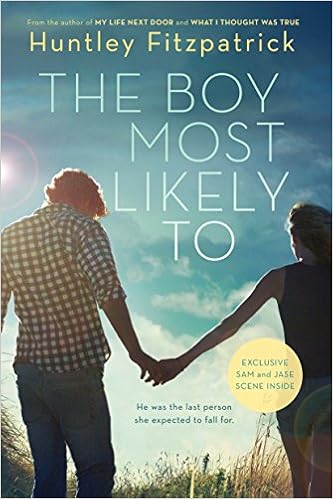
Amazon.com: The Boy Most Likely To (9780147513076): Fitzpatrick ...The Boy Most Likely To is a very well written book. There are two books that come before it, The Boy Next Door and What I Thought Was True. I don’t think that What I Thought Was True is necessary to read however since it is about different characters in the same city. However, the two main characters in The Boy Most Likely To, Tim and Alice, are characters in the Boy Next Door, so I would definitely recommend reading that beforehand.
I remember years ago, probably almost four, I picked the Boy Next Door off the shelf since I didn’t realize that Becca Fitzpatrick and Huntley Fitzpatrick were different authors. That’s happened to me a few times, and it was a rare occurrence for me to love both of the series.

The story follows seventeen-year-old Tim and the crazy life of 19-year-old Alice. Alice is taking care of all her siblings while her dad is in the hospital, while Tim is trying to stay out of trouble. It is unlikely that they would fall for each other, but everything else isn’t perfect in their life.

The story switches off between Tim’s and Alice’s points of view, which are written in distinctly different tones, which I thought was nice. I think that it was a well-written book and sequel, and is definitely worth the read. If you’re a fan of a realistic or a romance, this book is for you.

-Rebecca V., 12th grade

Death Comes as the End by Agatha Christie

Death Comes As The End by Agatha Christie - Agatha Christie

One of Agatha Christie’s only historical mystery novels, Death Comes as the End is set in 2000 BC in ancient Egypt, one of the singular civilizations that nearly valued death over life. At the bottom of a cliff in the city of Thebes lies the broken body of Nofret, concubine to a ka-priest, whose beautiful face was a harsh contrast to the venomous words that came out of her mouth, causing all who met her to hate her with a passion.

Though Nofret’s death is easily written off as an accident, Renisenb, the priest’s daughter, finds herself suspecting something more behind the tragedy. Increasingly, she becomes convinced that the source of evil is not an external spirit or force exacting revenge, but present within her own household.

As members of her family continue to die in “accidents,” Renisenb, her friend Hori, and her grandmother Esa must race against time to discover the true killer, before they, too, find themselves on the boat of Ra…

Beginning with a lighthearted tone, Death Comes as the End gradually descends into the darkness of a family surrounded by fear with no escape in sight. However, Christie also brings her experience in writing mysteries to the table by delving into the psychology of murder, which, far from being boring, serves as a yet another plot element leading up to the shocking, unseen conclusion.

Overall, Death Comes as the End by Agatha Christie is a fantastic read, and all fans of the Queen of Mystery should be sure to read it.

-Mahak M.

Death Comes as the End by Agatha Christie can be downloaded for free from Overdrive.

Gris Grimly’s Frankenstein

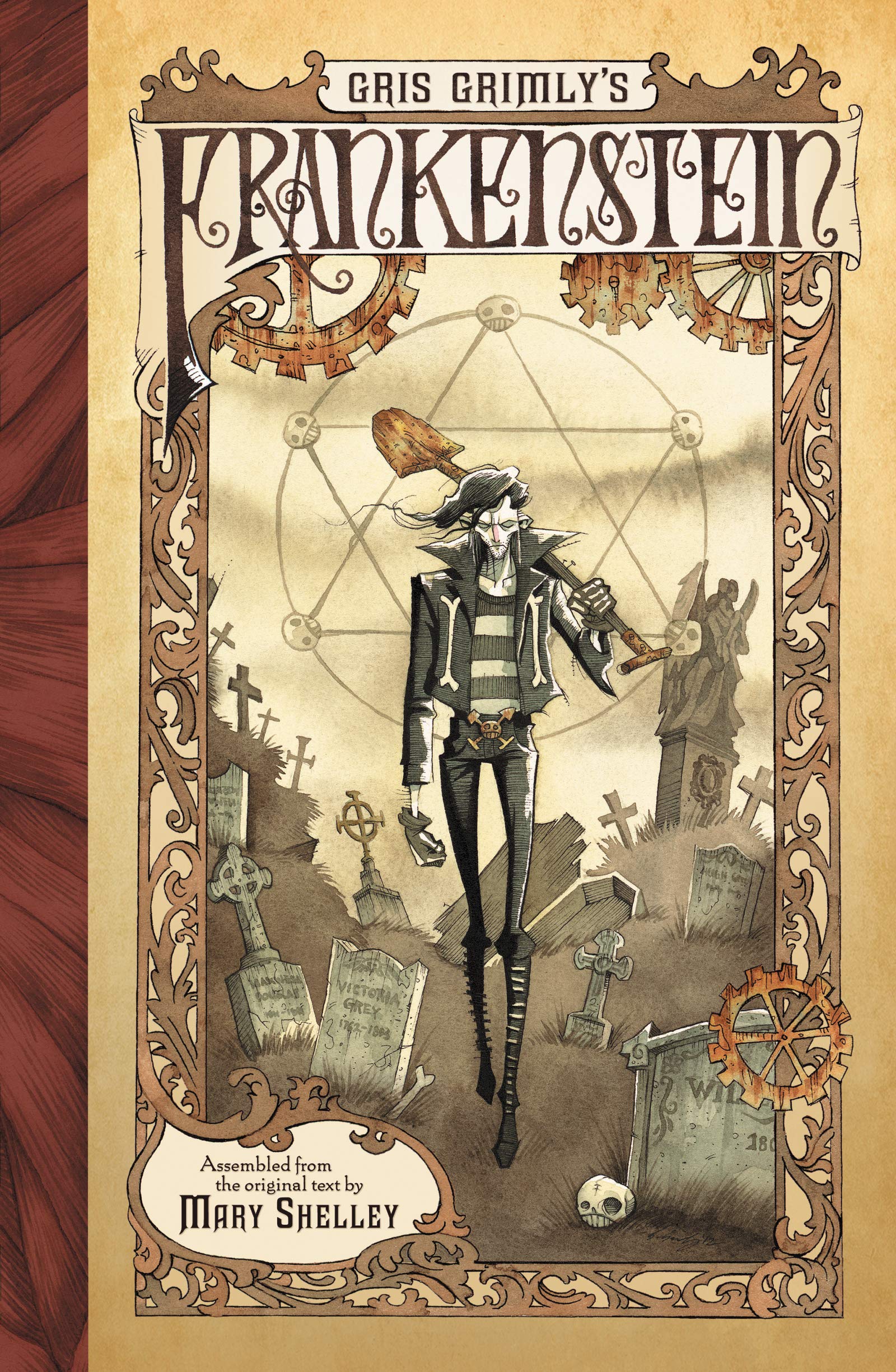
If you love comic strips, graphic novels, or rad video game graphics that tell the story seen in your imagination, then you will find Gris Grimly’s Frankenstein intriguing. This literary remake of Mary Shelley’s classic work captures attention immediately with on-point illustrations complementing the descriptive narrative, down to the smallest imagined detail. Grimly himself writes in his Afterword, “I wanted to set the tale in a world that could only be visited through my imagination. Dark moral lessons exist amidst a whimsical tone.” (Grimly 195).

The original Frankenstein was published in 1818 by Mary Shelley but the core messages of this chilling classic stand the test of time, especially told through Grimly’s words and pictures. Shelley’s original work was very advanced for its era. For many, the disturbing concept of creating life in a laboratory was difficult to understand. However, Shelley’s lessons about the consequences of what we create continue to captivate and even frighten readers today. As medical science has evolved, we can now transplant organs from one human being to another to sustain life. This is the positive side of such advancement but what are the consequences? Mary Shelley was asking these questions before anyone around her could imagine this kind of science. The problem with Shelley’s telling of Frankenstein is that the novel is long and difficult for a modern reader to get through. Enter Gris Grimly. Grimly is a wildly talented illustrator who was inspired by Mary Shelley’s Frankenstein so much so that he re-wrote the story in a way that would be more understandable to a wide audience. He added captivating, weird, and sometimes horrifying (in a good way) graphics that help usher the reader through the dense and detailed story.

Frankenstein is the story of Victor Frankenstein’s twisted life. A key component to understanding Victor is learning that he loses his beloved mother to scarlet fever. He is heart-broken and his grief drives him to the brink of insanity. His entire purpose becomes trying to find the cure for all illness, to prevent man’s demise from disease. This transforms from wanting to cure disease to creating life. Through research and experimentation, Victor succeeds in resurrecting the dead and creating life from a dead body dug out of a graveyard. The glory of his creation turns into fear because the life form has a hideous appearance. “For this I had deprived myself of rest and health. I had desired it with an ardour that far exceeded moderation; but now that I had finished, the beauty of the dream vanished, and breathless horror and disgust filled my heart.” (Grimly 42) Victor immediately flees the creature, his own creation, without even giving the creature a chance to learn humanity. The monster is brought into the world and abandoned by his maker. Grimly’s illustrative rendering of the scene is grotesque, sad, and begs the question, “who is the real monster?” Victor’s abandonment of the monster is a grave mistake. The monster flees into a world he does not understand with no guidance. He is shunned and hated by all manner of person. The rejection destroys the monster. He becomes jealous, hurt, and angry. The monster does not understand why he is treated differently than Victor and he is jealous of the love and acceptance Victor has from his family and friends. The monster’s rage and jealousy turn destructive and then deadly as he seeks to make Victor suffer in the worst way imaginable. With the guilt of his family being murdered by his own creation, Victor sets out to kill the creature and send it back to the darkness. Ultimately, this obsession leads to Victor’s own demise.

Grimly’s illustrations and written word are dark but weirdly drive home sympathy for the monster and disgust with Victor. Grimly writes in his Afterword about seeing the story through Victor’s eyes, “Beware the slippery slopes of acclimating to a life of self-absorbed achievements and fame, lest one falls into the pit of fire and brimstone.” (Grimly 195) Victor’s selfish undoing is not the only lesson of Frankenstein. The damage of ” judging a book by its cover” is another. The monster wants only acceptance and love. Anyone who has ever felt like the outsider or outcast can identify with him. Grimly beautifully draws the monster asking Victor to create a companion for him so he can, “become linked to the chain of existence and events, from which I am now excluded.” (Grimly 117) This drives home the monster’s feeling of loneliness and desire for acceptance and companionship. The reader can’t help but be frustrated by how the monster is treated and ask themselves, “wouldn’t I treat him better?” Ultimately what Gris Grimly accomplishes with his interpretation of Frankenstein is illustrative magic. Grimly draws the reader into his cool, grotesque, and hipster version of Frankenstein’s world, without allowing the reader to miss the key elements and moral questions of the original story. He takes the hard work of Mary Shelley’s immense masterpiece and makes it an easy ride for all readers.

-Johnson D.

Movies During Break

During this break, I have found myself with nothing to do and lots of free time. With it, I decided to watch a whole bunch of movies from “before my time.” I found that even after my family decided to let me watch the movie alone, I would find them coming in to watch with me, then asking me to wait until they had free time to finish it with me. 

My friends also decided they wanted to watch movies with me and kept recommending more and more movies that we could eventually watch together. Then we could talk about them later and watch other movies based on the ones we liked. 

I have found that there are many benefits to watching these movies. Though it may seem to some like you are just sitting around on a couch, I have found that with finals coming up for many teens, it has been a way to destress. Often with current movies, they are all the same and watching one is like watching them all. When watching older movies, they’re often much more interesting and I pay a lot more attention to them.

Another benefit of these movies is that I have been spending a lot less time on my phone. Watching a movie is still watching a screen, but I think it’s been a lot less harmful to watch a movie from farther away than being on my phone close to my face 24/7. 

As for recommendations, if you’re into classic movies from the 80s or 90s, I recommend Dirty Dancing, Dave, and The American President. As for movies from earlier years, Singin’ in the Rain and The Aristocats as well as Breakfast at Tiffany’s are all amazing movies. I do have to warn that some of them carry a PG-13 rating, so check with a guardian before watching. 

Watching movies is something that can be done year round and every day of the week, but especially on breaks when all you want to do is get away from the modern world and all of the issues going on right now. Watching them from past years, rather than one that came out three months ago can be therapeutic in that you can look back on what was good then and what you wish you had now and vice versa. 

So next time you have a long weekend off of school, or a week-long break, take some time to make a list of movies to watch and sit down with some popcorn. You might surprise yourself with what you end up loving.

-Danielle B.

Arboria Game Review

Arboria, developed by Dreamplant, is a dark, 3D RPG game. The player follows their customizable alien-like character, who explores different dungeons and prisons.  In the prisons, there are different monsters and enemies that you must face, such as flying bugs and corrupted animals. To help you on the quests, your character is able to customize their gear, such as different weapons, armor, and abilities.

The first thing that I realized about Arboria was the graphics. This game has a very dark and rouge-lite type graphics. This makes the game much darker, as well as scarier. I do believe that these graphics make the game slower, as well as not exciting. I do believe that was the point of the graphics, but I believe that they could have been a little bit more exciting or vibrant.

I did enjoy the large and various maps and dungeons. Each dungeon had different enemies and layouts. With each dungeon, players could unlock different weapons. For example, the player starts off with a battle-ax, but I was able to unlock a symbiote sword that attached to the body of my character. This wide variety of weapons was very interesting, and I was always excited to unlock a new weapon.

Another very interesting and new aspect of Arboria was the respawning system. When your character died, the player had to restart all over, losing all of their gear. This makes players be much more careful with how they play the game. On top of that, when each player dies, the gods get angrier. This will mean that the next character they play will have less trench, speed, etc. FOr example, My first character died after a couple of dungeons. When I respawned, I got a message saying that my second character will be punished for making the gods angry. In turn, my character had less speed. I found this system very nice, especially because it made all of the players much more cautious about how they play.

Overall, I really enjoyed Arboria, developed by Dreamplant. This well developed, exciting RPG game is definitely a new up and coming game. With new systems such as the limited respawns and angering god affects, Arboria has a lot of potential. I really enjoyed all of the different dungeons and maps, as well as the wide variety of weapons. All in All, I would definitely recommend Arboria to any gamer that is interested in a new and upcoming RPG.

Where the Sidewalk Ends by Shel Silverstein

Shel Silverstein, or perhaps more famously known as “The dude who wrote The Giving Tree” has actually written many stories alongside works of poetry; “Where the Sidewalk Ends” is one of those pieces of poetry. 

This collection of poems features works such as “Ickle Me, Pickle Me, Tickle Me Too”, “Hug O’War”, “For Sale”, “Sick”, “Me and My Giant” and “Hat”.  These poems are generally short, whimsical, and full of wit.  They are fun to read to kids, to dogs, to parents, to grandparents, or to yourself.  The poems are often satirical.  One such poem is called “The Land of Happy”. 

In this poem Silverstein tells of a place where everyone is always happy, then ends it with saying how plain that would be (Silverstein, 143).  Another is “Forgotten Language” in which Silverstein laments the loss of human connection to nature (Silverstein, 149).  All in all, this is a fun collection of poems for anyone looking for something to read before going to bed or for something to read anytime.

-Ainsley H

Where the Sidewalk Ends by Shel Silverstein is available for checkout from the Mission Viejo Library.