Book Review: Henderson the Rain King by Saul Bellow

Henderson the Rain King - Wikipedia

Henderson, the hero, comes from a famous family. His ancestors are all famous in the political world. Henderson, 55, inherited an estate of $3 million, an astronomical figure at the time, and could have led a worldly life of material comfort, but the prim-life self-proclaimed drifter was never satisfied. In real life, he causes a lot of trouble. He acts rudely because he has a lot of resentment in his heart. His first wife was a good match for him, but he married only to please his father. He loved to raise pigs, but he made a mess of the industry and clashed with his neighbors. He had tried to distract or extinguish his inner voice with physical labor, but to no avail. Rudeness begets rudeness, and anger begets greater anger. Unable to see the meaning of life, he escaped from his original life and embarked on a journey on the African continent. After experiencing the adventures of the Arnevi tribe, Henderson realized the meaning of life, understood the value of human beings, and returned to America with new hopes for life.

Exhausted, Henderson left the United States and began to travel to the ideal land of Africa in order to return to the primitive state of carefree human beings. This trip to Africa is not so much a trip as a self-imposed exile. He had not bought a ticket for the return journey. He had brought almost nothing for use, and most importantly, it was an exile with no destination and no time limit which not only cleansed his mind, but also made him realize the essence of life and the return to his true self. His exile was the only way he could ward off anxiety and achieve his ultimate goal— a transcendent existence beyond time and space. In fact, Henderson the Rain King reflects an intellectual living in an affluent environment who voluntarily gives up urban life and goes to the wasteland to complete the process of spiritual self-redemption. Eugene Henderson the wealthy American experienced a transition from superiority to perplexity, wealth to poverty, boredom to spiritual sublimation in his dealings with the natives.

-Coreen C.
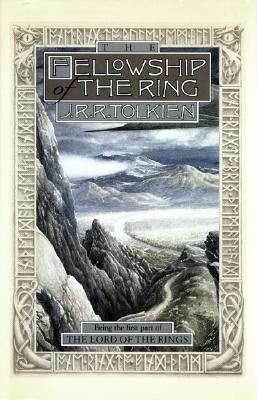
The Fellowship of the Ring by J. R. R. Tolkien

The Fellowship of the Ring is the first novel in The Lord of the Rings trilogy. The story is centered upon a magic ring found by Bilbo Baggins sixty years earlier during The Hobbit that must be destroyed. Bilbo has aged by the time of The Fellowship of the Ring, so with the advice of Gandalf, a powerful wizard, he passes the Ring on to his cousin Frodo and leaves for a “vacation.”

Years pass and Gandalf returns, and he discovers that the magic ring is no ordinary magic ring and that it is the ring of a powerful dark lord named Sauron. Gandalf tells Frodo that if the Ring were to fall into the hands of Sauron, he would conquer the world, and therefore it must be destroyed.

Gandalf sends Frodo, escorted by his friends Sam, Merry, and Pippin, to escort the Ring to Riverdale, an elven stronghold, where the fate of the Ring would be decided. Along the way, they face many threats, like the Ringwraiths, Sauron’s powerful servants. At Riverdale, it is decided that the Ring could only be destroyed in Mount Doom, a volcano near Sauron’s fortress where the Ring was forged in.

Frodo volunteers to travel to Mount Doom, and he is escorted by his friends, Gandalf, and some of the greatest heroes of Middle-Earth (the fictional world the story takes place in). The rest of the book is about the fellowship’s travels and adventures, and how they deal with problems and threats that they face on their journey to Mount Doom.

Ultimately, The Fellowship of the Ring is a good book, although it is quite long. I would recommend it to readers who love really long stories filled with action and adventure, like Greek epics such as the Iliad and Odyssey.

-Josh N. 

The Fellowship of the Ring by J. R. R. Tolkien is available for checkout from the Mission Viejo Library

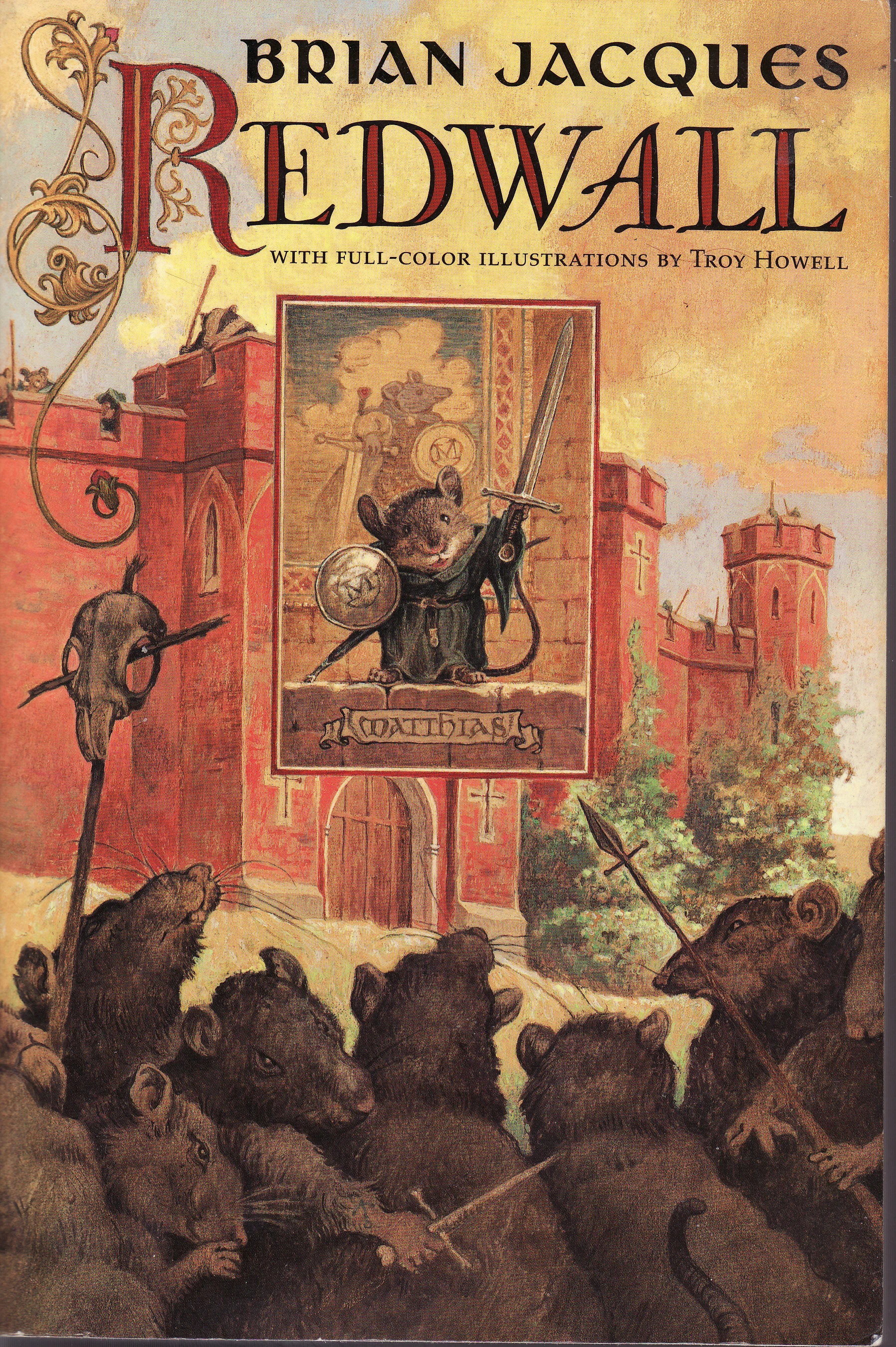
Redwall by Brian Jacques

Redwall is a series of 22 fantasy novels written by the late Brian Jacques.  The stories take place around a castle named Redwall Abbey in a land called Mossflower during a medieval period.  The main characters are animals with human-like abilities.  Most of the characters are woodland creatures that can talk and walk on their hind legs.  The good characters include mice, squirrels, otters, moles, and badgers.  The villains include rats, weasels, stoats, foxes and ferrets.  The books contain many epic adventures and are very enjoyable to read.

I have noticed a predictable pattern throughout the series.  Each book usually begins by introducing the main characters, including the main villain.  Then conflict arises between the good and bad characters.  Usually, the good characters are defending Redwall Abbey against their enemies.  Sometimes the heroes embark on long journeys or perilous adventures to defeat the villains.  By the end of each book, the bad creatures are defeated.  Though the books may seem repetitive and predictable, they are filled with surprising plot twists and many colorful personalities.

The first novel written in the series is simply titled Redwall.  The hero of the story is a small mouse named Matthias.  In this book, Matthias defends Redwall Abbey against the evil rat, Cluny the Scourge.  Matthias overcomes many challenges to save the abbey.  At one point he defeats the dreaded snake, Asmodeus, and obtains a legendary sword with which he fights against Cluny and his army.  This book is filled with action and suspense.

Another enjoyable novel in the series is Mossflower.  This book describes events that took place before the events of Redwall.  We learn about the history of Redwall Abbey.  A traveling mouse named Martin comes across a large and spacious castle inhabited by evil vermin led by tyrannical wildcats.  Martin finds a group of woodlanders who wish to overtake the giant castle and remove the dictators.  After finally succeeding in their mission and destroying the castle, they decide to build an abbey in its place.  The abbey is named Redwall because it was built with red sandstone from a distant quarry.  Redwall Abbey becomes the home of many good woodland creatures throughout the series. 

Perhaps my favorite book in the series is The Bellmaker.  This book involves a squirrel king named Gael who lives at Castle Floret.  The king is forced to flee from his home because of an evil foxwolf named Urgan Nagru.  As the story develops, heroic characters from Redwall come to the rescue to put an end to Urgan Nagru and his army once and for all.  This book may be my favorite in the series because of the gripping plot and fascinating character development.

The Redwall series is filled with adventure, action, and humor.  I enjoy reading each book because the stories are all woven together.  The characters come to life as we read about their exciting adventures from book to book.  These books may be written for young readers but I would highly recommend them to anyone.

-Oliver H. 

Brian Jacques’ Redwall series is available for checkout from the Mission Viejo Library

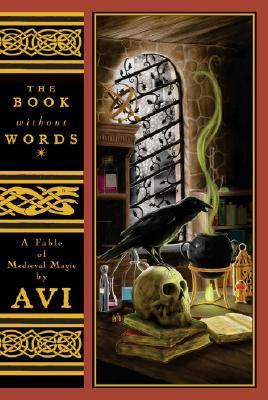
The Book Without Words by Avi

The Book Without Words by Avi is a strange, chaotic novella set in a medieval and gothic time period in an alternate universe.

An eccentric old man named Thorston has devoted his entire life to look for the two greatest secrets of life- the making of gold and immortality. Seconds away from a breakthrough, he keels over, dead. His servant, Sybil, and talking pet raven, Odo, decide that their only hope is to discover the two secrets and build a better life for themselves.

The ultimate theme of this book plays on human nature itself, as the two secrets themselves represent man’s greatest flaws- greed and the desire for immortality. 

This morally-charged storyline coupled with Avi’s odd, emotionless, and almost creepy narrating style makes for an intriguingly gruesome novella that turns the happy-go-lucky magic of youth into something curiously corrupted and cruel.

-Vaidehi B.

The Book Without Words by Avi is available for checkout from the Mission Viejo Library.

11/22/63 by Stephen King

This novel tells of Jake Epping, a recently divorced teacher at his local high school, teaching some GED classes for extra money. One of his GED students, the high school’s janitor, Harry Dunning, writes a tear-jerking essay for his final, about how his family was killed by his alcoholic father and how he was crippled for life. 

A few years later, when Jake visits his friend, Al, at Al’s Diner, Al shows Jake a time portal in the pantry of his diner; Al, seems to have aged years within a day, explains that he had used the portal to travel back in time, and had lived years in the past before he developed cancer and had to return. 

The few rules to the portal are as follows:

  • Each trip to the past is a complete reset to September 9, 1958. Whenever you enter the portal, you’re undoing whatever you did the last trip.
  • Each time coming back from the past through the portal, no matter how long you stay, you come back two minutes after you left.
  • The past can be changed, impacting the future, but the past is also obdurate; it tries it’s very hardest to stop from being changed.

After Al shows Jake the ropes, he sends Jake on the mission that he had been unable to complete last time. From what Al has observed, everything bad in the world can be traced back to John F. Kennedy’s assassination; if Jake could stop the assassination, the world would likely be a better place. And if it wasn’t, he could always go back and reset it. 

Jake agrees to the plan, but adds a few elements of his own; he would drop by the Dunning household, and stop Frank Dunning from murdering Harry’s family. Then, he would wait until 1963, watching and monitoring the world around him, and stop Kennedy’s assassination.

The title of this novel definitely was the eye-catcher on the library bookshelf for me, in addition to its impressive size. The reality of life that’s starkly shown in this novel, contrasting the preposterous situation Jake enters into, is why I enjoyed it so much. He constantly feels the danger of discovery, injecting an underlying urgency into the story, but I also felt a wrenching desire for him to settle down when he finds a wonderful woman in a content little town where he could live a happy life in the past. 

There’s a sense of heroism to the story as well; armed with the knowledge of the future, Jake strives to do his best for the greater good of the world. However, the past is “obdurate;” he runs into so many obstacles when he tries to change things, ultimately causing more harm than good. It’s an excellent example of how good intentions do not necessarily bring good results.

-Adelle W.

11/22/63 by Stephen King is available for checkout from the Mission Viejo Library. It can also be downloaded for free from Overdrive

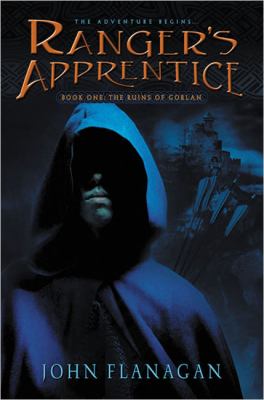
Ranger’s Apprentice: The Ruins of Gorlan by John Flanagan

The Ranger’s Apprentice series revolves around a boy named Will, an orphan taken in as a castle ward at Redmont fief, one of the fifty fiefs in Araluen. This first book follows his acceptance into the respected (and feared) Ranger Corps, the highly capable unseen protectors of the kingdom. As an orphan with no last name or memory of who his parents were, Will is set, along with his fellow wards, to be chosen by one of the Craftmasters and trained in service of the kingdom. 

However, Will’s skill set doesn’t fit any of the apprenticeships that his peers are chosen for. After Will climbs the tower up to the Baron’s office to try and find out his fate and the mysterious Ranger Halt catches him, he’s told that he would be most suitable for Ranger training. He learns to use the Ranger’s choice weapons, the bow, a throwing knife, and the specially made saxe knife, and learns the art of unseen movement, the key to a Ranger’s job in protecting his assigned fief. 

Meanwhile, Morgarath, the lord of the Mountains of Rain and Night, exiled from Araluen, plots his revenge against the kingdom. Having been planning for 15 years, he begins to mobilize his army of monstrous Wargals and unleashes the terrifying Kalkara, huge beasts of war that can freeze a man with their eyes. When word of this gets to Araluen, the Ranger Corps are put on high alert. Will, Halt, and another Ranger, Gilan, set off to track and kill the Kalkara. The book ends with Araluen mobilizing for war with Morgarath.

In addition to Will’s journey towards becoming a Ranger, I was particularly taken with his interaction with Horace, one of the castle wards and one of Will’s long-time bullies. Horace is accepted to Battleschool, training to be a knight; however, since he was alienated as an orphan, many of the other knight apprentices begin to bully him, causing Horace, in turn, to lash out at Will. After Halt gets rid of the Battleschool bullies, the two boys reconcile their differences and become fast friends; they see past their conflict and find a true friend in each other. I learned something crucial from this: that hostility is often rooted in something that can be solved with listening and understanding.

I love this series because it can be enjoyed immensely by anyone of any age; Flanagan transformed stories composed for his son into 12 artfully written novels of heroism, humor, and friendship. I highly recommend this book and this series to anyone in need of a fun and satisfying read.

-Adelle W.

The Ranger’s Apprentice series by John Flanagan is available for checkout from the Mission Viejo Library

Around the World in Eighty Days by Jules Verne

Amazon.com: Around the World in 80 Days (8601410733353): Verne, Jules: Books

The novel is rich in themes. Science fiction theme, roaming theme, detective theme, love theme and other themes cross and merge, and construct quite rich meanings. Among these themes, the Eastern theme stands out. In the novel, Fog’s route around the world is detour through Africa to India, from India to Japan, through Japan to San Francisco, and finally from San Francisco back to England. India, China, the Philippines, Japan and so on account for nearly a third of the pages. This part of Oriental imagination and writing is also the most prominent part of the dramatic elements in Around the World in 80 days, full of excitement and adventure, bantering and satire. Jules Verne fully demonstrated his humanism as a writer.

Through the words of his characters, he expresses his indignation at India’s barbaric funeral system, and shows his deep sympathy and righteous indignation at the British opium poisoning of the Chinese people through the experience of Jean Passepartout. He also used the beating of Fix and Fogg at the San Francisco convention to ridicule the chaos of the American democratic elections. Verne through Fogg’s whereabouts, connected Europe, South Asia, East Asia, North America’s topography, climate characteristics, urban architectural characteristics and local customs. As if it were a richly detailed book of popular geography, the precise amorous feelings and the ups and downs of the characters in the book combine closely with the strange religious customs and local customs of the world to form the propeller of the plot.

Fix, for example, would not have had the opportunity to urge the evil monks in Calcutta to sue Fogg and his French valet Jean Passepartout if he had not been a know-it-all who did not know that Hindu temples had to take off their shoes and socks and enter barefoot. If Fogg and Fix had not strayed into the Hong Kong tavern, Fix would not have drunkun Fogg with his pipe, and Fogg would have missed the important message that his master’s ship was about to sail ahead of time. Fogg had to venture to Yokohama in a boat of twenty tons, and there would have been no hurricane at sea. And if Fogg hadn’t gone to the Japanese acrobat troupe in Yokohama to find work and perform feats of human overlap, the master and servant would not have met by accident.

Custom has no greater effect on the plot than when Fogg and his party, riding on elephants, witness the grotesque and sinister funeral procession of widows passing through the dense forest, and Fogg has a whim to rescue the poor lady who has been forced to die. This directly created Aouda’s brilliant appearance in the story, and also created the sympathy between Fogg and Jean Passepartout. In other words, when a new custom is carefully portrayed by Jules Verne, it is conceivable that the conflicts of the story will again become concentrated and climax. The customs of the world’s landscapes are, in a manner of speaking, like intricate prisms, and the development of established stories like flower petals, which, when combined, create a kaleidoscope of wonders from Jules Verne’s travels.

Around the World in 80 Days follows the narrative pattern of travel in Western literature. The hero Fogg is a calm, rational, methodical, precise and accurate Englishman. He bet the men of the club twenty thousand pounds that he could complete the circle in eighty days. So he set out with the French servant, and after a long journey they returned to England on time. Fogg not only won the stakes, but also won the love of Aouda from India. This is the main clue of the novel. There is another clue in the novel: Detective Fix pursues Fogg. Fifty-five thousand pounds are missing from the counter of the Bank of England. The police find that the thief looks very much like Fogg. When they found out that Fogg had left England, they thought he was going to make an escape, so they sent Fix to hunt him down.

Travel and adventure and the pursuit of fugitives form the double power of narration in the novel, as well as the parallel and intersecting two threads, which make the narrative and structure of the novel form a certain tension.

The Hobbit by J. R. R. Tolkien

The Hobbit, or There and Back Again is a fantasy novel by J. R. R. Tolkien. The book is set in a world filled with elves, dwarves, orcs, magic, and all sorts of strange creatures, known as Middle-Earth. In The Hobbit, a company of dwarves, along with a wizard, attempt to reclaim their lost kingdom and gold, which have been taken by a dragon.

The book’s protagonist is a hobbit, a race similar to humans, but shorter than dwarves, named Bilbo Baggins. Bilbo lives a quiet, ordinary life inside his hobbit-hole, until one day a mysterious wizard named Gandalf the Grey and a company of thirteen dwarves show up at his doorstep, asking him to join their quest to reclaim their gold and slay the ferocious dragon Smaug. Bilbo initially refuses, but eventually gives in to temptation, and soon he, the dwarves, and wizard are thrown into an action-filled adventure.

The Hobbit mainly shows Bilbo’s growth and transformation into a hero as the dwarves are traveling towards their goal. Against obstacle after obstacle, Bilbo begins to prove his usefulness and worth, as he saves the dwarves from countless threats, from elven kings to deadly spiders.

The Hobbit is a great book that can be enjoyed by all ages. It is filled with adventure and there is action at every turn. Overall, The Hobbit is a classic novel that should be read by everyone.

-Josh N. 

The Hobbit by J. R. R. Tolkien is available for checkout from the Mission Viejo Library

Eragon by Christopher Paolini

Image result for eragon christopher paolini

A dark shadow looms over the seemingly-picturesque world of Alagaësia, where humans roam alongside elves, dwarves, and werecats – the wicked and powerful emperor Galbatorix, who rules with an iron fist. For nearly a century, the innocent inhabitants of this mythical land have suffered under the evil king, but all of that is about to change with the birth of a boy named Eragon.

Born as a simple, illiterate farm boy in a small village, Eragon was raised by his uncle alongside his cousin, unaware of anything beyond his home in Palancar Valley and, occasionally, the deep forest known as the Spine. It is in the Spine, however, that his life is changed forever when he comes across a peculiar sapphire-like jewel. After he sneaks it home, though, he quickly realizes that the “stone” that he found was actually a dragon egg, and that he was now a Dragon Rider, who were fabled peacekeepers, scholars, and healers during the Golden Age – the era before Galbatorix. 

Unfortunately for Eragon, being bonded with a dragon is one of the most dangerous occupations in Alagaësia, so he and his newly-hatched dragon, Saphira, are forced to flee from Palancar Valley with the help of Brom, the village storyteller who knows more than he tells, to find the mysterious rebel force which is known only as the Varden.

All in all, Eragon, written by Christopher Paolini, is an intriguing book containing new ideas imbibed with the same adventurous atmosphere featured in other popular series such as The Hunger Games and Percy Jackson. However, it can be said that the writing is rather childish, and so takes away from the overall excitement of the book. Nevertheless, while Eragon may not aspire to the same heights as Harry Potter, it is certainly a classic in its own right. 

-Mahak M.

Eragon by Christopher Paolini is available for checkout from the Mission Viejo Library. It can also be downloaded for free from Overdrive

Golden Son by Pierce Brown

Recently, I read Golden Son written by Pierce Brown. I really enjoyed this book and I am currently reading the third book in the series. The story is set in the future, when mankind has evolved. Now, humans are split into different levels, based off of the color of their skin. The story takes place right after Red Rising and still follows Darrow. He is getting closer and closer to his goal. In this novel, Darrow is having trouble getting the golds to start a civil war.

I chose this excellent book for many reasons. Overall, the book is well written. It has a good mix of action and suspense. One thing I liked about Golden Son was the relationship between Darrow and the Belonna family. Going off of the first book, Darrow and Cassius still have a vendetta.  One of my favorite parts of the book was when Cassius and Darrow finally meet after two years. Darrow challenges Cassius to a duel, and of course Cassius accepts. Cassius is known for being good at dueling, so he is over confident. At first, Darrow acts very bad at dueling, building up Cassius’s confidence. Then, Darrow pulls out all of his tricks. He tells Cassius that he has been training everyday for this moment. He easily beats Cassius, cutting off his arm, and starting a civil war, starting his goal. Overall, I would rate this book nine out of ten, and would recommend this to any middle-schoolers and up.

-Daniel C.

Golden Son by Pierce Brown is available for checkout from the Mission Viejo Library. It can also be downloaded for free from Overdrive