Book Review: Notes from Underground by Fyodor Dostoevsky

Upon a first reading of Notes from Underground, I found myself feeling confused and unable to verbalize what I was supposed to have taken away from this book. After some further reflection, I’ve come to realize that it would be better to classify it as a philosophical study rather than a novel. There is no apparent “hero’s journey” as we are accustomed to seeing in many classic and modern works of fiction alike; rather, everything that happens in this tale involves only the Underground Man and his relationship with his neuroses. 

It is because of this that I was puzzled after reading Notes from Underground. The Underground Man reaches no satisfying resolution to his character arc, leaving the reader yearning for catharsis yet receiving none. It is especially frustrating because his character arc is all the story depends on; and his anxious shuffling from one idea to the other plants a sense of never ending stress in the reader as well. 

That being said, it is still a brilliant story; deemed the first existentialist novel by countless thinkers and historians. I am regrettably uninformed in regards to the historical context of Notes from Underground, but I believe that the real merit in this book can be identified through analyzing the social climate in which it was written, and the philosophies that Dostoevsky incorporated into it. Once again, I lack the knowledge on existentialism to provide a full review as of now, but there are so many layers to this work that are waiting to be explored.

Notes from Underground is a pretty short read, and if one were looking into Dostoevsky for the first time, I would surely recommend this one to them. It’s a good introduction to his work, and it’s genuinely just such a stimulating novel. I consider it one of my favorite books of all time.

-Katie Z.

Notes from Undergound by Fyodor Dostoevsky is available to check out from the Mission Viejo Library. It is also available to download for free from Libby.
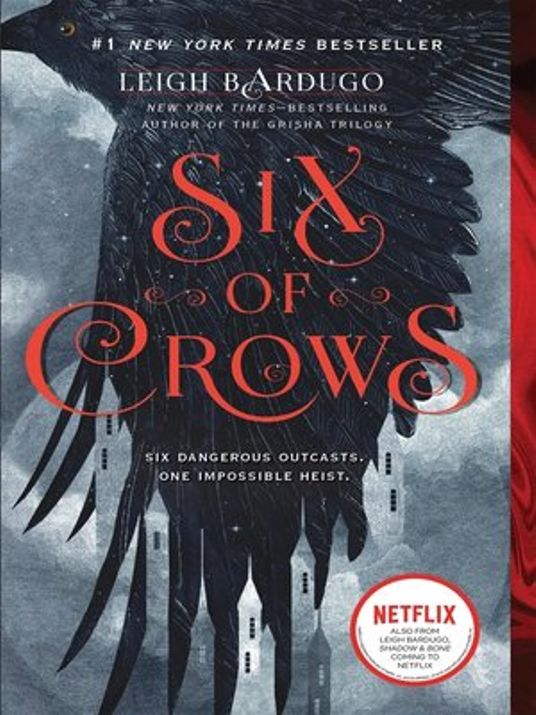
Six of Crows by Leigh Bardugo

Before reading Six of Crows, I had heard a lot of good things about it, but I’m not really a fan of the fantasy genre. Six of Crows surprised me greatly.

It’s the first book of the Six of Crows duology, its sequel being Crooked Kingdom. Both books are members of Leigh Bardugo’s incredible Grishaverse series. The Shadow and Bone trilogy were released beforehand, but aren’t necessary reading to understand Six of Crows.

This novel follows Kaz Brekker, a criminal mastermind living in Ketterdam. He’s made his way up the social chain from nothing and owns a large gambling hall in the city. Most importantly he’s the leader of the gang known as the Dregs. Kaz is asked to attempt to rescue a scientist from an extremely large and dangerous prison. He takes with him five members of the gang and their incredible adventure fills 462 pages of gorgeous writing, incredible plot, and some of my favorite characters ever.

As I previously mentioned, I wouldn’t call myself a fan of fantasy. I don’t know what drew me to Six of Crows but I’m so glad I read it. I’ve grown so attached to the main six characters and their deep emotions and painful backstories. All of the characters had their own unique backstories that just added so much to the story.

The chapters focus on individual characters. In other books I’ve read where it switches perspective, I’ve found myself disliking certain characters perspectives and zoning out when it was their chapters. However, Six of Crows kept me engaged the whole time.

I recommend Six of Crows to anyone looking for an incredible plot full of twist and turns. I already want to read it again.

-Ava T.

Six of Crows by Leigh Bardugo is available to check out from the Mission Viejo Library. It is also available to download for free from Libby.

The Secret History by Donna Tartt

The Secret History by Donna Tartt is narrated by Richard Papen, a new student attending a school called Hampden College in Vermont. Upon arriving, he is given the opportunity to take an ancient Greek class, in which he meets five Classics students: Charles, Camilla, Henry, Richard, and Bunny, who he grows close with within the first few months of the year. However, from the very first line in the prologue, Tartt spoils the fact that Bunny is eventually murdered, leading the novel to center around this event and how it was dealt with by the rest of the group.

Throughout the course of the story, Tartt alludes to several themes concerning the dangers of appearance and the romanticization of the elite class. For example, Richard is initially attracted to the group due to their wealthy, or as he describes, “magnificent,” appearances. He even fabricates aspects of his past in order to better fit in. However, as the group’s secrets, out-of-touch personalities, and extreme flaws slowly begin to unfold, it shows how their beauty never went beyond surface-level. No matter how rich they were, they were unable to cover up the guilt they felt from the damage they’ve caused.

What I found most intriguing and unique about this plot compared to others is that although Richard provides a well-paced, extremely detailed description of the course of events before and after Bunny’s death, he constantly alludes to the fact that he is a great liar, causing readers to question how valid his perspective truly is. Especially since he isn’t as involved in the group’s plans as others, the audience is left feeling as if they need to know more, and that there are gaps in the narration that can be filled by another character’s point of view. Therefore, I found myself continuing to contemplate the story days after I had finished it, making the novel an extremely memorable read that I see myself recommending to almost everyone.

-Aysha H.

The Secret History by Donna Tartt is available to check out from the Mission Viejo Library. It is also available to download for free from Libby.
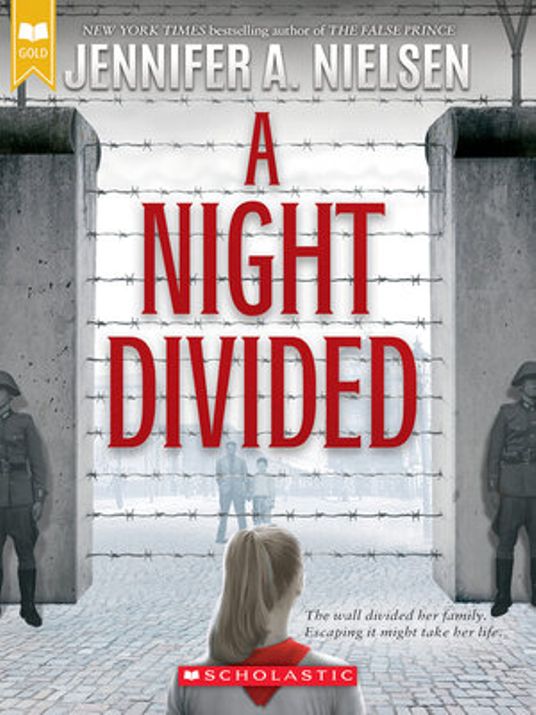
Book Review: A Night Divided by Jennifer Nielson

Over the course of one strange night, the family of twelve-year-old Gerta was abruptly divided. The rise of the Berlin Wall created an impenetrable boundary between West Berlin and East Berlin. Gerta’s family was split up; with her father and middle brother in the west and her, her oldest brother, and her mother trapped in the Soviet-controlled east.

Living in East Berlin is dangerous, with soldiers patrolling the city with guns at the ready all day long. Citizens are forbidden to watch the wall, think thoughts of freedom, or travel to the west. Any attempt of escape could end with deadly consequences. But one day, Gerta receives peculiar messages from her father and concludes that he wants them to dig a tunnel beneath the wall into West Berlin.

Gerta and her brother Fritz are at war with themselves, conflicted about whether they are ready to put their lives at risk for a chance of freedom. Gerta grows unsure of the people around her. Neighbors, friends… Can any of them be trusted? As the day that Fritz must report to military duty draws near, panic rises in Gerta and her family. Approaching is their one opportunity to escape to freedom in the west.

A Night Divided by Jennifer Nielsen is a historical fiction novel about the aftermath of World War II and its effects on a German family living in the east. I thoroughly enjoyed this novel, even though it’s different from the books I normally prefer. As a historical fiction novel, it dove deep into showing the impact that wartime can have on a country and how the world around a population of people can change. At the same time, it details how a war and a corrupt government can affect the lives of individual people, their emotions, and the way they grow. I truly enjoyed this book, and I would recommend it to readers of all kinds, especially those who already like historical fiction.

Happy reading!

-Lam T.

A Night Divided by Jennifer Nielsen is available to check out from the Mission Viejo Library. It is also available to download for free from Libby.

The Thirty-Nine Steps by John Buchan

The Thirty-Nine Steps is an adventure novel by John Buchan. The story is set in Great Britain, just before World War I. A man named Richard Hannay has just returned to London and feels exceptionally bored. He is tired of the sights and activities of the city. One evening, he receives a visit from a mysterious man named Franklin Scudder. Scudder claims to be a spy investigating a secret group of Germans who are attempting to steal Britain’s naval defense plans. He possesses an encoded notebook that references “the thirty-nine steps.” Hannay questions the veracity of Scudder’s claims, but he permits Scudder to hide out in his apartment. Hannay leaves for a few hours, and upon his return he is shocked to discover that Scudder has been murdered. Convinced that the murderers pose an international threat, Hannay takes Scudder’s notebook and sets out to foil their sinister plot.

This book is a classic adventure story. It could be considered a thriller, because it combines international intrigue with elements of suspense and detective work. The plot contains many twists and surprises, even though the book is quite short. I was impressed by the patriotism of the main character Hannay, who risked his own life to defend his country against a dangerous threat to its security. He is just an ordinary person, but he manages to escape an expert spy ring on many occasions. This book is fast-paced and exciting, and I was enthralled as I read it. I would recommend it to everyone. I would also recommend Alfred Hitchcock’s film adaptation. Even though it deviates a great deal from the book, the movie is highly entertaining and suspenseful.

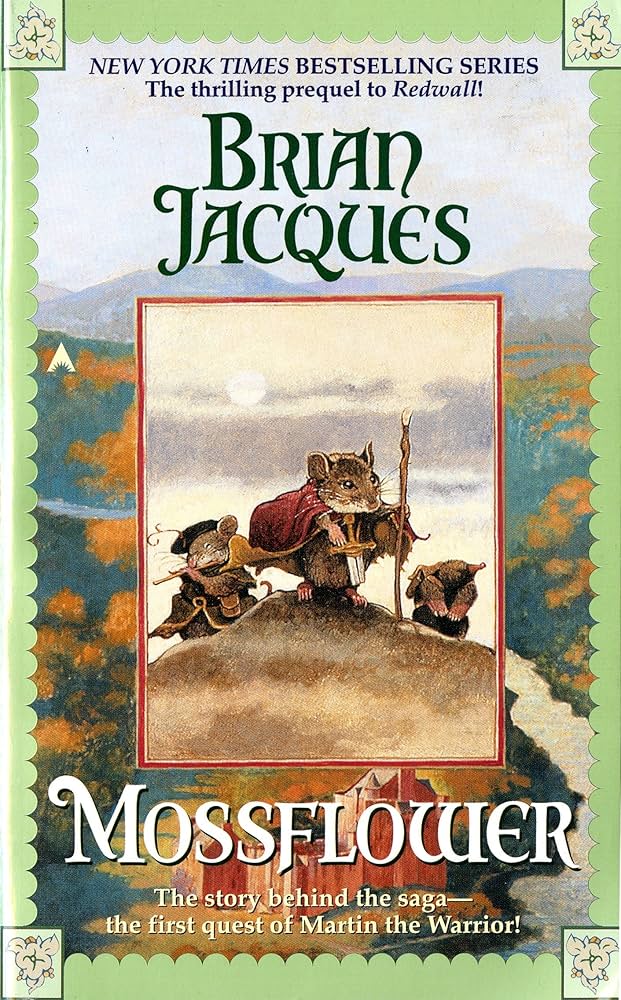
Mossflower by Brian Jacques

Mossflower, by Brian Jacques, is part of his popular Redwall series. This was the second book published in the series and would be the third book chronologically. It is a prequel to Redwall, a fantasy novel based in a world of human-like woodland creatures. Martin, the great mouse warrior, is traveling to Mossflower Woods. The residents of Mossflower are living under the tyrannical reign of Verdauga, the wildcat. Martin is captured and brought to Kotir, Verdauga’s castle, where he is imprisoned. Soon afterward, Verdauga’s daughter Tsarmina poisons her father and claims that her brother Gingivere is the murderer. She then imprisons Gignivere and usurps the throne, becoming the main antagonist of the story.

During his stay in prison, Martin is joined by Gonff the mousethief, who had been caught stealing food from Kotir. Gonff tells Martin about the Council of Resistance in Mossflower, known as the “CORIM,” and their active rebellion against Tsarmina’s evil reign. With the help of the CORIM, Martin and Gonff eventually escape from prison. Martin embarks on a quest to find Boar the Fighter, a badger who is believed to be the only creature capable of challenging Tsarmina. Defeating Tsarmina is the only hope for freedom in Mossflower, and Martin is determined to conquer the evil queen.

Redwall is one of my favorite books, so I was eager to read this prequel. Mossflower does not disappoint.  This book is filled with action and adventure. The large cast of woodland creatures and vast geographical setting create an exciting atmosphere, which made this delightful to read. The main character is just a small mouse, yet I found his bravery and determination to be noble and inspiring. The story is thoroughly immersive and engaging, and very dramatic. I would recommend this book to anyone.

Mossflower by Brian Jacques is available to check out from the Mission Viejo Library.

Jane Eyre by Charlotte Brontë

In the public eye, Charlotte Brontë’s Jane Eyre has been reduced to a romance novel. After all, all the elements are present: a plain heroine, a dashing love interest with a mysterious past, a barrier keeping them from their love, and much more. However, to reduce the novel to a story about a madwoman in an attic would be to disregard much of Brontë’s purpose in writing it.

The time Jane Eyre spends in Thornfield with Edward Rochester, the love interest in question, amounts to no more than one third of the book. After all, people do not just appear fully formed out of nowhere – they have a background, and Jane is no exception. Brontë masterfully details Jane’s childhood with her neglectful and abusive relatives at Gateshead, and the positive influence her first friend had on her at the Lowood Institution for Girls. In these parts of the novel, we see Jane growing up and growing into the strong, fierce personality Brontë makes it clear that her protagonist has – a first for female characters at the time.

Moreover, we continue to see Jane becoming her true self in the latter sections of the novel. Although she is finally reunited with part of her family, she does not let her attempts to fit in with them alter who she is and what she believes in. This can be seen when she rejects St. John’s proposal to marriage because she knows he loves another and only wants to marry Jane because she would make a good missionary’s wife. Despite internal and external pressures, she stays true to herself and eventually goes back to Rochester.

Jane Eyre is a bit of a dense read, but it will be time well spent. It covers a variety of topics and themes that allow the modern reader a glimpse into the nineteenth century, while also, of course, noting the forbidden yet passionate romance between Jane Eyre and Edward Rochester.

– Mahak M.

Jane Eyre by Charlotte Brontë is available to check out from the Mission Viejo Library. It is also available to download for free from Libby.
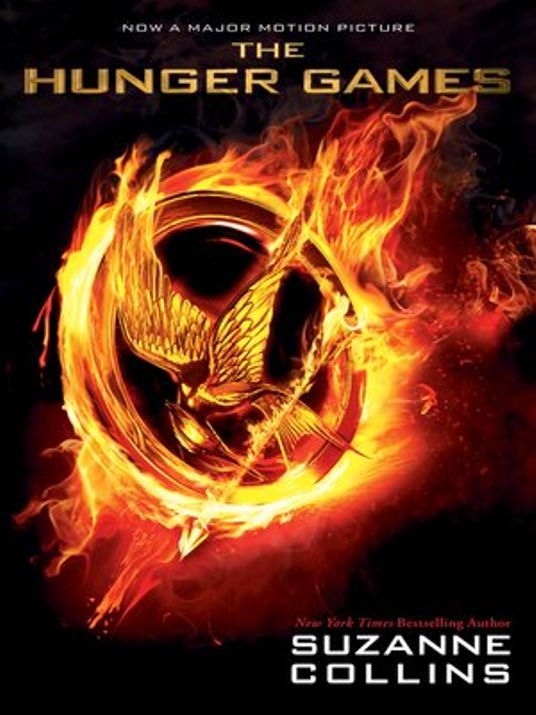
The Hunger Games by Suzanne Collins

*this review may contain spoilers*

This is actually my second time rereading this series but I felt inspired out of the blue to transfer myself into this dystopian world. The concept Collins portrays in this series is absolutely UNREAL.

Typically I don’t even like protagonists and usually root for the antagonist but in this case I enjoyed both Katniss Everdeen and Peeta Mellark. The chemistry between the two was executed perfectly within the plot of the story of the “Hunger Games”.

Essentially, the dystopian world, Panem is divided into 12 districts with a capitol which acts as their government. Annually there are these “Hunger Games” where 12-18 year olds are entered into and 1 girl and 1 boy are chosen from each district. Amongst the chosen, they battle out til there is only one survivor.

For the most part dystopian novels aren’t my liking but as of lately I’ve been seeking interest in reading dystopian novels. I also just think that Collins makes an effort to establish each of her characters with enough description and background that I feel connected to them. Books where you feel more bonded with the characters always sparks interest and that’s exactly what Collins did by creating Katniss and Peeta.

I honestly don’t understand how people come up with concepts like this, so reading the Hunger Games makes me giddy. I would recommend this book to anyone even if Dystopian/Fiction is not your preferred choice of genre.

-Madison C.

Hunger Games by Suzanne Collins is available to check out from the Mission Viejo Library. It is also available to download for free from Libby.
Book Review: Watchmen by Dave Gibbons and Alan Moore

At first glance, the bright appearance and comic book format of Watchmen may seem to just be any other superhero comic book, with an ensemble cast of heroes trying to save the world. However, from the opening pages, the uniquely real art and the darker tone establishes that this is anything but a simple superhero story. As the plot advances, Moore further cements this by showing the reader that the heroes in the world of Watchmen are just regular people who happen to be gifted with superpowers. This approach is what I believe inspired shows like the Boys, who take the same cynical approach to writing a superhero story.

The writing and story are very dense, but I think it never gets to be too much for the reader. One of the things I thought Moore does best is his use of flashbacks, both to give you a broader and more in-depth context of events happening in the book while also showing you that the heroes you see in the story have gone almost out of fashion. Another element that elevated Watchmen is the art done by Dave Gibbons and colored by John Higgins, which perfectly matches the tone of the story and sets a thick and developed atmosphere.

The story itself covers an alternate timeline where the US won the Vietnam War, and depicts the political and social atmosphere approaching WWII. The heroes of Watchmen are all very realistic and morally grey, and the plot covers them coming out of retirement to investigate the murder of an old hero and later uncover a plan with global consequences.

I personally really enjoyed Watchmen, and I would recommend it to anyone who is interested in comic books or superhero stories. However, I encourage people who usually don’t read comic books or are interested in things like superheroes to try Watchmen, as it’s unique approach and mature story appeal to many more people than just comic book fans.

-Orod S.

Watchman by Dave Gibbons and Alan Moore is available to check out from the Mission Viejo Library.

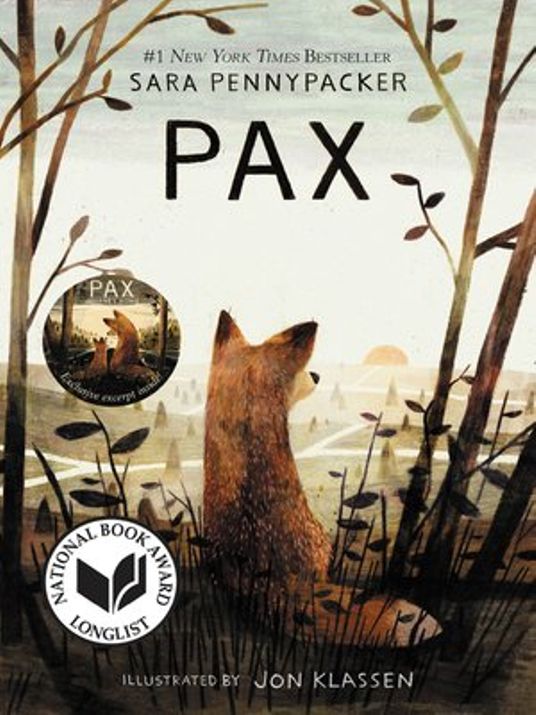
Pax

Pax is a children’s novel by Sara Pennypacker. It follows a boy named Peter’s journey to find his pet fox, Pax. He had found the fox all alone years ago, and taken him in. Since then, they had grown a very close bond with each other. 

Until the day that his father took Peter out for a drive.

Peter brought Pax with him, along with his favorite toy to play catch with. When they got out of the car, deep in the woods, Peter threw the toy.

When Pax came back, Peter wasn’t there. 

The rest of the novel follows Peter running away from home in order to find his fox again. It switches between Peter and Pax’s points of view, showing how the fox has become accustomed to his new life, meeting new friends along the way.

Oh yeah, and the whole book takes place during an unidentified war.

Peter is left at his grandfather’s home when his dad is drafted to join the fight as a soldier. Due to this, Peter is feeling more isolated than ever. He doesn’t have a very close relationship with his grandfather. Or his father. The whole family harbors their own anger towards one thing or another. Peter’s anger comes from his mother. Once, when he was young, he had gotten so angry that he broke his mother’s snow globe. As punishment, he had not been allowed to go grocery shopping with her. It was on that day, driving to the grocery store, that his mother had been struck and killed in a fatal car accident. Since that day, Peter had sworn to himself that he would never be angry again. He spent most of his time with Pax. So, when Pax is taken away from him, he makes the promise to find him. 

Pax is a children’s novel by Sara Pennypacker. It follows a boy named Peter’s journey to find his pet fox, Pax. He had found the fox all alone years ago, and taken him in. Since then, they had grown a very close bond with each other. 

Until the day that his father took Peter out for a drive.

Peter brought Pax with him, along with his favorite toy to play catch with. When they got out of the car, deep in the woods, Peter threw the toy.

When Pax came back, Peter wasn’t there. 

The rest of the novel follows Peter running away from home in order to find his fox again. It switches between Peter and Pax’s points of view, showing how the fox has become accustomed to his new life, meeting new friends along the way.

Oh yeah, and the whole book takes place during an unidentified war.

Peter is left at his grandfather’s home when his dad is drafted to join the fight as a soldier. Due to this, Peter is feeling more isolated than ever. He doesn’t have a very close relationship with his grandfather. Or his father. The whole family harbors their own anger towards one thing or another. Peter’s anger comes from his mother. Once, when he was young, he had gotten so angry that he broke his mother’s snow globe. As punishment, he had not been allowed to go grocery shopping with her. It was on that day, driving to the grocery store, that his mother had been struck and killed in a fatal car accident. Since that day, Peter had sworn to himself that he would never be angry again. He spent most of his time with Pax. So, when Pax is taken away from him, he makes the promise to find him. 

Pax by Sara Pennypacker is available to check out from the Mission Viejo Library. It is also available to download for free from Libby.