Book Review: A Christmas Carol by Charles Dickens

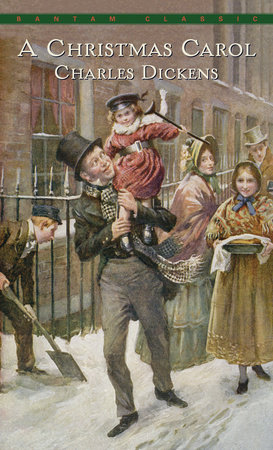
A Christmas Carol by Charles Dickens: 9780553212440 |  PenguinRandomHouse.com: Books

The novel is mainly about a miser. A miser had saved a lot of money, yet he was unwilling to add a lump of coal to the clerk’s fire. His nephew kindly invited him to the Christmas Eve party, but he thought his nephew was just trying to take advantage of him by refusing. Activists asked him to give a little Christmas food to the poor, but he was mercilessly rebuffed. He went home at night, and in the darkness he saw a face. Was it really a ghost? Or is it his vision? However, the appearance of the ghost has changed him completely.

Scrooge is visited on Christmas Eve by three Christmas spirits: Christmas Past, Present and Yet to Come. Christmas Past shows him how his sister cared for him in his lonely childhood, and how, as an apprentice, his kind boss, Fitzwig, danced with the crowd and entertained his staff on Christmas Eve. His heart began to soften, and he regretted his treatment of his employees and his transformation from a poor but happy young man to a rich but friendless boss. Present took him to a Christmas party at the home of one of his subordinates. It was a little clerk on a poor salary. There were no Christmas presents, no turkeys, but everyone had a happy smile on their faces. Yet to Come showed him the loneliness of being in bed with no family or friends to see him at Christmas when he was old. He began to rethink the meaning of life, and found that giving was happier than receiving. All this gradually awakened the other side of his humanity — compassion, kindness, love and joy. In an instant, his inherent selfishness and coldness collapsed and disappeared, and he became a good Samaritan.

So on Christmas morning, the morning after the ghost’s visit, Bob, an employee, arrives late for work, expecting Scrooge to be angry. But instead scrooge said to him, “Merry Christmas to you, my good fellow! I’ll give you a raise, and I’ll do my best to help your poor family. Get the fire lit quickly and buy a coal basket.” Then he bought a very big Turkey and had it sent to Bob’s family. Then, on his first visit to his nephew, he greeted people on the street with “Merry Christmas” and they smiled kindly at him. For the first time in his life Scrooge felt truly happy. His heart was laughing, and he felt the real joy of life in his charity.

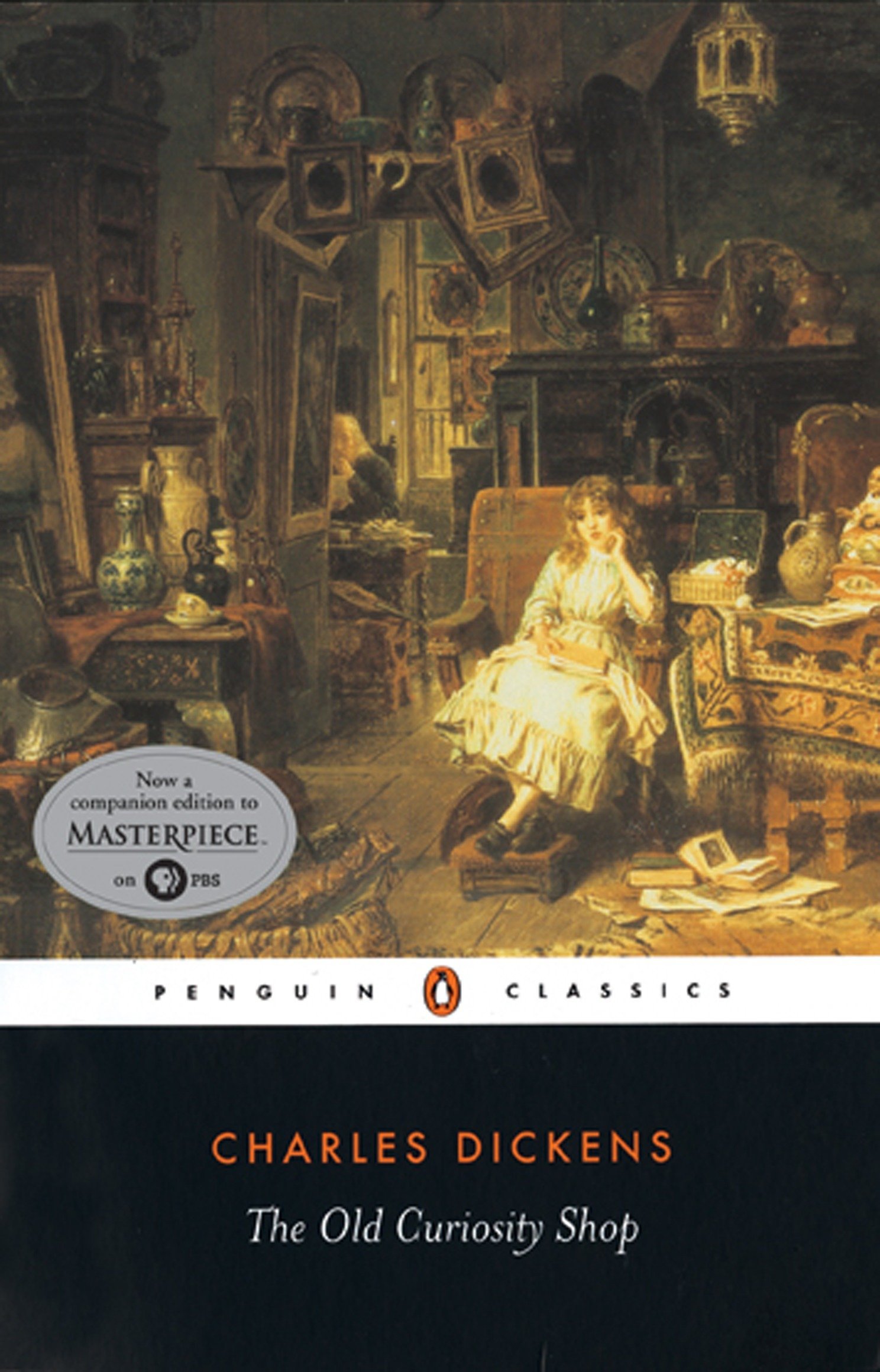
The Old Curiosity Shop by Charles Dickens

The Old Curiosity Shop (Penguin Classics): Dickens, Charles, Page, Norman:  9780140437423: Amazon.com: Books

The Old Curiosity Shop (1841) describes the tragic fate of the collapse of bourgeois in capitalist society. An old man with whom the author has deep sympathy runs an antique shop in a small alley in London. He had to fight against fate to get rich gambling, only to lose the antique shop to the loan shark instead. He and his little granddaughter Nell were ejected from the store. Two people later drifters to the remote countryside and died in the suffering. The kind-hearted little Nell and her grandfather lived together in an old antique shop, a place as magical as a fairy-tale cave. But little Nell did not know that her grandfather, who loved her dearly, hid a secret from her.

There was a crisis lurking in their seemingly uneventful lives — to make a living, and to leave little Nell a legacy that would enable her to live happily ever after. Desperate to get rich, he secretly gambled and borrowed money from the usurious upstart Daniel Quilp. Little did Grandfather think that they had fallen into the clutches of Quilp. Quilp tried to take over the old antique shop and the beautiful Nell. Nell’s sinister cousin, Freddy, had long coveted the business. He teamed up with his friend Dick Swiveller in an attempt to get Dick to marry little Nell, and then they could divide her inheritance between them, but grandfather found out.

Later, Daniel Quilp and his lawyer collect from turent, the old antique shop owner, an insatiable vampire who not only uses usury to take away all the old antique shop’s property, but also wants to take possession of beautiful Nell. Later, Quilp and his lawyer came to collect money from Grandfather, the owner of the old antique shop. The insatiable vampire not only used the usury to take away all the property of the old antique shop, but also wanted to take possession of the beautiful Nell. For the sake of his grand-daughter’s happiness, the old grandfather had to give up his old shop, which he had run for so many years, and take Nell with him to flee from home.

The two were forced to flee London and live a vagrant life of begging. On their way to escape, the two meet a variety of people, some good, some evil intentions, but Quilp has never stopped tracking them. In desperation, a good priest took them in and took them to his orphanage. But here, unfortunately, little Nell became very ill. In the end, the little Nell, who was physically and mentally injured and mentally exhausted, passed away.

The Grapes of Wrath by John Steinbeck

What if your family had no choice but to pack up all your belongings into a small car and travel a thousand miles on the road? And the destination is no place like home? What would you do?

Set in the “Dirty Thirties” during the Dust Bowl in Oklahoma, the Grapes of Wrath highlights the Joad family as they plan their new future in California, where workers are needed. In their eyes, California is their dream land and the rumored “Promised Land.” The family of thirteen people pack their necessities and are determined to take on the rigorous road to California.

Tom Joad, one of the main characters, leads his family through the obstacles on the road that include starvation and extreme heat. Each family member looks onto the road while facing internal and external challenges. The novel essentially teaches the importance of holding onto dignity and hope during hardships. The Joad family not only maintain hope for a better future, but they also unite together as a family.

Steinbeck additionally embraces the ideal American dream that, in reality, starts within the individuals with hope and determination. His use of symbols and literary devices portray the motif of endurance.

Overall, Steinbeck’s novel makes the reader go on his or her own journey while reading about the up’s and down’s of the Joads. At the end of the long path, the reader realizes that the obstacles they had to face teach them more about their ultimate destination.

-Zohal N. 

The Grapes of Wrath by John Steinbeck is available for checkout from the Mission Viejo Library. It can also be downloaded for free from Overdrive

Authors We Love: S.E. Hinton

S.E. Hinton is an American author we are often introduced to in school. Her classic novel The Outsiders remains one of the most popular books in youth literature to this day. The Outsiders tells the stories of the lower class (Greasers) and the upper class (Socs) from the perspective of narrator Ponyboy Curtis. The novel explores hostile interaction between social classes and is often seen as Hinton’s greatest work due to its stark realism and relatability. 

Rumble Fish is another one of Hinton’s greatest works. Rumble Fish follows the life of teenager Rusty James who struggles to live a life in his brother’s shadow. His brother, the Motorcycle Boy, had taken a trip to California and left behind a notorious, criminal reputation that Rusty James tries his best to embody. Unbeknownst to Rusty James, Motorcycle Boy never truly made it to California and was battling his own mental strife. In the end, Motorcycle Boy’s life is ended by his final, fatal encounter with the police as he tries to steal “rumble fish” from a local pet store. Possessed by grief, Rusty James decides to make his own trip to California and reaches the ocean in honor of his lost brother. Through this intense story, Rumble Fish teaches readers that the world becomes less dark if we know where to find the light. 

One of Hinton’s lesser known works is That Was Then, This is Now. That Was Then, This is Now contains many of the same elements as The Outsiders and Rumble Fish, but takes place a few years later. Now, social classes are less defined, and violence between Greasers and Socs is less frequent. The current omnipotent issue is no longer gang fights; it’s drug abuse. Main characters Mark and Bryon are close friends, and consider themselves brothers. When Bryon’s mother is hospitalized and needs surgery, the two scramble to find sources of necessary income. Bryon finds a job at a supermarket, while Mark supplies money without an obvious source. During this time of financial stress, their friend M&M goes missing until Bryon finds him under the influence of narcotics. M&M is hospitalized, and Bryon finds out that Mark has been selling drugs in order to help pay for his mother’s surgery. Bryon must choose justice for M&M or Mark’s life. In the end, their brotherly bond is severed when Bryon reports Mark and Mark is sent to prison. This story shows readers that the world is not divided into black and white, or good and evil. The most difficult decisions are often made in the area of divergence between the two extremes.

S.E. Hinton’s is one of the greatest authors of the 1900’s, and her books have remained popular, years after publication. Her didactic novels continue to teach modern youth crucial life lessons that will never die with age.

-Katie A. 

The works of S. E. Hinton are available for checkout from the Mission Viejo Library.

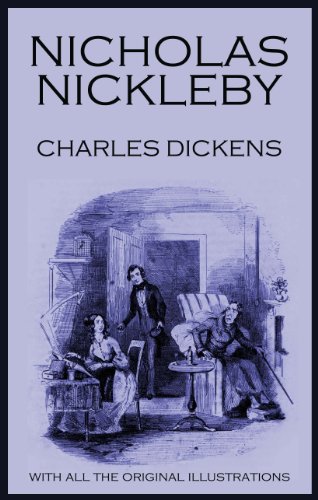
Nicholas Nickleby by Charles Dickens

NICHOLAS NICKLEBY (complete, unabridged and with all the original  illustrations from first publication) - Kindle edition by DICKENS, CHARLES.  Literature & Fiction Kindle eBooks @ Amazon.com.

Nicholas Nickleby is a boarding school teacher, an ambitious young man who is left penniless by the death of his father. His usury uncle not only refused to extend his hand to help, but uses his sister’s beauty for his own profit. He was upright and kind, and fled back to London to help abused schoolchildren. After many trials and tribulations, he fought with bad guys and exposed his uncle’s plot. Finally, he succeeded and married the girl he loved. Through his experience, the author reveals that at that time, the so-called poor run schools were actually profit-making places, the students suffered from hunger all day long, and whipping became the most important means of education.

Like most of Dickens’ works, Nicholas Nickleby is set in a contemporary setting. Most of the action takes place in London, with some episodes in Portsmouth and some in Yorkshire and Devon. This work satirizes social injustice in the form of irony. In the subject matter of this book, the main one is the education at that time. Dickens strongly criticized the education system at that time. He believes it is a serious crime that the British education system allows poorly functioning boarding schools to abuse children. Kindness and compassion are the main themes of this book. Noggs also plays the role of guardian angel because he is kind and upright. The friendship between Smike and Nicklyby further shows Dickens’ pity for some unfortunate people.

Greed is also an important theme of the novel. All characters make others suffer for their own financial gain. Most of their mistakes are caused by the love of money. Just as the Bible says: Money is the root of all evil. The book also deals with sexism and the passage of teenagers into adulthood. The book tells the story in the third person. Sometimes, the feelings of the characters are directly written out, and sometimes the feelings or thoughts of the characters are indirectly expressed through some small actions or facial expressions. When Dickens describes the abused children in chapter 8, he employs different rhetorical devices such as exaggeration, metaphor, alliteration and personification to leave readers with images of those children.

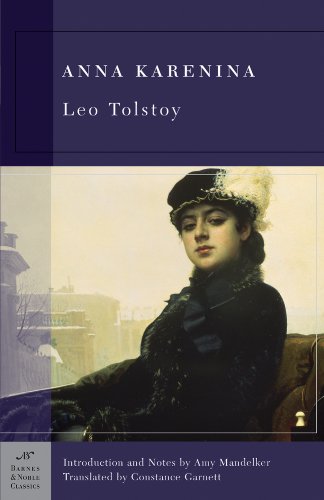
Book Review: Anna Karenina by Leo Tolstoy

Amazon.com: Anna Karenina (Barnes & Noble Classics) (9781593080273): Leo  Tolstoy, George Stade, Constance Garnett, Amy Mandelker: Books

An excellent psychological description is the essence of the artistic charm of Anna Karenina. The psychological description of the characters is an important part of the whole work. Anna’s choice shows human error. In order to realize the narrow personal love, she did not mind leaving her family as a slave to her own lust. Leo Tolstoy profoundly reveals the origin of Anna’s tragic fate through this magnificent work, that is, the incomplete emotional personality determines Anna’s tragic fate. Although her life exploration is aimed at realizing the spiritual self-pursuit, her life force lacks rational coordination, support and control, resulting in a tragic ending of drifting with passion.

Anna vigorously pursues the extension of perceptual life, strives to explore the original existence mode of life, and earnestly calls for the return of human nature. This behavior mode and understanding of life are understandable, but it does not mean that we should completely abandon even a little bit of rational constraints. Anna in the pursuit of spiritual freedom and practice of the liberation of human nature at the same time fell into the sensual error of indulgence. The freedom she sought to cast off the shackles of society was a selfish freedom, a freedom without scruples, a satisfaction of emotional and possessive desires.

Freedom is not a simple sense of doing whatever you want to do, but a rational sense of active life stretch. If we abandon the principle of reason and only recognize the freedom of the individual, then the freedom of the individual can easily constitute a violation of the freedom of another person, harm the interests of the surrounding groups, lead to contradictions and conflicts, and ultimately make the freedom of the individual insecure and unstable. Just as the pareto principle in economics requires, the realization of individual freedom must be restrained by rationality to ensure the freedom of the whole society is not reduced, that is, the increase of individual freedom must be presupposed by respecting the freedom of other relevant individuals.

It is only under the guidance of reason that each individual seeks his or her own freedom that he or she will be recognized by the social subject. Freedom must be combined with reason to manifest and realize, so as to form a complete concept of moral self-discipline. On the contrary, freedom without reason is at best an empirical self, not a positive extension of life. Only by constraining oneself with the power of reason, realizing the unity of sensibility and rationality, and establishing a sound ideal personality, can we achieve the true state of freedom, which is the highest state that human beings should pursue.

Moreover, Tolstoy saw that in Russia, with the development of urban civilization and material civilization, people’s natural emotions were suppressed, subjectivity gradually lost, and they became the slaves of selfish desires. In the novel, Levin is a man who loses himself in the bureaucratic strife. Through this character, the author shows his reflection on rationality and his deep worry about the alienation of human nature. In the novel, Tolstoy also created two environments, two kinds of aristocrats, through the lives of Levin and Anna. One was the city, where the Karenin, the Oblonsky, and the Vronsky aristocracy lived.

The other was the countryside, where the Levin aristocracy lived. The former is far from nature, for selfish desire to slowly lose the natural emotion of people. In the competition between human beastliness and human nature, they gradually abandon the good self for their own selfish desires. And the latter is in the natural environment, in the real work to exercise the body, purify the mind, get real happiness. Tolstoy shows his opposition to urban civilization through different aristocratic attitudes towards nature. From the cultural point of view, Anna’s tragedy should be the manifestation of Russian cultural tragedy.

Anna struggled between emotional satisfaction and religious repression, lacking a rational regulatory link, a mental defect that showed the fragmentation of Russian culture. Russia is a latecomer to capitalism. It is a millennia-long religious and authoritarian system that keeps the state running. The scientific Enlightenment, which rose slowly in Russia from the end of the 18th century to the beginning of the 19th century, was often led by the ruling class to serve the autocratic system, which resulted in a lack of real rational spirit and legal consciousness, let alone a sense of democracy.

In Russia, only a small number of intellectuals (such as Pushkin, Belinsky, Turgenev) were affected by western science, democracy and rational spirit. However, most intellectuals have a strong religious consciousness inherent in their minds (such as Tolstoy, Dostoevsky, etc., who best represent the characteristics of Russian culture). For the Russian people as a whole, their way of looking at problems and dealing with things is either instinctive desires or moral beliefs, and their instincts and beliefs are in a state of confrontation and division. Hence, Anna embodies the fractured nature of instinct and belief in Russian culture.

Agnes Gray by Anne Brontë

Agnes Grey, by Anne Bronte. I had rather low expectations for this  lesser-known Bronte novel, but it definitely exceed… | Agnes grey, Anne  bronte, Old movie posters

Agnes met the honorable curate Weston. Although both of them are equally poor, they have the good feelings of the world, and enjoy the beautiful things of nature together in helping each other. She and Weston lived an unflashy, truth-seeking life. In the face of ignorant and cruel students, selfish and hypocritical employers, Agnes showed integrity and patience. She never gave up her efforts and pursuit. She sympathizes with the weak and often visits and helps the poor. In this, Weston has done even better. In them, goodness is reflected. Compared with Agnes Gray and Weston, the ignorance, coldness, selfishness, and hypocrisy of the young ladies and gentlemen of the bourgeoisie are obvious. Standing on the progressive standpoint of that era, the author reveals the social inequality and unreasonableness.

Agnes Gray not only reflects the personal experience of a governess in the first half of the 19th century, but also highlights the characteristics of ignorance, callousness, selfishness and hypocrisy of the aristocracy and bourgeoisie in the rising stage of the British society at that time. Although they have accumulated a lot of material wealth and gained a high social status and power, readers can feel the dark side hidden behind all these grand appearances from the perspective of the author’s narration. These lords and ladies seemed to have fine manners and fine conversation, but their spiritual and material lives were far from balanced. If we cast aside that superficial appearance and go deep into their hearts, the reader will find that they are very poor in spirit.

Mr. Murray does nothing but drink and abuse, Uncle Robson is devious and takes pleasure in killing animals and insulting people, and Lord Ashby eats and drinks excessively. Even the Reverend Hatfield, the spiritual guide of these upper men, was no gentleman. From the pulpit he was eloquent, discerning and guiding, and presenting himself as the spokesman of the savior of mankind. As soon as he stepped off the pulpit, he showed his true colors. He tends to the ladies of the rich family. He is witty and talkative on the surface, but in reality he is a buffoon and a smooth talker. When he failed to court Miss Murray, he went out of his way to threaten her, and all the dignity and grace of the preacher was gone. In contrast to them were Agnes Gray, the governess, and the curate, Weston.

They all looked ordinary and came from poor families. They are indeed poor in material things, but they do not feel inferior to take the breath of the rich. They live a very full life within themselves, live by their own rules faithfully, and believe in the greatness of human love. They are striving for a balanced life, and if they have no ambition to make the world a better place, at least they want to perfect themselves. While seeking respect and love, they never forget to respect and love others. They live a life free from vanity and in pursuit of truth, which is not only their honesty to others and to themselves, but also their attitude towards life as a whole. They love knowledge and true friendship, as well as the plants and trees of nature.

They are intellectually, morally, and mentally superb to their employers or superiors. Because of their spiritual superiority, they face difficulties, grievances and injustices without deceiving themselves or feeling uneasy, and always accept the gifts of life with open arms. In this respect, the author seems to be saying that Agnes Gray and Weston’s acceptance of life is deeper and broader than that of property owners. It should be noted that in Agnes Gray and Weston, there is indeed a certain religious feeling. It is easy for the reader to relate much of the work, especially the personalities and experiences of the two men, to this background. It is true that the author measures a man’s character by the piety of his religious feelings.

The author distinguishes Agnes Gray from her employer by her faith in God and her love for humanity. But what is presented directly to the reader is Gray’s endurance, her efforts, and her pursuits in concrete life. So in this sense, religious background is only a superficial means to distinguish between the two, not the essence.

A Study in Scarlet by Arthur Conan Doyle

A Study in Scarlet (Sherlock Holmes Book 1) - Kindle edition by Doyle,  Arthur Conan, Penzler, Otto. Literature & Fiction Kindle eBooks @  Amazon.com.

“A Study in Scarlet” has a sophisticated narrative technique that is perfect. From the perspective of narrative layout, this novella is divided into two parts, with seven chapters in each part. The narrative sequence of the first part is as follows: Watson gets acquainted with Holmes — the reasoning method of Holmes — the murder happens — the police statement — the suspected murderer appears — the police statement — the murderer is caught. The second part is as follows: looking back to the past (that is, the motive of killing) — Watson supplement — Holmes explains the reasoning process. The whole narrative can be divided into three parts with the occurrence of the murder as the boundary. Before the crime, the first and second chapters are the chapters where the author sets up the characters to appear. Watson first learned about Holmes from a friend. His friend gave a very good summary of Holmes’s character in a few simple words, such as he was a strange man, a very decent man, his studies were messy, he was a little too hard on science, and so on. The role of this friend is to give Watson, and indeed the reader, an initial introduction to Holmes, and when the two meet and decide to share a room, the friend exits and disappears behind the scenes. The task of introducing Holmes to us fell to Watson. The author makes an ingenious shift of perspective, allowing Watson to amplify the magic of Holmes with several small events, such as knowledge table, argument with Holmes and reasoning on the identity of strangers.

In these two chapters, the narrator is not fixed. The narrative perspective constantly switches between Watson, his friend and Holmes, giving us a multi-dimensional understanding of the life situation and personality characteristics of Watson and Holmes. There are five chapters between the murder and the capture of the culprit. From the point of view of the complexity and brilliance of the narrative, this part of the content is undoubtedly the most worth tasting and analyzing. The author changed several narrators to make the plot more intense. When the postman brings a letter with information related to the murder, Holmes reads it and asks Watson to read it to him again. The letter is written by a policeman, Gregson, and read by Watson, who becomes the first narrator. Gregson, on the other hand, is the latent narrator. Then Holmes and Watson come to the scene of the crime. The two policemen again become the main narrators. By his own observations and the information provided by the police, Holmes got a preliminary understanding of the case. Then, the police officer who found the body described the discovery of the body as the main narrator, the police officer Gregson as the main narrator proudly announced his investigation process, Holmes as the main narrator confirmed to everyone that the dead died from taking poison, and caught the murderer. Basically, each chapter has a different narrator who tells the reader about the case from multiple perspectives.

When the police narrated the case as the narrator, Holmes supplemented the details that the police did not find as the second narrator. Such narration made the case complicated and confusing. All the people were in the fog, but Holmes had already reached the conclusion at this time. At this point, the murderer has been arrested, and is caught. This catches all the readers by surprise, for everyone, except Holmes, is in the dark. The criminal is suddenly caught, but the author does not explain to the reader how he killed, why he killed, and how Holmes learned who the criminal was. Normally, this would have been part of the first book, but Conan Doyle took a different tack, going back in time 30 years. The narrative space is transferred from London to the desert of North America. He tells us the motive of the murderer in the objective and calm third person with the content of five chapters. After going back through history, the author adds two more chapters. In the sixth chapter, after the first five chapters have laid the foundation for the motive of the murderer, Watson as the first narrator is actually the criminal Jefferson Hope as the second narrator to describe the criminal process in detail. At the end of chapter 7, when the criminal has died of illness, Holmes tells Watson his reasoning process. At this point, the whole novel really came to an end. Conan Doyle used dozens of narrators in “A Study in Scarlet”. The narrative perspective is constantly shifting from person to person (seemingly arbitrary, but actually carefully arranged by the author).

From the detective to the police, from the police to the criminal, and then to the author of the whole novel Watson. Conan Doyle weaves the whole story with the narrative structure of crime discovery, crime solving, crime story and reasoning process, which integrates love story, crime story, historical story and detective story, expands his creative horizon and greatly enriches the artistic charm of detective novel. From the irony and ridicule in the novel, we can also feel the skillful use of the narrative discourse, so that the listener can indirectly feel the thorns in the words through the derivation of the meaning. Such sarcasm actually attacks the face of the other party through narration, and it also plays an auxiliary role in the construction of the character image. It is in this way that the author gives us a description of a sharp, distinctive character of the detective image. Through the construction, metaphor and transformation of the narrative discourse, the author employs a lot of ink to render the characters of the three detectives, with the purpose of describing the incompetence and vulgarity of the official detective as a contrast to the wisdom and courage of the private detective. Moreover, the poor performance of these two detectives undoubtedly enhances the readability and entertainment of the novel, which enables the readers to enjoy the art of murder and achieve the artistic effect of relaxation after tension.

How Fiction Can Give Us a View Into Reality

“The difference between fiction and reality? Fiction has to make sense.” Tom Clancy’s analysis on the divergence between the realm of fantasy and the confines of the real world shows us that reality and fantasy are really not as different as they may seem. One example of this is Clancy’s Jack Ryan series, which centers around the trials and triumphs of a former U.S Marine lieutenant turned history teacher as he becomes entangled in the world of international espionage and warfare.

The series’ first book, Patriot Games, depicts Ryan’s chance encounter with Ulster Liberation Army terrorists in England and sets the tone for how this will alter the course of his career and family life in the books to follow. Although this book was written for entertainment purposes, it does give us a window into the international political climate at the time of the book’s release(July 1987). The Provisional Irish Republican Army was fighting to end British influence in Northern Ireland and reunite Ireland at the time of publication. This book was not based on a true story, but it does allude to the real-life political climate in the UK at the time, which helps readers gain a greater understanding of a time period that they may not have experienced.

Another author who drew inspiration from the world around him is John Steinbeck. Steinbeck’s famous Of Mice and Men is a book many read during high school English courses. It tells the story of two close friends, George and Lennie, as they attempt to seek work in California during the Great Depression. This story is categorized as fiction, though some of the characters and events Steinbeck described were people and things he met and experienced during his time working on a ranch in central California. Of Mice and Men’s setting helps readers understand the desperation that unemployed Americans faced in trying to find jobs during the Great Depression. Lennie’s character also shows the rejection, stigmatization, and ignorance of mental illness during this time period, which was a very real and prevalent issue in the real world. Many believe that books categorized as fiction are simply nothing more than stories created to entertain literary enthusiasts on a rainy day.

History, politics, and social structure are all topics that are traditionally reserved for textbooks or newspapers. However, Clancy’s series and Steinbeck’s works are some of the many examples of how fiction can give us a glimpse into the past or present reality. It is interesting to see just how much we can learn about a past time through our favorite novels and fantasy stories and may encourage those who stick to the world of non-fiction to branch out into other genres.

-Katie A.

Far from the Madding Crowd by Thomas Hardy

Far from the Madding Crowd eBook by Thomas Hardy - 9780553905557 | Rakuten  Kobo United States

The tone of this novel is light-hearted, humorous, lively and full of love for ordinary farmers, which is different from the heavy tragic color in Hardy’s later works. Although the reunion finale also contains themes familiar to readers in later works, such as pain and betrayal, the novel still shows a clear romantic color. In the novel, Hardy rendered the primitiveness and roughness of the natural scenery in Wessex with heavy color and ink, suggesting the potential deterrent force of such natural environment. However, man is extremely small and weak in front of the vast nature. A rainstorm or fire can destroy all the fruits of people’s hard work. An uncertain fate pervades “Far from the Madding Crowd”.

Poor Boldwood was tormented by fate. He poured all his feelings, thoughts, energy, and possessions into Bathsheba. Troy’s presence twice shattered his hopes just as he was within reach, so it was futile to demand what was fated to be unattainable. The beginning of the novel sets the tone that Bathsheba cannot live without Oak. In spite of Oak’s mediocre talent and appearance, in spite of the fact that his sheep had gone bankrupt and he had been reduced from a rich farmer to a wandering hand, Bathsheba had become the mistress of the farm because she had inherited her uncle’s fortune.

The conflicts between human beings and society in Hardy’s later novels reveal more about the social root of the characters’ tragedies, weaken the concept of fate, and replace the contingency with the inevitability of tragedy, which is the mature deepening of the author’s tragedy consciousness. However, such maturity and deepening are based on the conflicts originally embodied in “Far from the Madding Crowd”. In the plot structure, Hardy often sets up two parallel love clues and uses a lot of means such as chance, coincidence and mutation, making the love triangle between two women and a man or two men and a woman closely linked and fascinating. Techniques such as creating a heavy, tragic atmosphere through bleak depictions of the environment were pioneered in “Far from the Madding Crowd”.