Book Review: A Single Shard, by Linda Sue Park

single_shard“He would make replicas, dozens if needed, until the glaze was like jade and water. And the vase would be carefully inlaided, with a design of-of…” – An excerpt from A Single Shard by Linda Sue Park

A Single Shard is the story of an orphan, Tree-ear, in a potter’s village in Korea during the twelfth century. It was written by Linda Sue Park, who weaves a artful story of the orphan’s life and pottery.This is a fantastic book that won the 2002 Newbery Award.

Tree-ear is a 12-year-old boy who lives with a crippled man named Crane-man. They live together under a bridge in the small Korean potter’s village of Ch’ulp’o. They both scavenge and hunt for food to live. Living in such a town, Tree-ear naturally becomes attracted to the art of making pottery. Ch’ulp’o was one of many villages that were known for a be able to create beautiful pots of a rare celadon green color. Tree-ear likes especially to watch a potter named Min. Min is known to create some of the best pieces in the village, but is incredibly slow. Tree-ear by accident damages one of Min’s pieces and does work for Min to repay for the lost time. This eventually become a sort of apprenticeship. Even so, Tree-ear has to deal with Min dissatisfaction and refusals to teach him to shape a pot.   When the news of a royal commission reaches Ch’ulp’o, Tree-ears hopes to finally gain Min approval and respect. 

A Single Shard is a incredible book. This has been a favorite of mine ever since I read it several years ago– a tale that good for any age. This is a historical fiction that shows a peek into the history, art, and culture of ancient Korea. This story is also about the importance of family, and how it can change a person in both a good and bad way. Not much action or adventure, but a great book to read as a family. Read it for yourself and decide.

– Sarah J., 8th grade
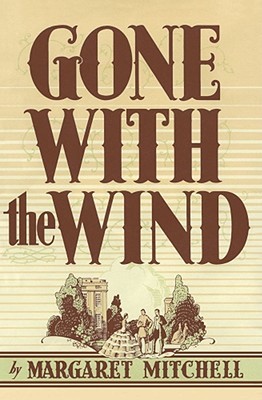
Book Review: Gone With the Wind, by Margaret Mitchell

gone_with_the_windHistorical fiction, the fabled nightmare of our literature! So they say, but most are quite gripping once you’ve delved in. This was the case for me with Gone With the Wind by Margaret Mitchell.

I admit, I started this classic for my social studies class. However, once I got past the first few chapters, the rest of the pages blew by quickly.
Setting the scene during the civil war, this story tells of Scarlett O’Hara, daughter of rich Southern plantation owners. Flirty and frivolous, she spends her early life attending parties and breaking boys’ hearts. There is small talk of civil war, but she pays no heed. When her “true love” turns her down, a series of events places her in Atlanta. Suddenly, the war is much more realistic and closer to home. Thousands enlist to join the Confederate army, and hospitals begin working overtime. With a harsh blockade, life within the city becomes stricter, but she manages. Finally, the Union breaks through the last defenses, and storms the city. Fleeing to her old ransacked home, Scarlett struggles to hold together the family and rebuild her life. Gradually, she raises her social status, recovering along with the rest of the world.

This historical fiction gives detailed descriptions of Civil War era life. From the daily life in the city to the social hierarchy, nothing is left out. What makes it so interesting is that Mitchell tells the story from a Southerner’s point of view. Usually the South is portrayed as a single-faced bad guy, but Gone With the Wind gives us two viewpoints. Many average people were just defending their homeland rather than preserving slavery. It really sheds a new light on Union General Sherman’s March to the Sea, in which thousands of homes and towns were pillaged. The history in this book makes it especially interesting, as it places everything in context of real events.

Gone With the Wind gained most of its fame as an acclaimed love story. Sadly, I just don’t see it. I feel like it wasn’t really romantic at all until near the very end of the book. Even then, it seemed like Scarlett and her lover, Rhett Butler, weren’t truly in love. Her first failed marriages were purely out of self interest, and her original love never returned any feelings. I think there are probably lots of better love stories out there. But don’t take my word for it, read it yourself! This timeless classic is a must for any avid reader. Soon, you won’t even mind the history part. Enjoy!

-Phillip X., 8th grade

Book Review: The Boy in the Striped Pajamas, by John Boyne

boy_striped_pajamasFriendship. A simple word that possesses a significant meaning. True friendship is something that is difficult to come by and may arise in the most unexpected way. A friend may share laughs with you or tell you that they love you. But a real friend will have a mutual understanding with you that will allow them to tell you their deepest, darkest secrets. A real friend will always be there for you through thick and thin. And they will be able to put aside their differences to see and accept you for what you truly are.

Written by John Boyne, The Boy in the Striped Pajamas is one of the most compelling stories you will ever read. Nine-year-old Bruno is a child living in Nazi Germany with his parents and older sister. When his father, a military man, accepts a new important job, the family is forced to move from the city to an isolated, mysterious place in the countryside that is surrounded by Nazi soldiers. But strangest of all is the fence—the place where fate brings Bruno to meet a peculiar boy dressed in a pair of striped pajamas.

The Boy in the Striped Pajamas is truly a wonderful book that is well-written and ultimately shocking. It is narrated by Bruno, a naïve child who does not really understand what it going on. At times, this made parts of the book a little confusing, so I had to infer and use past knowledge to figure out what was going on. For example, Bruno says that his family is moving to a place called “Out-With,” which really means Auschwitz. However, this unique narration was able to convey the overall message with even more meaning.

By exploring the beauty of innocence and the desire for friendship, it makes the story even more chilling and unforgettable. I would definitely recommend this book to anyone over the age of twelve, as it does cover the time of the Holocaust in Germany. For those of you who have read The Book Thief and don’t mind stories that don’t always have the perfect ending, this book is for you!

-Kaylie W., 9th grade

Book Review and Music Pairings: Esperanza Rising, by Pam Munoz Ryan

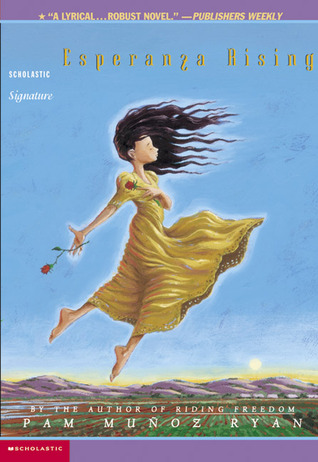
_206890SchEsperanza_0.tifThe story of Esperanza Ortega is a backwards Cinderella. Esperanza Ortega lives at a ranch called El Rancho de Las Rosas (The Ranch of the Roses) with her mother, father, and grandmother. Esperanza’s papa owns it until one day before her 13th birthday, Esperanza’s life is shattered when Alfonso and Miguel, servants of Papa, ride home in the wagon with Papa lying under a blanket in the back, dead

The most devastating part of this entire ordeal is that Papa died the night before little Esperanza’s birthday. Tio Louis and Tio Marco, Esperanza’s uncles, come to “grieve” for Papa. Tio Louis hints to Mama that Papa left the ranch to her , but it is not customary to leave a woman in charge of a household. He makes a proposal…of marriage! Mama is shocked and offended. She says no, of course! Tio Louis says that Mama will regret her decision. That night Esperanza is woken by Mama telling her the house on fire.

They finally agree to leave Mexico. It will be the best thing for them. It will be very tough on Esperanza who has never done an ounce of hard work in her life. They devise a plan to hoax Tio Louis. They follow the plan and leave for California. It is hotter, and the living conditions are worse. Esperanza goes through some more ups and downs in California just like her zig-zag blanket that her grandmother is teaching her how to make. At this point in the story, I had thought of the song, “Don’t Stop Believin'” by Journey. It shows that Esperanza needs hope. An interesting coincidence is that ‘Esperanza’ in Spanish means ‘hope’. The reason it reminded me of the song is Esperanza’s life is being torn apart. The line, “Hold on to that feeling,” reminded me that Esperanza needs to keep the feeling of love and the memory of Papa. But, by the end, unlike a backwards Cinderella, she feels rich at the end because she has her family, a roof over her head, and is surrounded by the people who love her.

At the end of the book, if the story were made into a movie, the song “We Didn’t Start the Fire” by Billy Joel should be played. At the beginning of the song, it describes the setting of the story: the Mexican Revolution. Then, as the song continues, more events happen just like Esperanza’s tragic life. But the biggest similarity between the two is the chorus. It says “We didn’t start the fire. It was always burning as the world’s been turning.” which relates that Tio Louis and Tio Marco set the fire in Esperanza’s house and through the rest of the story, there was always a fire burning in Esperanza’s heart where Papa used to be.

I would definitely rate this book a 10 out of 10 for its symbolism and its great literary quality. Esperanza Ortega was a real person, making this book based on an actual event. Esperanza was the author’s grandmother, and she told Pam a little bit of her life story. The rest Pam had to make up based on her grandmother’s personality. This book is also similar to Chinese Cinderella in the sense that they were both called Cinderellas by bullies.

Maya Salem, 6th grade

Book Review: A Thousand Splendid Suns, by Khaled Hosseini

thousand_splended sunsA Thousand Splendid Suns truly is, as suggested by its title, a splendid book.

It is a story, of hope and friendship despite hardship, that spins the intriguing and moving tale of two remarkable women in the midst of the tumultuous years of a war-ridden Afghanistan. It is mainly about the tribulations two very different women- Mariam and Laila- must endure and the deep friendship they forge out of their cruel mutual husband. At the same time they must deal with the death and destruction of the war and Taliban. This is a common theme of the novel- the oppression that they face both at home and in their country. That is all I can share about the story, for I don’t want to spoil anything; if you want to find out what happens to them and their fascinating stories, you’ll have to read the book.

The synopsis might not sound very interesting or appealing to some, especially teenagers (I, at first, was a bit wary of it), who may want a fun action packed or romantic story instead, but this book is definitely worth a read. It leaves a deep impact on you, changes the way you view things, your whole perspective. It is heart breaking, but moving; tragic, but real and hopeful; sad, but it is a bittersweet sort of emotion that will make you truly appreciate the book and its characters.

I can say that this is the only book that has ever made me cry. It is beautifully written, the words leaving great impact, as I grew attached to the characters and felt their emotion. The characters were all complex and interesting; the plot gripping at your attention. There was never a boring part of the book, I felt I could never put it down until I read every single word of it until the end. A Thousand Splendid Suns is a one of a kind type of novel that will make you smile and cry, maybe even at the same time, and thoroughly captivate.

-Rachel L., 10th grade

Traveling to My Favorite Book Settings

I love traveling! It is something my family and I have always done, and we love to connect our reading to our trips. I am so thankful to my family for all of the amazing experiences that inspired me to write this blog.

plum_creekThe first book series that I can recall reading is the Laura Ingalls book series. Just like so many little girls out there, once I read the first book in the series, I was hooked! After I read Laura Ingalls Wilder’s On the Banks of Plum Creek, my family and I went on a summer trip to the actual Plum Creek that Laura Ingalls played in! While we were there in southern Minnesota, we also drove down to South Dakota to walk around the Ingalls’ homestead and dirt-covered sod house that Laura’s Pa built. To top it all off, we also attended a reenactment of the Ingalls’ lives with actors and actresses in the middle of a giant field! They were spectacular and a trip like that really made the book come to life!

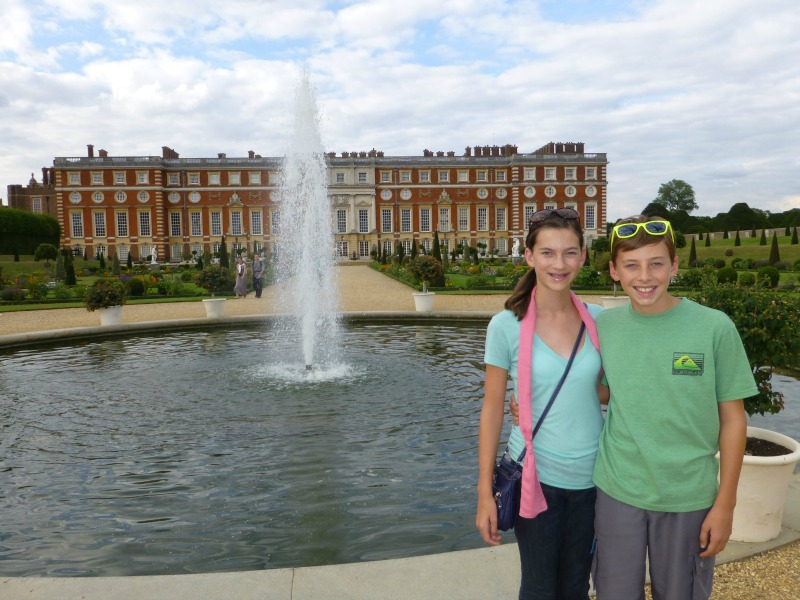
I have also read many books that take place in England because I love the classic style of Old English writing. Some of the books I have read include Rebecca by Daphne du Maurier; At the Mercy of the Queen by Anne Clinnard Barnhill; and Doomed Queen Anne by Carolyn Meyer. The novel At the Mercy of the Queen takes place in Hampton Court in England.

hampton_courtI actually got the opportunity this past summer to visit and tour the grounds where Queen Anne Boleyn and King Henry VIII entertained guests! The rooms were so decorative and ornate, and the reenactments with professional Shakespearean actors were perfect! I definitely recommend taking a day to see Hampton Court if you are planning on travelling to England!

Rebecca also takes place in England, but as this is a mystery novel, the stormy coasts of England is the setting. I love the descriptions in the novel of the “miserable” weather of England (though naturally as a Californian, I love it). I got to see part of the English coasts by train and ferry, and of course, both views were breathtaking! After my trip to England, I want to read even more novels set in the beautiful country, and I might even want to live in England someday!

I have had the chance to go to some gorgeous places and stand where some of the most amazing characters and historical figures have stood. The next place on my list to visit is Prince Edward Island, the setting of my favorite book series of all time: Anne of Green Gables.

I hope this blog has inspired you to explore the world with your favorite books in your suitcase! Please post a comment telling me places you’ve been or would like to go based on some of your favorite reads!

-Kelsey H., 10th grade

Series Review: “Dear America” by Scholastic

dear_americaAs we have many history-making moments in our time, you get to see big historical moments through a girl perspective in the series “Dear America” from Scholastic. The “Dear America” books are stories about big moments in history, like Hitler, in a form of a girl’s diary. The original series published by Scholastic in 1996, had hard covers, ribbon bookmarks attached inside (to hold your place), and 36 books.

The books out of the series I have read, and are my favorites, are Across the Wide and Lonesome Prairie: The Oregon Trail Diary of Hattie Campbell, 1847 by Kristiana Gregory (1997), Voyage on the Great Titanic: The Diary of Margaret Ann Brady, RMS Titanic, 1912 by Ellen Emerson White (1998), The Great Railroad Race: The Diary of Libby West, Utah Territory, 1868 by Kristiana Gregory (1999), One Eye Laughing, the Other Weeping: The Diary of Julie Weiss, Vienna, Austria to New York, 1938 by Barry Denenberg (2000), and many more.

The series was cancelled in 2004 with its final release, Hear My Sorrow. However, it was relaunched in the fall of 2010. The 2010 re-launch series came out with new covers and had no ribbon bookmarks were attached. The re-launch series has 19 books, from the original series like A Picture of Freedom: The Diary of Clotee, a Slave Girl, Belmont Plantation, Virginia, 1859 by Patricia McKissack (January 2011), Like the Willow Tree: The Diary of Lydia Amelia Pierce, Portland, Maine, 1918 by Lois Lowry (January 2011), as well as new “Dear America” stories like Behind the Masks: The Diary of Angeline Reddy, Bodie, California, 1880 by Susan Patron (January 2012).

As I am reading Color Me Dark by Patricia McKissack, I think the reading level is a bit low for middle school and high school, it is a great way on getting a learning on historical moments in a creative, non-boring way. The reading level I chose was from 3rd grade up to 7th grade.

-Kate B., 7th grade

Book Review: A Constellation of Vital Phenomena, by Anthony Marra

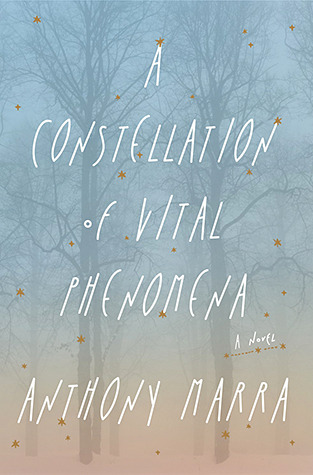
constellation_vitalWhat is life?

The prior question was once pondered solely by humanity’s greatest minds, but now, to the chagrin of some, has become somewhat cliched ponderation of the masses. Yet this propagation of the question what is life? is neither deplorable nor unexpected, for, in all verity, it is a fundamental consideration in the collective human consciousness, a driving factor that motivates us to make sense of this experience we all share.

In an attempt to address this question, or at least provide a platform by which it can be effectively considered, writer Anthony Marra reduces this ubiquitous thing we call life to the following: a constellation of vital phenomena-organization, irritability, movement, growth, reproduction, adaption, a definition whose first three words title his debut novel. By Marra’s own admission, he extrapolated the aforementioned definition of life from a medical textbook, an object which, as his novel even seems to suggest, is a prodigious, lifeless, static pool of knowledge surveyed and marked by wise men of ages past. Despite the seemingly esoteric and perhaps at first bland nature of this definition, through the course of A Constellation of Vital Phenomena, it becomes a stunningly beautiful mechanism by which the whole of human life can be understood.

While a new novel, published in 2013, Marra’s work can easily be counted among the highest ranks of literature from all ages. The writer’s prose drips with mastery, perhaps best evident in his provision of detail, which, although occasionally rambling, is rich and luscious. Indeed, these subtleties, albeit meritorious for their exquisite verbiage in themselves, perhaps more importantly contribute to the storytelling for which Marra is even more laudable as they color events in the lives of the novel’s characters.

Indeed, A Constellation of Vital Phenomena to a substantial degree ignores the traditional and popular sense of plot, with its linear and structured qualities, adopting a more free-flowing composition in which various moments of the lives of a slew of characters who live in a war-torn Chechnya are criss-crossed. In actuality, the novel spans the five days after the capture of Dakka, father of Havaa and friend of Akhbar, the latter of whom takes the former to a hospital in the Chechen capital city, Grozny, which lies 12 kilometers from their village of Eldár, in the hopes that the renowned surgeon, Sonja, who runs the nearly defunct medical facility, will allow the young girl to reside there.

One of the most rewarding facets of the novel is the full development of all the story’s major characters, a feat achieved through that very detailed presentation of different moments in each of their lives. Similarly wonderful is the fact that Marra ties the characters together in the most seemingly trivial, yet achingly touching and poignant ways. The author creates with his web of characters and events a mirror to the definition of life from which he draws his inspiration. Truly, the novel becomes its own organism, a cornucopia of characters who tell a hauntingly beautiful tale of a lost girl and allude to the complexities of life in general. A Constellation of Vital Phenomena calls the reader into deep reflection, in particular to view his or her own life as just that, a series of inseparable and interrelated moments and people and things, making all of life’s constituent parts ever more lovely and significant.

-Sebastian R., 11th grade

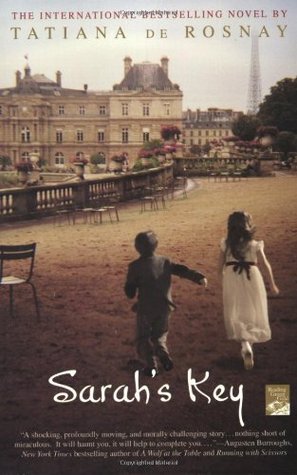
Book Review: Sarah’s Key, by Tatiana de Rosnay

sarahs_keyIn this book, Sarah’s Key, by Tatiana De Rosnay, you learn a valuable lesson about being grateful for what you have.

This book is about a girl named Sarah and she gets taken away with her mother and father off to a bike stadium. They had to go because they were Jewish. Before they leave, Sarah locks her little brother in a secret cupboard and promises to come back. The French Police take them away so she feels as if she is safe because it was not the Germans.

Then on the other side of the story, you learn about a women named Julia. She works for a magazine and is assigned to write an article about the roundup of Jewish people. She is married to a man whose family lived in the apartment Sarah lived in after she was taken away. She learns about Sarah and their stories connect, and Sarah sticks with her forever.

I would recommend this book to anyone who is interested about France’s involvement in World War II. Also, I would recommend it to  someone who is interested in the Holocaust. In the end, it is a delightful book to read and it was thought out very well.

-Melika R., 8th grade

Series Review: The Little House Books by Laura Ingalls Wilder

little_house_prairieLaura Ingalls Wilder, who was born Febuary 7, 1867,  lived in the pioneer days in the late 1800s and the early 1900s. She had a older sister named Mary, younger sister named Carrie and her Mother Caroline, and her father Charles. Her family moved to different parts of the United States when she was young and always enjoyed the new land they lived on. In this series about her life as an American pioneer, Laura wrote nine books:

  • Little House in the Big Woods
  • Little House on the Prairie
  • Farmer Boy
  • On The Banks of Plum Creek
  • By The Shores of Silver Lake
  • The Long Winter
  • Little Town on the Prairie
  • These Happy Golden Years
  • The First Four Years

I love this series. The books will have scary moments, interesting moments, and a history experience that doesn’t seem like history. Farmer Boy is not about Laura but it is about her husband, Almanzo, when he was a young working at a farm. All the other books that I know of in the series is about Laura except Farmer Boy. Some of the books are a bit long but they are good to read if you like short and long mixed books. The age level I would recommend is 8-12 years old and the grade level would be 3rd-7th.

-Kate B., 7th grade