Women In Science

Women are typically overlooked in STEM subjects, even though they contribute heavily to research and innovations. It is now time to recognize the significant achievements women have made. Here are just some women who don’t get the attention they deserve.

  1. Margarethe Hilferding

Hilferding grew up among liberal and Jewish women; she contributed a lot of her knowledge to the field of psychoanalysis, and medicine while also advocating for women’s rights to contraception. She knew as a young kid that she wanted to study medicine, and was one of three female students to be accepted into a university to study physics and math. Many professors made fun of her for taking such rigorous courses as during this time women typically didn’t study these courses. Hilferding was the first Austrian woman to receive a medical degree from the University of Vienna. She produced a theory on maternal instinct, which is seen as controversial, and died in the Holocaust on September 23, 1942.

Aus den medizinhistorischen Beständen der Ub MedUni Wien [132]: Zum 150.  Geburtstag von: Hilferding-Hönigsberg, Margarethe: Zur Behandlung der  Schwangerschaftsbeschwerden. Vortrag, gehalten in der Gesellschaft für  innere Medizin in Wien. | VAN SWIETEN

2. Dr. Dorothy Andersen

Dorothy Andersen was a physician and pathologist who discovered cystic fibrosis in 1983, a heretical condition that impacts the pancreas and lungs. She identified how to look for acute lung and gastrointestinal problems in children. Her first task as a pathologist was to dissect a young child’s organs who was deemed to have celiac disease. As she was examining the organs she noticed some differences in the child’s lungs and pancreas and decided to look at other patients’ autopsies to identify the problem. She wrote a 50-page paper called, “Cystic Fibrosis of the Pancreas and its Relation to Celiac Disease: A Clinical and Pathological Study” and was the first to diagnose this disease in a living patient.

3. Dora Richardson

Dora Richardson was a chemist who invented a breast cancer treatment, tamoxifen. She became a chemist after visiting her sick grandmother in the hospital and worked alongside Arthur Walpole, another chemist. She worked to create compounds, and one day she developed a base for the drug, tamoxifen. Walpole and Richardson discovered it could be an effective drug to prevent breast cancer. A pharmacologist named Craig Jordan selfishly took the title of the “Father of Tamoxifen,” and is now associated with this drug.

Many women are undervalued for their contributions to science. These are just some of many women in the world who are unforgotten for their life-changing discoveries.

Book Review: Immune: A Journey into the Mysterious System That Keeps You Alive by Philipp Dettmer

From the get-go, this book is a must-read for anybody who is interested in the field of biology, or anybody who wants to get to know how the system that keeps them alive works.

This work is divided into several sections, each explaining a specific part or aspect of the immune system. Dettmer first introduces the immune system and how it evolved from around 541 million years ago, when multicellular animal life suddenly exploded, causing bacteria and other microorganisms to become an existential threat, as they could use these ecosystems of organisms as free energy at the detriment of the former. As a result, some organisms such as sponges evolved what would be known as “humoral immunity”, or proteins that would float around and kill microorganisms that were not supposed to be in an animal’s body. This system ended up being so successful that evolution did not phase it out, and rather made it a crucial aspect of an organism’s immune defense.

The book then goes on to explain more aspects of the immune systems, such as different parts of it including the different cells that make it up, including macrophages and neutrophils, which are integral to the functioning of the immune system. After going over these two crucial parts of the immune system, Dettmer then goes on to talk about the process of inflammation and its causes in relation to the immune system.

Although it would be impossible for me to include every single one of this book’s many complex topics in this review, I think that this book was great, and made topics that would otherwise be complicated and tedious to read seem very interesting. The author of this book also has a very well-known science Youtube channel, Kurzgesagt, which I highly recommend checking out.

Immune: A Journey into the Mysterious System That Keeps You Alive by Philipp Dettmer is available to check out from the Mission Viejo Library.

Book Review: Your Inner Fish by Neil Shubin

Recently, I read Your Inner Fish, a book about the evolutionary origins of mankind, as well as talking about the research that the author directly went through in order to gain more information about how humans came to be through evolution, as well as how surprisingly, we share some similarities with prehistoric fish (as the title implies).

The Book starts with Shubin introducing and explaining his experience with using fossil evidence to determine the origin of mankind, travelling around multiple locations in the world and multiple fossil sites looking for clues. The book also goes over the influence of geography on how they look for fossils, with different rock layers signifying older fossils. The author also talks about different traits we have in similarity to other animals throughout the book. Furthermore, the author also goes over the usage of embryology, or the comparison of the embryos of two different species in order to find similarities to prove common ancestry. In his research, the author found that the human embryo had several similar traits with a shark embryo, implying that we are in some way related to a prehistoric fish. The author also covers the fascinating subject of using DNA to determine changes in an animal throughout the world’s long history, and also talks about the degree of similarity human DNA has to other species, as well as more fundamental theories such as the theory that the mitochondria was once its own independent organism, but later combined with others to form the cell structures we know today.

Overall, I think this book was very interesting, because of the fact that the author was able to make otherwise boring and complex topics interesting by explaining it in a simpler way. I would recommend this book for anyone who is interested in learning more about topics in biology.

Your Inner Fish by Neil Shubin is available to download for free from Libby.

The Life of Marie Curie

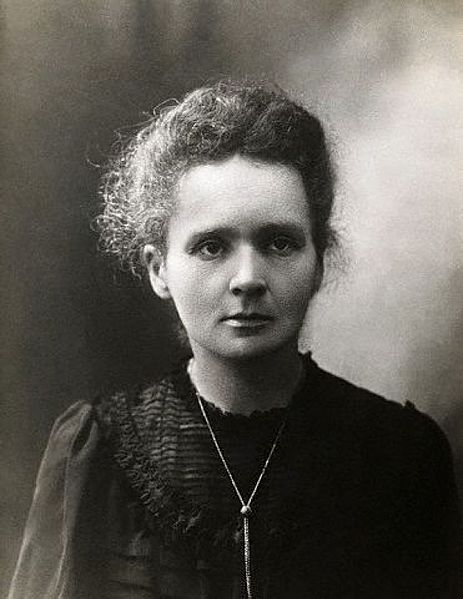
Born on November 7th, 1867, in Warsaw, Poland, Maria Sklodowska would go on to become a well-known scientist. Her father, Wladysaw Sklodowski, was also a scientist. Later, in 1891, she would move to Paris. This was when she changed her name to Marie and began working at a research laboratory, where she met her husband Pierre Curie in 1894. 

She would go on to marry her husband, Pierre Curie, in July of 1895. The couple would go on to work together, and eventually discovered the element Polonium. Marie Curie named their newly discovered element after the country she was from: Poland. They would also discover a second element, Radium, months later in 1898. Marie and Pierre Curie had two daughters, Irene (born in 1897) and Eve (born in 1904). In 1903, Marie and her husband won the Nobel Prize in Physics for their research about radiation.

On April 19, 1906, her husband Pierre was killed after a street accident. It is thought to be possible that part of the reason for his death was his and Marie’s repeated exposure to radium, a dangerous substance which weakened them both. Following this, however, Marie continued her work in science, and in 1911 won the Nobel Prize in Chemistry. This time for her work about radioactivity. 

Eventually, Marie Curie would die on July 4, 1934 of aplastic anemia, due to her constant work with radiation. She was 66 years old at this time. Marie Curie was a great scientist, and the first woman to win a Nobel Prize.

– Peri A.

Several books about Marie Curie are available to check out from the Mission Viejo Library. It is also available to download for free from Libby.

Unique and Interesting Exoplanets

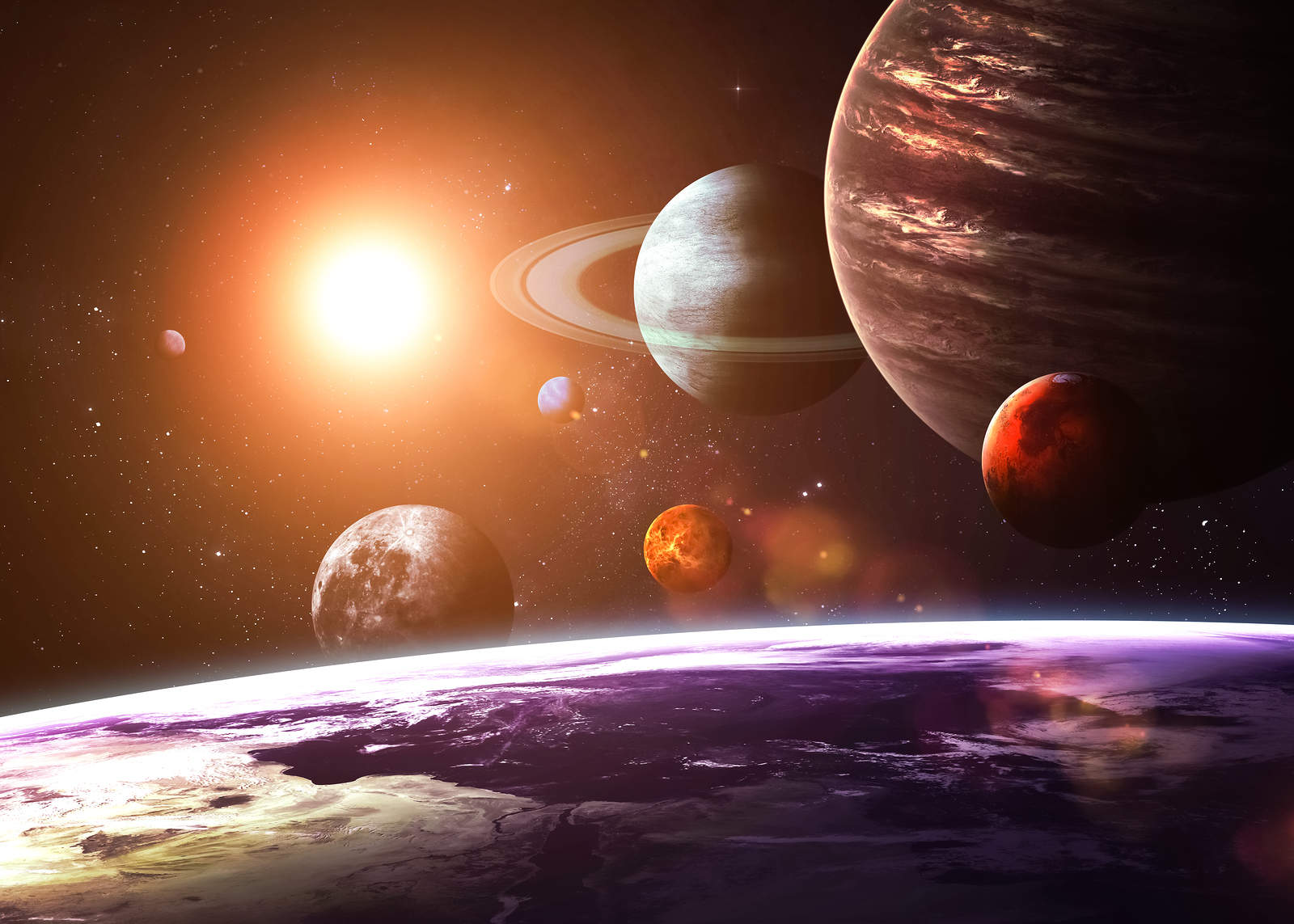
There are many exoplanets in our universe, all with varying characteristics. Here are just a few of them that have been discovered.

#1: The Ocean Planet – GJ1214b

This planet is likely to be an ocean planet, meaning it is entirely covered with one large ocean (no land). It is located about 40 light-years away from Earth.

#2: The Fast Planet – PSRJ1719-14b

Exoplanet PSRJ1719-14b quickly orbits its star; it takes about 2.2 hours for the planet to complete a full orbit around its sun. However, this is not the planet’s only unique characteristic. In addition to its fast orbit, this exoplanet also has a chance of being made of diamonds, although this has not been proved. Diamond planets form when the pressure and temperature are high enough to turn the carbon on the planet into diamonds. It is about 3,914 light-years away from Earth. 

#3: The Dying Planet – WASP-12b

Despite being around the size of Jupiter, this exoplanet is constantly nearing its star. Eventually, the gravity of its star will pull this planet into the star. Currently, this planet is 870.8 light-years away from Earth.

#4: A Large Planet – TrES-4

This planet is over 70% of the size of the largest planet in our solar system, Jupiter. What makes this planet unique, however, is that it has only %75 of the mass of Jupiter, giving it a much lower density. It is 1562.3 light-years away from Earth.

#5: An Old Planet – Methuselah

Estimations predict Methuselah is about 13 billion years old. Scientists believe that at that point in time (13 billion years ago), the materials to form planets were not actually able to form planets. This exoplanet is about 12,400 light-years away from Earth.

These are just a few of the many amazing exoplanets in our universe, with many more still waiting to be discovered.

-Peri A.

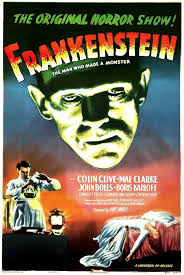
Frankenstein (1931) Movie Review

Movie Title: Frankenstein (1931)

Genre: Science Fiction Horror

My Rating: 2 stars

Summary: Henry Frankenstein, a scientist, creates a creature made out of dead body parts. The creature comes back to haunt Henry and kills and terrorizes people in Henry’s life.

Did I like the movie?: I honestly did not like the movie because it was not very exciting. The film did not make me want to keep watching it because you can predict what is going to happen next, even if you have not read Mary Shelley’s original Frankenstein novel. If there was more action and suspense in the movie, it would be better. At least half of the film is Henry creating the creature. This meant that there wasn’t a lot of action or screen time for the creature which is the most exciting part! Even when the creature did kill someone, it happened very quickly. I feel the directors of the movie should have brought suspense and gotten viewers wondering what would happen next.

Would I recommend this movie?: I would not recommend this movie to people who have read Mary Shelley’s original novel, Frankenstein. The movie is nothing like the novel. I read the novel first, and then watched the film, and it was a big disappointment. However, if you have not read Mary Shelley’s original novel, Frankenstein, you could watch the movie and think it is really good! However, in my opinion, I think even if you haven’t read Mary Shelley’s Frankenstein, the movie would still be somewhat of a disappointment because the action and suspense were not very exciting.

-Abby V.

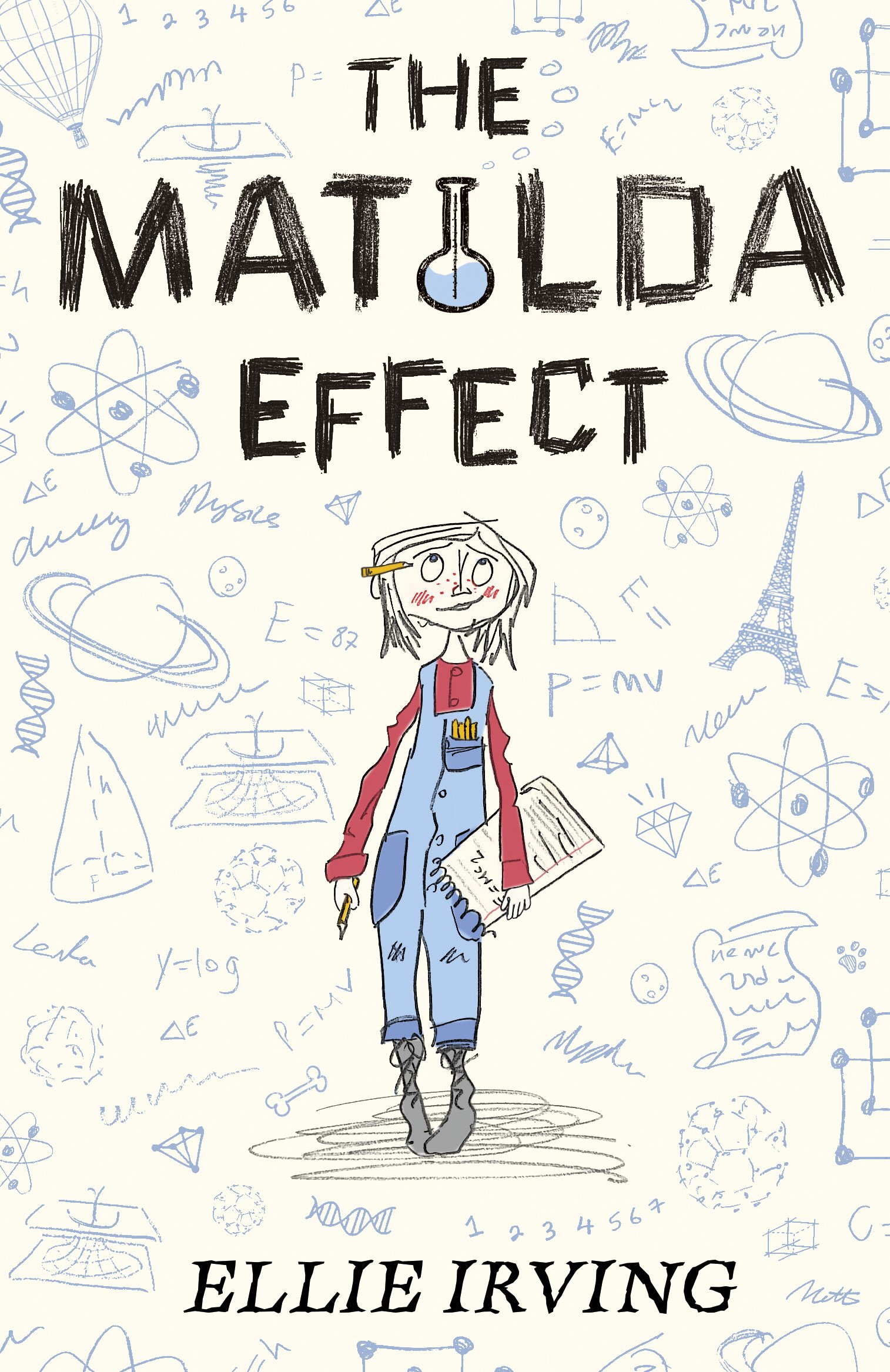
The Matilda Effect

This story is about a girl named Matilda and her grandmother’s journey from England to Sweden. The book emphasizes how women and girls may be treated unfairly, especially in the scientific fields. Matilda wants to be an inventor and loves science. The grandmother (Granny Joss) discovered a planet many years ago, but her boss claimed it was his discovery, and now he is about to be given a Nobel Prize! 

Matilda has also not been given awards, like a science prize in her school, because no one believed a girl could have done what she did. The judges gave the prize to a boy named Thomas Thomas, even though he did his experiment wrong, just because “at least he did it all by himself.” Matilda should clearly have won. 

She soon finds out her grandmother’s discovery was incorrectly credited and decides to go to Sweden to tell the Nobel Prize Committee that Professor Smocks is lying about his “discovery”. Her parents do not allow her to go there, so one night she sneaks out with her grandmother to go to Sweden. Will Matilda be able to get Granny Joss to the Nobel Prize ceremony in time, or will the planet forever be credited to Professor Smocks? They face many challenges along the way, almost dying at some parts, too. 

I like this book because the plot is so intriguing and the author is constantly introducing new characters. It was very interesting to see how each of these characters influenced the story and the characters. They are so different but are all affected in some way by Matilda and Granny Joss.

The “Matilda Effect” is a bias against women, and instead of giving them credit for their achievement(s), it is given to one of their male colleagues instead. This term was first used in 1993 by Margaret W. Rossiter, and named after Matilda Goslyn Gage. Historians had ignored Matilda Gage’s work as well. The title of the book, the storyline and the name of the main character in the story, is a reminder of this bias, ‘The Matilda Effect.

 I would recommend you to read this book if you enjoy science, engineering, or inventing and like a variety of characters. It is a truly enjoyable story and I really liked the plot. I thought that it was important that it emphasized how women and girls are sometimes treated unfairly.

-Peri A.

Frankenstein by Mary Shelley

Most of us are familiar with the monster we’ve labelled as Frankenstein, a green, grotesque creature of Hollywood films. Before reading Mary Shelley’s acclaimed novel for a high school English class, I had similar mental perceptions of the monster (I’d been envisioning the essential, go-to costume for elementary school Monster Mashes for years). After finishing the book, however, I was moved by the complexities of Shelley’s characters, their philosophy, as well as her examination of prominent social and political issues throughout the carefully woven narrative, which are still relevant today.

I’d read Gris Grimley’s Frankenstein before in middle school. Pages of colored artwork and masterful graphic design rendered an excellent adaptation of Shelley’s novel. It provided me the foundations to easily understand the basic plot of Frankenstein, yet I was still skeptic about reading the novel itself. I don’t particularly love Shakespeare or Dickens, with their fanciful ways of speech that can get tiring after a long period of reading, and I feared the same for Shelley’s work. But she was different somehow, her writing distinctively unique; perhaps this was because she was a female amidst a world of male writers, someone who had created such a haunting and gripping story so uncharacteristic of a woman of her time.

The novel centers around a gifted scientist, Victor Frankenstein, who manages to breathe life into his creation, a monstrous being. Instead of a being presented as a gift to humanity, the glorious product of defying even Nature itself, the specimen is a hideous creature that is shunned by society and his creator alike. The narrative is told from various perspectives–explorer Robert Walton’s letters, Frankenstein’s first person narration, the monster’s collection of stories–which I appreciated greatly, because it gave the storyline a certain vivacity, turning it away from the tiresome monotony of the same narrator. As the novel progresses, the monster and his creator enter into a growing spiral of violence and tragedy, and I will say (spoiler alert!) the novel is not exactly a Hallmark movie with a happy ending.

By the time I had finished the book, the ending surprisingly emotional (I had been nonchalant all throughout Romeo and Juliet’s deaths, but this ending really ran me over for good measure…go figure), I continued to mull the story’s events over in my mind. Frankenstein is a philosophical breeding ground–are monsters created or made, a victim of the cruelties of society? What are the ethical implications of science and technology (this one I consider a lot, since we are at a teetering frontier of modern scientific discovery)? Who is the real monster, the creation or its creator?

Even if you aren’t called by philosophy, read Frankenstein for it’s ingenious storyline. I didn’t think I would ever call a book published in 1818 “thrilling,” but I was pleasantly surprised at the wide range of emotions Shelley, and most good writers, can evoke through their stories, her ability to make the reader view society through a new lens. Read it for Shelley’s diction, the way she stirs to life a melancholy madness, the vividness in which she allows us to experience it, as if the character’s lives were our own, and which left me awed. It was a book that stuck with me long after I finished it, a book that I regretted misjudging before I picked it up and read it grudgingly for school, but which took me into the depths of humanity and morality.

-Katharine L.

Mary Shelley’s Frankenstein is available for checkout from the Mission Viejo Library. It can also be downloaded for free from Overdrive.

Angels and Demons by Dan Brown

Angels & Demons: A Novel (Hardcover) | Tattered Cover Book Store

When CERN director Maximilian Kohler discovers the dead body of his top physicist, Leonardo Vetra, in his secure lab, branded with the dreadful Illuminati ambigram symbol, Harvard symbologist Robert Langdon’s world is turned upside down. Traveling to Switzerland, Langdon realizes that the Illuminati, a secret society long thought disbanded, is actually alive and well, and have only one assignment to fulfill – the complete annihilation of the Catholic Church and Vatican City.

Together, Langdon and Vetra’s adopted daughter Vittoria must race to locate a deadly sample of antimatter taken from the late Vetra’s lab. To make matters worse, unless Langdon and Vittoria successfully track down the stolen antimatter, and Vetra’s killer, before the clock strikes midnight, not only will Vatican City explode, due to the recent death of the Pope, every major figure of the Catholic Church will perish along with the Vatican.

On a race against time, Langdon and Vittoria must follow the path laid by the ancient Illuminati members centuries ago, in the hopes of saving lives as they do it. However, the closer the two get to the final showdown, the higher the stakes are raised, and the more danger they find themselves embroiled in.

Dan Brown’s Angels & Demons is a definite read for fans of real historical facts interwoven with heart-racing action scenes and mystery theme elements. Fans of The Da Vinci Code will certainly enjoy the first chronicle of Langdon’s adventures.

-Mahak M.

Angels & Demons by Dan Brown is available for checkout from the Mission Viejo Library. It can also be downloaded for free from Overdrive.

The Island of Dr. Moreau by Herbert George Wells

H. G. Wells: The Island of Dr. Moreau: Dobbs, Fiorentino, Fabrizio:  9781683832034: Amazon.com: Books

In Dr. Moreau’s Island, Dr. Moreau uses his scalpel to transform the beast into a man with an ambitious plan to establish an empire on the nameless island in which he is the supreme ruler and creator. Dr. Moreau is a synthesis of scientific evolution and religious ideas. Using the scalpel as a tool to create humans, he plays the role of God and exerts both physical and spiritual control over the orcs. However, he fails miserably and both he and his assistant are killed. The novel condemns the endless expansion of life science that is not bound by the bottom line of morality, conveys the fear of human beings that they cannot truly control their creations, and is also mixed with the fear of Edward Prendick, the narrator, that he is not adapted to the strange island.

Back in the civilized world, Prendick is still haunted by fear, suspecting that the men and women around him are transformed orcs. Dr. Moreau’s provocative attempt to tamper with the laws of biological reproduction and evolution in nature ended in failure. His experiments also had devastating consequences for himself: he himself died at the hands of the monster he had created. And by the end of the story, the orcs are finally restored to their natural nature as animals. They began to disobey the “laws” that Dr. Moreau had made. Their physical features also began to return to their original characteristics. They become more and more unwilling to be bound by clothes, and finally become naked; Their limbs grew hairy; Their foreheads grew lower and their mandibles more prominent; Traits that were previously human-like are gradually disappearing without trace.

As the orcs’ nature was restored, the strange world that Dr. Moreau had created was destroyed by death. The failure of Dr. Moreau also proved that the law of nature is irreversible, the power of nature is strong, and any attempt to reverse or overstep the law of nature is doomed to failure. When human beings’ behaviors violate the ecological and ethical laws of nature, nature will punish the perverse actors with disastrous consequences. At the same time, nature will also use its own power to correct and tamper with it, making the whole ecological world move forward continuously in accordance with its inherent natural laws.

The progress of scientific and technological civilization in human society should be based on the integrity of the ecological ethical law of nature. The separation of scientific research from ethical laws, the neglect of ecological responsibility to nature, and the willful disobedience of the development laws of nature will eventually bring destructive consequences to the whole nature including human beings themselves. At the same time, once technology falls into the hands of those who seek power for personal gain and have no moral scruples, it will have disastrous consequences. Through the eyes of Edward Prendick, this novel depicts a miniature of the whole life, and mercilessly reveals the reality of the society.

Moreau brought the animals to the human level on a secluded island inhabited by humans, while creating a religion with himself as god and a harsh law to rule the orcs. This turned the orcs against him, and he died a violent death. The author uses this story to show the class antagonism in capitalist society. At the same time, the work gives a pessimistic outlook on social prospects. Wells referred to the Island as Noble’s Island, an obvious irony and yet another jab at the class system. Pronounce the name quickly and vaguely, and it is no blesses island.

-Coreen C.