Romeo and Juliet Play

A few days ago, our class just finished reading Romeo and Juliet by William Shakespeare, and watched both movies. It was…an experience.

I have to put it out there, this was definitely one of the more boring sections in our English Curriculum Requirements. Almost everyone has heard the story of Romeo and Juliet: two children from feuding families fall in love, and love brings them both to a terrible end.

At first when we went to check out the play from the library, I flipped through a few of the pages, and to me (and most other people in my class), the language made absolutely NO SENSE. I tried to process what the author was trying to imply, but every interpretation of what I THOUGHT it meant, was actually very different from what the actual translation was.

Throughout the daily reading sessions we had, my mind always drifted. It was almost impossible for me to focus when the language was so confusing! More questions kept popping up in my head as we read, but the most prominent one was: “How did the people during this time period understand Shakespeare’s unique language?” As we read Shakespeare’s works, we can truly see HOW our language has changed throughout several hundred years (461 to be exact!). Of course, I was thinking this while we were reading during class, which made the homework we had after a lot harder for me, but it was worth it.

Okay, on to the movies. The original one that was published in 1968 was a decent movie. It captured a majority of the plot, and the dialogue was almost exactly the same. I can most definitely say that the new version of the Romeo and Juliet movie was NOT what I expected.

For those of you who don’t know, the new version is a spin-off of Romeo and Juliet, where they are (hear me out) part of different mafia gangs. Could they have captured this any worse? Additionally, the ending was a complete shocker. This movie was quite hard to watch for me, as I feel the director lost the true meaning of what William Shakespeare was trying to convey.

Out of 5 stars, I would give the old version a solid 4 out of 5. Pretty good, but not too great. The meaning was there, although they skipped a few parts. The new version? 3 out of 5. Lost the meaning halfway through the show, but they did a decent job on the spin off, I suppose. 

Romeo and Juliet by William Shakespeare is available to check out from the Mission Viejo Library. It is also available to download for free from Libby.
Julius Caesar by William Shakespeare Movie Vs. Written Play Review  

Watching Julius Caesar as a film versus reading it as a written play is a strikingly different experience. The visual of the movie brings Shakespeare’s words to life in vivid detail, allowing for a more immersive and dramatic interpretation of the story. The magnificent settings, costumes, and performances add layers of depth and emotion that may come across more strongly than the written form of the story on paper. Some of the texts are difficult to understand on paper if you aren’t reading them together with a teacher to explain them to you. 

However, there is a unique power to reading the original text of Julius Caesar in its written form. By engaging with the paper play, readers can analyze and interpret the language more closely, uncovering nuances in Shakespeare’s words that can be easily overlooked in a film adaptation. The ability to imagine the scenes and characters based solely on textual descriptions allows for a more personal and intimate connection to the story, fostering individual interpretations and insights that may differ from those presented on screen.

In comparing Julius Caesar as a movie and a written play, it becomes clear that each medium offers distinct advantages and charms. While the film captivates with its visual splendor and dramatic impact, the written play invites readers to delve deeper into Shakespeare’s poetic genius and explore their perceptions of this timeless tragedy. Both versions complement each other beautifully, providing audiences with rich opportunities to discover and appreciate one of Shakespeare’s most iconic works. I prefer the written play that we read in class. By reading it, I can imagine the whole story in my mind, making it a lot more fun. Whatever your choices, you’ll find that Shakespeare’s writing is brilliant, and we can appreciate the story no matter the medium. 

Happy Choices!

Bella H.

Julius Caesar by William Shakespeare is available for checkout from the Mission Viejo Library. Movie versions are available here. The play can also be downloaded for free from Libby

Romeo and Juliet by Shakespeare

Ending my first year of high school, we read the famous Shakespeare play, Romeo and Juliet. I will say I enjoyed this book more than I thought I would. Last summer, I watched the play live thanks to Shakespeare by the Sea, and I thoroughly liked it. But now that I’ve read it, I know that I definitely didn’t understand everything I was hearing. I understood parts of it but some details went in one ear and out the other. Reading the book was enlightening, informative and very interesting; especially in how we can see glimpses of issues that are still happening today.

As many already know, Romeo and Juliet is a tragedy in which Romeo and Juliet are two star crossed lovers who end up taking their own lives. While their deaths are a big part of the tragedy, there are so many other deaths and unfortunate events that come up before the end. Many times, I tend to forget that this story is much more than just some young kids who fall in love and die. The true desperation and helplessness of these two children make things much sadder. The fact that they saw death as their only option can really connect to today’s society. While it may be stupid to die just because you can’t be with your beloved, it’s the fact that they see death as the only option left for them, like many young people today. Young people today may not have the same issue as Romeo and Juliet, but they may feel the same helplessness and the same feeling of being trapped.  It may seem simple to find another way out of this dark situation, but like Romeo and Juliet, people sometimes end up going to the extremes first. Shakespeare was very good at connecting his plays and other writings to reality, and this is just one of the many examples. 

After reading this, I also found that there were so many other people who were affected other than Romeo and Juliet, those mainly being Mercutio, Tybalt, Paris, and Benvolio. I thought Mercutio and Paris had to suffer the most. Mercutio got caught in a feud he wasn’t even a part of and Paris had no desire to fight and only wanted to be with his love. And yet (SPOILER) Romeo and Juliet cost them their lives. And then there was Benvolio, who lost everyone around him. He lost his two best friends to a feud that didn’t have any reason to continue. Sometimes innocent people suffer some of the worst consequences. While Romeo and Juliet are already sad by themselves, the deaths of innocent lives truly make this play a tragedy.

Previously, I had liked the play. I thought it was pretty fun, hearing dialogue between each character, watching scenes play out, especially those with Mercutio. Mercutio was my favorite character in the play, probably like most people who have watched or read the tragedy. His Queen Mab monologue was fantastic and I found it a really interesting choice for his character. After reading the play, I enjoyed it more. It isn’t just fun now, it’s truly a tragedy. This play was fun at times, but after reading, I understand how sad it is, for these young people to feel trapped, for them to die so young, for them to suffer. If you ever want to read the famous Romeo and Juliet, I would definitely recommend it as long as you can understand or have a small translation of Old English. I used the Folger’s library edition that includes small translations of words and phrases on the side. Shakespeare was a huge influence and he made some amazing works. I can’t wait to read more of his works in the future! 

-Nicole R.

Romeo and Juliet by William Shakespeare is available to check out from the Mission Viejo Library. It is also available to download for free from Libby.
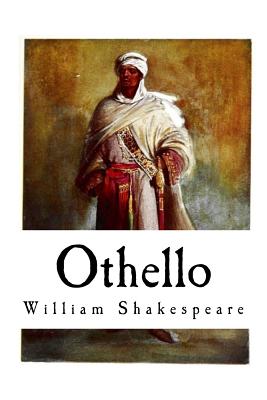
William Shakespeare’s Othello Review

William Shakespeare, a prominent playwright and poet, creates a story revolving around Othello, a Moorish military commander from Venice, and Iago, a soldier craving the rank of lieutenant. Othello has a lot of trust in Iago, but at the beginning of the play, he gives Cassio the rank of lieutenant over the qualified Iago. Thus, Iago feels wronged and plots for Othello’s downfall. Using his manipulative skills and careful planning, Iago takes advantage of certain characters’ personal flaws.

Othello, the respected and triumphant outsider, is insecure and struggles to communicate with his partner, Desdemona. Furthermore, Cassio, the man promoted over Iago, has some drinking problems. When plotting his revenge, Iago prioritizes Othello’s relationship by convincing him that Cassio and Desdemona are in a secret relationship. Throughout the play, Iago uses props and tricks to stimulate Othello’s destructive behavior.

In terms of writing style, Shakespeare implements techniques such as blank verse and prose. Blank verse is a form of poetry that doesn’t contain rhymes. Prose is implemented into poetry as a natural and flowing form of dialogue. There are many other literary devices throughout the play such as symbolism, dramatic irony, metaphors, and more.

Although Othello may be a little hard to read at times, I highly recommend the play. If you are reading it in a group, it may be fun to assign roles to one another. Shakespeare is widely recognized and respected for his literary works, but Othello is one of his most engaging and entertaining plays. Almost every character is fully fleshed out and play a significant role in the story. There are strong themes and character developments that progress smoothly throughout the play.

-Kern Mittal

Othello by William Shakespeare is available to check out from the Mission Viejo Library. It is also available to download for free from Libby.
Hamlet by William Shakespeare

To read, or not to read? That is the question. Whether ‘tis nobler in the mind to suffer the slings and arrows of Shakespeare’s outrageous language, or to take arms against a sea of metaphors, and by SparkNotes-ing understand them.

This is, of course, a reference to perhaps one of the most famous scenes in literary history: Hamlet’s soliloquy in the Shakespearean play of the same name. This is the story of Hamlet, prince of Denmark, who, in his quest to prove his uncle murdered his father in order to ascend to the throne, faces obstacles both external and personal that cause his (and the majority of the characters’) downfall.

However, looking beyond the scenario as it is presented, Shakespeare’s characterization captures ideas that permeated throughout society then and still exist in society today. The character flaw that is acute indecision plagues all people in a multitude of ways. Though it may not end in complete misfortune like it does in Hamlet, there are still times when we are paralyzed while making a big decision, and this hesitancy ends up costing us. 

Additionally, for those coming from Romeo and Juliet, be forewarned: Hamlet is not a book of romance. While Hamlet and Ophelia are shown to be in love, Hamlet ends up using Ophelia in his quest to avenge his father, driving her to madness in one of the most tragic events of the play. Hamlet is, first and foremost, a play about appearances versus reality, loyalties and betrayals, and the overarching fear of death and the afterlife.

Hamlet balances these heavy elements with intermittent light-hearted scenes that keep the audience’s attention (after all, this was originally meant to be an Elizabethan-era play), and this creates a book well-worth reading. By doing so, the reader will not only be exposed to one of Shakespeare’s finest works, but also to his most famous lines, many of which originated from Hamlet.

– Mahak M.

Hamlet by William Shakespeare is available to check out from the Mission Viejo Library. It is also available to download for free from Libby.

Romeo and Juliet: What’s in a name?

Romeo and Juliet are madly in love after meeting for just a short time and are willing to give up many valuable things in their life to be with each other, which shows how blinding falling in love can be. The two discuss what is in a name, and agree that what “we call a rose by any other name would smell as sweet” (2:2:46-7). Romeo is a Montague, Juliet is a Capulet, and their two families have been enemies for an extensive time. If Romeo or Juliet gave up their last name, they would still be the same person, just as a rose would be just as pretty and sweet if it had a different name.

The name of an individual does not change who they are as a person. After hearing Juliet speak about her troubles and Romeo’s family name on her balcony, Romeo says, “Call me but love, and I’ll be new baptized” (2:2:54). Romeo is willing to give up his family to be with Juliet, which is surprising considering he just met her and he has been with his family for years. In addition, Romeo completely forgot about Rosaline, whom he professed his love to right up until he met Juliet. Romeo would “deny thy father and refuse thy name” (2:2:36), showing that he would abandon his whole life just to marry Juliet, which is a very bold action. Romeo’s surname not only signifies his relationship with his parents and family, but also their family’s reputation, their inheritance, and personal identities. Romeo and Juliet would both be giving up more than just a name if they decided to marry each other. This decision could affect and impact their future forever.

However, both Romeo and Juliet do not understand the significance of their names as Juliet says, “What’s Montague? It is nor hand, nor foot, nor arm, nor face, nor any other part belonging to man” (2:2:43-5). Juliet is right that a name is not identified with certain body parts and who one is as a person. However, giving up one’s surname does impact one’s future and relationship with their family, which could, in turn, end up affecting their life together.

-Abby V.

Twelfth Night and Gender Identity

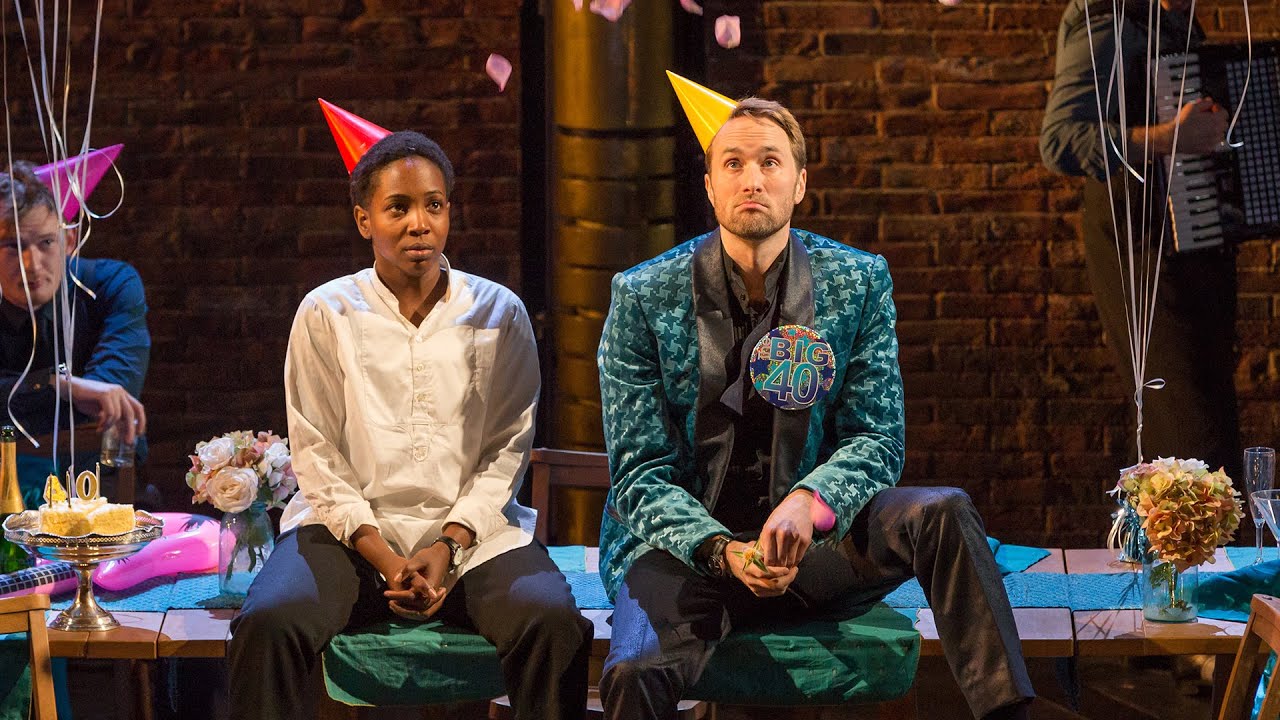
Audra McDonald, Anne Hathaway, and Raúl Esparza pose as Olivia, Viola, and Duke Orsino in Shakespeare in the Park’s Twelfth Night.

Twelfth Night by William Shakespeare is my personal favorite Shakespeare play. I read it for class in the 10th grade. At first, I approached this play cautiously. I have never read, listened to, or watched a Shakespeare play in my life—but I presumed that the language would be difficult, and the topics uninteresting to me.

And wow, was I wrong.

As we read along, I found myself completely invested in Viola’s story—the way she turns herself into ‘Cesario’ to navigate high society, how she manages to get a Countess to fall in love with her, and how she manages to fool Duke Orsino into thinking she was a man. I was interested in the way she navigated her relationship with not only Olivia and Orsino, but with her gender, as well.

The reason why I became absolutely obsessed with this play was because how it tackled gender and sexual identity, though maybe not completely outright, but it’s there! You just have to read closely, and watch closely.

Tamara Lawrance and Oliver Chris pose as Cesario and Orsino, in the National Theatre’s production of Twelfth Night.

Viola dressing as a man, and turning herself into ‘Cesario,’ addresses gender fluidity in such an amazing way—and brings up so many possibilities for newer adaptations of Twelfth Night and so many more possibilities for actors playing Viola. In Shakespeare’s time, for example, all roles in his plays were played by men. So, in turn, Viola was played by a man, playing a woman, who was trying to pass as a man. A bit confusing, isn’t it?

This shows that… does gender actually matter in Twelfth Night? What is gender actually? A person’s gender identity is what that person makes of it, and Twelfth Night showcased this perfectly. People fall for Viola, and people fall for Cesario—no matter the gender, Viola’s self is what wins people over. Even in the end, Orsino tells Cesario (technically still Cesario), that, once he gets his old clothes—he can be Viola once more. It’s almost as if gender is something you can put on, then take back off again, a perfect explanation of gender fluidity.

“I am all the daughters of my father’s house, And all the brothers too—and yet I know not.”

Act II, Scene 4

As I discussed before, Viola’s gender fluidity allows for so many newer adaptation of Twelfth Night. A particular favorite of mine is Shakespeare in Clark’s Park’s production Twelfth Night, which, in the end, had Viola renaming themself to Vi, and forgoing gendered terms, possibly being nonbinary.

Johnny Flynn and Mark Rylance as Viola and Olivia. This is a more traditional take on Twelfth Night, as this production at The Globe had an all-male cast, just as Shakespeare did.

Taking these age-old plays and turning them into something relatable, modern, completely realistic in this day and age is extremely important. It’s how you get younger generations to read and analyze these works of literature and interpret them for themselves. Relating to Viola’s journey of self-discovery is exactly how I felt myself so connected to this play. Though, obviously, it is not a completely perfect dissertation on gender and identity, but I believe it made leaps, especially during Shakespeare’s time. People conflicts with identity, sexuality, and gender, didn’t just start in modern times. It has been happening for a very long time, it’s only recently we’ve been able to give these labels names.

Twelfth Night explores these themes in a great way, and relating to the characters makes this play so much more meaningful.

Who Was To Blame in Romeo and Juliet?

William Shakespeare’s Romeo and Juliet is often considered to be the ultimate tale of romance – two children of warring families meet, fall hopelessly in love, and commit suicide in a woeful twist of fate. However, fate itself has quite little to do with the actions undertaken by the two lovers throughout the play. Though the tragic events of Act V, Scene III of Romeo and Juliet are often attributed to the two lovers’ distinct lack of luck, the blood shed at the end of the play is truly the fault of one character: Friar Lawrence, the trusted adult who both Romeo and Juliet turn to in their time of need, only to be led astray.

Despite knowing the potential tragedy that could follow, Friar Lawrence nevertheless encourages Romeo and Juliet in their wish to wed, not because he wants to see two young lovers be happy, but because of his own desires. Though the friar appears old and wise, he does not dissuade Romeo from his course, for the friar does not seem to particularly care about Romeo’s happiness – he has an underlying motive. He later tells Romeo that he will consent to wed the two lovers not because he believes in the true love between them, but because he wants to end the feud between their families. 

The marriage between Romeo and Juliet eventually leads to ruin, when Romeo is exiled from the city and Juliet is being forced to marry Count Paris. To avoid this, Juliet visits Friar Lawrence and desperately begs him for a solution to the problem. Friar Lawrence concocts a plan, in which Juliet will fake her death to both avoid marrying Paris and reunite with Romeo in Mantua. This plan is infamously imperfect. For one, the entire plan hinges on Romeo being aware that Juliet had faked her death before Friar Lawrence retrieves her from the Capulet tomb. Unfortunately, the exact opposite occurs, and, in his grief, Romeo commits suicide. Juliet, upon waking to Romeo’s corpse, stabs herself and dies.

The irony of the play is that, in the end, Romeo and Juliet’s deaths, not their marriage, is what ends the feud between the Montagues and the Capulets, which was Friar Lawrence’s intent all along. Friar Lawrence, supposedly the wise and reasonable adult of the play, ends up being the most blameworthy character, both because of his deliberately neglectful and ignorant words and actions in regards to the lovestruck pair, as well as his continual promotion of his own overarching agenda. 

All in all, while it may appear that the tragic events of Romeo and Juliet can be solely credited to the cruel hand of destiny, the true blame for the two lovers’ deaths lies in the hands of Friar Lawrence, the trusted adult who leads Romeo and Juliet into a situation from which the only escape is death.

-Mahak M.

Audiobooks for Shakespeare

My AP Literature class just started reading Hamlet by Shakespeare and I have come to realize how audio books can help. Like all Shakespeare plays, Hamlet’s language is difficult to read at best and sometimes people cannot understand what is going on in the story. My class read the first scene in school and my teacher played the audiobook while we read. This made it much easier to understand.

Not only are you able to grasp the tone of the situation as performed by the readers on the audio book, but voice inflection and use of the complex, old words allows for an enjoyable read. I went home and downloaded the audio book off of Amazon so that I could listen and read at the same time for homework, and it truly makes a difference.

The audio book downloads right to your phone as well so you can take it with you wherever you go. I use the Archangel audio book if anyone would like to know. I have never used an audiobook before, however I can say for sure that I understand Hamlet, and actually enjoy it as well now.

-Kyle H.

Want Shakespeare on audio? Downloadable titles are available on Overdrive and Hoopla.

Othello by William Shakespeare

Image result for othello cover

Let’s get this out of the way: this play is one of Shakespeare’s many tragedies, and as always, everyone dies at the end. I did write about one of Shakespeare’s other tragedies, Hamlet, which is my favorite Shakespeare play. However, although it is not my favorite, Othello is also a very good play, full of jealousy, lost love, and has a way better love story than Romeo and Juliet or Twilight.

We meet Othello, who is the greatest man in Venice. He is handsome, kind, charismatic, humble, and courageous. He is also a very strong leader of the Venice army, has a very beautiful and perfect wife, and is about to be promoted. So why he is set up for a tragedy? There are two reasons. The first is that he is a Moor, who are known for their dark skin, and Venice is full of people who think that Othello used magic and witchcraft, as it was assumed all Moors could do this, in order to marry the one he loved. The second is that he promoted a foreigner, Cassio, as his right hand man instead of Iago, the most manipulative man in Venice. Thus, Iago hatches a plan that brings Othello, his new wife Desdemona, and Cassio into ruins, all because he had the “green eyed monster” of jealousy inside of him.

This play is great not only because of the plot, but because of the ties to today’s time. The people of Venice, especially Iago, sometimes scorn Othello because he is a foreigner Moor with dark skin, just like how there are many people in the world who are racist today. Additionally, there is also the theme of jealousy that can be seen today. Iago is like the person at a workforce who is envious of someone who received a higher position and decided to destroy that person with a scandal. Finally, there is also the theme of women, which lays out questions for both Shakespeare’s time and ours. In a place and time where women were not thought of as much, the women in the play have a lot of questions to answer. If it gave their husband the world, should they be dishonorable? If every action they had done was perfect except for one lie, can they ever be trusted again? And should they obey every wish of their husband, even if they don’t know why they have to do it or if it is evil?

For the genres, in case one likes these genres, there are politics, a better love story than Romeo and Juliet, tragedy, and much more.

I hope that you can read this amazing play!

-Megan V., 12th Grade