Book Review: Paralyzed, by Jeff Rud

paralyzed_coverThis book review is part of series of reviews written by students at St. Margaret’s Episcopal School for their 7th grade English classes.

I don’t know if you have ever played sports before, but I know that horrible feeling when you see somebody laying down on the ground injured. Whether it be on the court, on the diamond, or out on the field everybody holds their breath and hopes that the injured player is okay. Jeff Rud, author of Paralyzed, is a writer of many different sports books.

In the book Paralyzed, Nate Brown, tight end for Milbury High School poorly tackles star middle linebacker Reggie Scott from Lincoln High School when Reggie intercepts the ball. In football, tackling a player leading with your head is very chancy, and he learned the consequence. Nate Brown laid frozen on the field. It is later released
that Nate Brown is paralyzed. As time goes by, Reggie feels guilty about Nate’s injury and that really affects the way he plays football, and the way he is around his family.

Overcoming guilt is one of the great themes and also the conflict in the book. Nate Brown’s mother is an evil character in the book. Reggie tries to visit Nate when Nate’s mom sees him and stammers, “How do you think he’s doing?” The woman was shrieking now. “This is the Intensive Care Unit. How the hell do you think he’s
doing?” (22-23). That then makes Reggie feel very guilty. I really do like Reggie’s perseverance because he keeps trying and trying to go see Nate. That is also a great theme in this book.

One of my favorite characters in this book is Dr. MacIntyre. He is a sport physiologist that Reggie goes to see to help him focus with football. He is a very amenable and casual person and makes the reader feel like you want to be his friend. Dr. McIntyre says some things that make Reggie realize whether he should be visiting Dr. McIntyre or not. “‘Well, I don’t know if I actually need to be here or not,’ [Reggie] said, hedging a little. ‘But my coaches think I do, and my parents think I do, so I guess I do.’ ‘Well, Reggie,’ Dr. MacIntyre said. ‘This is only going to work if you want help. If you’re here just to satisfy somebody else, you might as well not waste your time or mine'” (69). This really helps Reggie focus and decide on his goals.

Does Reggie finally get to visit Nate? Will Nate be okay? Will Nate’s mother still be mad at Reggie for what happened? To answers these questions, you should read the book. I highly recommend.

Logan P., 7th grade

Book Review: Looking for Alaska, by John Green

looking_for_alaskaUntil I picked it up again, Looking for Alaska had been sitting on my bookshelf collecting dust. But let me tell you, this has been one of the most fulfilling books I’ve read. I often speed through books being left with a small impression of the story, the characters, the situation, but without much profound and deep pondering on my part, Looking for Alaska however, was something entirely different.

Looking for Alaska follows the story of Miles Halter, later nicknamed “Pudge” – an average teenager who has the unusual hobby of memorizing people’s last words. Convinced by the last words of François Rabelais, “I go to seek a great perhaps” and tired of his dull life in Florida, he decides to attend boarding school in Alabama to seek a new start. He meets his roommate and soon-to-be best friend, called the Colonel, introduces him to Alaska Young, the beautiful, moody, wild, yet emotionally unstable girl who he becomes instantly infatuated with.

They spend their time bonding over elaborate pranks against the school and “Weekday Warriors” (the rich students of the school who go home every weekend), studying, and generally breaking the rules. About halfway through the book a terrible tragedy occurs making the way Miles and all the other characters of the book completely rethink their lives while making sense of what happened, to solve the mystery left behind.

This book deserved every award it has received. It’s gorgeously written– a hilarious, impassioned, thought-provoking, deep, profound, and relatable story. The characters are often seen as the bad behaving and rebellious in the story, but despite that are incredibly fleshed out, vividly real, complex, and beautifully illustrated, making the reader through their stories confront the not so easily pondered and discussed topics of self-discovery and on the other end of the spectrum-loss. This book was almost impossible to put down, pulling you in deeper with every word, allowing you to empathize with what the characters are experiencing, making you ponder your own life and beliefs along the way.

The story is not divided by chapters, but instead marked by the amount of days leading up to the tragedy and then the days after. The first half readers will be left grinning the entire time, and at the end they will deeply moved, maybe even to the point of tears, but also left with deep and profound ideas to mull over.

Overall I was very impressed by Green’s writing. He leaves the reader with a deep impression of the characters, all having their own distinct stories and all holding their own distinct beliefs. The story itself is very deep and profound, but what made this one of the most valuable books I’ve read was the simple yet extremely inspiring and deep messages he left with me. Reading this book made me look back on some of the events that happened in my life, and made me re-analyze them in a new light. It helped reintroduce many of the things that I had locked away in my memory bank, making me rediscover and confront troubling things from the past.

Alaska had chosen as a topic of her essay in the religious studies class the students were taking, Simon Bolivar’s last words, “How will I ever get out of this labyrinth?” which she interprets as life-the labyrinth of suffering. Miles, through his loss and tragedy, in the end concludes the only way out of  the labyrinth is through forgiveness.

Through the experiences of the characters you will learn a lot about yourself and be able to face topics you haven’t been confronted with before. As a final word of warning, there is lots of mature content, but everything in it serves to define character, give voice, and develop profound themes in the story. Indeed, this award-winning book is even on many high school reading lists and can help to open the topics of loss, self discovery, and friendship.

Sophia U., 11th grade

Manga Introduction: Naruto, by Masashi Kishimoto

naruto_coverThis was my first ever manga I ever read. This is the manga series that got me hooked into the word of manga. Since then I have learned about many more.

Here are a few facts about Naruto:

  • Naruto was first published in September of 1999. It quickly became popular and now remains as one of the top 5 most popular manga in the world.
  • There are over 60 tankobon volumes(Manga books) each containing about 8-10 chapters per book. Each chapter is a full set of about 18-20 pages of black and white drawings.
  • Every week Naruto’s publisher magazine, Weekly Shonen Jump, publishes one chapter of Naruto.
  • Naruto, due to its popularity, has two anime series, both featuring over 200 episodes.

As you can see, Naruto is a rather large and popular manga series. In this manga series, ninjas are the ones who have most power in the land where the series happens. The series mainly focuses on Naruto Uzumaki, who is the main character. There are also many incredible main supporting characters.

-Sarah J., 8th grade

Book Review: Audrey Wait!, by Robin Benway

audrey_wait_coverThis book review is part of series of reviews written by students at St. Margaret’s Episcopal School for their 7th grade English classes.

Have you ever imagined what it would be like to be famous? Rising up into stardom… having everyone know your name… being the hot topic of the world… I know I do, but for 16-year-old Audrey Cuttler, this was her worst nightmare. Robin Benway, author of Audrey Wait!, describes the not so normal life of Audrey Cuttler. The author of this ostentatious story attended college at both NYU & UCLA. She is known mainly for her young adult novels and outstanding fictional writings.

Audrey Wait! is a fanciful and gaudy story about a 16 year old girl who wants nothing more than to be normal again… oh, and for her ex-boyfriend, Evan, to pay for writing the stupid song… and have all the hot rock band boys stop being jerks… and for James to forgive her, along with Victoria… and– okay you get my point. She wants a myriad of things, but come on, she’s a girl. enough said. Through thick and thin, best friend for life, Victoria, has always been there for Audrey. But will things change? As boys, rumors, and fame, cloud Audrey’s mind, will she get back to reality, or loose the most important people in her life? From leaked photos, to crazed paparazzi hiding in her bushes, will Audrey ever become normal again? Audrey finally gets to tell the world her side of the story, and show the not so good things about being the world’s number one top muse. Like crazed fans and stalkers who won’t even let her go on a simple date, parents who put you on lockdown because you’re famous, how about getting on the cover of the magazines with rumors written all about you, or the worst one, having a leaked video of something you don’t want your parents’ to see online… well, that’s Audrey’s life for you. Follow a story filled with rock band boys, dorky co-workers, fake friends, crazy fans, overprotective parents, girl fights, and a whole lot more, in Audrey Cuttler’s wild, high school ride.

Robin Benway’s unique and quick read book portrays the downsides of fame, rather than the perks. As Audrey goes through a brimming junior year, the author describes the main character’s mistakes, as well as the consequences she must face. This book separates itself from others because ordinarily, most books don’t explain the costs of their behaviors. This results in many teens making poor choices similar to those of the characters’. However, the author makes sure to point out the problems that poor choices can cause. The themes of love, friendship, celebrity and identity are strongly represented in this climactic book.

This book includes fantastic morals that are very cogent for everyone; mainly categorizing teenagers, the age this book is appointed towards. Audrey, as any regular teenager, has to make choices everyday. Some of her choices were better than others, resulting in consequences for her rash decisions. The main morals of this novel include to always stay ethical and to not change due to peer pressure, fame, gossip, or rumors. Also, always try to build friendships up, rather than tear them down, because friendship is key. Lastly, always think before you speak, and take caution over your actions.

Living in hot southern California, Audrey and Victoria spend their days at boring, old high school, lame jobs, and of course rocking out to their favorite bands. Whether they’re dancing in their bedrooms, catching bands at the local jukebox, or tuning it out at a concert, these crazy girls always have a blast. But who can’t, when you’re living in California! Now don’t get all excited, because with benefits comes work; like, when you work at the Scooper Dooper ice cream shop (more like Scooper Pooper shop) Audrey hates her job, especially wearing the untrendy, pink uniforms. “My job sucks the most suck that has ever sucked” (26), Audrey complains. Robin Benway put a lot of effort into making her book comical and entertaining. And just from this sneak peak into the story, you can pick up on how humorous this book is.

Music loving Audrey is the main character of Audrey Wait!. Her personality is similar to her best friend, Victoria’s, and that’s why they get along so well. Audrey is your average-smart student at high school, but all of that changes when she breaks up with her boyfriend, Evan. She is perky, loud, musical, and does NOT want to be in the spotlight. As a natural lover of music, especially rock, she loves to play her music loud. “I like my music loud. I mean loud. I’m not talking the kind of loud where your parents knock on your bedroom door and ask you to turn it down. Please. That’s amateur hour. When I say loud, I mean you-can’t-hear-your-parents-knocking-and-the-neighbors-are-putting-a-FOR-SALE-sign-on-their-house-and-moving-to-another-block-because-they-can’t-handle-the-constant-noise-anymore loud” (9). Audrey continues by talking about how she feels about music. Although, Audrey Cuttler was never a role model of mine, as the story progresses, she grows into a more respectable idol. Now, I believe that she has learned a lot from mistakes and conflicts that have presented themselves throughout her life.

Victoria is Audrey Cuttler’s best friend for life. She was my favorite character throughout the book because I loved her personality and qualities. What really stood out to me was that Victoria was her own person. While in other books, the main character takes most of the spotlight in the story; Victoria has her own completely different limelight. This novel is unique to me because the author doesn’t create one big star, although it is obvious that Audrey is the main character. Both girls have separate qualities that make them special. Some of Victoria’s traits include being fun, loud, crazy, sweet, caring, girly, dramatic, energetic, stubborn, intelligent, and spirited. Victoria loves loud rock music, just as much as Audrey.

Robin Benway created the voice of her story from her interpretation of 16-year-old girls. However, I disagree with her, and think that she did a poor job bringing the characters, setting, and book to life. There was rarely any description or adjectives to describe a character’s appearance or the environment around the character. Although the story line was fantastic and very intriguing, I constantly was side tracked by her attempt to sound like a teenage girl. As cussing becomes more commonly known for teenagers, I blame influences such as this book for that. The author writes swear words into the dialogue between teenagers, but she does it excessively in my opinion. Additionally, there were some editing errors, but overall, I really enjoyed reading this page-turner book.

Audrey Wait! was a fun read, and I would definitely recommend it to others. However, be cautious of the strong language and young adult content in this book. Lastly, above all, make sure to ask your parents if you can read it or not, before you go ahead and read something not for your maturity level.

-Ania O., 7th grade

Book vs. Movie: The Lightning Thief

percy_book_movieI want to start off by saying the Percy Jackson series is one of my favorite series of all time. The first book, The Lightning Thief by Rick Riordan, begins the entire crazy adventure for Percy and his friends. I had high hopes for the movie version, though I never expect them to be as good as the book. That being said, I was still disappointed when I saw the movie.

There is no denying that it wasn’t a good movie, but lots of “creative license” that the movie took were really annoying. There were little things they messed up on like Annabeth’s hair being brown instead of blond, completely cutting out Clarisse, and giving Hades a surprise appearance at camp. There were other major things that got on my nerves, though.

There was the random quest to find pearls, when in the book, they were a gift from Poseidon to Percy. Speaking of Poseidon, he caused the gods to be distant from their children because he was becoming mortal? That was really weird and felt very unnecessary to the plot.

The thing that changed the most was the main characters’ age. Percy, Annabeth, and Grover were only supposed to be 12, but they were driving cars and looked 16. Which completely changes the course of the series. There were plenty other things that changed from the book, most of those are understandable for the time restraint.

Now on to the positive parts. There were good fight scenes (most not in the book) with great special effects. The scenes with Percy healing himself and Annabeth looked really cool. It was also interesting to see the different scenes at Camp Half Blood, Medusa’s place, The Underworld, and Mount Olympus. The movie was far from bad, it just can never compare to the written version.

This movie would probably be enjoyed more by someone who didn’t read the book. The experience, of course, is different for everyone. So the only way to know if you’ll enjoy the movie is to see it yourself. So which you like better and why as books vs. movies continues.

-Nicole G., 10th grade

Manga Review: Elemental Gelade, vol. 3, by Mayumi Azuma

elemental_gelade3Check here and here for reviews of previous volumes in this series.

This is a character-developing book. It takes one character and for the majority of the time there is only focus on one character: Cisque. This takes place around the time of the end of the second book, which this series makes a habit of doing.

In this volume, Cisque has to save Kuea and the others. While she battles the hunter Wolx, Cou has to save them using Ren, which doesn’t really work, as normal. He works to keep off the guard while the buyer is watching the fight. Of course Cisque just barely wins by pulling out a pistol. Wolx’s Elemental Raid jumps in front of him and takes the bullet for him. Of course, being that this is the happy story, Cisque makes a deal where he finds elemental raids and sells them to her agency so instead of being sold on the black market they will be protected. Once they arrive at the town, they go and meet up with the agency. This is also the first time we will see Rowen and Cisque in regular clothes as they go on vacation.

Onto the book itself; yes, it is very good. I liked it a lot, like the second one. And seeing Cisque in the regular clothes is a nice change of pace for her. Rowen doesn’t really change; he just wears a suit instead of the work outfit. Cou and Rin don’t change by the end of the book, but they do play a major part in the next book.

I give this volume a 8/10; it’s a great book and fans should keep reading on and if you’re still sketchy, it’s still doing really well, so read on– it only gets better.

-Cameron S., 12th grade

Book Review: Stormbreaker, by Anthony Horowitz

stormbreakerAlex Rider’s story begins with a perfect life. Alex is a regular boy who is 14 years old. One night he is awoken by the chime of a doorbell and overhears that his uncle died mysteriously in a car crash. But the weird thing is that the cops were saying he was not wearing his seat belt. His uncle always enforced the rule that no matter what, you have to wear your seatbelt to Alex, and he always followed that rule too. Alex didn’t have enough information to believe the cops.

Alex decides to investigate and discovers that it wasn’t a car crash that killed his uncle– it was murder. At the car dump, he finds that one bullet from a sniper made a crisp circular hole in the glass window. An attempt on his own life kicks off the beginning of Alex’s adventures, and things really get complicated when he learns that his uncle was an MI6 agent– and he must get involved too.

I personally would recommend that this book should be read only if you are older than 12 years old. The reason why is that there is a little bit of violence it the book. Stormbreaker by Anthony Horowitz is a great read!

-Satej B., 7th grade

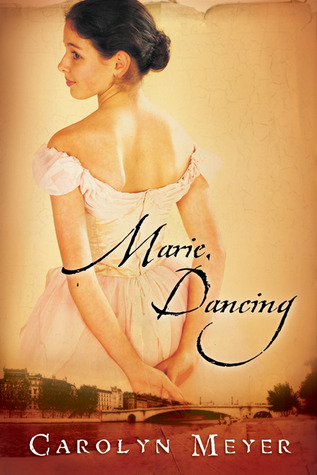
Book Review: Marie, Dancing, by Carolyn Meyer

marie_dancing_coverThis book review is part of series of reviews written by students at St. Margaret’s Episcopal School for their 7th grade English classes.

Have you ever wondered what goes through a ballerina’s mind when she dances?

What could she possibly be thinking about as she takes the audience’s breath away? The spotlight is on her, her and nothing else. For a few seconds, minutes or even hours, it’s as if nothing else exists in the world while dancing. Dancers learn to hide their emotions on stage. You can’t show nervousness, fear, or any type of imbalance. You have to keep tempo, stay with the music, and perform the grand jetés, fouettés, and combinations that you practiced so hard to be able to do. Nothing else matters.

The amazing story of Marie, Dancing is an excellent book written by Carolyn Meyer because of her descriptive language and engaging plot. Meyer has also written Doomed Queen Anne, Jubilee Journey, White Lilacs, and many more. This is another one of her great books that teaches perseverance, honesty, and passion. These were the three most common lessons I found throughout the book.

Marie, Dancing takes place in beautiful Paris, France, mainly around the Seine River at her ballet school called the Paris Opera. The story is revolved around a sculpture called The Little Dancer, Aged Fourteen, which is actually in the Louvre today sculpted by Edgar Degas. This is what makes this story unique because it is revolved around a sculpture, unlike many stories.

Marie’s goal is to become a famous dancer, but she has a lot of hardships and set backs such as living in poverty and issues with her family. She is in intense ballet training while a world renowned artist; Edgar Degas offers her a job to pose for his new sculpture. Edgar Degas is a bitter and cold man, but an amazing artist: “He didn’t wait for me to reply or to change my clothes but simply walked off, motioning me to follow his command” (4). She agrees, and every week for one year she went to his studio and posed for him. This helped her get a little closer to her dream of stardom. Meanwhile, she has big ballet examinations coming up to determine if she gets to say at the Paris Opera Ballet School. Her older sister ends up in prison for three months, and she is risking her practice time for the examinations by visiting her troubled sister. Will she get that dream of stardom that she is desperate to have? Will she ever dance again? Will she ever forgive her sister for what she has done?

One of the obvious reasons I love this book is because of the main character, Marie. She is an example of a 14 year old dancer in the 1880s who lives deeply in poverty, but has a huge passion for what she does. Three words to describe her are determined, helpful, and kind. I would say that she is determined because she really wants to become a famous dancer, and trains every moment she has. Marie is also helpful because she basically raises her 10 year old sister Charlotte while her mother is off drinking, and her oldest sister is very selfish. She gets payed by Edgar Degas to model, and she uses the money to pay off the rent on their house. “I reached Rue de Douai and climbed the dimly lit and rank smelling stairs” (137). Lastly, I found that Marie is kind. One of the reasons why she is kind is because when her older sister was in prison, she risked her ballet career just to go give her scraps of food.

This book also kept me engaged because I really like how the author wrote very descriptively, and it was easier to paint a picture of the setting and imagine the the plot in my mind. I would recommend this book to middle school students. Although, this book got off to a slow start, it eventually went by faster and it was very enjoyable to read. Overall, this is a book that I would definitely recommend.

-Valentina M., 7th grade

Book Review: Pawn of Prophecy, by David Eddings

Even though some books haven’t been turned into movies, they may actually be very good books. David Eddings wrote books that never would be movies, yet those books have attracted readers ever since the 1970s with their comedy, romance, adventure, and magic.

Pawn of Prophecy is the first book that attracted those readers. In the book, the Orb of Aldur, a jewel created by a god that can do almost anything, is a key item. Torak, the evil god of the Agnaraks, would do anything do get that jewel, yet it would burn anyone except one pure of heart. However, Torak is dead, killed by the Rivan ruler, who was led by Belgarath the sorcerer and Polgara the sorceress. Yet prophecies still say that if the Orb was taken from Riva, then disaster may follow, which wasn’t much of a problem because even though the Rivan line has been dead for centuries, a substitute has been preserving the throne.

Garion has heard these legends ever since he was a boy. However, even though all the legends contained magic, he had never seen it, since Sendaria was the only place that had no central god, a kingdom with mixed cultures. Even so, he couldn’t expect much from it.

But when an old and fantastic storyteller comes back to Faldor’s Farm, Garion’s home, after five years of absence with news of something being stolen, Garion, his aunt Pol, and a couple of others have to embark on a journey across the western world, encountering monsters, kings, romance, adventure, magic and much more!

Yet even though Garion is fourteen, he doesn’t know what’s going on, and nobody, not even the voice inside his head with a mind of his own, would tell him what’s going on. For Garion’s destiny has brought himself into a conflict so deep that even if he returns to Faldor’s Farm, he would never be normal ever again. I would give this book the highest rating ever known. Eddings is famous for:

  •  his spectacular comedy
  • the fantastic/comical “why me?” statement, which is said by the main character a lot, the main woman character who’s very motherly
  • the realistic details
  • and the fact that he made the adventure scenes very intriguing.

In the end, I couldn’t relax and put the book down until I read the last the last page of the last book. Eddings really put his mind into his books,  and wanted to make sure that kids have fun reading. However, readers should note that the prologues are big spoilers, some people die, and there is quite a bit of romance.

I would recommend this book to fans of Lord of the Rings and Harry Potter, since it’s set in a medieval sort of world with the different kingdoms, with the fantasy elements of gods and sorcerers. The age appropriate group would be any teenager, and maybe a few preteens.

In conclusion, it’s safe to say that books that haven’t been turned into movies aren’t always bad, just different.

Megan V., 8th grade

Book Review: The Gallagher Girls Series, by Ally Carter

gallagher_girls1This addicting, action-packed series follows Cameron “Cammie” Ann Morgan, a sophomore at the Gallagher Academy for Exceptional Young Women. The Gallagher Academy’s reputation is primly negative, and the neighboring inhabitants of Roseville, Virginia view it as a school for “rich, snotty heiresses.” However, the students are actually spies-in-training, the next generation of agents who hope to be employed by the CIA post high school graduation.

Book One: I’d Tell You I Love You, But Then I’d Have to Kill You
While on a mission for her Covert Operations class, Cammie meets Josh Abrams, a normal, typical boy, who sees her, despite her rank of being a great ‘pavement artist’ and her distinctive aim to stay in the shadows. Cammie is known as the “Chameleon,” because she is average- not too tall, not too short, not too chubby, not too thin, not too anything- so she is able to blend in among a crowd of people, and specializes in tailing her subjects while under cover. With the help of her best friends, Liz Sutton and Bex Baxter, and her roommate, Macey McHenry, along with some brilliant heists and ingenious exaggerations of the truth, Cammie is able to develop a steady relationship with Josh, and sneaks out– using the school’s newfound secret passageways that only she knows about (being the headmistress’s daughter and all)– to see him on a regular basis throughout the school year. She revels in his normalcy and takes comfort in his regular teen dilemmas; I believe this is a big part of why she likes him: when she is with him, she is able to become someone she’s not, and abandon the careful, restless side of her that has been trained to constantly watch her back. However, things soon get complicated, as Cammie is forced to lie endlessly (and flawlessly) to keep her cover as a rich schoolgirl, and she soon learns that normal isn’t all it’s cracked up to be.

Book Two: Cross My Heart and Hope to Spy

After the whole Josh-inspired mishap, Cammie returns to Gallagher Academy for her junior year of high school, only to find that the East Wing is strictly off-limits. During CoveOps the next day, the class is blindfolded and transported to the National Mall, where they are told to blend in and instructed to meet at the ruby slippers exhibit by a given time, practicing counter-surveillance. Only one girl in the class succeeds in doing this; Cammie fails when she is followed by Zach, whom she believed to be an innocently ignorant teenage boy, follows her from the elevator. Later, Cammie’s mom, Headmistress Morgan, announces that fifteen boys- Zach being one of them- from Blackthorne Institute for Troubled Young Men (Cammie concludes this is a cover, and they are also spies in disguise) will be staying at the Gallagher Academy for an unknown duration of time, in a sort of “one-way exchange program.” Cammie and her roommates view the boys as suspicious targets and decide to investigate, but the carefully-placed listening devices in their bedrooms, and the trackers in their shoes don’t prove useful. Zach always seems to constantly hang around Cammie, who doesn’t know whether to consider him infuriating or endearing, and ends up settling with annoying. When he asks her on a study date, she almost says no, but then uses it as an excuse to get information from him about his school, and his past. When the Gallagher Academy’s cover almost gets blown, and is in danger of being released, the girls- and the boys!- must work to make sure that their identities stay secret, no matter what the cost.

Book Three: Don’t Judge a Girl By Her Cover

When Macey invites Cammie to stay with her in Boston over summer break, Cammie accepts, and looks forward to watching Macey’s father accept his nomination for Vice President of the United States. But Cammie and Macey lead dangerous and twisted lives, and they soon find themselves victims of an attempted kidnapping. But luckily their in-depth training and fantastic espionage skills kick in, and they manage to escape along with Preston, the son of the soon-to-be President of the U.S. As their junior year begins, Cammie has a hard time focusing on her studies, and Gallagher Academy doesn’t feel like the safe sanctuary she once believed it to be. In addition, Zach is starting to make a habit of showing up at dangerous points in Cammie’s life. Coincidence? Or is he a piece of the puzzle? Cammie (Codename: Chameleon), Macey (Peacock), Bex (Duchess), and Liz (Bookworm) must dig up their field devices once again and harness their talents of espionage in order to discover who is out to get Macey and why, in this extraordinary novel of friendship, romance, and family. Continue reading