Short Story Review: The Most Dangerous Game, by Richard Connell

most_dangerous_gameNow, don’t get confused by the title. “The Most Dangerous Game” is about a man named Sanger Rainsford, a hunter, landing on a island  called Ship-Trap Island. As Rainsford travels around the island, he finds a huge door. He bangs on the door and a giant man named Ivan, lets Rainsford in. Then, Rainsford meets General Zaroff. Weird names, right? It gets even weirder. Zaroff says that he is a hunter, but a different kind of hunter. He tells that animal hunting bored him. The animals have instinct but no strategy. He says he has hunted every animal. He needed a new animal. How can you do that, you ask? He made a way…
Now, I won’t give it away– but it is shocking. You can consider him crazy, and I mean CRAZY! Now, since Zaroff and Rainsford are both hunters, they go on a hunt. But not a normal hunt but like a hide-and-seek hunt. Confused? Then you should read the story to figure it out, huh?

I would recommend this book to 7th graders with their English teacher or a dictionary because some words are hard to read. But 8th grade and up to 12th grade is the best level of reading. The ages would be 12 years old to 18 years old.

-Kate B., 7th grade

Book Review: The Total Tragedy of a Girl Named Hamlet, by Erin Dionne

total_tragedy_coverThe Total Tragedy of a Girl Named Hamlet was awesome! From Erin Dionne, author of Models Don’t Eat Chocolate Cookies and Tales of an Accidental Band Geek, comes a story about Hamlet Kennedy, a funny eighth grade girl with a few big problems:

1) Her name is Hamlet- what about that is not tragic?
2) Her seven year old sister Dezzie will be attending eighth grade with her- as the math tutor (eek!)
3) Her parents are a walking, talking Renaissance fair who are still stuck in the 16th century and use words like Huzzah!

With issues like this you would expect Hamlet to just curl up under a rock and be homeschooled like any normal person. But Hamlet does not give up. Even if Carter still isn’t interested in her and she’s tanking pre-algebra, she doesn’t (excuse me, does not) let it show. Between her friends, her sister, and the school performance of “A Midsummer Night’s Dream” in which she plays Puck, she is able to actually enjoy her eighth grade year and even (shh!) has a secret admirer.

The characters are vibrant and funny, the plot is unpredictable, and the writing entertaining. This book is real, funny, and down to earth. Ask for it for Christmas!

-Becka O., 9th grade

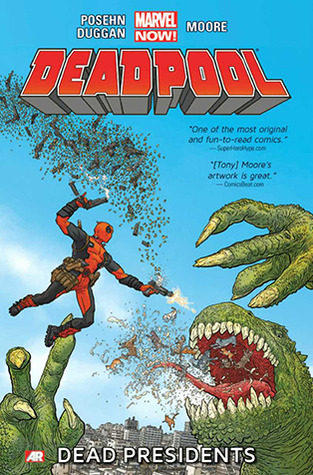
Graphic Novel Review: Deadpool, by Poehsen, Duggan, & Moore

deadpoolI should explain why I put full story spoilers in these comic reviews. Because of how short they are, and the fact that comics are a visual book. I try to engross you in the story without the images, of course this isn’t that easy but I do my best. So without further delay, here is DEADPOOL!

This has to be the most interesting part of the comic for me if only for how absurdly stupid and funny it is. It’s a disembodies voice talking over the many noteworthy problems like the amount of homeless people, and overweight people fighting which I will not go into do to this turning into a political rant. Turns out, instead of everything else, it’s a necromancer. (Fun fact: A necromancer is a wizard that uses what is normally but not always considered dark magic to revive the dead.)

Of course, this necromancer LOVES America so he has an idea! He’s going to bring back all of the dead presidents to help fix the country. (An idea that many people that I know think would be cool.)  This of course is a no-no. He brings back a very demonic Harry S. Truman. (Fun fact: The S in Harry S. Truman doesn’t stand for anything. Instead of a middle name he had middle initial.) Instead of helping the country he wants to DESTROY it. Happy, right? Some where in all this, Captain America comes in and has to fight President Truman. The next scene skips ahead to the Shield flying fortress.

I can only assume that the person screaming at Agent Preston is Nick Furry. He is of course upset that CAPTAIN AMERICA is using his shield to DECAPITATE President Truman. They have a problem, of course, because the dead presidents are coming everywhere and causing problems; but they can’t send their heroes after them because after all, that would be horrible for the press. Who you gonna call? DEADPOOL. …but that’s later.

The next page is literally a Godzilla spin-off destroying the city. And then stops. You see a small sword go all the way down the front of him and dead pool’s head sticks out going: HERE COMES DEADPOOL. Once again proving Deadpool is the funniest thing in Marvel.

Easily a 8 out of 10. I love this comic series, and this is only the first half. There’s far more to love and I can’t wait.

-Cameron S., 12th grade

Print Book vs Ebooks: Pros and Cons

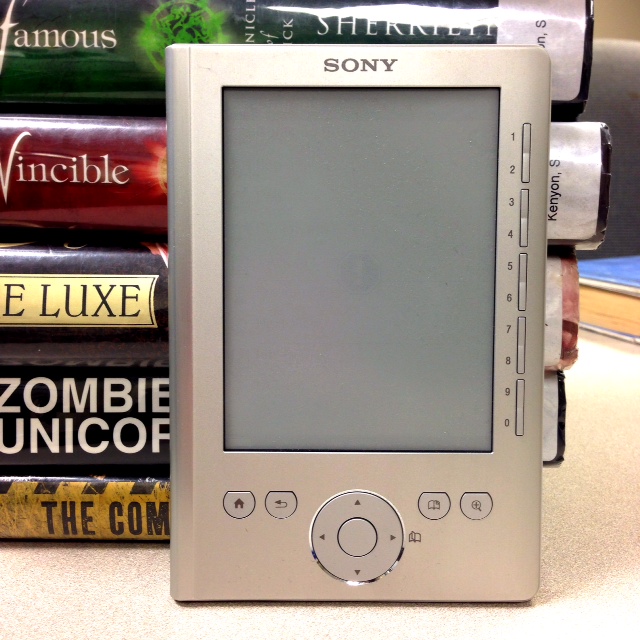
ereader_picBack in June, another blogger, Sarah B., wrote this wonderful post about the debate over ebooks which included some great information on the history of ebooks, and most recently Leila S. made great visual representation of the differences between the two. Today, I would like to talk more about the pros and cons of each.

Ebooks have more concrete pros and cons than print books do, a lot of the things that make print books great have more to do with preferences, while ebooks are more about convenience. First off, let’s take a look at the pros of ebooks.

  • Size: For me this is one of the greatest things about ebooks– you can fit hundreds on one small device, which- when you love reading- is an amazing thing. This small size is also great for traveling.
  • Font Options: Most ebooks let you adjust the font size to your liking, you can have anything from huge and easy to read to super small which lead to less “page turning”. This is a great feature especially if reading small print is difficult for you. Some e-readers also let you change the color and font type to make the font easier on the eyes.
  • Brightness: Many ereaders have either the ability to change the screen brightness or come with a built in light which makes it easier to read in any lighting condition, from dark nights to bright days outside.
  • Cost: Often times ebooks are cheaper than there print counterparts, and many classics are even offered for free. This is great for saving money.

And now onto the cons of ebooks…

  • Start-up Cost: To read ebooks you will need to get an e-reader, and even though there are e-readers priced at every budget level it can still be an investment, especially if you’re not totally sold on the idea.
  • Needs to be Charged: For light day to day reading at home battery life shouldn’t be a problem, but for long car trips or camping then having to have an electrical outlet can be a problem.
  • Hard to Lend Books: While there are some programs, like the Amazon Kindle Owners Lending Library, that allow ebooks to be lent to friends and family, it can be a hassle to figure out the system,not to mention all parties involved would need a device.
  • Digital Feel: For me part of the joy of reading is the book itself, the texture, the smell, the weight, and with ereaders, you just don’t get that.

Next I would like to talk about the pros of print books.

  • Easy to Share: Lending print books couldn’t be easier– just grab the book and pass it along; no set-up or hassle involved.
  • The Whole Experience: There is just something about print books that ebook can’t compete with, the way the spine cracks the fist time it’s open, the way the pages feel in your hands, the rich scent of paper, the way they wear over time and gain character.
  • Sentimental Value: While ebooks are probably going to be around for quite a while, there is something really special about being able to hold something in your hands that your parents, grandparents, and other family members had when they were young.
  • No Battery Required: With print books it’s grab and go– no need to worry about being miles away from electricity.

And finally, onto the cons of print books.

  • Size: The fact is print books take up space, and a lot of it. For avid readers it’s only a matter of time before the books move from the bookshelf onto tables, chairs, the floor, and anywhere that they will fit.
  • Cost: Print books, especially hardcovers, can add up fast. Although buying used or checking free carts at libraries can help, that can be a gamble and pursuing the newest book will usually result in a trip to the store.
  • Reading Conditions: Print books need light, and sometimes that can be a problem, especially if you’re a fan of reading at night before bed or on long night car trips.
  • Durability: Paper degrades over time, and while this won’t typically be a huge problem, it can be a hindrance if you like to travel with books or plan on passing them down to future generations. The plus side is this wear is usually just something that gives the book character and not a deal breaker.

Overall, both ebooks and print books have many advantages and disadvantages and when it comes down to it, it’s all about preference. Whatever you choose– read on!

-Angela J., 12th grade

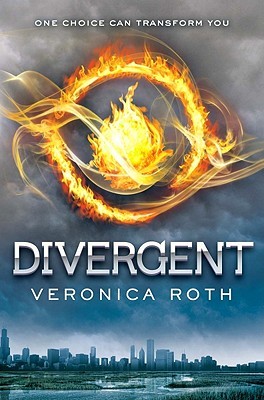
Book Review: Divergent, by Veronica Roth

divergent_coverThe thrilling novel Divergent by Veronica Roth is both spectacular and engrossing and I found it almost impossible to put down.

I chose to read it for my literature circle in my English class, and nobody in my group could stick to the assigned reading because we all kept reading ahead! The story starts off slowly, letting the reader understand the futuristic “utopian” society in which the setting takes place. In the book, the government has sectioned off its citizens into five factions that are best fitting to the individual’s personality and traits. There are the Dauntless, who are the brave, Abnegation, who are the selfless, Candor, for honesty, Amity, for peace and kindness, and last but not least there’s Erudite, who are the most intelligent in the society. The main character of the book is Beatrice Prior, who is originally Abnegation but is struck with the life-changing decision of staying with her family in a faction where she feels an outsider, or going with her heart and never seeing her family again.

Through government secrets and sparks of rebellion, Divergent is a perfect fit for anyone who is a fan of The Hunger Games or the Mortal Instruments series.

-Sara S., 10th grade

Frozen Movie Review and Readalikes

frozen_movie_posterDisney’s newest animated feature, Frozen, is about princesses Elsa and Anna. Elsa has the beautiful and dangerous power to create snow, but after hurting Anna when they were little, she tries to hide her ability. When her power is revealed, she runs away, leaving Anna more alone than ever, yet Anna is determined to go after her, restore summer, and just get her sister back.

Frozen is an amazing movie with laugh-out-loud moments along with the ones that make your heart shatter. Although it doesn’t really follow the plot line of Hans Christian Andersen’s original fairy tale, The Snow Queen, with Elsa being good and Anna’s sister for instance, it maintains a fairy tale quality while having a modern feel.

The animation is astonishing, the snow so realistic, you almost get shivers just seeing it. The music that is equally fantastic, one of my favorite song being “For the First Time in Forever” (second only to “Let it Go”) because, besides being beautiful, it is the duet between two sisters and the theme of the entire story. The sisters were well developed with Anna somewhat awkward (in a good way) and adventurous and Elsa very cool and collected. What I liked best was how sisters were more important than a love interest, though that element is still there.

It is one of the best Disney movies I have seen and I definitely recommend it to anyone who loves those “Disney classics” that seem timeless, because that is Frozen. In honor of this movie, here is a list of books with sisters inspired by fairy tales.

sisters_grimm_coverThe Fairy-Tale Detectives by Michael Buckley

After the mysterious disappearance of  their parents, sisters Sabrina and Daphne Grimm (descendants of the Brothers Grimm) are sent to live with their grandmother in Ferryport Landing, where every fairy tale character (they prefer to be called Everafters) lives. When their Grandmother is kidnapped, it is up to the Sisters Grimm to take up the family business of fairy tale detectives if they ever wish to see their family again.

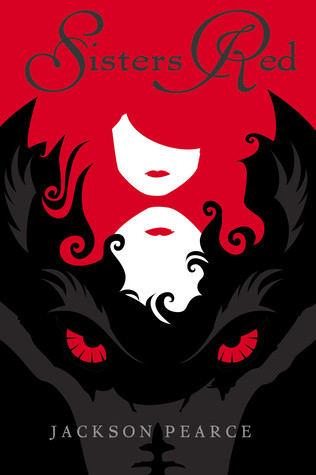
sisters_red_coverSisters Red by Jackson Pearce

Sisters Scarlet and Rosie were attacked by werewolves at their grandmother’s house when they were young. Now they are the ones who hunt the werewolves down. Scarlet won’t stop until every werewolf is dead, but Rosie doesn’t want to fight anymore. How do you explain that to the sister who saved your life? It follows a possibility of what could have happened after the little red riding hood tale.

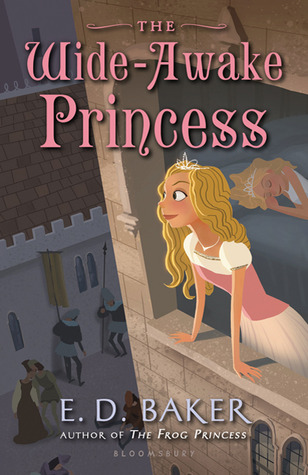
wide-awake_princess_coverThe Wide-Awake Princess by E.D. Baker

Did you know Sleeping Beauty has a little sister? Her name is Annie and she is immune to magic. It’s the only reason she didn’t fall asleep with the rest of the castle. To save the kingdom, Annie adventures out to find her sister’s true love to break the spell, maybe finding her own along the way. A sweet retelling of Sleeping Beauty as well as a few other fairy tales mixed in.

-Nicole G., 10th grade

Book vs. Movie: Catching Fire – Further Analysis

catching_fire_book_movieMy family and I saw The Hunger Games: Catching Fire recently and I wanted to compare it to the book.

First of all, the time that they spent in the actual arena in the movie was shortened a lot. It probably consisted of half the time they spent in the arena in the book. Also, the time that they spent in their district was a lot longer than the previous movie. Both movies, it seems, spent more time in the districts than in the arena. Third, as the years go on, book-based movies in general are becoming more and more like the original books. Catching Fire was no exception. I could remember so many things from the book that were put into the movie that I was quite overwhelmed.

Although, in the book –SPOILER ALERT—after Katniss is taken from the arena in a hovercraft containing Finnick, Haymitch, and Gale, they talk a lot more about what has happened while the games were taking place. In the movie, there was just a lot of screaming and not much talking. Katniss is pretty scary when she gets angry. I don’t remember Haymitch –SPOILER ALERT (again)—giving Finnick his gold bracelet or that Effie gives Haymitch one, also. Otherwise, the movie and the book were more alike than I would have thought them to be if I had not watched the movie.

If you have not read the book: read it – your lives will be better, I assure you. And also, watch the movie too. Compare them if you want, and post a comment below about what you thought about them!

-Kyle H., 7th grade

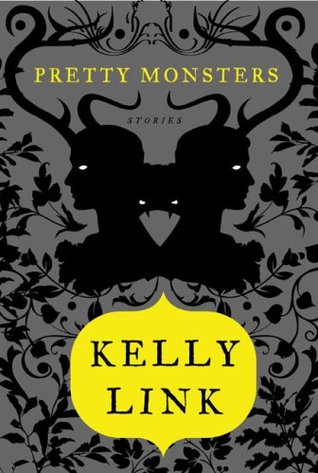
Book Review: Pretty Monsters, by Kelly Link

pretty_monsters_coverThis collection of short stories spans the genres of fantasy, horror, and sci-fi. Some stories are established as supernatural from the first sentence, while others are seemingly normal until the twist ending. The stories make use of the Magical Realism genre, in which magical elements are present, but treated as a normal part of the characters’ world, and often not the main focus of the story. Magical realism stories are often intentionally ambiguous and leave it up to the reader whether the events were real or imagined, or never give an explanation of the existence of paranormal forces.

One story I particularly liked was “Magic For Beginners,” which follows teenager Jeremy through his parents’ divorce and discovery of family secrets. Jeremy and his friends were brought together by being avid fans of a television show called “The Library.” The show is brought up in several conversations, with the characters derailing uncomfortable topics by talking instead about the most recent episode. Gradually, the reader learns that “The Library” airs at random times on random channels, with commercials for nonexistent products and actors no one can identify, although the characters aren’t overly concerned by this. The abnormality culminates in “The Library’s” main character Fox, thought to be fictional, calling Jeremy and asking him to steal books for her so that she won’t die in the next episode. Jeremy completes his instructed mission but never talks face-to-face with Fox, and so the true origin of the phone calls and the possibility of her existence is never resolved.

Another one of my favorites was “The Surfer,” in which the adolescent protagonist’s father takes him to Costa Rica to escape a viral pandemic in the near future. They share a quarantine shelter with cult members who are waiting for the return of aliens that briefly visited their leader years ago. The reader sees that one confirmed visit from aliens has not changed the future world much, and the characters’ conversations about world politics, books, soccer, and the virus take up most of the story.

Overall, I liked this book. Some stories were confusing or too open-ended, but in others the minimalist ambiguity allowed by the short story format contributed to the narrative. The author’s descriptions are concise and vivid, and the existence of ghosts, aliens, or werewolves often takes a backseat to the characters’ coming-of-age stories. I would recommend this book to anyone who enjoys surreal fantasy and speculative fiction.

-Miranda C., 12th grade

Michael Hingson: Speaking With Vision

MHingson_Author Headshot

Michael Hingson, author of Thunder Dog

On November 20, 2013, I had the unexpected honor of meeting author Michael Hingson. I had recently read and reviewed his book, Thunder Dog, and within 24 hours of my review being posted on Teen Voice, Michael Hingson posted a comment!  I was thrilled!  In his comment, Mr. Hingson invited me (and my parents) to his upcoming presentation: Speaking With Vision at Irvine Valley College.

Even though he has been called a hero for surviving the September 11th, 2001 terrorist attacks in the World Trade Center through the partnership of his guide dog, Roselle, Mr. Hingson focused his speech on his life experiences before and after his terrifying ordeal.

Being completely blind, Mr. Hingson has challenges due to his physical inability to “see” with his eyes. True, this means he is forced to take a different approach to things designed for a sighted world. But this isn’t a disability to him.

Those of us who pre-judge and limit Mr. Hingson when we learn he is blind have the real disabilities. Much to the dismay of his well-meaning neighbors, Mr. Hingson grew up riding a normal two-wheel bicycle around town!  He did this without crashing into objects or running into people.  He rode his bike just like the other kids who were not blind.  How did he do it? Much like dolphins and bats, Mr. Hingson learned that our environment “sounds” different when you pass a solid object or open doorway and that distances can be determined by sound bouncing off objects. He has become an expert at echolocation.

He has also become an expert at determination and having a “can-do” attitude.  His philosophy on life first began by his parents who never believed or treated him as if he was disabled.  Rather than insisting he live in a “safe” environment, they just cautioned him to be careful. Mr. Hingson has never expected or welcomed special treatment.  But he has insisted that he have the same opportunities sighted people have.

Mr. Hingson and his parents don’t spend time worrying about what isn’t in their control (like being blind or being inside the WTC when the hijacked planes hit the Twin Towers). Instead, Mr. Hingson believes we should “focus on things you can [control].  The rest will take care of itself.”

He wholeheartedly believes that “We have to make the decision to use our tools to move forward and progress,” just like the one-word command he gives his guide dogs to signal when he is ready to go:  “Forward.”

During Mr. Hingson’s speech, it was hard to tell he was blind. If he wasn’t talking about his disability (though it’s not really a disability at all), I would’ve forgotten he was blind! This is just another way to show you that Mr. Hingson doesn’t let his blindness drive his life.

After his speech, Mr. Hingson gave me a pre-release copy of his new book aimed towards 8-year-olds and up, Running with Roselle. Running with Roselle is a children’s version of his New York Times bestseller, Thunder Dog.  I will be honored to read and review this book in an upcoming blog!

-Danielle L., 6th grade

Book Review: The Death of Ivan Ilych, by Leo Tolstoy

ivan_ilych“Can it be that I have not lived as one ought?” suddenly came into his head. “But how not so, when I’ve done everything as it should be done?”

All humans who were, who are, and who will be have existed, exist, and will exist, respectively, as unique entities, each discrete and different from every other. In our vast variety, it is peculiar to think that all of us, collectively, could find anything of commonality. Indeed, our discrepancies are often cited as the sources of our social and cultural distinctions, our conflicts, and even our wars. Nonetheless, as human beings we do truly share something, or perhaps a few things, that constitutes the essence of our existence. Possibly the most important of these constituent parts, or, as some may perceive, an equivalent of this essence, is human life itself, its progressions and turbulences, its peaks and nadirs.

It is this very concept, life in its truest form, that Leo Tolstoy, in his novella, The Death of Ivan Ilych, seeks to explore. Tolstoy’s work is a summation of the life of a judge in mid-19th century Russia, focusing in particular on his final days of life. As an audience, we are first introduced to Ivan Ilych through the perspective of his colleagues, who, in regards to their fellow official’s death, are most interest in the fate of his position and estate. With this introduction, the remainder of the novella chronicles the passage of years in Ivan Ilych’s life. He appears to live comfortably, dedicated to his career, and exists happily, despite the mounting pangs of a loveless marriage. Ilych, with wife and children, lives awhile in the exile of a peasant village with his wife’s family, but soon he is returned to a more honorable post in his old line of work, affording him the opportunity to begin a good life anew. Yet in the excitement of a new home all his own, Ilych’s life begins to run downhill after he contracts an internal injury whilst decorating the new residence he so cherishes. Ever quickening, his dying days pose for him an existential crisis, causing him to question the value of his life and how his once ubiquitous comfortableness has been lost.

In regards to its plot and subject matter, there is nothing extravagant or instantly engrossing about The Death of Ivan Ilych. To the contrary, the work is defined by and truly is bold for its simplicity. Indeed, Ivan Ilych himself is a simple man, a highly physical being who seeks only to live and to live well. Perhaps this is why his death, as opposed to that of a more prominent figure, is so significantly tragic. Ivan Ilych is an everyman, and thus his sufferings, those of a man who sought only to do what is good and right, become frighteningly familiar and immediately applicable to our own lives. Even with its brevity, The Death of Ivan Ilych has much insight to offer on this human experience we all share.

-Sebastian R., 11th grade