Book Review: The Adventures of Huckleberry Finn by Mark Twain

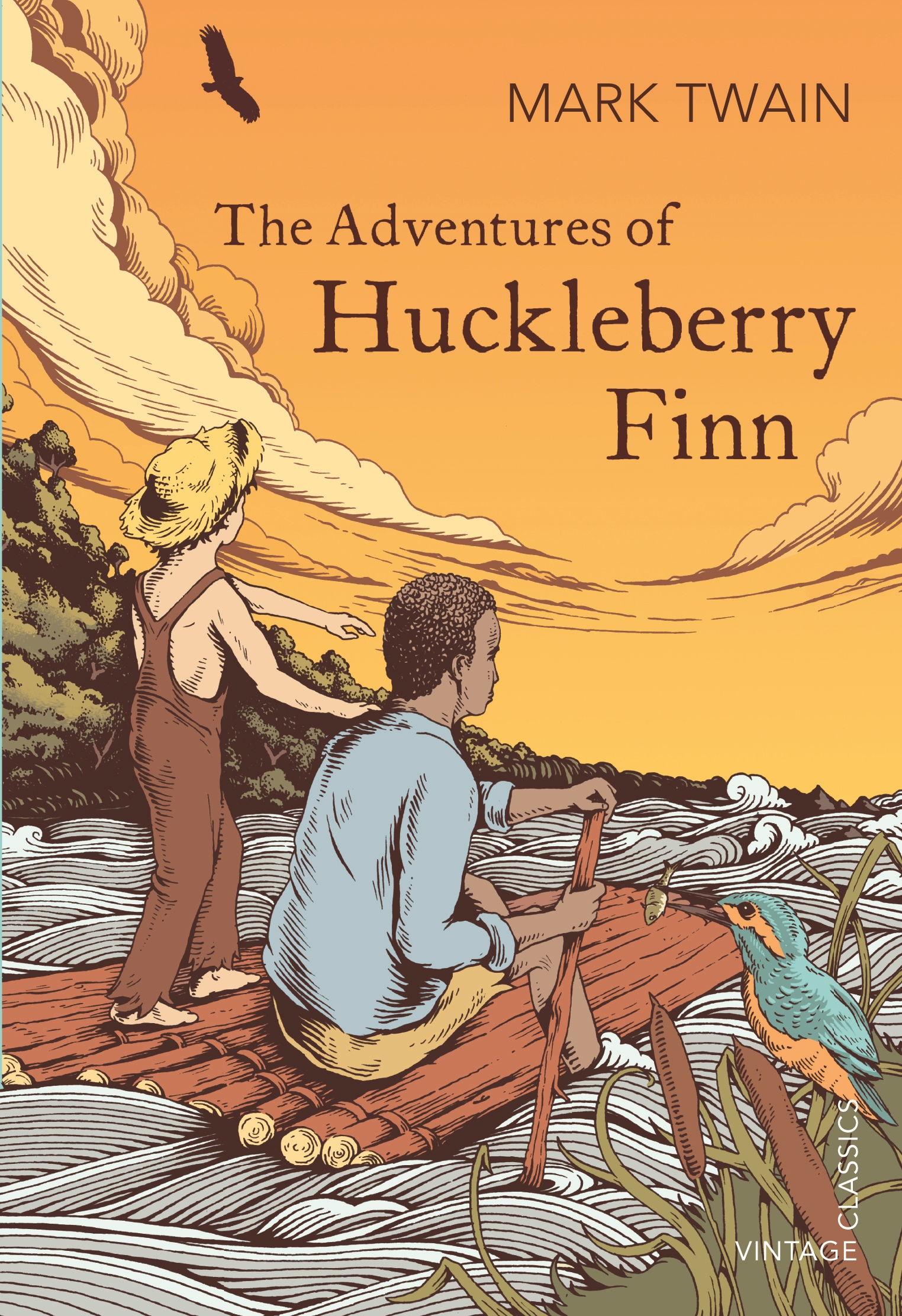
The Adventures of Huckleberry Finn by Mark Twain - Penguin Books ...

The Adventures of Huckleberry Finn is a novel by American writer Mark Twain. It is a sequel to the novel The Adventures of Tom Sawyer, first published in 1885. The hero of the story is Huckleberry Finn, who met the reader in the Adventures of Tom Sawyer. Huckleberry Finn was a bright, kind, and brave white boy. He fled to the Mississippi River in pursuit of a free life. On the run, he meets Jim, a slave. Jim is a hard-working, simple, warm, honest, and loyal slave. He fled from his master’s house in order to escape the fate of being sold again by the master. The two went through various adventures. The novel praised the boy Huckleberry’s wit and kindness, condemned the hypocrisy of religion and the ignorance of believers, and created the image of a dignified slave.

The Adventures of Huckleberry Finn is a masterpiece because Mark Twain took the literary traditions of the American frontier west and expanded them beyond the narrow confines of such humorous literature. There are many readers who, after reading this novel, admire the consistency, perfection, and appropriateness of the various dialects used by the author — it is hard to find a word in this book that is not closely tailored for Huckleberry or Jim.

As a classic work in American literature, The Adventures of Huckleberry Finn written by Mark Twain has its unique linguistic art, namely the use of colloquial language. The language of the protagonist narrator often breaks grammatical conventions, matches with the narrator’s child-like thinking, and changes verb tenses at will. In addition, the language of other characters is mostly dialect, including slang. The colloquial language of Huckleberry Finn created a new style of literary language, creating a profound influence on American writers later.

-Coreen C.

Messenger by Lois Lowry

By this point in The Giver series, people have given up reading for a host of reasons. First, they never even made it to Gathering Blue. Third, they read Gathering Blue and did not see the connection to The Giver so didn’t see a point in continuing. They have something against their amazing book.

First of all, it’s a series so, like, get with the program. Plus they are great reads anyway so you won’t be wasting your time. Basically, there is this world (presumably ours but in the future) where there are scattered communities that are pretty much all messed up. One is a utopia, where a boy named Jonas is selected for a special job that will lead him to see beyond the norm. Another is just really wonky and the government (which btw is all guys) pretty much enslaves children with talent. Here, Kira is commissioned as a slave for her skill in weaving.

The Giver is dedicated to Janas and his story while Gathering Blue tells of Kira and her triumphs. A lot of the time people read The Giver and are like “Wow, that was great! (The book, not the society people, don’t go thinking that) What rose can I read by my new queen, Lois Lowry?”. Then they are like, “Oh, Gathering Blue, this looks cool.”. And they go through and read it but don’t actually pay attention to it because they spend the whole time trying to figure out how it is related to The Giver (myself included). Friend, don’t make that mistake. Not if but when you read Gathering Blue, appreciate it for what it is. Don’t meet Micheal Jackson and then Janet and spend your whole conversation trying to look for things that make them look related! You’ll miss out on everything that she has to say.

The point is, before you do anything else with your life, read The Giver. Then, before you even blink start reading Gathering Blue and get your life back on track. If it is not apparent, these books are, like, sacrilegious to me. Messenger does not really connect The Giver and Gathering Blue. Now you are probably thinking, “What, I just went through all of your lamenting for that”. Hold your horses. Messenger lays the groundwork for Son, the last and longest book in the series. Messenger and Son are as related as The Giver and Gathering Blue are unrelated if you catch my drift. In Messenger, you see more of two background characters from Gathering Blue. If you would like the general summary, continue further.

WARNING: THERE WILL BE SPOILERS FOR EVERYONE WHO IS NOT TAKING THE TITLE OF THIS PARAGRAPH SERIOUSLY.

You have been warned. If you thought that I was ranting up top, you have not seen the beginning. Deep breath and…once upon a time in Gathering Blue when Kira meets her father, Seer, he says that he lives in a community that is like literally the only nice place in the world to raise your kids. They accept refugees from all of the other wackadoo cities, in fact, it was founded by them too. Kira’s friend Matty goes to life with Seer. The story takes place while Matty is coming of age (surprise surprise, Lois Lowry is a partial time that age) and is looking for a job/purpose in the world. He really likes to deliver letters and parcels for the villagers (because there aren’t and forms of digital messaging here). He is like the Hermes, going back and forth. He aspires to be the town’s mailman. In this city, it is sort of like in colonial times. Everyone is an expert at something. For example, there is one baker, one teacher, one candlestick maker. You name it, there is only one. Matty wants to be an expert delivery man. Anywhoo, he is coming of age and learning about himself when low and behold, a conflict arises! This town is basically full of first-generation refugees. These people understand the serious oppression in their world. They get that it is no bed of roses.

Not only that, these people were brave enough to escape and start new lives for themselves. They are the spinning images of chivalrous; morally strong and outwardly brave and kind. However, this super sketchy dude comes along and (almost) ruined it. In case you have not picked up on it by now, everyone’s superpowers are kind of magical. Jonas and his “seeing beyond”. Kira’s impeccable weaving. Matty’s, uh, speedy deliveries. Well, this sketchy guy, Trademaster, he’s magical too, but he has dark magic. He operates this event where he comes into the good little town and tempts people with things that they desire in refers to part of their soul. Mahhhh! I know, it’s super trippy. So, say you want the winning lottery ticket. Snap! He makes it happen. Awesome, right? No friend, most defiantly not awesome. In return for that lottery ticket you are going to have to part with part of yourself. “Great!” you think yo yourself, “I get this lottery ticket and I get to get rid of my bad temper, cool!”. FRIEND, sit down, sit down right now.

Trademaster would not want your bad temper, no one does. He collects juicy things like “kindness”, “morality”, “intelligence”, “bravery”, things to put on your resume. So you get the lottery ticket and you win and you are loaded but your partner breaks up with you and you and says your breath stinks and you are losing hair and getting fat and wrinkly and old. Then you are sitting all alone one-night scooping ice cream out of a carton watching soap operas and wondering what happened to your life. Your rich, but lonely. Snap! Trademaster took your “romanticness”. Not worth it, huh. But now it’s too late. You are stuck being lonely and single forever. So basically, Trademaster rolls into town and everyone is like Oh, ah! Matty quickly learns from the wisdom of Seer that Trademaster is sketchy and tries to convince everyone else of this. Meanwhile, Trademaster is corrupting the town. This empire of refugees is building a wall to block out people seeking freedom and a new life. Also, if the wall is closed up Seer will never see Kira again! Matty has to go on the most important delivery mission of his career, to bring Kira to see her father. I am going to leave you on a cliff hanger. But hopefully, my summary has intrigued you enough to keep reading the series.

Once upon a time there was a rural, simple little town built of refugees from maniacal communities. There is a boy who is coming of age and wants to discover his calling and has a passion for mail delivery. He and his adopted father are the only ones who see through Trademaster an evil magician who’s ambition is to turn all of the noble-minded people against one another and all other refugees. I can never give it the justice that it deserves.

This book is not as exciting as the other three, that’s true. However, it connects Gathering Blue to the last book and lays the foundation for Son which is really, really phenomenal. Thank you for listening to my ranting, hopefully, it has done you some good and Good Night!

-Ainsley H. 

Messenger by Lois Lowry is available for checkout from the Mission Viejo Library

Book Review: The Hunchback of Notre-Dame by Victor Hugo

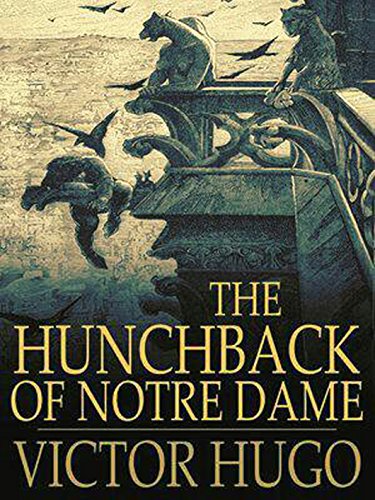
The Hunchback of Notre Dame - Kindle edition by Hugo, Victor ...

“The Hunchback of Notre-Dame” is a story set in 15th century France with a quirky and contrasting approach. The novel exposes the hypocrisy of religion, declares the bankruptcy of asceticism, praises kindness, love and self-sacrifice of the lower working people, and reflects Hugo’s humanitarian thoughts. “The Hunchback of Notre-Dame” is a tragedy in which the good innocent people were tortured and persecuted under the autocratic system. The heroine Esmeralda is a kind and pure young girl.

When the peddler poet, Granger, strayed late at night into a gathering place for vagabonds and beggars in Paris, and was about to be killed, she came forward and offered to marry him, taking him under her protection, though she did not love him. When Quasimodo was whipped in the blazing sun and cried out in pain of thirst, she was the only one who sympathized with the hideous bell-ringer who had hijacked her in the middle of the night. She thought the world was as pure as her, and she died in passionate love with the heartless Phoebus. She was steadfast in character, willing to die before Claude’s insolence. She was the darling of the vagabonds and beggars of Paris, but self-supporting and undefiled.

Hugo put such a bright image in the dark background of the Middle Ages, describing how the society ruled by despotism and rampant with the power of the church threatened her and persecuted her like a huge net, strangling her by horrible means. The religious fanaticism of Bohemian maidens, the vicious plots of church figures to satisfy their vile and animal desires, the brutality of the despotic state regime… all of these are described by Hugo in a romantic way as terrible as a nightmare.

Through this description, the author shows the darkness of the feudal autocratic society and highlights an anti-feudal theme of the work. Whether it’s Crowder or Quasimodo, they’re people of society at the end of the day. The division and conflict in their hearts reflected the division and conflict between theocracy and human rights, ignorance and knowledge seeking in their time, between the huge and heavy dark system and the struggling of vulnerable individuals, which finally led to the tragic end of all the characters.The literary value and social significance of “The Hunchback of Notre-Dame” have a far-reaching influence. This novel, breaking the shackles of classicism, is a milestone in romantic works. Since its release, the novel has been adapted into numerous films, cartoons and plays.

-Coreen C.

Book Review: The Adventures of Tom Sawyer by Mark Twain

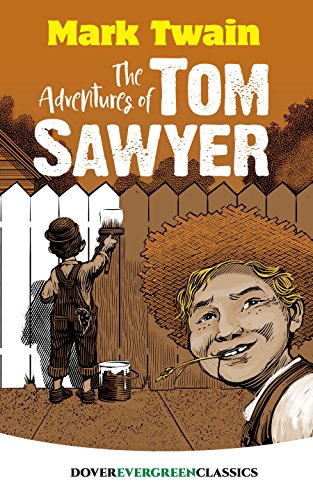
The Adventures of Tom Sawyer (Dover Children's Evergreen Classics ...

The novel takes place in the first half of the 19th century in a small town on the banks of the Mississippi River. The hero Tom Sawyer is innocent and lively, dares to explore, pursues freedom avidly,but cannot bear to restrain his individuality and endure boring life. In the antebellum period of the novel, the small town of St. Petersburg is in some ways a microcosm of American society. Through the adventures of the protagonist, the novel satirizes and criticizes vulgar social customs, hypocritical religious rituals and stereotyped school education in The United States, and describes the free and lively hearts of children with cheerful writing.

Tom lost his mother in infancy and was adopted by his aunt. Clever and naughty Tom could not stand the control of his aunt and school teacher. Late one night, while playing in a cemetery with his good friend Huckleberry Finn, he happened to witness a murder. For fear of being discovered by the murderer they know this matter, Tom, Huckleberry and another small friend together fled to a desert island to become “pirate”. Their family thought they were drowned, but they turned up at their own “funeral”. After a fierce ideological struggle, Tom finally stood up and testified against the murderer. Soon after during a picnic, he and his sweetheart Betsy got lost in a cave and faced death for three days and nights. After he manages to escape danger later, Tom Sawyer found the treasure that the murderer buried together with his good friend Huckleberry Finn.

The Adventures of Tom Sawyer marks further development of Mark Twain’s realistic creation. This book describes the free and lively psychology of children, and in contrast exposes the vulgar conservative life of small town citizens, highlighting their dull and dreary lifestyle. Mischievous and lively, full of fantasy and justice, Tom planned to go out for adventures in order to get rid of the shackles of reality and enjoy the full pleasure of freedom. All of this contradicts the capitalist living environment and is not allowed by secular morality and church precepts. Generally speaking, criticizing stagnation, vulgarity and religious hypocrisy of American local life can be seen as the main content of the novel.

-Coreen C.

Walden by Henry David Thoreau

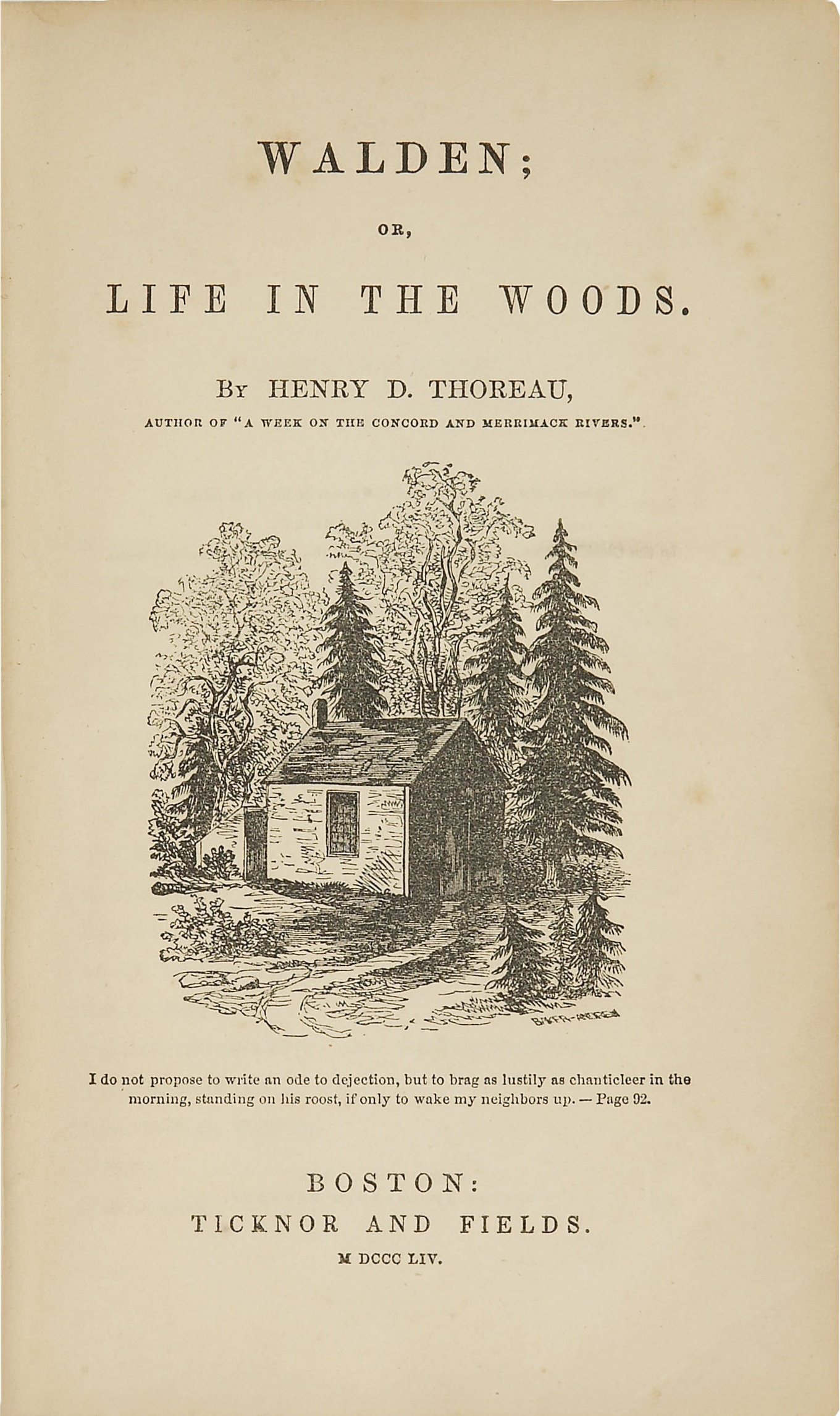
Walden - Wikipedia

Walden is a collection of essays by American writer Henry David Thoreau. Walden is a record of American writer Henry David Thoreau living by the Walden Pond. It describes what he saw, heard and thought over a period of more than two years. The book is rich in content, profound in meaning and vivid in language. Walden is composed of 18 essays.

In the process of the change of four seasons, it records in detail Thoreau’s inner desire, conflict, disappointment and self-adjustment, as well as the complicated mental process of his desire again after adjustment, which went through several cycles until its final realization. It shows that the author employs it to challenge his personal, and even human boundaries. But this kind of challenge is not the infinite hope of realizing self-worth, but the infinite power of recovery after injury.

Thoreau’s own practice at Walden Pond and his works have a consistent proposition: return to nature. In his works, he constantly pointed out that most of us modern people are trapped by family, work, various material needs, have lost spiritual pursuit and lived a materialistic life. That is still the case today, and it is getting worse. Many of us pay little attention to things beyond our petty personal interests and activities. In a global context, Walden has become a model of harmonious coexistence between man and nature. In the broader sense of ecology and biology, Thoreau was way ahead of us.

The myth of Walden represents a primitive way of life in pursuit of perfection, expressing an ideal that is both attractive and practical to contemporary people. This model is of ecological significance to us today, because the destruction of ecological balance and environmental degradation have reached a rather serious level, and many ecologists and environmentalists are working to protect the few remaining wealth left by nature to human beings. Thus, Walden is no longer just a specific place where the famous American writer Thoreau lived, wrote and thought. It has become a symbol. In Walden, we can find a way of life, a romance between man and nature, a persistent pursuit of ideals, a concept of embodied nature, and the eternal desire of man to approach and merge with nature.

-Coreen C.

The Hunger Games by Suzanne Collins

Suzanne Collins’ The Hunger Games is a dystopian novel set in a futuristic fictional nation known as Panem, located in the midwestern United States. The novel’s protagonist is Katniss Everdeen, and she must survive a deadly competition known as the “Hunger Games.”

Panem is divided into twelve districts, each of which is like states. Each district has a specialty; for example, Katniss is from District Twelve, which specializes in coal mining. Because of a failed rebellion years before, each of the districts is required to send one “tribute” to an annual event known as the Hunger Games, during which two tributes from each district, a male and female, all fight to the death to claim the glorious title of “victor.”

The story begins before the Reaping, an event that chooses the two tributes from each district by random. Katniss’s younger sister is drawn, but Katniss volunteers to take her sister’s place, knowing that going means almost certain death. Chosen alongside Katniss is the male tribute, named Peeta.

Katniss and Peeta are both sent to the Capitol, a wealthy and powerful state that rules over all the districts and runs the Hunger Games for its own entertainment. Together with their coach and advisor, they begin to prepare for the Hunger Games, training and making alliances with other tributes.

I would recommend the Hunger Games because of the extreme suspense that the author creates while the tributes are fighting during the games. The story is touching, but it contains extreme violence, so I wouldn’t recommend it to younger readers.

-Josh N. 

The Hunger Games series by Suzanne Collins is available for checkout from the Mission Viejo Library. It is also available for download from Overdrive

For Whom the Bell Tolls by Ernest Hemingway

For Whom the Bell Tolls (film) - Wikipedia

“For Whom the Bell Tolls” is a novel created by American writer Ernest Hemingway in 1940. This novel tells the story of Robert Jordan, a young American who teaches Spanish in a university and has deep feelings for Spain. He volunteered for the Spanish army to blow up behind enemy lines. To cooperate with the counterattack, he was ordered to contact with the local guerrillas and complete the task of bombing bridges. He enlisted the support of Bilal, the wife of the guerrilla captain Pablo, and the rest of the team. He then isolated the demoralized Pablo, and arranged each man’s task in a step-by-step manner. In the midst of the flames of war, he heals the trauma of Maria, the girl whom Bilal has taken in because she was raped by his enemies. In these three days, Robert experienced the conflict between love and duty and the test of life and death while human nature continues to sublimate. When the bridge was bombed, Robert was wounded in the thigh and left alone to block the enemy. In the end, he sacrificed his young life for the Spanish people.

In “For Whom the Bell Tolls”, efforts are made to achieve a universal sense of harmony between nature and man, and man and woman. This harmony, Hemingway tells us, is the most difficult type of struggles. To understand one’s intimate relationship with nature and one’s co-existence with others requires breaking the consciousness of the human ego, overcoming the arrogant sense of domination and understanding the ethics of interconnectedness, interdependence and care.

-Coreen C.

Running for Governor by Mark Twain

Running for Governor: Twain, Mark: 9781523289370: Amazon.com: Books

“Running for Governor” is a unique artistic work, a special genre between satire and short story. While a novel should be about character and plot, “Running for Governor” doesn’t focus on character or plot, but describes a bunch of cleverly arranged news stories and interspersed commentary. In that sense, it’s like a funny story, or a satirical essay. However, it is different from the general satirical sketch, because although it does not focus on depicting the character, it cannot be said that it does not show the character at all. It runs through the process of the emotional change and awakening of a character “I”.

Aesthetically, humor and satire belong to comedy. When something that is intrinsically ugly takes the form of something that is good and just; or, on the other hand, when something essentially good is expressed in some harmless form which is not in harmony with its essence, it tends to have a comedic effect — the former may be satirical and ridiculous, the latter humorous and ridiculous. “Running for Governor” is based on this contradictory principle of content and form, and adopts hyperbole to create a comic effect.

As a master of critical realism, the artistic feature of Mark Twain’s writing is based on his profound insight into the various social conditions and human affairs of capitalism. The sharp point of criticism directly points to the hypocrisy and ugly soul of capitalism. The irony in language is the most outstanding feature of “Running for Governor”. As for the use of language, Mark Twain is not impatient, but slowly, through vivid and delicate brushwork to show the subtle changes and contrasts in the text incisively and vividly.

-Coreen C.

The Fellowship of the Ring by J. R. R. Tolkien

The Fellowship of the Ring is the first novel in The Lord of the Rings trilogy. The story is centered upon a magic ring found by Bilbo Baggins sixty years earlier during The Hobbit that must be destroyed. Bilbo has aged by the time of The Fellowship of the Ring, so with the advice of Gandalf, a powerful wizard, he passes the Ring on to his cousin Frodo and leaves for a “vacation.”

Years pass and Gandalf returns, and he discovers that the magic ring is no ordinary magic ring and that it is the ring of a powerful dark lord named Sauron. Gandalf tells Frodo that if the Ring were to fall into the hands of Sauron, he would conquer the world, and therefore it must be destroyed.

Gandalf sends Frodo, escorted by his friends Sam, Merry, and Pippin, to escort the Ring to Riverdale, an elven stronghold, where the fate of the Ring would be decided. Along the way, they face many threats, like the Ringwraiths, Sauron’s powerful servants. At Riverdale, it is decided that the Ring could only be destroyed in Mount Doom, a volcano near Sauron’s fortress where the Ring was forged in.

Frodo volunteers to travel to Mount Doom, and he is escorted by his friends, Gandalf, and some of the greatest heroes of Middle-Earth (the fictional world the story takes place in). The rest of the book is about the fellowship’s travels and adventures, and how they deal with problems and threats that they face on their journey to Mount Doom.

Ultimately, The Fellowship of the Ring is a good book, although it is quite long. I would recommend it to readers who love really long stories filled with action and adventure, like Greek epics such as the Iliad and Odyssey.

-Josh N. 

The Fellowship of the Ring by J. R. R. Tolkien is available for checkout from the Mission Viejo Library

Light In August by William Faulkner

This is perhaps my favorite writing so far done by Faulkner. In this novel, he explores the prejudice Americans have against each other. Diversity in this country oftentimes is merely seen as a glorification of racism. Back in the days when this book was written, southerners didn’t like northerners which is why Miss Burden had to suffer so much. Not that she was a huge advocate of the north, but that her attempt to live a peaceful and honorable life at the south was denied because of her heritage. Residents in Mississippi, a typical southern state, are not willing to give her a second chance at life merely because of her heritage, instead of other wrongdoings she has committed before, reflecting the deep-rooted bigotry people used to have and still remain today.

Joe Christmas, my favorite character in this novel, is no different. His cold and even brutal personality is a product of his upbringing in an orphanage. When he once caught the dietician making love to a male doctor while vomiting because of eating too much toothpaste, he denied the bribery which the dietitian offered—one dollar. Later on, because of his biracial ethnicity, he was sent to a black orphanage by the janitor who always watched him but later recalled by the matron. Christmas was adopted and got his name changed to McEachern because his father, a religious man thought the name represented sacrilege.

Joe Christmas’s life reminded me of his sense of repugnance for this world when he didn’t belong anywhere. Since he never received love, he didn’t have much to give. He has no fear in life and fears himself to some degree. His mixed-race endowed him with endless audacity but also imposed extremely low self-esteem upon him. In modern days, perhaps the reason why there are so fewer personages who are not white is not because of their inability to do well and contribute to the country, but because they felt disparagement and disenfranchisement from white supremacists who might be discouraging from having confidence and speaking for what they believe in.

-Coreen C. 

Light In August by William Faulkner is available for checkout from the Mission Viejo Library