Far from the Madding Crowd by Thomas Hardy

Far from the Madding Crowd eBook by Thomas Hardy - 9780553905557 | Rakuten  Kobo United States

The tone of this novel is light-hearted, humorous, lively and full of love for ordinary farmers, which is different from the heavy tragic color in Hardy’s later works. Although the reunion finale also contains themes familiar to readers in later works, such as pain and betrayal, the novel still shows a clear romantic color. In the novel, Hardy rendered the primitiveness and roughness of the natural scenery in Wessex with heavy color and ink, suggesting the potential deterrent force of such natural environment. However, man is extremely small and weak in front of the vast nature. A rainstorm or fire can destroy all the fruits of people’s hard work. An uncertain fate pervades “Far from the Madding Crowd”.

Poor Boldwood was tormented by fate. He poured all his feelings, thoughts, energy, and possessions into Bathsheba. Troy’s presence twice shattered his hopes just as he was within reach, so it was futile to demand what was fated to be unattainable. The beginning of the novel sets the tone that Bathsheba cannot live without Oak. In spite of Oak’s mediocre talent and appearance, in spite of the fact that his sheep had gone bankrupt and he had been reduced from a rich farmer to a wandering hand, Bathsheba had become the mistress of the farm because she had inherited her uncle’s fortune.

The conflicts between human beings and society in Hardy’s later novels reveal more about the social root of the characters’ tragedies, weaken the concept of fate, and replace the contingency with the inevitability of tragedy, which is the mature deepening of the author’s tragedy consciousness. However, such maturity and deepening are based on the conflicts originally embodied in “Far from the Madding Crowd”. In the plot structure, Hardy often sets up two parallel love clues and uses a lot of means such as chance, coincidence and mutation, making the love triangle between two women and a man or two men and a woman closely linked and fascinating. Techniques such as creating a heavy, tragic atmosphere through bleak depictions of the environment were pioneered in “Far from the Madding Crowd”.

Pokemon: Detective Pikachu

Although this movie released in May, I didn’t see it in theaters because the feedback wasn’t all that stellar. In fact, I only got around to watching it today, and only because my sister called in a favor I owed her.

Despite the mostly-negative feedback, I was kind of excited to watch it, since I’m a fan of Ryan Reynolds. I don’t know much about Pokemon, I must admit, and I have never played any form of it. All I know is the theme song and a couple of characters. However, even with my very limited knowledge, the movie was great.

It was a little confusing, and had a couple of plot holes, but nothing that couldn’t be ignored. Although it was not an Oscar-worthy piece of art, and the predictable plot and less-than-perfect CGI were questionable, I enjoyed it, and so did the rest of my family. It was funny and lighthearted, perfect for a family movie night of a laid-back night with friends.

The characters were dynamic, and the plot was cute, and predictable to a certain extent. Or maybe I’m just spoiled by the horrible plot twists gifted to viewers by Marvel. Either way, the movie managed to make it onto my good list despite a few flaws. If you are looking for an airy and light film to watch with a family of friends, or both, this may be it for you. It’s funny, dynamic, and has a really happy ending.

-Arushi S.

Dracula by Bram Stoker

Dracula (Bram Stoker) eBook by Bram Stoker | Rakuten Kobo

The creation of the horror image and the gloomy atmosphere in the novel is realized by spreading the devil world centered on Dracula, making the readers like a horror drama staged in the dark and dirty old castle. At the beginning, the novel presents a series of mysterious and dramatic images, such as a remote old castle, a desolate night, a sudden werewolf, and a strange bat.

The unknown smoke and other images serve as background factors to arouse readers’ memories and impressions of the grim and horrible scenes, so as to present a terrifying world to readers. This technique was also widely used in 19th century Gothic novels. On the one hand, it introduces the characteristics and identity of Dracula, on the other hand, it also employs these images to expand readers’ imagination and enhance their understanding, which sets a tone of terror and panic for the whole novel.

The existence of Dracula and the perception of his image are the self-perception of human eyes or psychology and the vivid description and presentation of the current social mentality. Jonathan’s visit and familiarity with the castle actually started the contest and struggle between good and evil, and at the same time hinted at the subtle relationship of conquest and resistance between the British Empire and the colonized countries at the end of the 19th century. The novel presents the reader with a strange and deviant world. In such a world, the reader is as anxious as the monster is terrifying. Dracula represents a strong possessiveness and a desire for racial invasion. He tried to invade London from far away eastern Europe, and while women were sleeping, he controlled their consciousness and drank their blood to reproduce his own race, expand his territory, and dominate the British Empire.

At the same time, the women who had been sucked into the blood were transformed into social outliers. They broke away from the male authority and were no longer bound by traditional concepts and customs, and freely expressed their likes, dislikes and desires. They possessed the characteristics of the new females emerging in the British society at the end of the 19th century, which was not recognized by the mainstream population at that time. The image of Dracula’s attempt to overturn the harmonious and orthodox order of British society was the accumulation of capital in the British Empire. The shadow of colonial expansion and self-portrait are the reverse of imperial colonial rule. At the same time, Dracula’s whole scheme is a symptom of the waning British empire’s fear of its own political future, a looming fear of the vassal states that are rebelling against colonialism and the rising powers that are gaining momentum.

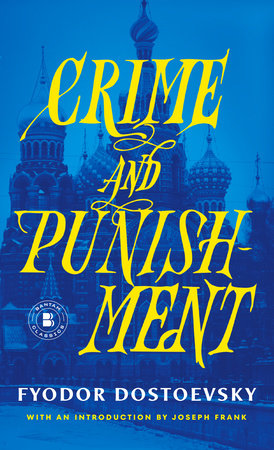
Crime and Punishment by Fyodor Dostoevsky

Crime and Punishment by Fyodor Dostoevsky: 9780553211757 |  PenguinRandomHouse.com: Books

Raskolnikov, a poor university student, lived in a small five-story apartment in a poor Petersburg slum. He had been forced to drop out of law school because he could not afford his tuition, and now lived off the money his mother and sister had saved from a tight budget. He hasn’t paid his rent for a long time. Of late the landlady had not only stopped feeding him, but was pressing him very hard for rent. Then he met Marmeladov, a junior civil servant. Marmeladov was driven to despair by unemployment, and his eldest daughter Sofia was forced to become a street prostitute. Raskolnikov did not want to be like Marmeladov, but he wanted to do something to prove that he was a very extraordinary man. The proprietress of the pawnshop, not far from where he lived, was a usurer, merciless. One night, while she was alone, Raskolnikov broke into the house and killed her. Raskolnikov, in a panic, killed the landlady’s half-sister, who was returning.

The next morning he received a summons from the police. He was horrified, but was relieved to learn later that he was chasing after the money he owed. As he was leaving, he overheard the officer talking about last night’s murder and passed out to get the officer’s attention. When he regained consciousness, he went home and was bedridden for several days, before recovering. After the murder, Raskolnikov, unable to get rid of his fear because of the painful conflicts in his heart, felt that he had lost all his original good feelings. This was a punishment of conscience more severe than the punishment of law. He was conscious that he had failed. So he came to Sofia in anguish of heart, and, inspired by Sofia’s religious ideas, told her the truth and the motive of the crime. Persuaded by Sonia, he turned himself in to the police. Sentenced to eight years of hard labor, Raskolnikov traveled to Siberia. Sofia was soon there too. The two met early one morning by the river. They are determined to have faith in God, to suffer all kinds of sufferings in a penitent mood and to gain spiritual rebirth.

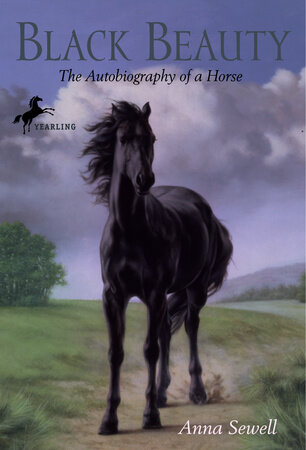
Black Beauty by Anna Sewell

Black Beauty by Anna Sewell: 9780440416456 | PenguinRandomHouse.com: Books

Black Beauty is gentle, intelligent and strong. His coat is black and shiny. A white speck of fur stands out on his forehead like a beautiful white star. However, fate is difficult, life is fickle, as a horse, he has tasted the sweet and sour people give. Black Beauty, the hero of the novel, is a beautiful and well-bred black horse. He has been living in a noble family since childhood. He has been well trained, docile and clever. But the good times did not last long, the master home had a change, Black Beauty had to be sold. He had been sold many times in a row and met all kinds of people. There are drunks who take their horses to anger when they drink too much wine, cab drivers who whip easily, barbarians who don’t take animals seriously. After tasting all the joys and sorrows of the world, it was lucky to have a good end-result. The work reveals the inner world of the horse, as well as the description of the horse coldly looking on the human society. Black Beauty’s life is the epitome of Victorian horse-riding, wagons in the country and London cabs. When he was a boy, his mother told him that a horse’s fate was all down to luck — he was lucky to have a good master, but unlucky to have an abusive master. As he grew up, Black Beauty met good people and people who mistreated him. He was first sold as a mount to Lord Gordon, who was kind to horses. Then it was sold to the count, and that abominable bridle became his greatest nuisance, and the bane of all horses. Pulling wagons not only consumes a lot of physical energy, but also is whipped by the driver. Black Beauty suffers when he draws a cab because people drive in the wrong way. Finally, Black Beauty finally found a friendly home to spend his old age. In Black Beauty we see many human qualities: honesty, courage, meekness and friendliness. Though Black Beauty has gone through trials and tribulations, it has not changed these qualities. This makes us wonder: what qualities should we have as human beings? Don’t we treat animals so cruelly because we disregard good qualities in them? Black Beauty, through his own eyes, with vivid language, tells a story, to convey such a message to readers. Animals also have feelings and thoughts. Human beings should therefore be kind to animals.

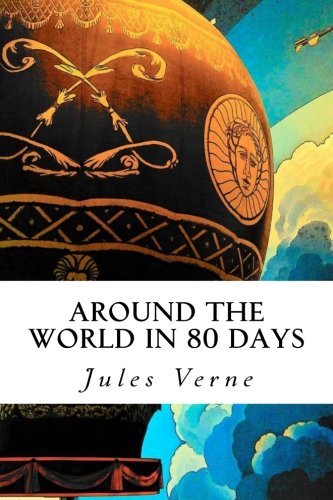
Around the World in Eighty Days by Jules Verne

Amazon.com: Around the World in 80 Days (8601410733353): Verne, Jules: Books

The novel is rich in themes. Science fiction theme, roaming theme, detective theme, love theme and other themes cross and merge, and construct quite rich meanings. Among these themes, the Eastern theme stands out. In the novel, Fog’s route around the world is detour through Africa to India, from India to Japan, through Japan to San Francisco, and finally from San Francisco back to England. India, China, the Philippines, Japan and so on account for nearly a third of the pages. This part of Oriental imagination and writing is also the most prominent part of the dramatic elements in Around the World in 80 days, full of excitement and adventure, bantering and satire. Jules Verne fully demonstrated his humanism as a writer.

Through the words of his characters, he expresses his indignation at India’s barbaric funeral system, and shows his deep sympathy and righteous indignation at the British opium poisoning of the Chinese people through the experience of Jean Passepartout. He also used the beating of Fix and Fogg at the San Francisco convention to ridicule the chaos of the American democratic elections. Verne through Fogg’s whereabouts, connected Europe, South Asia, East Asia, North America’s topography, climate characteristics, urban architectural characteristics and local customs. As if it were a richly detailed book of popular geography, the precise amorous feelings and the ups and downs of the characters in the book combine closely with the strange religious customs and local customs of the world to form the propeller of the plot.

Fix, for example, would not have had the opportunity to urge the evil monks in Calcutta to sue Fogg and his French valet Jean Passepartout if he had not been a know-it-all who did not know that Hindu temples had to take off their shoes and socks and enter barefoot. If Fogg and Fix had not strayed into the Hong Kong tavern, Fix would not have drunkun Fogg with his pipe, and Fogg would have missed the important message that his master’s ship was about to sail ahead of time. Fogg had to venture to Yokohama in a boat of twenty tons, and there would have been no hurricane at sea. And if Fogg hadn’t gone to the Japanese acrobat troupe in Yokohama to find work and perform feats of human overlap, the master and servant would not have met by accident.

Custom has no greater effect on the plot than when Fogg and his party, riding on elephants, witness the grotesque and sinister funeral procession of widows passing through the dense forest, and Fogg has a whim to rescue the poor lady who has been forced to die. This directly created Aouda’s brilliant appearance in the story, and also created the sympathy between Fogg and Jean Passepartout. In other words, when a new custom is carefully portrayed by Jules Verne, it is conceivable that the conflicts of the story will again become concentrated and climax. The customs of the world’s landscapes are, in a manner of speaking, like intricate prisms, and the development of established stories like flower petals, which, when combined, create a kaleidoscope of wonders from Jules Verne’s travels.

Around the World in 80 Days follows the narrative pattern of travel in Western literature. The hero Fogg is a calm, rational, methodical, precise and accurate Englishman. He bet the men of the club twenty thousand pounds that he could complete the circle in eighty days. So he set out with the French servant, and after a long journey they returned to England on time. Fogg not only won the stakes, but also won the love of Aouda from India. This is the main clue of the novel. There is another clue in the novel: Detective Fix pursues Fogg. Fifty-five thousand pounds are missing from the counter of the Bank of England. The police find that the thief looks very much like Fogg. When they found out that Fogg had left England, they thought he was going to make an escape, so they sent Fix to hunt him down.

Travel and adventure and the pursuit of fugitives form the double power of narration in the novel, as well as the parallel and intersecting two threads, which make the narrative and structure of the novel form a certain tension.

Authors We Love: Saul Bellow

Saul Bellow was born on June 10, 1915, and passed away on April 5, 2005. He was born in Lachine, a small village located in Quebec, Canada and immigrated with his parents to Chicago, United States with he was eight. Due to this reason, Hyde Park, Chicago was the backdrop of a lot of his famous works because he was the most familiar with it.

Both of his parents were from Russia and were very strict Jews. They wished Saul Bellow could be a rabbi or a violinist playing in church when he grows up. However, he couldn’t overcome his passion for writing and therefore did not relinquish to these two occupations even when his mother passed away. He went to Chicago University and later switched to Northwestern University because he felt the former disliked Jews and therefore mistreated them. Bellow did his graduate studies at the University of Wisconsin.

As a Novel Prize Literature winner, Pulitzer Prize fiction winner, and the only writer to win the National Medal of arts three times, Bellow in his entire life has composed a lot of works. These include Dangling Man, The Victim, The Adventures of Augie March, Seize the Day, Henderson the Rain King, Herzog, Mr.Sammler’s Planet, Humboldt’s Gift, The Dean’s December, More Die of Heartbreak, A Theft, The Bellarose Collection, The Actual, and Ravelstein. He also wrote a lot of plays and some nonfiction as well.

One thing which marks his unique style is his philosophical views embedded amongst the paragraphs and in characters’ dialogues. It provides on his insight of life, death, marriage and other themes which he values as important. Although some critics argue that this style of approach can be very elusive and a form of digression, I thought if sociology and anthropology are vital in Bellow’s life, he should put it down to let people who he really is.

-Coreen C. 

The works of Saul Bellow are available for checkout from the Mission Viejo Library.

Film Review: Spider-Man: Far From Home

All right–first things first. THIS POST WILL CONTAIN SPOILERS FOR AVENGERS: ENDGAME AND SPIDER-MAN: FAR FROM HOME. DO NOT READ THIS REVIEW IF YOU HAVE NOT SEEN THESE FILMS.

Second things second. Avengers: Endgame has surpassed Avatar and is now the highest-grossing film of all time worldwide! So, cheers to that! But all that aside, Marvel recently released its final movie for 2019, a beautiful sequel to Spider-Man: Homecoming, and that’s going to be my main focus.

Firstly, allow me to express my insurmountable appreciation for the titles for the last two Spider-Man movies, and explain the symbolism behind them. In Spider-Man: Homecoming, Peter Parker has been recognized as Spider-Man by Tony Stark, AKA Iron Man, and he’s being given the resources to become the hero he was always meant to be. He’s harnessing his powers, bonding with the beloved Mr. Stark, and his superhero alter ego is giving him an excuse to get even closer to his best friend, Ned. His powers and alternate persona are allowing him to become more comfortable with himself and his surroundings. The movie, at its core, depicts his homecoming, his arrival at where he was always meant to be. I just find that beautiful. Cut to Spider-Man: Far From Home. Not only is Peter literally far away from Queens (as he’s touring Europe), but everything he thought he knew is being refuted. Tony Stark, his mentor and father figure, the man who metaphorically brought him home in the previous film, is dead. The original Avengers are all either dead or retired. The world is in the midst of a rebirth, dealing with the aftermath of the Snap and the tentative formation of a new team of superheroes. Peter Parker isn’t just an Avenger-in-training anymore. He’s a legitimate hero, and he is beginning to realize that he has a brand new set of obstacles to maneuver. He has, at no fault of his own, strayed far away from the home he built for himself in Homecoming.

Enter Mysterio (played by the marvelous Jake Gyllenhaal). He seems like the perfect new leader of the Avengers, the perfect new hero for this broken Earth. His story is barely plausible, but nothing is unbelievable to the citizens of a planet whose population was just cut in half, then restored. He claims to be from another universe when his true intentions are to steal away Tony’s legacy from Peter. Spider-Man himself is gullible enough, after the falling-apart of his world, to willingly hand over Tony’s tech to Mysterio.

The world proceeds to fall apart yet again, this time at the hand of a false hero who the world mistakenly trusts. Peter has to come to the rescue, all by himself this time, only for Mysterio to throw one final punch. Even though he’s dead, the villain manages to get a video of himself onto the screens in Times Square, stating that Spider-Man is the real villain, and revealing the masked hero’s identity.

The movie is an emotional roller coaster. The audience feels everything Peter does, and that’s where the true beauty of the film lies. This movie is an artfully crafted masterpiece, and if you haven’t seen it yet, I ardently recommend it.

-Arushi S. 

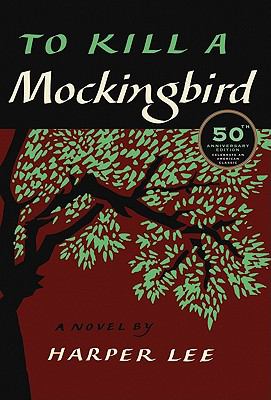
To Kill A Mockingbird by Harper Lee

This novel, published in 1960 by Harper Lee, deserves every ounce of fame it has thus far received. Although the subjects that are addressed by the novel are shrouded by controversy, it addressed issues that needed to be addressed, such as racism and the crimes that can be committed under its name.

The novel is told from the perspective of six-year-old Caucasian Jean Louise “Scout” Finch. Her father, Atticus Finch, is the most reliable lawyer in her town, Maycomb. He takes on a case defending a black man who is wrongfully accused of raping a white woman, and this sends the entire population of their town into a frenzy. Scout and her brother, Jem, experience the metaphorical splitting of the town as everyone takes a side. They are attacked and harassed for the actions of their father.

The plot deepens and thickens, unfolding with an uncanny message: racism is a real issue, and it remains as such, even though To Kill A Mockingbird was first published in 1960. In fact, Scout and Jem are attacked at night and nearly killed in retaliation of their father’s case. The town is violently over-involved in Atticus Finch’s case, and most of its citizens actually attend the trial for sport and entertainment. People are quick to take sides and are adamant and passionate about whichever one they end up on.

To Kill A Mockingbird is also semi-autobiographical- Scout’s childhood is based loosely off of Harper Lee’s. However, Lee quickly became reclusive due to her book’s fame and all the attention it received. The novel was groundbreaking, but Harper Lee hardly did any interviews, book signings, or any public event of the sort. In fact, Harper Lee was barely involved in the making of the movie adaption of the novel, which became a box-office hit (it made over three times its budget!).

Overall, To Kill A Mockingbird is a magnificent literary tapestry, with intricately woven characters and artfully spun plots and subplots. It addresses issues that were relevant in its time and, some may argue, even more, relevant today. It is a novel that has affected people’s lives, in ways that are clear but also subconscious, and has educated many on the subject of racism amid the early 1930s.

-Arushi S.

To Kill A Mockingbird by Harper Lee is available for checkout from the Mission Viejo Library. It can also be downloaded for free from Overdrive

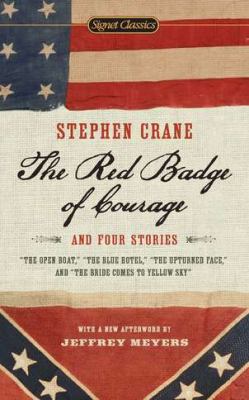
The Red Badge of Courage by Stephen Crane

Another classic I checked out from the library this summer. This book for sure is the most well-known piece of work of Stephen Crane. It talks about Henry Fleming, a soldier fighting in the Civil War in the Union side.

Unlike some of the other war novels, this book employed succinct and vivid language to portray the brutality, fear, cowardice, and bravery in wars. It explored the main character Henry’s flight from the war, the despicable excuse he found for himself, his gradual awakening of conscience, and finally his change into a courageous soldier who transformed into an unselfish and devotional citizen willing to die for his country.

Although it was relatively short, but every detail in a battle was explained. Such as the way how the soldiers fire using their rifles, how they travel on foot from one regiment to another, how they charge forward reluctantly and in horror when their lieutenant orders them to. It doesn’t really name any battles specifically, but it does a fantastic job of expatiating everything that could occur in a battle. My favorite character is surprisingly not Henry Fleming, the main character but his friend Wilson, who was a minor character without too much of a dimensional personality. But I was deeply touched when Wilson was willing to share his bed with Henry and feed him when he fled from the battle and came back later. There was a possibility that Wilson knew Henry was lying when he said he got shot in the head, and yet his altruism melted my heart. I believe that we all need a friend like this who understands our mistakes and forgives us silently whether we admit it or not.

-Coreen C. 

The Red Badge of Courage by Stephen Crane is available for checkout from the Mission Viejo Library