The Labours of Hercules by Agatha Christie

The Labours of Hercules by Agatha Christie - Agatha ChristieA string of Pekinese kidnappings…a romance left half-finished by the strange disappearance of a young woman…a malicious Parisian gangster fleeing to one of the most remote places on Earth…the largest political scandal in England…a stolen painting and a kidnapped schoolgirl…a series of women dying under odd circumstances, only connected by a mysterious religious sect…an innocent woman on the verge of being framed for a dastardly crime…. 

The only thing that connects these decidedly unusual yet distinctly unrelated cases is one man, and one man alone: the great Hercule Poirot (and his mustaches).

Based on the original Labours of Hercules, Poirot endeavors to act in his namesake by carefully selecting twelve special cases before his retirement from detective work in order to cultivate vegetable marrows.. From the Nemean Lion to the Erymanthian Boar, from the Flock of Geryon to the Capture of Cerberus, Poirot will stop at nothing to bring criminals to justice, and, on occasion, to take matters into his own private hands.  

While writing short stories isn’t standard fare for Agatha Christie, this collection of twelve short stories is the perfect mix of murder, intrigue, and Hercule Poirot (featuring his little grey cells) that any fan of the celebrated Queen of Mystery will surely not be disappointed.

-Mahak M. 

The Labours of Hercules by Agatha Christie is available for checkout from the Mission Viejo Library

Julius Caesar by William Shakespeare

Caesar is one of William Shakespeare’s best plays. It not only portrays the friendship of two major characters but also describes how democracy, instead of tyranny, is the best way to govern a nation and protect the rights of its citizens.

In this post, I would like to explain why, Brutus, in my opinion, is a patriot instead of a traitor. First, he killed Caesar because he thinks that it is the only way to save Rome from a dictatorship. Signs of corruption and power in Caesar warns Brutus that a tyrant is in sight. Therefore, he killed Caesar for the common good and to ensure democracy.

Another reason why killing Caesar can be justified as a way of patriotism is because the benefit equal representation in Senate brings outweighs the loss of Caesar. The plebeians do not know how the government operates, and therefore, they don’t know Caesar’s selfish plans and his personality. Hence, it is Brutus’ responsibility to assure that the Roman citizens’ rights are not taken away. If Brutus is already aware of others will accuse him of murdering his best friend and be entitled to that of a traitor, yet he still chooses to do it, this proves that he is a person who values his country above his personal relations.

-Coreen C. 

Julius Caesar is available for checkout from the Mission Viejo Library. It can also be downloaded for free from Overdrive

The Da Vinci Code by Dan Brown

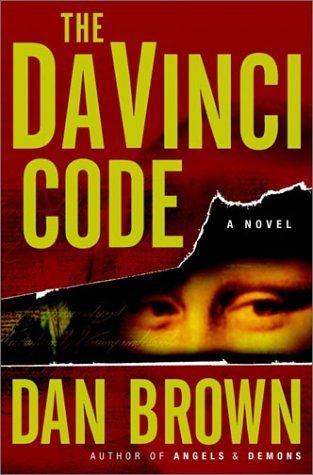
Ever since its infamous publication in 2003, The Da Vinci Code has succeeded largely in two things: become a massive international bestseller and stir up a contentious brew of religious controversy and criticism.

Controversy aside, I have to first applaud Dan Brown’s skill in weaving together an excellent thriller. When I first saw how thick the book was (689 pages; and I usually only exercise that sort of brainpower and patience with Harry Potter or Percy Jackson), I thought that Dan Brown better have a good story to tell.

Let me just say…he rose to the challenge and completely destroyed it.

My previous conceptions on the book were way off. I had this skewed idea that it was a biography of Leonardo da Vinci’s, ah, complex life, but it’s far more intriguing than that. In fact, the whole book is entangled in a complex matrix of enigmatic riddles, secret societies (ooh!), and the constant hit-or-miss run of the two fugitive protagonists, Robert Langdon and Sophie Neveu.

Langdon is a professor at Harvard–very prestigious, I know–and he studies the meanings of hidden symbols (sign me up for his class, please). He is drawn together to the other main character, Sophie Neveu, who is the granddaughter of a famous curator, Jacques Sauniere, through the mysterious death of Sauniere in the Louvre. Fair warning: this book is pretty intense. It literally starts with the curator’s murder by the hand of a monk under the religious group Opus Dei, but honestly, I don’t mind these intense openings, which makes me sound extremely psychotic. Guys, I promise the book didn’t ruin me.

Anyways, we eventually discover that Sauniere is part of a brotherhood, the Priory of Sion, that is devoted to the preservation of the pagan goddess worship tradition, and believed to be once led by Leonarda da Vinci (see, you knew da Vinci was in the title for a reason!), and that Sauniere is the last living member of the brotherhood. So that means…all their secrets are about to die! How could they!

Yeah, sorry. Jacques Sauniere outplayed us all, the genius man. Through excruciating pain before his death, he creates riddles and drawings around the exhibition, leading Neveu and Langdon on the most epic scavenger hunt I have ever witnessed. Sauniere doesn’t plan on having the secrets of the Priory lost anytime soon, and he trusts Langdon and Neveu to solve his puzzles and discover the truth. To be completely honest, Neveu and Langdon seriously make me question my IQ. I mean, they somehow escape the Louvre, slipping through the grasp of the French police by means of a bar of soap and a garbage truck (read the book to find out; the scene is pure gold, so I can’t elaborate too much >:) ). This might sound sort of cringy, but trust me, you have got to read this book, because you won’t put it down. Ever. How Dan Brown comes up with the puzzles in the story, the whole plot, the creative ways of escaping…it’s beyond me. At this point, I’m convinced that if anyone knows how to evade the FBI and disappear off the face of the planet, it’s Brown.

I’m not really going to go into more detail, because each puzzle just folds into another lead, then another. It’s insane. Now, though, I want to talk about the conflict about this book, which is partially what made it so well-known.

See, the book was banned entirely in countries like Lebanon because it poses some…well, interesting ideas about Christianity. For example, the whole focus of the Priory of Sion is the belief that the Holy Grail is not a cup depicted in da Vinci’s drawing The Last Supper. It’s a woman named Mary Magdalene, who the Priory believes to have married Jesus Christ and bore his child. I go to a religious high school, and yeah, that theory is definitely never brought up. Additionally, the book highly suggests that religious leaders such as the Pope and religious groups such as Opus Dei are surrounded with a dark history of blackmail and altering the true stories of the Bible, simply to make money. As the book says, the Bible isn’t the best book ever written, it was the best book ever sold.

Shots fired.

Brown argues that the book is completely factual, but many opponents of the book aren’t at all interested in listening. And I suppose they have a good reason to; the book does unravel some aspects of religion that Christians and others of faith may find highly offensive. For now, I’m choosing to remain neutral on the issue. I can definitely understand why some would renounce the book, but to me, I would still praise it for its compelling plot-line and lovable characters. If you’re looking for a thriller you can’t put down and will keep you occupied for days to come during quarantine, hit up Leonardo da Vinci, Langdon, Neveu, and the rest of the gang–and just lose yourself in the awesome world Dan Brown has created!

-Katharine L. 😀

The Da Vinci Code by Dan Brown is available for checkout from the Mission Viejo Library. It can also be downloaded for free from Overdrive

Catch-22 by Joseph Heller

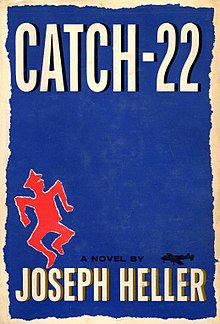
Image result for catch 22

Nearly six decades after its original publication, Joseph Heller’s Catch-22 remains one of America’s most valuable – and most entertaining – classics of all time. Depicting the brutal insanity of war in a way no one else has quite managed, Heller and Catch-22 have cemented themselves in American literature.

Set in Italy during World War II, Catch-22 tells the story of the disillusioned bombardier Yossarian, who is furious because thousands of people he has never met are constantly trying to kill him, including both the enemy forces and the people within his own army. 

The most significant of these would-be killers is undeniably the titular Catch-22, which states that a man is considered insane if he willingly continues to fly dangerous combat missions, but if he makes a formal request to be removed from duty, he is proven sane and therefore ineligible to be relieved. 

Trapped in this endless cycle of missions and death, the soldiers on the island of Pianosa are forced to adapt to their constant torture by hiding in the hospital ward, enjoying illegal meals in the mess hall, and generally doing their best to be a nuisance to Colonel Cathcart, who continues to raise the missions needed to be relieved from duty.

Combining serious matters with lighthearted humor, Catch-22 is a book that everyone should read at least once in their lives. This fascinating look at the negative aspects of war, inspired by World War II and the Vietnam War, is a book that is impossible to put down. 

-Mahak M. 

Catch-22 by Joseph Heller is available for checkout from the Mission Viejo Library

The Two Towers by J.R.R. Tolkien

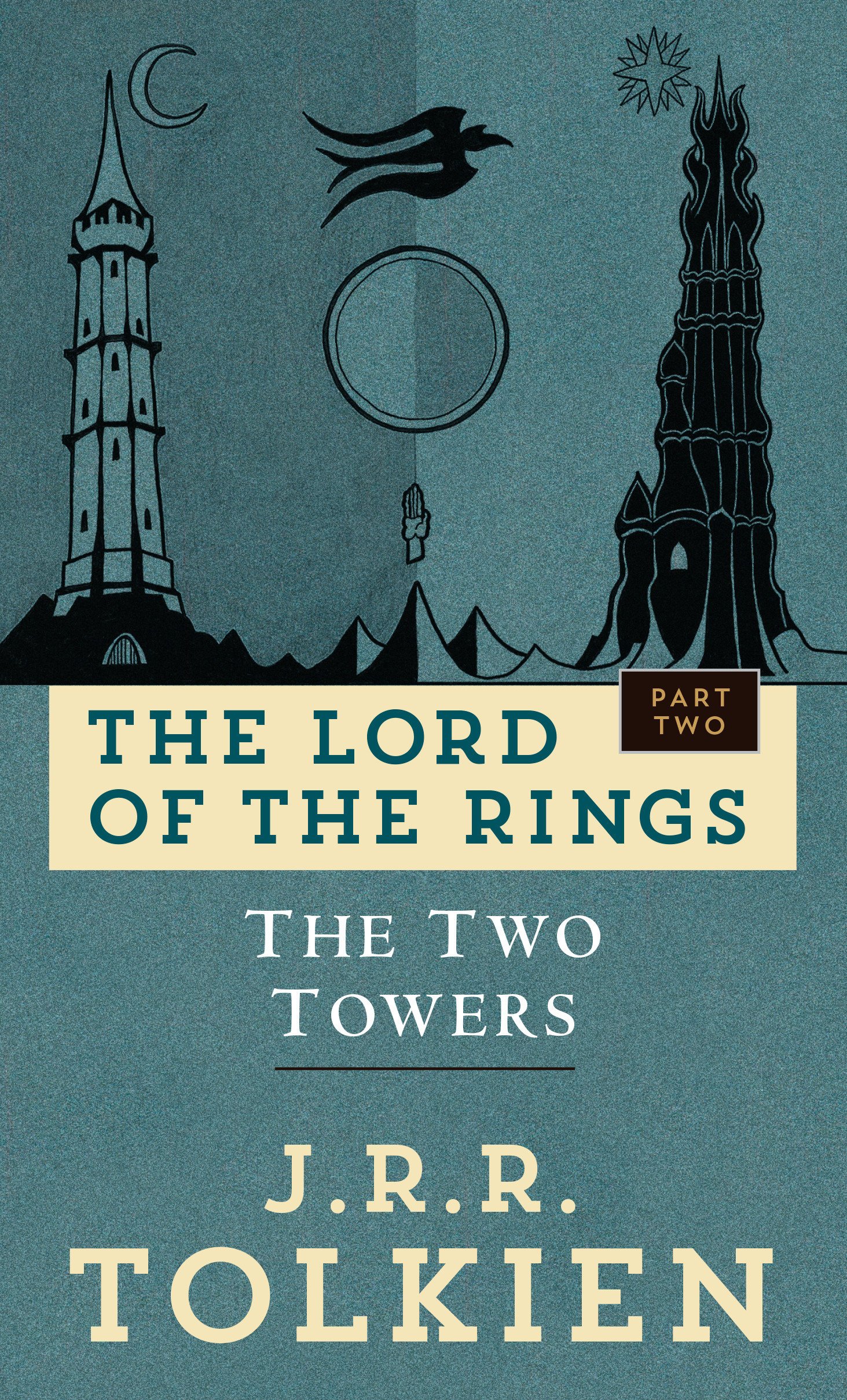
The Two Towers is the second book of J.R.R. Tolkien’s famous trilogy known as The Lord of the Rings.  The first half focuses on Aragorn and the remaining members of the Fellowship of the Ring.  The second half focuses on Frodo Baggins and Sam Gamgee as they try to reach Mordor.  The book includes various subplots, and many characters and places, so it may seem difficult to keep track of everything.  However, the story is very gripping and worth the effort to read.

Some of my favorite characters in this book are the Ents.  The Ents are like tree people.  Two of the little hobbits, Pippin and Merry, encounter an Ent named Treebeard after escaping a group of savage orcs.  Treebeard, like other Ents, is very tall and strong.  He moves very slowly because he does not like to be “too hasty.”  The Ents are usually gentle creatures, but they can become powerful warriors if aroused to battle.  I enjoy reading about these creatures because they are like trees come to life.

Treebeard takes Pippin and Merry to a tower controlled by Saruman.  Saruman is a wizard who was once good.  He is one of my favorite characters in the trilogy, even though we learn that he has become bad.  His voice is described as low and melodious, and he is able to enchant and trick people.  He appears to be full of wisdom, which enables him to gain many followers.  This character is a very accurate portrayal of how a wicked person can deceive many people.

Meanwhile, Frodo and Sam are traveling with the One Ring toward Mordor, an evil land where orcs and many unnamed horrors roam.  They are guided by Gollum, a savage little thing that was once a hobbit, but has become corrupted by the ring.  Frodo and Sam form an uneasy alliance with Gollum after taming him, even though he still lusts for the ring.  The ring grants its wearer invisibility, but it also slowly overpowers its owner.  The ring is designed to get back to its creator, the evil Sauron.  Sauron is in the form of an eye on a tower in Mordor, always searching for his ring, which would give him unlimited power.

This book is a great story about the dangers of greed and power.  It also includes many surprises and plot twists.  The end of the book is a sort of cliffhanger, so I would recommend that readers read the entire trilogy in sequence.  The Two Towers is a great book on its own, but it should definitely be read along with the other books in the trilogy.

-Oliver H. 

J. R. R. Tolkien’s Lord of the Rings is available for checkout from the Mission Viejo Library. It can also be downloaded for free from Overdrive

The Da Vinci Code by Dan Brown

Image result for the da vinci codeWhat does the murder of an elderly curator of the Louvre, Leonardo da Vinci, and a secret society only rumored to exist have in common? That’s what famed Harvard symbologist Robert Langdon must find out in The Da Vinci Code

On a race against time, Langdon and a talented French cryptologist, Sophie Neveu, attempt to unveil the truth behind the Priory of Sion, an ancient secret society that the late curator was involved in – one that is dedicated to protecting a historical secret that has proven to be as enlightening as it is dangerous. 

Blocked by both the Church and the Parisian police, Langdon and Neveu are left isolated and working against everyone they know. Together, the two of them must follow the trail of mystery and murder on a quest to stop a shadowy puppetmaster who appears to anticipate their every move and will stop at nothing to extract the Priory’s secret – not even murder. 

Fast-paced and unforgettable, Dan Brown’s The Da Vinci Code is a perfect example of historical intrigue and modern writing that makes this novel a contemporary classic. This book is recommended to all readers or any history buffs who want a new look at an old painting. 

-Mahak M. 

The Da Vinci Code by Dan Brown is available for checkout from the Mission Viejo Library. It can also be downloaded for free from Overdrive

The Crucible by Arthur Miller

The Crucible is a novel based around fear. Every action that occurs is due to the fear of punishment and fear of others. It appears completely outrageous yet parallel’s the red scare in the United States and even some of the fear-based racism occurring in today’s society over the coronavirus. There is much to be learned from this novel and the chaos that fear-based decisions create.

However, it is an interesting story with intriguing insights into human nature. The entire story is based on a lie given by a girl, Abigail Williams, who does not want to get in trouble. She and her friends were caught dancing in the woods, something banned in the Puritan society in which The Crucible was set in. Instead of accepting blame for her actions, she blames Tituba of witchcraft as a scapegoat. From this, society degrades blaming everybody of witchcraft for one reason or another. Though truly, not a single person was a witch. People were blaming each other for witchcraft as either a scapegoat for themselves or to get vengeance on a neighbor.

The courts, the people, and the church all believe the web of lies that have been created. Falling into complete hysteria. Nothing matters other than catching witches. They leave their children, their crops, their animals, and their society in ruins just to accuse one another of actions that did not occur.

This plot is intriguing because it mimics many aspects of current life and, though it is a play it is still easy to read. It attempts to teach society the lesson of not allowing hysteria to control life which, is something that today’s society needs especially with the fear of the coronavirus. It allows readers to really reflect on their own lives and see the faults in their own society.

This is a must-read for everybody. The message it gives is something that every human in today’s society must understand to help society reign in their senses and not let the world collapse with fear of the virus.

-Ava G.

The Crucible by Arthur Miller is available for checkout from the Mission Viejo Library

The Elite by Kiera Cass

Caution: This review contains spoilers from book one, The Selection.

One aspect of this book that I liked is that it follows the first book, The Selection, almost seamlessly. When reading a sequel, I usually find that it takes me several pages or chapters to “get back into” the story, and I appreciated that The Elite begins more or less where The Selection ends.

America Singer is left with a position as one of 6 remaining Selected girls (known as the Elite), and a choice between her dearest Aspen and the charming prince Maxon.

I found this book to be darker than The Selection, with an expansion on the situation with the rebel attacks on the castle, Illéa’s history, and the conflict created by the caste system. As tension rises within the dwindling group of Elite, as the danger of the rebels becomes far more apparent, and as America discovers more about the founding of Illéa, the Selection no longer seems like a frivolous game.

I was a bit disappointed in the shift in America and Maxon’s friendship, though it might have been expected given the need for conflict in the story. The understanding and casual words that passed between the two of them in The Selection morph into a complicated, less transparent relationship as America’s feelings for Maxon become more apparent.

Because of her growing desire for Maxon’s heart, America grows mistrustful of him and the other girls, and she begins to make decisions that seem less measured than those she made before. I liked how America was kind and helpful to the girls in the beginning of the Selection, but in this book, as her feelings for Maxon grow, she begins to see them more as opponents. Though she maintains her courageous and strong character, America allows herself to be pulled further in to the competition, meaning more uncertainty and distrust.

Additionally, I did feel like some of the conflict between Maxon and America might have been unrealistic; if they truly loved each other, wouldn’t they trust each other more and be able to express their thoughts to each other? Nevertheless, I realize that America and Maxon are both filled with doubt and worry about the decisions set before them (for instance, America debates between Maxon and Aspen: princess or Six?), and are no doubt unsure of many things–even each other.

What I admired about The Elite as well as The Selection was that Maxon did not appear like some two-dimensional character. Despite his privileged position, he is still influenced and pressured by his father, and he feels great responsibility in his choice for a princess–he feels he must not only consider his own happiness, but that of his future people and his father as well.

If you enjoyed The Selection and are eager to follow America’s story further, this is the perfect book! Additionally, it leaves off with 4 Elite … Maxon’s decision draws closer with the close of the second book.

– Mia T.

The Elite by Kiera Cass is available for checkout from the Mission Viejo Library. It can also be downloaded for free from Overdrive


The Story of an Hour by Kate Chopin

This story discusses the oppressive nature of marriage, which I think is still very relevant even in today’s society. The United States alone has a divorce rate of 50 percent. The characters in this story think that marriage has stripped them of their individuality and independence. Personally, I don’t deny this argument, but I don’t completely agree with it either. Marriage is the bonding of two people together. Being married means that it is no longer simply a relationship that you are sharing with your spouse, but that there is heavy responsibility associated with that relationship. For a lot of families, women give their careers up to rear the children, which can be a huge sacrifice. I think this type of sacrifice eventually if not alleviated would lead to breakups and divorces.

On the other hand, this story also made me realize how the men in the family should take responsibility as well. The male character’s death not only did not traumatize his wife in the story but also made her feel a sense of relief. A lot of times the breadwinner of the house may feel exhausted after work, therefore demanding that his wife meets all of his needs voluntarily and mandatorily. Nevertheless, he is omitting all the house chores and child-caring the mother or females of the house have undertaken during the period when he’s gone to work. Hence, this story tells us that it is important for every family member to take a share of responsibilities and duties.

-Coreen C. 

The Old Man and the Sea by Ernest Hemingway

The Old Man and the Sea is a short novel by American author Ernest Hemingway. The novel is about a Cuban fisherman who manages to hook onto the largest fish he has ever seen, which he struggles to haul in alive.

The novel begins with the old fisherman who had not caught any fish for the past eighty-four days. As a result, he is considered unlucky, and a young boy who used to fish with him together is no longer allowed to by his parents. The old man and the boy are very close, with the young boy often bringing the old man news and food.

The next day, the old man leaves early on his tiny boat, and he manages to hook onto the largest fish he has ever seen, an eighteen feet long marlin. Despite the fish’s massive size and strength, the old man is determined to catch the fish to end his unlucky period. The old man shows his determination after continuing to hold onto the fish for three days straight without sleep as it pulls his boat. With his determination, he eventually catches the massive fish after three days.

However, unfortunately for the old man, swarms of sharks attack his boat, eating the fish in the process, even though he desperately defends against them with everything he has.

He eventually returns home with nothing except the skeleton of the fish, collapsing onto his bed from exhaustion. The next day, the skeleton of the fish, still attached to his boat, draws crowds of people, fishermen and tourists alike, who are amazed by its size. Through all of this, the old man simply sleeps calmly, while the boy returns to take care of him, deciding he will fish with the old man despite his parents forbidding him to.

Ultimately, despite that The Old Man and the Sea is a classic, I would not recommend it due to its boring plot. The novel does contain some symbols, and the old fisherman represents Hemingway’s view on life, described as Hemingway’s “code hero.”

-Josh N. 

The Old Man and the Sea by Ernest Hemingway is available for checkout from the Mission Viejo Library