Three Lunar New Year Traditions that I Like

Many people around the world celebrate Lunar New Year, which creates many different traditions and beliefs about the holiday. This list just shows three out of the many beliefs and traditions that people have surrounding the holiday.

Red Envelopes
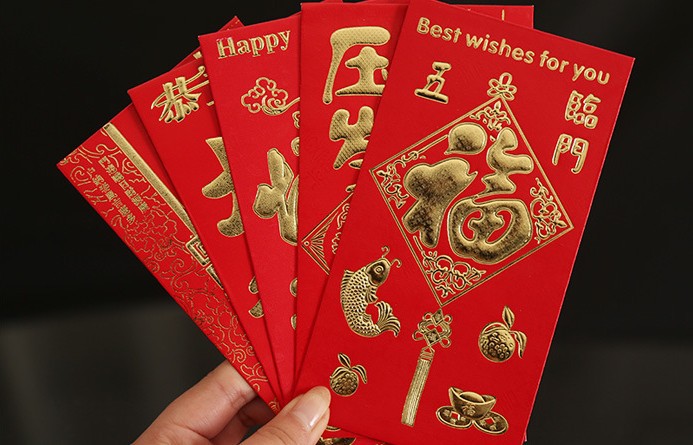
Your Guide to Chinese New Year 2019 — Red Envelopes, Great Events and The  Year of the Pig

During Lunar New Year, the giving of Red envelopes seems to be a constant. Usually these envelopes are filled with money. In Singapore, people give out red with the phrase “Fú” on it, which means good luck. Based on my personal experience, some of the red envelopes will have the zodiac animal of the new year on it.

Eating Traditional Foods
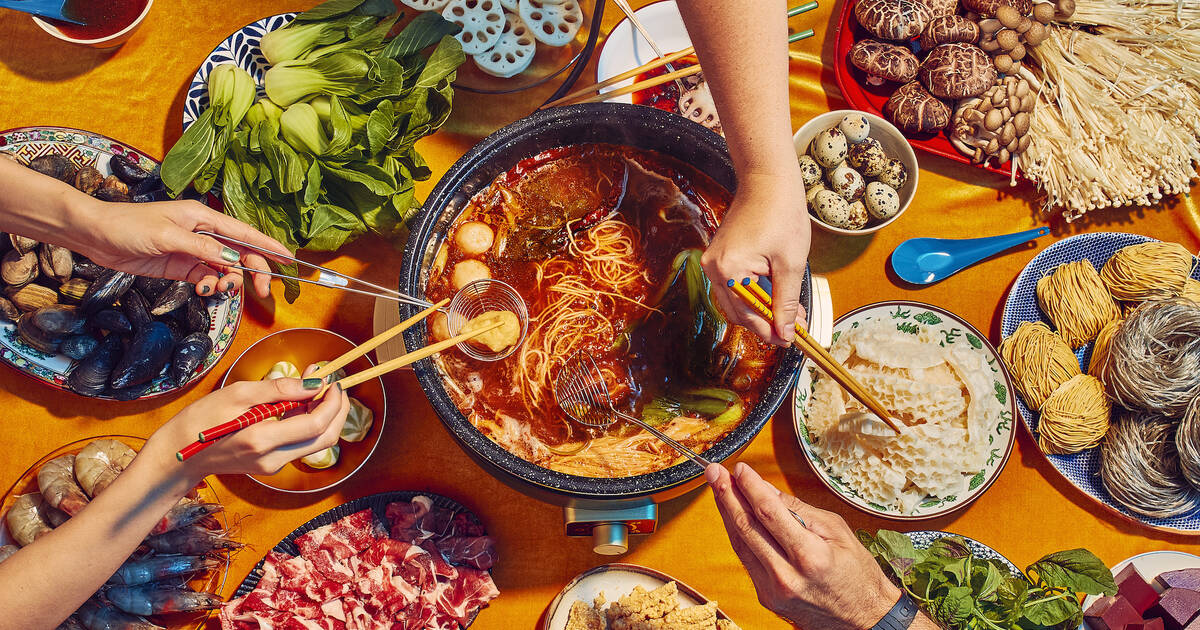
How to Throw a Hot Pot Party: Jing Gao of Fly By Jing Gives Us Some Tips -  Thrillist

Eating certain foods to celebrate holidays is something that is very common in almost every country, and Lunar New Year is no exception. In Taiwan, people will eat pineapple cakes because pineapple in their dialect loosely translates to the phrase “good fourtune is coming”. In Mongolia, people eat hotpot. The ingredients in hotpot have different meanings, for example, round fishballs are added into the soup because they symbolize good fourtune.

Visiting Family
Chinese New Year Activities for Kids -

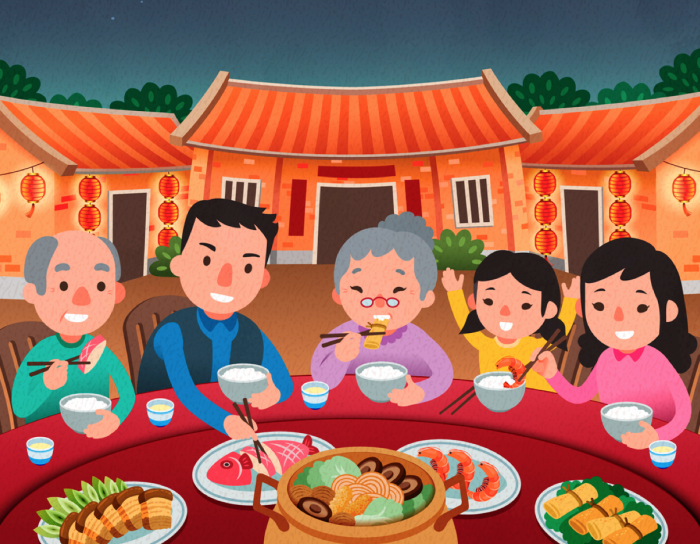
Almost everybody who celebrates Lunar New Year spends it with their family. Most of the time, people practice these tradtions with their families. Based on what I’ve experienced, people will visit their family for almost the entire day. They will usually go to a temple together. To add, all of the married people in the family give red envelopes to the unmarried people. Around nighttime, everyone will eat traditional foods together for dinner.

Sources:

Chinese New Year Activities for Kids by Kristina Klausen

How Lunar New Year Is Celebrated Around Asia by Anna Kim

How To Throw The Perfect Hot Pot Party by Kat Thompson

13 Lunar New Year Traditions From Around the World by Michelle Tchea

Your Guide to Chinese New Year 2019 by Billy Fong

-Nicole M.

How Reliable Is Decision Making?

The coming to decisions based off observed patterns and past experiences is known as a heuristic. On the other hand, algorithms are step by step procedures that guarantee an outcome, and require lots of trial and error. Heuristics are often much more efficient than algorithms, yet they do not always guarantee a solution. For example, in a grocery store setting, an algorithm would be going up and down every single aisle looking for a specific item. Although there will always be a one hundred percent success rate, there is a lack of efficiency and most would not feel this as the best way to look for an item. A heuristic in this situation would be to look in certain labeled aisles that may contain the specific item that is being looked for. One type of heuristic that impacts decision making is the representative heuristic, or the judging of the likelihood of something by intuitively comparing it to particular prototypes. Although the use of this representative heuristic can make decision making quick, it may have a negative effect on the accuracy of such decisions. 

This is shown in the study Khaneman and Tversky 1974. This study attempts to prove the hypothesis that when people evaluate probability by representativeness, prior mathematically probabilities would be neglected. To do this, subjects were told to determine what the likely occupation of a certain person would be (engineer or lawyer?) based off of a description. However, this description would often have little to nothing to do with the occupation at all. To cope for this, the particpants were either told that there were 30 engineers and 70 lawyers, or that there were 30 lawyers and 70 engineers. Theoretically, the ratio of the participants’ guesses should be seventy to thirty because of mathematical probability. However, the study found that the participants of both groups had guesses closer to a ratio of fifty to fifty. Such shows that the subjects used to representative heuristic to make their decisions rather than using the probabilities given to them, causing decision making to become unreliable.

This study is useful in showing how the data does not match what one would expect based off the idea that the subjects were aware of the unequal amount of each profession. However, this does not directly prove that the representative heuristic is responsible for this distortion, as there is lots of room for error in the descriptions that the participants were given for each person. In the end though, the study still supports how decision making can become unreliable and cause errors.

-Jeremy L.

Free Periods in School

Class schedules can be something that make or break how good someone’s year can be. If they have a list of really hard classes all in a row, they can get really stressed out. On the other hand however, if someone has classes that are of no challenge to them, they could often find themselves getting bored. 

I’ve found something out my senior year with my schedule. When I entered this year, I was originally in 7 classes and 4 of those were APs. I decided that math wasn’t the class for me, and bumped down to just 6 classes total, 4 APs. This was the first year that I have ever had a free period. Now that I’ve realized just how useful those can be, I can’t believe I didn’t do it sooner.

With my free period, I am able to get homework done as well as hang out with friends and help my favorite teachers. Not only that, but when I’m done with my work, I can take naps. Now while that isn’t the best use of time, those naps are always helpful in keeping me awake when I have practice. 

My free period this year has made me happier overall. Now that I can get most of my work done in school, after practice I have much more time to relax when I get home. I highly recommend if you can take a free period, do it. It is much better for both mental health and overall stress. With a slightly less packed schedule and more free time after school, I am able to connect more with friends and family as well as catch up on much needed sleep. 

School schedules often cause stress that really shouldn’t be there. So the next time you have to plan a schedule, try to squeeze in a free period so that you also have time to catch up on sleep, with friends, and just overall try to improve stress levels.

-Danielle B. 

The Most Beautiful Libraries Around the World

  • Biblioteca de Convento de Mafra: This library is located in Mafra, Portugal. It is filled with leather-bound books from the 14th to the 19th centuries. This library had once been a part of the Mafra National Palace and it’s exquisite structure still stands today because of the bats sleeping in the shelves to keep away any pests. You should see it if you are ever nearby!
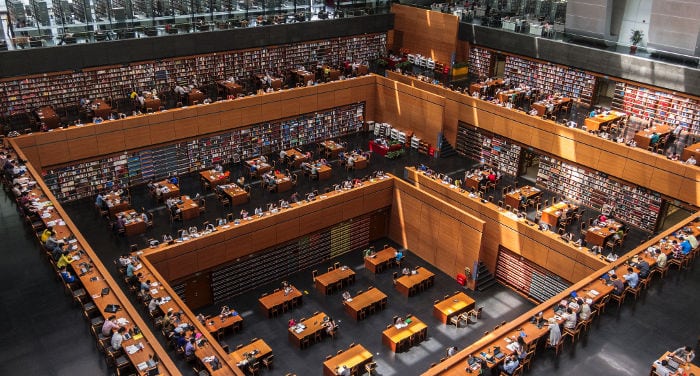
  • National Library of China: This library is located in Beijing, China. Several shelves consist of archives dating to the Song Dynasty and even some made of tortoise shells and bones from the Qing Dynasty. In the year of 1909, this library had been granted by the Xuantong emperor as an ordinary library but after the Revolution of 1911, it was taken over by the Ministry of Education and eventually led to being the country’s national library. People of all different interests in books find this library absolutely astounding.
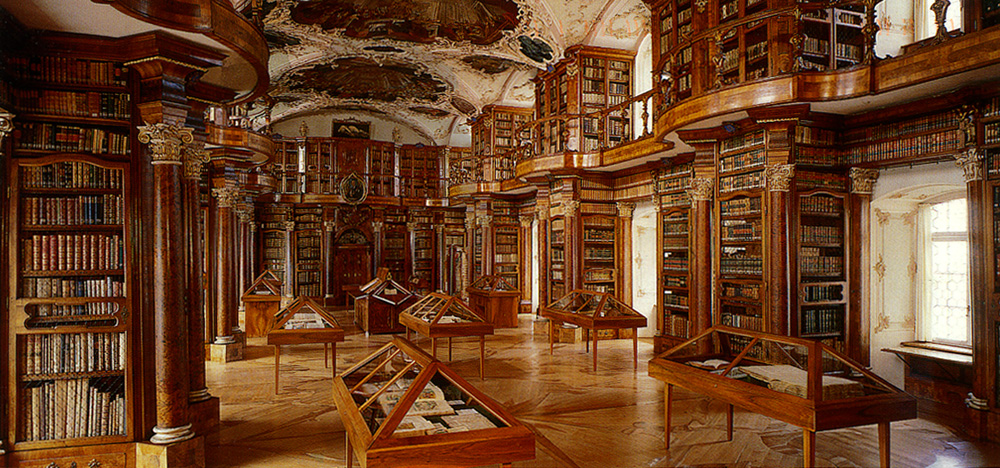
  • Abbey Library of St. Gall: This library is located in St. Gallen, Switzerland. The paintings on the roof and the fashion of the book shelves leaves people breathless at first sight. This library is attached to the church of Abbey of St. Gall and has archives that date back to 820 CE. In the mid-18th century, the library had been redone in the Renaissance art style and architecture. A must-see that doesn’t allow any photography inside!
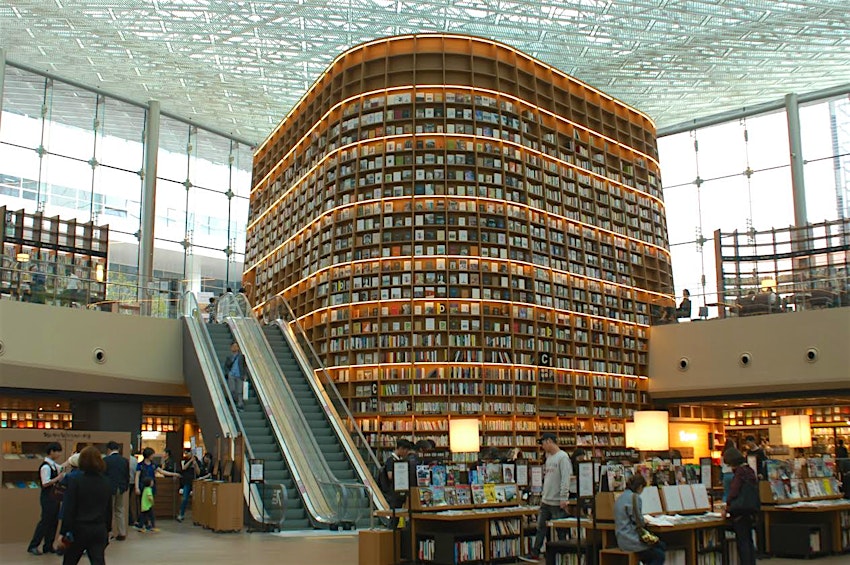
  • Starfield Library: This library is located in Seoul, South Korea. A unique characteristic of this library is that it is located in an underground mall! This library seems to be one of the most recent of beautiful libraries as it was built in 2017. Its two-story athenaeum shows the space as glowing and the plush sofas there are very relaxing.
  • Klementinum National Library: This library is located in Prague, Czech Republic. The original library of a Jesuit library became the “Baroque pearl of Prague” national library of the country. The adorn ceiling came from the artwork of Jan Hiebl and a portrait of Emperor Joseph II is placed at the head of the hallway with all of the works done throughout the centuries that had been in libraries that no longer exist anymore.

-Saanvi V.

Schema Theory

A schema is a pattern of memory that is heavily influenced by pre-clustered ideas, and is known as the framework that organizes social information. Schemas are often used to interpret and learn information, as we are more likely to comprehend what we learn if it matches our schema. For example, if we always know that grass is green, then we will be able to comprehend the fact that the grass in Texas is also green much better than the (not-so-true) fact that the grass in New Mexico is purple: because purple grass does not match our schema of grass.

Another thing schema causes is stereotypes, or the idea that certain groups will have certain traits in common. This is because our schema of the particular group that we envision has been influenced by social/cultural norms. However, the most notable and fascinating thing that schema does is the distortion of memory. In the 1980s, psychologists Brewer and Treyens conducted an experiment, where participants were asked to wait in a waiting room that resembled an office (these participants were under the impression that they were waiting for an experiment, when in reality, the waiting room was the experiment). After a brief period of time in the waiting room, the participants were asked to name items that were in the waiting room. A lot of things were recognized correctly, but things that normally did not appear in an office were not recognized.

Even more interestingly, participants seemed to recall things that normally appeared in the office, but actually were not there at all. For example, many participants recalled seeing books in the office, even though there were no books in the office. That is attributed to the fact that there are usually books in offices. This area of psychology is very fascinating, and helps us understand human behavior better.

-Jeremy L.

The Origins of Thanksgiving

Thanksgiving is a widely celebrated holiday in the U.S. taking place every year on the fourth Thursday of November. In fact, 62% of Americans celebrate Thanksgiving at home with their loved ones each year. But are we celebrating something that we don’t really know the full meaning behind? Thanksgiving is a time that most Americans can agree is spent being thankful, which is true. But the story of Thanksgiving involves much more than being thankful for all that we are given.

The story of Thanksgiving first begins in 1620, when a group of 102 religious separatists left their home in search of religious freedom. The pilgrims finally settled in Massachusetts Bay after 66 days on a ship named the Mayflower. From there, the pilgrims began to cultivate and establish the town of Plymouth. The first winter in America was brutal, and many pilgrims suffered from diseases such as scurvy. By March however, they were greeted by an English- speaking tribe of Indians known as the Abenakis. A member of one the native tribes, Squanto, taught the pilgrims how to use and respect the land. In November of 1621, the pilgrims had their first successful harvest and called for a celebration that included their native allies.

This celebration- now referred to as “Thanksgiving”- lasted for three days. Much of the menu of the first Thanksgiving is unknown, but historians rationalize that many of the sweet treats we enjoy at the table today- 400 years after the first Thanksgiving- were most likely not present in November of 1621. Most of the sugar necessary in making these sweets would have been in short supply after months on the Mayflower. Much of the meal, however, was made using native spices that local tribes had used for years before.

So the next time you are sitting around the dinner table with your loved ones enjoying turkey and stuffing, remember the first Thanksgiving, one of harvest and harmony.

-Roma L.

Cough and Cold Season: How do I Avoid it?

It is officially a cough and cold season everybody! With the new stands of covid spreading along with the yearly flu, it is very important to know how to stay safe in a time like this. Unlike normal flu seasons, Covid-19 is still as apparent as ever, making the process of taking precautions even more serious. Here I am going to let the public know, or remind them, of the important precautions that should be taken to accommodate the flowing viruses.

First and foremost, wash your hands!! Whenever you get home from school, work, or an event, the first thing you should think of doing is washing your hands. I know that saying this sounds like a no-brainer, but most people do not wash their hands when they get home. To put into perspective, all of the bacteria from all the different places you touched that others have also touched are all on your hands. If you were to eat, all that bacteria that may carry viruses will go into your system, which is not good! By consistently washing your hands, you are minimizing the chance of exposure.

My next precautionary step is something most people do not think of, which is disinfecting your phone. For most, their phone is like an extension of their body, meaning it travels everywhere with them. People also tend to always place their phones on tables, bags, and other dirty surfaces. When doing this, your phone picks up more bacteria than you could think of and is dirtier than a toilet seat. Now that you are thinking about all the places you have left your phone at today, think about how viruses could be on your phone, which you touch every day. To prevent your phone from causing a cold, always keep it when you get home. This means taking a disinfectant wipe and cleaning off your phone, killing all of the bacteria that had collected on your phone throughout the day. This way the bacteria is not transferring from your phone to your hands, which could cause you to get sick.

My last step may be the most important, that is to get the flu or covid vaccines. I am fully aware that vaccination has become politicized, but I am merely speaking from a neutral perspective, a health perspective. If you can find your local CVS or Walgreens, make an appointment to get the flu or cold vaccine. This way if you are exposed to either of the viruses, your body will have some immunity, and either you will not get sick, or you will experience symptoms that are a fraction as bad as they would have been without the vaccine. This way your immune system is built up and ready to face the virus that may enter your body. 

These are my helpful tips to keep you guys safe during this fall season!

-Lilly G.

Books For School vs. For Fun

Having just finished my first book for my senior English class, it got me thinking about why people have such a hard time reading books they are required to for classes. As an avid reader, I always find it a struggle to get my school reading done, even though I like the act of reading. I think the real issue I have with it is that I feel that it takes my time away from my personal reading. It also creates for less room about what impact the book had. 

When I am reading for school, it is usually a book that I don’t get to pick and everyone else in my class is reading as well. It feels like there is less room for discussion because all the students feel like they are supposed to have the same opinions. When reading books for fun, there is more room for people to share their thoughts on the book. Not everyone reads or interprets the same way, however when reading school books, everyone feels like they have to be the same. 

With school books, I also feel like I have less time for my personal reading which causes me to feel less inspired to read. I do believe that reading both for school and for fun can be something that is beneficial. Though it might be hard to read when it is not something we can do for fun, there is still a lot that can be learned from the reading we do in school. It might not be the most enjoyable use of our time, but it is something that we can discuss and learn from.

-Danielle B.

Problematic Tropes in Books

TW: Mentions of Abuse

1. “I am not like other girls”: This trope is particularly targeted against women using harmful stereotypes. These girls could be portrayed as hating makeup or reading a lot or being awkward, which defines how women as a total acts in society. Such stereotypes are used to demean women and the activities they partake in.

2. Limited Diversity: This applies to both members in the BIPOC and LGBTQ+ community. Authors only write these characters to earn some credit for being “open” and “inclusive.” Most of the time, these characters are used to further the main character’s plotline, have no character development at all, or are killed off. No matter where a story takes place, there will be more than one person of color and the LGBTQ community. People in these categories deserve representation too!

3. Enemies-to-Lovers gone wrong: This is a popular trope among book readers (such as myself) and could be enjoyable if done right. However, sometimes this trope uses abuse and doesn’t address it when the two enemies become lovers. This is a hard thing to do because if both of the people are good, how could they be enemies? Many people struggle with this and often defend the abusers against people who notice dangerous trends with these characters. Relationships should be portrayed as healthy, no matter what the trope is being used!

4. Love Triangle: It is common in this situation that stereotypes would be enforced in a harmful way. First of all, a woman is torn between choosing between two men. This choice becomes the only character development she obtains throughout the entire book, whether she chooses the right guy or not. Usually (not always) the girl chooses the guy who is more manipulative toward her because of the “intense” sexual tension between them (Relationships isn’t solely based around sexual tension but many books make it seem that way). And if it is 2 women desiring one man, they are often pitted against each other as competition, finding ways to demean each other and come out on top.

5. Love at First Sight: In no world could this be realistic. This attraction is caused by physical attraction which doesn’t say anything about someone’s personality. It states that love circulates around whether you find the person attractive and nothing about how they treat others around them. If young readers believe this as a real thing, many could potentially experience abusive relationships in the future. The “magic” that comes with the first glance of a potential love interest can’t make a relationship work out in the long run.

I might have said things that you disagree with (That’s okay. This is my viewpoint on these scenarios; you have every right to any opinion you have). And there must be more problematic book tropes that I didn’t mention above. If you have any you would like to share, comment them below!

-Saanvi V.

How Can Peace Be Ensured In A Diverse Society?

Around the world, different cultures have struggled with maintaining an equilibrium between their ideas and beliefs. Many have broken apart, but some exceptional countries have managed to maintain a state of tranquility among their people. The United States is known as a country of immigrants, and it is a place where people of all backgrounds and cultures coexist in a way that has never been seen before. So, how can peace be ensured in a diverse society?

With the acceptance of surrounding differences, there can be harmony between distinct people. Patriotism is the pride in one’s country, and American patriotism is largely perceived as taking pride in being able to coexist with people who have different backgrounds. This means that the United States itself is a nation that is built on embracing the differences and unique qualities of others. It also means that accepting others allows Americans to acquire connections with each other, and in turn maintain tranquility in society. 

Trust and communications are essentials for a unified nation; therefore, common goals are an essential factor for ensuring peace. In his Gettysburg Address, Lincoln declares, “It is for us, the living, rather, to be dedicated here to the unfinished work which they who fought here have thus far so nobly advanced.” Referring to the Union’s fallen soldiers in the Battle of Gettysburg, Lincoln calls the Americans to action and implores them to continue their fight for the cause. This cause, equality for all, was the common goal which held Americans together during that difficult time. Their unity allowed them to have peace among themselves. 

A more recent example is depicted in the terrorist attacks of September 11, 2001: one of the most devastating events in America’s history, but there was an abundance of help and support available for those who needed it. In other words, America was united with its common goals, establishing trust in each other and making it easier to communicate with each other despite any differences. A society with common goals, but not necessarily common beliefs and customs is a society which provides its community with a safe and peaceful environment.

From the Civil War to today, history is filled with conflicts between groups of people who have struggled to reconcile their differences. It is important to understand that peace can only be achieved through collective efforts, not by the pleas of a single person. However, the pleas of a single person can certainly spark a collective movement. In fact, it is up to courageous individuals to speak up and speak out for their dream (dream: sound familiar?) and inspire others to take a stand.

-Ayati M.