Fictional Worlds I’m Glad are Fictional

Books have a way of taking us to new and exciting places, and a lot of times those are places we wish we could go visit. Places like Hogwarts and Camp Half Blood are places that captures a reader’s heart and make you wish you could just jump through the pages and join in the adventure– and yet there a few fictional worlds that I am very glad are just that… fictional.

hunger_games_coverPanem – The Hunger Games series by Suzanne Collins

While the The Hunger Games is a great trilogy full of action and excitement, the country of Panem is one I’m glad exists only on paper. The thought of being entered into a drawing and forced to fight to the death at such young ages is something that I am glad I don’t have to worry about. Even though the concept that drives the story is something that I’m sure almost everyone would be against if it was implemented in society, there is something that makes it incredibly alluring to read about. The huge disconnect between the Capitol and the districts is something that in a way is reflective of our own government, and I think this is part of why readers are drawn to strongly to the story. This draw is further enhanced by Katniss’s incredible drive to protect those she loves, something which also aids in making the story relatable. Overall, the world of Panem is one that we can love to hate.

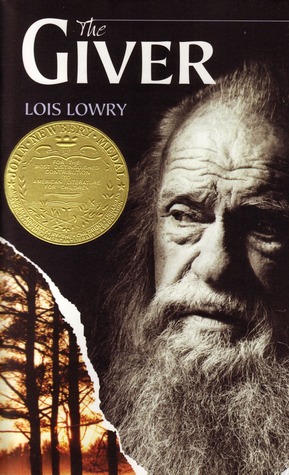
giver_coverThe Giver by Lois Lowry

The Giver takes place in an unnamed, futuristic society that at first glance is a utopia. Everything in this world is designed to make life as pleasant and convenient as possible; everyone is always polite, there is no war, no sickness, essentially everything unpleasant about life has been eliminated. Through reading the book and following the story of Jonas, the child who has been given the job of the Receiver of Memory at the Ceremony of Twelve (12 is the age at which children get their assignments, or roles they will play in the society), the reader begins to see that this utopia comes with a price. By eliminating all negatives aspects of life the society has really eliminated what makes people, people, something that Jonas learns while receiving the society’s collective memory. The Giver is a great reminder that even though life can be painful and unpleasant at times, it is these struggles that make life great in the long run.

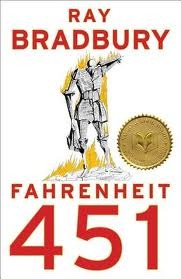
fahrenheit451_coverFuturistic America – Fahrenheit 451 by Ray Bradbury

The world of Fahrenheit 451 is another world that could be considered a utopia, however its flaws are more readily visible than other stories that feature utopia societies that dissolve into a dystopian society as the story progresses. In the society portrayed in the book people lives are all about quick gratification and easy living, they don’t think for themselves or having meaningful conversations, rather they settle for cheap thrills like driving their cars far too fast and letting technology essentially brainwash them into confirmatory. The biggest thing that sets the world of Fahrenheit 451 apart from our world is that books are illegal and fireman start fires, not stop them. Books are burned to prevent the spread of ideas and keep society uniform. With this restriction of thought it’s easy to see why that is a world better left on paper.

Overall, while there are many great fictional worlds that I would love to visit there are some that I am certainty glad are safely contained on the pages of books.

-Angela J., 12th grade

Series Review: The Divergent Series, by Veronica Roth

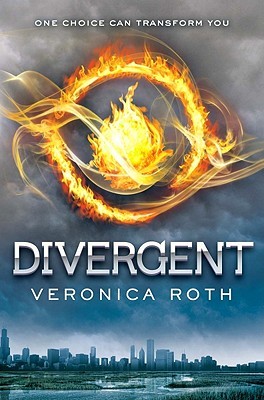
divergent_coverWritten by Veronica Roth, the Divergent series is an irresistible trilogy that’s full of action, suspense, and (for you girls out there) romance! The series contains three books titled Divergent, Insurgent, and Allegiant.

Set in a future world that has been destroyed by the human nature of greed, ignorance, and cowardice, society is split into five factions: Abnegation for the selfless, Candor for the honest, Amity for the peaceful, Dauntless for the brave, and Erudite for the intelligent. The series follows sixteen-year-old Beatrice (nicknamed “Tris”) Prior who learns that she has an aptitude for more than one faction. This is called “Divergent,” and is extremely dangerous. In order to reveal the secret kept from her city, Tris embarks on a dangerous journey with the help of friends. Along the way, she must protect herself from those who threaten to kill her for her Divergence, as well as discover the true meaning of sacrifice, facing your fears, and being brave, honest, and selfless.

After reading the first book in the series, I was captivated with the storyline and became attached to the characters. I especially loved the process of Dauntless initiation, as well as the many plot twists that made me keep reading and finish the book in two days. Insurgent was a little confusing and boring at times, but the cliffhanger at the end really made me eager to keep reading. After months of eagerly waiting, Allegiant finally came out in October 2013! And to be honest, I was very disappointed and angry that Veronica Roth finished the trilogy that way (you have to read it to find out). Although Allegiant clarifies all of the mysteries and unknown questions in the first two books, the mind-blowing finale had me curled up in a corner sobbing for hours! (ok, maybe not) How could the author do something so cruel to her readers? But after reading the third book over again, I was able to realize that Veronica Roth actually wanted to teach us a life important lesson.

I would rate the Divergent series a 9.5 out of 10 and would highly recommend it to anyone over the age of 13, whether you’re a boy or girl. Make sure to read it in time for the movie adaption coming out on March 21, 2014!

-Kaylie W., 9th grade

Book Review: Possession, by Elana Johnson

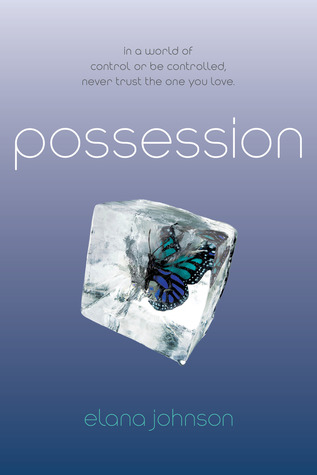
possession_coverPossession, a dystopian fiction novel written by Elana Johnson, follows the life of narrator and main protagonist Violet (Vi) Schoenfeld.  Vi is a free thinker, which in the world she lives in, makes her a dangerous outcast.  She soon finds herself caught in a love triangle between bad boy Jag and her best friend Zenn.

One of the best things about this book is the plot.  With twists and turns on every page, it was definitely interesting.  The characters were also captivating, and fairly relatable.  In addition, the book is narrated in a way that teenagers would speak today, which made it even more relatable.

However, that being said, the book was somewhat disorganized.  Most parts were extremely difficult to follow.  With dystopian fiction, one of the most important things the author needs to do is lay out the setting in a way the reader can easily understand.  Despite my eagerness to learn more about Vi’s world, I found myself let down and confused at the lack of description.

Overall, this book had a nice, captivating plot, but was relatively difficult to follow.  If you are interested in the genre of dystopian fiction, I would recommend reading this book for the plot alone.  However, do be cautious as you may, like me, become frustrated at the lack of organization throughout the novel.

-Amanda D., 11th grade

Series Review: Delirium, by Lauren Oliver

delirium_seriesI wrote a blog a couple of months ago about author Lauren Oliver’s visit to the Mission Viejo Library, which was absolutely phenomenal. It was a great opportunity to meet the author of a really prestigious series. While I was there, I received a free copy of the final novel in her Delirium series, Requiem. This series was absolutely marvelous. I have read a lot of novels, but this is definitely going to remain my favorite for a long time.

This series is about a girl, Lena Haloway, who lives in a world where love, or deliria, is a disease. In this world, when you turn 18, you get cured from deliria, and you get assigned a husband and a job for the rest of your life. There is a community of “Invalids” beyond the border of Portland, Maine, that are individuals who have never been cured of deliria. However, Lena Haloway’s life takes a turn for the unwanted.

Soon, before her cure day, Lena meets a perplexing boy named Alex, who she soon develops feelings for. A budding romance flourishes, however Lena is coming closer and closer to her cure day.

In this uniquely written novel series, Lauren Oliver puts her readers through a rollercoaster of an unwanted life in a different world.

-Nirmeet B., 10th grade

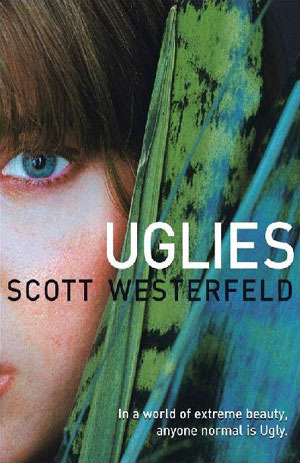
Series Review: The Uglies Saga, by Scott Westerfeld

uglies_coverLike many science fiction book that are being published these days, Uglies by Scott Westerfeld is centered around a teenage girl. The Uglies Saga has glamour, romance, and action compacted into four books. The books are appropriately titled: Uglies, Pretties, Specials, and Extras.

The series is set in a world three hundred years in the future. There is more focus on nanotechnology, which manipulates matter. This leads to new inventions, such as hoverboards and rotating apartment buildings (so that its residents will never get tired of the view). The populations is categorized into three groups. There are littlies (who live with their parents until they are twelve), uglies (who live in a dorm until they are sixteen), new pretties (live in New Pretty Town and have no worries), middle pretties (join a profession), late pretties (also called crumblies; they are parents who have gotten surgery to live into their two hundreds), and specials (optional and not spoken about very much).

uglies_saga

The main character is named Tally Youngblood, and she is one of the uglies. She lives in a dorm room and day dreams about turning sixteen. In this civilization, once teenagers turn sixteen, they undergo a surgery to become pretty, thus allowing them to live in New Pretty Town. She often sneaks into New Pretty Town as an ugly, which is not allowed. Tally displays this sort of rule-breaking behavior throughout the series. Once she gets through the events of the first book, her life only becomes more difficult and more dangerous.

This book is one of my favorites because the main character is often faced difficult decisions. And like many teenagers, she doesn’t always know what would be the best choice. Tally has to struggle through big moments and she has to do things that she thinks are right thing to do. I also love Tally because she constantly finds ways to fight her city’s government, no matter how impossible it may seem. I would highly recommend this series.

-Madison M., 12th grade

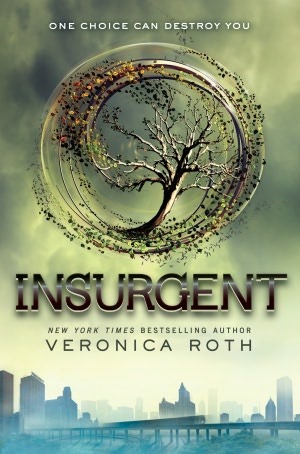
Book Review: Insurgent, by Veronica Roth

insurgent_coverInsurgent, the second YA dystopian book by Veronica Roth, is the awesome sequel that picks up on the action right where Divergent left off. Speaking of which, be sure to read predecessor first. This is a very fast-paced and exciting book sure to keep you on your toes.

This book takes place right after a massive civil war ravages the city of five society factions. In the aftermath, the protagonist, Tris, contemplates her guilt and sorrow from her actions. As fighting begins again, she will have to think quickly but profoundly about how much she is willing to sacrifice to protect her newfound friends, and the fate of the new society bound to come.

After reading this book, I think it is quite obvious that it evokes some very thoughtful and political questions in the reader. For example, the rebels, whom Tris is allied with, wants to completely wipe out the headquarters of the corrupt government. However, Tris and her prodigious soldier boyfriend both know that they have to save the computers there with advanced technology that the city sorely needs. So, how to accomplish both?

Another thing Veronica Roth does very well is connecting the protagonist and the reader. We can feel her anticipation, sorrow, and guilt in the upcoming war, her relationship issues, and her determination to do what’s in the new society’s interest.

Overall, Roth’s new thriller debut novel is something everyone should look into. You will definitely enjoy the relentless action and the profound thoughts weaved in and out of the story. And if you’re just getting into this series now, your timing is good– the end of the trilogy, Allegiant, comes out on October 22nd.

-Phillip X., 8th grade

Book Review: The Hunger Games, by Suzanne Collins

hunger_games_coverIn The Hunger Games by Suzanne Collins, you learn about friendship, courage, and much more.

This whole book is about a young girl named Katniss. Her country is divided into 12 districts, and then the capital. Each year, one girl and one boy are sent to the annual Hunger Games from each district. She has to go to her country’s annual Hunger Games. The Gunger Games is an event where 24 kids are put into an arena and are forced to fight to the death.

She makes many new friends along the way, but she also makes many new enemies. She has many tragedies along the way. For example, one of her closest friends in the games gets killed. Katniss helps unite the districts slowly throughout the story.

Her story consists of betrayal, love, hate, and friendship. Her journey has many ups and downs and it ends with an unforgettable event. I would recommend this book to anyone from the ages 12 and up. I believe that even adults will enjoy this book. Although you may not like the science fiction genre, I’m sure you will enjoy this book. This book will just make you want to pick up the next one!

-Melika R., 8th grade

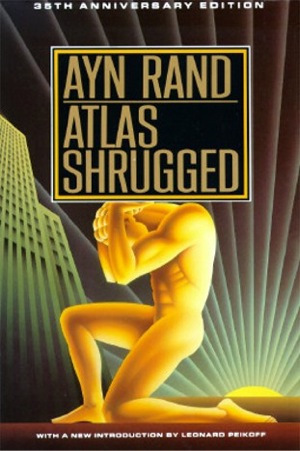
Book Review: Atlas Shrugged, by Ayn Rand

atlas_shrugged_coverIn this great nation of the United States, we have long maintained our democracy on a strict, two-party platform. In more recent times, these two positions have been filled by the left-leaning Democrats and right-leaning Republicans, but, aspiring to exercise to the fullest their rights as participants in the democratic process, smaller third parties have always managed to remain in existence. Among these more peripheral groups, one of the most prominent has long been the Libertarians who, in the opinion of this writer, offer a captivatingly stringent ideological adherence to the fundamental principles of liberty and small government.

Today’s brand of Libertarian represents a diverse membership, but many holding such a political ideology often cite in their political development one common influence. A Russian immigrant to the United States in the early 1900s, Ayn Rand, ceaselessly propagating her philosophy of objectivism, would later write one of the century’s most influential novels, an ideologically dense yet invigorating tale she named Atlas Shrugged, which appears to have become the gospel of the contemporary libertarian movement.

Set an ulterior, dystopian United States, in a world that is increasingly Marxist, the novel follows the events that surround Dagny Taggart, an executive of her family’s transcontinental railroad company. As her brother, James, the president of the corporation, increasingly engages in reckless and destructive business choices, seemingly sympathizing with the notion and proponents of a totalitarian state, Dagny becomes the real director of the company, attempting to extend its longevity to the greatest extent possible. Our protagonist finds solidarity with another rational man of business, Hank Rearden, president of Rearden Metal, whose innovative steel, the strongest and most durable of its kind, she utilizes for the construction of a new section of the Taggart rail network. Time progresses, and a trend of successful businessman leaving their corporations to fall into despair exponentially develops, yet Dagny and Hank fight on in their endeavor to merely remain above water.

While the world around them continues to grow grimmer and increasingly less hopeful, Dagny and Hank find one spark of hope in an abandon factory: a revolutionary engine that possesses the capacity to transform static electricity from the atmosphere into the energy needed to power a locomotive. Unaware of but desperate to discover the inventor of this engine, they embark on a quest that takes them to various places in a now hellish American country. Eventually, miraculously they find themselves in Galt’s Gulch, where they become acquainted with various figures, from business, medicine, art, and other important social spheres, including the aforementioned businessmen, all who have left their respective trades to join John Galt, with whom the reader, at this point in the story, is already somewhat familiar as the result of the novel’s widespread street phrase, “Who is John Galt?”

As the novel closes, the storyline wraps the mystery and uncertainty of why these people are present in Galt’s Gulch and what the future of the nation, and indeed the world, will be all together into a coherent, revelatory, and gripping ending, but that, as well as the answer to the question of Mr. Galt’s identity, is for you, reader, to discover for yourself.

In all verity, Atlas Shrugged is not an easy read. Its length alone might frighten some readers, but requiring even more mental faculty than that necessary to trudge through the nearly thousand pages is that required to pore the dense philosophical dogma that lies therein. Why, then, do I still maintain a positive opinion of and recommend this novel? The story is one that, though gripping, is even more so absorbing for its excellent use and conveyance of Rand’s beliefs. As it has affected countless others, Atlas Shrugged has similarly influenced my philosophical outlook and beliefs.

There will be those who will wholeheartedly disagree with Ms. Rand and her writings, yet the novel discussed here is worth the read even for the mental debate it will inevitably spark. If you are up for the challenge, as any good reader should be, and are open to intellectual growth, give Atlas Shrugged a shot.

-Sebastian R., 11th grade

Book Review: Flash Point, by Nancy Kress

flash_point_coverFlash Point is a dystopian fiction set in a future United States after an economic collapse has left many people jobless and rioting. Amy Kent, a teenager supporting her sister and dying grandmother, signs up for a job on the reality TV show Who Knows People, Baby – You?, where viewers try to predict the reactions of six players to surprise crisis scenarios. Desperate for ratings, the television producers put the contestants in increasingly real danger.

Though the premise of this book is similar to The Hunger Games, it focuses more on the turbulent, poverty-stricken society it is set in, rather than survival. I enjoyed that the teenage players are chosen to fit stereotypes – the spoiled rich socialite, the nerdy strategist, the relatable everygirl – but by the end of the book, when they have decided to team up against the television executives, each one is revealed to be more than they seem. Though the characters’ goal is to expose the motives of one program rather than changing the world, they learn that no one can really predict the actions of others.

I would recommend this book to anyone 14+ years old (mostly for language), who enjoys dystopian fiction and interesting plot twists.

-Miranda C., 12th grade

Book Review: The Program, by Suzanne Young

program_cover

“I’m going to die if I don’t cry right now. The sorrow is going to rip through my chest and kill me.” p. 43

The Program by Suzanne Young is unlike any book I have ever read before, set in a dystopian society with one key change to the world today. It takes place in a time when teen suicide is high, the government institutes The Program to “cure” depression. It also strips your memories and the essence of who you are.

“Would we commit suicide without The Program, or does it drive us there?” p. 63

Sloane has seen suicide firsthand, her brother’s. James, who is both her boyfriend and brother’s best friend, was also there. Now they live with survivors guilt. They both support each other and need each other to survive. Are their promises enough to withstand The Program?

It is never a matter if The Program will find you, but when they will. They will be free of The Program when they reach 18, but will they last that long? Can Sloane hold on to her love for James if her past is taken from her forever?

This is not a happy, light read kind of book. It deals with harsh topics plaguing society to this day. It is written in a way that feels so real, I have to remind myself it is only a story. I honestly had to put the book down a couple times just to cry; it was so sad.

Yet, I needed to know what happens next. The worst part is having likable characters that can’t fight back. At least, not at first. Even when it seemed hopeless, there was always some part of me that wished things would get better. You have to read the book to find out how it ends.

Due to the topic, this book is recommended for older teens. If you want a book that is deep and meaningful, (and will make you cry) this is the book for you.

-Nicole G., 10th grade