A Farewell to Arms by Ernest Hemingway

A Farewell to Arms by Ernest Hemingway

Farewell to Arms tells the story of an American teenager, Frederick Henry who met Catherine Barkley, a British nurse, while volunteering as an ambulance driver in northern Italy during World War I. Henry was wounded by a shell while on duty at the front and was taken to a Milan hospital. Due to the shortage of nurses, Catherine also came to Milan; the two meet again. This time, Henry found himself deeply in love with Miss Barkley. During the medical treatment in Milan, the two were in love and had a good time. During this time, Catherine became pregnant. When Henry returned to the front from his wounds, he found the Italian army demoralized, full of defeat and despair. German attack finally crushed the Italian resistance.

The soldiers were very excited and anti-war enthusiasm was high.In front of a bridge, the Italian front army began to arrest officers who were alleged to have deserted their posts. Henry escaped execution by jumping into the river while others were interrogated. He finally realized that his duty as a soldier had been washed away with the river. At this time, he has only one purpose: to find Catherine, and then the two would escape the bitter sea of war. Henry travels to Milan and finds that Catherine has gone to a resort town on the frontier. When Henry found Catherine, they were happily together again. However, they were chased by the Italian police and had to flee to Switzerland. Catherine died in childbirth, leaving Henry alone in exile.

Hemingway in A Farewell to Arms successfully created the war-torn hero Henry as a strong, brave, confused, and desperate hero. Through Henry’s disillusionment from hope to disappointment and then to despair, Hemingway profoundly revealed to people the great destruction and injury caused by war to society and humanity. He called on people to have a thorough reflection and awakening to the war, to persist in opposing it as a major and far-reaching cause until one day all mankind can finally say “farewell” to weapons.

-Coreen C.

For Whom the Bell Tolls by Ernest Hemingway

For Whom the Bell Tolls (film) - Wikipedia

“For Whom the Bell Tolls” is a novel created by American writer Ernest Hemingway in 1940. This novel tells the story of Robert Jordan, a young American who teaches Spanish in a university and has deep feelings for Spain. He volunteered for the Spanish army to blow up behind enemy lines. To cooperate with the counterattack, he was ordered to contact with the local guerrillas and complete the task of bombing bridges. He enlisted the support of Bilal, the wife of the guerrilla captain Pablo, and the rest of the team. He then isolated the demoralized Pablo, and arranged each man’s task in a step-by-step manner. In the midst of the flames of war, he heals the trauma of Maria, the girl whom Bilal has taken in because she was raped by his enemies. In these three days, Robert experienced the conflict between love and duty and the test of life and death while human nature continues to sublimate. When the bridge was bombed, Robert was wounded in the thigh and left alone to block the enemy. In the end, he sacrificed his young life for the Spanish people.

In “For Whom the Bell Tolls”, efforts are made to achieve a universal sense of harmony between nature and man, and man and woman. This harmony, Hemingway tells us, is the most difficult type of struggles. To understand one’s intimate relationship with nature and one’s co-existence with others requires breaking the consciousness of the human ego, overcoming the arrogant sense of domination and understanding the ethics of interconnectedness, interdependence and care.

-Coreen C.

The Great Gatsby by F. Scott Fitzgerald

F. Scott Fitzgerald’s The Great Gatsby, in all of it’s blue and gold shimmering splendor, is regarded as one of the greatest American novels of twentieth-century literature. Focusing on the story of Nick Carraway and his involvement with notoriously wealthy Jay Gatsby (followed by his legacy of the American dream and bitter love pursuit), The Great Gatsby dives into 1920’s American society in which the ideal life is painted as an extravagant party, born out of wealth and materialistic grandeur.

Hidden within the folds of Fitzgerald’s florid language — words of “yellow cocktail music,” a “universe of ineffable gaudiness,” “roaring noon” — the novel captivates the audience until it’s profound and raw close. The seamless flow of one thing to the next, the vivid images of a fast-paced and rich life, the timeless theory of long-lasting love and ambition: Fitzgerald renders a chaotic and recklessly beautiful portrait of the roaring 20’s Jazz Age and the world that buzzed within its history.

The incorporation of reoccurring symbols, such as the green light at the end of the dock or the constant juxtaposition of the colors yellow on blue, deepens the horizons to which The Great Gatsby stretches. Across the novel’s pages, Fitzgerald repetitively uses the colors yellow and blue to convey the ideas of truth versus wealth and false wealth in an abstract manner. Likewise, the green light brings the audience closer to Gatsby’s personal ambitions, his true substance over his outward actions.

Fitzgerald’s gradual characterization of each character increases the mysterious aura that revolves around Gatsby and those associated with him, wrapping the entire story into an enigmatic piece of literature rooted deeply in American history.

—Keira D.

The Great Gatsby by F. Scott Fitzgerald is available for checkout from the Mission Viejo Library. It can also be downloaded for free from Overdrive

Father Goriot by Honoré·de Balzac

Père Goriot by Honoré de Balzac

“Father Goriot” focuses on exposing and criticizing the naked money relationship between people in the capitalist world. The novel is set in Paris between the end of 1819 and the beginning of 1820. It mainly tells two parallel and overlapping stories. Retired flour-maker Goriot was neglected by his two daughters and died miserably in the attic of an apartment. The young Rastignac changed constantly under the corrosion of Paris society, but he still maintained justice and morality.

It’s also interspersed with stories about Madame de Beauséant and Madame Vauquer. Through the alternating main stages of shabby apartments and luxurious aristocratic salons, the writer paints a picture of the materialistic and extremely ugly society of Paris. It reveals the moral decay of the bourgeoisie under the control of the power of money and the ruthlessness between people, and reveals the inevitable destruction of the aristocracy under the attack of the bourgeoisie, which truly reflects the characteristics of the Bourbon Restoration period.

In “Father Goriot”, Balzac successfully depicts the complex relationship between class and class consciousness through the fate of Eugène de Rastignac and Goriot. This complex relationship has a historical basis. As two different classes, the aristocracy and the bourgeoisie have different economic bases, lifestyles and values, and occupy a dominant position in different historical periods. In France, in this sense, both the rise of Eugène de Rastignac and the fall of Goriot are the inevitable products of certain historical situations. The context set in the novel is 1819.

Although it was the restoration period of Bourbon, the regression was only partial, and the overall trend of historical development could not be reversed. The capitalist mode of production became increasingly stable, and the bourgeois consciousness inevitably became increasingly dominant. The gradual dominance of bourgeois consciousness not only means that the aristocracy is defeated on the whole, but also means that some individual aristocrats are incorporated by the bourgeoisie, such as Eugène de Rastignac.

This shows that the rule of the aristocracy was not only defeated from the outside, but ultimately collapsed from the inside as well. At the same time, the process eliminated members of the bourgeoisie who were not pure, such as Goriot. The bourgeoisie was consolidated from within. This shows the complexity of the historical process in which the bourgeoisie replaced the aristocracy. The struggle between the two took place not only externally, but also internally, not only in the form of revolution, but also in the form of ideological struggle.

Madame de Beauséant and Vautrin are the smartest people in the world. They had insight into a society that was respectable on the outside but dirty underneath. They were Eugène de Rastignac’s worthy mentors, and without them the young peasant would not have awakened so quickly. However, in addition to the words of these two teachers, it was also due to the example of Goriot that finally enlightened Eugène de Rastignac. We do not say this to regard Goriot as a bad man, or to say that he had done something unseemly.

Goriot died alone after his two daughters had bled him clean of his poor savings, and Eugène de Rastignac was a witness to the whole course of this tragic event. It was from here that Eugène de Rastignac saw through the world’s sordid society and was no longer under any illusion about the so-called justice, affection, friendship and so on between people. Therefore, he was determined to enter the upper class arena as a challenger. Sure enough, after some struggles, when the reader sees the young man again in one of Balzac’s other works, he has already mixed up a personal image.

The Red Badge of Courage by Stephen Crane

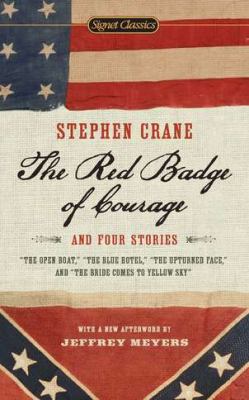
Another classic I checked out from the library this summer. This book for sure is the most well-known piece of work of Stephen Crane. It talks about Henry Fleming, a soldier fighting in the Civil War in the Union side.

Unlike some of the other war novels, this book employed succinct and vivid language to portray the brutality, fear, cowardice, and bravery in wars. It explored the main character Henry’s flight from the war, the despicable excuse he found for himself, his gradual awakening of conscience, and finally his change into a courageous soldier who transformed into an unselfish and devotional citizen willing to die for his country.

Although it was relatively short, but every detail in a battle was explained. Such as the way how the soldiers fire using their rifles, how they travel on foot from one regiment to another, how they charge forward reluctantly and in horror when their lieutenant orders them to. It doesn’t really name any battles specifically, but it does a fantastic job of expatiating everything that could occur in a battle. My favorite character is surprisingly not Henry Fleming, the main character but his friend Wilson, who was a minor character without too much of a dimensional personality. But I was deeply touched when Wilson was willing to share his bed with Henry and feed him when he fled from the battle and came back later. There was a possibility that Wilson knew Henry was lying when he said he got shot in the head, and yet his altruism melted my heart. I believe that we all need a friend like this who understands our mistakes and forgives us silently whether we admit it or not.

-Coreen C. 

The Red Badge of Courage by Stephen Crane is available for checkout from the Mission Viejo Library

To Kill a Mockingbird by Harper Lee

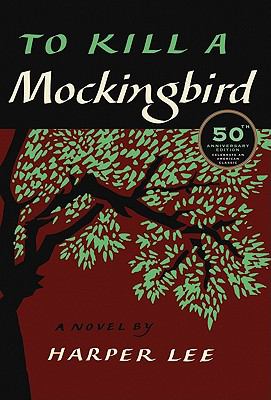
Image result for to kill a mockingbird book cover

Published in 1960 and never forgotten since, Harper Lee’s To Kill a Mockingbird is a dramatic coming-of-age tale about a small Southern town poisoned by prejudice during the 1930s, only about half a century after the end of the Civil War.

Told through the eyes of eight-year-old Scout Finch, this novel appears to merely be the story of a small-town girl, but if one observes carefully and makes connections, one will discover the twisting and turning threads of racial segregation lying just underneath the surface. Atticus Finch, Scout’s father and a man who believes that justice is blind, faces the most dangerous trial of his life when he attempts to defend a black man, Tom Robinson, from a rape charge.

In the background of all this, however, is a quaint depiction of Maycomb, a tiny village at the heart of Maycomb County. The reader watches Scout Finch grow from a young tomboy to a slightly older tomboy, as she loses her innocence in the face of the hate brought on by racial prejudice.

All in all, To Kill a Mockingbird is the kind of book that will stay with the reader long after they have finished it. Combining delightfully accurate prose with an undercurrent mocking the idea of segregation, this novel is an extraordinary one, pulling any and all readers into its pages and holding them there from the very first page to the very last word.

-Mahak M.

To Kill A Mockingbird by Harper Lee is available for checkout from the Mission Viejo Library. It can also be downloaded for free from Overdrive

A Tale Of Two Cities by Charles Dickens

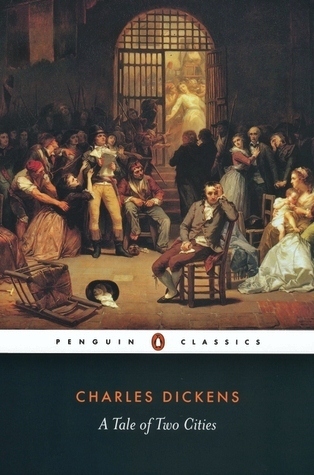
A Tale of Two Cities is a piece of classic literature that many teenagers are required to read in English class. Which mean that when many people including me go into reading this book, it is in the mindset of getting it finished for class. Of course, reading for school also seems like a chore.

The book, however, is not horrible. Though, it is quite difficult to read and has a storyline that is confusing. Which makes reading this book take a long time because to truly understand what is going on, it has to be read slowly and be comprehended. But, reading books in this style of old English is a skill and does get easier over time.

This story is placed in the late 1700s and is focused on both England and France during the French revolution. Which makes it interesting for those who are into history. It gives an insight into life during the revolution and the turmoil and chaos that followed it.

The main character that the story follows is Charles Darnay, who travels between both France and England, as well as Lucy Manette and her father Dr. Manette who are the other main characters of the story. They allow the reader to have insight into the personal life of someone during the French Revolution and gives a different side to this historical event other than the typical reading from a textbook.

Throughout the story, there is a lot of drama, with long sections of suspense can be captivating but also off-putting for it seems as if there is no end in sight. There are long sections of buildup which are often partially resolved. Especially with Mr. and Mrs. Defarge who both help and betray Darnay. They also a large role in the revolution.

Overall, this story is confusing but is worth reading at least once. It gives a reader a better understanding of reading literature and of the past. It does take a while to read but, as the story goes on it become more interesting. This book is good for someone looking for a challenge.

-Ava G.

A Tale of Two Cities by Charles Dickens is available for checkout from the Mission Viejo Library. It can also be downloaded for free from Overdrive

The Count of Monte Cristo by Alexandre Dumas

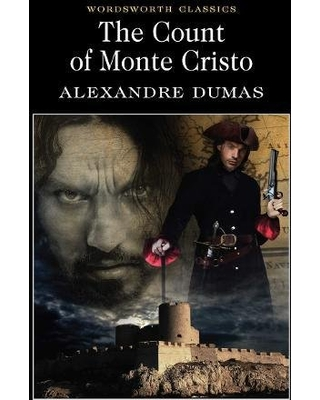
From the author of the well-known The Three Musketeers comes The Count of Monte Cristo, a classic tale of romance, adventure, and overarching revenge.

In 1815, Edmond Dantès, a talented sailor on the cusp of marriage, finds his golden life stolen away from him when he is cruelly betrayed by his supposed comrades. Branded a traitor and sentenced to life in prison, Dantès, innocent and heartbroken, has no idea the scale of the conspiracy presented against him. Of the three co-conspirators, all were considered the unfortunate man’s “friends”: M. Danglars, a fellow sailor who was desirous of supplanting Dantès as captain of their ship; M. Fernand, who loved the woman Dantès was to marry; and M. de Villefort, who ignored his duty as a man of law and sent a faultless young man to prison to protect his murderous father.

However easily they may have gotten away with their crime in round one, they certainly did not keep up their success in round two. After spending fourteen years in prison for a crime he did not commit, Edmond Dantès sets himself at liberty, and returns to France as the enigmatic Count of Monte Cristo, the man everyone knows yet no one does.

Receiving wealth beyond belief from a fellow inmate, the count, tenacious and patient, not only avails himself of the opportunity to exact revenge on the malicious men he blindly trusted, he also uses his immense wealth and munificence to benefit the lives of those who helped him in the past.

In the midst of all this, however, life goes on, and romantic intrigues, marriage refusals, and the like all continue on in the background of a slow-moving chess game only the Count of Monte Cristo knows is being played.

Mind racing, excitement overtaking, any reader, no matter what genre they prefer to read, will root for the vengeful Count of Monte Cristo, and condemn his enemies to their given punishments.

Of Mice And Men by John Steinbeck

Of Mice and Men by John Steinbeck is about George Milton and Lennie Small trying to find a job and settle. The reason that this is such a difficult task is because Lennie has what seems to be memory loss. He constantly forgets what George tells him. He also doesn’t understand what is right compared to what is wrong.

[Editor’s Note: Spoiler Warning]

This book tells of George and Lennie trying to find work in Soledad. They go to a ranch and speak with the boss before being told when to start working. When they are shown where they will sleep, they encounter the boss’ son Curley. Curley immediately starts trying to pick a fight with Lennie. As soon as Curley leaves, George warns Lennie about avoiding Curley at all costs. Curley’s wife, who Lennie is attracted to upon seeing her, is also a big problem.

After working for some time and getting to know other ranch hands, George and Lennie believe that they may be able to finally buy a house just for them. However, one day Curley’s wife finds Lennie alone and starts a conversation with him. She tells about how she could have gone to Hollywood and about her hair. She lets Lennie feel her hair, and he starts pulling on it. Curley’s wife cries out in pain, so Lennie covers her mouth out of fear of getting in trouble. He pulls on her hair more and more until he accidentally snaps her neck. When Curley finds out he goes to kill Lennie. George gets to Lennie first, and painlessly kills him so that Curley wouldn’t shoot him and let him bleed to death.

-E. Vargas

Of Mice and Men by John Steinbeck is available for checkout from the Mission Viejo Library. It can also be downloaded from Overdrive.

To Kill a Mockingbird by Harper Lee

This month, I read To Kill a Mockingbird, written by Harper Lee. The story follows Jean Louise (Scout), a young girl who loves to explore the world and her town, Maycomb. She also has an older brother named Jem Finch and a father, Atticus Finch, who is an attorney. The story follows Jean Louise’s daily life, leading up to a big case her father is working on defending Tom Robinson, who was accused of a crime he did not do.

This story takes place in the 1930 during the Great Depression. Racial tensions also ran high in the South during this time, which added to the story. During Atticus’ closing statement to the courtroom, the story becomes very intense. Atticus is by far the most convincing lawyer in Maycomb but he is defending an African American against a white person. Back then, colored people were thought of as property, not people, and they did not command any respect. Atticus’ client loses the battle, and the reader really feels how biased the court, and the South, was during that time

This part of the book was my favorite, because even though Atticus knew his chances of winning were slim, he still gave it his best effort. I also liked the segment just before the defense was presented, when a group of men were about to kill Tom. Before they have a chance to do it, Scout stops them. As the fight is about to start, Scout recognizes one of the men. She introduces herself and tells the man to say “Hi” to his son, Scout’s friend. After that, the man calls off his friends and they leave. This scene really moved me. It represents how everyone is human and shares common ground. When Scout asks the man to say “Hi” to his son, the man realizes that he has a family, just like Atticus or Tom. If he killed Tom, he would never be the same, and his family would always look at him differently.

Overall, I thought this book was very moving. It had a great mix of comedy, suspense, and dramatic impact. I would definitely recommend this to eighth graders and up.

-Daniel C.

To Kill A Mockingbird by Harper Lee is available for checkout from the Mission Viejo Library