Authors We Love: Ernest Hemingway

Ernest Hemingway (Author of The Old Man and the Sea)

Ernest Miller Hemingway (July 21, 1899 — July 2, 1961) was an American writer and journalist who lived in Oak Park, a suburb of Chicago, Illinois. Hemingway won many awards during his life. He was awarded the silver medal for bravery during World War I. In 1953, he won the Pulitzer Prize for the Old Man and the Sea, which won him the Nobel Prize for Literature in 1954. In 2001, Hemingway’s The Sun Also Rises and A Farewell to Arms were included in The American Modern Library‘s list of The 100 Best English Novels of The 20th Century. Hemingway was a representative figure among the “Lost Generation” writers in the United States. In his works, he showed confusion and hesitation about life, the world and the society. He has always been known as a tough guy in the literary world, and he is the spiritual monument of the American nation. Hemingway’s works mark the formation of his unique style of creation, and occupy an important position in the history of American and world literature.

Ernest Hemingway was born in Oak Park and was baptised at Walloon Lake. Hemingway spent most of his childhood in his farmhouse at Walloon Lake, reading picture books and animal comics and listening to all kinds of stories. He liked to imitate different characters and was interested in sewing and other domestic things. Hemingway’s mother wanted her son to pursue a musical career, but Hemingway followed his father’s interests, such as hunting, fishing, and camping in the woods and lakes. So Hemingway, who grew up in a farmhouse on Walloon Lake, loved nature. From 1913 to 1917, Hemingway received high school education, academic performance, physical education, and an outstanding talent in English. He got his first writing experience in junior high, writing for two literary newspapers. When he entered high school, he became the editor of the journal. He sometimes uses the name Ring Lardner Jr in honor of his literary hero, Ring Lardner . After high school, Hemingway, rejecting college, began his writing career at the age of 18 as a reporter for the Kansas City Star, an influential newspaper in the United States. During his six months working for the Kansas City Star, Hemingway received good training.

In 1918, despite his father’s opposition, Hemingway quit his job as a journalist and tried to join the U.S. military to observe the fighting in World War I. Hemingway failed the physical examination due to a visual defect and was transferred to the Red Cross ambulance team as an ambulance driver. On his way to the Italian front, he stopped in Paris under German bombardment. Instead of staying in a safe hotel, he kept as close as he could to the battle. Hemingway witnessed the cruelty of war on the Italian front, shocked by the explosion of an ammunition depot near Milan and the fact that more women than men died in a makeshift morgue. Hemingway was awarded a silver medal for bravery by the Italian government on July 8, 1918, when he was wounded while transporting supplies and dragged the wounded Italian soldiers to safety. Later, Hemingway worked in an American Red Cross hospital in Milan. It was the inspiration for his early novel A Farewell to Arms. Hemingway regarded himself as the protagonist of the novel, the original creation.

In 1920, Hemingway moved to Toronto, Ontario, where he lived in an apartment. While there, Hemingway took a job with the Toronto Star as a freelance writer, reporter, and overseas correspondent, and struck up a friendship with Morley Callaghan, a star reporter. Between 1920 and 1921, Hemingway lived near Chicago’s north side and worked for a small newspaper. In 1921, Hemingway married his first wife, Hadley Richardson, and moved to a three-story apartment on the North side of Chicago in September. By December, the Hemingways had moved out of the country and never returned to live there. Ernest Hemingway, settled in Paris, gave an interview to the Star newspaper about the Greek-Turkish War (1919-1922). Back in Paris, Anderson guided Hemingway into the “Paris Modernist Movement.” Hemingway’s first novel, “Three Stories and Ten Poems,” was published in Paris in 1923. After the birth of his first son, Hemingway quit his job at the Toronto Star to support the family.

In 1925, the short story series In Our Time was published, showing a concise style of writing. 1926 Hemingway’s novel The Sun Also Rises was published. In 1927, Hemingway divorced Hadley Richardson and married his second wife, Pauline Pfeiffer and published Men Without Women. Hemingway left Paris in 1928 to live a quiet idyllic life in Florida and Cuba. He often goes hunting, fishing, and watching bullfights. Within a few years, Hemingway’s second and third sons were born. In 1931, Hemingway moved to Key West (where he lived in a house that is now a museum) and gathered material for Death in the Afternoon and Winner Gets Nothing. Death in the Afternoon was published in 1932. In 1937-38, he worked as a war correspondent on the front lines of the Spanish Civil War. During World War II, he went with the army as a journalist and fought in the liberation of Paris. During this time, Hemingway’s essay “Denouncement” was published in 1969 with “The Fifth Column and Four Stories of the Spanish Civil War.”

Hemingway and Pfeiffer’s marriage ended in 1940. During this period, physical health problems came one after another, causing great trouble to Hemingway. In the same year, Hemingway published For Whom the Bell Tolls, an anti-fascist novel set in the Spanish Civil War, and in 1950, Across the River and into the Trees, set in Venice after World War II. After the Pacific War broke out at the end of 1941, Hemingway immediately converted his yacht into a patrol boat to monitor the operations of German submarines and provide information for the destruction of the enemy. In the mid-1990s, Alexander Vasiliev, a former KGB officer, was granted access to Soviet intelligence archives. He was surprised to discover that Hemingway had been recruited as a KGB spy in 1941, codenamed Argo. Unfortunately, he had no talent for obtaining any valuable information.

In 1944, Hemingway accompanied the American army to Europe for an interview. He was seriously injured in a plane crash, but after recovering, he still went behind enemy lines for an interview. After the end of the second world war, he received a bronze medal. Hemingway divorced Martha in 1948, married Mary Welsh Hemingway, a wartime correspondent, and returned to Cuba shortly thereafter. Hemingway took his own life with a shotgun in Idaho on July 2, 1961, at age 62. Hemingway has an excellent command of language. He often employs the simplest words to express the most complex content, basic words and short sentence patterns to express the specific meaning, nouns and verbs to reveal the true colors of things without any affectation. Hemingway’s life and literary career were controversial from the start. Hemingway, whether as a legendary figure or as a writer, created a concise and smooth style with his unique artistic style and superb writing skills, which purified the traditional style of writing of a generation and had a great impact on the European and American literary circles.

-Coreen C.

Islands in the Stream by Ernest Hemingway

Islands in the Stream: A Novel - Kindle edition by Hemingway ...

Islands in the Stream is a novel by American writer Ernest Hemingway. Published in 1970, it is one of Hemingway’s last works. It tells the story of painter Thomas’s rough experience of life. Painter Thomas went through ups and downs, had two marriage changes, the three children born after marriage were raised by his ex-wife. He loved his career and his children and often went fishing with them. There is a deep bond between father and son. Unfortunately, two of his sons were killed in a car accident, and the only remaining son was killed in World War II. In the end, Thomas decided to throw his personal sorrows and joys behind the tide of the anti-fascist war. In 1942, as the war in Europe raged, Hemingway commanded a submarine in Cuba to gather intelligence on the Nazis on the island, substituting espionage for writing and personal military adventures for brutal warfare. Although opinions vary on Hemingway’s adventures, this serious military action provided valuable material for his writing, based on which he wrote Islands in the Stream. In July 1944, Hemingway fought ground battles against allied troops in Normandy. For more than 20 days, he was in the midst of a bloody struggle.

The severity and danger of this war have never been greater. The terrible memory of the war pained him greatly. Hemingway, who experienced the cruelty of war, was awarded a medal. But the war made him more conscious. His experience of war was written into his series of war novels. In Islands in the Stream, Hemingway, by portraying the image of painter Thomas, once again emphasized the tough man spirit advocated by him, which is unyielding and indomitable. Thomas, the main character of the book, likes painting and fishing. He has been to the America, Europe, Asia, and Africa. But in middle age he chose to live in the Bahamas, rather than on the islands of Cuba which lies in the Gulf Stream. Through the crucible of his mind and body, Thomas persevered and dealt doggedly with his enemies. He embodies the characteristics of the tough guy that Hemingway often describes, and is a very successful artistic model.

-Coreen C.

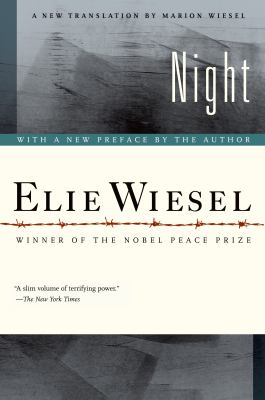
Night by Elie Wiesel

Night by Elie Wiesel is a terrifying story of the Holocaust during World War 2. Elie was born in Sighet, Transylvania. He lived a normal age until the day that he and his family were taken to a concentration camp formerly called Auschwitz. There he is separated from his mother and sisters. He is told to lie about his age and job in order to survive.

After he tells a guard about his age, he is led away with his father. Some days after, they are taken to Buna, a work camp. They work long hours and are very malnourished. Due to the harsh conditions, the Jews must look after one another. This behavior doesn’t last long, and soon all the Jews care about is that they survive. This pushes many of them to commit horrific crimes for extra rations of bread. They quickly lose faith in God and no longer pray. This brings on a worse despair. After some months of labor, the prisoners are soon to be liberated by the Russians. Because of this, the Germans decide to move the prisoners. They are forced to march through a snowstorm to another concentration camp called Gleiwitz. Once at Gleiwitz, they are crammed into cattle cars. All 100 prisoners that hadn’t died were tightly packed against one another. Most cannot take anymore pain and die on the train. Once the train stops at Buchenwald, only 12 prisoners get off of the train. Soon after arriving, Elie’s father dies of dysentery on April 11, 1945. After experiencing so much, this breaks Elie and he is transformed into only a skeleton of a man.

-E. Vargas

Night by Elie Wiesel is available for checkout from the Mission Viejo Library. It can also be downloaded from Overdrive

All the Light We Cannot See by Anthony Doerr

allthelightwecannotsee_anthonydoerrWhen I’m recommended a World War II book, my mind immediately thinks of shooting, and guns, and war. But this is not one of THOSE books. I could honestly say it impacted my perspective on life. Not to mention it won the 2015 Pulitzer Prize for Fiction and the 2015 Andrew Carnegie Medal for Excellence in Fiction.

Anthony Doerr’s historical fiction, All the Light We Cannot See follows the story of two individuals who could not be more different. Marie-Laure, a blind, French girl, and Werner, an orphan, German boy grow up separately. Living in Paris, Marie-Laure’s father helps her with her eyesight disability by creating a tangible model of her city. But when she is 12, Marie-Laure and her father escape Paris after it is taken over by the Nazis and flee to Saint-Malo and her uncle in France.

Werner, an extremely bright boy, grows up in a small mining town with his sister. They find a broken radio that he fixes and is soon recruited at an academy for Hitler Youth. He eventually is dispatched on the field to track radios operated by the resistance.

The book explores the hardships these children have to face as they grow up in a war zone, but with a light mood. The book beautifully explores the potential of humanity. The innocent, humbling characters find hope in places with no light to be seen. In this way, this story did not include all the cliches of war books.

From the first word to the very last, Doerr somehow painted a beautiful, poetic picture of their lives during this depressing time. Marie-Laure and Werner were children finding their own way in a corrupt world. Their motivating strength to survive was the main thing that inspired me live life and find light and hope, even in the darkest places. You may not be able to see the light, but that doesn’t mean it’s not there for you to discover.

-Megan A.

All the Light We Cannot See by Anthony Doerr is available for checkout from the Mission Viejo Library. It can also be downloaded for free from Overdrive

Unbroken by Laura Hillenbrand

Every month in English, my teacher assigns the class a certain genre to read. In April, I had tor read a bibliography. I chose Unbroken because I was interested in a war story and had heard good things about the book and movie.

I quickly discovered that this was an incredibly touching story about a man and the challenges he faced during World War 2. This story tells interesting facts and stories, making the reader want to read more.

Louis Zamperini, a famous Olympian runner, enrolls in the army only to crash land in the Pacific Ocean. He was stranded at sea for 47 days before he and his two other crew mates were captured and tortured by the Japanese for three years! Louis eventually escapes when the war is over, but was never the same man again.

The book is well written, switching between gruesome and sad sections to cheerful and funny scenes. This gives the reader an idea of how much Louis was tortured, but is not overwhelming gory. My favorite part of the book is when the Japanese surrender and the war is over because you finally know that Louis is safe.

The book is interesting to read with slightly accelerated vocabulary.Exciting and stressful, Unbroken is a great book that I would recommend to middle school students or older.

-Daniel C.

Unbroken by Laura Hillenbrand is available for checkout from the Mission Viejo Library. It can also be downloaded for free from Overdrive.

Stepping on the Cracks by Mary Downing Hahn

Let me just say, this book was a lot better than I originally thought it would be. I usually don’t read WWII novels, I am more into the Civil War myself, so this was a different kind of read for me. But let me tell you it was worth it because it had me hooked after the first sentence.

In this book, Margaret and her best friend Elizabeth find a hut in the woods. At first, Margaret is scared to go into it, but with prompting, Margaret goes in. It turns out that Gordy (the class bully) is hiding his brother, a deserter, in the hut. To keep the secret, Gordy attempts to blackmail Margaret and Elizabeth. Along the way they get into many hardships, but they find a way through it.

The cool thing about this novel is that even though it is a children’s book, it isn’t written like one. This is the perfect book for a child to read because it is all very easy to understand and it is very intriguing. However, an adult would enjoy this book just as much as a child. The way the author portrays everything it is obvious she must have witnessed it. In my personal opinion, everyone should read this book. It doesn’t matter if you don’t think you would like it, just trust me, you will.

All the Light We Cannot See by Anthony Doerr

Anthony Doerr’s historical fiction All the Light We Cannot See brings out the tragedies and horrors of Nazi-occupied Europe. Set in France and Germany, Doerr writes about the stories of a young blind girl and orphan boy and how each adapts to survive during World War II.

Marie-Laure loses her eyesight at age six and eventually manages to learn how to cope with her disability. Her father looks after her as she attempts to memorize the streets of her home in Paris so that she can navigate the city independently. Six years later, when Germany invades France, she and her father seek help from an uncle to take refuge, where she spends the majority of the war hidden in the walled city of Saint Malo.

Werner grows up in an orphanage in Germany with his younger sister. They find a radio and fix it, only to be astounded by Werner’s talent with the device. This later grants him a schooling for the brutal Hitler Youth, and is assigned to use his intelligence with radios to track the resistance.

Doerr introduces two very opposite perspectives during the war and demonstrates both the beauty and brutality of living during such a frightening era. He constantly shows how such an obstacle such as blindness should urge one to keep fighting and overcome it. Likewise, he writes how a gift or talent can change one’s life into one of the most powerful groups in history.

On a scale of one through ten, this novel deserves an eight for its beautifully described picture it portrays of World War II. I would recommend this novel to those of 14 years or older for its maturity and historical content.

-Riley W.

All the Light We Cannot See by Anthony Doerr is available for checkout from the Mission Viejo Library. It is also available to download from Overdrive

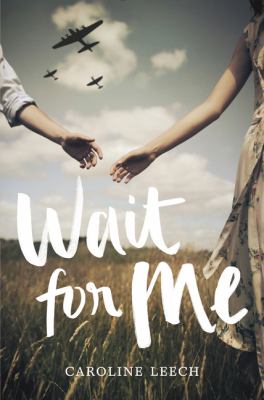
Wait For Me by Caroline Leech

This book is set during World War II in Scotland. I thought it was a great book, especially considering it is YA Historical Fiction, which is rare. Lorna lives on a farm with her father. A group of German prisoners of war come to the farm to work. As hard as Lorna tries to hate the laboring POWs, specifically a man named Paul, but it doesn’t seem to work.

“Yes, he was quite nice really. For a German.”

As Paul works on the farm longer, Lorna see’s him as he really is: just a person. She starts to bond with him, and as you can probably assume, they start to fall for each other. But it is not predictable and it is not sudden. There is some prejudice from the townspeople involving their relationship, considering that Paul technically IS from the Nazi side.

“I am German, yes, but I am not a Nazi. There is a difference, and one day I hope you understand that.”

As they start to get closer, people see Lorna as a “bad” person as well. But she does try to keep the relationship a bit hidden. Paul has issues of his own as well. He is young, and he has his mother and his sister back home that he desperately wants to see again. But as he is a prisoner of war, he must stay in Scotland

“I am not proud that my country killed many of your people, though please remember, your country has killed many Germans too. But that is war is about. We do not like it, but we must all live with it until it is ended.”

The cool thing about this book is the fact that is was never predictable, especially the ending, which I could have never seen coming. This book was very sweet. And to me the ending was perfect! This novel is more so of the two caught in the war then the war itself, there is not much gore (at least involving the war). It is a vert clean novel so the younger YA audience will most likely enjoy this.

-Skyler N.

Wait for Me by Caroline Leech is available for checkout from the Mission Viejo Library.

Rose Under Fire by Elizabeth Wein

“Hope is the most treacherous thing the world. It lifts you and lets you plummet. But as long as you’re being lifted, don’t worry about plummeting”  -Elizabeth Wein, Rose Under Fire

Rose Under Fire, written by Elizabeth Wein, is a historical fiction novel about Rose Justice, an Air Transport Auxiliary pilot for the Royal Air Force. She along with other pilots, Maddie, and Felicyta, carry out their duties of delivering airplanes for the RAF.

However, one day, while delivering a Spitfire from Camp Los Angeles in France, to England, Rose encounters a V1-flying bomb, a pilotless plane carrying a bomb, heading towards Paris. She prevents the attack, but it takes her off course over Germany.

After flying over German territory aimlessly for a while, two Luftwaffe pilots spot Rose’s Spitfire and cornered her to follow them inside Germany. Rose is taken in as a political prisoner and sent to Ravensbrück Concentration camp, a place where she would learn to survive the horrors of the concentration camps in Nazi Germany.

The book is divided into three parts and it is written from Rose’s point-of-view. It is a companion to Code name Verity, but it can be read as a standalone book. I loved the writing style of the author and the characters in this book. Wein did a wonderful job in details and in staying true to most of the historical facts.

Since most of the story is set in where Rose is a prisoner in Ravensbück, there are some parts where it is graphic such as describing the experiments the Rabbits went through in Block 32. There are curse words in this book (more f-words than a PG-13 movie, but less than an R-rated movie), but it’s expected since it’s set during World War II.

If you’re tired reading YA books with romance or you’re not interested in romance, this book might be great for you. There is a little romance, only a tiny bit when Rose was dating Nick before she got arrested and brief instances where Rose would write poems about Nick, but that’s it. I loved that the author focused on the strong friendships Rose made at Ravensbrück instead of her relationship with Nick.

I don’t read historical fiction often, but after doing a quick Google search on ‘YA books without romance’, I discovered this book. It took me a while to read since I recently started reading novels again, but overall a great read that might make you a bit teary-eyed.

-Ash A.

*Note: Recommended reading age: 14+ for mature themes, curse words, graphic/disturbing images, and violence.

Rose Under Fire by Elizabeth Wein is available for checkout from the Mission Viejo Library

The Darkest Hour by Caroline Tung Richmond

Image result for the darkest hour caroline tung richmondI’m normally not a huge fan of historical fiction. Although, I am okay with reading a few alternate histories, but not constantly. Caroline Tung Richmond is also the author of The Only Thing To Fear, about the present day world under Hitler’s control. Even though this book isn’t an alternate history, it is still about World War II.

The year is 1943, in France, and Lucie Blaise is a part of Covert Ops, a group of female spies. They are willing to do anything to take down Hitler. After her older brother dies in combat, Lucie wants to avenge his death and try in any way possible to defeat Hitler. She didn’t want a boring desk job, and wanted to be an actual spy. Even with her training, she is unprepared for the real world. She almost gets caught, but luckily the Nazis barely buy her cover. Also, she didn’t remember her training exactly when she had her job to do, and she almost was fired because of it. I can’t describe what her job was, because it be too much of a spoiler.

This is a really interesting book about female spies in World War II. I felt that the scenes with Dorner could have been written differently, like maybe Lucie could have been starting to fall in love with Dorner, and the book would have been longer as a result. But nothing happened between them, there was no love story for Lucie, and I feel the book would have been more interesting if something did happen. After reading this book, I wondered if some of the events mentioned were true, and reading the Author’s Note explained it. The Operation Zerfall is fiction, but I was shocked to read that the Wunderwaffe program existed.

So if you’re into World War II, spies, or historical fiction, this book is for you! If you like this book, I strongly recommend reading Richmond’s other book, The Only Thing To Fear. This book isn’t mean for younger audiences.

-Rebecca V. 8th grade

The Darkest Hour by Caroline Tung Richmond is available for checkout from the Mission Viejo Library