The Maze Runner by James Dashner

The Maze Runner by James Dashner is about a boy named Thomas who woke up in an elevator with no memory of his past except that his name is Thomas. When the elevator opens he is greeted by people who also have no memory other than their names. Over time Thomas starts exploring the glade (what they call where they live) which the outside of where they live is the maze which they think is the key to their escape. One day after Thomas arrives this girl named Teresa shows up in the box with a note saying that she was the last one ever. Which puts the group in a panic.

This book is a fantastic read. It keeps the reader engaged the entire book because you never know the twists and turns that will happen on their journey. This book is also the intro to the other 3 books in the series which are also very good books that I highly recommend. Also, I recommend reading the books before watching the movies because I felt more connected to the characters watching the movie after reading the books and also books are usually better than the movie counterparts.

-Howard M.

The Maze Runner by James Dashner is available for checkout from the Mission Viejo Library. It can also be downloaded for free from Overdrive.

What is Modern Family?

Modern Family (season 10) - Wikipedia

I am here to recommend one of my all time favorite television shows to binge. I do know that a lot of good shows never seem to have enough episodes, so this one is a long one, the famous Modern Family. Many people have heard of it but have yet to watch it, and let me tell you it is hilarious. Modern Family ended in 2020 but has 11 seasons for you to watch. This show revolves around 3 different families that are all related. 

The first family is Gloria, Jay, Manny, and Joe Pritchett (Joe is a new addition later on in the show). Jay is an old white man while Gloria is the young Columbian that marries him and brings her son, Manny, from a past marriage. Though many are skeptical about their relationship, they are an amazing couple. Gloria is one of the characters that just make you laugh the entire time. She is full of jokes and is constantly criticizing Jay’s old man habits. 

The second family is Cameron Tucker, Mitchell Pritchett, and their adopted daughter Lily from Vietnam. Mitchel is the son of Jay Pritchett, with Jay’s past wife. This is one of those families that you cannot look away from. Cameron is from a rural town and always finds a way to include his life from the farm into every conversation while exaggerating many events. Mitchell is the put together lawyer that tries to keep him in check. One of my favorite parts of this show is them constantly criticizing others for stereotyping them as a specific type of gay couple while fulfilling half of the stereotyping at the same exact time. 

The last family is Claire, Phil, Haley, Alex, and Luke Dunphy, my personal favorite family. Haley is the typical teen that always wants to go out and part, Alex is your nerdy middle child, and Luke is the young and carefree child constantly getting into trouble. Claire Dunphy is the mother and daughter of Jay, who is a housewife with a strong opinion. Phil Dunphy will most likely be one if not your favorite character in the entire show. He is a real estate agent with a passionate hobby of magic. He always wants to be the “cool dad” who his children see as one of the “boys”. This family is one of those crazy ones with kids running around everywhere and parents who are just as crazy.

Those families sound very different, one of my favorite aspects of this show is how we get to see being brought together during family events. There are many awesome relationships between the uncles and nieces, cousins, etc. We get to see the conflicts between adult siblings and their parents along with how they end up making up with one another. You will definitely get a hoot of this show if you love comedy while following a crazy extended family.

-Lily G.

Authors We Love: Diana Wynne Jones

Diana Wynne Jones was a British novelist and children’s fantasy writer born in London on August 16, 1934 as the eldest of three sisters. In her early childhood, she was evacuated to Wales as a result of the bombings taking place during the Second World War. Throughout the war the family moved frequently before settling in 1943, but the result was a very complicated relationship between her and her parents, as she was largely left to care for her younger sisters. However, this only fueled Jones’s passion for reading despite struggling with dyslexia, and later transformed into a passion for writing as she wrote many short stories for her younger sisters.

She went on to study English at St. Anne’s College in Oxford, attending lectures by two very prominent authors, C.S Lewis and J.R.R. Tolkien. By the time she graduated from college, she married John Burrow and had three sons with him. She read to her children as many mothers do, but this also inspired her to create Children’s books of her own. Jones submitted her works to several publishers but they were ultimately rejected until she published the Changeover, one of her few adult novels.

Overtime, her most popular works included the Chrestomanci series, the Dalemark series, and especially Howl’s Moving Castle from the Moving Castle Series. Howl’s Moving Castle soon inspired the creation of the 2004 film Howl’s Moving Castle by Studio Ghibli and Japanese director Miyazaki Hayao. She would later go on to write dozens of many more works for both children and adults, along with winning multiple writing awards such as the British Fantasy Award, the World Fantasy Award for Life Achievement, and the Mythopoetic Award.

-Elia T.

The works of Diane Wynne Jones are available for checkout from the Mission Viejo Library.

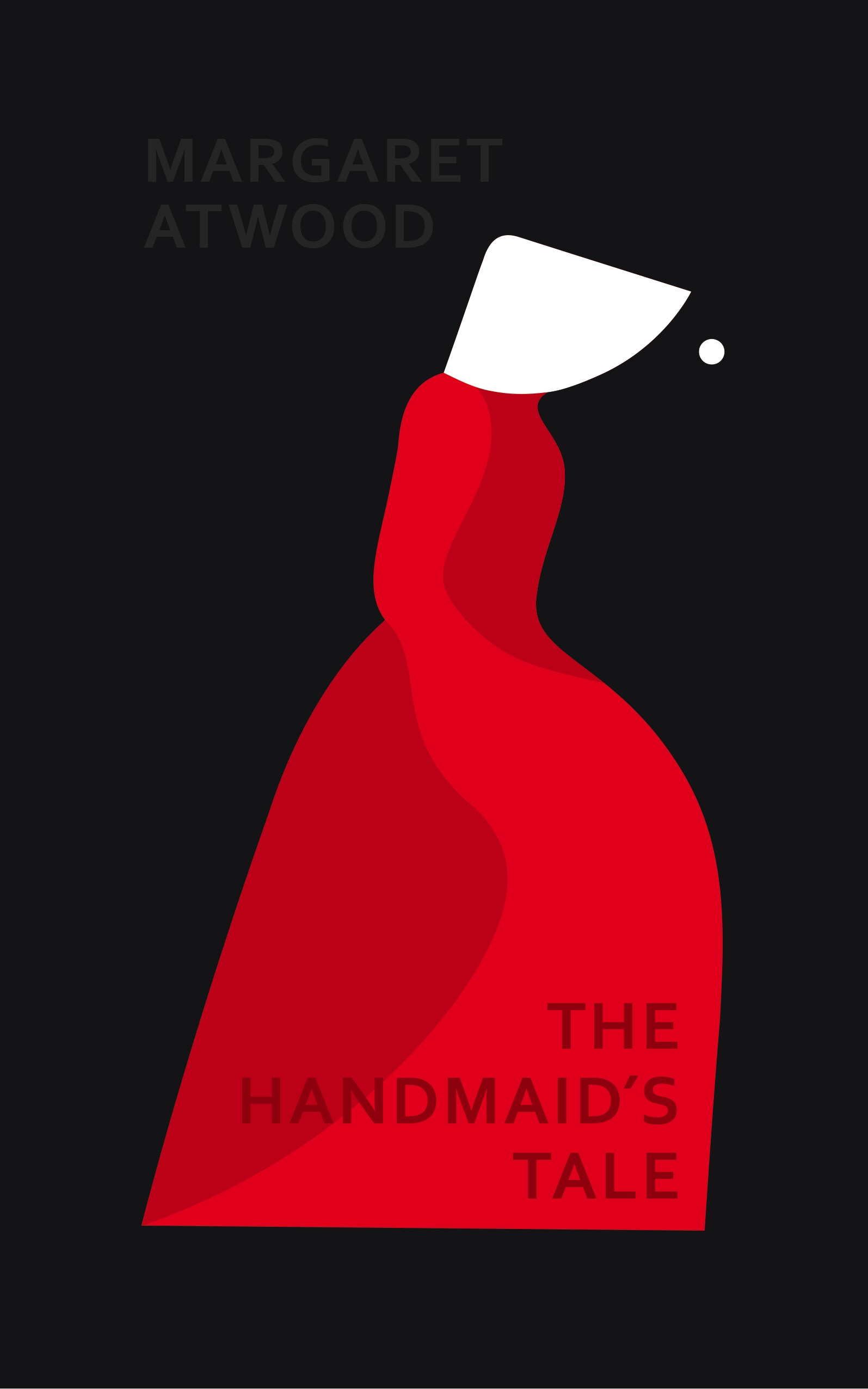
The Handmaid’s Tale by Margaret Atwood

Extract | The Handmaid's Tale by Margaret Atwood - Penguin Books Australia

The land that was once the United States of America has been taken over by a totalitarian theocracy known as Gilead. In this new government, society is divided into rigid castes, ranging from the powerful Commanders to the lowly Handmaids, with other classes like the Commanders’ Wives and the working Marthas and Econopeople in between.

With the laws of Gilead being based on select passages from the Bible, women are reduced to almost nothing, and have little to no freedom. For instance, they are not allowed to read or write, they must cover their hair and bodies in order to avoid tempting men to sin, and they cannot even choose who they associate with or marry.

The unfortunate women who are “chosen” to become Handmaids, however, lose even more – their basic right to their own bodies. Because of dangerously low reproduction rates, fertile Handmaids are assigned to bear children for elite couples that have trouble conceiving. Despite their importance, the Handmaids are treated as their Commander’s property, only to be seen and not heard.

The narrator, Offred, is among the class of the Handmaids, and she belongs to the man named Commander Fred, as well as his Wife, Serena Joy. Stripped of her name, her body, and her past life, all Offred has left is her voice, which she uses to describe the horrors of Gilead in a way that drives even the most hard-hearted audience to pity. 

Margaret Atwood’s writing skills are brilliant, and she weaves the world of Gilead in a gripping masterpiece that will occasionally cause the reader to be lost inside the dystopian hellscape that is The Handmaid’s Tale. However, the epilogue (which I will not spoil here) leaves a last bit of hope for the reader that will leave them feeling both bitter and optimistic about the future.

-Mahak M.

The Handmaid’s Tale by Margaret Atwood is available for checkout from the Mission Viejo Library. It is also available for download from Overdrive

What Should Schools Teach?

Education is considered a basic human right in today’s standards. Nearly everybody in today’s America has received at least a high school level education. However, a lot of the stuff people learn in high school ends up not helping them in life. Although it may not seem obvious at first, so much time sitting in class is wasted. 

To start off, so many pieces of information that we learn during our school days are never used. According to studies from Oxford University, the best way for the brain to store information and remember things is through repetition. Specifically, studying a certain thing for 10-15 minutes per day. The thing is, once that certain chapter test or quiz is over, there is no need to keep studying that subject, so we forget it. There is not a single job in the world that requires you to know how to graph logarithmic equations except for two: mathmetician and algebra teacher. So if these two occupations are the only ones that require to learn this skill, then why do schools bother teaching it anyway? Especially considering that students will forget these skills within the next couple of months really questions the importance of learning these in the first place.

So if schools should not teach these subjects, then what should they teach? Well schools do actually do some things right. When schools offer classes like computer science or band, it opens learning opportunities for kids that will actually be useful to them later in life, as there are actual careers based off these classes. However, as these classes may be useful, there are so many other classes that should be offered. One of which is personal management, specifically talking about finance. The way society sees it is that if you have money, you are considered successful. However, so many people waste their potential and hard work through poor financial management and decision making. Another class that schools should offer are social skills. Although schools already do offer some courses similar to this, they usually are optional and do not last longer than a semester. Some scientists on forbes.com have posted that “we share mirror neurons that allow us to match each other’s emotions unconsciously and immediately”. The problem is that so many people today have terrible social skills, either saying the wrong things at the wrong time or just straight up not talking at all. 

Everybody knows that education is one of the most important things in life. However, the important thing is that people need to receive the right education and skillsets.

-Jeremy L.

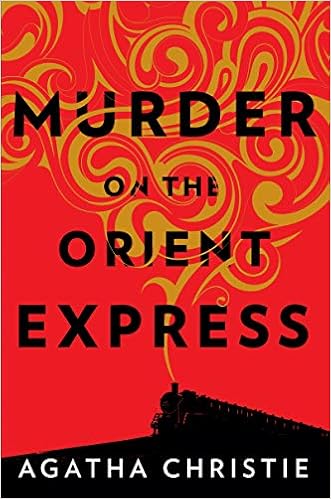
Murder on the Orient Express by Agatha Christie

Murder on the Orient Express is a mystery novel by Agatha Christie.  The hero is the famous detective, Hercule Poirot.  Poirot is described throughout Christie’s novels as a small Belgian man with an egg-shaped head and a distinctive moustache.  The novel is set almost entirely on a train called the Orient Express.  The train was on its way to London, but becomes stuck in the middle of the night due to a snowdrift.  The next morning, a man named Mr. Rachett is found dead in his bed having been stabbed multiple times.  Poirot, intrigued by the mysterious circumstances surrounding this apparent murder, puts the “little grey cells” in his mind to work.  In other words, as he always does, Poirot uses his brain power to solve the case.

One thing I enjoyed about this novel is that we have more suspects than most Poirot stories.  The various personalities made the story quite colorful and entertaining.  Many nationalities are represented, such as American, British, Hungarian, Russian, Swedish and Italian.  One of my favorite suspects is an old woman named Mrs. Hubbard.  She tends to ramble and rattle on about her daughter or anything else that pops into her head.  I found it amusing to read about the passengers’ interactions as they all claimed alibis to absolve themselves of the murder.  The victim seems to have had a very bad reputation, so many suspects might have been motivated to kill him.  This made it very hard to guess which suspect was the actual killer.

This is one of my favorite Agatha Christie books.  There are many characters to keep track of, which makes the story interesting and exciting, but the mystery becomes difficult to figure out.  The ending was quite surprising and different from other Poirot stories that I have read.  Overall, I found this novel to be quite thrilling.  I would also recommend Agatha Christie’s other Poirot books, such as Cards on the Table and The ABC Murders.  Hercule Poirot is one of my favorite characters, and I have enjoyed all of the Poirot mysteries that I have read so far.

-Oliver H.

Murder on the Orient Express by Agatha Christie is available for checkout from the Mission Viejo Library. It can also be downloaded for free from Overdrive.

Frankenstein by Mary Shelley

Most of us are familiar with the monster we’ve labelled as Frankenstein, a green, grotesque creature of Hollywood films. Before reading Mary Shelley’s acclaimed novel for a high school English class, I had similar mental perceptions of the monster (I’d been envisioning the essential, go-to costume for elementary school Monster Mashes for years). After finishing the book, however, I was moved by the complexities of Shelley’s characters, their philosophy, as well as her examination of prominent social and political issues throughout the carefully woven narrative, which are still relevant today.

I’d read Gris Grimley’s Frankenstein before in middle school. Pages of colored artwork and masterful graphic design rendered an excellent adaptation of Shelley’s novel. It provided me the foundations to easily understand the basic plot of Frankenstein, yet I was still skeptic about reading the novel itself. I don’t particularly love Shakespeare or Dickens, with their fanciful ways of speech that can get tiring after a long period of reading, and I feared the same for Shelley’s work. But she was different somehow, her writing distinctively unique; perhaps this was because she was a female amidst a world of male writers, someone who had created such a haunting and gripping story so uncharacteristic of a woman of her time.

The novel centers around a gifted scientist, Victor Frankenstein, who manages to breathe life into his creation, a monstrous being. Instead of a being presented as a gift to humanity, the glorious product of defying even Nature itself, the specimen is a hideous creature that is shunned by society and his creator alike. The narrative is told from various perspectives–explorer Robert Walton’s letters, Frankenstein’s first person narration, the monster’s collection of stories–which I appreciated greatly, because it gave the storyline a certain vivacity, turning it away from the tiresome monotony of the same narrator. As the novel progresses, the monster and his creator enter into a growing spiral of violence and tragedy, and I will say (spoiler alert!) the novel is not exactly a Hallmark movie with a happy ending.

By the time I had finished the book, the ending surprisingly emotional (I had been nonchalant all throughout Romeo and Juliet’s deaths, but this ending really ran me over for good measure…go figure), I continued to mull the story’s events over in my mind. Frankenstein is a philosophical breeding ground–are monsters created or made, a victim of the cruelties of society? What are the ethical implications of science and technology (this one I consider a lot, since we are at a teetering frontier of modern scientific discovery)? Who is the real monster, the creation or its creator?

Even if you aren’t called by philosophy, read Frankenstein for it’s ingenious storyline. I didn’t think I would ever call a book published in 1818 “thrilling,” but I was pleasantly surprised at the wide range of emotions Shelley, and most good writers, can evoke through their stories, her ability to make the reader view society through a new lens. Read it for Shelley’s diction, the way she stirs to life a melancholy madness, the vividness in which she allows us to experience it, as if the character’s lives were our own, and which left me awed. It was a book that stuck with me long after I finished it, a book that I regretted misjudging before I picked it up and read it grudgingly for school, but which took me into the depths of humanity and morality.

-Katharine L.

Mary Shelley’s Frankenstein is available for checkout from the Mission Viejo Library. It can also be downloaded for free from Overdrive.

TV Show Review: Yu-gi-oh! 5D’s

Yu-gi-oh 5D’s is a remake of the popular children’s show Yu-gi-oh in the early 21st century. The show aired from 2008 to 2011 and has a cumulative 4 seasons. Of all the remakes of the original show, this version is often regarded as the most well built show. The show is widely popular among the younger generations as Yu-gi-oh has been a part of many people’s childhoods.

The show, primarily based on the iconic duels between card monsters, incorporates new game mechanics and gimmicks to keep the show fresh. The show adds shiny, advanced motorcycle technology and sleek character designs that come with such concepts. The monsters and main characters all are well designed and all have redeeming features that attract viewers. Fan favorites such as the main characters Yusei and Akiza are all built on their intriguing background story in addition to the well designed cards they utilize. The characters and character development in this iteration of the show is exceptional compared to previous and latter versions and is something that makes Yu-gi-oh 5D’s stand out. The story is also a boon for the show. While it may not be the greatest story in the world, it is still very good compared to most card game shows and cartoons which make it fun to follow and keeps you invested. Unlike a lot of cartoons, the story is fluent and builds on itself.

5D’s is very well built overall, the animations are not only fluent, but keep the show exciting and nostalgic for many viewers. The duels in this show are always tense and entertaining, showing why the Yu-gi-oh franchise was so popular with younger viewers in the first place. Each duel being well animated, while building lore and story at the same time is somewhat of an anomaly in cartoons and this show is a step above the others in the way the duels are integrated into the world-building. 

My only gripe with the show is that sometimes it can feel like the pace is too slow, but the action in each of those episodes makes up for it. There are rarely any filler episodes, if any, so each episode doesn’t ever feel like a waste of time as they are all important to the overall story. 

Overall, the show is a great watch if you have not seen it and want to watch something with the classic, early decade animation. There are so many interesting characters and relevant, important duels that it is easy to stay invested in the characters and show. I would rate it a 9/10 and encourage others to give it a try!

-Benjamin L.

Intro to Guitar!

With the more free time that has opened up due to quarantine it is the perfect time to find something you enjoy to fill the time. I recommend learning the basics of guitar. If you enjoy any style of music there is bound to be a guitar part somewhere within the piece. The awesome thing about this stringed instrument is once you understand the basics you can learn any song you want with a little bit of practice. Stay tuned to hear some basic tips for getting started on your music journey!

When you pick up a guitar for the first time the first thing going through your head is most likely what are all of these pieces. Right below I have a picture that shows the different parts of the guitar. If you are right handed the fretboard and neck is where you put your left hand while the right goes over the body. If you are left handed it is the opposite, there are actually left handed guitars that are made for any left handed players so keep that in mind when finding a guitar. But, it is not necessary, my brother was left handed but learned on a right handed guitar and never used a left handed one, it is all up to preference. 

As seen in the picture above there are 6 strings that stretch across the fretboard. From top to bottom, or thickest to thinnest, the notes are E A D G B E. An easy way to remember this is by remembering the expression Eddie Ate Dynamite Good Bye Eddie. If you noticed there are 2 E strings. The difference is the first one is a low E while the last one is a high E, meaning they are a whole octave apart from each other. Memorizing these string names is very important when you’re starting to play guitar. 

For beginners I recommend starting on an acoustic guitar so that your fingers can grow accustomed to the thick strings before playing an electric guitar where the strings ate thinner. Many do this so you can build calluses on your fingers as you play. If you start and notice that it hurts everytime you touch the string, that is normal!!!!! After several weeks your fingers will grow calluses that make  any pain disappear. 

When you pick up a guitar the first thing you need to do is tune it. On a guitar the pegs at the end of the guitar is what tunes it. For starters notes can be flat, sharp, or in tune. When it is flat or sharp the notes will sound off and distorted which is why it is important to tune it first. As a tuner I would recommend the “GuitarTuna” app available on app stores. This app will provide a visual representation of whether or not the guitar is in tune each time you play a string. Linked down below is a short and simple video to be used as a visual of how exactly to tune a guitar. 

Instructions on how to tune the guitar are readily available on YouTube!

The Knife of Never Letting Go by Patrick Ness

The Knife of Never Letting Go follows 12-year-old Todd Hewitt and his companion Viola on their journey to reach New Haven, a town at the other end of the world. The history of their planet is one of the grim desolate conditions, which Todd learns early on as he has raised in Prentisstown: a town where every man can hear each other’s thoughts and all the women died of a mysterious disease soon after Todd was born. The youngest boy in the town, he is exactly one month away from becoming a man when his guardians, Ben and Cillian, send him away into the swamp with no explanations, and only a warning that everything he knows about the history of Prentisstown and the New World is a lie. In the wilderness, he meets Viola, a young girl that survived a space shuttle wreck meant to scout the area for new settlers. Together, along with Todd’s easily distracted yet loyal dog Manchee, they run and fight to survive in a world they soon realize is nothing like they were told.

Patrick Ness, the award-winning author of A Monster Calls, depicts the story through the thoughts of Todd, his inner monologue and Noise (men’s broadcasted thoughts in the New World), and the chaotic noise of the other men around him. He displays the emotional connections Todd makes with Viola and his guardian Ben, as well as the confusion and horror when slowly realizing the secrets of Prentisstown, all while hiding a dramatic bombshell of death and despair that we only get to read and imagine towards the end of their journey. Themes of maturity, love, death, and hope scatter the novel as the characters grow, leading to a beautiful final destination that feels all but complete, as plans are derailed for us to wait in anxiety for the next installment.

Having read this book for the first time several years ago, I was excited yet worried to read it again; the book is a towering and intimidating 500 pages, but is impossible to put down. The twists and turns shocked me once again, and I thoroughly enjoyed my second read. I look forward to uncovering the secrets of the rest of the trilogy in the coming months.

-Bailey L. 

The Knife of Never Letting Go by Patrick Ness is available for checkout from the Mission Viejo Library. It can also be downloaded for free from Overdrive.