Book Review: The Treatment, by Suzanne Young

treatment_cover

“The girl I used to be is dead-The Program killed her. And for better for better or for worse, I’m what’s left.”

Starting where The Program left off, Sloane and her boyfriend James are on the run. They barely survived The Program, an organization that “cures” teenagers from depression by stealing their memories, isn’t ready to let them go.

When forced to team up with some rebels, Sloane and James have the time to ask themselves who they are. Without their memories, so much of their past is unknown. How much of their life is a lie? The good news is, they have an orange pill, more commonly known as The Treatment, that can bring back their memories and ensure those memories will be safe from The Program forever. The bad news is, there are two of them and only one pill, a pill The Program won’t rest until they find.

This book felt less dark than the first. Since they have been “cured,” suicide is more a thing talked about other people doing rather than the main characters contemplating doing themselves. Instead, they learn to accept that they must live for the present, leaving the past behind them, if they ever want to live for the future.

It always seems more hopeful, at least for me, when characters are on the more instead of isolated in a single area when they are being hunted down. There are plenty more places to hide and ways to evade, but when The Program needs to keep their 100% success rate, it could only be a matter of time. If or when they are caught, it won’t be the same as before. Because this time, The Program won’t merely take their memories. This time, their personality will be sucked out of them as well.

I don’t think it is necessary to read the first book in the series. All crucial elements of The Program is revealed over the course of the novel, whether referred to directly or indirectly varied. Other than understanding the characters and their situation better, I think it would have been more interesting for me to learn along with the characters the past events and who people are versus who they claim to be.

Even so, I believe the mature content of the book she be reserved for older teens. Depression and suicide, even in a futuristic world, still seems so terrifyingly real.

This review is based on an advance reader’s copy. The Treatment, published by Simon & Schuster, will be available in bookstores everywhere on April 29.

-Nicole G., 10th grade
Series Review: The Quantum Prophecy, by Michael Carroll

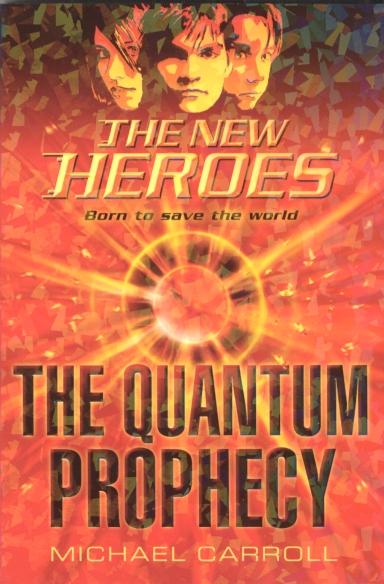
quantum-prophecy-thePicture being able to fly, run fast, or hear far away sounds. Now reading about all these super powers makes me want them even more than my normal daydreams do. In the series The Quantum Prophecy, all these daydreams become a reality when Colin, Danny and their superhuman friends fight super villains and save the world from their evil plans. When the super humans disappeared ten years ago, everyone mourned their loss on Mystery Day, until now.

Since Colin and Danny’s thirteenth birthday, their powers have shown more and more powerful. Danny saved a girl from getting hit by a bus when he was on the other side of the street. Turns out he can run so fast that time actually slows down around him. When Colin first heard what the family several doors down from their house were having for dinner, he began to freak out a little.

Now with their joined power and with help from Diamond and Paragon, Colin and Danny fight the bad guys. When they find out that a man named Victor Cross is making a power damper, they try everything in their power to stop it. Danny losses his right arm in the process and kills his father, Quantum. Quantum had had a vision that his son, Danny, would lead an army that will destroy the world. Danny has that vision then loses his right arm. Colin and Danny go back home and agrees that it is over. But Danny has a secret, in the vision; he has a mechanical right arm.

There are three books in this series and I am on the second one so far. If you haven’t read these books, you should. Post a comment about these books if you have read them!

-Kyle H., 7th grade

Book Review: Peter Nimble and his Fantastic Eyes, by Jonathan Auxier

peter_nimble_coverPeter Nimble and his Fantastic Eyes is probably my favorite book that is not part of any kind of series. In it, a young blind boy named Peter Nimble, after a misremembered nursery rhyme, embarks on a magical journey to save the world after meeting the Haberdasher and stealing a box full of what feels like eyes. Along his way, he ends up in the Just Deserts, meets Sir Tode, and helps save HazelPort from the clutches of the evil Lord Incarnadine and his army of apes.

All in all, I really love this book and have reread it over and over again. This book is filled with just so many things that make you want to smile and laugh. I would consider it to be of the action-adventure and fantasy genres, and is appropriate for people of all ages, though geared more towards kids in 4th-7th grade.

There are a lot of events throughout the story that will make you think about what is going on. Also, it is one of those books that has a thief as the hero in the end, and for some reason, that small factor makes it all the more enjoyable. I would highly recommend this fantastic book to anyone, and I would give it the five stars that it truly deserves.

-Linna C., 7th grade

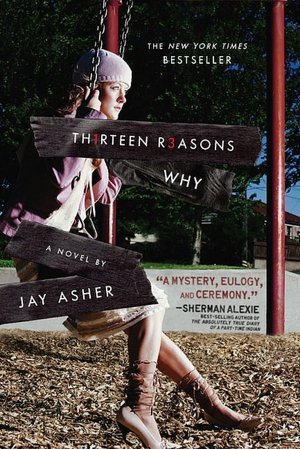
Book Review: Thirteen Reasons Why, by Jay Asher

13_reasons_whyTo follow the style of the original book, this review will be divided and counted.

Thirteen Reasons Why follows the story of Clay Jensen, an ordinary high school student, unwillingly tied up with the recent suicide of his classmate, and first crush Hannah Baker. After her death her “tapes” (listing the thirteen reasons why she decided to commit suicide) are distributed and mailed around to the thirteen people who are mentioned in the tapes. Jensen, as one of the recipients of the tapes, spends the evening listening to them- retracing Hannah’s steps throughout the town…eventually learning more about the girl who slipped away, out of his life.

Overall I had many, many problems with this book. There were a few positives, but the way the author addressed the serious topic of suicide and depression disturbed me and left me unnerved. Here are my own eight reasons why…

Negative aspects of this work:

1. Hannah Baker holds a very shallowly based argument for suicide.

A majority of the reasons for her suicide are connected to her romantic interactions with other males in the town, or her own reputation at stake. Although it is irrefutable that suicide/and or depression could be triggered by anything, societal problems being one of them, the story portrayed by the author struck me as if it was written by someone who had no idea of the weight of the topic they were discussing.

2. There was too much focus on males within the story.

Let me explain a little more, the males within the story were portrayed as the main instigators of most of Baker’s reasons for suicide. All of them also connected to her because of some romantic, or sexual exploitation turned rumor. Perhaps the author was trying to hint at the fact that males should be more aware of their actions towards others and how it affects them, but I still saw it as a sometimes anti-male tirade.

3. Some parts of the novel were incredibly unrealistic.

Much like the first point I made, other details in the story showed up as questionable. One of those is that Baker’s parents are never mentioned as being a source of help for her within the duration of the narrative. And what about the fact that the whole new town that she moved into seems so messed up, and against her? The fact that she seems unable to make new friends despite how charismatic and kind she is. This book definitely had a few plot holes, and things left unexplained- which did not help with the overall narration style taking place.

4. Uninspired story

Overall, you can tell that the author probably has had no personal experience with suicide or depression- as it shows through the work itself. And according to the author, it was inspired by audio tours that people take at museums, seeing artifacts, and listening to the story in place- not exactly the inspiration you would think would be needed to portray such a serious topic.

Don’t worry though…there are some positive aspects:

1. The author does a very good job of highlighting the idea that “it’s all a matter of perspective.”

No matter how trivial something may seem to you-that same thing, or action or thought may mean something entirely different for someone else based off of their own life experiences. Basically you don’t know the back story, so don’t be so quick to judge.

2. There is a very good portrayal of the ripple effect.

The author did a wonderful job in explaining and showing how one action may unwittingly set off a whole chain of events following, despite the connections being almost unseen to the people experiencing it.

3. There is very good characterization of the main person Clay Jensen.

The author did an incredibly realistic illustration of how he was reacting to the tapes. His immediate train of thought as he was visiting the places mentioned within the tapes. As the tapes explain back stories to people that he was completely unaware of. All of his reactions were incredibly relatable, and maybe even something I would do within his situation, allowing me to extend more empathy to his character. His emotion and anxiety was palatable, something completely tangible that you could almost feel as you were reading along.

4. There is a very good sense of “what if.”

The entirety of the story leaves you thinking about “what if.” And in turn makes you reflect about your own life and the “what ifs” present there.

Overall, the book’s negative aspects outweighed the positive for me, but it came as an easy read, with parts that left me with little bits of (sometimes shallow) introspection to mull over. Perhaps read it with these bits of commentary in mind, but don’t take it too seriously- after all, the author didn’t seem to take such controversial topics that way either.

-Sophia U., 11th grade

Book Review: My Big Nose and Other Natural Disasters, by Sydney Salter

my_big_noseHave you ever wanted to physically change a part of you? Maybe this book would help you reconsider.

Jory is a seventeen year old girl who has a big nose, and hates it because while her parents get the model style looks and her brother is a teenage Adonis, she gets the plain looks and her great-grandfather’s nose. However, in the summer before her last year of high school, she decides to work as a driver for a cake and flower delivery service so that she can raise enough money to fix her nose with plastic surgery and get the attention of her crush, Tyler. However, many things happen during that summer, such as meeting a violinist boy who works with jewelry, finding out that one of her once sensible best friend is making some bad choices, and finding out Tyler’s shocking secret.

In this book, there are some things that the reader should look out for. First of all, there is some weird humor. Secondly, there is use of alcohol and talk about people who like others of their same gender. Finally, Jory has the wrong image of what interests a boy in most of the story and also has a bit of jealousy later on.

However, this story does teach a good moral. Jory laters learns that no matter what, you should be okay with just  who you are, even if have a big nose.

-Megan V., 8th grade

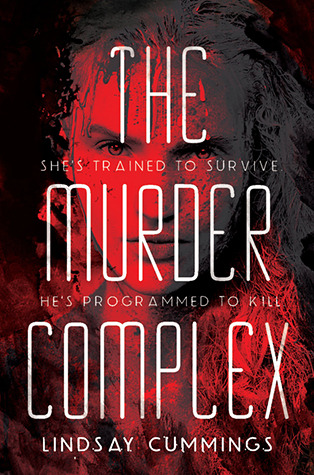
Book Review: The Murder Complex, by Lindsay Cummings

murder_complex_coverShe’s trained to survive. He’s trained to kill. With a gripping tagline like that, one would expect this book to be excellent, right? Think again. When I first heard of The Murder Complex, I was instantly hooked. With its compelling title and blood-spotted cover, it seemed to be my type of book: bloody, action packed, and thrilling. Unfortunately, it fell extremely short of my expectations.

The Murder Complex is the start to a series by a brand-new author, Lindsay Cummings. It is a futuristic novel about a fifteen-year-old girl named Meadow Woodson living on a houseboat in Florida with her father, older brother, and younger sister. The world has changed drastically. A plague affected the world and killed off extreme amounts of people before a cure was found. Now, death is only possible by murder, which could happen anytime, anywhere. The murder rate is higher than the birth rate and no one is safe. Meadow has been trained to fight and survive by her callous father. Now that she’s approaching sixteen, she has to compete for a living. She soon meets and falls in love with Zephyr, a Ward, or someone who has to collect the bodies of people who are murdered every day. Zephyr is actually a trained killer, although neither Meadow nor Zephyr actually knows it. After a near-death experience, Meadow discovers something called The Murder Complex, which is a system that controls the number of people who die each day.

This book was an major disappointment. It’s simply way too confusing and chaotic. Periodically I had to stop and reread the summary to understand exactly what I was reading. The author attempts a dual POV with Meadow and Zephyr, but it doesn’t work out. The characters’ voices are too similar and they meld into one. It’s also just plain ridiculous. I was constantly rolling my eyes at the poor attempts to be dramatic and the “coincidences” that occurred so frequently. In conclusion, the plot was overly complicated, the romance was ridiculous, the characters were bland, and my boredom levels were high. It’s basically just a poorly executed replica of the Divergent series and The Hunger Games. Maybe my expectations were too high, but The Murder Complex was one disappointment after another.

This review is based on an advance reader’s copy. The Murder Complex will be available in bookstores everywhere on June 10, 2014, published by Greenwillow, an imprint of HarperCollins.

-Rabani S., 9th grade

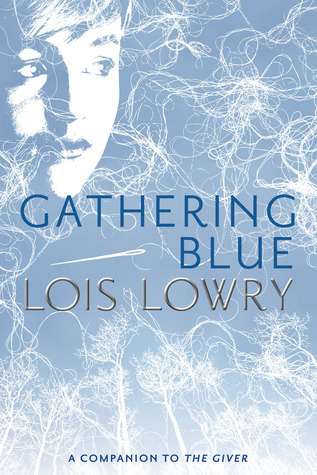
Book Review: Gathering Blue by Lois Lowry

gathering_blue_coverIf you’re in middle school, you’ve probably already read or are going to read The Giver, a John Newbery Medal award winning science fiction novel by Lois Lowry. I decided not to do a book review on it so in case you haven’t read it yet, you won’t be dying to read it before you’ve been assigned it.

By the way, The Giver is being made into a movie and will be coming out around August this year. If you are a big Swiftie, like me, you’ll be excited to hear that Taylor Swift will be playing a character in the book named Rosemary.

The Giver is actually the first novel of a quartet by Lois Lowry.  The second, third, and fourth novels are Gathering Blue, Messenger, and Son respectively.  (You don’t necessarily have to but it helps to read the books in order.)

This review will be on the second book, Gathering Blue.  A thought-provoking book, it took me longer than usual to read this one. A bit less exciting than The Giver, but nonetheless a wonderful book. It takes place in a dystopian future, where a girl named Kira is orphaned after her mother’s death. She was born with a bad leg in a harsh society that shuns imperfections. To her surprise, she is taken in by the Council of Guardians, given a comfortable room with food and indoor plumbing (which is a rare and generous thing in this era), and allowed to pursue her beautiful and amazing talent: embroidery. She trains with an old woman in how to make dyes, and is given the task of restoring the robe worn by the Singer once a year, when he sings the history of the world to the people of the village. Things are pretty good, but Kira comes to realize not everyone and everything is so true and kind…

I’m glad I didn’t give up on finishing this book; it was definitely worth the read! I can’t wait to start the third book in this quartet! I understand it ties the first two together!

-Danielle L., 6th grade

Book Review: The Power of Six, by Pittacus Lore

power_of_six_coverIn The Power of Six, the sequel to the book I am Number Four by Pittacus Lore, aliens called Loriens move to Earth to escape the evil Mogadorians, who have already destroyed the planet Lorien and plan to take over the universe. The Loric are each named after a number and possess superhuman abilities called Legacies. Protected by a special charm, they can only be killed off in their numbered order. In I am Number Four, the Mogadorians have already terminated numbers one, two, and three out of the nine Loric. If all of the Loric are killed, there is no telling of what the future of Earth, let alone our universe, will be like.

After destroying a school and leaving Paradise, Ohio, Number Four and Six both go to Florida to flee the Mogadorians. On the other side of the world in Spain, however, Number Seven is trying to find her chest of Lorien because she knows that it is time to find the other Loric and face their enemies. But when the Mogadorians grow stronger and start to hunt down the only survivors of Lorien, there is nowhere else to hide from death and destruction.

Pittacus Lore is a pseudonym for the authors of the I am Number Four series. The authors are still in progress of finishing the series, which many young adults love. I would rate The Power of Six an eight out of ten because there wasn’t much action compared to I am Number Four. I would certainly recommend it to young adults and teenagers who love action and adventure, and can’t wait to finish reading the series!

-Riley W., 6th grade

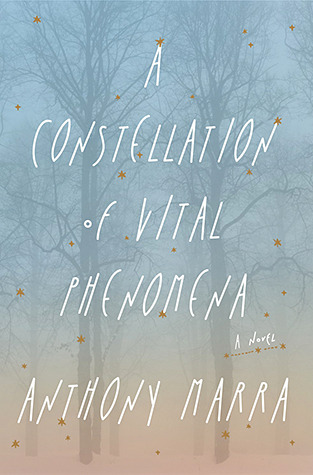
Book Review: A Constellation of Vital Phenomena, by Anthony Marra

constellation_vitalWhat is life?

The prior question was once pondered solely by humanity’s greatest minds, but now, to the chagrin of some, has become somewhat cliched ponderation of the masses. Yet this propagation of the question what is life? is neither deplorable nor unexpected, for, in all verity, it is a fundamental consideration in the collective human consciousness, a driving factor that motivates us to make sense of this experience we all share.

In an attempt to address this question, or at least provide a platform by which it can be effectively considered, writer Anthony Marra reduces this ubiquitous thing we call life to the following: a constellation of vital phenomena-organization, irritability, movement, growth, reproduction, adaption, a definition whose first three words title his debut novel. By Marra’s own admission, he extrapolated the aforementioned definition of life from a medical textbook, an object which, as his novel even seems to suggest, is a prodigious, lifeless, static pool of knowledge surveyed and marked by wise men of ages past. Despite the seemingly esoteric and perhaps at first bland nature of this definition, through the course of A Constellation of Vital Phenomena, it becomes a stunningly beautiful mechanism by which the whole of human life can be understood.

While a new novel, published in 2013, Marra’s work can easily be counted among the highest ranks of literature from all ages. The writer’s prose drips with mastery, perhaps best evident in his provision of detail, which, although occasionally rambling, is rich and luscious. Indeed, these subtleties, albeit meritorious for their exquisite verbiage in themselves, perhaps more importantly contribute to the storytelling for which Marra is even more laudable as they color events in the lives of the novel’s characters.

Indeed, A Constellation of Vital Phenomena to a substantial degree ignores the traditional and popular sense of plot, with its linear and structured qualities, adopting a more free-flowing composition in which various moments of the lives of a slew of characters who live in a war-torn Chechnya are criss-crossed. In actuality, the novel spans the five days after the capture of Dakka, father of Havaa and friend of Akhbar, the latter of whom takes the former to a hospital in the Chechen capital city, Grozny, which lies 12 kilometers from their village of Eldár, in the hopes that the renowned surgeon, Sonja, who runs the nearly defunct medical facility, will allow the young girl to reside there.

One of the most rewarding facets of the novel is the full development of all the story’s major characters, a feat achieved through that very detailed presentation of different moments in each of their lives. Similarly wonderful is the fact that Marra ties the characters together in the most seemingly trivial, yet achingly touching and poignant ways. The author creates with his web of characters and events a mirror to the definition of life from which he draws his inspiration. Truly, the novel becomes its own organism, a cornucopia of characters who tell a hauntingly beautiful tale of a lost girl and allude to the complexities of life in general. A Constellation of Vital Phenomena calls the reader into deep reflection, in particular to view his or her own life as just that, a series of inseparable and interrelated moments and people and things, making all of life’s constituent parts ever more lovely and significant.

-Sebastian R., 11th grade

Series Review: The Divergent Series, by Veronica Roth

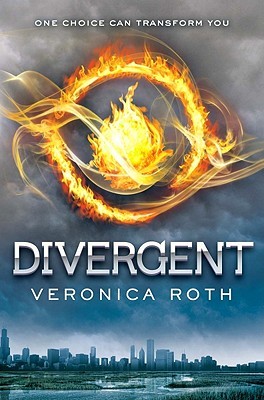
divergent_coverWritten by Veronica Roth, the Divergent series is an irresistible trilogy that’s full of action, suspense, and (for you girls out there) romance! The series contains three books titled Divergent, Insurgent, and Allegiant.

Set in a future world that has been destroyed by the human nature of greed, ignorance, and cowardice, society is split into five factions: Abnegation for the selfless, Candor for the honest, Amity for the peaceful, Dauntless for the brave, and Erudite for the intelligent. The series follows sixteen-year-old Beatrice (nicknamed “Tris”) Prior who learns that she has an aptitude for more than one faction. This is called “Divergent,” and is extremely dangerous. In order to reveal the secret kept from her city, Tris embarks on a dangerous journey with the help of friends. Along the way, she must protect herself from those who threaten to kill her for her Divergence, as well as discover the true meaning of sacrifice, facing your fears, and being brave, honest, and selfless.

After reading the first book in the series, I was captivated with the storyline and became attached to the characters. I especially loved the process of Dauntless initiation, as well as the many plot twists that made me keep reading and finish the book in two days. Insurgent was a little confusing and boring at times, but the cliffhanger at the end really made me eager to keep reading. After months of eagerly waiting, Allegiant finally came out in October 2013! And to be honest, I was very disappointed and angry that Veronica Roth finished the trilogy that way (you have to read it to find out). Although Allegiant clarifies all of the mysteries and unknown questions in the first two books, the mind-blowing finale had me curled up in a corner sobbing for hours! (ok, maybe not) How could the author do something so cruel to her readers? But after reading the third book over again, I was able to realize that Veronica Roth actually wanted to teach us a life important lesson.

I would rate the Divergent series a 9.5 out of 10 and would highly recommend it to anyone over the age of 13, whether you’re a boy or girl. Make sure to read it in time for the movie adaption coming out on March 21, 2014!

-Kaylie W., 9th grade