Book Review and Reflection: The Winner’s Curse, by Marie Rutkoski

winners_curseIn the aristocratic society where Kestrel resides, superiority is a universal attribute and war is the national obsession. A key character once tells her, “A kestrel is a hunting hawk,” to which she replies unconvincingly, “Yes. The perfect name for a warrior girl.”

Being the only child of the highly respected Head General, Kestrel is required to enlist for the army before her twentieth birthday, when citizens of Valoria must decide to marry, or they will be drafted into the military. Kestrel has a knack for battle strategization, and her father wishes to work with her, despite the fact that if she enlists, she will have to give up playing the piano, which is viewed upon as a slave’s task. But is she really willing to sacrifice her one real passion—music—in order to please her father?

When she purchases a slave sold as a singer at a local auction, society begins to speak. They had anticipated that she would be in the army already, not being caught sneaking to and from the music room, in re a disinterested low class citizen.

Consequently, Kestrel and her father strike a deal: by spring, she will be married, or her father will get his way and she will be enlist; both forms of life-long commitment to which she is opposed. However, she decides that this agreement is better than the alternative scenario, and inevitably succumbs to his blackmail and manipulatively selective choice of words.

Even though the most frequently used idiomic cliché remains to be “Don’t judge a book by its cover,” we all do, admittedly. [It has been scientifically proven that “within a tenth of a second of seeing a person for the first time, we have already made a series of judgments, not just about attractive they are, but how trustworthy they are, how assertive they are, how funny they’re going to be. We’re built to make these snap judgments about each other because at some point in our history, it was necessary for our survival to do so. And now, we build even more signals into the way we style our hair, the shoes that we wear, the socks, the clothes, tattoos and piercings, all a way to give cultural cues about what kind of person we are.” (Hank Green)].

We are all awash in this excessively unrectified and undoubtedly precedented subconscious appeal to the visually representative; we make all these initial and usually incorrect assumptions that are solely based on superficiality and appearance so often that we are no longer aware that we are being superficial. I was discussing this disappointing fault of our underling human lives with one of my closest friends not too long ago (a bit ironic, as we live in Orange County) and he laughed and then said to me: “It is not a question of whether we are superficial. It is a question of to what extent; myself, of course, being of no exception to this philosophy.” This is something, I think, that was conveyed as a theme throughout this book, as it was definitely something that I took away from it.

I, subsequent to my superficial examination, expected The Winner’s Curse to be an anticipatable, contemporized attempt to reconjure the simultaneous romance and tragedy of a Shakespearean drama lo the many, many authors that have tried—and failed—to do just that (although I did enjoy Kissing Shakespeare by Pamela Mingle and Still Star-Crossed by Melinda Taub). In a nutshell, this book is not a poor attempt to recreate the irreplaceable story of Romeo and Juliet like the cover so obviously suggests.

The Winner’s Curse contains love and violence; separation and companionship; countless lies and recoverable truths; manipulation and forgiveness. It addresses the differentiation between what is expected of us—or what people want for us—and what we, for ourselves and what we love, aspire to become. It is that passion; that thing that we do solely because we love doing it, despite what society tells us we should be doing instead, that shapes us into the individual person that we will one day become.

I am really appreciative that I was given the opportunity to “pre-read” an advance copy of this book just before it was published; thanks to Mission Viejo’s Teen Librarian, Allison, for supplying me with that opportunity. It’s now available in bookstores everywhere. I would also like to congratulate those of you who actually succeeded in reaching the end of this incessant rant and would like to apologize for its unnecessary length and depth.

-Danielle K., 8th grade


Book Review: Skinned, by Robin Wasserman

skinned_coverSkinned is the first book of a sci-fi trilogy, set in a future where science has perfected a way to download a person’s personality and memories into an immortal mechanical body.

After her body is destroyed beyond repair in a car accident, 17-year-old Lia Kahn’s wealthy parents pay for her to become a “mech.” Lia’s new life poses unexpected problems when her friends reject her, believing her to be an inhuman impostor of her former self, and hate groups protest her very existence. She encounters a group of mechs who shun mortal life and live together for protection, and must choose between her old friends and family or the company of others like her.

I really liked the worldbuilding of this book. Many futuristic dystopian novels feature civilizations with impractical societal rules that are unlikely to develop in our world’s future, and are used mostly as a plot device (no art ever! the government matches you up with your spouse!). However, the world of Skinned is more of a decayed version of our own: there is still a democratically elected government, but they have little power compared to the huge corporations that own everything. People are even more addicted to technology and entertainment. And outside of the comfortable suburbs where Lia lives, the majority of the population starves in crime-ridden cities or works under harsh conditions in corporate-owned towns. Lia lives her life preoccupied with popularity and consumerism, and only starts thinking about the bleak state of the rest of the world once she sees the cities for herself and befriends mechs who grew up there. Her greater awareness of the problems of her society parallels her character development from a spoiled and judgmental girl to a more mature person trying to change the world. Though Lia has several love interests over the course of the trilogy, romance never overshadows the plot and equal focus is given to Lia’s changing relationships with family, friends, enemies, and the corporation who built her.

I would recommend Skinned to anyone 14+ (for language and thematic elements) who likes sci-fi and dystopian books such as Scott Westerfeld’s Uglies.

-Miranda C., 12th grade

Book Review: Alabama Moon, by Watt Key

alabama_moonHave you ever fantasized about residing in the woods? Have you ever envisioned hunting for every meal you need? How about constructing your own dwelling from trees with your own hands? In the book Alabama Moon, by Watt Key, audacious and juvenile ten-year-old Moon Blake has resided his entire existence in the woods with no external connection except for Mr. Abroscotto, who owns the local general store.

After his father succumbs, Moon knows that he has to pursue the last instructions of his father to go north to Alaska. Heading to Alaska, Moon’s journey is stopped precipitously when a policeman catches him. As he battles his way through the outside world he has never known, he comprehends that going to Alaska will not be easy. Read the rest of the novel to see if Moon makes it to Alaska or not.

I would recommend this book to kids who dream of an adventurous life in the woods. I admired how Moon overcame impossible obstacles with his positive spirit. He is a great role model for children everywhere. A funny part was how Moon had never eaten “normal” food and he enjoyed every meal he ate, even though it was sometimes jail food. The only questionable aspect of the book was Moon’s father’s reasons for living in the woods was not that clear, even though it stated that he went to Vietnam. Overall, the book was outstanding, and a great read for somebody craving adventure.

-Anmol K., 7th grade

Book Review: The Lives We Lost, by Megan Crewe

lives_we_lostThis month, I am reviewing the sequel to The Way We Fall, by Megan Crewe. The book, The Lives We Lost, begins when the main character, Kaelyn, and her friends discover that the deadly virus that starts with “flu-like” symptoms has spread far past their small quarantined island on the East Coast, and has now reached the rest of America, and possibly the world.

Kaelyn subsequently finds a vaccine in her late father’s lab that she heard him talking about before he died. She knows that she must set out to find someone who can replicate this vaccine to save humankind as we know it. However, as Kaelyn and her friends set out, they realize that the journey they are taking is long and dangerous, and the few people who are not infected with the virus will do almost anything, even kill innocent kids, to get their hands on the vaccine.

This is a great read, especially for teens who enjoy apocalypse and dystopian novels. Due to the content of the book, I would only recommend it for kids ages 13 or 14 and up, but even though the book can be graphic, it is a page-turner.

Both The Lives We Lost and its predecessor end with cliff hangers foreshadowing another book in the series. While I wish that Ms. Crewe had added another hundred pages or so and just finished the second book instead of leaving the reader hanging, I am looking forward to reading the third in the series.

-Will R., 9th grade

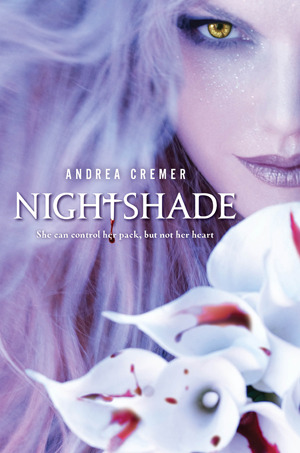
Book Review: Nightshade, by Andrea Cremer

nightshade_coverThis book is actually has a prequel series and the first book’s title is Rift. After I read Rift, I fell in love with this world. Rift took place in 1401 so there are castles and knights. Within the kingdom there are special types of knights that protect from outside invaders, such as monsters from a different dimension. Later, after the war that happened in the prequel series, the actual book starts.

A girl named Calla isn’t a ordinary human, she’s a Guardian. Guardians are like werewolves that protect the kingdom from seekers. Calla has had her whole life planned out for her because she’s the alpha of her pack; she would marry the other alpha from the pack Bane, named Renier, also known as Ren– and then their packs would merge together after the Union. The Union was the day Calla and Ren would become married. Calla goes to a school called the Mountain School, which is ordinary.

One day she and her packmate and best friend, Bryn, go out to watch the grounds, like a normal Sunday, but she and her friend see a boy being attacked by a bear, so she saves him, which is against the Guardian law. After that scene she thinks that it’s the last time she’ll ever see him, but when she goes to school she finds out that the boy, Shay, starts to go to her school too.

Day after day she starts straying from her destiny, and she doesn’t know who to trust. Does she trust Shay enough to figure out the truth within the lies she’s been fed all her life, or does she go with Ren and continues to be part of the world she grew up in?

-Meagan R., 8th grade

Book Review: Go Ask Alice

go_ask_aliceGo Ask Alice, an anonymously written “journal” has recently been receiving a lot of attention from teenagers looking for a fun, easy read.

The book is about a girl growing up in the late 1960s, struggling through her first year of high school in a brand new city. On a short trip back to her old town, she tries LSD for the first time at a party. After she’s introduced to her new world of drugs and parties, this new life follows her when she returns home. Months pass and as her life is spiraling out of control, the reader takes an adventure through the life of a typical sixties teen.

I would definitely recommend this book to anyone looking for a story with an interesting plot, and a creative writing style. This book is impossible to put down and I couldn’t help myself from finishing it in one sitting. The reader never learns the character’s name, which adds a lot of mystery to the plot and makes it even more interesting. Of all the books in the “Anonymous” series (including Jay’s Journal, Lucy in the Sky, and Letting Ana Go), I believe that Go Ask Alice is the most well written and most interesting of the four.

-Sara S., 10th grade

Book Review: Magyk, by Angie Sage

magyk_coverLooking for a new fantasy novel? Magyk by Angie Sage is the beginning to an amazing series that rivals Harry Potter. Like your other favorites, it includes magic, wizards, evil and a perfect touch of humor.

In a peaceful castle, the queen gives birth to a baby girl with violet eyes. An assassin breaks in to assassinate the two, but fails to kill the infant princess, who is spirited out of the castle. Meanwhile, the Heap family of wizards welcomes their seventh son. Pronounced dead, baby Septimus Heap is taken away in the night. Soon after, Silas Heap, the father, adopts an infant abandoned in the snow (hmm). Ten years later, an assassin returns to finish the job, forcing the princess, Silas, the ExtraExtraordinary Wizard, and some others to flee the area. They seek refuge in the forest, evading the Hunter. What will happen? As we like to say, find out!

This book is particularly interesting because it doesn’t have one specific main character. Sage follows the thoughts of multiple characters throughout the book. In fact, it even details the lives of the antagonists, including the Hunter and evil necromancer. In this way, Magyk is a very unique and creative book. We even get the novelty of exploring the life of a millipede. Sounds like your kind of book? Light humor is mixed into the storyline, so that you can laugh out loud every once in a while. The entire story is written in a lighthearted tone, so it feels very casual and fun to read.

For a veteran reader of fantasy novels, this book will be especially delightful. It’s not difficult to read, yet interesting enough to keep the reader engaged. There are several more books in the series for you to enjoy, so get started quickly. We know there are lots of wizard books out there, but Magyk is one of the most unique and fun to read.

-Phillip X., 8th grade

Book Review: Fahreinheit 451, by Ray Bradbury

fahrenheit451_coverFahrenheit 451: the temperature at which books burn. Books: the very objects that cause all the evil in this world.

This is what Guy Morgan used to think whenever he was out his job as a fireman, which was to burn books. However, that all changed when a girl started asking questions that didn’t matter to him before. Soon, he starts seeing things questionable, such as killing a woman who wanted to die with her books.

Through master science fiction writer Ray Bradbury comes a story from the 1940s of a world that is set in our timeline and would stir up an internal “fire” in the heart of book lovers anywhere.

Even though Fahrenheit 451 is a very old book, it can be very appealing to teenagers. For example, one of the characters gets you to look at objects through a different perspective. Secondly, there is action, where the main character is in a rush to run, hide, or just get something that can save his life.

Whether you are a fantasy fan or an action lover, Fahrenheit 451 is a book that you would treasure for the years to come, especially since one of the characters says something that I personally would never forget as a book lover:
“[M]agic is only in what books say, how they stitched the patches of the universe together into one garmet for us.” Dr. Faber page 83

Megan V.

Eighth Grade

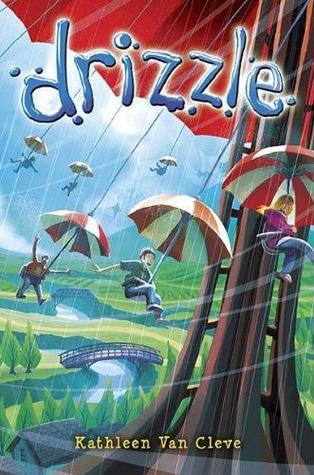
Book Review: Drizzle, by Kathleen Van Cleve

drizzleIn the book Drizzle by Kathleen Van Cleve, eleven-year-old Polly Peaboy lives on her family’s rhubarb farm. You must be thinking that living on a rhubarb farm must be boring, but the Peaboy’s farm is far from ordinary. At the farm, the rhubarb tastes like chocolate, it rains on the farm exactly at 1:00 p.m. on Mondays, and diamonds sprout from the ground.

On one unusual Monday, it stops raining and a ripple effect of unfortunate events happened afterwards. The plants start to wither, and her older brother, Freddy, gets a deadly, peculiar illness. Realizing that she is the only person who could save the farm and Freddy, Polly must believe in herself and be brave enough to do it. Although she does not realize this, Poly is the savior of her farm and must carry out this huge task.

I thought this book was average. The story was sort of slow and dull. It got a little boring in the middle because of Polly’s personality. The plot could have been better if some inconsequential events were eliminated. Overall, I would recommend this book to anybody who is looking for a magical, whimsical book about rhubarb plants (just kidding… there’s much more to the book than only rhubarb plants).

-Anmol K., 7th grade

Series Review: “Dear America” by Scholastic

dear_americaAs we have many history-making moments in our time, you get to see big historical moments through a girl perspective in the series “Dear America” from Scholastic. The “Dear America” books are stories about big moments in history, like Hitler, in a form of a girl’s diary. The original series published by Scholastic in 1996, had hard covers, ribbon bookmarks attached inside (to hold your place), and 36 books.

The books out of the series I have read, and are my favorites, are Across the Wide and Lonesome Prairie: The Oregon Trail Diary of Hattie Campbell, 1847 by Kristiana Gregory (1997), Voyage on the Great Titanic: The Diary of Margaret Ann Brady, RMS Titanic, 1912 by Ellen Emerson White (1998), The Great Railroad Race: The Diary of Libby West, Utah Territory, 1868 by Kristiana Gregory (1999), One Eye Laughing, the Other Weeping: The Diary of Julie Weiss, Vienna, Austria to New York, 1938 by Barry Denenberg (2000), and many more.

The series was cancelled in 2004 with its final release, Hear My Sorrow. However, it was relaunched in the fall of 2010. The 2010 re-launch series came out with new covers and had no ribbon bookmarks were attached. The re-launch series has 19 books, from the original series like A Picture of Freedom: The Diary of Clotee, a Slave Girl, Belmont Plantation, Virginia, 1859 by Patricia McKissack (January 2011), Like the Willow Tree: The Diary of Lydia Amelia Pierce, Portland, Maine, 1918 by Lois Lowry (January 2011), as well as new “Dear America” stories like Behind the Masks: The Diary of Angeline Reddy, Bodie, California, 1880 by Susan Patron (January 2012).

As I am reading Color Me Dark by Patricia McKissack, I think the reading level is a bit low for middle school and high school, it is a great way on getting a learning on historical moments in a creative, non-boring way. The reading level I chose was from 3rd grade up to 7th grade.

-Kate B., 7th grade