Book Review: Good Omens, by Neil Gaiman & Terry Pratchett

good_omens_coverGood Omens is a funny, original book written by British authors Neil Gaiman (Stardust, American Gods) and Terry Pratchett (the Discworld series). It is time for Heaven and Hell to destroy the world in the Biblical apocalypse, and for Adam Young, a normal preteen in a quiet English town, to realize his destiny as the Antichrist. But Crowley and Aziraphale, a demon and angel who have been working on Earth and become friends over six hundred years, decide to defy their respective superiors and save humanity. Meanwhile, the Four Horsepeople of the Apocalypse form a team to trigger the End of Days.

The major strength of this book is its humor, with running gags, half-page-long footnotes, and sarcastic tangents about random aspects of humanity. Aziraphale and Crowley repeatedly attempt to listen to music cassette tapes, only to have them morph into “Best of Queen” albums if left in the car for over two weeks. War, Death, Famine, and Pollution are followed around by four human bikers trying to represent concepts such as No Alcohol Lager, Things Not Working Properly, and All Foreigners Especially The French. Witch-hunter Newt Pulsifer is pulled over by aliens (for no reason) who criticize humans for being a dominant species while under the influence of consumerism. Pratchett’s witty writing style and Gaiman’s inventive fantasy are both evident here.

My favorite part of the book is near the end, where Crowley drives to help Aziraphale in a burning car held together by his own willpower, and proceeds to pick up a tire iron to fight Satan (in contrast to Aziraphale’s flaming angel sword). I also like the depictions of the Horsepeople: War as a beautiful red-haired woman who writes newspaper stories on international conflict, Famine as a thin businessman dressed in black who sells diet foods that make people starve to death, and Pollution as an inconspicuous white-haired young man who helped invent environmentally disastrous products.

If you enjoy satirical books such as Discworld or The Hitchhiker’s Guide to the Galaxy, you should definitely read Good Omens.

-Miranda C., 11th grade

Book Review: Vanishing Act, by John Feinstein

This book review is part of series of reviews written by students at St. Margaret’s Episcopal School for their 7th grade English classes.

vanishing_act_coverI would have never thought that one of the top seeds in the U.S. Open of tennis would be kidnapped just minutes before her first round match, but in the book Vanishing Act, the unheard of scenario became a reality. Nadia Symanova was kidnapped before her first round match, and kid sleuth’s Stevie Thomas and Susan Carol Anderson are up for the mystery.

The perspective of Stevie was interesting because his thoughts and feelings came to life. Stevie is a youth journalist who attends popular sports events such as the final four which was his last stop. He is a social boy who is a knowledgeable sports fanatic. He mostly enjoys golf, and can never stay away from his IM account, which he mostly uses to talk to his crush, Susan Carol. “He needed a shower, but as usual, he checked his IM first” (8).

Susan Carol, Stevie’s partner in crime, is a kind and energetic youth journalist, as is Stevie, who is very passionate about sports. Her uncle Brendan Gibson is an agent of one of the rising stars in tennis Evelyn Rubin, but is Brendan working with other tennis players behind Evelyn’s back… You will just have to pick up the book and see.Bobby Kelleher, Stevie and Susan Carol’s journalist friend from their last stop at the Final Four is at the tournament. Bobby gets into all of the players lounges and locker rooms, and that might be very helpful after the crime.

I believe that “the sky is the limit” is the major theme of this book because, Stevie and Susan Carol are both 13 and they are nationally identified as two of the greatest youth sports journalists in America. They worked hard on something they enjoyed and it led them to fame.

Even though this book was a fictitious sports mystery I believe there was a moral. The moral being if you want to do or finish something, put your mind to it and make the dream a reality.

Even for those who do not enjoy tennis, this book is a mysterious nail biter. It isn’t a book you can put down without finishing it.

John Feinstein is a sports writer and commentator and has written many fictitious sports mysteries. He incorporates some of the books he has written in the Vanishing Act, which is an unusual writing tactic.

I give this book 5 stars, there were no flaws and everything in my opinion was perfectly explained throughout the book. The resolution really surprised me, and If I were you I would pick up this book right now, find a comfortable chair, and dig into this unbelievable book!

-Peter G., 7th grade

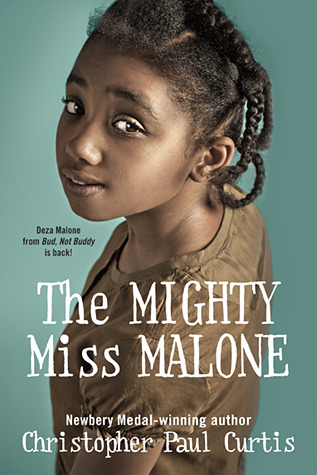
Book Review: The Mighty Miss Malone, by Christopher Paul Curtis

mightymissmalone_coverThe Mighty Miss Malone is a historical fiction novel by Newbery Medal winning author Christopher Paul Curtis. This story is about twelve-year-old Deza Malone and her family.

Deza has a loving and caring mother and a brother who has a gifted voice. The Great Depression has caused tremendous trouble for black men like Deza’s father, so he leaves their home in Gary, Indiana in search of a job. One month later they still have had no word from him, so Mrs. Malone decides to leave Gary in search for her husband along with her children.

On the search, they find shelter in a camp in Flint, Michigan. Deza starts to attend school, although she encounters racial prejudice. A few weeks later a man at camp hears her brother Jimmie’s singing voice and convinces him to leave the camp so they can find work in Chicago or New York. That same night, Mrs. Malone and Deza leave camp to find a more permanent home.

At last, Deza finally receives a letter from her father. What does the letter say? What
happens to Jimmie? Will she and her mother finally find Deza’s father? Will
they live happily together as a family? Read the book to find out.

I think Deza is called “Mighty Miss Malone” because she is strong and stays positive through hard times. I loved the fact that she is caring and compassionate for her family. I think girls her age can relate to her. I highly recommend this beautifully-crafted book.

-Anmol K., 6th grade

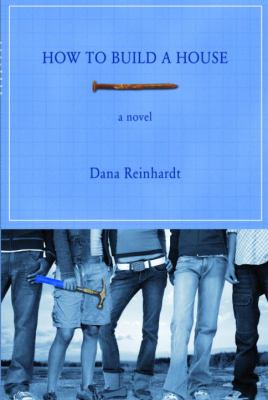
Book Review: How to Build a House by Dana Reinhardt

house_reinhardt_coverThis book review is first in a series of reviews written by students at St. Margaret’s Episcopal School for their 7th grade English classes. We’re pleased to showcase these reviews on the Mission Viejo Library Teen Voice.

Have you ever wanted to run away from reality? Dana Reinhardt took me on an inspiring adventure with one of her five books, and a 2012 Abraham Lincoln Book Award nominee How to Build a House. This novel was written in the perspective of a teenage girl, Harper. Harper is sadly familiar with the term loss; her mother had died, and her beloved step mom had left, along with her two step sisters. She faces many struggles and heartache, yet she finds ways to get back to life past her losses.

Harper was only two years old when her mother passed away. I guess you could say she had been hiding behind her dad until the day he introduced her to his “special” friend. Harper came out of hiding. Along with Jane, her to-be step mother, came two daughters, Tess and Rose. They would become Harper’s sisters. Harper thought nothing could ever be better. When Harper was 17, she came home from school on one ordinary day and received the news from her dad that Jane and her daughters were gone.

Everything had come to sudden stop. There were no more family dinners. No more family movie nights or coming home to homemade cookies. No more slumber parties with her sisters. No more talking to her sisters at school.  Anything with the word family in it made Harper’s heart jerk. But most importantly the thought of there being no more Jane, Rose or Tess was what hurt her the most. What had she done to deserve this?  Harper had to get away. Someway, somehow just as long as she got away from this feeling of ultimate betrayal.

Then there was a charity trip she read about in the newspaper. Recently there had been a tragic tornado in Tennessee, leaving most of the homes ruined. The Homes from the Heart Program for Teens was an organization designed to rebuild houses for families who had lost their own. At first it did not sound appealing to Harper but she thought of the main reason she was doing it… to get away.

“We’re landing now.  Dusty brown has morphed into lush green” (8).  Harper had settled in, met her roommate, and the next morning they began to build. The summer friendships began to form. Harper met Teddy Write, the oldest son of the family they were building the house for. They told each other everything and he welcomed Harper into their family’s temporary home like she was part of it. This made Harper realize what she had lost. This family had lost so much more, but they still had the one thing Harper did not have, a family. Her body began aching “… Not for what they don’t have, [but] I ache for what they do have.”

Harper arrived home from that summer trip learning something no one could have taught her but herself. Dana Reinhardt captured me with this intriguing novel about a teenage girl overcoming one of the hardest things anyone could go through. What is the valuable lesson that Harper taught herself? You must read the book to find out. One of the truest and most heartfelt books I have read in a long time.

-Amelia E., 7th grade

Book Review: Double, by Jenny Valentine

double_coverThe mysterious pages of Double, by Jenny Valentine, will keep readers in suspense every twist and turn.

This mystery book is centered on a boy known as Chap, a sixteen-year-old runaway. After living on the streets for several years, one event changes his life forever. When police detain him for fighting, they discover an ad in the newspaper for a missing boy named Cassiel Roadnight. After realizing he has nothing to lose, Chap takes on a new identity with the caring family and home he never had.

Every minute is a challenge for him; Cassiel’s family could discover the truth at any moment. However, nobody realizes the truth, except for a friend of Cassiel’s named Floyd. Slowly, the two begin to piece together what really happened on the day Cassiel disappeared. Will Chap find out his true identity, and finally find a family of his own? This highly dramatic and thought-provoking story is sure to keep anyone at the edge of their seat.

Chap is a very intelligent and thoughtful person. His every motive is clear and simple, so readers can understand his every subtle or bold action. His emotions and thoughts really show through as he struggles to cope with his life spiraling out of control. As if building a house of cards, Chap is now forced to add layer after layer of deception, knowing that in the end it will all come tumbling down.

Valentine does a superb job with this murder mystery, skillfully meshing teenage emotions and the cold reality of the world. Double shows deep emotions about family and loved ones, and will have a profound impact on readers. Chap’s wit and quick thinking will aid him on his path to redemption as readers cheer him on. Double is a new, quick read that will definitely satisfy any reader’s crave for mystery.

-Phillip X., 7th grade

Book Review: Love’s Image, by Debby Mayne

loves_image_coverThis is a great love story with some very powerful messages:

  • Beauty is not only skin deep.
  • What’s on the outside of someone is not as important as what’s  on the inside.
  • Have faith and never ever give up.

My great-aunt read it and thought I would like it. She was right.

Model Shannon McNab has been in a terrible car accident that wounded her face. Left with a long scar as a reminder, she knows that her career as a model is shot and her self-confidence has flown out the window. Her boyfriend leaves her because he no longer finds her attractive.

When one of her friends takes her to a singles group at church, Shannon is apprehensive about going at first. It is there that she meets Judd Manning, a kind, funny school teacher who makes Shannon smile once again. He makes her believe that she might be able to find someone who doesn’t judge her by her scar and will love her the way she is. She begins to feel better about herself again and falls in love with Judd.

As her scar fades over time, her love for Judd and God grows. She is confident again and finally happy, having found the true meaning of her life and believing that everything does happen for a reason.

This novel is definitely a favorite of mine and a real feel-good story. It shows how to have faith in God, other people, and yourself.

-Lauren B., 12th grade

Book Review: Matched, by Ally Condie

matched_coverThis book is a definite must-read that keeps one glued to the pages.

In a very controlled society, Cassia is getting ready for the biggest day of her life, the Match Banquet. Her best friend Xander, also has his Match Banquet, but after a little mix-up with who her match is, she finds herself debating over who she loves.

Once Xander’s face shows up on her card, Cassia is sure that they are the perfect match. But when another boy’s face shows up on the screen for a second she finds herself debating who she is truly meant for. Cassia finds herself falling in love with this other boy, Ky– which upsets the Society and puts herself and Ky in danger.

As Cassia begins to discover her true self, she finds herself caught up in life-threatening secrets and daring choices. At the same time she is trying to save the one she loves, while she keeps her family safe.

Matched is the first volume in a trilogy. Find out what happens to Cassia in the sequels, Crossed and Reached.

-Jenna R., 7th grade

Book Review: Carpe Diem, by Autumn Cornwell

carpediem_coverAfter a careful search in the library, I rediscovered a book I read a few summers ago.  Carpe Diem revolves around sixteen-year-old Vassar Spore, an academic overachiever. Her life goals include graduating high school with a 5.3 GPA, (“the new 4.0”), attending the prestigious Vassar women’s college (which she was named after), marrying a PhD graduate, and receiving a Pulitzer Prize. To reach all of these goals her next two summers have been completely planned out with Advanced Placement courses and extracurricular activities.

Suddenly, all of her meticulous planning is flipped upside-down when her eccentric, bohemian Grandma Gerd demands that Vassar spend the summer backpacking through Southeast Asia with her. Her usually-conventional parents agree to let her go after being blackmailed by Grandma Gerd, who threatens to tell Vassar about “The Big Secret.” Vassar is abruptly thrust into a completely different world filled with dirt, pests, and people from all walks of life. While traveling, she learns about LIMing (Living in the Moment, as coined by Grandma Gerd), and meets a Malaysian cowboy/bodyguard, named Hanks. And as stated in the book’s summary, “Vassar Spore can plan on one thing: She’ll never be the same again.”

I really, really enjoyed reading Carpe Diem. At first, the plot seemed predictable: a serious student learns there is a lot more to life than just books. Cornwell, however, exceeded my expectations and developed Vassar into a much deeper character. Vassar prepares meticulously for challenges. She changes into someone willing to live in the moment, taking things in life as they come. I sense that Cornwall draws on her love for Southeast Asia and her own experiences traveling abroad to describe Vassar’s misadventures.

This story offered me a valuable lesson. I am also a hardworking student in high school and go to great lengths to focus on school, grades, and getting into college. Rereading this book made me step back for a while and think about my real priorities. Once in awhile, I want to drop everything and “just LIM it!”

Rereading this book triggered my own memories of traveling abroad and domestically, experiencing new and novel things, taking in new cultures and mindsets, and expanding my perception of things. This book was also a valuable read because it broadened my interest and knowledge about Southeast Asian culture and travel.

I recommend Carpe Diem for readers who enjoy stories of adventure, exotic cultures, and travel, seasoned with lots of laughs. This book was enjoyable all the way through, with a balance of humor and seriousness to satisfy any reader. Based on the reading level, I would recommend this book for readers aged ten and up, though the content is acceptable for precocious readers who are under ten years old.

-Sophia U., 10th grade

Book Review: Pulse, by Patrick Carman

pulse_coverBy the year 2051, nearly the entire US population is divided among two primary territories: the Eastern State and the Western State. The world is in panic about global warming, and scientists are desperately searching for ways to save mankind.
Those who don’t live within the State’s protective walls live upon the debris and ruins of our former country. These small, aligned communities are strictly governed by the States, who despite their formal requests, refuse to supply them with anything more than food and clothing. However, the States do distribute Tablets to the outsiders, which soon become the core of their survival. Everything: school, entertainment, shopping, communicating — even drugs — are all experienced on these Tablets, which are very similar to the electronic tablets we have today, only slightly more advanced.

The resisters of society are strongly encouraged to move to the States, for it increases their population and strengthens their power, two things considered to be necessary in overcoming the hardships of the current. Many resisters feel compelled to make the switch, but are hesitant with the knowledge that once you step foot inside the States’ boundaries, there’s no going back.

Among the resisters is a girl named Faith Daniels. At the beginning of the story, she attends a high school whose number of students is rapidly dwindling, and lives a repetitive, tedious life. She, too, sees it as inevitable, but refuses to give in, knowing that moving to the States would require her to surrender her freedom and trade it for sanctuary, something she was unwilling to do. This I admire her for: not sacrificing her freedom, even though it seemed like the easy way out.

When Faith’s classmate, Dylan Gilmore, reveals that she has a “pulse” — a telekinetic ability in which she can move objects using her mind — everything gets a lot more complicated. Together, Dylan (who also possesses the pulse) must track down a group of evil, telekinesis masterminds who turn inanimate objects into deadly weapons in their greedy search for influence, prosperity, and utmost power. Someone must stop them from corrupting the world’s leaders, and ruining the slim chance of survival they have managed to obtain. Dylan and Faith set out to do just that, and must unleash the full power of their newfound talents in order to do so, meanwhile discovering things about themselves — and each other — that will change them forever.

One unique aspect of this novel was the point of view chosen by the author. It was written from third person omniscient, meaning that the reader can tell what every character is thinking at any given point in the story. I feel that the author took a big risk by doing this, however the results are positive for the most part. Another important part of this story was its philosophical and complex world building, which plays a large role in the unraveling and revelation of the plot. This book is the first in a trilogy of the same name, and I am looking forward to seeing how the saga concludes.

When this book was released, there was an abundance of negative and offensive reviews. But honestly, I loved this book and was able to connect with the characters fairly well. Although Faith is consistently volatile and rash throughout the story, she is also brave and stands up for what she believes is right. I stumbled across this book randomly, but I definitely recommend it to anyone who enjoys stories of dystopian societies and/or supernatural abilities.

-Danielle K., 7th grade

Light Reading: Two Short and Sweet Book Reviews

little_blog_prairie_coverDo you love Laura Ingalls Wilder? Think it would be fun to live life out on the prairie? Well, think again.

In Little Blog on the Prairie, by Cathleen Davitt Bell, Gen is furious when she finds out that her mom has signed her up for a summer long family camp where they all get to pretend that its the year 1890. Sounding fun yet? To add to the delights of raising chickens, using an outhouse, and fighting with your
little brother, this prairie has a Nellie Oleson style mean girl.

When Gen sneaks her phone in and texts her friends, they think that this little life on
the prairie would make a great blog. But when things blow up big-time, Gen has to admit that the prairie has actually grown on her a lot, and she can’t bear to leave.

This is an excellent book full of twists, turns, inevitable drama, and a boy with a leather necklace. Try Little Blog on the Prairie for some LOL entertainment.

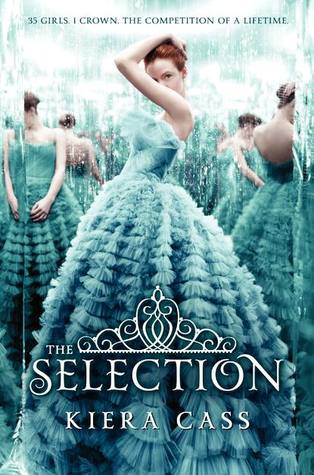
selection_coverThe Selection, by Kiera Cass, a dystopian book about a princess competition is… hard to rate. I can’t honestly say that I loved it, but this book definitely had some very interesting parts.

America Singer (cool name, huh?) is chosen to be in the selection: thirty-five girls all competing to catch the eye of Prince Maxon, the awkward, naïve, and kind of sweet future ruler of Illea. Even though America still can’t get over her ex-boyfriend who dumped her right before she got involved in the competition, and there are some pretty catty competitors to fight off, fiery America won’t go down without a fight.

I think The Selection is pretty good piece of dystopian lit, even if it may not hold a candle to The Giver. It definitely falls into the category of chick lit, though… sorry, guys!

-Becka O., 8th grade